Malta stands as a premier hub in the global iGaming landscape, renowned for its robust regulatory framework and favorable business environment. The island nation offers comprehensive licensing regimes and strategic access to European markets, making it a top choice for operators. This analysis delves into Malta’s regulatory landscape, market metrics, and the legal environment driving operator opportunities and challenges.
| Metric | Value |
|---|---|
| Legal Gambling Status | Fully regulated for land-based and online gambling |
| Regulatory Authority | Maltese Gaming Authority (MGA) |
| Population | 516,000 (approx.) |
| GDP (2024) | €15.6 billion |
| GDP Per Capita | €30,000 (approx.) |
| Internet Penetration | 98% |
| Mobile Penetration | 120% (multi-SIM users accounted) |
| Licensed Online Operators | 150+ (as of 2025) |
| iGaming License Types | Class 1, Class 2, Class 3 licenses |
| Minimum Capital Requirement | €100,000 (for Class 1 license) |
| License Application Fee | €5,000 – €25,000 depending on license type |
| License Renewal Fee | €10,000 annually for Class 1 |
| Gross Gaming Revenue (GGR) Tax | 5% to 15% depending on license |
| Corporate Tax Rate | 35% standard rate |
| Average Market Growth Rate (CAGR) | 8% projected 2024-2029 |
| Market Size (2024) | €1.2 billion revenue |
| Average Revenue Per User (ARPU) | €3,000 annually |
| Payment Processing Infrastructure | Robust with major PSPs and e-wallets |
| KYC/AML Compliance Requirements | Comprehensive, aligned with EU standards |
| Responsible Gambling Measures | Mandatory with self-exclusion and limits |
| Physical Presence Requirements | Registered office and local representative required |
| License Application Timeline | 6-8 months average |
| Advertising Restrictions | Strict regulations including time and content limits |
| Market Entry Barriers | High compliance and capital costs |
| Technology Standards | Certified RNG and platform audits mandatory |
| Data Protection Standards | GDPR compliant |
| Annual Reporting Frequency | Quarterly and annual submission mandates |
| Enforcement and Penalty Mechanisms | Strict with fines and license suspension |
| Currency Acceptance | EUR mandatory |
| Foreign Ownership Limits | None, open to 100% foreign ownership |
Section 1: Regulatory Framework and Legal Environment
Current Gambling Regulation Status
Malta maintains a comprehensive legal and regulatory framework that governs all forms of gambling activities across the country. The framework covers land-based casinos, sports betting, lotteries, and a highly developed online gambling sector. Gambling activities are fully legal and regulated under the jurisdiction of the Maltese Gaming Authority (MGA), the primary regulatory body overseeing licensing, compliance, and enforcement. The MGA’s mandate ensures consumer protection, game fairness, and market integrity through rigorous standards and continuous monitoring.
Land-based gambling includes casino operations, sports betting shops, and dedicated gaming halls offering slot machines and other electronic gaming devices. Lotteries and bingo are also regulated within specific legal provisions, complementing the broader gambling ecosystem. Malta’s framework is harmonized with European Union directives, ensuring robust compliance with anti-money laundering (AML) and data protection laws.
Online gambling in Malta is one of the most advanced and regulated sectors globally. The MGA authorizes and supervises a wide range of digital gaming licenses that encompass sports betting, casino games, poker, bingo, and skill games. The legal framework prohibits certain activities, including unauthorized betting exchanges and any games not meeting certification standards. Operators must comply with strict technical, financial, and operational criteria to maintain their licenses.
Land-Based Gambling Activities
Malta’s land-based gambling sector is mature, featuring a network of licensed casinos primarily in key tourist areas and urban centers. Casino operations are subject to stringent regulatory controls, including mandatory player identification and anti-fraud measures. Sports betting shops operate under specific licenses, offering pre-match and live betting markets with regulated odds and event coverage.
Dedicated slot machine halls and gaming arcades provide additional localized gambling options within a controlled legal environment. Lotteries and bingo halls are integrated within the regulated spectrum, enhancing community-based gaming participation.
Online Gambling Framework
The Maltese online gambling framework is defined by a tiered licensing system that addresses different operator activities and scales. Licenses are broadly categorized as Class 1 (high value and high risk), Class 2 (intermediate), and Class 3 (low risk, such as betting intermediaries).
Operators face obligations on platform security, game fairness verified through Random Number Generator (RNG) certification, and ongoing operational audits. The MGA enforces strict KYC and AML protocols, including customer identity verification, transaction monitoring, and suspicious activity reporting. Prohibited online activities include unlicensed betting exchanges, unregulated poker platforms, and any unauthorized games lacking MGA certification.
Malta’s regulations promote a secure and transparent digital gaming environment designed to protect players and support sustainable business practices. The robust oversight framework improves market confidence and investor appeal.
Licensed Operators and Market Players
The Maltese iGaming market hosts over 150 licensed operators, ranging from global giants to emerging startups. The competitive landscape is marked by a mix of established casino brands, sportsbook operators, and innovative platforms focusing on niche markets and emerging technologies. Key market players leverage Malta’s favorable regulatory reputation, strategic EU access, and robust infrastructure to gain competitive advantages. New entrants often adopt partnerships with local entities to expedite compliance and market penetration. Market share distribution is relatively concentrated, with the top 10 operators holding approximately 60% of market revenue.
Licensing Framework and Requirements
Application Process and Eligibility
The Maltese Gaming Authority administers licensing through a rigorous application procedure emphasizing financial stability, technical competence, and integrity. Applicants must demonstrate compliance with technical standards including RNG certification and platform security audits. Financially, operators must show adequate capital reserves with minimum capital requirements varying by license classification.
The licensing process begins with the submission of detailed documentation and ends with MGA approval following thorough due diligence and background checks. Application fees and timelines differ by license class but typically range from €5,000 to €25,000, with processing times averaging 6 to 8 months. Operational readiness including IT infrastructure, local presence, and compliance frameworks are evaluated before final approval.
The licensing framework requires submission of multiple essential documents:
- Corporate registration certificate and articles of incorporation
- Audited financial statements for the past three years
- Business plan with market strategy and revenue projections
- Technical documentation including RNG and software certification
- Criminal background checks for all directors and beneficial owners
- Proof of minimum capital funds deposited in a licensed bank
- Compliance policies detailing KYC, AML, and responsible gambling measures
- Information on software suppliers and game certification status
Local Presence and Operational Requirements
Operators must establish a registered office within Malta and appoint a local representative responsible for compliance communications with the MGA. The law mandates domain registration under Maltese jurisdiction, and financial transactions must be conducted in euros. Personnel obligations include employing compliance officers and designated responsible gaming staff. Foreign ownership is permitted up to 100%, with no restrictions, although partnership with local entities is common for operational support.
Compliance Obligations and Monitoring
Player Protection and Identification
Malta has instituted comprehensive measures for player protection encompassing age verification and stringent KYC processes aligned with EU directives. Operators implement ongoing AML transaction monitoring and suspicious activity reporting obligations, supported by technological safeguards. Mandatory responsible gambling measures include self-exclusion schemes, deposit limits, and informational disclosure to promote player awareness and safety.
The MGA mandates operators to maintain transparent communication channels to educate players on risks and available support systems, enhancing market trust. Regulations require regular audit trails and record-keeping for all player interactions and financial transactions.
Responsible Gambling Requirements
Key responsible gambling measures enforced by the MGA include:
- Implementation of player self-exclusion programs
- Pre-set deposit, loss, and wager limits configurable by players
- Provision of access to counseling and support services
- Mandatory display of responsible gaming information on websites
- Regular staff training on detecting problem gambling behaviors
- Collaboration with external gambling addiction prevention organizations
Financial Monitoring and Reporting
Operators are required to implement robust transaction monitoring systems to identify suspicious activity and comply with AML reporting obligations. Monthly and annual regulatory reports must be submitted, detailing financial performance, customer activity, and compliance status. External audits verify adherence to regulatory standards and financial integrity. The MGA conducts routine inspections and can mandate corrective actions, fines, or license suspensions as needed.
Taxation Structure and Financial Obligations
Player Taxation
Players in Malta are not subject to direct taxation on winnings from licensed operators, enhancing player appeal. The tax burden is predominantly on operators, with transparent withholding and reporting mechanisms. This structure supports market growth by reducing barriers for player participation.
Operator Taxation
| Tax Category | Rate |
|---|---|
| Casino (Class 1 License) | 15% GGR |
| Intermediate Operators (Class 2 License) | 5% GGR |
| Betting Intermediaries (Class 3 License) | No GGR tax, fixed fee applies |
| Corporate Income Tax | 35% on profits |
| License Renewal Fee | €10,000 annually for Class 1 |
| Turnover Tax | No general turnover tax imposed |
Gambling Market Financial Performance
Malta’s iGaming sector generated an estimated €1.2 billion in revenue in 2024, reflecting steady year-on-year growth driven by expanding player bases and innovative product offerings. The total amount wagered across regulated platforms continues to increase, supported by favorable tax conditions and robust regulatory confidence. Tax revenue collected from operators contributes significantly to national coffers, reinforcing the sector’s economic importance.
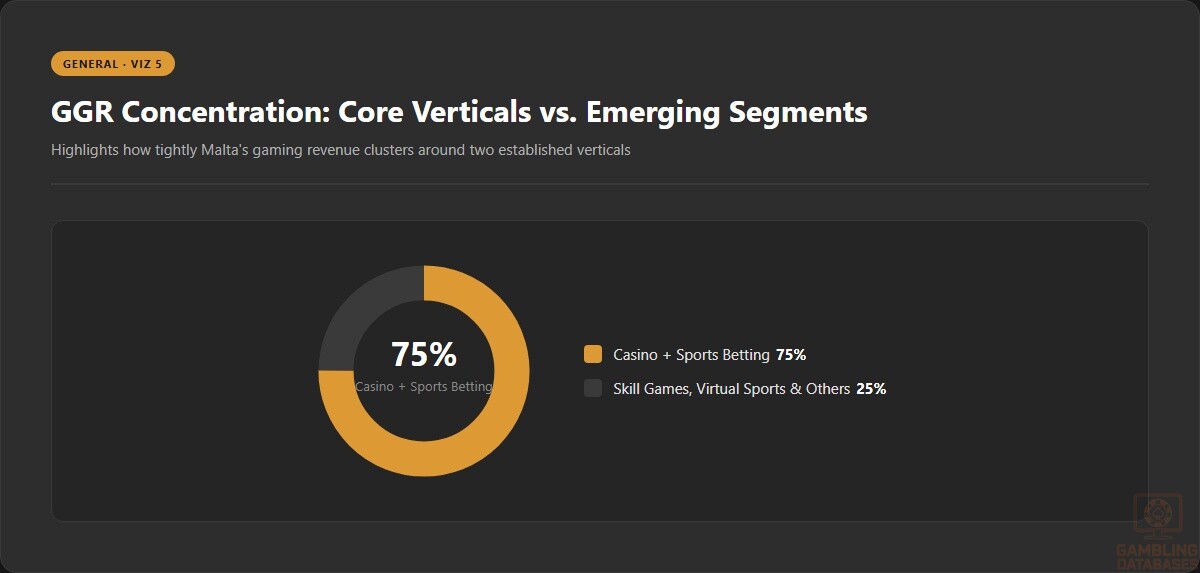
Revenue distribution shows concentration within casino and sports betting verticals, which combined account for approximately 75% of gross gaming revenue. Emerging sectors such as skill games and virtual sports offer diversification potential and are attracting increased operator focus.
Advertising and Marketing Restrictions
Advertising within Malta’s iGaming sector is tightly regulated to ensure responsible promotion and consumer protection. Operators must comply with content restrictions that prohibit misleading claims, targeting of minors, and aggressive promotional tactics. The use of media channels is controlled through specific guidelines on permissible timings and content nature.
Sponsorship agreements, particularly in sports and entertainment, are subject to MGA approval with emphasis on preventing undue influence and maintaining ethical standards. Time-based restrictions limit gambling advertisements during certain hours, primarily targeting youth protection efforts.
- Television advertising with regulated time slots
- Online digital advertising subject to content filters
- Radio broadcasts with content and scheduling controls
- Sponsorships and event endorsements vetted by regulatory body
- Print media subject to advertising content limitations
- Social media promotions monitored for compliance
Recent Regulatory Changes and Their Impact
In recent years, Malta has undertaken several regulatory updates aimed at strengthening market integrity and aligning with evolving EU directives. Changes include the enhancement of AML procedures, introduction of stricter data protection mandates, and increased transparency requirements for operators. These adjustments have raised compliance costs but improved player confidence and sector resilience.
Operators have adapted by investing in advanced compliance technology and refining responsible gambling protocols. The MGA’s proactive stance on enforcement has resulted in measurable reductions in illicit activities and greater market transparency.
Enforcement Mechanisms and Penalties
The Maltese regulatory framework incorporates rigorous enforcement to ensure full compliance across all licensed operators. Penalties for violations range from fines to temporary license suspension and, in severe cases, permanent revocation. Enforcement activities include regular inspections, audits, and investigations prompted by reports or risk assessments.
Operators are incentivized to maintain strict adherence to regulations due to the high costs of non-compliance and reputational risks. The MGA publishes periodic compliance reports enhancing sector accountability.
- Monetary fines proportional to violation severity
- Temporary suspension of gaming licenses
- Permanent license revocation for repeated breaches
- Mandatory corrective action plans imposed by MGA
- Public disclosure of compliance failures
- Criminal prosecution in cases of fraud or money laundering
Section 2: Demographics and Consumer Analysis
Population Demographics and Distribution
Malta’s total population stands at approximately 516,000, characterized by a balanced gender ratio and a median age of around 40 years. The population exhibits a strong urban concentration, with over 90% residing in cities and towns, reflecting Malta’s island geography and economic centralization. The demographic profile shows a sizeable working-age group supporting a dynamic consumer market, with implications for iGaming participation and digital service adoption.
| Age Group | Percentage of Population |
|---|---|
| 0-14 years | 14% |
| 15-24 years | 12% |
| 25-44 years | 33% |
| 45-64 years | 27% |
| 65 years and over | 14% |
The relatively young demographic within the 25-44 age bracket, comprising one-third of the population, represents the core market segment for online gambling activities. Urban areas exhibit higher internet connectivity, enhancing access to digital gaming platforms. Rural populations are minimal and primarily concentrated in smaller island communities, impacting local gambling venue distribution and consumer outreach.
Geographic Distribution
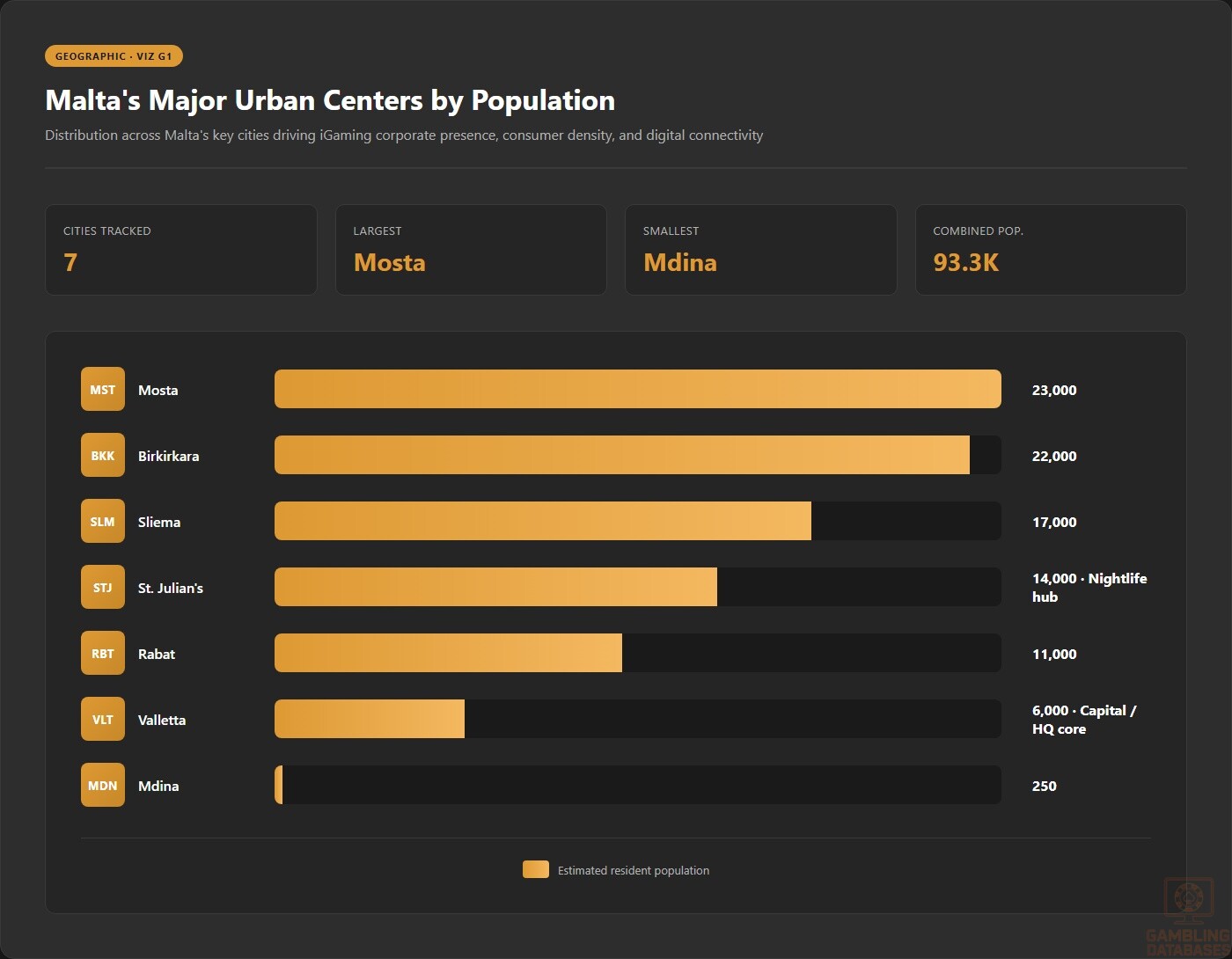
Malta’s major urban centers serve as key economic and social hubs with pronounced online and offline gambling activity. The main cities exhibit substantial infrastructure development and higher disposable incomes, supporting the growth of gaming venues and tech-driven services.
The following are Malta’s major cities along with estimated populations:
- Valletta – 6,000 inhabitants
- Birkirkara – 22,000 inhabitants
- Sliema – 17,000 inhabitants
- Mosta – 23,000 inhabitants
- Mdina – 250 inhabitants
- St. Julian’s – 14,000 inhabitants
- Rabat – 11,000 inhabitants
Urban centers like Birkirkara and Mosta are noted for their dense populations, while Valletta, the capital, serves as the administrative and financial core with significant iGaming corporate presence. St. Julian’s is known as a nightlife and entertainment hub, supporting both land-based and online operator offices. Internet access is near-universal across these urban areas, significantly exceeding the national average in broadband speed and mobile connectivity.
Economic Indicators and Consumer Spending Power
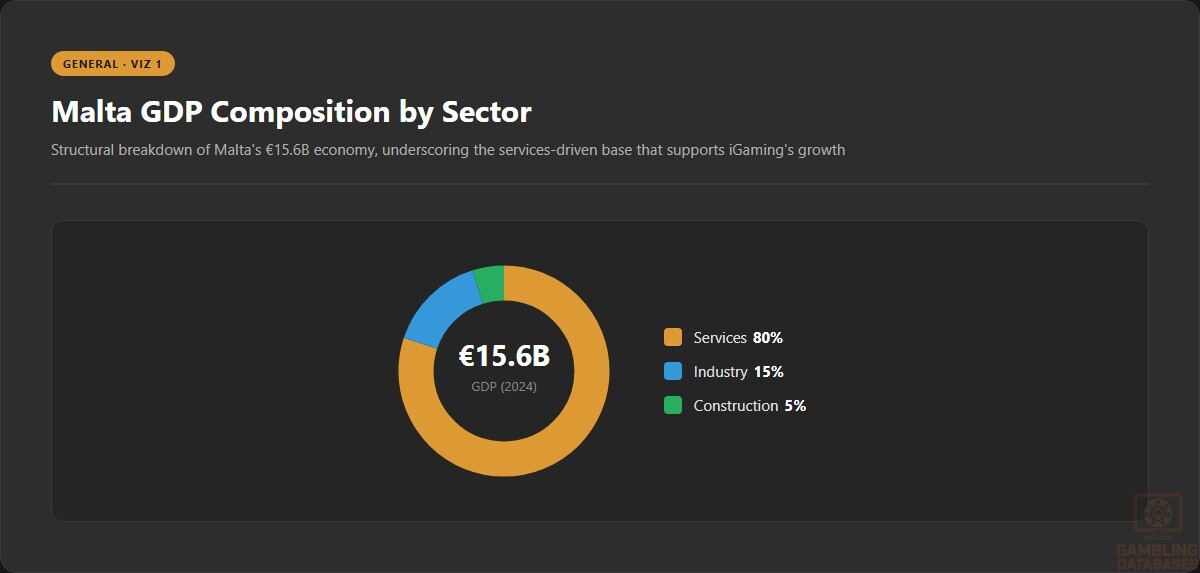
Malta’s GDP stood at approximately €15.6 billion in 2024, reflecting steady annual growth driven by services and tourism. With a per capita GDP near €30,000, Malta exhibits considerable consumer spending capacity relative to its size and regional peers. Economic diversification continues to support a resilient middle class with expanding disposable income, fostering greater recreational expenditure including iGaming.
The economy is dominated by the services sector, contributing around 80% of GDP, followed by industry and construction sectors accounting for roughly 15% and 5% respectively. This composition highlights the growing importance of knowledge-based industries and digital innovation in Malta’s market landscape.
Income and Wealth Distribution
Average household income in Malta is estimated at €27,000 annually, with median income slightly lower due to income distribution variability. Despite this, income inequality is moderate, supported by social welfare policies and comprehensive tax structures. Disposable income trends indicate increasing consumer capacity for discretionary spending, particularly among younger demographics with higher digital engagement.
Spending patterns reveal significant allocations to entertainment and online services, reflecting the growing penetration of internet-based leisure activities. Middle income groups dominate digital consumption, while higher income brackets are noted for premium iGaming participation.
Market Size and Growth Projections
| Year | Market Revenue (€ million) |
|---|---|
| 2020 | 850 |
| 2021 | 940 |
| 2022 | 1,050 |
| 2023 | 1,140 |
| 2024 | 1,200 |
| 2025 Projection | 1,300 |
Market revenue has shown consistent upward trends with a compound annual growth rate (CAGR) near 7%. User base expansion and ARPU increases are key drivers, supported by progressive regulation and technology adoption.
The growing penetration of mobile gaming platforms and diversified product offerings stimulate participation, extending reach to new demographic and geographic segments. Such trends firmly position Malta as a competitive iGaming market within the European context.
Education, Skills, and Digital Literacy
Malta boasts high literacy rates exceeding 95%, with a strong education system emphasizing technology and business skills. Digital literacy is pervasive, fueled by government initiatives and private sector investments in IT infrastructure. The workforce benefits from multilingual capabilities, especially in English and Maltese, enabling broad access to international digital markets.
Training programs and higher education institutions focus extensively on software development, cybersecurity, and gaming technologies, providing a skilled talent pool for iGaming operators. This ecosystem supports innovation and competitive advantage for local and international firms.
Cultural and Social Factors
Communication and Language
English and Maltese are official languages, with English predominantly used in business, media, and online communications. Digital content consumption largely occurs in English, facilitating international market integration. Areas with strong tourism influence also exhibit multilingual capabilities including Italian and French.
Social media and digital platforms predominantly operate in English, supporting diverse communication with global audiences.
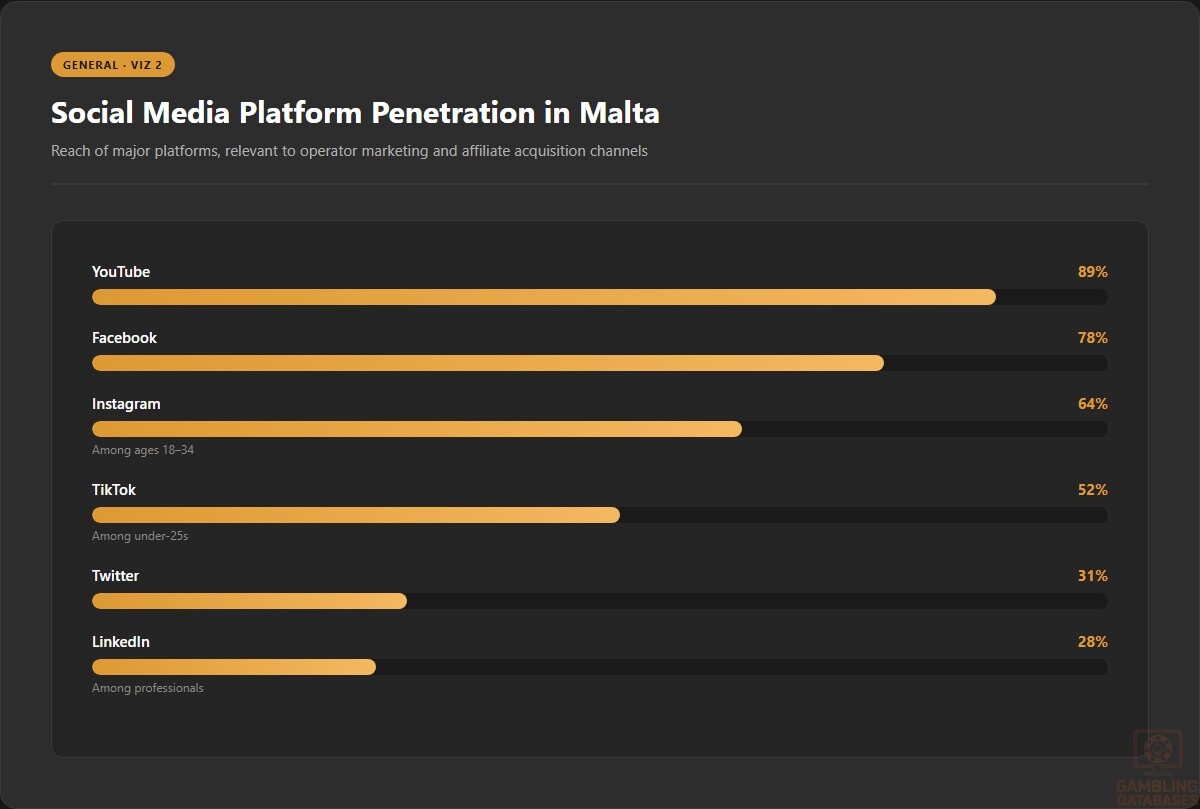
Social media platforms widely used in Malta include:
- Facebook with 78% penetration
- Instagram with 64% penetration among 18-34
- YouTube with 89% penetration
- TikTok with 52% penetration among under-25
- Twitter with 31% penetration
- LinkedIn with 28% penetration among professionals
Cultural Attitudes
Gambling enjoys broad acceptance as an entertainment activity, with cultural norms supporting regulated participation. Religious influences are moderate and have limited impact on market behavior or policy, allowing liberal regulation. Foreign brands are generally welcomed, benefiting from Malta’s international business environment and diverse consumer base.
Entertainment preferences embrace digital innovation and social engagement, aligning well with iGaming trends. The strong tourism sector also influences exposure to international gambling cultures and practices.
Problem Gambling and Social Considerations
Estimated prevalence of problem gambling is moderate, with targeted interventions supported by government and industry initiatives. Mandatory contributions from operators fund treatment and prevention programs, reinforcing social responsibility.
Government response measures include:
- National helpline and counseling services
- Mandatory self-exclusion schemes
- Public awareness campaigns
- Training for gambling industry staff on addiction signs
- Funding for research and treatment programs
Political Structure and Governance
Malta operates as a parliamentary republic with a stable government system conducive to business and regulatory consistency. The political environment supports transparent regulatory practices and ongoing engagement with EU directives. International relations are constructive, fostering open markets and foreign investment, essential for the iGaming sector’s sustainability.
Technology Adoption and Digital Behavior
Internet and Digital Usage
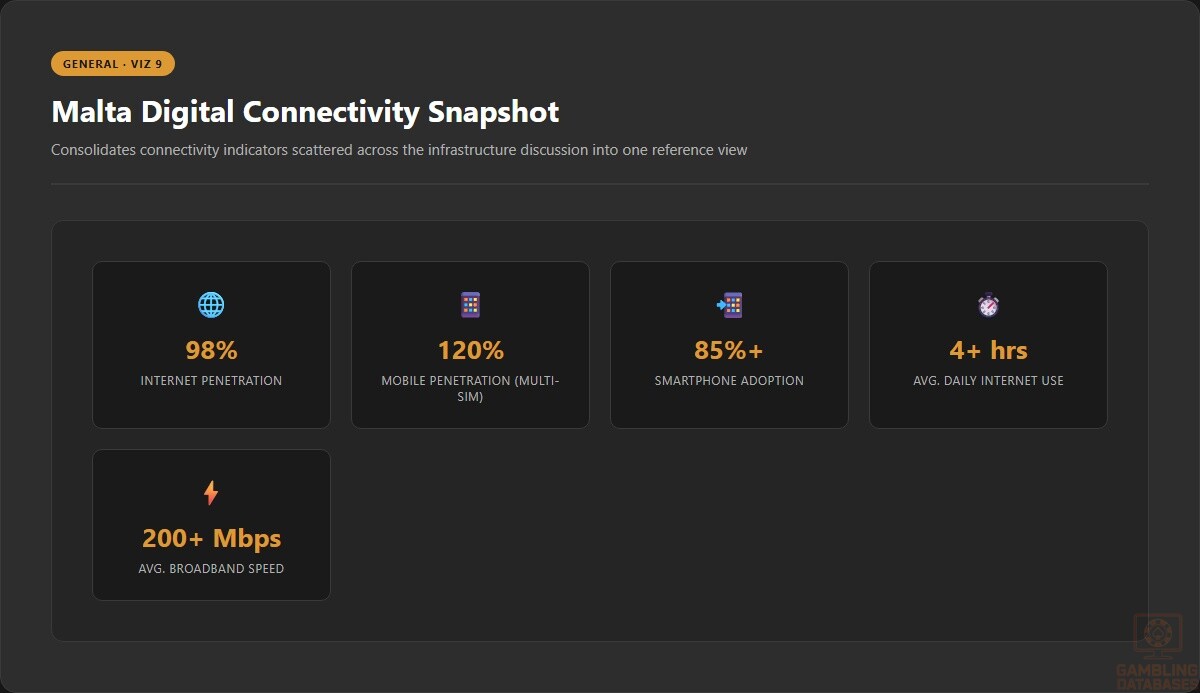
Internet penetration in Malta exceeds 98%, with average daily usage of over 4 hours. Mobile adoption is robust, exceeding 120% penetration due to multi-SIM ownership. Social media engagement is high, reflecting active digital lifestyles and consumption patterns supportive of iGaming activity.
Popular social media platforms by market share include:
- Facebook with 78% penetration market share
- Instagram with 64% penetration among 18-34 market share
- YouTube with 89% penetration market share
- TikTok with 52% penetration among under-25 market share
- Twitter with 31% penetration market share
- LinkedIn with 28% penetration among professionals market share
Digital Payment Behavior
Digital payment methods dominate online transactions in Malta, with widespread adoption across demographics. Popular options include credit and debit cards, e-wallets, and bank transfers, supplemented increasingly by cryptocurrencies. These preferences reflect both security concerns and convenience, which are critical for iGaming platforms competing in demanding markets.
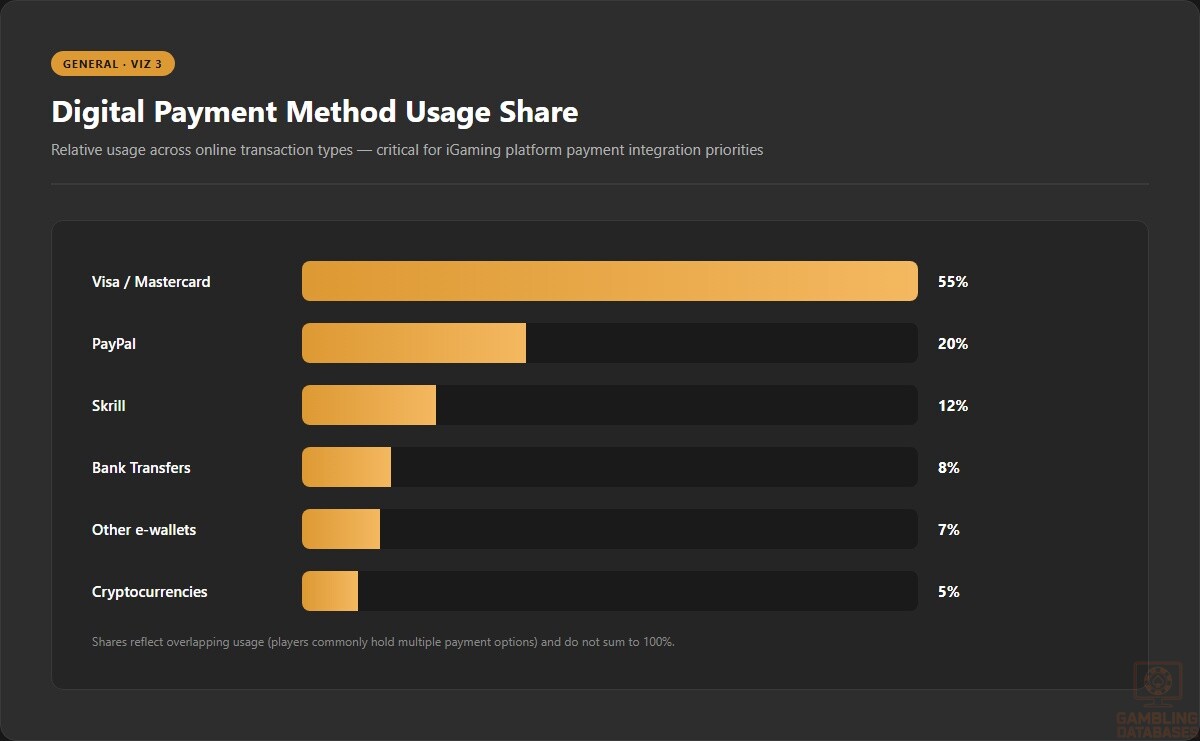
Leading payment methods by market share are:
- Visa and Mastercard covering 55% of online transactions
- PayPal covering 20% of online transactions
- Skrill covering 12% of online transactions
- Bank Transfers covering 8% of online transactions
- Cryptocurrencies covering 5% of online transactions
- Other e-wallets covering 7% of online transactions
Gaming and Gambling Preferences
Current Market Participation
Gambling participation in Malta is diverse, with several popular activities attracting significant player engagement. The most common activities ranked by participation rate are:
- Online casino games
- Sports betting
- Poker
- Lotteries
- Bingo
Malta’s iGaming consumers exhibit mature spending habits, favoring secure and licensed platforms with diverse product offerings. Peak activity typically occurs during evening hours and weekends, consistent with work-leisure cycles. Session lengths average 30 to 45 minutes per visit, with high retention observed in skill-based games and sports betting.
Platform preferences indicate strong mobile device usage supported by fast connectivity and user-friendly interfaces. Additionally, loyalty programs and localized promotions significantly influence consumer retention and lifetime value.
Section 3: Technology Infrastructure and Business Environment
Internet and Digital Infrastructure
Connectivity and Network Performance
Malta boasts near-universal internet penetration at over 98%, supported by advanced fixed broadband and mobile networks. Broadband services primarily use fiber-optic and VDSL technologies, offering average download speeds exceeding 200 Mbps. Mobile networks complement fixed connections, with LTE availability nationwide and frequent network upgrades enhancing capacity and reliability.
Infrastructure investments focus on redundancy and resilience to maintain continuous service, critical for digital-centric industries like iGaming. Local data centers and international connectivity through submarine cables ensure low latency and robust performance for online service providers.
5G and Future Technology Deployment
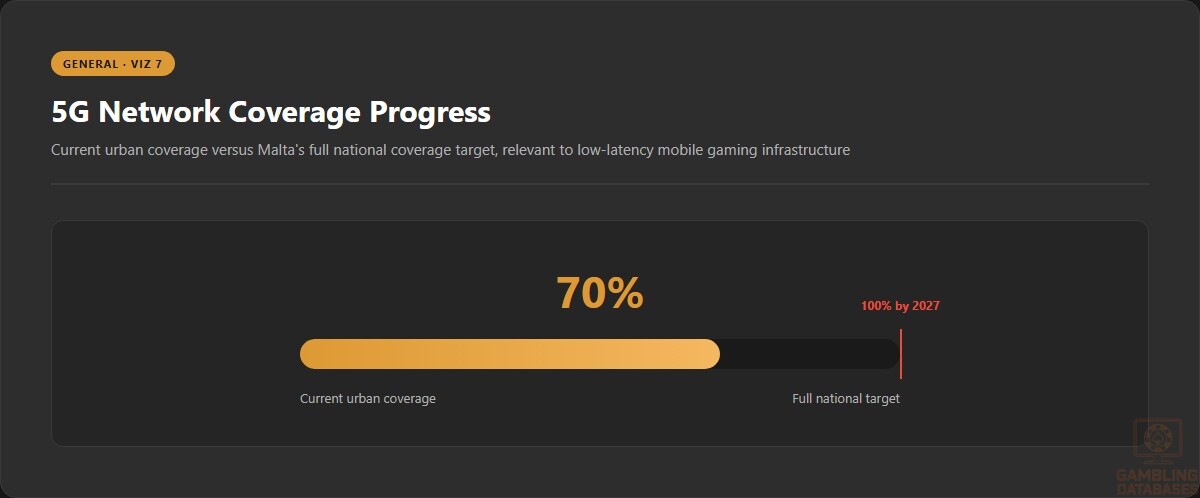
5G rollout is well underway in Malta, with coverage in key urban areas surpassing 70%, and ongoing expansion planned to reach full national coverage by 2027. The three primary mobile network operators are investing heavily in 5G capabilities to enhance mobile broadband speeds and IoT applications.
Future plans include leveraging 5G for low-latency gaming experiences and integrating edge computing infrastructure to support real-time interactive content, thereby bolstering competitiveness of Malta’s iGaming sector in the evolving global digital economy.
Mobile Technology Ecosystem
Mobile Network Infrastructure
Malta’s mobile networks are served by a competitive landscape of operators offering widespread 4G coverage and accelerating 5G deployments. Network quality is high, with extensive urban and suburban coverage and emerging rural inclusion. Data costs are competitive within the EU context, enhancing consumer adoption and usage.
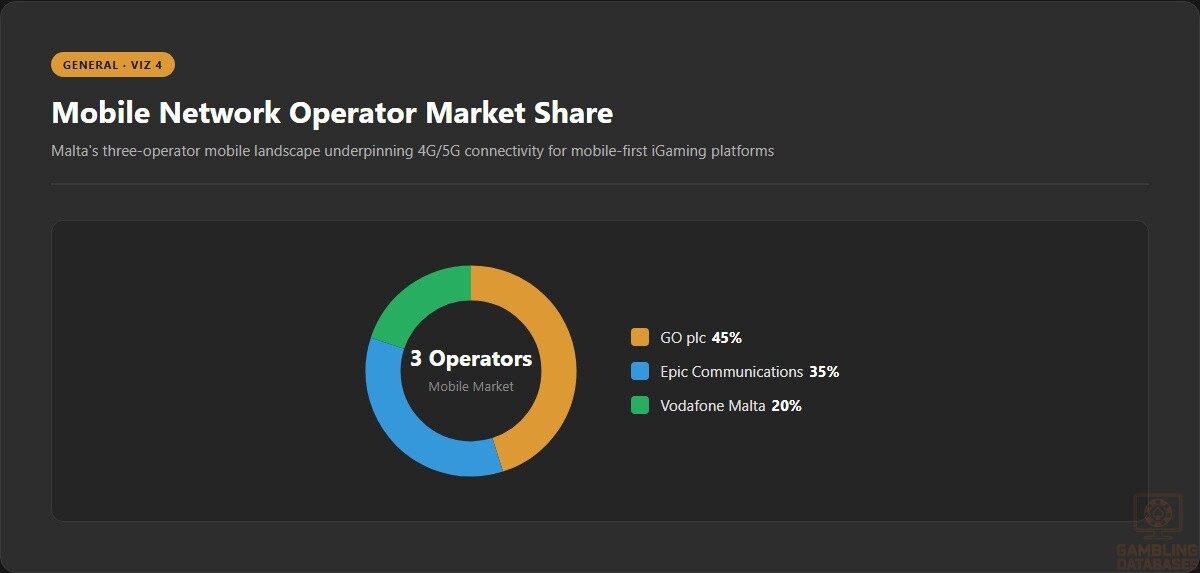
Market shares among mobile operators are moderately distributed, with major players focusing on service innovation and bundled data plans to capture expanding mobile data consumption driven by gaming and streaming needs.
- GO plc: Market leader with approx. 45% share, offering comprehensive 4G/5G services
- Epic Communications: Holds approx. 35% share, aggressive in 5G deployment
- Vodafone Malta: Accounts for 20% share, known for quality network and customer service
Device Penetration
Smartphone adoption exceeds 85%, with predominant use of iOS and Android platforms. Consumer preferences favor mid-to-high-tier devices supporting rich media and gaming applications. Usage patterns indicate strong affinity for mobile apps and on-the-go digital engagement, critical for iGaming platform design and marketing strategies.
Financial Services and Payment Infrastructure
Banking System Structure
Malta’s banking sector is well-developed, with extensive digital banking adoption and nearly universal account penetration. The landscape features international and domestic banks, supporting seamless cross-border transactions and multi-currency operations essential for iGaming enterprises.
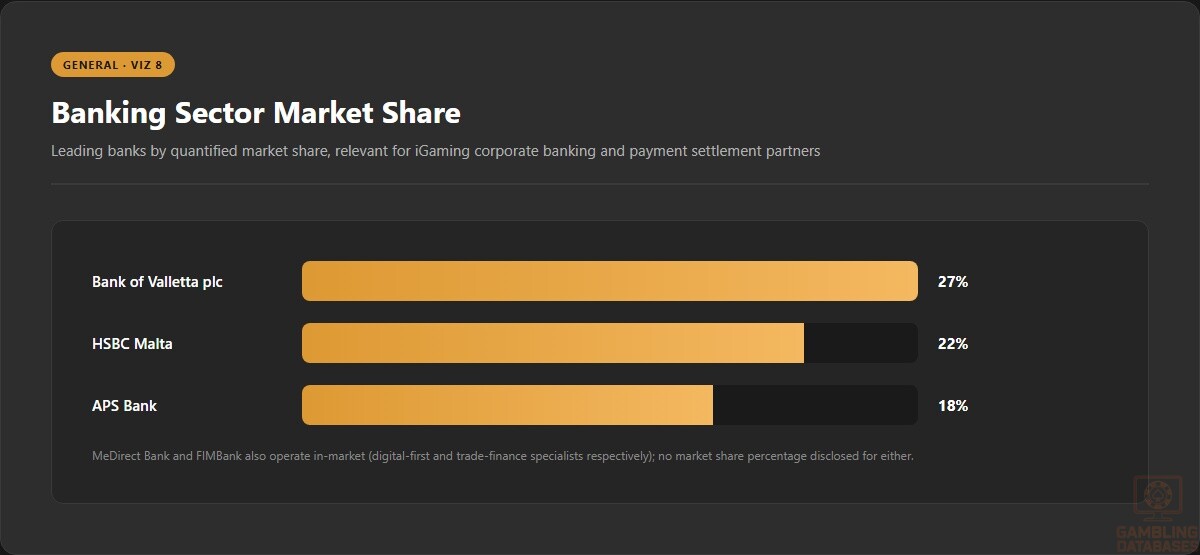
- Bank of Valletta plc: Largest bank with 27% market share and leading digital banking platform
- HSBC Malta: International presence with 22% share, strong corporate banking services
- APS Bank: Specializes in retail and SME banking, holding 18% market share
- MeDirect Bank: Known for digital-first banking solutions, rapidly growing client base
- FIMBank: Focuses on trade finance and international banking services
Payment Processing Options
Payment ecosystem is broad and mature, facilitating smooth transactions across credit cards, e-wallets, bank transfers, and emerging digital currencies. Card penetration is high, with Visa and Mastercard dominating. E-wallets like PayPal, Skrill, and Neteller provide flexibility preferred by younger demographics and international players.
- Credit/Debit Cards (Visa, Mastercard)
- PayPal e-wallet services
- Skrill digital wallet
- Neteller digital wallet
- Bank wire transfers and instant SEPA payments
- Cryptocurrency payment options emerging with Bitcoin and Ethereum adoption
E-commerce and Digital Economy
Malta’s e-commerce sector is growing steadily, with online retail accounting for over 20% of total retail sales. Consumer trust in digital platforms is high due to stringent data protection and consumer rights enforcement. The digital economy benefits from high internet and payment adoption, translating into strong online entertainment spending and an optimal environment for digital gaming expansion.
Business Environment and Regulatory Framework
Ease of Business Operations
Malta ranks favorably in ease of doing business indices, reflecting streamlined company registration processes and investor-friendly policies. Foreign investment is actively encouraged, with transparent regulatory frameworks and competitive operational costs. Efficient government services and bilingual workforce further ease market entry and ongoing operations.
- Preparation of necessary company formation documents and due diligence
- Submission to Malta Business Registry for incorporation (3-5 business days)
- Registration for tax with the Commissioner for Revenue
- Opening corporate bank accounts and capital deposit
- Licensing application submission to regulatory authorities
- Compliance setup including KYC/AML and responsible gaming frameworks
Corporate Structure and Registration
Key entity types for iGaming businesses include Private Limited Companies (Ltd), Public Companies, and Branch Offices of foreign entities. The Private Limited Company is most common due to flexible governance and liability protection. Foreign ownership is unrestricted. Incorporation requires detailed disclosure of beneficial ownership and compliance with local laws.
Registration timelines average 1 to 2 weeks for company formation, though licensing may extend setup to several months. Compliance obligations start immediately, necessitating robust legal and operational preparation.
- Certificate of Incorporation
- Memorandum and Articles of Association
- Identification documents of directors and shareholders
- Proof of registered office address in Malta
- Tax Registration Documents and VAT registration as applicable
- Compliance and AML policy documentation
Taxation Framework
Corporate Income Tax Structure
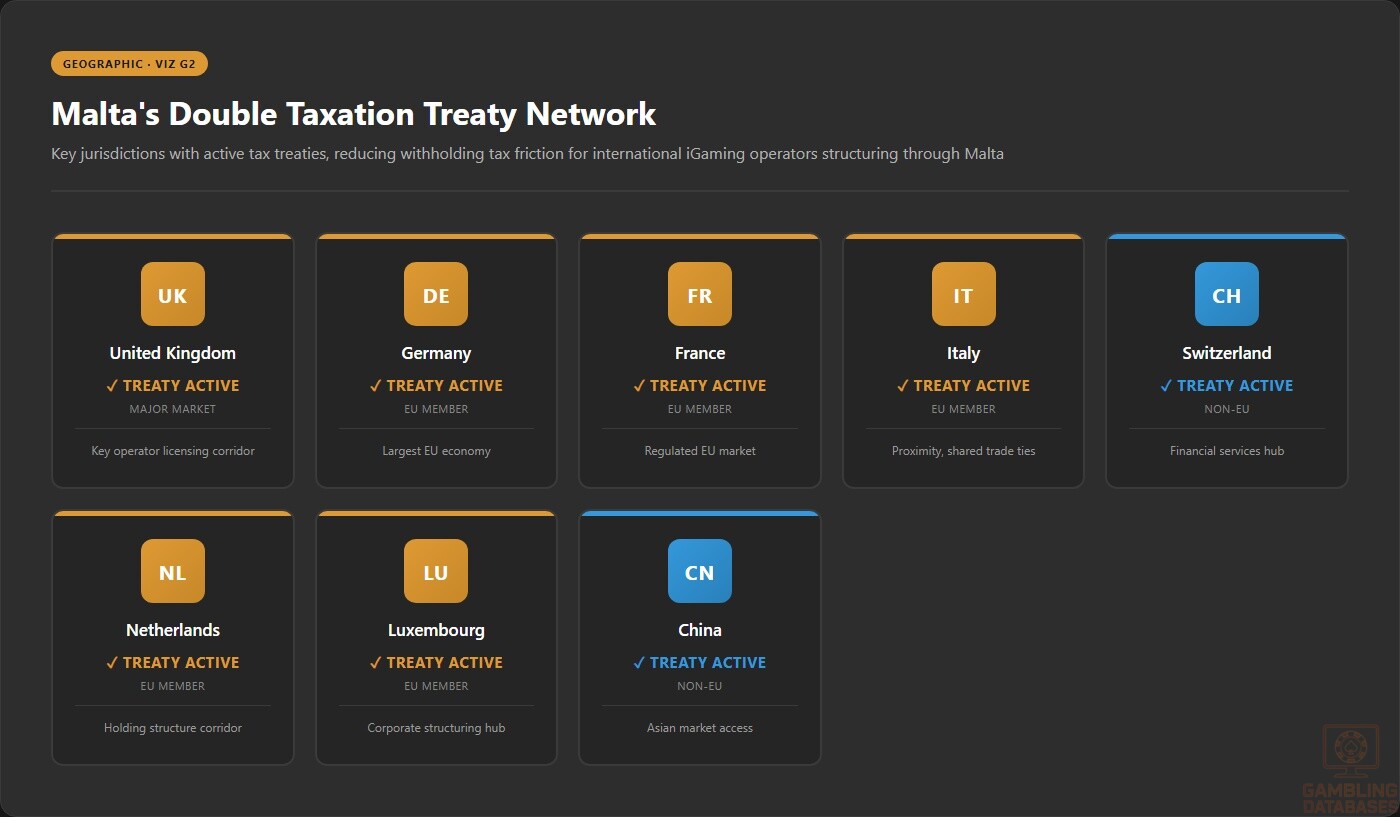
Malta applies a standard corporate income tax rate of 35% with an extensive full imputation system eliminating double taxation on distributed profits. Special economic zones and incentive programs offer tax reductions for qualifying businesses. Malta holds tax treaties with numerous countries, facilitating international business.
- United Kingdom
- Germany
- France
- Italy
- Switzerland
- Netherlands
- Luxembourg
- China
Personal Income Tax
Individuals are taxed progressively with rates up to 35%. Withholding taxes apply to dividends, interest, and royalties, subject to treaty relief. Social security contributions are paid by employees and employers, supporting Malta’s social welfare programs. Malta’s tax residency rules are favorable for expatriates and remote workers, attracting global talent.
Market Entry Considerations
Recommended Entry Strategies
Successful market entry requires thorough regulatory compliance and building local presence. Partnering with Maltese service providers for licensing support and operational management expedites approval. Offering multi-channel platforms optimized for mobile and incorporating responsible gambling features enhances market acceptance. Harnessing technology for player data analytics and personalized marketing is crucial to competitiveness.
- Establishing a Private Limited Company with local registered office
- Engaging specialist legal and compliance advisors
- Partnering with established payment gateways and PSPs
- Designing mobile-optimized and multi-language platforms
- Implementing advanced KYC/AML and responsible gambling tools
Typical Costs and Timelines
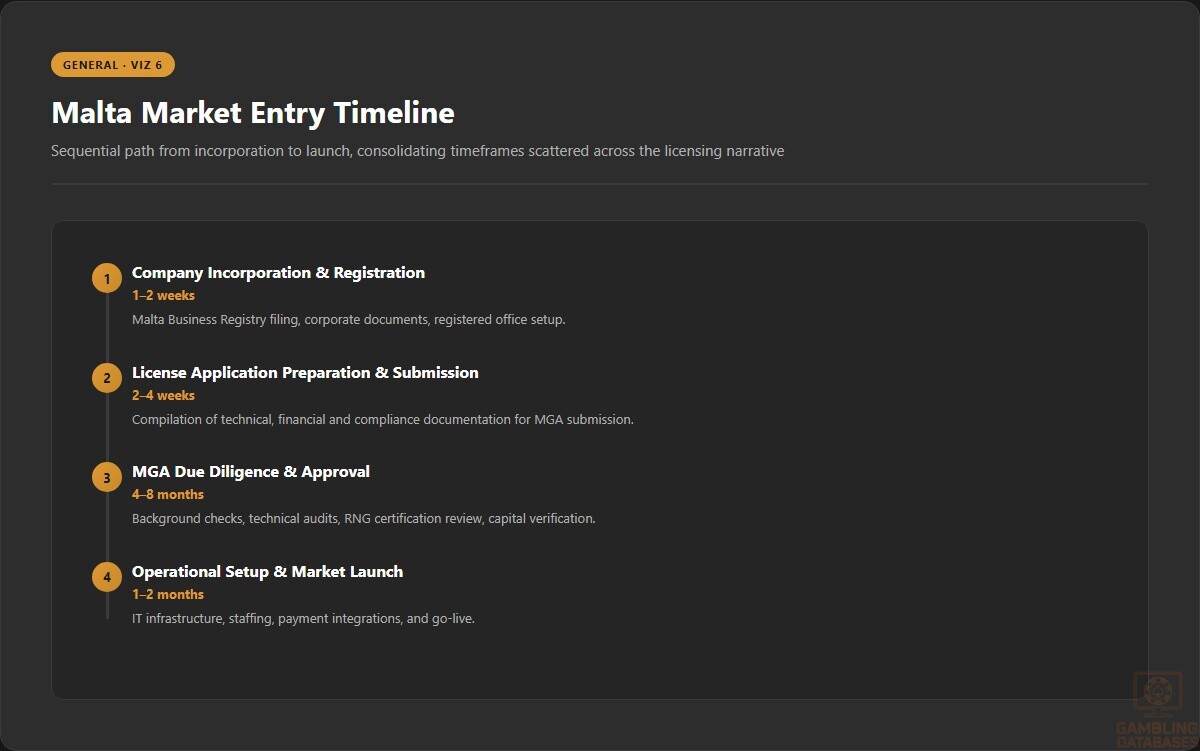
Initial market entry involves application fees (€5,000 to €25,000), licensing costs (~€100,000 minimum capital), legal and consultancy fees (€40,000–€70,000), and operational setup including IT and staff. Timeline for full market readiness usually spans 6 to 12 months, depending on licensing complexity and infrastructure readiness.
| Cost Category | Estimated Cost (€) |
|---|---|
| License application and fees | 5,000 – 25,000 |
| Minimum capital requirement | 100,000 |
| Legal & consultancy fees | 40,000 – 70,000 |
| IT infrastructure and software | 50,000 – 100,000 |
| Operational staffing and office setup | 80,000 – 150,000 |
- Company incorporation and registration (1-2 weeks)
- License application preparation and submission (2-4 weeks)
- MGA due diligence and approval process (4-8 months)
- Operational setup and market launch (1-2 months)
Success Factors and Challenges
Key success drivers include a strong regulatory compliance culture, technological innovation, and customer-centric platform development. Challenges consist of high entry costs, evolving regulatory requirements, and competition from established operators. Cultural alignment and agile marketing strategies are essential for differentiation.
- Robust KYC/AML and responsible gaming frameworks
- Advanced data analytics for player retention
- Comprehensive licensing and compliance adherence
- Investment in mobile-first gaming platforms
- Strategic partnerships for payment processing
Exit strategies must consider market liquidity and license transfer conditions, with valuations impacted by regulatory compliance and revenue stability. Malta’s transparent business environment facilitates ownership change but requires thorough due diligence.
FAQ: Frequently Asked Questions
1. Is online gambling legal in Malta?
Yes, online gambling is fully legal and regulated in Malta under the Maltese Gaming Authority. The MGA licenses operators following strict regulations focused on player protection, market integrity, and anti-money laundering compliance. Both local and foreign companies can obtain licenses, provided they meet all regulatory requirements. The legal framework supports a broad range of online gambling activities including casino games, sports betting, and skill games.
2. What types of gambling licenses are available and what do they cover?
MGA issues three main classes of licenses: Class 1 covers high-value, high-risk casino games; Class 2 permits intermediate activities like remote betting; Class 3 includes low-risk activities such as betting intermediaries. Each license type carries distinct compliance and financial requirements, enabling operators to select the license matching their business model.
3. How much does an iGaming license cost and how long does it take to obtain?
License fees range from approximately €5,000 to €25,000 depending on license class. Minimum capital requirements are typically €100,000 for Class 1 licenses. The full application and approval process usually takes 6 to 8 months, involving due diligence, document submission, and technical audits. Compliance readiness can affect timelines.
4. Can foreign companies obtain a gambling license?
Yes, foreign companies are eligible for MGA licenses with no restrictions on ownership percentage. Applicants must comply with Maltese laws including having a local registered address and appointing a local liaison. This facilitates international operators’ access to the European market via Malta.
5. What are the tax obligations for iGaming operators?
Operators pay gross gaming revenue tax varying by license type, typically 5% to 15%. Corporate income tax is 35%, mitigated by Malta’s full imputation system. License renewal fees apply annually. Operators must submit regular tax and financial reports. Player winnings are exempt from tax.
6. Are gambling winnings taxed for players?
No, players do not pay taxes on winnings from Malta-licensed operators, which enhances player appeal and market competitiveness. Taxation is aimed at operators rather than individual participants.
7. What are the typical operational costs for running an online casino/sportsbook?
Operational costs include licensing fees, software development or leasing, payment processing fees, regulatory compliance, staffing, marketing, and infrastructure maintenance. High entry costs for capital and compliance exist, but efficient scale and technology use can optimize ongoing expenditure.
8. What is the expected ROI timeline for entering this market?
Depends on investment scale and market strategy. Typically, break-even occurs between 18 and 36 months post-launch, considering regulatory costs, customer acquisition, and competitive pressures. Strong compliance and smart marketing accelerate ROI.
9. What are the local presence requirements for operators?
Operators must have a registered office in Malta and appoint a local representative for MGA communications. This ensures compliance oversight and facilitates regulatory interactions.
10. What payment methods are available and recommended?
Major accepted methods include credit/debit cards (Visa, Mastercard), e-wallets (PayPal, Skrill, Neteller), bank transfers, and emerging cryptocurrencies. A multi-option approach enhances player convenience and transaction success.
11. What are the advertising and marketing restrictions?
Strict MGA regulations prohibit misleading content, targeting minors, and excessive promotions. Advertising must adhere to timing restrictions on TV and radio, and sponsorships require regulatory approval to ensure ethical standards.
12. What responsible gambling measures are mandatory?
- Player self-exclusion programs
- Deposit and loss limits
- Access to support and counseling
- Staff training on problem gambling
- Transparent risk disclosures
13. How large is the iGaming market and what is the growth potential?
The market generated approximately €1.2 billion in 2024 revenues, with an 8% CAGR and steady user growth. Expansion is supported by digital adoption and regulatory stability, with forecasts projecting continued strong growth through 2029.
14. Who are the main competitors and what is their market share?
Over 150 licensed operators compete, with the top ten controlling about 60% of market revenue. Key players include large international casino brands, sportsbook providers, and innovative niche operators leveraging Malta’s regulatory advantages.
15. What are the player preferences and typical spending patterns?
Players favor online casino games and sports betting, with mobile platforms leading usage. Spending is a mix of casual bettors and high-value players, with session peaks in evenings and weekends. Loyalty programs and social gaming features improve retention.
16. What are the key success factors and main challenges for new entrants?
Success depends on regulatory compliance, technology investment, player engagement, payment integration, and local market understanding. Challenges include high initial costs, stiff competition, and evolving regulations. Strategic partnerships and innovation mitigate risks and foster growth.
Sources and References
- Malta Gaming Authority – Official Site
- National Statistics Office Malta – Population & Demographics 2024
- Central Bank of Malta – Financial Reports 2024
- Ministry for Finance Malta – Tax Guidelines
- World Bank – Doing Business Report 2024
- International Telecommunication Union – ICT Statistics 2024
- Malta Communications Authority – Connectivity Reports
- European Commission – Digital Economy and Society Index
- Bank of Valletta Annual Report 2024
- HSBC Malta Market Analysis 2024
- Malta Financial Services Authority – Regulatory Overview
- Gaming Industry Report, Global iGaming Edition 2024
- Malta Business Registry – Corporate Registration Data
- Malta Digital Economy Strategy 2024-2029
- Responsible Gambling Foundation Malta – Annual Statistics 2024
- Malta Telecommunications Infrastructure Report 2025
- PayPal Malta – Payment Trends 2024
- Skrill and Neteller Market Analysis 2024
- Malta Internet Service Providers Association – Coverage Data
- Government of Malta – Foreign Investment Policy Statement
- Malta Economic Growth Forecasts 2025-2030
- European Online Gambling Market Report 2024
- Academic Journal of Gambling Studies – Malta Focus 2024
- Malta Regulatory Updates Bulletin 2024
- Local News Outlets – Malta Business and Economy Section
- Industry Whitepaper – iGaming Compliance Best Practices 2024