Mongolia has recently implemented a sweeping ban on all forms of gambling, both online and land-based, making it a highly restrictive market for iGaming operators in 2026. This article provides an in-depth analysis of the country’s regulatory framework, key legal restrictions, and the implications for market entry.
Executive Summary: Key Market Indicators
| Metric | Value |
|---|---|
| Gambling Legal Status | Complete ban on all gambling and betting activities (land-based and online) since July 1, 2025 |
| Population | Approx. 3.4 million |
| GDP (Nominal) | Approx. $14 billion (2024 est.) |
| GDP per Capita | Approx. $4,100 (2024 est.) |
| Internet Penetration Rate | About 70% |
| Mobile Penetration Rate | Estimated 120% (multiple SIM ownership) |
| Licensing Status | No active license issuance for gambling; all licenses revoked or prohibited |
| License Application Fees | Not applicable due to ban |
| Tax Rates on Gambling Operators | Not applicable – market prohibited |
| Tax Rates on Player Winnings | Not applicable – gambling prohibited |
| Market Entry Barriers | Complete legal prohibition on gambling, severe penalties for operators and facilitators |
| Penalties for Illegal Operations | Fines, community service (240-720 hrs), travel restrictions (6-12 months), imprisonment (6 months – 3 years) |
| Advertising Restrictions | Complete ban on gambling advertising and promotions |
| Regulatory Authority | Parliament of Mongolia and relevant governmental bodies |
| Market Size | Currently negligible due to prohibition |
| Revenue Projections | Zero – market closed |
| Technology Infrastructure | Moderate broadband and mobile network penetration |
| Business Environment | Challenging for gambling due to strict legal environment |
| Average Revenue Per User (ARPU) | Not applicable |
| Growth Forecast (CAGR) | Negative due to banning of all gambling activities |
Section 1: Regulatory Framework and Legal Environment
Current Gambling Regulation Status
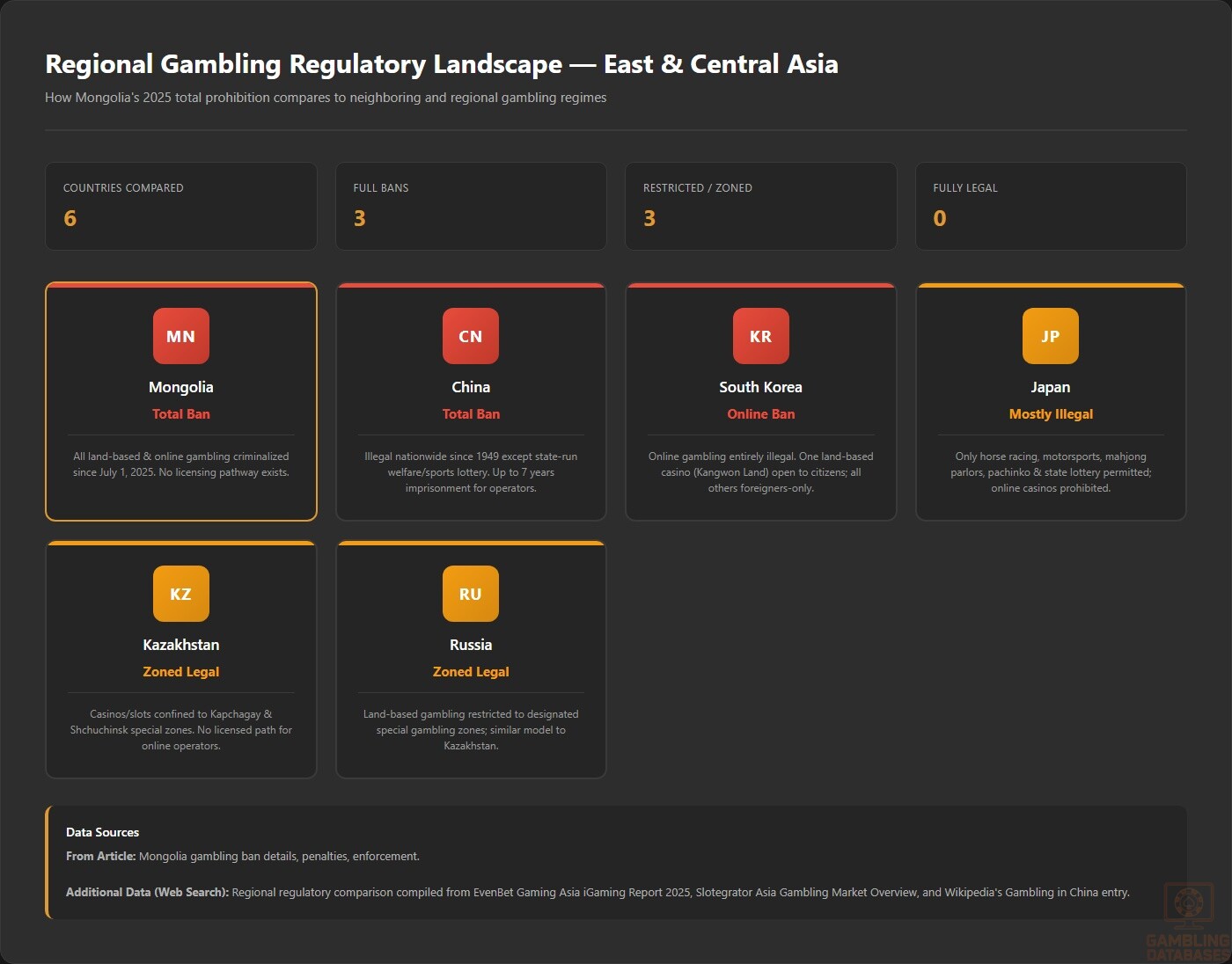
Mongolia’s approach to gambling regulation in 2025 is marked by a comprehensive prohibition of all gambling activities. This legal shift came into effect July 1, 2025, following parliamentary approval of sweeping amendments that criminalize every form of paid betting and gambling. The prohibition applies equally to land-based and online gambling, including casinos, sports betting, slot machines, lotteries, and paid prediction games.
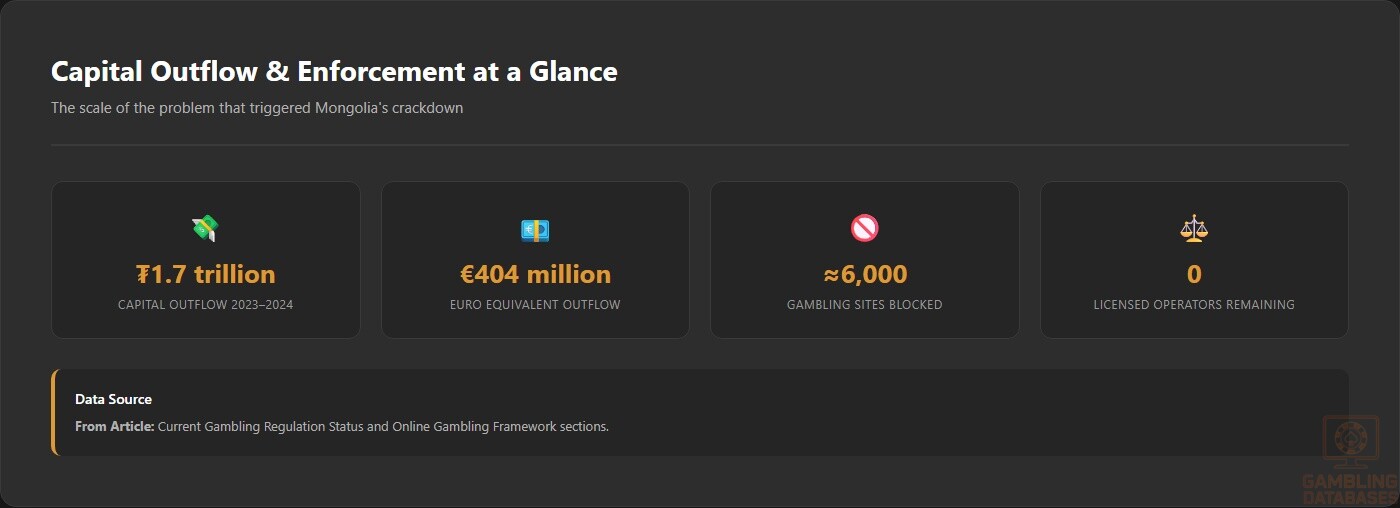
Previously limited regulation focused on some sports betting activities, but the new framework has overturned these allowances to address social and economic harms. The government cited a significant outflow of capital abroad, measured at approximately 1.7 trillion Mongolian Tugrik (€404 million) between 2023 and 2024 due to online gambling, as a primary driver of this crackdown.
Organizing, facilitating, or promoting gambling activities within Mongolia is now a criminal offense. Facilitating includes providing banking services, telecommunications, or digital currency frameworks to support gambling transactions. Violators face a spectrum of penalties including financial fines, community service obligations, travel restrictions, and imprisonment terms ranging from six months to three years.
Land-Based Gambling Activities
All physical venues offering gambling have effectively been shut down under the new legislation. This includes casinos, sports betting shops, slot machine halls, and any other locations offering paid gaming activities. The legislative framework repealed all previous laws permitting such operations and revoked existing licenses.
The ban spans traditional casino games, sports wagering, and lottery ticket sales. No specific exemptions exist for social gambling or charity betting, creating a zero-tolerance environment. The legislative changes also removed excise tax and corporate income tax provisions related to gambling equipment and operations, indicating a firm exit from fostering a land-based gambling market.
Online Gambling Framework
Online gambling is categorically banned with no licensing or regulatory allowances. Internet-based platforms operating within or targeting Mongolian residents are illegal, and the government has committed to blocking gambling websites and domains. Despite efforts such as blocking around 6,000 gambling websites, enforcement challenges remain due to domain hopping by operators.
The Criminal Code amendments specifically target online gambling promoters and intermediaries. Advertising or promoting gambling online is prohibited, with fines and administrative penalties applied for violations. The government also prohibits the use of technologies like VPNs to circumvent gambling restrictions and actively prosecutes evasion attempts.
Licensed Operators and Market Players
The current market has no licensed operators due to the complete ban. The competitive landscape was effectively dissolved as of mid-2025. Former operators either ceased operations or relocated activities abroad. There is no regulatory pathway for new entrants to obtain a license or operate legally within Mongolia.
Given this environment, market entry strategies relying on traditional licensing or partnerships in Mongolia are not feasible. Operators must consider the legal risks and enforcement intensity before exploring any engagement with Mongolian players or markets.
Licensing Framework and Requirements
Application Process and Eligibility
The legislation repealed the framework for licensing gambling operators, including sports betting. Prior provisions instituting special sports betting licenses were abolished with the comprehensive ban. Currently, no government authority issues gambling licenses, and no application processes, financial requirements, or technical standards apply for gambling operators.
- Corporate registration documents
- Financial audit reports
- Business plans and market strategies
- Technical platform certifications and Random Number Generator (RNG) certifications
- Criminal background checks for officers and owners
These standard licensing documents no longer have relevance in the gambling sector due to prohibition.
License application fees, timelines, and renewal processes have been suspended nationwide. The framework for competitive licensing or regulatory inspections does not apply.
Local Presence and Operational Requirements
Operators are forbidden from establishing any physical or virtual presence related to gambling in Mongolia. No legal provisions exist supporting the registration of gambling domains or operational offices. Foreign ownership restrictions are irrelevant in the current context as gambling activities are banned outright for all entities.
No exceptions or special economic zones allow gambling operations or marketing within Mongolia. Partnerships with local entities for gambling purposes are therefore illegal, and such collaborations risk legal penalties.
Compliance Obligations and Monitoring
Player Protection and Identification
With the absence of legal gambling, there are no formal KYC or AML standards directly relating to gaming operators. However, the legislation mandates strict verification and monitoring of financial transactions linked to illegal gambling. Authorities utilize digital identifiers such as payment accounts, e-wallets, and telecommunications identifiers to detect and prosecute violations.
- Age verification controls to prevent underage participation
- KYC procedures for customer identification
- AML monitoring for suspicious transactions
- Self-exclusion mechanisms for problem gamblers
- Mandatory disclosure of gambling risks and responsible gaming educational materials
These measures remain aspirational as the government prioritizes outright prohibition over licensed player protections.
Financial Monitoring and Reporting
Operators and financial institutions in Mongolia must cooperate with regulatory authorities on transaction monitoring, reporting suspicious activities potentially linked to illegal gambling. However, due to the ban, no formal gambling-specific financial reporting exists. Enforcement follows criminal investigation protocols rather than gaming regulatory reporting timelines.
Taxation Structure and Financial Obligations
Player Taxation
Since gambling winnings are illegal in Mongolia, no official taxation of player winnings exists. Players engaged in unlawful gambling face penalties under criminal law instead of tax obligations.
Operator Taxation
| Tax Type | Rate | Applicability |
|---|---|---|
| Gross Gaming Revenue (GGR) Tax | Variable, up to 20% | Previously applied to casinos and sports betting |
| Corporate Income Tax | Corporate tax standard rates | Applied to registered operators |
| Excise Tax on Gambling Equipment | Fixed amount per machine | Land-based slot machines |
| License Renewal Fees | Varied by license type | Annually for operating licenses |
These tax regulations were repealed in 2025 following the prohibition, making operator taxation obsolete.
Gambling Market Financial Performance
The prohibition has resulted in the near-eradication of formal gambling revenue in Mongolia. Total wagered amounts, operator revenues, and tax receipts from gambling activities are effectively zero post-ban. The market has reversed from gradual growth to contraction, as all legal gambling revenue streams ceased.
Advertising and Marketing Restrictions
The legal framework imposes a blanket ban on all advertising and promotion of gambling products and services. This extends across digital, broadcast, print media, and public venues. Gambling sponsorships and brand visibility activities are prohibited, limiting operators’ marketing options severely.
- Upcoming advertising bans in all media channels
- Prohibition on promoting gambling websites or apps
- Restrictions on third-party affiliate marketing
- Ban on sponsorship of sports or events by gambling operators
- Regulation of content to prevent inducements or misleading claims
Recent Regulatory Changes and Their Impact
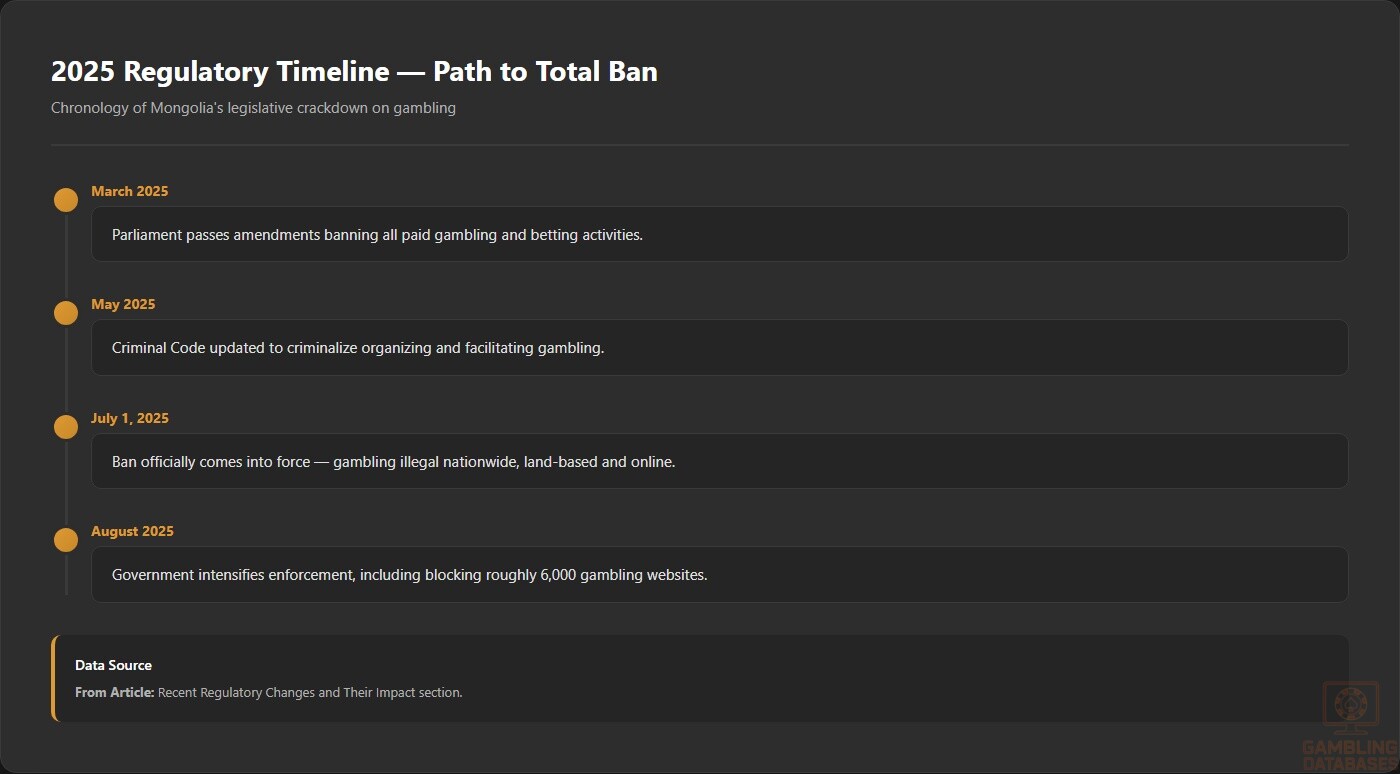
- March 2025: Parliament passes amendments banning all paid gambling and betting activities.
- May 2025: Criminal Code updated to criminalize organizing and facilitating gambling.
- July 1, 2025: Ban officially comes into force making gambling illegal nationwide.
- August 2025: Government intensifies enforcement including blocking online gambling websites.
These changes have increased risks and costs for operators dramatically, forcing market exit and halting new market entry plans.
Enforcement Mechanisms and Penalties
- Monetary fines ranging from a few thousand to tens of thousands in local currency
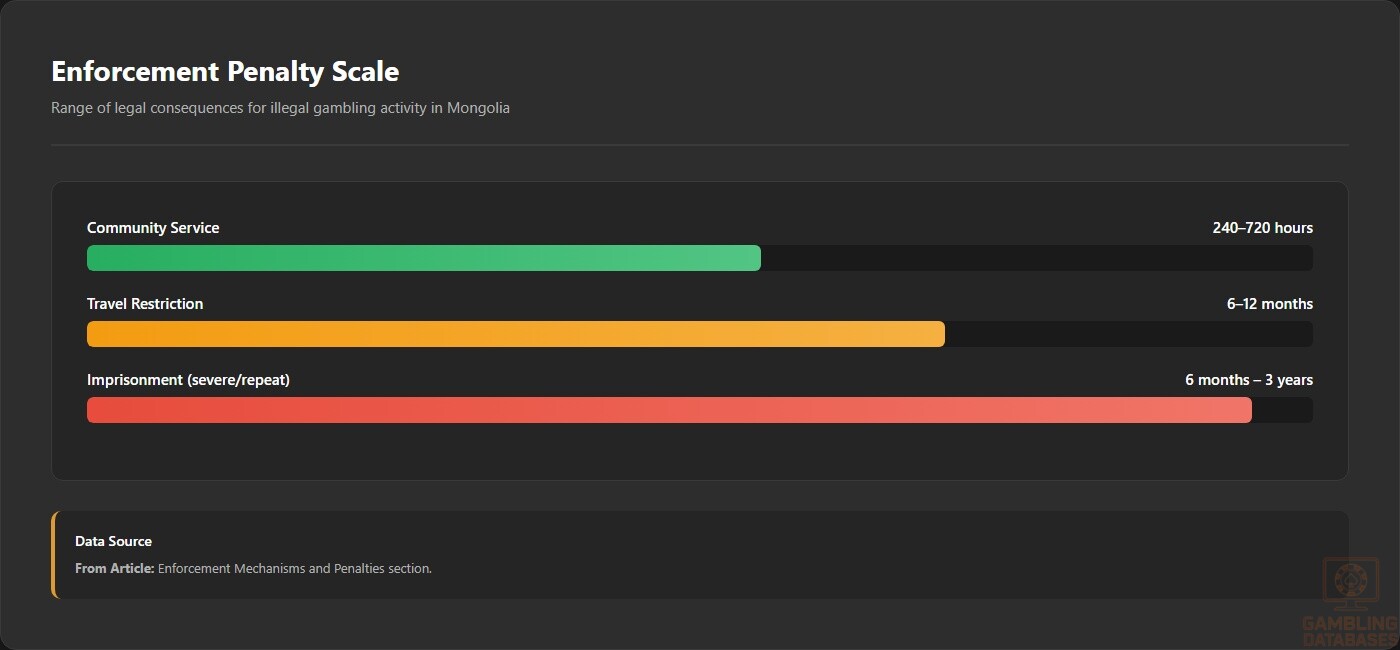
- Mandatory community service between 240 to 720 hours
- Travel restrictions preventing exit from the country for 6 to 12 months
- Imprisonment terms from 6 months up to 3 years for severe or repeat offenders
- Administrative penalties for advertising violations including fines and business suspensions
Ongoing monitoring relies on coordination between financial regulators, law enforcement, and telecommunications authorities to identify and prosecute offenders effectively.
Section 2: Demographics and Consumer Analysis
Population Demographics and Distribution
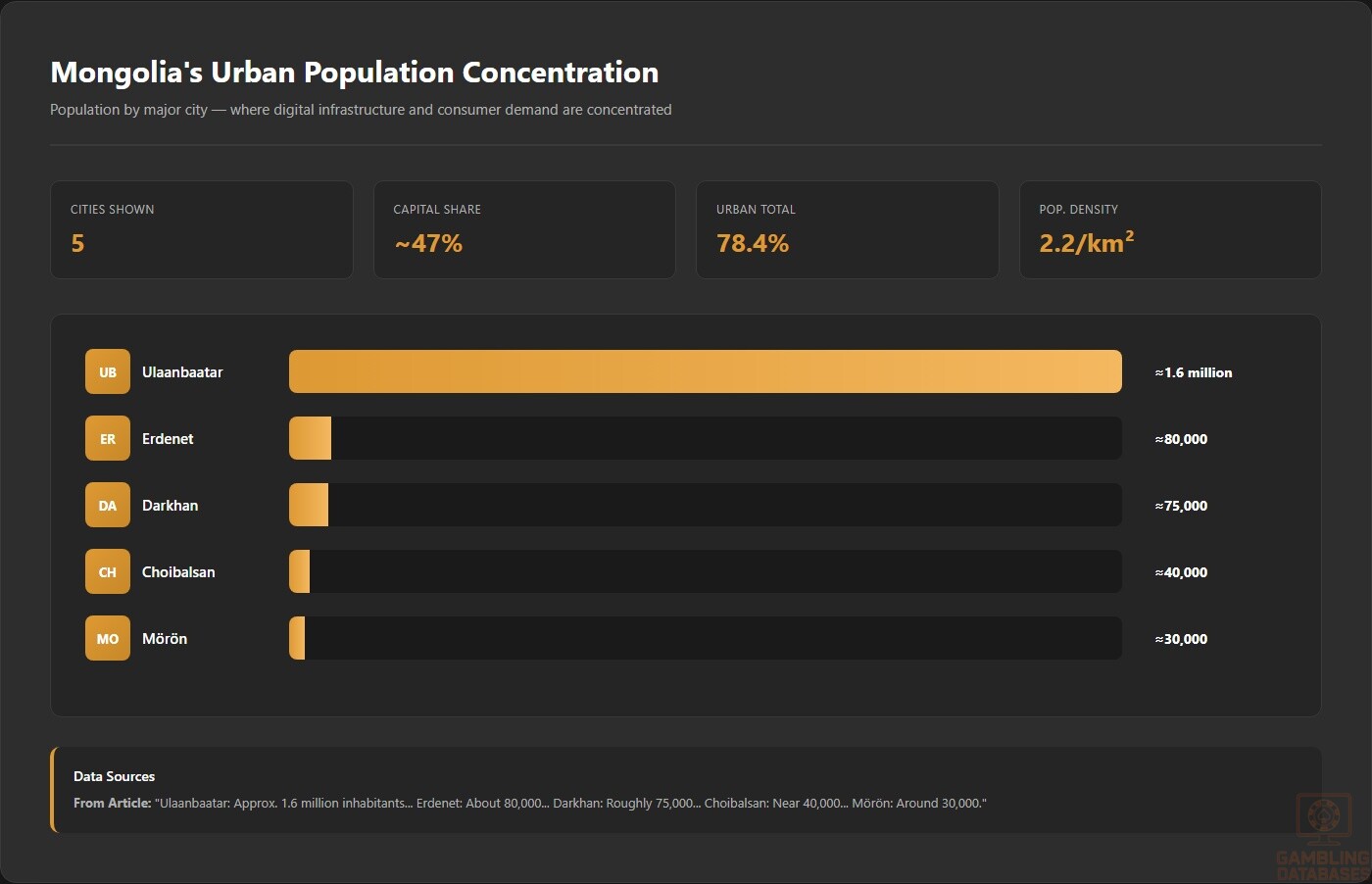
Mongolia’s total population is approximately 3.4 million as of 2025, with a steady annual growth rate of about 1.0%. The median age of the population is around 30.7 years, reflecting a relatively young demographic. The gender ratio is nearly balanced with approximately 971 men per 1000 women. Urbanization is significant, with about 78.4% of the population residing in urban areas, primarily concentrated in a few key cities.
| Age Group | Population Percentage |
|---|---|
| 0-19 years | 37.6% |
| 20-64 years | 56.9% |
| 65+ years | 5.4% |
Population density remains exceptionally low due to Mongolia’s vast land area, calculated at roughly 2.2 people per square kilometer. This sparse distribution contributes to a concentration of economic and social infrastructure within urban centers.
The urban population clusters mainly in the capital and several secondary cities, where most commercial and digital infrastructure exists. This geographic distribution plays a critical role in shaping consumer access to services like iGaming platforms.
- Ulaanbaatar: Approx. 1.6 million inhabitants
- Erdenet: About 80,000 inhabitants
- Darkhan: Roughly 75,000 inhabitants
- Choibalsan: Near 40,000 inhabitants
- Mörön: Around 30,000 inhabitants
Economic Indicators and Consumer Spending Power
Mongolia’s economy is projected to grow by approximately 6.3% in 2025, driven by a surge in mining outputs and a recovering agricultural sector. With a nominal GDP ranking around $14 billion, the country’s economic expansion is supported by infrastructure investment and rising public and private consumption.
GDP per capita stands near $4,100, representing a moderate level of consumer purchasing power. Economic composition indicates a dominant mining sector supported by services and agriculture, suggesting variable regional wealth distribution correlated with resource locations.
Average household income growth supports increased discretionary spending, though inflationary pressures near 9.1% may temporarily curb purchasing power. The urban middle class exhibits expanding capacity for entertainment and digital services, a key factor for potential iGaming market development.
| Indicator | Value |
|---|---|
| GDP Growth Rate | 6.3% |
| Nominal GDP | $14 billion |
| GDP Per Capita | $4,100 |
| Inflation Rate | 9.1% |
| Urban Population Percentage | 78.4% |
Consumer spending patterns show increasing digital adoption, with urban consumers displaying preference for online retail, social media, and electronic payments. This shift signals evolving demand characteristics despite the overall modest income levels.
Market Size and Growth Projections
The formal gambling market in Mongolia is currently inactive due to regulatory bans. However, pre-ban data estimated penetration rates and average revenue per user (ARPU) metrics that provide insight into potential latent demand.
An estimated 6.8% of the Mongolian population previously engaged in some form of gambling activity, with ARPU averaging around $140. User base forecasts suggest modest growth potential if regulatory conditions were favorable, given rising internet penetration.
| Metric | Value |
|---|---|
| Gambling Participation Rate | 6.8% |
| Average Revenue Per User (ARPU) | $140 |
| Market Growth Forecast (CAGR) | Negative (current) |
Future market growth is heavily contingent upon regulatory reforms. Return of legal sporting betting frameworks could catalyze re-entry and expansion in the medium term.
Education, Skills, and Digital Literacy
Mongolia enjoys a high literacy rate exceeding 97%, with widespread access to primary and secondary education. Digital literacy has improved significantly in urban areas, driven by government initiatives and mobile technology proliferation.
Workforce skills include growing competencies in ICT and service sectors, supporting an increasingly digital economy. Education levels and computer literacy rates facilitate rapid uptake of online platforms, including entertainment and payments.
Cultural and Social Factors
Communication and Language
- Mongolian is the official and most widely spoken language.
- Russian is spoken by older generations and remains influential in business.
- English is increasingly popular among youth and urban populations.
- Minority languages include Kazakh and Tuvan in specific regions.
- Internet content primarily consumed in Mongolian and English.
Cultural Attitudes
Gambling historically carries a mixed cultural perspective in Mongolia, influenced by social norms and Buddhist values advocating moderation. Recent governmental crackdown reflects societal concerns about the social harms of gambling.
Foreign digital brands enjoy moderate acceptance when aligned with local values and trust practices. Entertainment preferences favor sports, online gaming, and social media integration.
Problem Gambling and Social Considerations
Problem gambling prevalence is believed to mirror global averages, with young adults aged 18-39 identified as higher risk. Government social programs focus primarily on prevention and awareness but remain limited in scope due to the nascent legal market.
- Public awareness campaigns on gambling risks
- Hotline support for addictive behavior
- Community outreach and education programs
- Self-exclusion initiatives (limited application)
- Regulatory policies enforcing advertising bans
Mandatory contributions by operators to social responsibility funds are not applicable currently due to the gambling ban.
Political Structure and Governance
Mongolia operates as a parliamentary republic with a stable political environment and consistent regulatory regime. The government demonstrates a cautious but pragmatic approach to technological and economic modernization, balancing economic opportunity with social policy priorities.
International relations focus on trade partnerships and regional cooperation, with ongoing efforts to enhance business environment transparency and investor protections.
Technology Adoption and Digital Behavior
Internet and Digital Usage
Internet penetration exceeds 83%, with approximately 2.9 million users as of early 2025. Daily internet use averages multiple hours per user, driven by social media, video streaming, and online communication platforms.
Mobile device adoption surpasses population numbers, with multi-SIM ownership common, supporting high mobile internet usage.
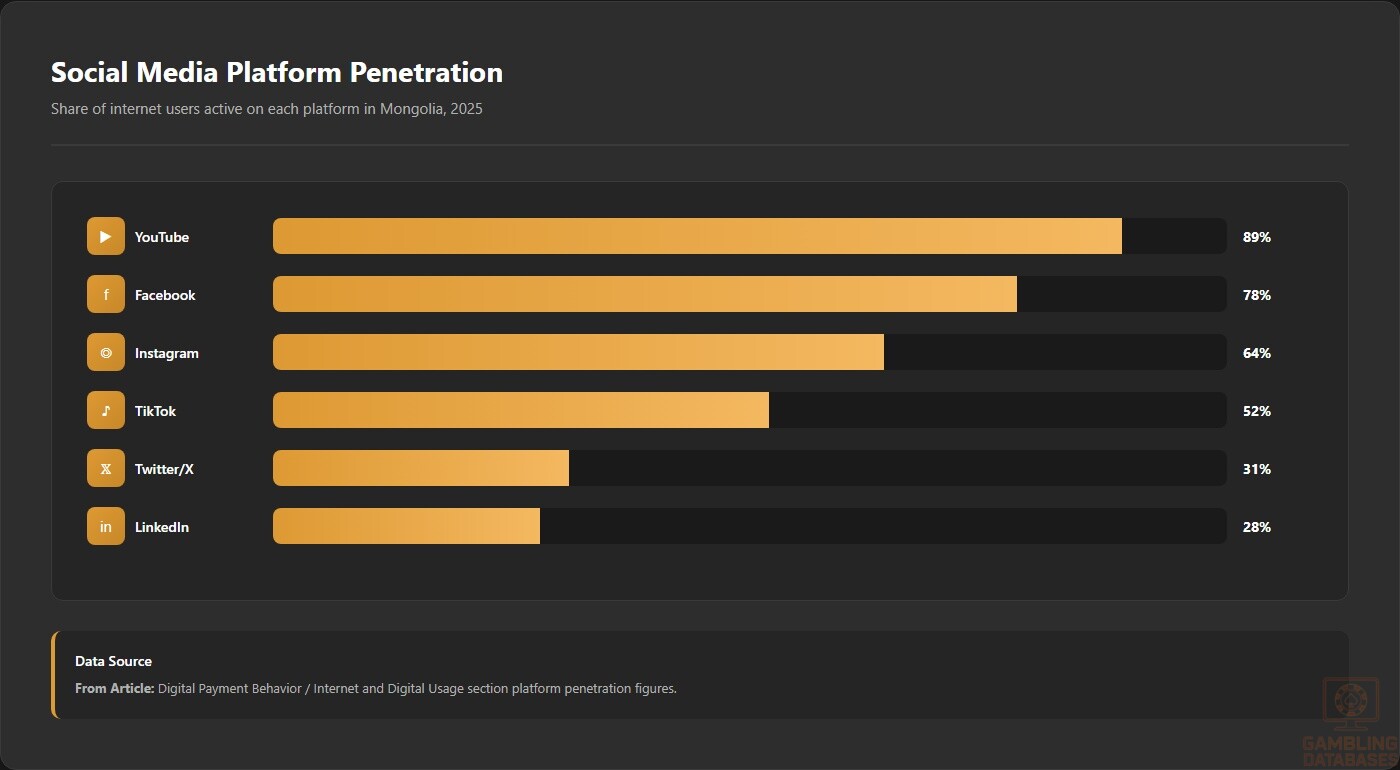
- Facebook: 78% internet users
- Instagram: 64% among youth
- YouTube: 89% penetration
- TikTok: 52% rapid growth under 25
- Twitter: 31% penetration
- LinkedIn: 28% professional usage
Digital Payment Behavior
While cash remains dominant, digital payments are rising rapidly, particularly in urban centers. Consumers increasingly utilize credit/debit cards, online banking, and mobile money platforms, supporting eCommerce and online service transactions.
- Visa and Mastercard credit/debit cards
- American Express premium payments
- Mobile banking applications
- Apple Pay and Google Pay digital wallets
- PayPal and other international services
Gaming and Gambling Preferences
Current Market Participation
- Sports betting
- Lottery games
- Slot machine play
- Social gaming without monetary stakes
- Informal peer-to-peer betting
| Gambling Activity | Participation Rate (%) |
|---|---|
| Sports Betting | 3.4% |
| Lottery | 2.0% |
| Slot Machines | 1.5% |
| Online Casino Games | 0.8% |
Consumer Behavior Patterns
Consumers show preference for mobile-friendly platforms offering convenience and anonymity, particularly in urban settings. Peak activity aligns with evening hours and weekends.
Session lengths average under an hour for majority of users, with retention linked to localized content, promotions, and trusted operator reputations. Informal betting remains significant outside the regulated environment.
Section 3: Technology Infrastructure and Business Environment
Internet and Digital Infrastructure
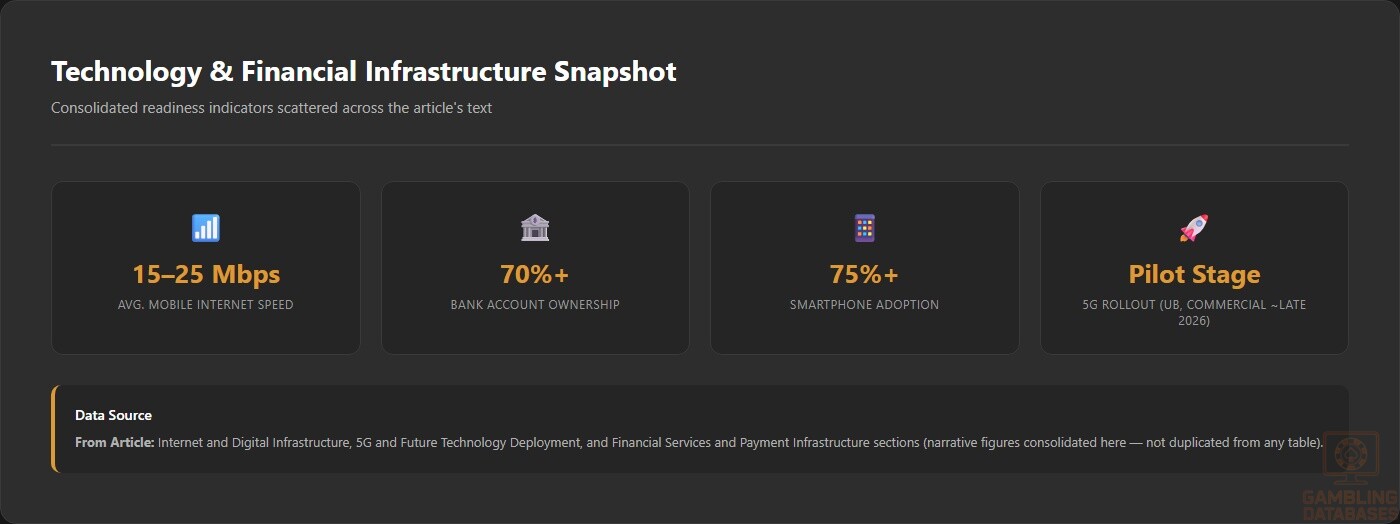
Mongolia has achieved significant internet penetration, with over83% of the population accessing the internet as of early 2025. While fixed broadband penetration remains moderate, mobile internet dominates connectivity, facilitated by widespread 4G coverage. Average internet speeds average around 15-25 Mbps for mobile networks and are slightly higher for fixed lines, offering sufficient performance for digital gaming and streaming applications.
Recent government investments focus on expanding fiber-optic backbone infrastructure and rural connectivity projects to reduce the digital divide. However, sporadic reliability issues and weather-related outages still challenge remote areas.
5G and Future Technology Deployment
5G rollout in Mongolia is in the initial stages, primarily focused on Ulaanbaatar and select urban centers. Network operators have launched pilot projects, with commercial 5G services expected to expand significantly by late 2026. The government supports accelerated adoption through regulatory incentives and public-private partnerships.
Multiple operators are positioned to lead 5G development, aiming to enhance network speed, latency, and capacity for emerging digital services including iGaming platforms, augmented reality, and IoT deployments.
Mobile Technology Ecosystem
The mobile network operator landscape is competitive, featuring several providers offering extensive nationwide coverage. Mobile data is relatively affordable, encouraging high consumption rates among urban and increasingly rural users.
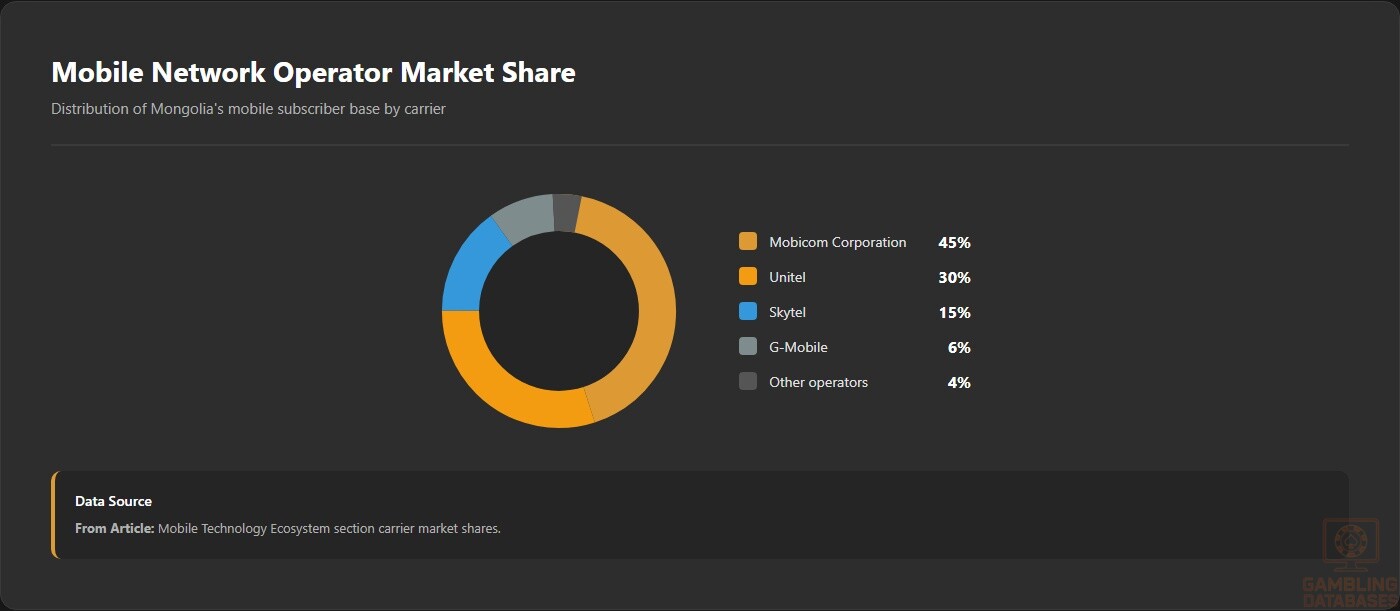
- Mobicom Corporation holds roughly 45% market share, the largest operator
- Unitel maintains approximately 30%, known for wide coverage
- Skytel commands around 15%, focusing on enterprise clients
- G-Mobile serves niche rural markets at about 6%
- Other smaller/local operators cover remaining market shares
Smartphone adoption rates exceed 75% overall, with lower-cost Android models dominating the market. Device usage patterns illustrate a high level of engagement with mobile applications and online services.
Financial Services and Payment Infrastructure
The banking system in Mongolia is modernizing rapidly, with increasing digital banking penetration particularly within urban centers. Bank account ownership exceeds 70%, and mobile banking adoption is growing swiftly among young adults.
- Trade and Development Bank of Mongolia (TDB)
- Golomt Bank
- State Bank
- Chinggis Khan Bank
- XacBank
Payment processing infrastructure supports an increasing variety of options including card payments, e-wallets, and bank transfers. While cash remains prevalent, digital payments are gaining traction due to convenience and increased e-commerce activity.
- Visa and Mastercard credit and debit cards
- ZepetoPay and Mobipay mobile wallets
- Bank-to-bank transfers using domestic payment systems
- International services like PayPal and Skrill
- Mobile carrier billing as an emerging payment channel
E-commerce and Digital Economy
Mongolia’s e-commerce market is expanding, driven by growing internet access and digital payments infrastructure. Online retail penetration is rising, with consumers favoring electronics, fashion, and household goods. Trust in online platforms depends heavily on payment security and delivery reliability.
Digital service adoption beyond retail includes entertainment subscriptions, online education, and government e-services, painting a positive outlook for broader digital economy growth. Such trends provide fertile ground for future digital gambling platforms once regulatory barriers ease.
Business Environment and Regulatory Framework
Mongolia ranks moderately on the World Bank Ease of Doing Business scale, with procedures streamlined over recent years but execution times remain longer than regional averages. Foreign investment is generally welcomed, although regulatory complexity poses challenges especially in sectors under heavy governmental control like gambling.
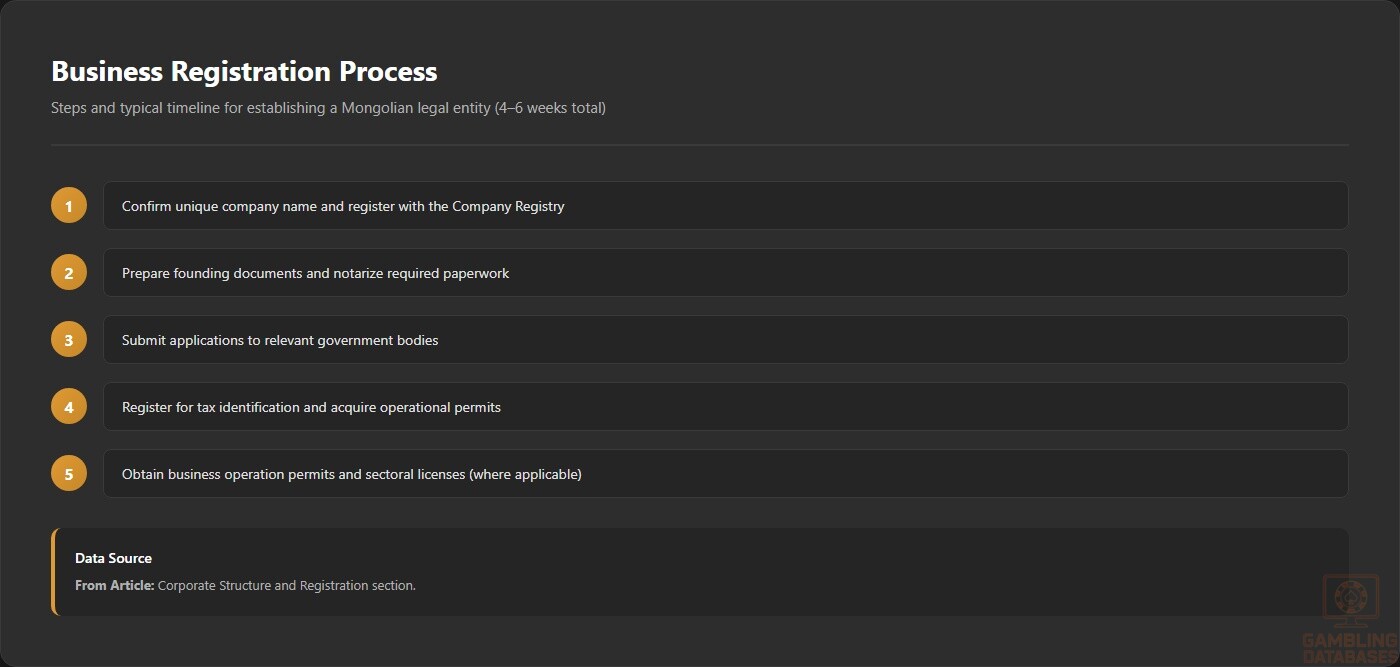
Business registration involves several steps, beginning with name reservation, document preparation, submission to the Company Registration Office, federal tax registration, and local licensing — typically spanning four to six weeks.
- Confirm unique company name and register with Company Registry
- Prepare founding documents and notarize required paperwork
- Submit applications to relevant government bodies
- Register for tax identification and acquire operational permits
Corporate Structure and Registration
Commonly used entity types include Limited Liability Companies (LLCs), joint-stock corporations, and branch offices of foreign companies. LLCs dominate due to simpler governance requirements and lower minimum capital thresholds, making them the main choice for market entrants.
Registration requires substantial documentation including articles of association, shareholder agreements, and proof of address. Foreign ownership is generally permitted without restrictions aside from industry-specific limitations such as the current gambling ban.
- Articles of incorporation and company statutes
- Directorate and shareholder identification documents
- Proof of registered business address
- Tax registration certificates
- Business operation permits and sectoral licenses
Taxation Framework
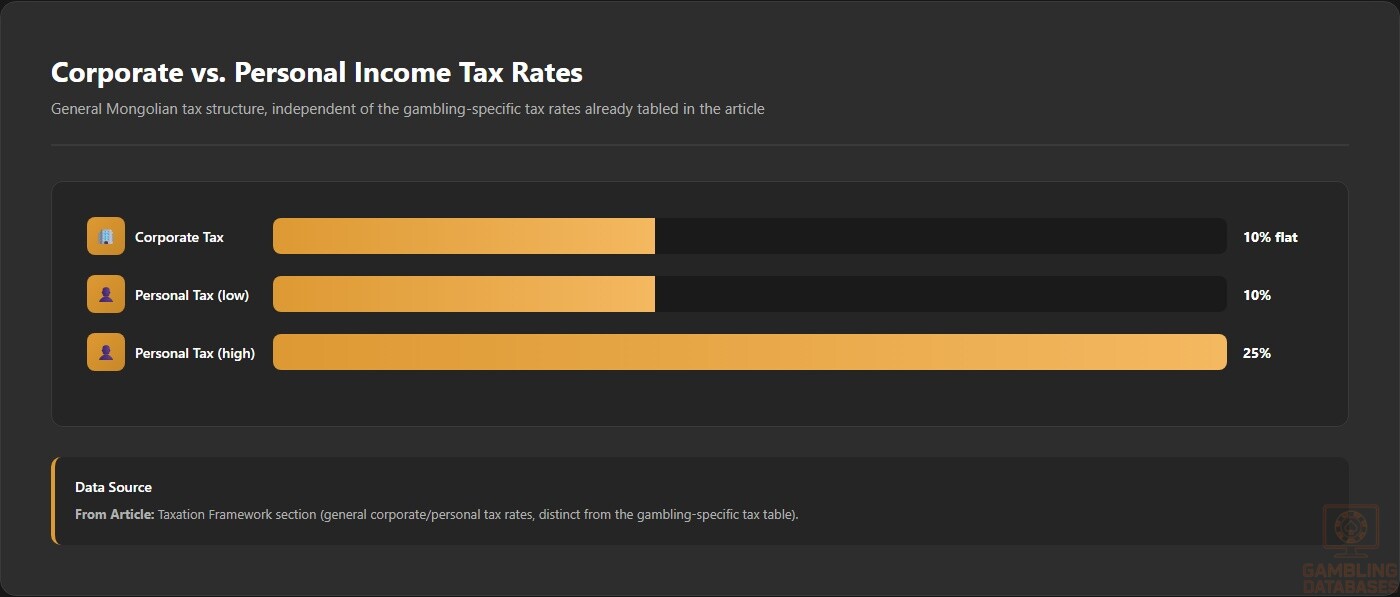
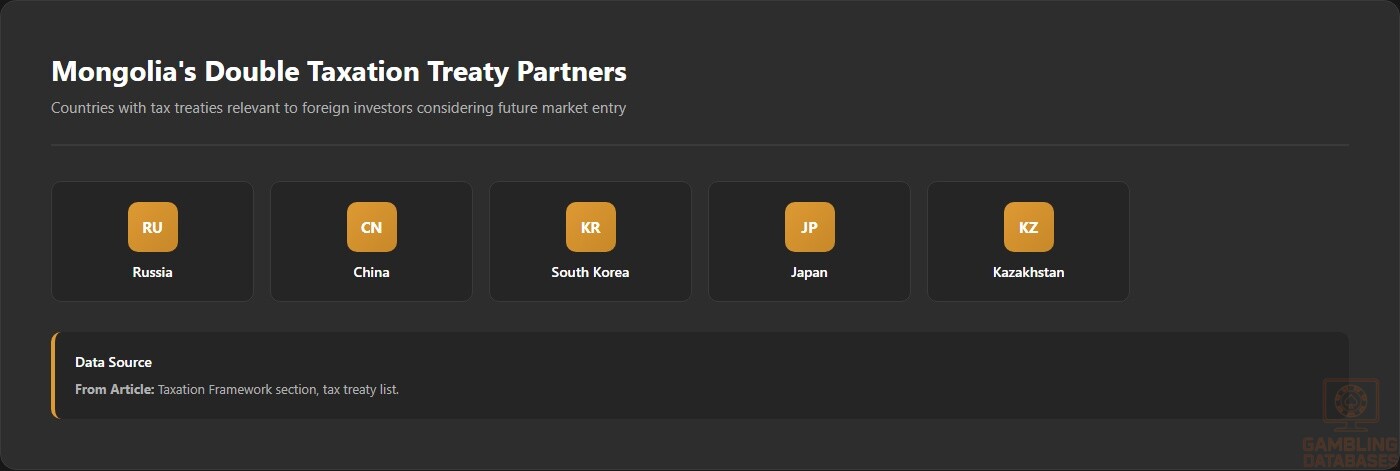
Corporate income tax is levied at a flat rate of 10%, with notable exemptions and incentives available in designated special economic zones. Mongolia has entered into multiple tax treaties to avoid double taxation.
- Russia
- China
- South Korea
- Japan
- Kazakhstan
Personal income tax ranges from 10% to 25%, with social security contributions required from employers and employees. Tax residency is defined by the duration of stay exceeding 183 days within a fiscal year.
Market Entry Considerations
Given the current gambling prohibition, market entry requires anticipation of regulatory changes. Operators should focus on digital sports betting platforms, leveraging partnerships with local payment and telecom providers upon market liberalization. Cultural adaptation and compliance readiness are critical success factors.
- Establish local partnerships to navigate regulatory environments
- Deploy mobile-first platforms optimized for local devices
- Integrate widely accepted payment solutions to ensure smooth transactions
- Develop responsible gaming programs aligned with anticipated regulations
- Invest in market research and localized marketing to build brand trust
Typical costs for market entry involve legal consulting, platform development, licensing preparation (if applicable), marketing, and operational setup. Timeline expectations range from six months to over a year, depending on regulatory clarity and partnership success.
| Cost Category | Estimated Cost (USD) |
|---|---|
| Legal and Regulatory Consulting | $60,000 |
| Platform Licensing and Development | $150,000 |
| Marketing and User Acquisition | $120,000 |
| Local Office Setup and Staffing | $70,000 |
| Compliance and Responsible Gambling Programs | $40,000 |
FAQ: Frequently Asked Questions
1. Is online gambling legal in Mongolia?
Currently, all forms of online gambling are illegal in Mongolia, following a comprehensive ban enacted in 2025. This prohibition includes online casinos, sports betting, and any paid prediction games. Operating, promoting, or facilitating such activities is criminalized with significant penalties. No licenses are being issued, and market entry remains closed until legislative changes occur.
2. What types of gambling licenses are available and what do they cover?
Before the ban, Mongolia offered licenses primarily for land-based casinos and sports betting operators. These included general gambling licenses, sports betting-specific licenses, and lottery permits. However, as of 2025, all these licenses have been revoked, and no new licenses are being granted. Future licensing regimes, if introduced, may differentiate between land-based and online operators depending on regulatory frameworks.
3. How much does an iGaming license cost and how long does it take to obtain?
Prior to prohibition, licensing fees varied significantly based on the scope and scale of operations, often ranging from $100,000 to $250,000. The application process, including background checks and technical review, typically took 6 to 12 months. At present, no licensing process or fees exist due to the gambling ban, and timelines remain undefined until new laws come into force.
4. Can foreign companies obtain a gambling license?
Historically, foreign companies could apply for licenses but were required to establish a local legal entity and adhere to Mongolian regulations. Given the current ban, foreign firms are unable to obtain licenses but may engage indirectly through partnerships in other sectors. Foreign ownership restrictions are generally minimal outside the gambling sector, supporting investment in permitted industries.
5. What are the tax obligations for iGaming operators?
Before the ban, operators faced gross gaming revenue taxes up to 20%, corporate income taxes, and excise taxes on equipment. Tax filing requirements mandated monthly or quarterly declarations. Since all gambling operations are currently banned, no official tax obligations apply. Future operators should expect comprehensive tax regimes with potential incentives tied to compliance and localization.
6. Are gambling winnings taxed for players?
Mongolia does not currently tax individual gambling winnings directly, but since gambling is illegal, winnings are unofficial and not subject to taxation. Officially, players engaged in prohibited gambling risk legal sanctions rather than tax assessments. Should legalization occur, structured tax policies on player winnings may be introduced.
7. What are the typical operational costs for running an online casino/sportsbook?
Operational costs generally include platform licensing, software fees, staffing, marketing, payment processing, and regulatory compliance. These costs can total several hundred thousand USD annually, depending on scale and licensing requirements. Operators must budget for customer support, risk management, and responsible gambling initiatives to maintain market presence.
8. What is the expected ROI timeline for entering this market?
Return on investment timelines vary widely, typically ranging from 24 to 36 months based on market conditions, competition, and regulatory stability. In emerging markets like Mongolia, additional delays from legal uncertainties may extend this period. Early movers may benefit from reduced competition but face elevated compliance risks.
9. What are the local presence requirements for operators?
Previously, operators needed a registered entity within Mongolia with local directors and staff. Physical offices and domain registration within Mongolia were mandated to comply with licensing. The current legal ban voids these requirements, but any future licensing frameworks are expected to reinstate local presence obligations to ensure regulatory oversight.
10. What payment methods are available and recommended?
Mongolian consumers favor a mix of payment methods reflecting global and local services. Visa, Mastercard, and American Express cards dominate card payments. Mobile wallets like Mobipay and ZepetoPay are increasingly popular. Bank transfers remain common, alongside international e-wallet platforms. Integrating multiple methods ensures maximum accessibility in a market with diverse preferences.
11. What are the advertising and marketing restrictions?
The 2025 ban extended to comprehensive advertising restrictions on all gambling-related content across print, broadcast, and digital media. Sponsorships and branding by gambling operators are prohibited. Promotion through affiliate marketing and influencer partnerships is similarly banned. Future relaxation of these restrictions will likely introduce regulations governing content standards and advertising ethics.
12. What responsible gambling measures are mandatory?
Due to the prohibition, no mandatory responsible gambling frameworks currently exist. However, industry best practices include self-exclusion options, deposit limits, user education, and support for problem gamblers. When regulation permits licenses again, operators are expected to implement robust responsible gambling policies aligned with international standards.
13. How large is the iGaming market and what is the growth potential?
The Mongolian iGaming market is effectively closed in 2025. Prior pre-ban estimates identified a relatively small but growing user base with an ARPU around $140 and participation rates just below 7%. Growth potential remains promising pending legislative changes, especially targeting sports betting and mobile platforms, given strong digital engagement.
14. Who are the main competitors and what is their market share?
The ban halted all licensed competitors; prior major operators exited or ceased Mongolian operations. No active domestic market share data exists currently. International operators dominate gray markets, but regulatory enforcement discourages widespread participation. Market readiness hinges on clear legal frameworks.
15. What are the player preferences and typical spending patterns?
Players prefer mobile-optimized, user-friendly platforms centered around sports betting and lottery games. Peak usage is during evenings and weekends, with average session times under an hour. Spending correlates strongly with disposable income and trust, emphasizing the importance of localized content and reliable payment methods.
16. What are the key success factors and main challenges for new entrants?
Successful entry depends on navigating complex regulatory environments, building trusted local partnerships, and exploiting mobile-first technologies. Challenges include legal uncertainties, payment system integration, and cultural adaptation. Operators must balance compliance costs with innovative marketing and responsible gambling commitments.
- Clear regulatory compliance and licensing
- Effective local partnerships and knowledge
- Robust, secure payment integrations
- Culturally resonant marketing strategies
- Commitment to responsible gambling practices
Sources and References
- Mongolia Gambling Regulatory Authority – Official Website – https://legalinfo.mn
- World Bank Mongolia Economic Update, May 2025 – https://worldbank.org
- National Statistical Office of Mongolia – Population and Demographic Data 2024
- Central Bank of Mongolia – Financial Sector Reports 2024
- International Telecommunication Union – ICT Statistics 2025
- Digital 2025: Mongolia Report – Datareportal 2025
- Mongolia Population and Demographics – Worldometers 2025
- Statista Payments Market Overview – Mongolia 2025
- Mongolia Parliament Gambling Ban News Articles 2025
- Gaming Awards – Mongolia Gambling Ban Coverage 2025
- SiGMA Report on Mongolia Online Gambling Ban 2025
- CEIC Data Mongolia Internet Usage – 2025
- Novalnet Payment Processing Mongolia Report 2025
- ADB Mongolia Economic Growth Forecast – 2025
- PopulationPyramid.net Mongolia Data 2025
- Mongol Bank Payment System Overview 2017 Updated
- World Population Dashboard Mongolia – United Nations 2024
- Yogonet International News Mongolia Market Updates 2025
- Slotegrator Industry News on Mongolia 2025
- Next.io Regulatory Updates Mongolia 2025
- Tribuna Mongolia Gambling Law Changes 2025
- TrafficCardinal Global Online Gambling Legal Status 2025
- ADB Mongolia Mining Sector Report 2025
- Reddit Community Discussion on Illegal Gambling in Mongolia – 2025
- Soloazar.com Mongolian Parliament Gambling Ban Analysis 2025
- Central Statistical Office of Mongolia Annual Reports 2024
- International Monetary Fund Mongolia Economic Statistics 2025
- Mongolian Ministry of Finance Tax Regulations 2025
- Local Bank Annual Reports Mongolia 2024-2025
- Gaming Industry Market Research 2024-2025
- Academic Publications on Mongolia Internet and Social Usage 2025
- Government of Mongolia Business Registration Portal
- Wikipedia Demographics of Mongolia 2025
- World Bank Ease of Doing Business Report 2024
- Novalnet Payment Solutions and Trends in Mongolia 2025