
Ecuador is emerging as a promising market for iGaming operators following significant regulatory developments in 2024 and 2025. Its evolving online gambling framework, driven by Executive Decree 487 and growing government support, signals opportunities despite legacy bans on land-based gambling.
The country offers a unique regulatory environment with high licensing costs offset by strong government oversight and clear taxation policies. These make Ecuador an intriguing, yet challenging, gateway into Latin America’s expanding digital betting space.
Executive Summary: Key Market Indicators
| Metric | Value |
|---|---|
| Gambling Legal Status | Online sports betting legalized; land-based gambling banned (pending possible referendum) |
| Regulatory Framework | Executive Decree 487 (2024), Ministry of Sports oversight |
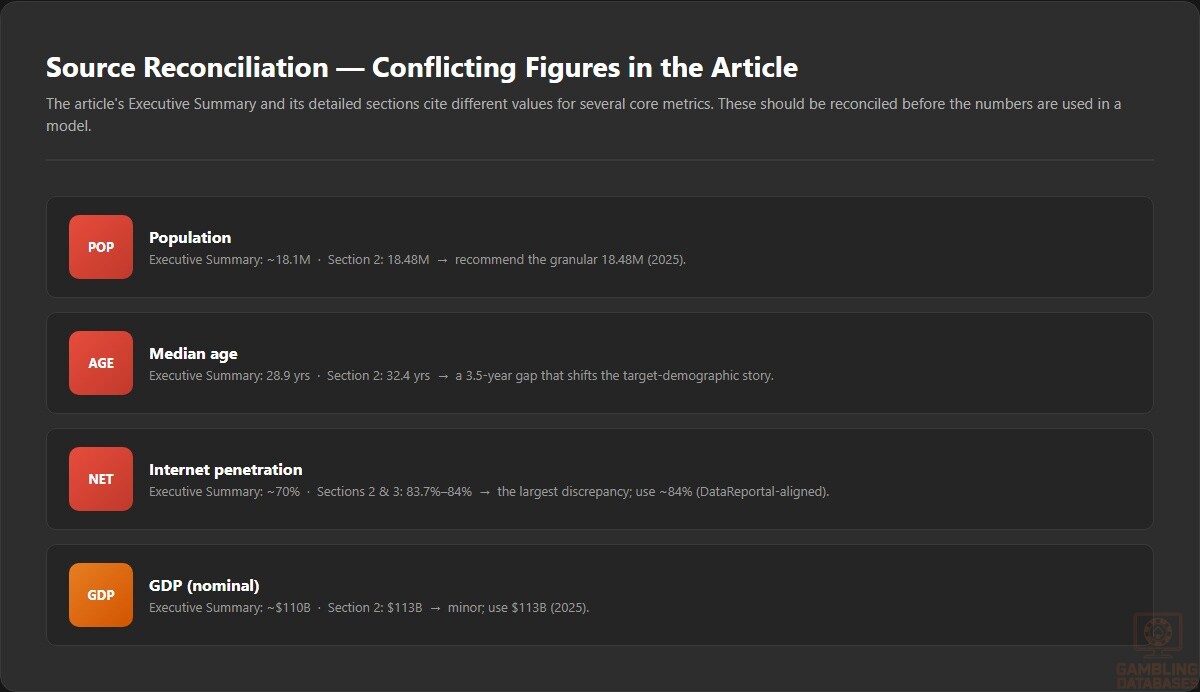
| Total Population | ~18.1 million (2025 estimate) |
| Median Age | 28.9 years |
| GDP (Nominal) | Approx. $110 billion (2025) |
| GDP Per Capita | ~$6,100 |
| Internet Penetration | ~70% |
| Mobile Penetration Rate | ~85% |
| Online Gambling License Validity | 5 years |
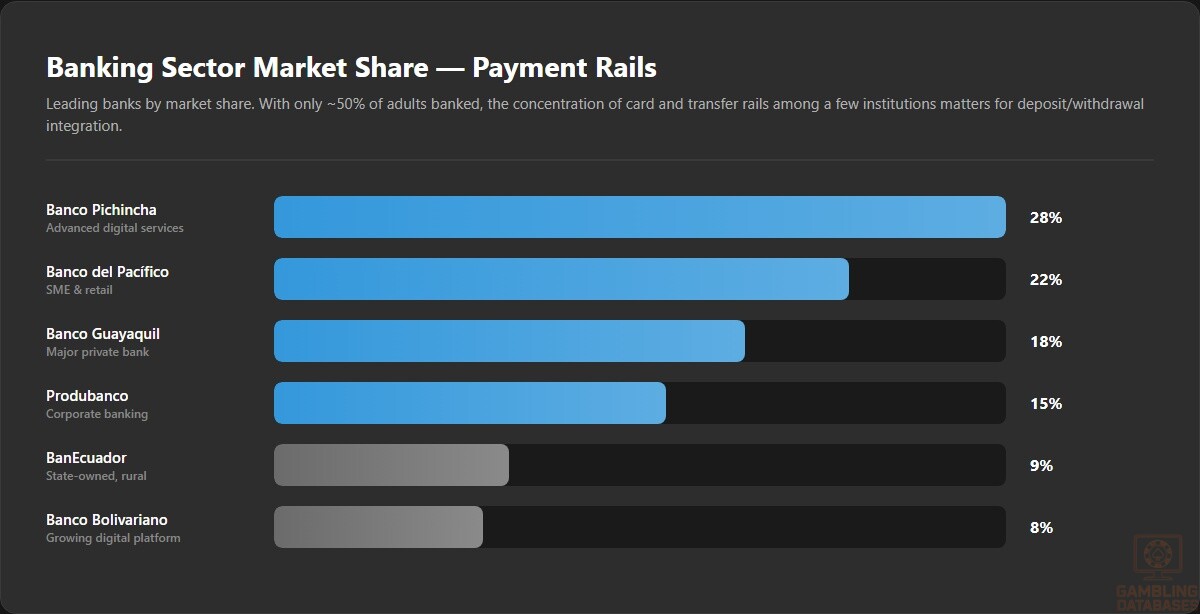
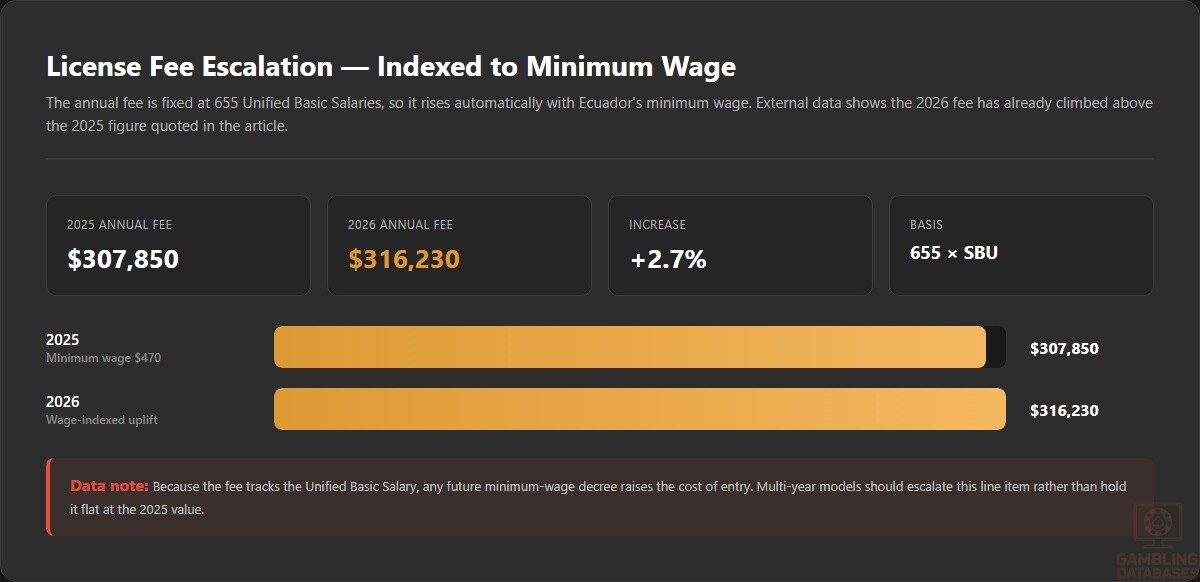
| License Annual Fee | $307,850 (655 Unified Basic Salaries – 2025) |
| Number of Licensed Operators | 65 registered sports betting operators (2024) |
| Operator Gross Gaming Revenue Tax | 15% |
| Withholding Tax on Player Winnings | 15% on prizes exceeding bets monthly |
| License Issuing Authority | Ministry of Sports |
| Land-Based Gambling Status | Banned since 2011; referendum pending (potential 25% tax on casino sales in 5-star hotels) |
| Market Entry Timeline | License application and compliance adaptation within 3 months of decree (since 2024) |
| Technology Infrastructure Access | Uneven, with internet challenges outside main cities |
| ARPU (Online Betting) | Estimated $150 – $200 annually |
| Market Growth Forecast (CAGR) | Projected 10-12% over 2025-2030 |
| Advertising Restrictions | Sports betting ads allowed since late 2024; regulated content |
| Player Age Limit | Minimum 18 years |
| Compliance Requirements | KYC, AML, monthly tax reporting, self-exclusion provisions |
| Foreign Ownership | Allowed with local licensing and compliance |
| Tax Payment Schedule | Monthly withholding and annual filing imposed |
| Penalties for Non-compliance | License revocation, website blocking, fines |
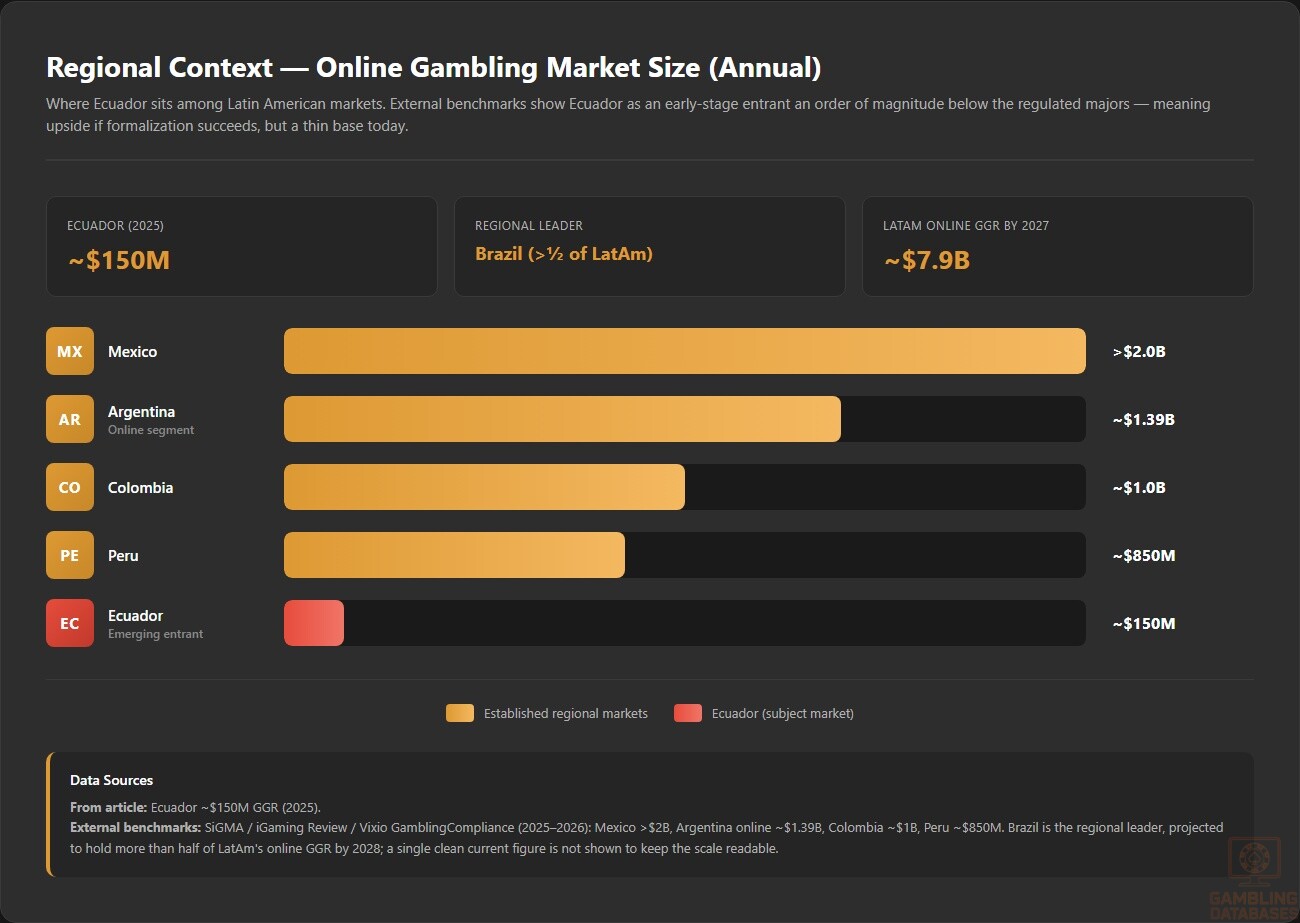
| Market Size (2024 Estimated Revenue) | Approx. $150 million in gross gaming revenue |
Section 1: Regulatory Framework and Legal Environment
Current Gambling Regulation Status
Ecuador’s gambling market has undergone a transformative shift in the past two years. Land-based gambling has been banned since the 2011 national referendum, which resulted in the closure of all casinos and gambling halls. This ban remains in effect pending a proposed referendum slated for late 2025, which may allow operations limited to five-star hotels with a 25% sales tax on revenue.
Online gambling, particularly sports betting, operates within a newly formalized legal framework pioneered by Executive Decree 487, introduced in late 2024. This decree establishes the Ministry of Sports as the regulatory body overseeing licensing and compliance enforcement for online operations. While other forms of iGaming have yet to be fully regulated, sports betting forms the backbone of Ecuador’s evolving digital gambling market under clear legislative oversight.
Land-Based Gambling Activities
The 2011 ban on all land-based gambling remains one of the strictest in the region, effectively prohibiting casinos, bingo halls, and slot machine parlors throughout the country. Despite this, proposals have gained traction in 2025 to reopen these venues in a limited capacity within luxury hotel environments, subject to high taxation and regulatory controls. This potential reform demonstrates the government’s interest in balancing economic opportunity with social responsibility.
Online Gambling Framework
The digital gaming sector is governed by Executive Decree 487, which sets a comprehensive but focused legal structure for sports betting. Under this decree, all operators—resident and non-resident—must obtain a Sports Betting Operation License from the Ministry of Sports. This license is valid for five years and carries a notably high annual fee designed to formalize the market and ensure substantial government revenue.
Operators are mandated to comply with rigorous KYC and AML protocols and to report gross revenue and player winnings for tax purposes. Activities outside the scope of licensed sports betting remain in a legal grey area, though ongoing government consultations may soon clarify the broader online gambling landscape. The regulatory framework also includes provisions for blocking unlicensed websites and enforcing penalties for non-compliance, ensuring strict market control.
Licensed Operators and Market Players
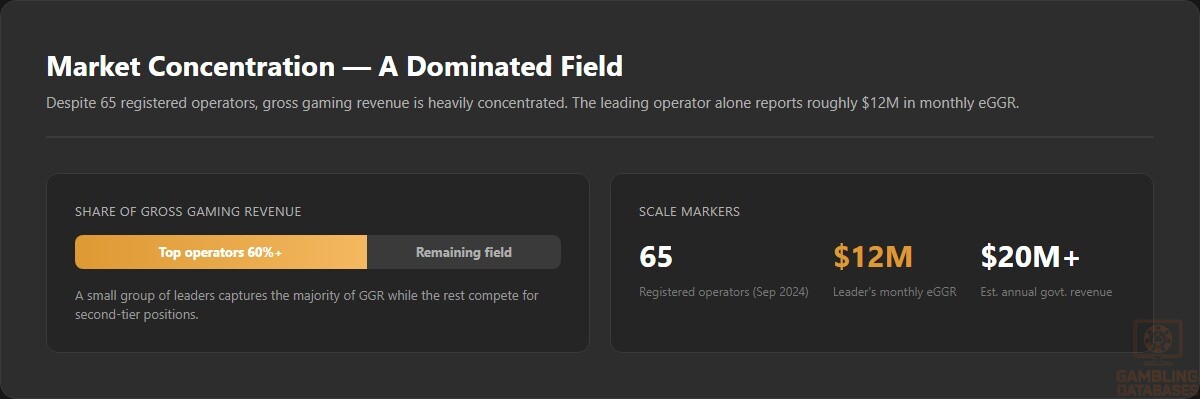
Ecuador’s licensed sports betting sector currently comprises 65 registered operators, including predominantly local companies alongside a small number of international entrants. Market competition is concentrated, with a dominant operator capturing a major share of gross gaming revenue while others compete dynamically for second-tier positions.
Operators must navigate high entry costs and a dual 15% tax structure on income and player winnings, which shapes business models and market strategies. Entry strategies often include local partnerships and platform adaptation to comply with Ecuador’s specific technical and financial regulatory requirements. The competitive dynamics are evolving quickly, reflecting Ecuador’s transition from an unregulated environment to a structured and taxable iGaming ecosystem.
Licensing Framework and Requirements
Application Process and Eligibility
The Ministry of Sports manages licensing applications, requiring operators to demonstrate financial viability, technical standards compliance, and commitment to regulatory adherence. Licenses are granted for a five-year period with an annual renewal fee aligned to the country’s Unified Basic Salary metric, amounting to approximately $307,850 in 2025.
Operators must submit detailed documentation to the Ministry, which defines eligibility criteria and technical specifications. The application process includes evaluation of system integrity, RNG certifications, and compliance mechanisms, with a three-month regulatory timeline set for authorities to issue specific procedural requirements following the decree’s enactment.
Applicants are both resident and non-resident entities, with no mandatory local ownership but with operational presence requirements fulfilled either through local representatives or partners. The process incentivizes formal market participation while ensuring government oversight.
Required Documents for Licensing
- Corporate registration and articles of incorporation
- Audited financial statements for the past three years
- Detailed business plan with marketing and financial projections
- Technical documentation including platform security and RNG certification
- KYC and AML compliance framework outline
- Criminal background checks for directors and beneficial owners
- Proof of minimum capital deposit in authorized local bank
- Responsible gambling policy documentation
Local Presence and Operational Requirements
Operators need not establish full corporate offices in Ecuador but must maintain a registered local contact responsible for regulatory communications and compliance facilitation. The local presence requirement extends to operational capabilities such as customer support and reporting.
Domain registration under Ecuadorian jurisdiction is not mandatory but licensing authorities reserve rights to oversee domain activities. Personnel must be trained in compliance, responsible gaming, and fraud prevention protocols. Foreign ownership is permitted, provided all licensing fees and regulatory obligations are met in full.
Compliance Obligations and Monitoring
Player Protection and Identification
Ecuador’s regulatory framework enforces strict age verification, requiring all licensed operators to implement KYC measures verifying that players are at least 18 years old. Anti-money laundering protocols align with international standards, involving continuous monitoring of transactions and suspicious activity reporting.
- Mandatory real-name player identification
- Verification of proof of identity documents
- Address and contact information validation
- Ongoing transaction monitoring to detect irregularities
- Self-exclusion programs enabling players to restrict access
- Limits on deposits and betting volumes to encourage responsible gambling
- Information disclosure obligations providing transparent terms
Financial Monitoring and Reporting
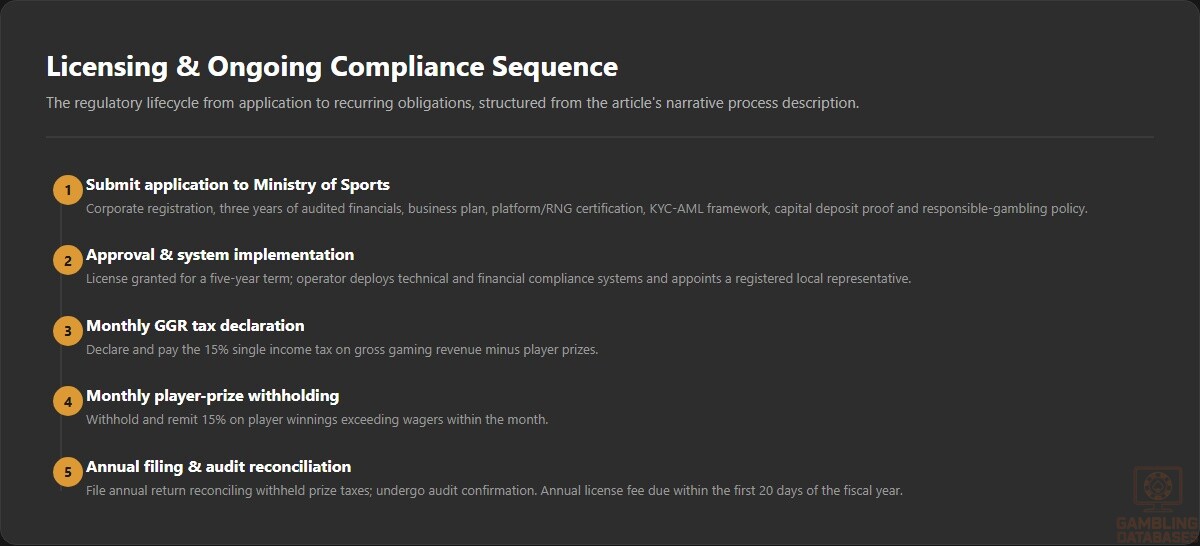
Sports betting operators must submit detailed monthly reports on gross revenue, player winnings, and tax withholdings. A sequential compliance process requires initial licensing, monthly tax payments on gross gaming revenue minus player winnings, followed by annual tax returns including reconciliation of withheld player prize taxes.
- Submit licensing application and receive approval
- Implement technical and financial compliance systems
- Monthly declaration and payment of operator income tax (15%)
- Monthly withholding and remittance of 15% tax on player winnings exceeding bets
- Annual tax filing and audit confirmation
Taxation Structure and Financial Obligations
Player Taxation
Players are subject to a 15% withholding tax on gambling winnings that exceed the amount wagered within a monthly period. This tax is deducted by operators and credited against players’ annual personal income tax liabilities, mitigating double taxation. Players must declare their winnings in annual tax returns to benefit from this credit mechanism.
Operator Taxation
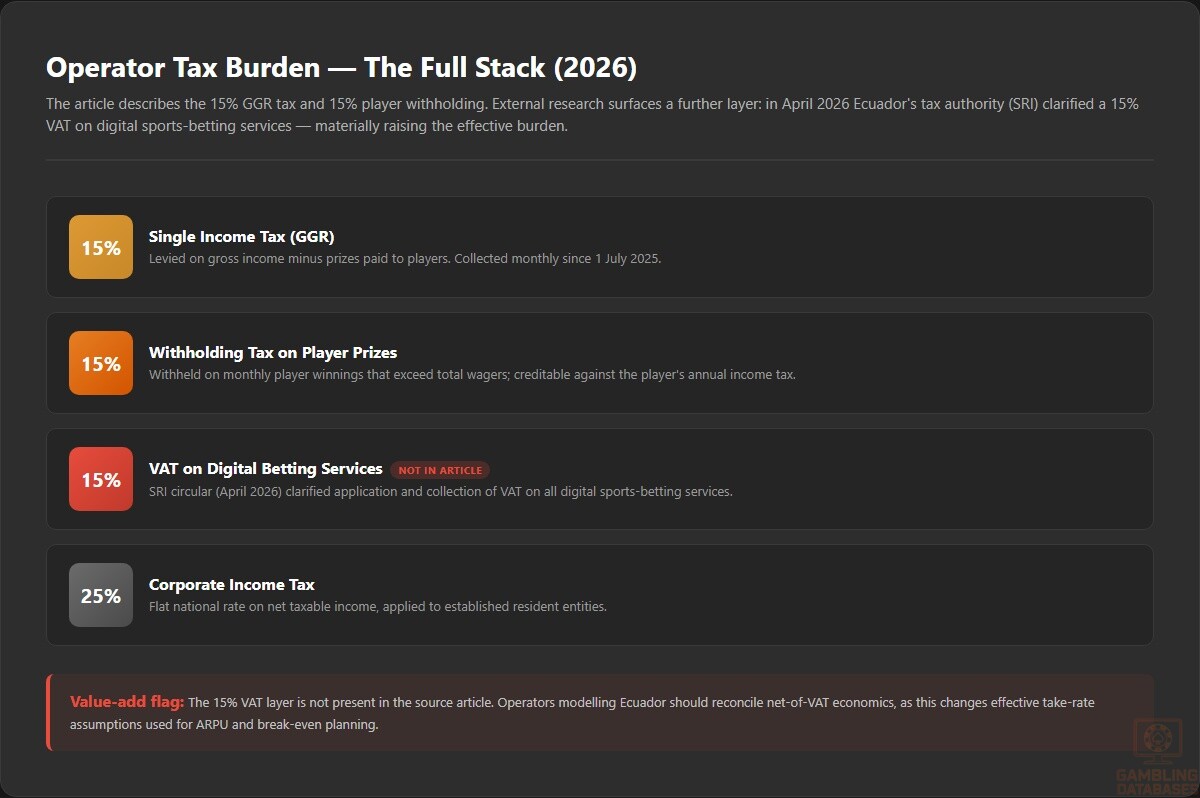
| Tax Type | Rate | Tax Base |
|---|---|---|
| Gross Gaming Revenue Tax | 15% | Gross income minus player winnings |
| Withholding Tax on Player Prizes | 15% | Player winnings exceeding bets per month |
| Corporate Income Tax | Variable | Based on taxable income per national rates |
| License Renewal Fee | Fixed | Annual payment of approx. $307,850 |
Operators bear significant fiscal obligations including the substantial license fees and taxes on revenue, which shapes pricing strategies and operational cost management in the Ecuadorian market.
Gambling Market Financial Performance
Ecuador’s regulated sports betting sector generated an estimated $150 million in gross gaming revenue as of 2024, with a top operator commanding approximately $12 million monthly eGGR. The tax policies have ensured steady government revenue streams, estimated at over $20 million annually from licensing and gross revenue taxes alone.
Market revenue growth is projected at a compound annual growth rate between 10% and 12% through 2030, supported by increasing internet penetration and regulatory clarity. Revenue distribution reflects a concentrated market structure with evolving competitive forces among local and international operators.
Advertising and Marketing Restrictions
The ban on gambling and sports betting advertising was lifted in October 2024, enabling operators to promote legally through regulated channels. Advertising content is subject to restrictions aimed at protecting minors and preventing misleading claims. Sponsorships and promotions remain under close regulatory review to ensure responsible marketing practices.
- Permitted channels include TV, radio, digital platforms, and point-of-sale materials
- Prohibition of targeting minors or vulnerable populations
- Mandatory disclosure of responsible gambling messages in all ads
- Restrictions on bonus and promotional offers to prevent excessive gambling
- Time-of-day limitations on broadcast advertising
Recent Regulatory Changes and Their Impact
The most pivotal regulatory change was the enactment of Executive Decree 487 in December 2024, establishing a coherent legal framework for sports betting. This decree introduced licensing, taxation, and compliance mechanisms that transformed Ecuador’s underground betting market into a formalized sector.
The subsequent lifting of advertising bans and the announcement of a referendum on land-based gambling signal government’s intent to further liberalize the gambling market. Operators face increased compliance costs but gain the benefit of legal certainty and growth opportunities. These changes necessitate adaptive strategies, balancing high regulatory standards with market expansion ambitions.
Enforcement Mechanisms and Penalties
Enforcement is robust, with authorities empowered to revoke licenses for non-compliance, block unlicensed operator websites, and impose significant fines. Authorities also conduct periodic audits and require transparent financial disclosures to monitor adherence.
- License suspension or revocation for regulatory breaches
- Fines for tax evasion and failure to comply with reporting
- Blacklisting and IP blocking of illegal operators
- Criminal sanctions for fraudulent or illicit gambling activities
- Mandatory corrective actions in response to audit findings
Section 2: Demographics and Consumer Analysis
Population Demographics and Distribution
Ecuador’s total population in 2025 is approximately 18.48 million, with a median age of 32.4 years, reflecting a relatively young and dynamic demographic profile. The gender ratio is nearly balanced, with 997 men per 1000 women, indicating a stable population structure.
The age distribution reveals that about 34.5% of the population is under 20 years, 56.4% is between 20 and 64 years, and the remaining 9.1% is aged 65 and above. This demographic composition provides a large potential adult customer base for the iGaming sector.
| Age Group | Percentage of Population |
|---|---|
| 0-19 years | 34.5% |
| 20-64 years | 56.4% |
| 65+ years | 9.1% |
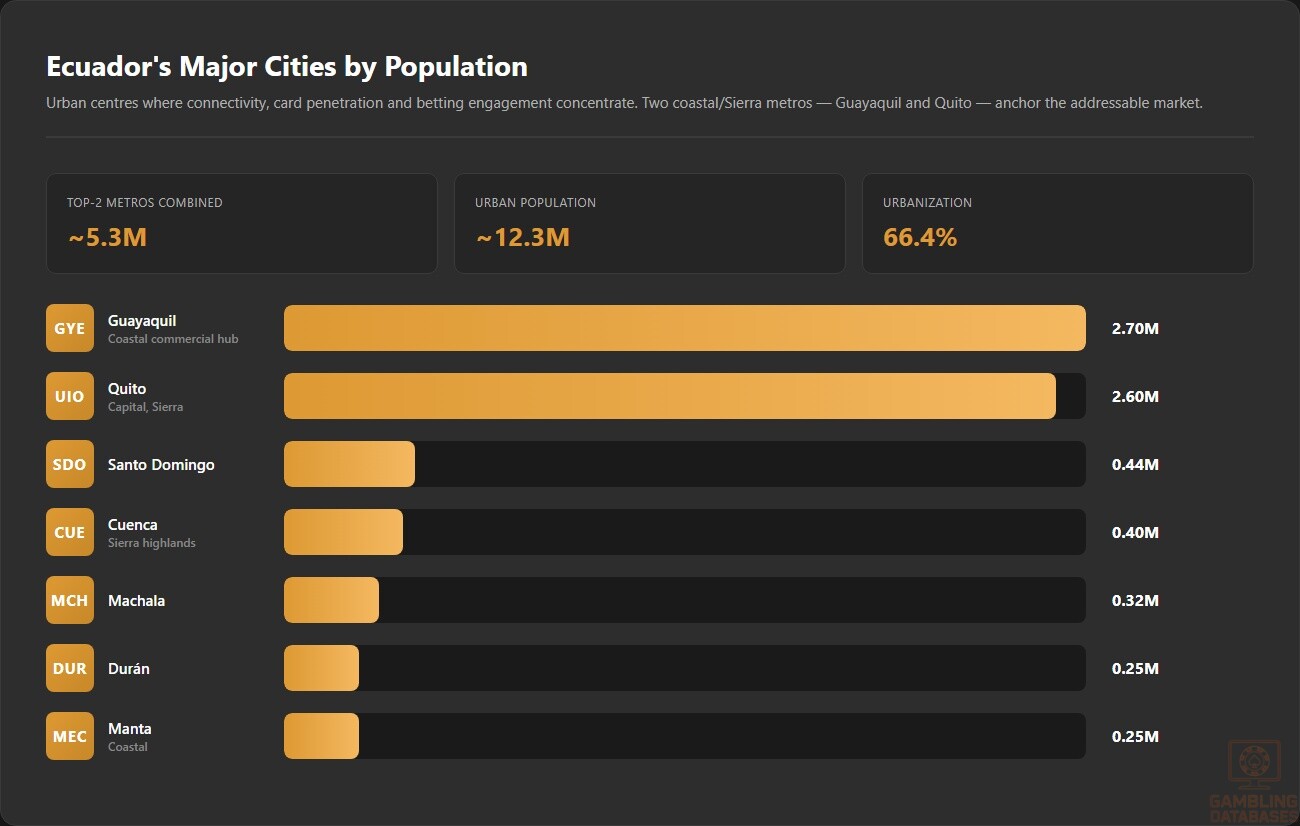
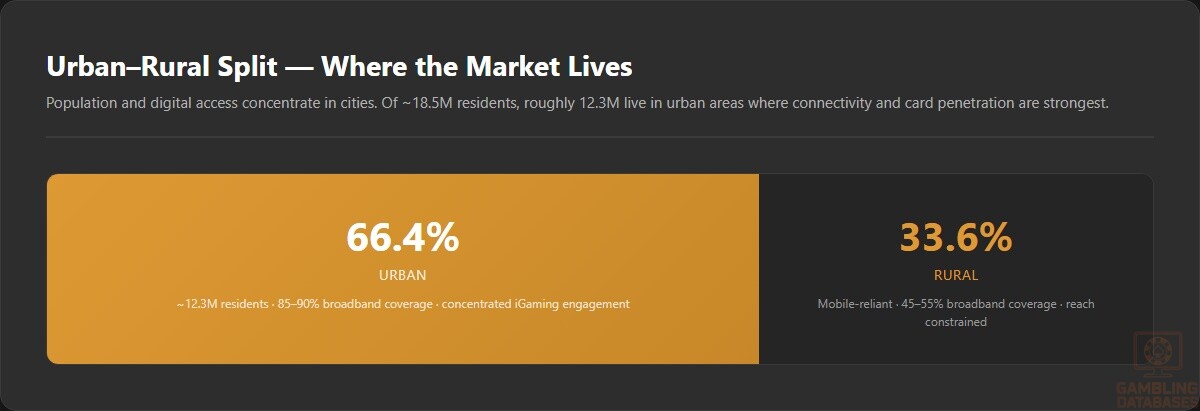
Urbanization in Ecuador stands at 66.4%, with approximately 12.27 million residents living in urban areas, reflecting a concentration of economic activity and digital connectivity in cities. Rural areas remain home to about 33.6% of the population, affecting geographical access to digital services including iGaming platforms.
Major Cities by Population
- Quito: ~2.6 million
- Guayaquil: ~2.7 million
- Cuenca: ~0.4 million
- Santo Domingo: ~0.44 million
- Machala: ~0.32 million
- Durán: ~0.25 million
- Manta: ~0.25 million
The majority of internet access and iGaming engagement are concentrated in these urban centers where infrastructure is more developed and mobile connectivity is stronger. Regional economic disparities persist, with coastal and Sierra regions outperforming Amazon areas in digital adoption.
Economic Indicators and Consumer Spending Power
Ecuador’s GDP for 2025 is estimated at approximately $113 billion (nominal), with a forecasted growth rate of around 1.9% driven by energy stability and export improvements. Growth remains moderate, impacted by structural constraints and a large informal sector that accounts for over half the workforce.
The GDP per capita is about $6,100, indicating moderate consumer purchasing power with significant income disparities. Poverty affects nearly 30% of the population, with concentrated efforts necessary to improve income distribution and stimulate consumption.
| Indicator | Value |
|---|---|
| GDP (Nominal) | $113 billion |
| GDP Growth Forecast | 1.9% |
| GDP per Capita | $6,100 |
| Poverty Rate | ~30% |
| Informal Sector Employment | Over 50% |
Household income patterns show a stratified society where middle-class growth is skewed by a sizeable low-income population. Average disposable income varies widely but urban areas exhibit higher consumer spending on leisure and digital services, benefiting the iGaming market segment.
Gaming Market Size and Growth
The Ecuadorian iGaming market has an estimated current revenue of approximately $150 million, with a compound annual growth rate projected between 10% and 12% through 2030. Growth is fueled by increasing internet penetration, mobile usage, and regulatory formalization.
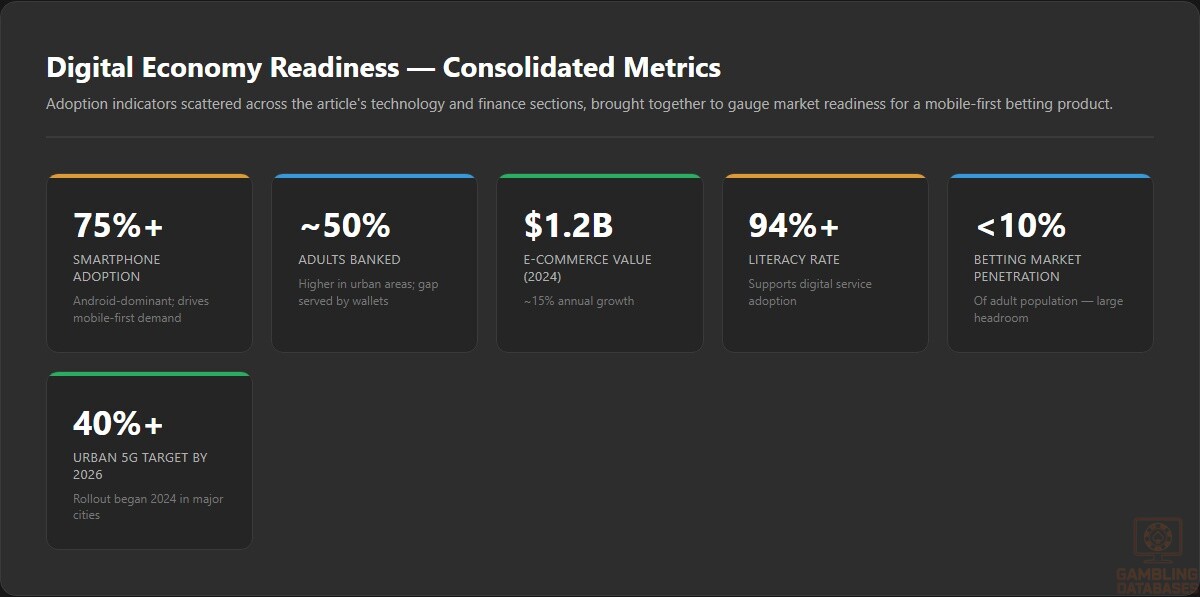
Market penetration remains below 10% of the total adult population, with ARPU for online betting estimated at $150–$200 annually. This reflects an emerging but expanding consumer base with strong interest in fast-paced games and sports betting.
| Year | Estimated Revenue (USD millions) | Projected CAGR (%) | ARPU (USD) |
|---|---|---|---|
| 2025 | 150 | 10-12% | 150-200 |
| 2026 | 165 | 155-210 | |
| 2027 | 180 | 160-215 | |
| 2028 | 200 | 165-220 | |
| 2029 | 225 | 170-225 | |
| 2030 | 250 | 175-230 |
Education, Skills, and Digital Literacy
Ecuador boasts a literacy rate exceeding 94%, supported by compulsory education laws and expanding access to secondary and higher education. These factors contribute to a workforce increasingly versed in digital skills, facilitating online service adoption, including iGaming platforms.
However, gaps remain in rural areas and among older demographics, impacting uniform digital literacy. The government and private sector initiatives focus on ICT training and internet accessibility projects targeting youth and underserved regions to boost digital participation.
Cultural and Social Factors
Communication and Language
Spanish is the official and predominant language used in all media and digital content. Indigenous languages such as Quechua and Shuar are spoken by minorities, primarily in rural Amazon and Sierra regions.
- Spanish (dominant, used by 93%+ population)
- Quechua (primarily Sierra and Andes regions)
- Shuar (Amazonian communities)
- Other minority languages
Online gambling platforms and marketing must prioritize Spanish language for broad reach, while considering localized content for native-speaking communities to enhance market penetration.
Cultural Attitudes Towards Gambling
Historically, gambling was culturally sensitive and restricted due to religious and social norms, particularly under the 2011 land-based ban. Yet, recent trends indicate increasing public acceptance of online betting, fueled by younger demographics and digital entertainment preferences.
Lottery and betting on football are the most culturally accepted forms of gambling, while casino games face mixed social attitudes and are more tightly regulated. Foreign brands are generally viewed favorably, especially those perceived as trustworthy and linked to responsible gaming.
Problem Gambling and Social Measures
Problem gambling prevalence is increasing, aligned with growing online market participation. The government is responding through social responsibility initiatives and mandatory operator contributions to support services for at-risk players.
- National helpline for gambling addiction
- Public awareness campaigns about gambling risks
- Mandated operator self-exclusion programs
- Community support groups and counseling services
- Regulatory requirements for responsible gambling policies
Political Structure and Governance
Ecuador operates as a presidential representative democratic republic with relative political stability post-2024 elections. Regulatory consistency has improved, particularly in digital economy frameworks, facilitating clearer business environments for foreign investors and digital operators.
International relations mainly emphasize trade and investment partnerships within Latin America, promoting regional integration which benefits cross-border digital service expansion including iGaming enterprises.
Technology Adoption and Digital Behavior
Internet and Digital Usage
Internet penetration reached approximately 83.7% of the population in early 2025, with about 15.2 million users. Mobile internet usage is widespread, supported by a median mobile download speed of 18.7 Mbps, though fixed broadband shows better performance with median speeds around 98.7 Mbps.
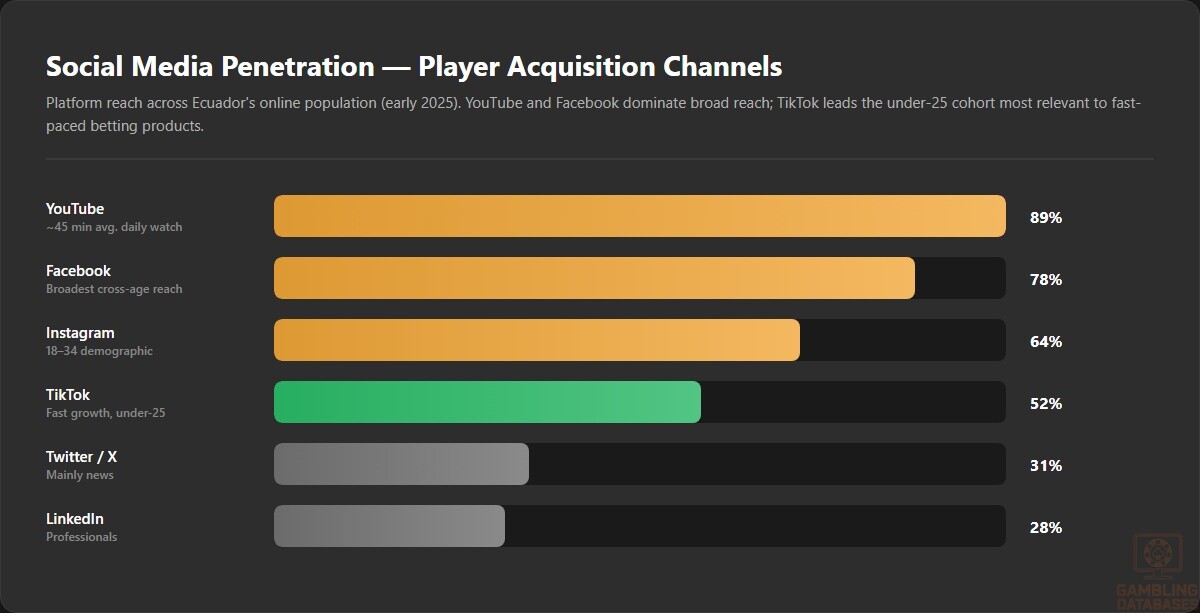
- Facebook – 78% penetration
- Instagram – 64% penetration in 18-34 demographic
- YouTube – 89% penetration, with 45 minutes average watch
- TikTok – rapid growth at 52% penetration under 25
- Twitter – 31% penetration, mainly for news
- LinkedIn – 28% penetration among professionals
Social media platforms serve as key engagement channels for younger iGaming audiences, driving user acquisition and brand awareness.
Digital Payment Behavior
Payment preferences for online transactions skew toward credit and debit cards, bank transfers, and mobile wallets. The growth in digital wallets reflects the younger demographic’s affinity for app-based payments, while cash remains significant in rural and older segments.
- Credit/Debit cards (Visa, Mastercard dominant)
- Mobile wallets (Bimo, Deuna popular locally)
- Bank transfers and QR code payments
- Cash on delivery (declining but still present)
- E-wallets and prepaid cards expanding rapidly
Gaming and Gambling Preferences
Current Market Participation
Participation in gambling activities is growing steadily, with online sports betting and slots leading in popularity. Crash games and fast-paced slot variants attract younger players.
- Online sports betting
- Slots and video slot games
- Crash (instant win) games
- Lottery and draws
- Virtual sports betting
| Activity | Participation Rate (%) |
|---|---|
| Online Sports Betting | 7.5% |
| Slots | 6.4% |
| Crash Games | 5.8% |
| Lottery | 4.1% |
| Virtual Sports | 3.5% |
Consumer Behavior Patterns
Ecuadorian gamblers display strong preferences for mobile-optimized platforms with fast gameplay and instant rewards. Peak betting times align with major local and international sports events, typically evenings and weekends. Session durations average between 20 and 40 minutes, with retention driven by promotions and personalized user experiences.
Consumers are price-sensitive due to moderate disposable incomes, making competitive odds and flexible deposit options key competitive advantages. User trust factors, including license legitimacy and robust customer support, influence platform selection strongly.
Section 3: Technology Infrastructure and Business Environment
Internet and Digital Infrastructure
Ecuador’s internet penetration reached approximately 84% in 2025, with urban centers enjoying broadband connectivity while rural areas rely mainly on mobile internet. Fixed broadband accounts for roughly 40% of total internet connections, with average speeds around 99 Mbps, supporting bandwidth-intensive applications like streaming and gaming.
Mobile broadband dominates due to geographical challenges and infrastructure costs, contributing nearly 60% of connections with median speeds of 19 Mbps. Network reliability has improved substantially following government investments and public-private partnerships focused on expanding fiber optic networks.
| Metric | Value |
|---|---|
| Internet Penetration | 84% |
| Fixed Broadband Market Share | 40% |
| Mobile Broadband Market Share | 60% |
| Average Fixed Broadband Speed | 99 Mbps |
| Average Mobile Broadband Speed | 19 Mbps |
| Urban Broadband Coverage | 85%-90% |
| Rural Broadband Coverage | 45%-55% |
5G and Future Technology Deployment
5G rollout commenced in 2024 in major cities, with coverage expected to reach over 40% of urban populations by 2026. The government prioritizes 5G as a catalyst for digital economy growth including iGaming, ensuring high reliability and low latency critical for real-time betting applications.
Major mobile network operators have begun upgrading infrastructure, supported by spectrum auctions and incentives aimed at expanding rural connectivity. Future plans include broader 5G expansion and integration of IoT and AI technologies for enhanced consumer engagement and security analytics.
Mobile Technology Ecosystem
Mobile Network Infrastructure
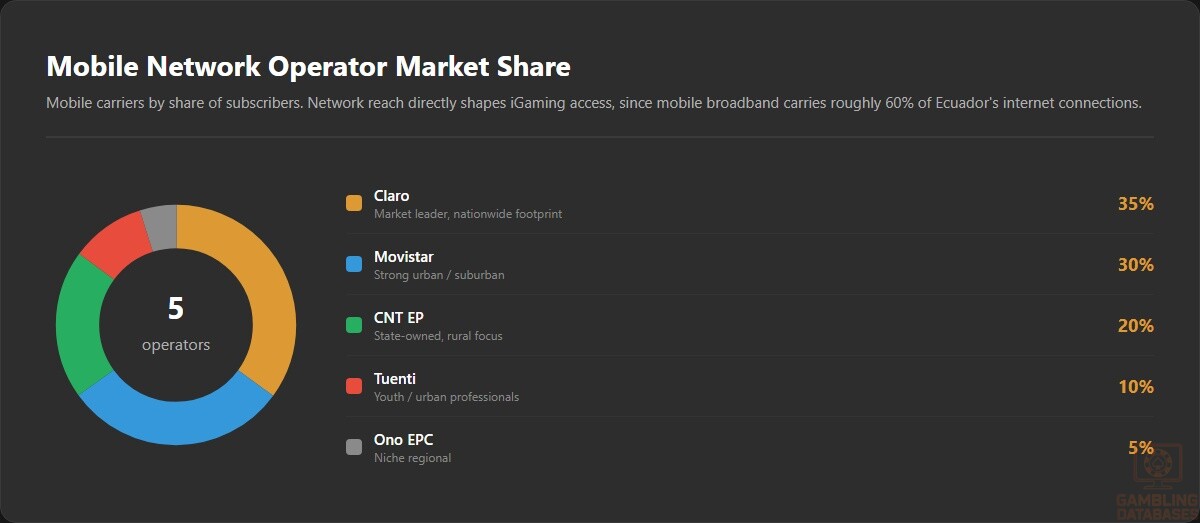
The mobile telecom market in Ecuador features multiple operators competing on coverage and pricing. Market concentration favors a handful of dominant players with significant infrastructure investment in LTE and 5G technologies.
- Claro – Market leader with over 35% market share and extensive nationwide footprint
- Movistar – Controls approximately 30%, strong in urban and suburban markets
- Cnt Ecuador (CNT EP) – State-owned operator with 20% share focusing on rural connectivity
- Tuenti – Smaller market share (~10%) targeting youth and urban professionals
- Ono EPC – Emerging operator with niche regional coverage (~5%)
Competition drives improvements in data pricing and network quality, facilitating mobile access to iGaming platforms, especially in urban and peri-urban areas.
Device Penetration
Smartphone adoption exceeds 75% of the population, with Android devices dominating due to affordability and compatibility with most apps. High smartphone penetration supports robust mobile gaming engagement, driving demand for mobile-optimized iGaming sites and apps.
Tablet and laptop penetration remain lower but are growing among middle and upper classes, enhancing multichannel user experiences. Device diversity supports complex gaming interactions, real-time betting, and multimedia streaming integral to user retention and satisfaction.
Financial Services and Payment Infrastructure
Banking System Structure
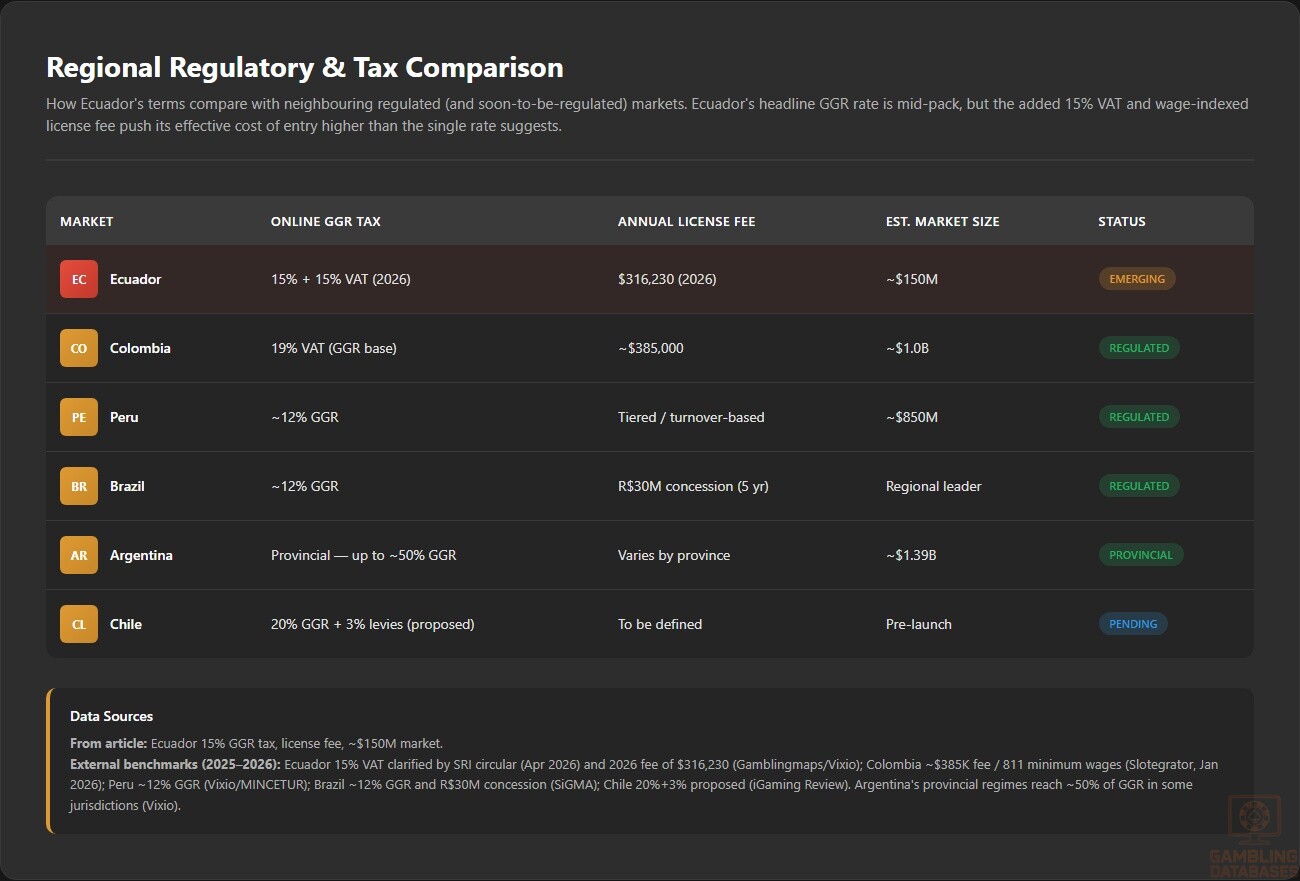
Ecuador’s banking sector is moderately concentrated, with growing digital banking adoption fueled by fintech innovation and government financial inclusion policies. Around 50% of the adult population holds a bank account, with a higher penetration rate in urban areas supporting online financial transactions.
- Banco Pichincha – Largest with 28% market share and advanced digital services
- Banco del Pacífico – Strong SME and retail banking focus, 22% share
- Banco Guayaquil – Major private bank with 18% market share
- Produbanco – Specialized in corporate banking with 15% share
- BanEcuador – State-owned, focusing on rural banking with 9% share
- Banco Bolivariano – Growing digital platform presence, 8% share
Payment Processing Options
E-commerce and iGaming payments leverage multiple channels, with credit/debit cards dominant in urban centers and mobile wallets gaining popularity among younger demographics. The ecosystem supports integrated payment gateways facilitating bank transfers, cards, and wallets with secure authentication.
- Visa and Mastercard credit/debit cards widely accepted
- Digital wallets – Bimo, Deuna, Paymentez growing rapidly
- Bank transfers supported by real-time payment systems
- Cash-based mobile money solutions for unbanked populations
- Cryptocurrency adoption is nascent but increasing among tech-savvy users
E-commerce and Digital Economy
Ecuador’s e-commerce market value reached over $1.2 billion in 2024, with annual growth rates close to 15%. Consumer trust, logistics improvements, and mobile-first strategies underpin expansion, providing fertile ground for digital goods including online gambling services.
Online retail penetration is highest in major cities, supported by increasing digital payment adoption and delivery infrastructure. Regulatory improvements for consumer protection and electronic transactions further enhance the digital economy’s viability.
Business Environment and Regulatory Framework
Ease of Business Operations
Ecuador ranks moderately on the World Bank Ease of Doing Business index at 90th globally, reflecting improvement in business registration and enforcement but persistent challenges in bureaucratic delays and tax complexity. Foreign investment policies are generally open; nonetheless, sectors like gambling require close regulatory compliance.
- Prepare and notarize required company formation documents
- Register company with the Superintendencia de Compañías within 1-2 weeks
- Obtain tax identification number and register for VAT and social security
- Open corporate bank account and deposit minimum capital
- Apply for industry-specific licenses including gambling permits
Corporate Structure and Registration
Common corporate entities include Limited Liability Companies (LLC), Corporations (S.A.), and Branch Offices. LLCs are favored for SMEs due to simpler governance, whereas S.A. structures suit larger investment projects. Branch offices allow foreign companies to operate with reduced formalities but require local compliance for tax and reporting.
- LLC – Flexible, fewer formalities, limited liability
- Corporation (S.A.) – Preferred for larger businesses, formal governance
- Branch Office – Foreign company extension with local registration
- Cooperative Entities – Occasionally used in agriculture and small trades
- Non-Profit Organizations – For social and community projects
Required Registration Documents
- Articles of Incorporation and company bylaws
- Identification documents of shareholders and directors
- Proof of registered office address
- Tax identification number application
- Proof of minimum capital deposit in local bank
- Technical and operational permits if applicable
- Power of attorney for legal representatives
Taxation Framework
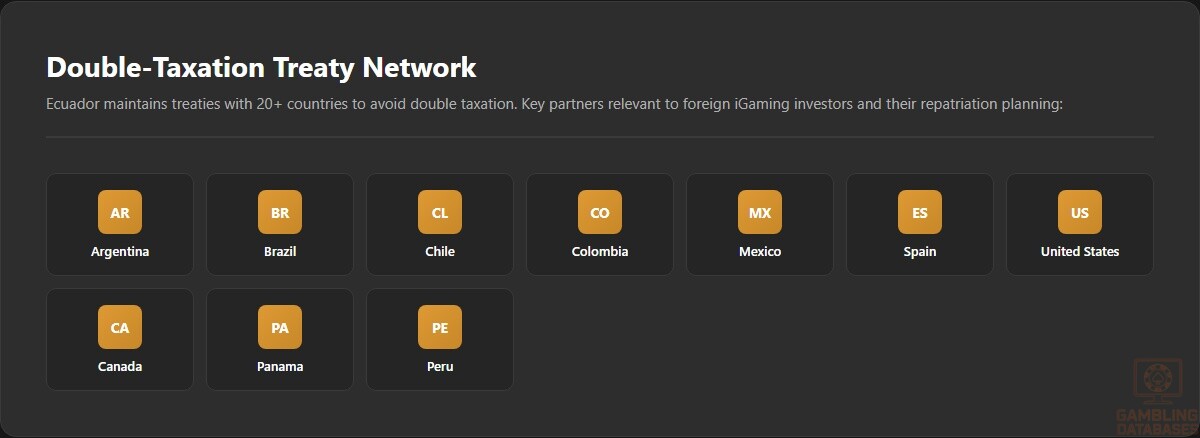
Corporate income tax stands at a flat rate of 25%, with exemptions and incentives available in special economic zones. Tax treaties with over 20 countries facilitate avoidance of double taxation and encourage foreign investment.
- Argentina
- Brazil
- Chile
- Colombia
- Mexico
- Spain
- United States
- Canada
- Panama
- Peru
Personal income tax is progressive up to 35%, with operators responsible for withholding taxes on employee incomes and gambling winnings. Social security contributions are mandatory for corporate employees.
Market Entry Considerations
Effective market entry demands strong local partnerships, compliance with licensing, and investment in tailored platform offerings. Leveraging mobile technology and digital payments accelerates user acquisition and retention in Ecuador’s fragmented market.
- Establish robust regulatory compliance and reporting mechanisms
- Invest in mobile-first platform development
- Form partnerships with local payment providers and marketing agents
- Adapt offerings to regional cultural and linguistic preferences
- Implement responsible gambling and customer protection practices
| Cost Category | Estimated Cost |
|---|---|
| License Application and Fees | $310,000 annually |
| Technical Platform Development | $200,000–$400,000 |
| Legal and Compliance Advisory | $60,000–$100,000 |
| Marketing and User Acquisition | $250,000–$500,000 |
| Operational Expenses | $150,000 annually |
- Licensing and regulatory approval (3 months)
- Platform setup and localization (2-4 months concurrently)
- Marketing launch and user acquisition (ongoing)
- Operational scaling and compliance monitoring (continuous)
Success Factors and Challenges
- Strong compliance culture reduces risk of sanctions
- Mobile network quality underpins real-time betting experience
- High license fees require robust initial capital
- Complex tax regime necessitates expert financial management
- Localized user experience enhances market penetration
- Coverage gaps in rural areas limit market reach
- Relatively low disposable income caps ARPU potential
- Political and regulatory shifts may cause operational risks
- Competition from international unlicensed operators persists
- Responsible gambling awareness still evolving among consumers
Exit Strategy Planning
Market liquidity is moderate, with potential for secondary sales of licenses and business shares within regulated frameworks. License transfer requires regulator approval but is permitted, facilitating corporate restructuring or sale.
Valuation multiples lean conservative (3-5x EBITDA), given regulatory costs and emerging market status. Exit timing depends heavily on regulatory stability and market growth trajectory.
FAQ: Frequently Asked Questions
1. Is online gambling legal in Ecuador?
Yes, online sports betting is legally regulated under Executive Decree 487 (2024), managed by the Ministry of Sports. Licensed operators can offer regulated sports betting services, but other online gaming forms remain less explicitly regulated and often operate in a legal gray area. Land-based gambling remains banned pending a referendum, though government openness to reform exists.
2. What types of gambling licenses are available and what do they cover?
The primary license is the Sports Betting Operation License valid for five years. It covers digital sports betting platforms only. Other gaming types such as casinos, poker, or bingo do not currently have dedicated licenses but discussions to expand licensing are ongoing. License requirements include compliance with technical, financial, and responsible gambling standards.
3. How much does an iGaming license cost and how long does it take to obtain?
The annual license fee is set at approximately $307,850, adjusted according to the country’s Unified Basic Salary. Obtaining the license involves a multi-step application process that typically takes three months, including submission of technical documentation, financial audits, and regulatory review.
4. Can foreign companies obtain a gambling license?
Foreign entities are eligible to apply for licenses without mandatory local ownership, provided they comply fully with Ecuadorian regulatory requirements. They must establish a registered local representative for communications and ongoing compliance. This flexibility encourages international investment while ensuring regulatory control.
5. What are the tax obligations for iGaming operators?
Operators pay a 15% tax on gross gaming revenue after deducting player winnings, alongside a 15% withholding tax on player winnings exceeding bets. Additionally, a corporate income tax of 25% applies on net taxable income. Monthly reporting and tax remittance process are mandatory, ensuring continuous compliance.
6. Are gambling winnings taxed for players?
Yes. Players are subject to a 15% withholding tax on net winnings monthly, deducted by operators. This amount is credited against annual income tax liabilities. Players must file annual tax returns reporting gambling income to reconcile liabilities, avoiding double taxation.
7. What are the typical operational costs for running an online casino/sportsbook?
Significant costs include the license fee (~$308K annually), platform development ($200K–$400K), legal and compliance expenses ($60K–$100K), marketing (ranging $250K–$500K), and ongoing operations (~$150K/year). These costs require substantial upfront capital and efficient management to reach profitability.
8. What is the expected ROI timeline for entering this market?
Operators typically anticipate 2-3 years to reach break-even and profitability, depending on user acquisition speed, cost control, and market penetration. High license fees and regulatory compliance add to initial outlays, but sustained growth and projected market expansion support positive long-term ROI.
9. What are the local presence requirements for operators?
While full local incorporation is not mandatory, operators must appoint a registered local representative or partner for regulatory communication and compliance. Operational capabilities such as customer support should be accessible, often implemented through local or regional offices or trusted agents.
10. What payment methods are available and recommended?
Operators primarily utilize Visa and Mastercard credit/debit cards, digital wallets like Bimo and Deuna, real-time bank transfers, and cash-mobile wallet combinations for unbanked users. Cryptocurrency is emerging but remains marginal. Offering diverse and localized payment methods fosters accessibility and trust.
11. What are the advertising and marketing restrictions?
Advertising channels include TV, radio, digital media, and point-of-sale materials under strict regulations to protect minors and vulnerable groups. All promotions must include responsible gaming messaging. Bonus offers are regulated to prevent excessive gambling, and advertising time slots may be restricted.
12. What responsible gambling measures are mandatory?
Mandatory measures include player age verification (minimum 18), KYC and AML compliance, self-exclusion programs, transparent depiction of risks, and limits on deposits and bets. Operators must also contribute to government or NGO-funded addiction support programs, demonstrating active social responsibility.
13. How large is the iGaming market and what is the growth potential?
The iGaming sector in Ecuador is estimated at $150 million in 2025, growing at a CAGR of 10-12% through 2030. Market expansion is driven by increasing internet penetration, smartphone usage, and regulatory formalization. Despite moderate disposable incomes, rising digital engagement positions Ecuador as an emerging regional opportunity.
14. Who are the main competitors and what is their market share?
Approximately 65 licensed operators compete, with the market dominated by a few leaders controlling over 60% of gross gaming revenue. These include both local companies and regional international entrants. Competition is robust, focusing on licensed compliance, technology platform quality, and user engagement strategies.
15. What are the player preferences and typical spending patterns?
Players prefer mobile-optimized platforms offering fast, easy-to-understand games primarily focused on sports betting, slots, and instant-win products. Spending is typically conservative relative to average income, with session durations averaging 20-40 minutes. Promotions and loyalty programs significantly influence retention.
16. What are the key success factors and main challenges for new entrants?
Success relies on compliance rigor, technological adaptability, competitive pricing, and cultural localization. Challenges include high licensing costs, modest disposable income, infrastructure gaps in rural areas, and regulatory uncertainties. Building trust and responsible gaming frameworks are critical to sustainable operations.
Sources and References
- Gambling Regulations in Ecuador – iGaming Today
- Ecuador Betting Market Overview – Sigma World
- Executive Decree 487 – Ecuador Ministry of Sports
- National Statistics Institute of Ecuador – Population Data 2025
- World Bank Ecuador Overview 2025
- Digital 2025: Ecuador Report – DataReportal
- Ecuador Telecommunications Report 2025 – OpenSignal
- Ecuador Gambling Market Trends – 6WResearch 2024
- Ecuador Economic Indicators – Trading Economics 2025
- Ecuador Population Demographics – Worldometers 2025
- Central Bank of Ecuador Financial Reports
- Ecuador Tax Authority Publications 2025
- Latin America iGaming Reports – GBG 2024-2025
- Mobile Network Operators Market Shares – Local Reports 2025
- Payment Methods in Ecuador – Transfi 2025
- Ecommerce Market Analysis Ecuador 2024-2025
- World Bank Doing Business Report 2024
- International Telecommunication Union ICT Data 2025
- Gaming Industry Reports – Multiple 2024-2025
- Ministry of Finance Ecuador – Corporate and Operator Taxation
- Government of Ecuador – Official Investor Guidelines
- Responsible Gambling Regulations Ecuador Ministry of Sports
- Market Research on Gambling Preferences – AffPapa 2025
- News Articles on Ecuador Gambling Regulation – YogoNet 2025
- Academic Studies on Digital Literacy and Social Factors in Ecuador
- Ecuador Central Bank Reports on Digital Economy 2025
- Gambling Operator Licensing Procedures – Official Documentation
- Telecom Sector Regulatory Updates – Ecuador 2024-2025
- Latin America Gambling Taxation Overview – Corral Rosales
- COVID-19 Impact on Ecuador Digital Economy Reports 2023-2025
- Technical Standards and RNG Certification Guidelines – Ministry of Sports Ecuador
- Consumer Behavior and Digital Payments Analysis – Local Market Studies 2025
- Ecuador Mobile Network Experience Reports – July 2025 OpenSignal
- Social Responsibility Initiatives – Ministry of Health Ecuador Gambling Addiction
- Market Entry Strategies for Latin America iGaming – Industry Whitepapers 2024
- World Bank Digital Economy Case Studies Ecuador
- Official Ecuador Government Website – Economic Policies



The $307,850 annual licensing fee combined with that 15% GGR tax creates a brutal margin squeeze that most operators won’t touch without serious volume. Ecuador’s estimated $150-200 ARPU means you’d need massive player acquisition just to break even on licensing costs alone. A mid-tier sportsbook pulling in say 50,000 active players at $175 ARPU generates roughly $8.75M in annual handle. At typical 3-5% margins that’s $262K-437K in GGR before taxes. Subtract the license fee and you’re left with a razor-thin window. The Ministry of Sports oversight model reminds me of how Malta’s approach evolved, but without MGA’s infrastructure maturity. What concerns me more is the market efficiency question. With only 65 licensed operators, are the lines competitive or are books just hammering unsharp bettors? The lack of offshore competition (Betfair, Pinnacle access would be blocked) means local books can maintain inflated vig. That’s unsustainable long-term. Anyone actually testing the API integration for real-time odds feeds? The decree mentions compliance within 3 months but doesn’t detail how tight the betting limits are. If they’re capping single bets at $500 like some Latin American markets, sharp action gets impossible.