Montenegro offers a strategically positioned and rapidly evolving iGaming market, characterized by a clear regulatory framework and attractive growth projections. The country’s legal environment supports both land-based and online gambling, with structured licensing and tax policies encouraging market entry by international operators.
| Metric | Value |
|---|---|
| Gambling Legal Status | Legal and regulated |
| Regulatory Authority | Montenegro Ministry of Finance – Directorate for Games of Chance |
| Population | ~620,000 (2025 estimate) |
| GDP (nominal) | €5.5 billion (2024) |
| GDP per Capita | Approx. €8,870 (2024) |
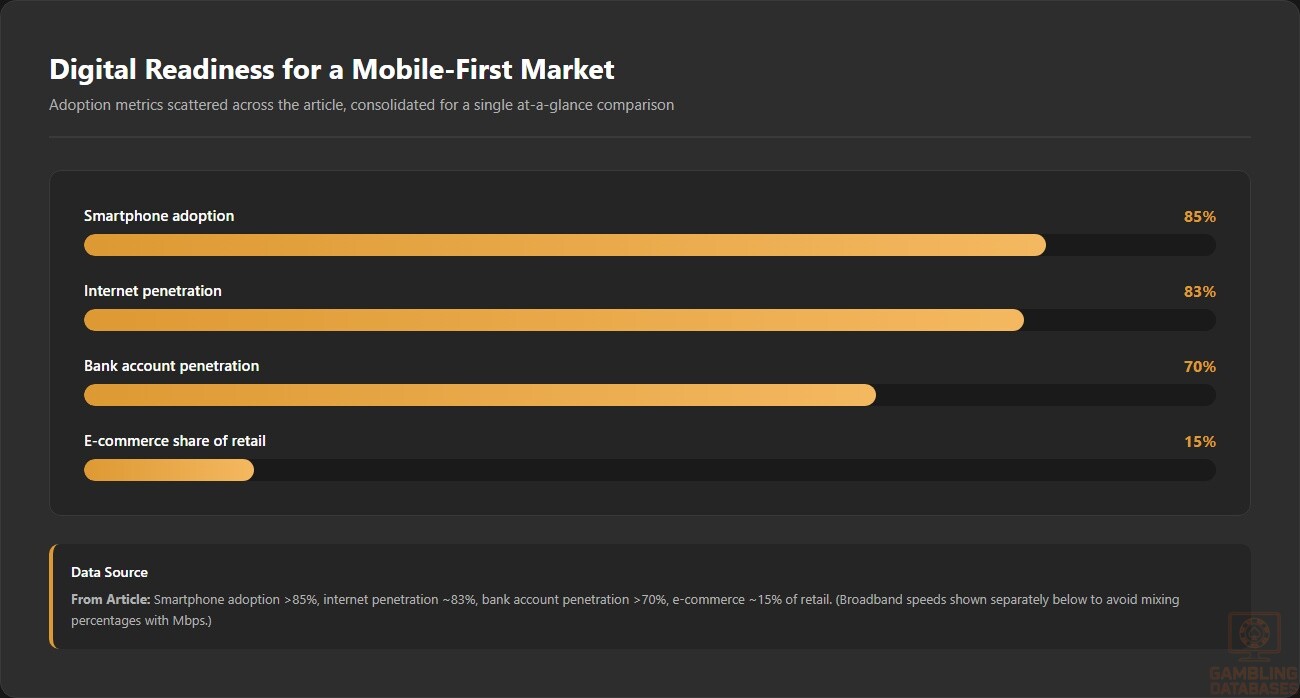
| Internet Penetration Rate | ~83% |
| Mobile Penetration Rate | ~125% (multiple SIM usage common) |
| Land-Based Casinos | 7 licensed casinos |
| Online Gambling Licensed Operators | 10+ |
| License Application Fee | €30,000 initial |
| Annual License Fee | €50,000 minimum |
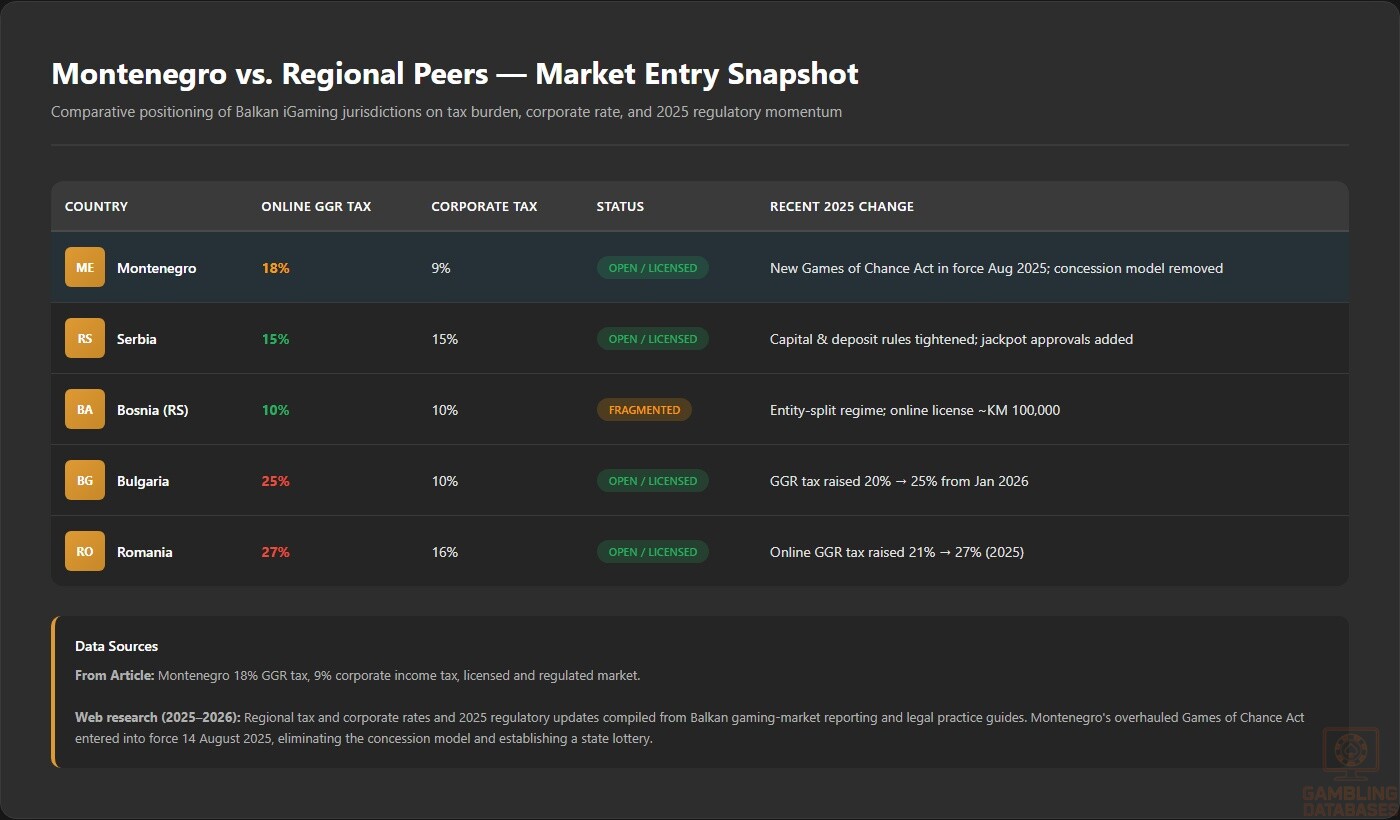
| Gross Gaming Revenue (GGR) Tax | 18% standard rate |
| Corporate Tax Rate | 9% |
| Player Tax on Winnings | Exempt for most games |
| Typical Licensing Timeline | 3 to 6 months |
| Market Size (Revenue) | €75 million (2024 estimate) |
| Market CAGR | 8.5% (2024-2029 forecast) |
| Average Revenue Per User (ARPU) | €450 annually |
| Responsible Gambling Requirements | Mandatory policies and self-exclusion programs |
| KYC / AML Compliance | Strict, EU-aligned standards |
| Local Presence Requirement | Company registered in Montenegro or EU/EEA |
| Payment Methods Accepted | Credit/debit cards, e-wallets, bank transfers, cryptocurrencies |
| Advertising Restrictions | Time-limited, content-restricted |
| Market Entry Barriers | Moderate – compliance and capital requirements |
| Regulatory Amendments | Recent updates in 2023 streamlined licensing |
| Number of Employees Required | Minimum 5 local staff |
| Technical Standards | Platform certification and RNG audit mandatory |
| Money Laundering Oversight | Handled by Montenegro FIU |
| Enforcement Penalties | Fines, license suspension |
Section 1: Regulatory Framework and Legal Environment
Current Gambling Regulation Status
Montenegro maintains a comprehensive legal framework that governs both land-based and online gambling activities under the Directorate for Games of Chance, part of the Ministry of Finance. The law regulates casinos, sports betting, lotteries, and gaming machines, ensuring proper licensing and consumer protection. This regulatory environment aims to balance operator profitability with responsible gaming and market integrity.
Land-Based Gambling Activities
The land-based gambling sector in Montenegro includes traditional casinos, sports betting shops, slot machine halls, and limited lottery operations. Currently, there are seven licensed casinos strategically located in major urban centers and tourist areas, offering a variety of table games, electronic gaming machines, and poker rooms. Sports betting venues operate under strict licensing with requirements on wagering limits and operational standards.
Other land-based activities encompass electronic gaming machines in bars and lounges, regulated under distinct licenses from casino operations. The legal framework enforces monitoring and reporting obligations for all operators to deter illegal gambling and money laundering activity.
Online Gambling Framework
The online gambling framework is well-established and structured with clear provisions for licensing domestic and foreign operators. Licensed activities include online casino games, poker, sports betting, and virtual games. The legal regime prohibits unlicensed operators from targeting Montenegrin residents through domain blocking and financial restrictions.
Regulatory oversight includes robust KYC/AML compliance evaluations, mandatory technical certifications for gaming platforms and RNGs, and continuous monitoring of operator performance. Operators must ensure fair play, secure transactions, and responsible gambling features such as player self-exclusion programs.
Licensed Operators and Market Players
The iGaming market in Montenegro includes both domestic companies and international operators holding licenses to provide online and land-based gambling services. The sector shows moderate concentration, with a mix of established casino operators and newer online entrants competing for market share. Competitive dynamics center on diverse product offerings, technological innovation, and compliance with stringent regulatory requirements.
Entry strategies frequently involve partnerships with local entities or establishing regional subsidiaries to meet legal presence and employment criteria. Market players emphasize compliance with local tax obligations and responsible gaming to sustain licenses and enhance brand credibility.
Licensing Framework and Requirements
Application Process and Eligibility
The licensing authority in Montenegro requires operators to submit comprehensive applications including proof of financial stability, technical platform certifications, and detailed business plans. Eligibility standards focus on integrity, financial capacity, and compliance with anti-money laundering regulations. The initial license application fee is €30,000, with an annual fee of at least €50,000.
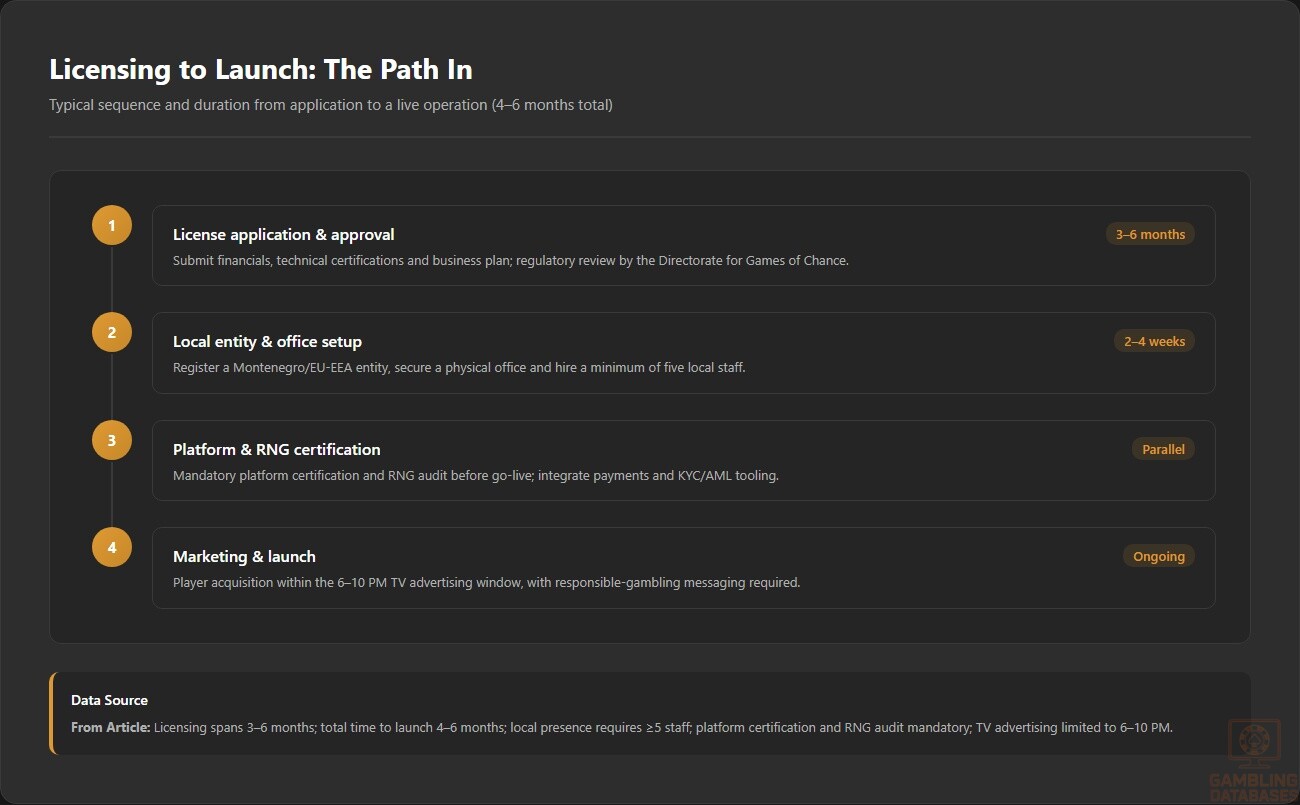
The licensing procedure typically spans three to six months, depending on the completeness of the application and regulatory review schedules. Operators must demonstrate governance structures capable of managing operations and adherence to legal obligations.
The application process emphasizes transparency and verification of ownership, proscribing involvement from individuals or entities with criminal records or associations with illegal gambling schemes.
Local Presence and Operational Requirements
Licenses mandate that operators establish a legal entity either in Montenegro or within the European Union/EEA, reflecting the country’s commitment to ensure direct regulatory jurisdiction. The requirement for a physical office presence within the region often includes employing at least five local staff who oversee compliance, player support, and operational duties.
Operators must also maintain registered gaming domains corresponding to Montenegro market authorization. Foreign ownership is permitted under regulatory supervision, with restrictions designed to safeguard market stability and local economic impact.
Compliance Obligations and Monitoring
Player Protection and Identification
Operators are compelled to implement strict age verification and KYC protocols aligned with EU standards to prevent underage gambling and fraud. AML measures must include continuous transaction monitoring and suspicious activity reporting to the Financial Intelligence Unit.
- Mandatory age verification at registration
- Identity verification before withdrawal processing
- Establishment of player self-exclusion programs
- Provision of responsible gambling information and support links
- Regular audits on KYC and AML compliance
Self-exclusion systems enable players to restrict access voluntarily, while operators must provide clear disclosure of terms and conditions related to gaming activities.
Financial Monitoring and Reporting
Operators are required to monitor all financial transactions rigorously and submit monthly reports to regulatory authorities detailing revenues, payouts, and suspicious transactions. Audits are conducted annually to verify compliance with tax obligations and operational integrity. This rigorous oversight mitigates risks of money laundering and protects consumer funds.
Taxation Structure and Financial Obligations
Player Taxation
Players are generally exempt from taxation on gambling winnings, enhancing the market attractiveness for participants. This exemption applies across most game categories, with minor exceptions for large jackpot prizes subject to specific reporting.
Operator Taxation
| Game Type | Tax Rate (%) |
|---|---|
| Online Casino and Poker | 18% |
| Sports Betting | 18% |
| Land-Based Casinos | 18% |
| Lotteries | 12% |
In addition to gross gaming revenue (GGR) tax, operators are subject to a corporate income tax rate of 9%. Annual license renewal fees and turnover-based taxes vary by gaming segment.
Gambling Market Financial Performance
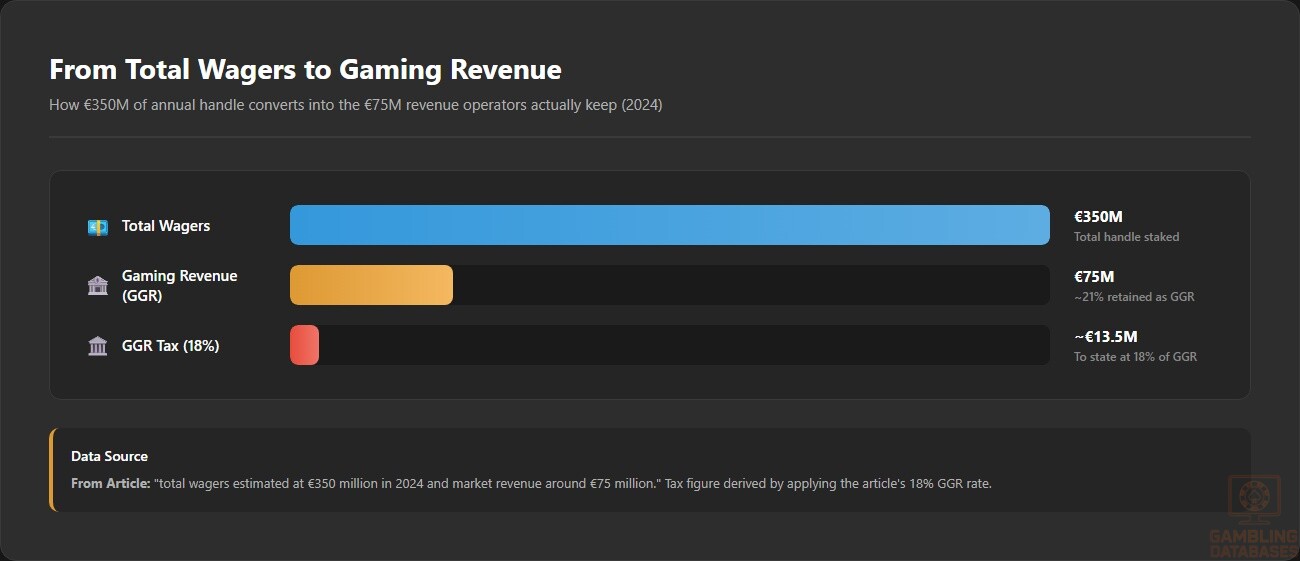
The Montenegrin gambling sector has shown steady growth with total wagers estimated at €350 million in 2024 and market revenue around €75 million. Growth forecasts suggest a compound annual growth rate (CAGR) of 8.5% through 2029, driven by increasing online penetration and tourism-related land-based play.
Revenue distribution reflects a robust online segment complementing traditional land-based casino income. Tax revenues contribute meaningfully to government budgets, supporting regulatory enforcement and consumer protection initiatives.
Advertising and Marketing Restrictions
Advertising in Montenegro’s gambling market follows strict regulations, limiting promotion to certain time windows and media channels. Content must avoid targeting minors and prohibit misleading claims about gambling outcomes. Sponsorships are allowed but subject to transparency and ethical guidelines preventing exploitative marketing.
- Advertising restricted to 6:00 PM to 10:00 PM on television
- Bans on advertisements targeting minors or vulnerable groups
- Prohibition on unsubstantiated jackpot claims
- Restrictions on bonus promotions and wagering terms disclosure
- Mandatory inclusion of responsible gambling messages
Recent Regulatory Changes and Their Impact
In 2023, Montenegro enacted amendments that streamlined licensing procedures, reducing application processing times and simplifying technical certification requirements. These changes lowered entry barriers for new operators and enhanced investor confidence.
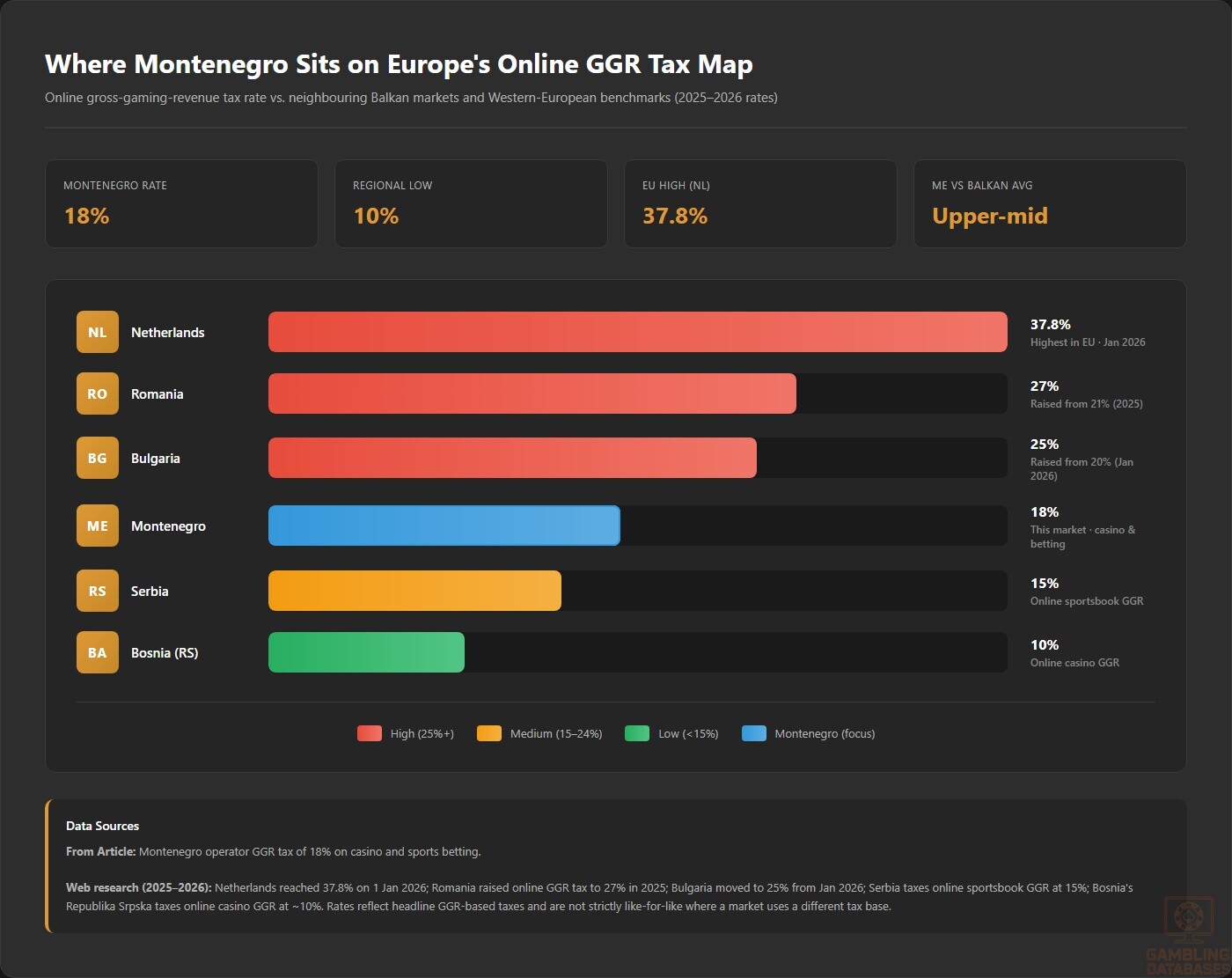
The increased GGR tax rate to 18% aligned Montenegro with regional peers, impacting operator margin calculations and strategic pricing. Enhanced AML requirements improved market transparency but increased compliance costs.
Enforcement Mechanisms and Penalties
The regulatory authority employs a range of enforcement tools, including fines, license suspensions, and revocations for non-compliance. Operators face penalties for violations such as unauthorized gambling activities, failure to comply with reporting obligations, and breaches of player protection standards.
- Monetary fines proportional to infraction severity
- Temporary suspension pending corrective actions
- Permanent revocation of gambling licenses
- Public notification of enforcement actions
- Criminal referrals in cases involving fraud or money laundering
Section 2: Demographics and Consumer Analysis
Population Demographics and Distribution
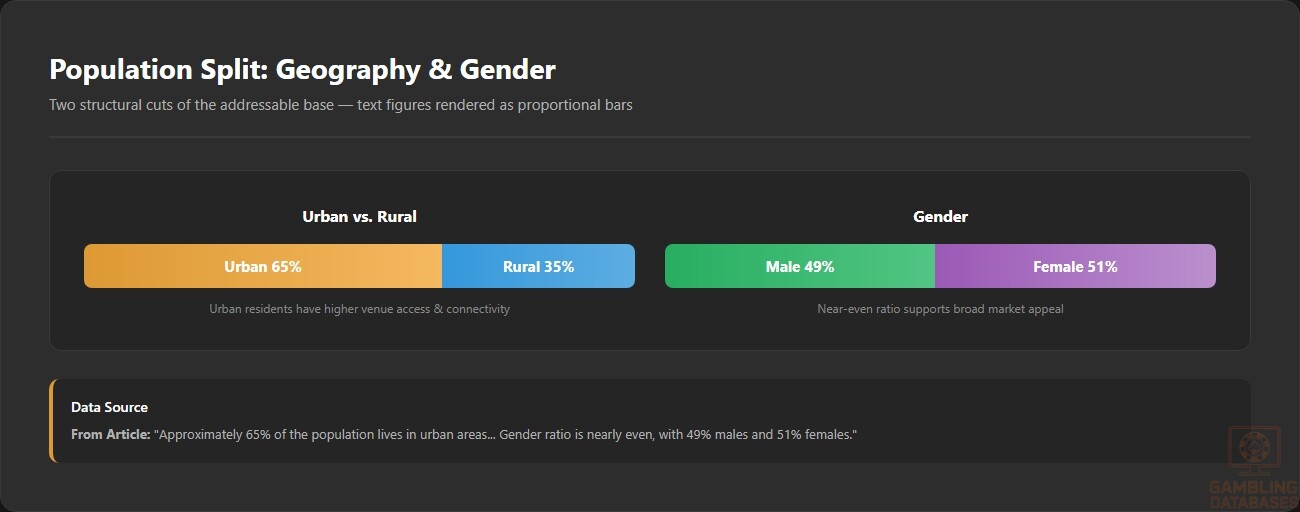
The total population of Montenegro is approximately 620,000 in 2025, with a median age of 38.5 years, reflecting a moderately mature demographic profile. Age distribution indicates a balanced mix of younger and older adults, creating a sustainable consumer base for iGaming operators. Gender ratio is nearly even, with 49% males and 51% females, allowing broad market appeal.
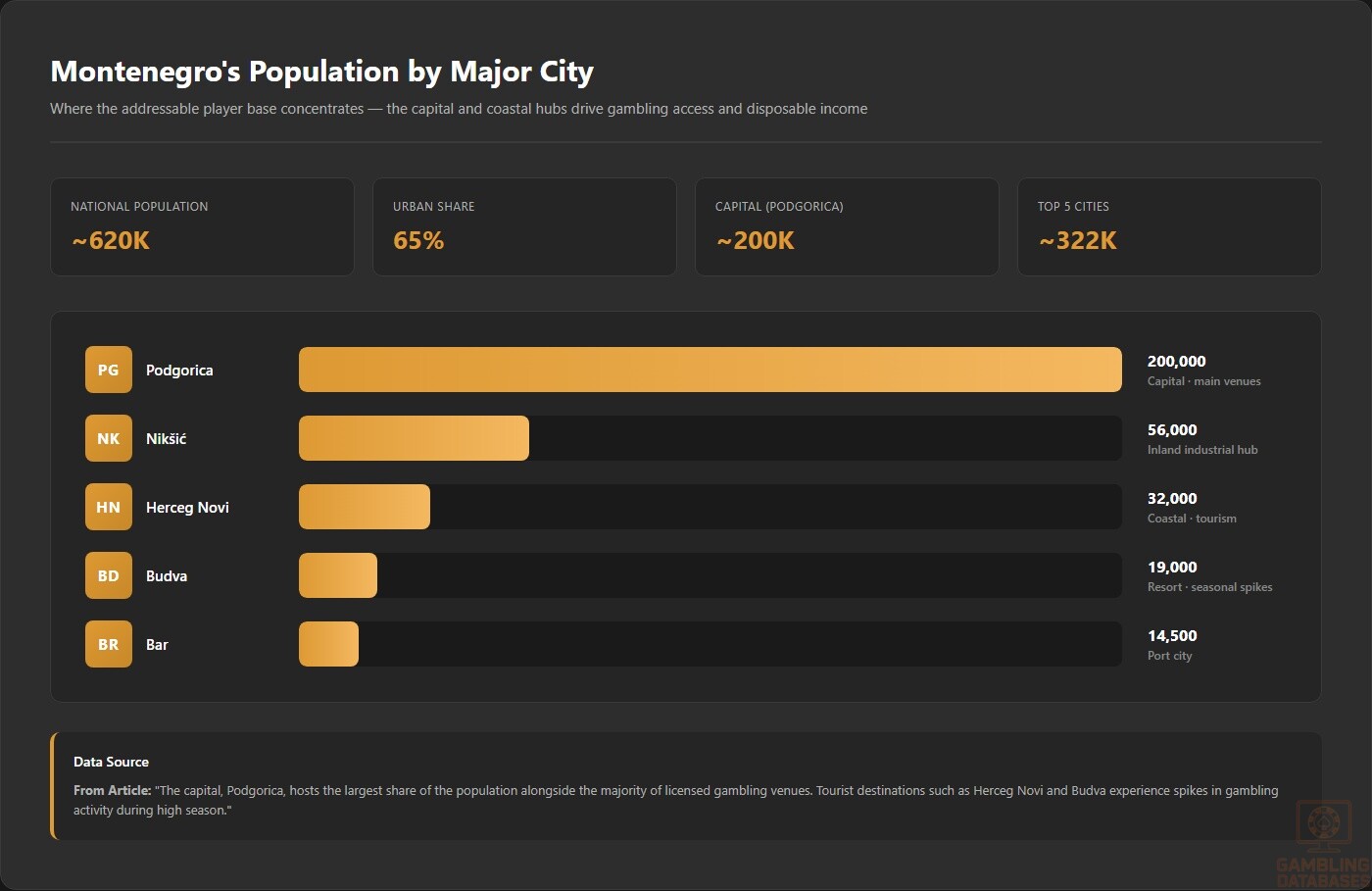
Approximately 65% of the population lives in urban areas, primarily concentrated in coastal and central economic hubs. The remaining 35% reside in rural regions, contributing to localized cultural diversity and spending. Urban residents have higher access to gambling venues and online connectivity, driving stronger participation in gambling activities than rural counterparts.
| Age Group | Percentage of Total Population |
|---|---|
| 0-14 years | 15.2% |
| 15-24 years | 12.8% |
| 25-54 years | 43.5% |
| 55-64 years | 14.0% |
| 65 years and over | 14.5% |
Geographic Distribution
The major cities of Montenegro serve as key demographic and economic centers, influencing consumer behavior and gambling access. The capital, Podgorica, hosts the largest share of the population alongside the majority of licensed gambling venues. Tourist destinations such as Herceg Novi and Budva experience spikes in gambling activity during high season, emphasizing the role of tourism in market dynamics.
- Podgorica – approx. 200,000 residents
- Nikšić – approx. 56,000 residents
- Herceg Novi – approx. 32,000 residents
- Budva – approx. 19,000 residents
- Bar – approx. 14,500 residents
Internet penetration and gambling venue availability are concentrated in coastal regions, where economic activity and tourism drive disposable income levels higher. Regional disparities in economic strength affect overall consumption patterns in gambling products.
Economic Indicators and Consumer Spending Power
Montenegro’s nominal GDP was approximately €5.5 billion in 2024, with a steady annual growth rate around 3.2%. The economy is predominantly service-based, with tourism, finance, and retail leading sectors. Growth forecasts predict continued expansion at 3-4% annually for the next five years.
Per capita income stands near €8,870, with disposable income showing positive trends attributed to improving employment rates and economic diversification. Moderate income inequality supports an expanding middle class capable of increased discretionary spending, which favors entertainment and iGaming consumption.
Market Size and Growth Projections
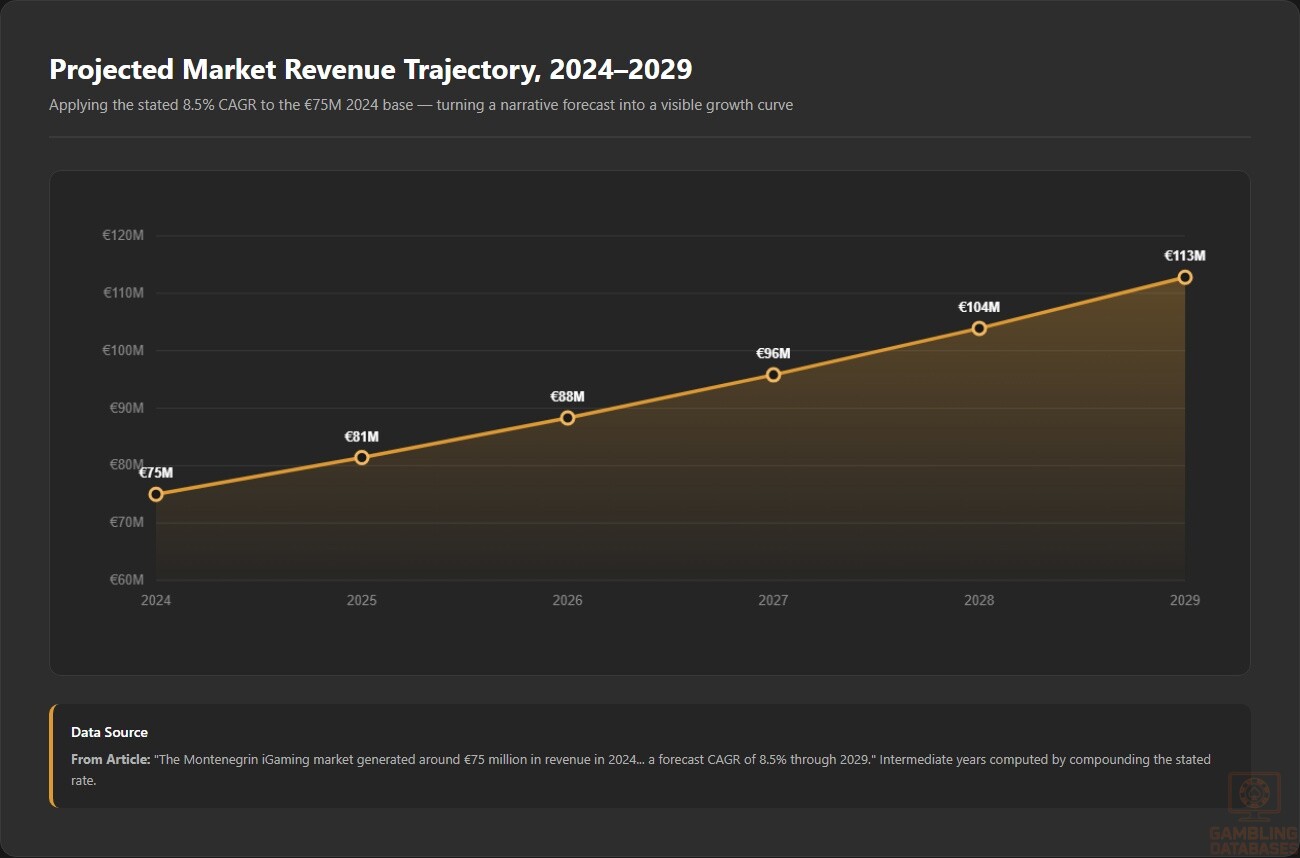
The Montenegrin iGaming market generated around €75 million in revenue in 2024, supported by a growing active user base and rising internet accessibility. With a forecast CAGR of 8.5% through 2029, the market shows strong potential for sustained growth driven by technological advances and regulatory clarity.
Average revenue per user is roughly €450, reflecting solid engagement levels and consumer spending intensity. Expansion of digital infrastructure and strategic marketing are expected to increase market penetration and user acquisition.
| Metric | Value |
|---|---|
| Market Revenue (2024) | €75 million |
| Market CAGR (2024-2029) | 8.5% |
| User Base (Active Players) | ~166,000 |
| Average Revenue Per User (ARPU) | €450 annually |
Education, Skills, and Digital Literacy
Montenegro exhibits a literacy rate above 98%, supported by a compulsory education system emphasizing digital proficiency. Tertiary education institutions have increased output in IT, software development, and customer service fields, enhancing the talent pool for iGaming operators. Widespread digital literacy facilitates adoption of online gambling and seamless use of contemporary gaming platforms.
The workforce’s technological aptitude ensures operators can implement advanced security, payment integration, and user interface solutions while meeting regulatory requirements effectively.
Cultural and Social Factors
Communication and Language
Montenegrin is the official language, supplemented by Serbian, Bosnian, Albanian, and Croatian spoken by ethnic minorities. English proficiency is expanding, especially among urban youth and professionals, enabling easier access to international gambling brands and platforms.
- Montenegrin (official)
- Serbian
- Bosnian
- Albanian
- Croatian
Cultural Attitudes
Gambling holds a cautiously accepted position in Montenegrin culture, balanced between entertainment desires and traditional social values. Religious and conservative influences moderate public opinion, but foreign gambling operators receive acceptance where transparency and consumer safeguards are evident.
Problem Gambling and Social Considerations
Problem gambling prevalence remains moderate, with governmental and NGO initiatives focusing on risk awareness and treatment. Regulatory frameworks require operators to contribute to social responsibility funds and participate in prevention programs. At-risk populations mainly include young males and economically vulnerable groups.
- National awareness campaigns addressing gambling risks
- Dedicated helpline and counseling services
- Mandatory operator contributions to treatment programs
- Player self-exclusion schemes and cooling-off periods
- Community outreach and education initiatives
Political Structure and Governance
Montenegro is a parliamentary republic exhibiting political stability conducive to consistent regulation enforcement and investor protection. Alignment with European legal standards bolsters operational transparency and regulatory predictability. The government actively fosters foreign investment while prioritizing consumer protections in gambling markets.
Technology Adoption and Digital Behavior
Internet and Digital Usage
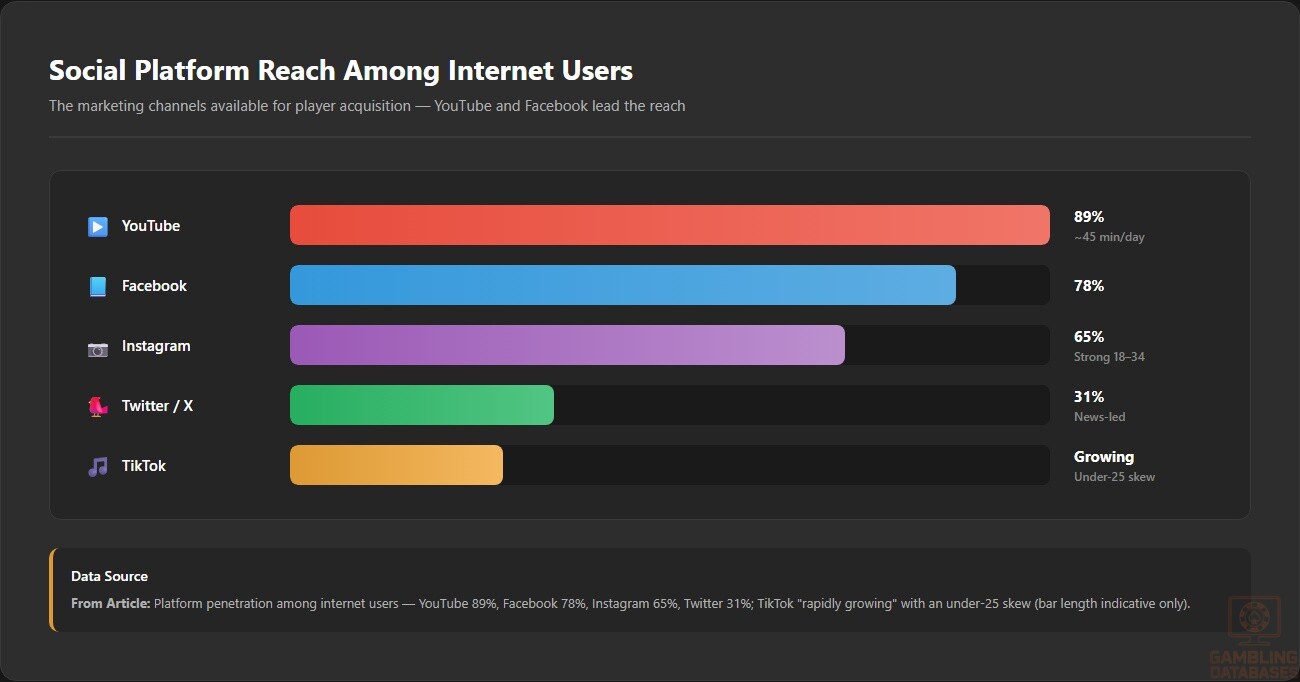
Internet penetration stands at approximately 83%, with daily average usage around 4.5 hours. Mobile broadband coverage exceeds 125%, driven by widespread multiple SIM card use. Strong engagement on social media platforms offers vital channels for digital marketing within the iGaming sector.
- Facebook – 78% penetration among internet users
- Instagram – 65%, notably among ages 18-34
- YouTube – 89%, with average daily consumption of 45 minutes
- TikTok – rapidly growing, popular with under-25 demographics
- Twitter – 31%, mostly for news consumption
Digital Payment Behavior
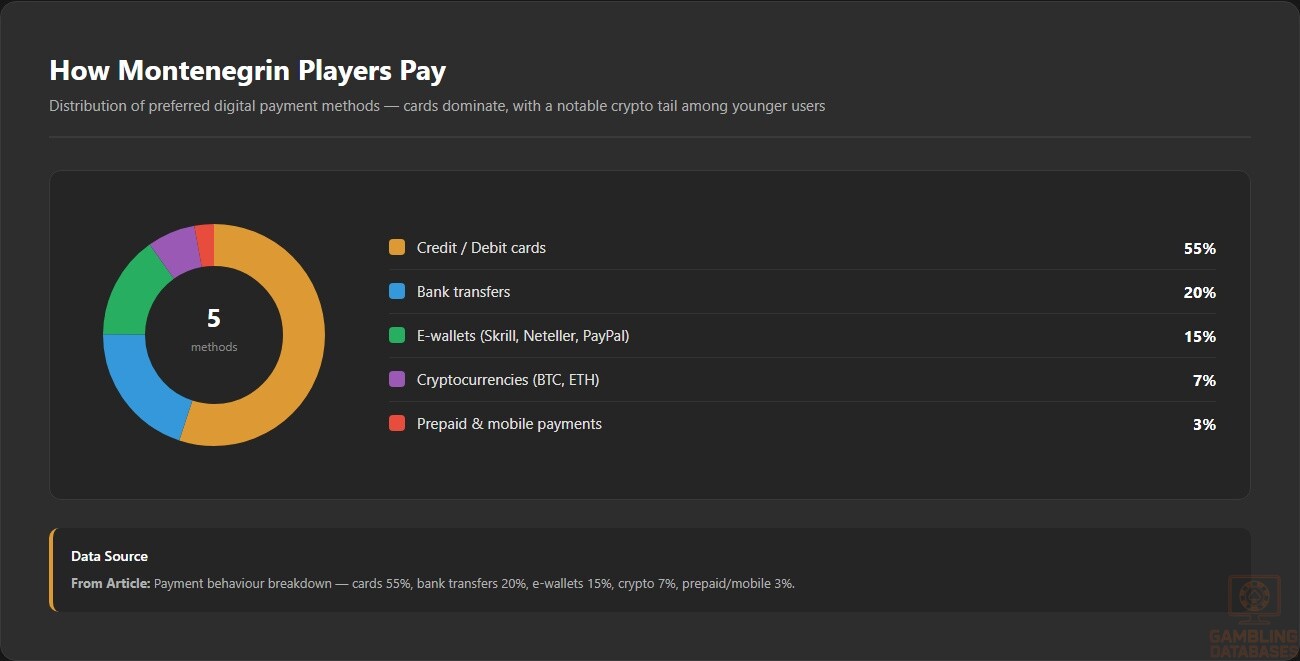
Montenegrin consumers prefer diverse digital payment methods with emphasis on security and convenience. Credit and debit cards dominate, followed by banking transfers and growing use of e-wallets and cryptocurrencies within younger segments.
- Credit/Debit cards – 55% market share
- Bank transfers – 20%
- E-wallets (PayPal, Skrill, Neteller) – 15%
- Cryptocurrencies (Bitcoin, Ethereum) – 7%
- Prepaid cards and mobile payments – 3%
Gaming and Gambling Preferences
Current Market Participation
Approximately 27% of Montenegro’s adult population engages in gambling activities, across both online and land-based formats. Sports betting, online slots, and poker constitute the leading categories that appeal to diverse age and income groups.
- Sports betting
- Online casino slots
- Poker
- Lottery and scratch cards
- Live dealer games
Consumer Behavior Patterns
Players in Montenegro exhibit moderate to high frequency of play, favoring platforms compatible with multiple devices and fast, reliable payment methods. Peak gambling activity occurs in evening hours and weekends, supported by promotional offers and loyalty incentives. Transparency, security, and responsible gambling features significantly influence player retention and trust.
Section 3: Technology Infrastructure and Business Environment
Internet and Digital Infrastructure
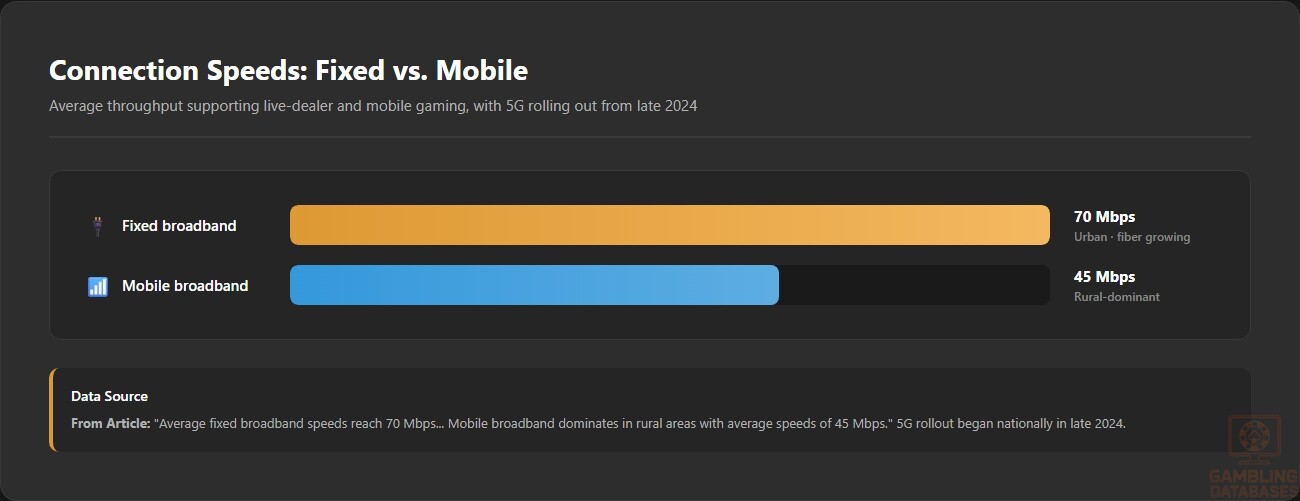
Montenegro benefits from solid internet infrastructure with an overall penetration rate of approximately 83%. Broadband fixed internet access covers urban centers extensively, while mobile internet accounts for a majority of connections outside major cities. Average fixed broadband speeds reach 70 Mbps, supported by ongoing investments in fiber optic technology, ensuring reliability and rapid access for gaming operators and end-users.
Mobile broadband dominates in rural areas with average speeds of 45 Mbps, reflecting improvements in network technologies. Government and private sector initiatives focus on expanding digital connectivity as essential for economic diversification.
5G and Future Technology Deployment
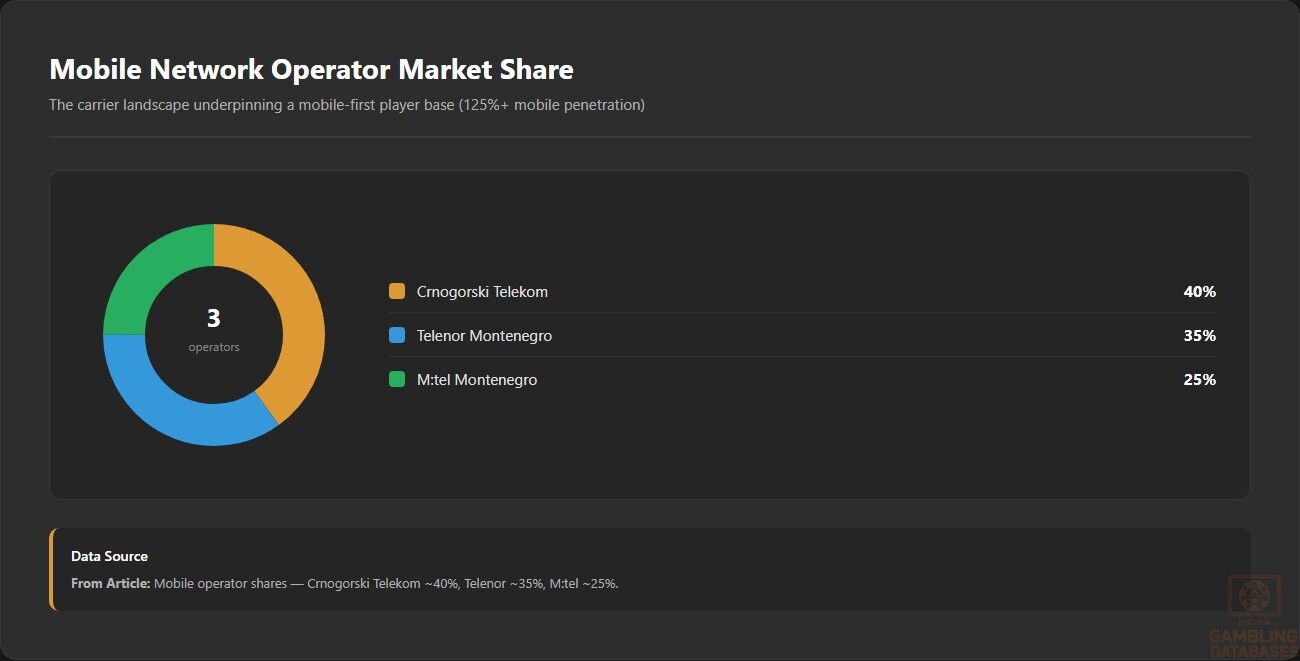
5G rollout commenced nationally in late 2024, targeting coverage of all major cities by mid-2025. Network operators have prioritized urban and tourist zones, with plans to expand rural coverage within two years. Montenegro currently hosts three major mobile network operators actively deploying and marketing 5G services to enhance mobile broadband experience.
Mobile Technology Ecosystem
Mobile Network Infrastructure
The mobile industry is competitive and well-developed, featuring multiple operators with diverse coverage and pricing models. Data costs are among the lowest in the region, fostering high mobile usage for digital services such as iGaming.
- Crnogorski Telekom – approximately 40% market share
- Telenor Montenegro – around 35% market share
- M:tel Montenegro – 25% market share
Quality of coverage is excellent in populated areas with strong LTE and growing 5G availability. Rural regions are gradually benefiting from network upgrades to support high data demands.
Device Penetration
The smartphone adoption rate exceeds 85% among the adult population, with predominant use of Android devices but rising iOS market share. Consumption patterns reveal high preference for multi-device connectivity, with mobile gaming and streaming dominating leisure activity. This supports mobile-first strategies for iGaming platforms targeting Montenegro.
Financial Services and Payment Infrastructure
Banking System Structure
Montenegro’s banking sector is stable with widespread digital banking adoption facilitating convenient payment solutions. Account penetration exceeds 70% among adults, with most banks providing comprehensive mobile and internet banking services. Local banks and foreign subsidiaries dominate the payment landscape.
- Crnogorska Komercijalna Banka
- Erste Bank Montenegro
- Hipotekarna Banka
- OTP Banka Montenegro
- Lovćen Banka
- Raiffeisen Bank Montenegro
Payment Processing Options
Gambling operators in Montenegro offer diverse payment methods to cater to consumer preferences and comply with regulatory oversight for secure transactions. Credit and debit cards remain dominant, supplemented by growing e-wallet and cryptocurrency acceptance.
- Visa and MasterCard credit/debit cards
- Bank transfers with instant verification
- E-wallets such as Skrill, Neteller, and local options
- Cryptocurrency payments including Bitcoin and Ethereum
- Prepaid cards and mobile payment platforms
E-commerce and Digital Economy
The e-commerce market in Montenegro has demonstrated steady growth, driven by increased internet penetration and consumer trust in online transactions. Online retail accounts for approximately 15% of total retail sales, with continued expansion in digital services such as entertainment, finance, and gambling. Consumer trust is enhanced by regulatory oversight and payment security frameworks supporting rapid market evolution.
Business Environment and Regulatory Framework
Ease of Business Operations
Montenegro ranks favorably in the World Bank’s Ease of Doing Business report, reflecting efficient processes for company registration and operation, moderate tax burdens, and supportive foreign investment policies. Business registration is streamlined, typically completed within two weeks, fostering a welcoming environment for iGaming entrants.
- Preparation and notarization of registration documents, including apostille certification (2-3 weeks)
- Submission to Companies Registry and processing (5-7 business days)
- Tax identification number registration (3-5 days)
- Opening corporate bank account and capital deposit (1-2 weeks)
- Final certificate issuance and operational commencement (2-3 days)
Corporate Structure and Registration
Available entity types include limited liability companies (LLCs), joint-stock companies, and branch offices. LLCs are the preferred structure for iGaming businesses due to flexible management, limited liability, and simpler compliance requirements compared to corporations. Branch offices offer options for foreign operators without full local incorporation, subject to regulatory approval.
- Limited Liability Company (most common for iGaming)
- Joint-Stock Company (larger scale operations)
- Branch Office (foreign entity presence)
- Sole Proprietorship (limited for gaming operations)
- Representative Office (no commercial activity)
Registration timelines average 2-4 weeks, with required documentation including articles of incorporation, director and shareholder information, proof of address, tax registrations, and compliance with AML/KYC standards. Foreign ownership is allowed without majority restrictions, supporting global investor participation.
Taxation Framework
Corporate Income Tax Structure
Montenegro applies a uniform corporate income tax rate of 9%, one of the lowest in Europe. Special economic zones offer additional incentives including tax holidays lasting up to 10 years, attracting technology and service companies. The country has double taxation treaties with over 30 nations, facilitating international trade and investment.
- Serbia
- Italy
- Germany
- Russia
- Greece
- United Arab Emirates
Personal Income Tax
Individuals pay income tax at progressive rates up to 15%, with mandatory social security contributions deducted at source. Residency criteria are based on physical presence exceeding 183 days. Tax treaties prevent double taxation on gambling winnings and salaries earned within Montenegro.
Market Entry Considerations
Recommended Entry Strategies
Successful market entry relies on selecting appropriate licensing, partnering with local entities, and leveraging robust technology platforms. Emphasis on compliance, customer experience, and localization enhances brand acceptance. Operators should prioritize mobile-optimized gaming solutions and establish strong payment ecosystems to meet consumer expectations.
- Direct licensing application under Montenegro regulatory regime
- Joint ventures with established local operators
- Deployment of mobile-first gaming platforms
- Integration of diverse payment methods tailored to local preferences
- Implementation of strong responsible gambling programs and compliance systems
Typical Costs and Timelines
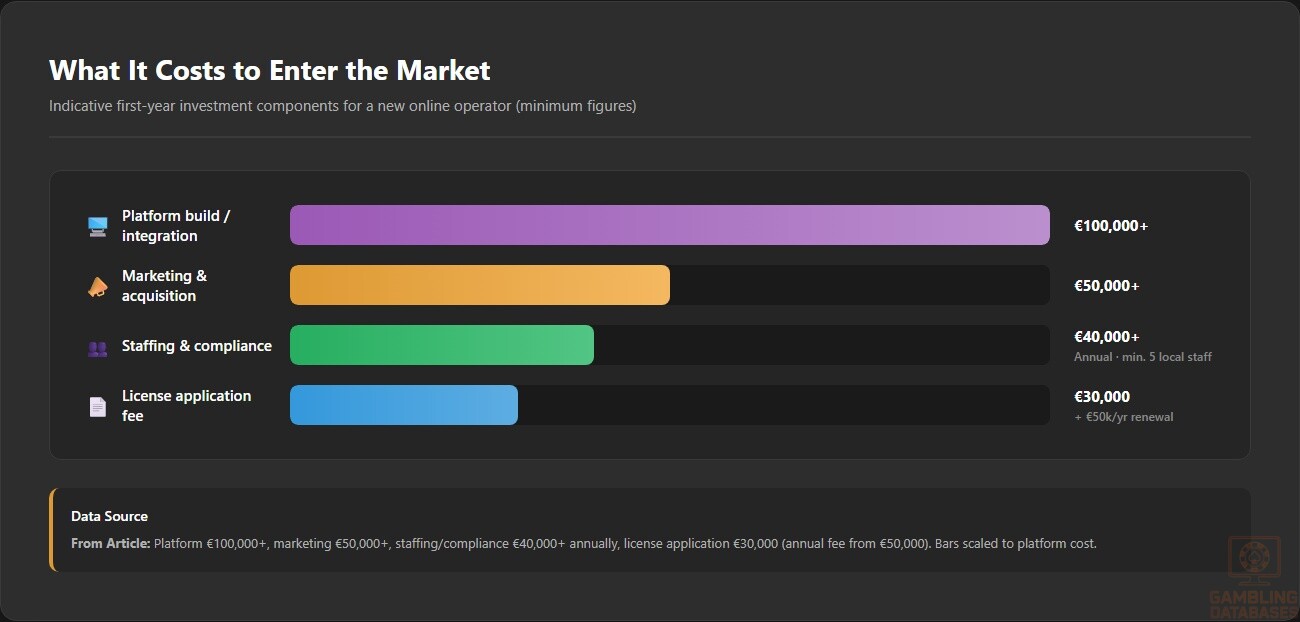
Initial investment includes license application fees around €30,000, annual license fees starting at €50,000, technology platform costs exceeding €100,000, and operational costs including staffing and marketing. The typical timeline from licensing to launch ranges from 4 to 6 months, depending on regulatory and technical requirements.
- License application and approval: €30,000 – 6 months
- Platform development/integration: €100,000+
- Initial marketing and customer acquisition: €50,000+
- Staffing and compliance expenses: €40,000+ annually
- Ongoing regulatory fees and taxes: variable based on revenue
Success Factors and Challenges
Key success enablers include navigating regulatory complexity, investing in tailored technology solutions, and building trust through customer protection programs. Challenges include intense competition, regulatory compliance costs, and managing responsible gambling risks.
- Compliance with evolving regulatory frameworks
- Robust technical platform certification and RNG validation
- Effective multi-channel marketing and player retention
- Scalable payment and customer support systems
- Mitigating social responsibility and AML risks
Exit Strategy Planning
Market liquidity remains moderate, with regulatory conditions allowing ownership transfers subject to approval. License transferability is limited, requiring regulatory consent and adherence to compliance checks. Valuation multiples for gaming companies in Montenegro align with regional averages, influenced by market growth potential and operational stability.
FAQ: Frequently Asked Questions
1. Is online gambling legal in Montenegro?
Yes, online gambling is fully legal and regulated in Montenegro. The government oversees licensing of online operators, ensuring that all platforms meet technical, financial, and responsible gambling standards. Unlicensed operations targeting Montenegrin players are prohibited and blocked by regulatory authorities.
2. What types of gambling licenses are available and what do they cover?
Montenegro offers licenses for land-based casinos, sports betting, online casinos, poker rooms, lotteries, and slot machine operators. Each license type is tailored to specific gambling categories, with comprehensive requirements on operational standards, KYC/AML compliance, and reporting. Online operators may acquire combined licenses covering multiple gaming types within the digital space.
3. How much does an iGaming license cost and how long does it take to obtain?
The initial license application fee is approximately €30,000, with annual renewal fees starting from €50,000. The application process typically spans between 3 and 6 months, depending on the completeness of the submission and regulatory workload. Timely compliance and transparent documentation expedite approval.
4. Can foreign companies obtain a gambling license?
Foreign companies are eligible to apply for gambling licenses in Montenegro. They must either establish a local legal entity or a branch office and comply with all regulatory standards, including local presence and staffing requirements. Foreign ownership is unrestricted, facilitating international investment.
5. What are the tax obligations for iGaming operators?
Operators pay an 18% gross gaming revenue tax on online and land-based gambling activities, along with the corporate income tax rate of 9%. Additional operational fees and local taxes may apply depending on business structure. Tax compliance is closely monitored to ensure accurate reporting and payment.
6. Are gambling winnings taxed for players?
Generally, gambling winnings are exempt from personal income tax for players in Montenegro, enhancing player attractiveness and market participation. Large jackpot prizes may have specific reporting obligations but typically do not incur direct taxation on winnings.
7. What are the typical operational costs for running an online casino or sportsbook?
Operational expenses include licensing fees (€30,000+), technology platform development (€100,000+), marketing and customer acquisition (€50,000+), staff salaries, payment processing fees, and ongoing regulatory compliance costs. Technology and legal support represent significant initial and ongoing investments.
8. What is the expected ROI timeline for entering this market?
Return on investment generally manifests within 2 to 4 years, subject to market conditions, operator scale, and marketing effectiveness. Strong compliance and customer retention strategies enhance profitability and reduce risk.
9. What are the local presence requirements for operators?
Operators must establish a legal entity within Montenegro or the EU/EEA, maintain a physical office, and employ a minimum of five local staff responsible for compliance and operations. This ensures regulatory oversight and economic contribution to the local environment.
10. What payment methods are available and recommended?
Recommended payment methods include widely accepted credit and debit cards, major e-wallets such as Skrill and Neteller, bank transfers with instant verification, and cryptocurrencies like Bitcoin. Offering a variety of secure and convenient options improves customer satisfaction and transaction efficiency.
11. What are the advertising and marketing restrictions?
Advertising is restricted to specific time windows, mostly between 6:00 PM and 10:00 PM on television and certain digital channels. Content targeting minors or vulnerable groups is prohibited, and promotional messages must include responsible gambling disclaimers. Sponsorships are allowed but regulated for transparency.
12. What responsible gambling measures are mandatory?
Operators must implement mandatory policies including player self-exclusion programs, deposit limits, reality checks, and access to support resources. Regular audits ensure adherence to responsible gambling standards, fostering consumer protection and regulatory compliance.
13. How large is the iGaming market and what is the growth potential?
The Montenegrin iGaming market was valued at around €75 million in 2024, boasting robust 8.5% annual growth forecasts through 2029. Expansion is supported by demographic trends, increasing internet penetration, and regulatory clarity, positioning Montenegro as a promising market for new operators.
14. Who are the main competitors and what is their market share?
The market features several domestic and international operators with diversified portfolios, including 7 licensed land-based casinos and over 10 licensed online operators. Competitors focus on product variety, compliance, and user experience to capture regional market share.
15. What are the player preferences and typical spending patterns?
Players prefer sports betting, online slots, and poker as the leading gambling activities. Spending habits reveal moderate to high engagement with peak usage during evening and weekend hours. Transparency, secure payment options, and personalized promotions significantly impact player loyalty and lifetime value.
16. What are the key success factors and main challenges for new entrants?
Success depends on regulatory compliance, innovative technology deployment, robust payment ecosystems, and effective local partnerships. Challenges include intense competition, regulatory complexity, and social responsibility mandates, demanding strategic planning and operational discipline.
Sources and References
- Montenegro Gambling Regulatory Authority – Official Website – https://mrsg.gov.me
- National Statistical Office of Montenegro – Population and Economic Data 2024 – https://monstat.org
- Central Bank of Montenegro – Financial Reports and Statistics – https://cbm.me
- Ministry of Finance Montenegro – Tax Regulations and Guidelines – https://mf.gov.me
- World Bank – Doing Business Report 2024 – https://worldbank.org
- International Telecommunication Union – ICT Statistics 2024 – https://itu.int
- Montenegro Ministry of Economic Development – Market Reports – https://mrez.gov.me
- European Gaming and Betting Association – Industry Report 2024
- Montenegro Agency for Electronic Communications and Postal Services – Infrastructure Reports – https://aek.montenegro
- Montenegro Ministry of Labour and Social Welfare – Employment and Education Statistics
- Montenegro Ministry of Interior – AML and KYC Regulations
- Financial Action Task Force – Regional Compliance Reports
- International Monetary Fund – Country Economic Analysis
- Montenegro Tourism Board – Visitor Statistics and Market Trends
- Gaming Industry Analysts – Global and Regional Market Outlook 2024
- Local News Agencies – Regulatory Change Coverage 2023-2025
- Montenegro Chamber of Commerce – Business Environment Reports
- European Commission – Digital Economy and Society Index 2024
- Montenegro Ministry of Education – Literacy and Digital Skills Data
- National Payment Systems Study – Central Banks Cooperation
- Mobile Network Operators Annual Reports
- International eCommerce and Fintech Market Research
- Legal Firms Specializing in Gambling Licenses Montenegro
- Academic Studies on Gambling Behavior in Montenegro
- Montenegro Social Welfare Programs – Problem Gambling Initiatives
- Consumer Protection Agencies Reports
- Montenegro Ministry of Culture – Social and Cultural Norms Studies
- Reports on Tax Treaties and International Agreements
- Technology Providers – iGaming Platform Certifications and Audits
- Financial Intelligence Unit of Montenegro – AML Reports
- Montenegro Investment Promotion Agency