

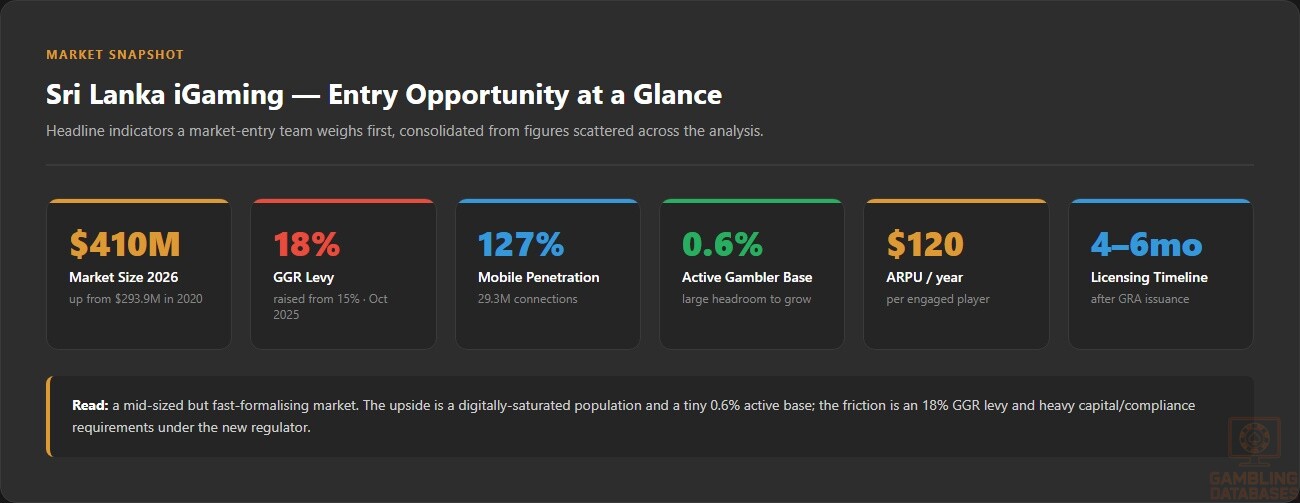
Sri Lanka is rapidly evolving into a promising iGaming market with the establishment of the Gambling Regulatory Authority (GRA) in 2025, introducing unified oversight and licensing. The country’s strategic location, rising digital adoption, and newly consolidated gambling laws offer a compelling opportunity for international operators seeking entry into South Asia’s gaming sector.
| Metric | Value |
|---|---|
| Gambling Legal Status | Regulated land-based and partially regulated online gambling under new unified law |
| Regulatory Authority | Gambling Regulatory Authority (GRA) |
| Population | 22 million |
| Median Age | 33 years |
| GDP (Nominal) | Approximately $90 billion USD (2025) |
| Average Monthly Income | Approx. $400-450 USD |
| Internet Penetration | 68% (2025 estimate) |
| Mobile Penetration Rate | 92% (2025 estimate) |
| Major Land-Based Gambling Venues | Casinos, horse racing tracks, betting shops |
| Online Gambling Legal Status | Newly regulated; online licensing under GRA pending |
| Gross Gaming Revenue Tax | Raised from 15% to 18% (2025) |
| Casino Entry Fee for Locals | Increased to $100 USD |
| License Application Fee | To be specified by GRA; provisional fees documented for casinos |
| Minimum Investment Requirement | Estimated $250 million USD for casino licenses |
| License Validity | Typically 3 years (subject to renewal) |
| Market Entry Barriers | Stringent capital and compliance requirements, local presence mandate |
| Regulatory Compliance Requirements | KYC/AML, responsible gambling controls, social harm mitigation |
| Enforcement Mechanism | Fines, license suspension and cancellation, criminal penalties |
| Growth Forecast (CAGR) | Projected 12-15% annually (2025-2030) |
| Average Revenue Per User (ARPU) | Approx. $120 USD per annum |
| Market Penetration | Approx. 0.6% active gamblers population base |
| Technology Infrastructure | High mobile access; increasing broadband coverage |
| Business Environment | Emerging market, improving transparency and investor protections |
| Competitive Landscape | Few licensed operators; ongoing entry opportunities |
| Timeline for Licensing Process | Expected 4-6 months after GRA issuance |
| Cross-border iGaming | Prohibited without GRA license; offshore platforms monitored |
Section 1: Regulatory Framework and Legal Environment
Current Gambling Regulation Status
Sri Lanka’s gambling sector has historically operated under a patchwork of legislations including the Gambling Ordinance (1887), Casino Ordinance (1988), and Horse Racing Betting Ordinance (1988). These laws governed limited land-based gambling activities such as casinos and horse race betting but left online gambling largely unregulated.
In 2025, major legal reforms culminated in the establishment of the Gambling Regulatory Authority (GRA), which consolidates previous laws into a unified regulatory framework. This authority oversees all gambling activities, including land-based casinos, online platforms, and betting operations, aiming to standardize operations and enhance regulatory compliance.
Land-Based Gambling Activities
Land-based gambling remains the dominant sector, comprising:
- Licensed casinos (including large integrated resorts like City of Dreams Sri Lanka)
- Horse racing events and betting tracks
- Licensed sports betting venues
- Authorized slot machine halls
- Cruise ship gaming operations localized at Colombo Port City
Despite growth in land-based venues, strict operational and licensing requirements apply, including minimum capital thresholds and compliance with financial crime safeguards.
Online Gambling Framework
The online gambling sector is newly regulated under the Gambling Regulatory Authority’s remit. Licensing for online operators is in development, with the framework stipulating strict adherence to KYC and AML protocols. Online betting, including sports and casino games, will only be legal when operated under a GRA-issued license.
The regulatory framework prohibits unlicensed online gambling, criminalizing offshore and domestic platforms operating without authorization. The authority also emphasizes responsible gambling measures and social harm reduction initiatives for digital gaming operators.
Licensed Operators and Market Players
The market currently hosts a limited number of licensed operators primarily focused on land-based casinos with provisional registrations since 2013. Notable brands include Bally’s, Bellagio, Casino Marina, Stardust, and the newly launched City of Dreams Sri Lanka integrated resort.
With the GRA’s establishment and the consolidation of licensing, the competitive landscape is expected to open up for newcomers equipped to meet the high capital and compliance standards. Market share remains concentrated, but regulatory transparency aims to stimulate foreign investment and broaden operator diversity.
Licensing Framework and Requirements
Application Process and Eligibility
The Gambling Regulatory Authority administers licensing with rigorous evaluation criteria. Key aspects include regulatory authority oversight, investment thresholds, and technical compliance with operational standards.
Application fees and timelines are currently defined to encourage prompt processing, with expected durations ranging from 4 to 6 months.
An initial casino license demands a minimum investment reported at approximately $250 million USD, reflecting a commitment to high-value, large-scale operations.
Documents Required For Licensing
- Corporate registration certificate and articles of incorporation
- Audited financial statements for the past three years
- Comprehensive business plan with financial projections
- Technical documentation of gaming systems and RNG certification
- Criminal background checks for all directors and beneficial owners
- Proof of capital deposit in a licensed bank
- Compliance procedures for KYC and AML regulations
Local Presence and Operational Requirements
Licensing mandates a physical presence in Sri Lanka, including registered office and personnel fulfilling compliance and operational functions locally. Domain hosting for online operations must adhere to jurisdictional control under the GRA.
Foreign ownership is permitted but subject to regulatory scrutiny and may require partnership with local entities to ensure operational transparency and compliance with national economic policies.
Compliance Obligations and Monitoring
Player Protection and Identification
Operators must implement stringent age verification, KYC/AML standards, and responsible gambling programs to mitigate social harms. This includes self-exclusion systems, betting limits, and transparent disclosure of gaming odds and risks.
The GRA enforces mandatory consumer protection measures, aiming to safeguard vulnerable populations and ensure fair play through continuous monitoring.
Mandatory Player Protection Measures
- Age verification to restrict underage gambling
- Comprehensive KYC checks on all players
- Anti-Money Laundering (AML) transaction monitoring
- Self-exclusion programs enabling player refusal
- Deposit and betting limits to manage player exposure
- Information disclosure on odds and RTP (Return to Player)
- Support access to responsible gambling counseling
Financial Monitoring and Reporting
Operators are required to maintain detailed transaction records and submit periodic reports to the GRA, including financial audits and compliance confirmations. The reporting process incorporates several stages including initial registration, periodic compliance submission, audit reviews, and anomaly investigations.
- Initial license application and declaration of financial status
- Monthly reporting of gross gaming revenue and financial transactions
- Annual audited financial statements submission
- Compliance audit and regulatory review by GRA
- Enforcement actions for non-compliance, including fines or suspension
Taxation Structure and Financial Obligations
Player Taxation
Players are subject to tax on winnings as legislated, with specific thresholds delineating taxable amounts. The state applies withholding taxes where applicable, reducing operator administrative burden.
Operator Taxation
| Game Type | Tax Rate (% on GGR) |
|---|---|
| Land-Based Casinos | 18% |
| Online Casinos (anticipated) | 18% |
| Sports Betting | 18% |
| Horse Racing Betting | 18% |
| Slot Machines | 18% |
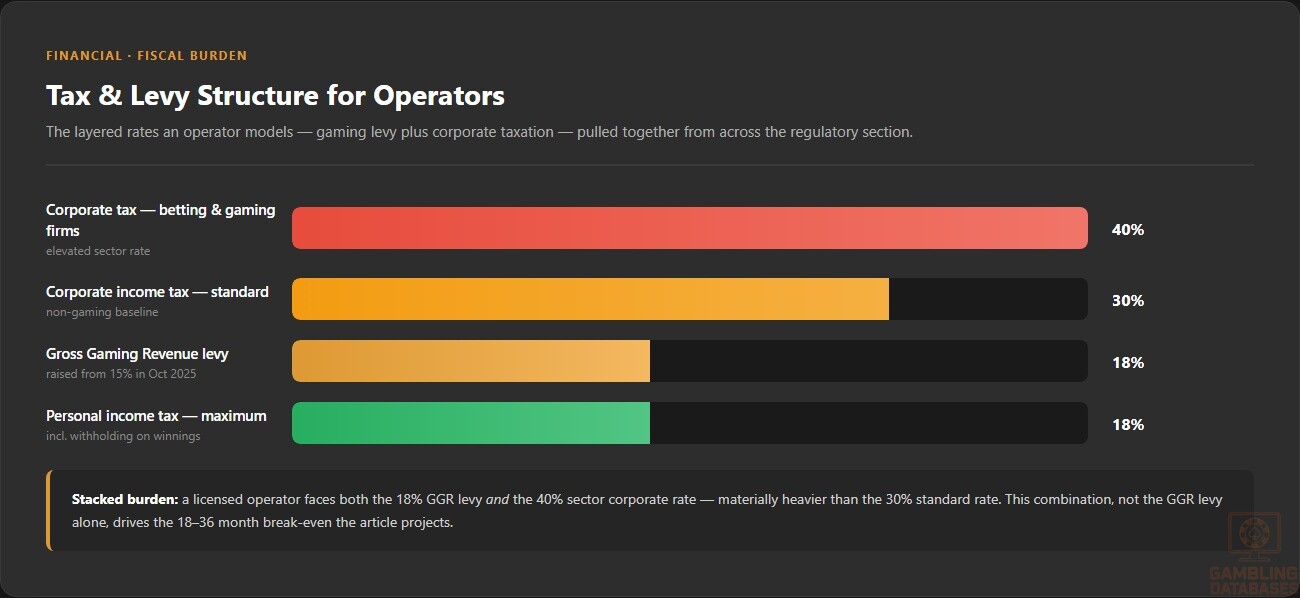
In addition to GGR tax, operators pay corporate income tax and fixed licensing fees. Licenses typically require renewal every three years, subject to compliance and fee payment.
Gambling Market Financial Performance
The sector has demonstrated steady growth, fueled by new resort openings and increased regulatory clarity. Annual wagering is rising, with casino operators reporting increasing gross revenue despite heightened taxation and entry fees. The government’s enhanced tax revenues support further regulation and social initiatives targeting gambling-related harm.
Advertising and Marketing Restrictions
Advertising channels are tightly controlled to prevent exposure to minors and vulnerable groups. Promotional content must comply with ethical standards, avoiding misleading claims or aggressive inducements. Sponsorship within sporting events is allowed under strict guidelines, with time-of-day restrictions on broadcast advertising.
Advertising and Marketing Channels Restricted or Permitted
- Television advertising during restricted hours
- Online digital marketing with mandatory content warnings
- Print media with controls on placement and content
- Sports event sponsorships under regulatory approval
- Physical venue advertising adhering to local zoning laws
- Social media marketing compliant with platform policies
Recent Regulatory Changes and Their Impact
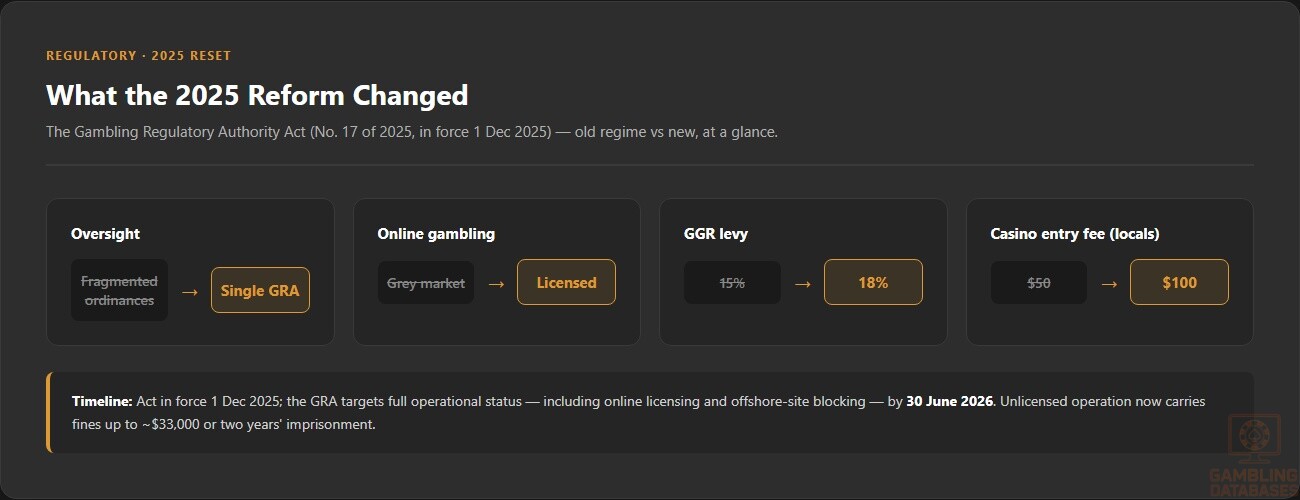
Since early 2025, Sri Lanka has overhauled its gambling statutes to create a more transparent and unified regulatory framework. The enactment of the Gambling Regulatory Authority has standardized licensing, increased taxation, and introduced rigorous compliance protocols that have reshaped the market.
The tax hike from 15% to 18% on gross gaming revenue and doubling of local casino entry fees have increased the fiscal burden on operators and patrons alike, leading to strategic adjustments in pricing and marketing. These reforms bolster government revenue and aim to limit illegal and unregulated gambling activities.
Enforcement Mechanisms and Penalties
The GRA is empowered to impose a range of penalties to enforce compliance, including:
- Monetary fines scaled to severity of infraction
- Suspension or revocation of operating licenses
- Criminal prosecution for illegal gambling activities
- Seizure of unauthorized gambling equipment
- Restrictions on advertising and promotional activities
- Mandatory corrective action plans for offending operators
Enforcement efforts focus on maintaining market integrity, protecting consumers, and upholding Sri Lanka’s regulatory standards in line with international best practices.
Section 2: Demographics and Consumer Analysis
Population Demographics and Distribution
Sri Lanka’s population is estimated at approximately 21.8 million in 2025, with a median age of about 36.8 years reflecting a maturing population. The gender ratio shows 914 men per 1,000 women, indicative of a slightly higher female population. Age distribution demonstrates a substantial working-age population, supporting consumer market potential.
| Age Group | Population Percentage | Approximate Number |
|---|---|---|
| 0-19 years | 29.0% | ~6,330,000 |
| 20-64 years | 57.6% | ~12,565,000 |
| 65 years and older | 13.4% | ~2,922,000 |
Urbanization remains moderate with just under 20% of the population residing in urban centers. This skew towards rural residency shapes accessibility and uptake of digital services including iGaming platforms.
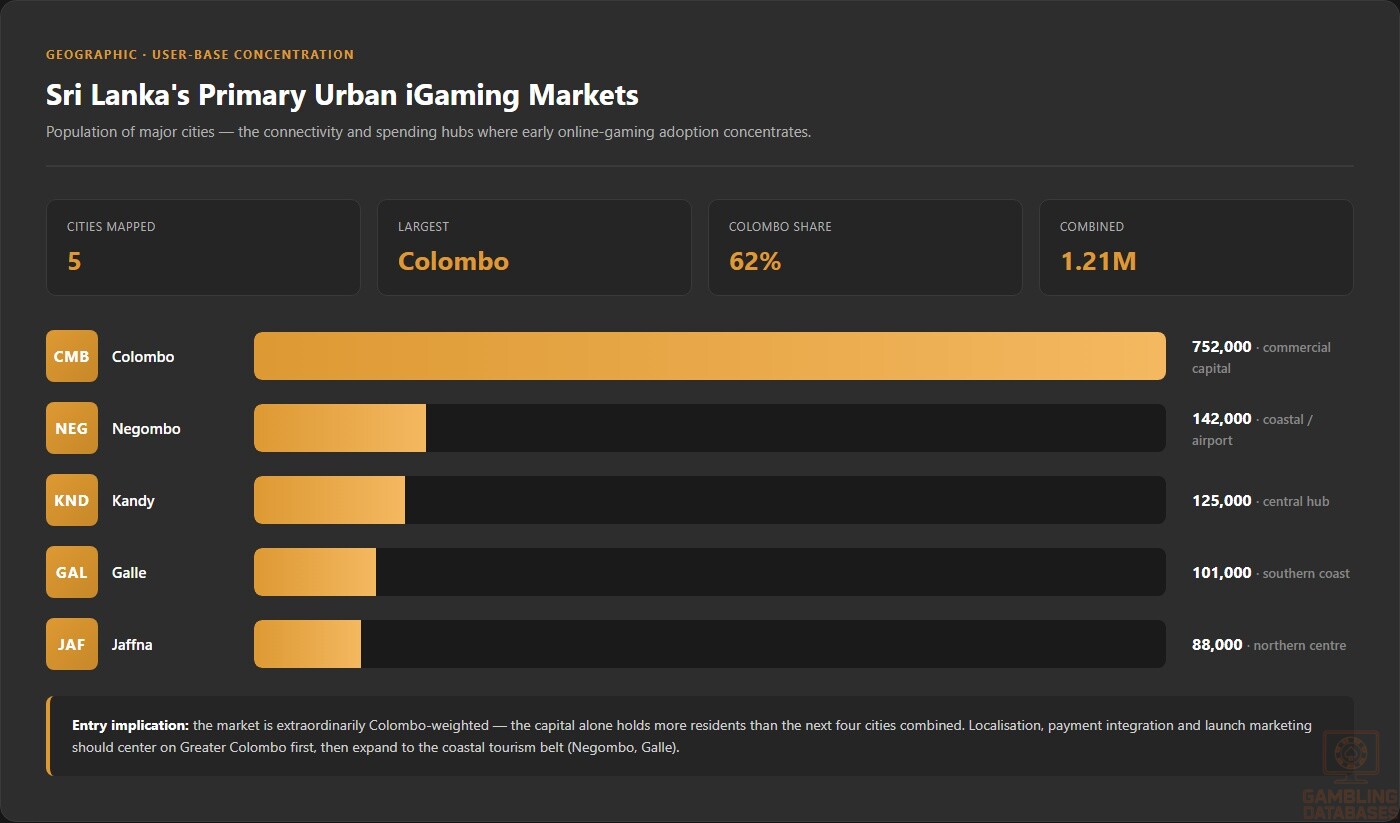
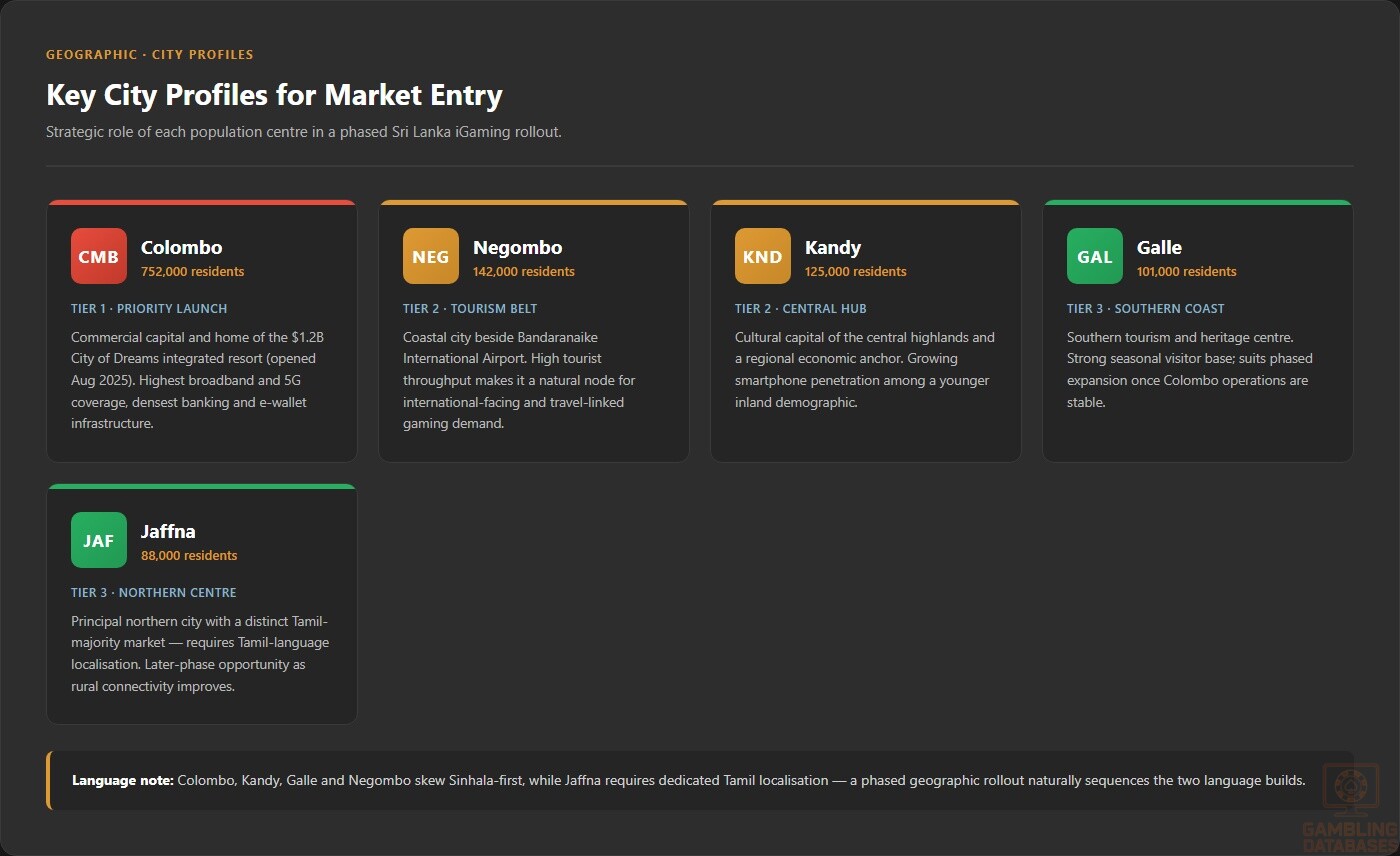
Major population centers such as Colombo, Kandy, and Galle concentrate economic activity and infrastructure including better internet access and gambling venue presence, driving primary iGaming user base growth.
- Colombo (~752,000 inhabitants)
- Kandy (~125,000 inhabitants)
- Galle (~101,000 inhabitants)
- Jaffna (~88,000 inhabitants)
- Negombo (~142,000 inhabitants)
Economic Indicators and Consumer Spending Power
Sri Lanka’s economy in 2025 is projected to grow at approximately 4.6% fueled by industrial and service sectors, notably tourism, construction, and retail. GDP is estimated near $90 billion USD, with per capita income hovering around $400-$450 monthly, suggesting moderate consumer spending power.
Significant poverty remains an obstacle, with a poverty rate above 24%, influencing discretionary spending capacity and necessitating targeted marketing for iGaming products aimed at middle and upper-income brackets.
| Indicator | Value |
|---|---|
| GDP Growth Rate | 4.6% |
| GDP (Nominal) | $90 billion USD |
| Monthly Disposable Income | $400-$450 USD |
| Poverty Rate | 24.5% |
| Inflation Rate | 5-6% |
Consumer spending favors mobile-based transactions and digital entertainment, reflecting a rising middle class comfortable with online payments and mobile applications. Household income distribution is uneven, with a significant segment in the middle-income bracket driving digital consumption growth.
Market Size and Growth Projections
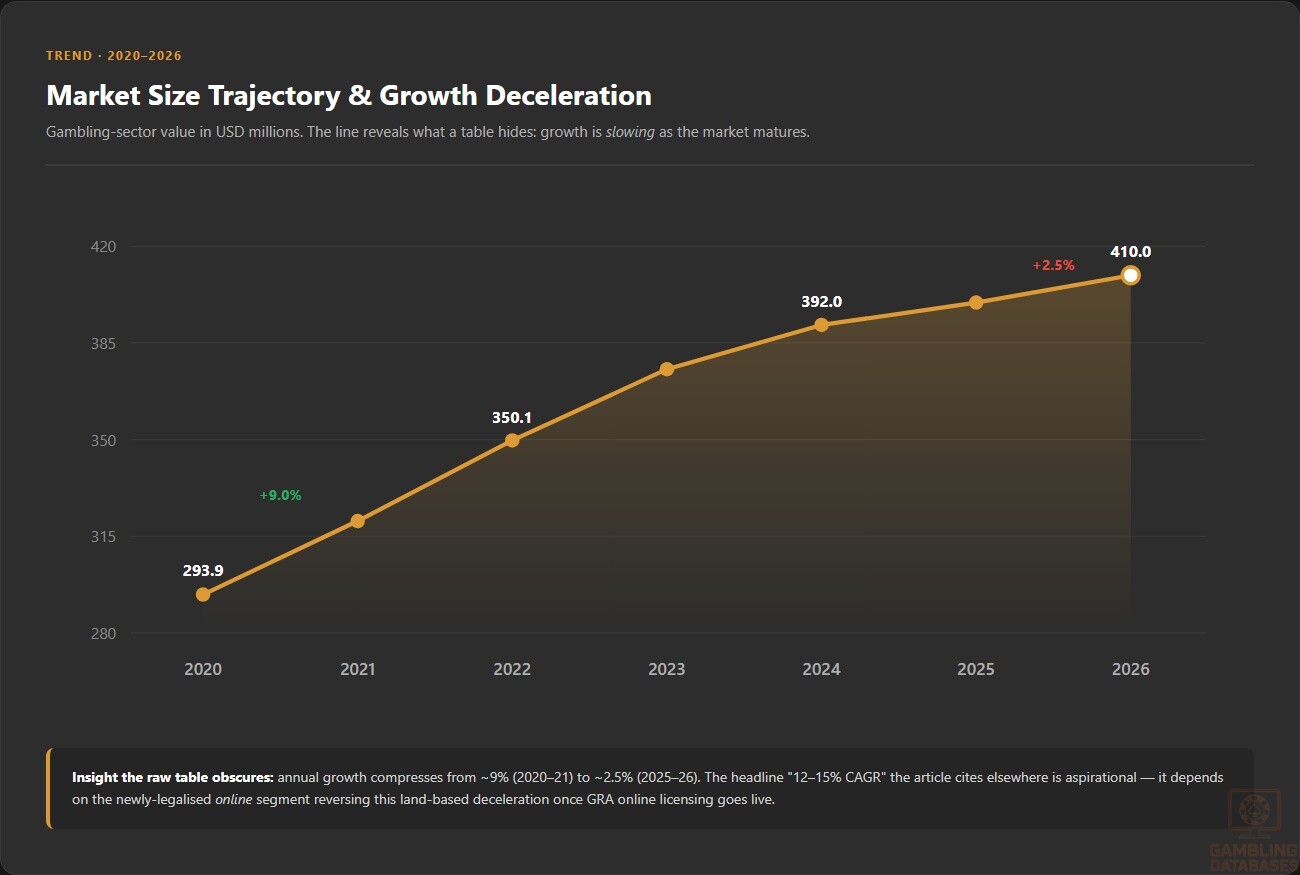
The iGaming market in Sri Lanka was valued around $295 million USD in 2020, with projections estimating growth to over $410 million USD by 2026. Annual growth rates of 12-15% indicate an emerging and promising segment supported by regulatory reforms and rising digital penetration.
| Year | Market Size (USD million) | Annual Growth Rate (CAGR) |
|---|---|---|
| 2020 | 293.9 | — |
| 2021 | 320.5 | 9.0% |
| 2022 | 350.1 | 9.2% |
| 2023 | 375.9 | 7.4% |
| 2024 | 392.0 | 4.3% |
| 2025 | 400.1 (est.) | 2.1% |
| 2026 | 410.0 (forecast) | 2.5% |
Average Revenue Per User (ARPU) is approximately $120 USD annually, driven by a compact but growing segment of engaged players. Increasing urbanization and mobile device availability are expected to support sustained user base expansion.
Education, Skills, and Digital Literacy
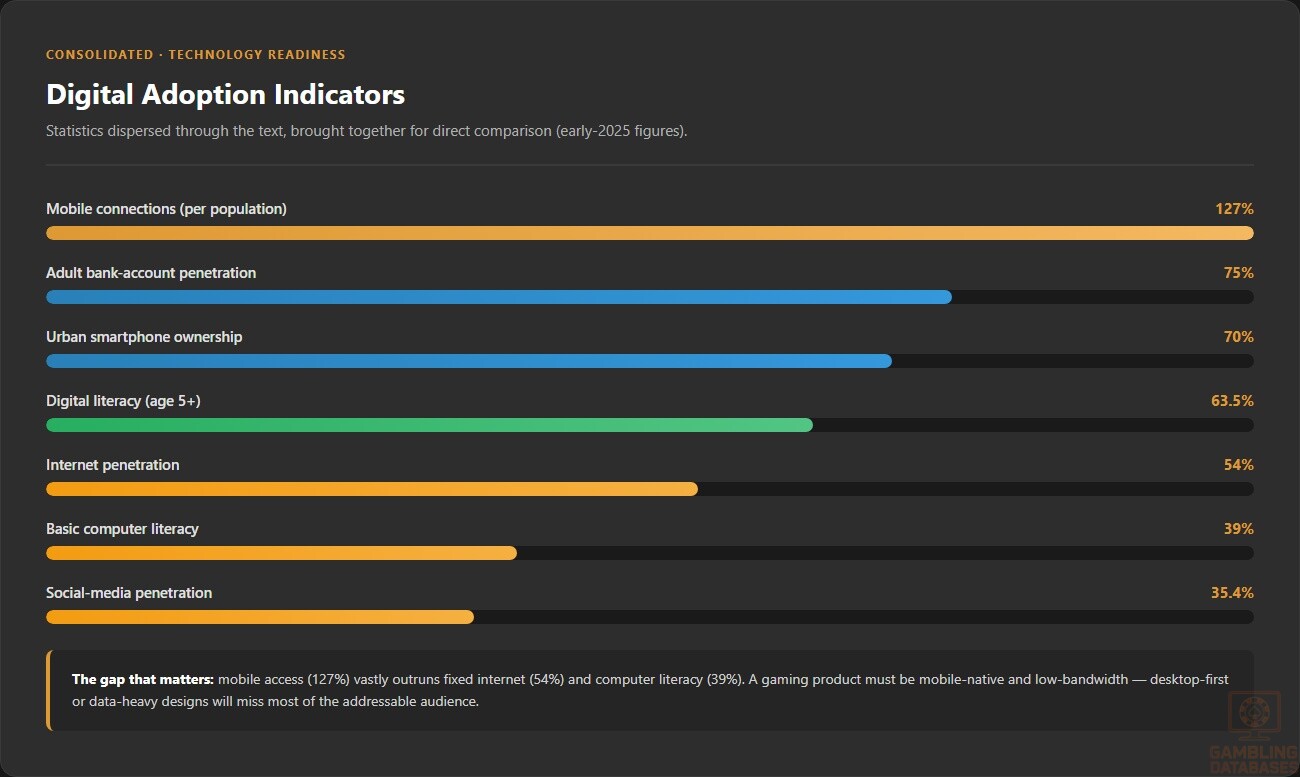
National literacy exceeds 91%, with digital literacy showing a marked rise; over 63.5% of the population aged five and older are deemed digitally literate as of 2023. Basic computer literacy is seen in roughly 39% of Sri Lankans, supporting expanding online service adoption.
Government initiatives and increased smartphone penetration in both urban and rural areas have enhanced digital skills, creating a fertile environment for mobile gaming and online betting platforms. The workforce displays growing competency in digital tools, critical for the sustainable growth of iGaming ecosystems.
Cultural and Social Factors
Communication and Language
- Sinhala (spoken by ~74% of the population)
- Tamil (spoken by ~18% of the population)
- English (widely used as a second language in business and education)
- Other regional dialects in minority communities
English proficiency provides an advantage for international operators targeting the market, facilitating customer support and promotional communications. Internet content consumption is predominantly in Sinhala and English, informing language strategy for platforms.
Cultural Attitudes
Gambling in Sri Lanka is culturally complex, influenced by religious and social norms. Traditional views often stigmatize gambling, yet urban areas and younger demographics show growing acceptance tied to entertainment and digital convenience.
Foreign gambling brands are generally seen as reputable, especially with government regulation ensuring transparency. Entertainment preferences emphasize mobile apps and social gaming as primary engagement formats for local players.
Problem Gambling and Social Considerations
Though comprehensive data on problem gambling is limited, government and NGOs recognize increasing risks particularly among youth and urban populations. Social responsibility initiatives are emerging alongside regulatory mandates.
- Mandatory contribution to responsible gambling funds by operators
- National education campaigns addressing gambling harms
- Access to counseling and support services
- Promotion of self-exclusion programs
- Research funding on gambling addiction prevalence
Political Structure and Governance
Sri Lanka operates as a democratic republic with a stable governance framework conducive to foreign investment. Political consistency and regulatory reforms to unify gambling oversight demonstrate commitment to market transparency and investor protection.
Technology Adoption and Digital Behavior
Internet and Digital Usage
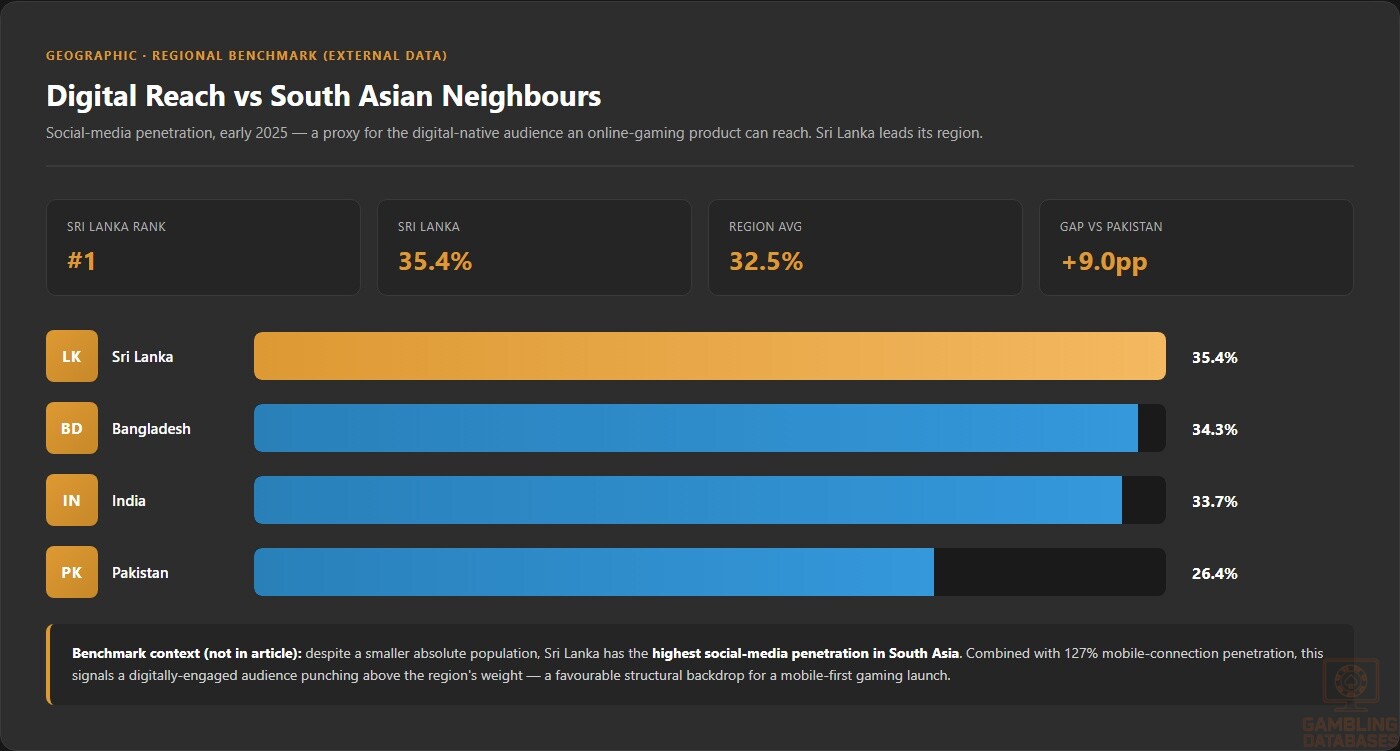
Internet penetration in Sri Lanka reaches an estimated 68% by early 2025, with an average daily usage time of approximately 3 to 4 hours for adults. Mobile adoption exceeds 90%, strongly favoring smartphones over fixed broadband connections.
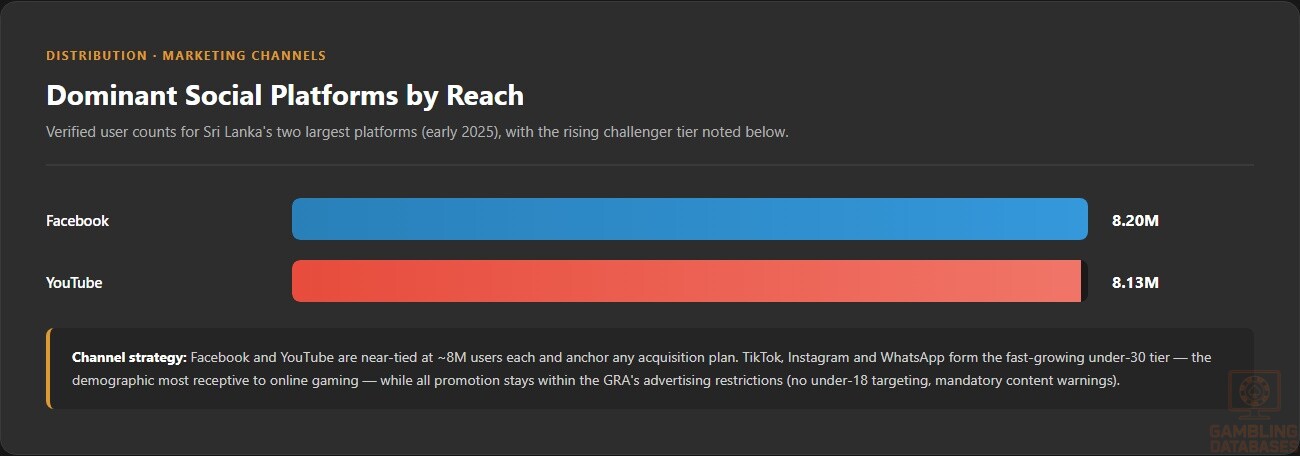
Social media is widespread, playing a crucial role in digital communication and marketing. Key platforms include:
- Facebook — dominant social networking platform with broad demographic appeal
- YouTube — primary video consumption channel with significant engagement
- Instagram — popular among younger, urban users driven by visual content
- TikTok — rapidly growing short-video platform with under-30 demographic focus
- WhatsApp — prevalent messaging app used for personal and business communications
- LinkedIn — professional networking platform growing among business communities
Digital Payment Behavior
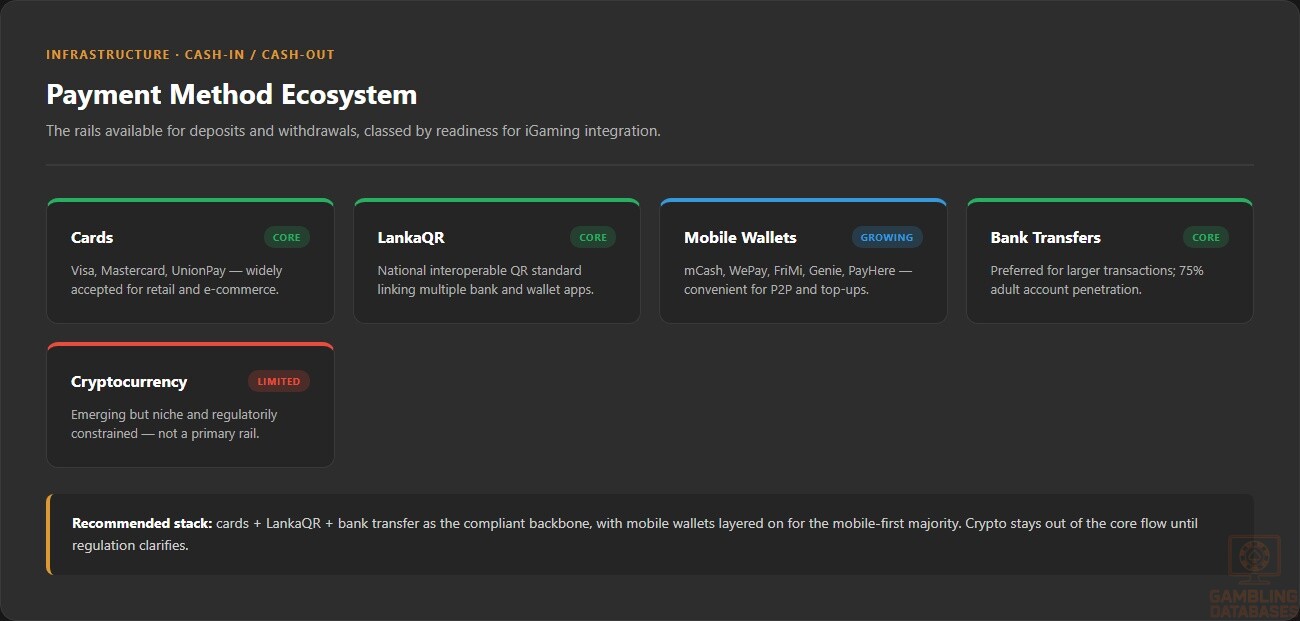
Digital payments are increasingly common, supported by national initiatives like LankaQR, promoting interoperable QR code transactions. Card usage is prevalent in urban retail and online transactions, while cash remains dominant in rural areas.
Popular payment methods include:
- Cash (Sri Lankan Rupee) for daily in-person transactions
- Debit and Credit Cards (Visa, Mastercard) for retail and e-commerce payments
- Bank transfers enabled by LankaQR system
- Digital wallets such as Genie and FriMi for P2P and bill payments
- International money transfer platforms like Wise for cross-border transactions
Gaming and Gambling Preferences
Current Market Participation
About 0.6% of the population actively participates in gambling activities, with growth expected as online regulation rolls out. The most popular gambling activities by participation rate are:
- Sports betting (football, cricket)
- Lottery ticket sales
- Horse race betting
- Land-based casino gaming
- Online casino games (in nascent regulatory stage)
Consumer Behavior Patterns
Players in Sri Lanka predominantly favor mobile platforms due to widespread smartphone usage and convenience. Gambling sessions average 30-45 minutes with peak activity in evening hours. Spending patterns reveal cautious incremental bet sizing, with retention driven by localized content, bonuses, and social engagement features.
International operators with tailored offerings and culturally adapted experiences have a competitive advantage in attracting and retaining loyal users in this emerging market.
Section 3: Technology Infrastructure and Business Environment
Internet and Digital Infrastructure
Sri Lanka’s internet penetration reached approximately 54% in early 2025, with a user base of around 12.4 million. Broadband and mobile internet access remain the cornerstones of connectivity, with fixed broadband median speeds at 22.3 Mbps and mobile internet speeds averaging 20.22 Mbps, showing steady annual growth.
While urban areas enjoy comparatively reliable, high-speed connections, challenges remain in rural regions where infrastructure gaps cause intermittent connectivity. Investments totaling over $100 million, including government and private sector funds, target 4G and 5G network coverage expansion to close these gaps and improve overall digital accessibility.
5G and Future Technology Deployment
By mid-2025, deployment of 5G networks accelerated across Sri Lanka’s major cities and growing urban centers, spearheaded by key players such as Dialog Axiata, SLT-Mobitel, and Airtel. These efforts promise increased speeds, ultra-low latency, and enhanced connectivity for both consumers and enterprises.
The government’s digital infrastructure roadmap emphasizes broad 5G adoption by 2027, targeting improved economic diversification and fostering smart city developments. Investment in next-gen digital public infrastructure, including AI and IoT applications, further supports Sri Lanka’s ambitions as a regional technology leader.
Mobile Technology Ecosystem
Mobile Network Infrastructure
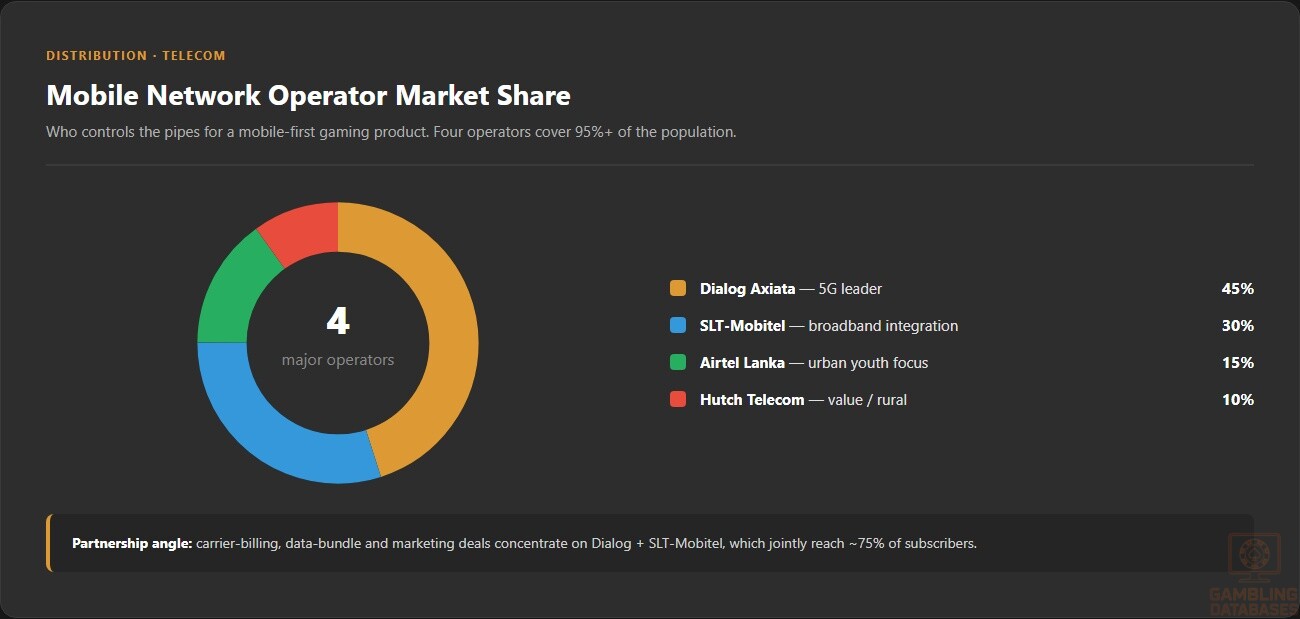
The Sri Lankan mobile market is serviced by four main operators that collectively cover over 95% of the population. Competition centers on expanding 4G and 5G services as demand for data surges.
- Dialog Axiata: Largest market share exceeding 45%, leader in 5G rollouts
- SLT-Mobitel: Second largest with around 30% market share, strong fixed and mobile broadband integration
- Airtel Lanka: Roughly 15% share, targeting urban youth and data-centric users
- Hutch Telecom: Approximately 10% market share, focusing on price-sensitive and rural segments
- Other MVNOs and niche providers collectively fill remaining market share
Device Penetration
Smartphone penetration is robust, with over 70% of the urban population equipped with smartphones and growing adoption in rural areas. Brands from Samsung, Xiaomi, and Oppo dominate device sales, favored for affordability and feature sets.
User behavior is shifting toward mobile-first engagement, with a significant portion of digital traffic coming from apps and mobile browsers, setting a solid foundation for mobile iGaming platforms.
Financial Services and Payment Infrastructure
Banking System Structure
The banking sector is a mix of state-owned, private, and international banks with increasing focus on digital banking and financial inclusion. Account penetration has expanded to over 75% of adults underpinned by drive toward cashless payments.
- Commercial Bank of Ceylon: Largest private bank with substantial digital offerings
- People’s Bank: Government-owned with extensive rural reach
- Sampath Bank: Innovator in digital payment solutions including WePay platform
- Hatton National Bank: Focuses on SME and corporate banking digitization
- National Development Bank: Key player in SME lending and fintech partnerships
Payment Processing Options
Payments infrastructure supports a wide array of methods, essential for seamless iGaming transactions. The payment ecosystem is evolving with increasing e-wallet adoption complementing traditional card and bank transfer usage.
- Credit and Debit Card Networks: Visa, Mastercard, UnionPay widely accepted
- National QR Code Standard – LankaQR integrates multiple payment apps
- Mobile Wallets: mCash, WePay, and PayHere popular for convenience
- Bank Transfers: Commonly used especially for larger transactions
- Cryptocurrency: Emerging but limited to niche segments due to regulation
E-commerce and Digital Economy
E-commerce in Sri Lanka is expanding rapidly, supported by improved logistics, digital payments, and growing consumer trust. Online retail penetration exceeds 20% of the urban population, with continuing government support for digital service adoption.
The digital economy contributes significantly to GDP growth, driven by increased internet penetration, mobile adoption, and expanding fintech services supporting SMEs and consumers.
Business Environment and Regulatory Framework
Ease of Business Operations
Sri Lanka ranks moderately in the World Bank’s ease of doing business metrics, showing strengths in starting a business and accessing credit but facing challenges in enforcing contracts and dealing with construction permits. Recent reforms facilitate faster registrations and investor protections.
- Secure company name reservation and registration via online portals (eROC)
- Submission of incorporation documents and tax registration within weeks
- Opening corporate bank accounts and compliance registrations follow shortly
- Obtaining sector-specific licenses and permits, including gambling-related approvals
Corporate Structure and Registration
Common business entities include Private Limited Companies, Partnerships, and Branch Offices for foreign companies. Private Limited Companies are preferred by iGaming entrants due to liability protections and regulatory clarity.
Foreign ownership is permitted without restrictions, but regulatory scrutiny ensures compliance with local economic policies. Registration timelines typically span 2-4 weeks, subject to document completeness and licensing requirements.
Required Registration Documents
- Certified Copy of Articles of Incorporation
- Memorandum of Association
- Director and Shareholder IDs and Addresses
- Company Resolution for Authorized Person
- Proof of Registered Office Address
- Tax Registration Certificate (TIN)
- Compliance Undertakings for AML/KYC
Taxation Framework
Corporate Income Tax Structure
The standard corporate income tax rate is 30%. Betting and gaming companies incur a higher tax rate of 40%. Special economic zones grant tax holidays and reduced rates for qualifying operators.
- Double tax treaties with countries including India, China, Singapore, UK, and UAE reduce withholding taxes and encourage foreign investment
- Tax compliance includes quarterly filings and annual audits
Personal Income Tax
Individuals pay progressive income tax rates up to 18%, with withholding applied on gambling winnings where applicable. Social security contributions are mandatory and split between employers and employees.
Market Entry Considerations
Recommended Entry Strategies
Entering Sri Lanka’s iGaming market requires a mix of regulatory compliance, local partnership, and technology adaptation. Leveraging mobile-first platform design and integrating local payment options enhances market acceptance.
- Form local legal entity with full compliance
- Partner with established payment processors and banks
- Customize offerings to fit cultural preferences and languages
- Adopt robust responsible gambling and AML frameworks
- Build strong digital marketing channels aligned with advertising restrictions
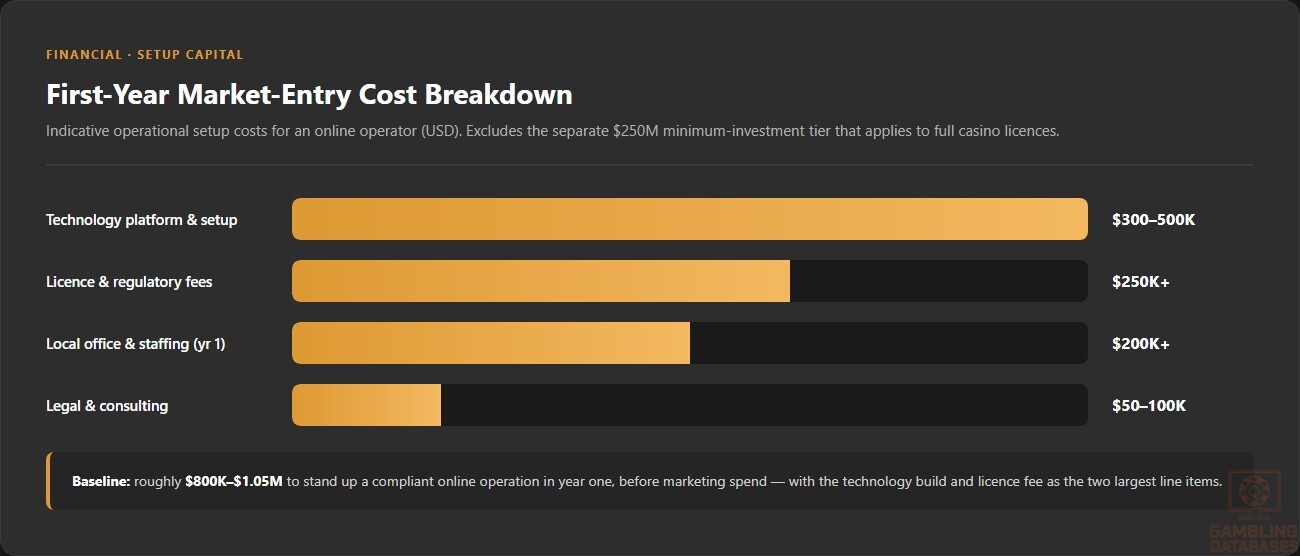
Typical Costs and Timelines
Initial investment involves license fees, technology integration, and staffing. License acquisition spans 4-6 months. Sustainable operations require substantial capital reserves given tax and regulatory demands.
- License application and regulatory fees: Approx. $250,000+
- Technology platform licensing and setup: $300,000 – $500,000
- Local office operation and staffing yearly: $200,000+
- Marketing budgets: Variable based on strategy
- Legal and consulting fees: $50,000 – $100,000
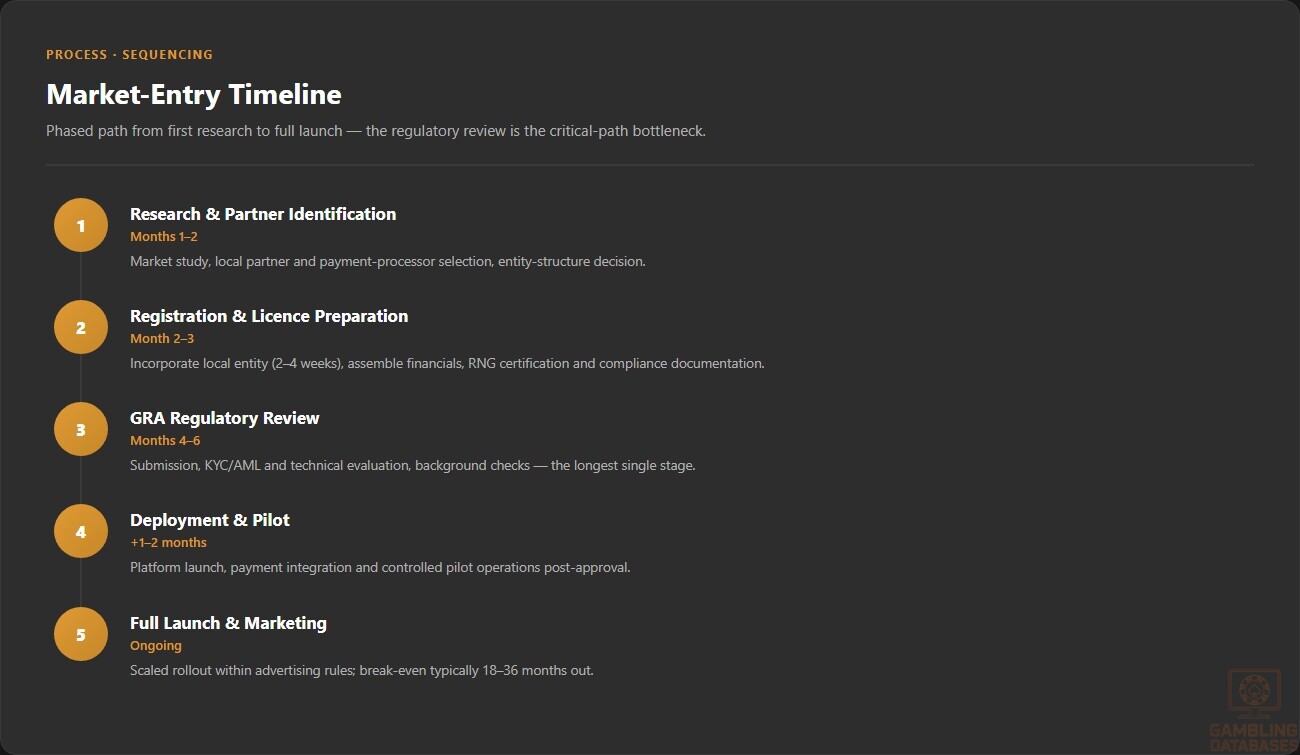
Market Entry Timeline Phases
- Preliminary market research and partner identification (1-2 months)
- Company registration and license application preparation (2 months)
- Submission and regulatory review process (4-6 months)
- Platform deployment and pilot operations (1-2 months)
- Full-scale market launch and marketing rollout (ongoing)
Success Factors and Challenges
Successful operators navigate complex regulatory landscapes, build trusted local brands, and deliver superior customer experiences. Challenges include navigating tax changes, ensuring effective AML/KYC compliance, and overcoming infrastructure disparities.
- Regulatory adherence and transparent operations
- Strong local partnerships and cultural understanding
- Robust technology with mobile and payment integration
- Effective marketing within legal advertising constraints
- Continuous investment in player protection and responsible gambling
Exit Strategy Planning
Market liquidity for ownership transfers exists but is moderated by regulatory approvals. License transferability is restricted and requires prior GRA consent. Valuations hinge on regulatory compliance, revenue stability, and growth potential.
FAQ: Frequently Asked Questions
1. Is online gambling legal in Sri Lanka?
Online gambling in Sri Lanka is currently legal only under the regulatory framework established by the Gambling Regulatory Authority (GRA). Operators must obtain a GRA-issued license to conduct online gaming legally. Unlicensed online gambling platforms are prohibited and subject to penalties. The evolving regulations emphasize consumer protection, AML compliance, and responsible gambling.
2. What types of gambling licenses are available and what do they cover?
Licenses are issued for land-based casinos, online casinos, sports betting, horse racing betting, and slot machine operations. While some land-based licenses have long been established, online gambling licenses are newly introduced under the GRA. Each license category requires compliance with distinct operational, technical, and financial standards tailored to its gaming format.
3. How much does an iGaming license cost and how long does it take to obtain?
iGaming license fees typically start around $250,000 USD, varying with scope and size. The application process takes between 4 to 6 months to complete, factoring regulatory review, compliance checks, and technical evaluations. Additional fees may apply for renewals and ancillary permits.
4. Can foreign companies obtain a gambling license?
Yes, foreign companies are eligible for Sri Lankan gambling licenses but must establish a local legal entity or partner with a licensed local operator. Regulatory requirements include demonstrating financial stability, adherence to AML/KYC standards, and local presence ensuring operational transparency.
5. What are the tax obligations for iGaming operators?
Operators face an 18% gross gaming revenue tax on all gaming categories, with an overall corporate tax rate of 30%, and a higher 40% rate specifically for betting and gaming businesses. Taxes on winnings for players are withheld at source. Operators must comply with quarterly and annual tax filings and remit all due taxes promptly to avoid penalties.
6. Are gambling winnings taxed for players?
Yes, gambling winnings are subject to withholding taxes under Sri Lankan law. The government applies tax mechanisms to ensure transparency and compliance, reducing the administrative burden for players. Specific thresholds and rates depend on game types and prize sizes.
7. What are the typical operational costs for running an online casino or sportsbook?
Operational costs include licensing fees, platform development and maintenance, staffing, marketing, and regulatory compliance. Technology licensing and security investments also represent significant expenses. Marketing budgets depend on growth strategies while compliance monitoring is essential to avoid fines.
8. What is the expected ROI timeline for entering this market?
ROI timelines vary but operators typically achieve break-even after 18 to 36 months, contingent on market penetration, compliance costs, and competitive positioning. High capital expenditure and taxation affect early profitability, emphasizing strategic planning and efficient operations.
9. What are the local presence requirements for operators?
Operators must maintain a registered office in Sri Lanka and employ local compliance and operational staff. This presence ensures adherence to regulations, facilitates communication with the GRA, and enhances trust with local consumers and agencies.
10. What payment methods are available and recommended?
Recommended payment methods include credit/debit cards, national QR code payments (LankaQR), leading e-wallets such as mCash and WePay, and bank transfers. Cryptocurrency use is emerging but regulated. A diverse payment portfolio supports inclusion and convenience for players.
11. What are the advertising and marketing restrictions?
Advertising is permitted within regulated channels but with restrictions to prevent targeting minors and vulnerable groups. Promotions must avoid misleading claims and respect content guidelines. Sponsorship of sports and events is allowed subject to GRA approval and time restrictions on broadcast advertising.
12. What responsible gambling measures are mandatory?
Operators must enforce age verification, self-exclusion programs, deposit limits, and provide clear information on gaming risks. Social responsibility contributions fund public awareness and treatment initiatives. Continuous monitoring and user-accessible controls are required.
13. How large is the iGaming market and what is the growth potential?
The iGaming market in Sri Lanka is valued at approximately $360 million in 2025, with expected growth at a 5.4% CAGR through 2030. Growth drivers include digital adoption, regulatory clarity, and rising tourism. Online segments exhibit rapid expansion potential as licensing matures.
14. Who are the main competitors and what is their market share?
The market features established land-based operators such as Bally’s and City of Dreams Sri Lanka with emerging online contenders. Market share is concentrated but expected to diversify with new entrants meeting regulatory criteria and capital thresholds.
15. What are the player preferences and typical spending patterns?
Players favor sports betting, lotteries, and horse racing, with increasing interest in online casinos. Peak engagement occurs evenings and weekends via mobile platforms, with average session lengths of 20-45 minutes. Payment flexibility and localized content drive retention.
16. What are the key success factors and main challenges for new entrants?
Success requires regulatory compliance, strong local partnerships, mobile-optimized platforms, and robust responsible gambling frameworks. Challenges include high entry costs, tax burdens, competition, and infrastructure gaps. Cultural adaptation and ethical marketing are essential to long-term growth.
Sources and References
- Sri Lanka Gambling Regulatory Authority – Official Government Publications and Laws
- Central Bank of Sri Lanka – Economic and Financial Reports 2025
- Digital 2025: Sri Lanka Report – DataReportal
- World Bank – Doing Business Report 2025 for Sri Lanka
- Telecommunications Regulatory Commission of Sri Lanka (TRCSL) – Market Statistics
- Stats and Market Data from Sigma World and iGamingToday 2024-2025
- PopulationPyramid.net – Sri Lanka Demographics 2025
- National Statistical Office of Sri Lanka – Population and Economic Data 2025
- Digital Payments Reports from Sampath Bank and JustPay
- Ookla Speedtest Reports Sri Lanka 2025
- Dialog Axiata Infrastructure Investment Announcements 2025
- Sri Lanka Mobile Operators Market Analysis 2025 – MarketReportAnalytics
- Corporate Taxation Guide Sri Lanka 2025 – SimpleBooks and Trading Economics
- Business Registration Guidelines – Department of Registrar of Companies Sri Lanka
- Financial Times and Reuters – Sri Lanka Economic and Gambling Market News 2024-2025
- Coingeek and UNDP Reports on Digital Transformation in Sri Lanka 2025
- LinkedIn Publications on Sri Lanka Digital and Gambling Market Trends 2025
- Market and Payment Gateways Analysis – Tectera 2025
- Sri Lankan Fintech and Payment Systems Overview 2025 – LinkedIn and Industry Publications
- The Morning Sri Lanka – Internet Connectivity Analysis 2025







Quick question – does the GRA licensing cover players from the US or EU? I’m trying to figure out if I can actually access Sri Lankan operators once they get licensed, or if geolocation blocks will shut me out like everywhere else. Also, does anyone know if VPN usage voids your account there or is it more relaxed than UK/Malta operators?
Regarding geolocation access, the GRA framework doesn’t explicitly restrict US or EU players at this stage, but that’s likely to change. What typically happens with newly regulated markets is operators receive guidance from the GRA on permitted jurisdictions within 60-90 days of licensing. The framework emphasizes local presence mandates and compliance with international AML standards, which suggests operators will follow FATF guidelines and exclude higher-risk jurisdictions initially. VPN usage exists in a gray area in Sri Lanka currently. The old ordinances didn’t address it, and the new GRA framework hasn’t published specific guidance yet. However, given the emphasis on geolocation verification in the compliance requirements section, I’d expect operators to flag or restrict VPN traffic within 6 months. Best practice: wait for official GRA guidance documents before attempting access, as account closures for terms violations are harder to reverse than initial rejections.
Thanks for that. So basically I should just wait and see what the GRA publishes rather than trying to access operators early through workarounds. Makes sense. I’ve had accounts closed before for VPN usage on other platforms so I’d rather not risk it again.
The KYC and AML requirements outlined in the GRA framework are significantly stricter than what we saw under the old patchwork system. The article mentions compliance requirements but doesn’t specify the verification timelines, which is critical. Based on comparable jurisdictions like Malta and Cyprus, I’d expect document verification (passport/ID scan, proof of address) to take 48-72 hours minimum, with potential delays if source of funds documentation is flagged. The minimum $250 million investment threshold for casino operators also means operators will be highly selective about customer acquisition, likely implementing enhanced due diligence for accounts above $10,000 monthly deposits. One concern: the article states cross-border iGaming is prohibited without a GRA license, but doesn’t clarify enforcement mechanisms for offshore platform access or whether the GRA will implement blocking technology similar to GamStop in the UK. Operators should prepare for comprehensive geolocation verification requirements during account registration, likely requiring device-level checks in addition to IP verification.
You’ve identified a genuine enforcement gap in the current framework. The article mentions offshore platform monitoring but provides no detail on methodology. Looking at comparable markets, Sri Lanka will likely implement one of three approaches: ISP-level DNS blocking (most aggressive), payment processor restrictions (most effective), or reactive enforcement through local financial crime units (slowest). Given the $90 billion GDP and 22 million population, I’d expect the GRA to start with payment processor agreements rather than technical blocking. This means Visa/Mastercard transactions from offshore platforms would face decline, but cryptocurrency and alternative payment methods remain less regulated. The source of funds documentation you mentioned is crucial here—the GRA’s AML framework will likely require operators to verify that deposits come from legitimate employment or business income. For accounts showing patterns of frequent large deposits with unclear origins, expect mandatory enhanced due diligence or account suspension pending investigation. The 4-6 month licensing timeline also suggests the GRA is still finalizing these procedural details, so compliance standards may shift before operators launch.