Trinidad and Tobago offers a strategic Caribbean location with a growing iGaming sector supported by recent regulatory advancements. Its evolving legal framework and rising digital adoption position it as a promising market for iGaming operators seeking regional expansion.
The government’s introduction of the Gambling (Gaming and Betting) Control Act in 2021, effective 2026, marks a pivotal shift toward robust governance, consumer protection, and economic diversification through gambling.
Executive Summary: Key Market Indicators
| Metric | Value |
|---|---|
| Legal Gambling Status | Regulated under Gambling (Gaming and Betting) Control Act 2021 |
| Regulatory Authority | Gambling Control Commission (GCC) |
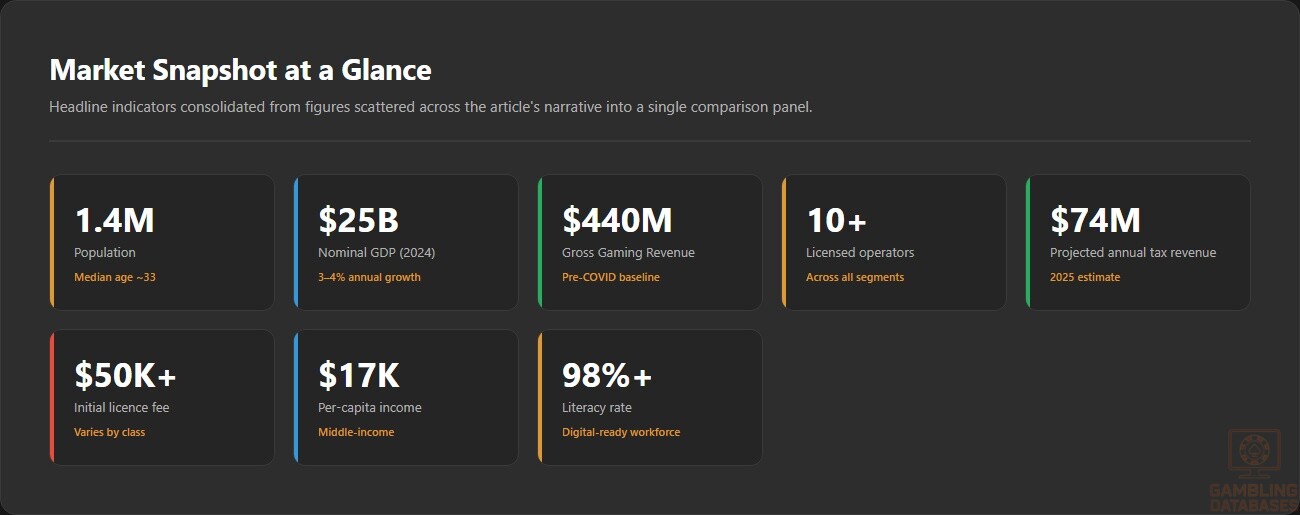
| Population | 1.4 million |
| GDP (Nominal) | Approximately $25 billion USD (2024 estimate) |
| Per Capita Income | ~$17,000 USD (estimate) |
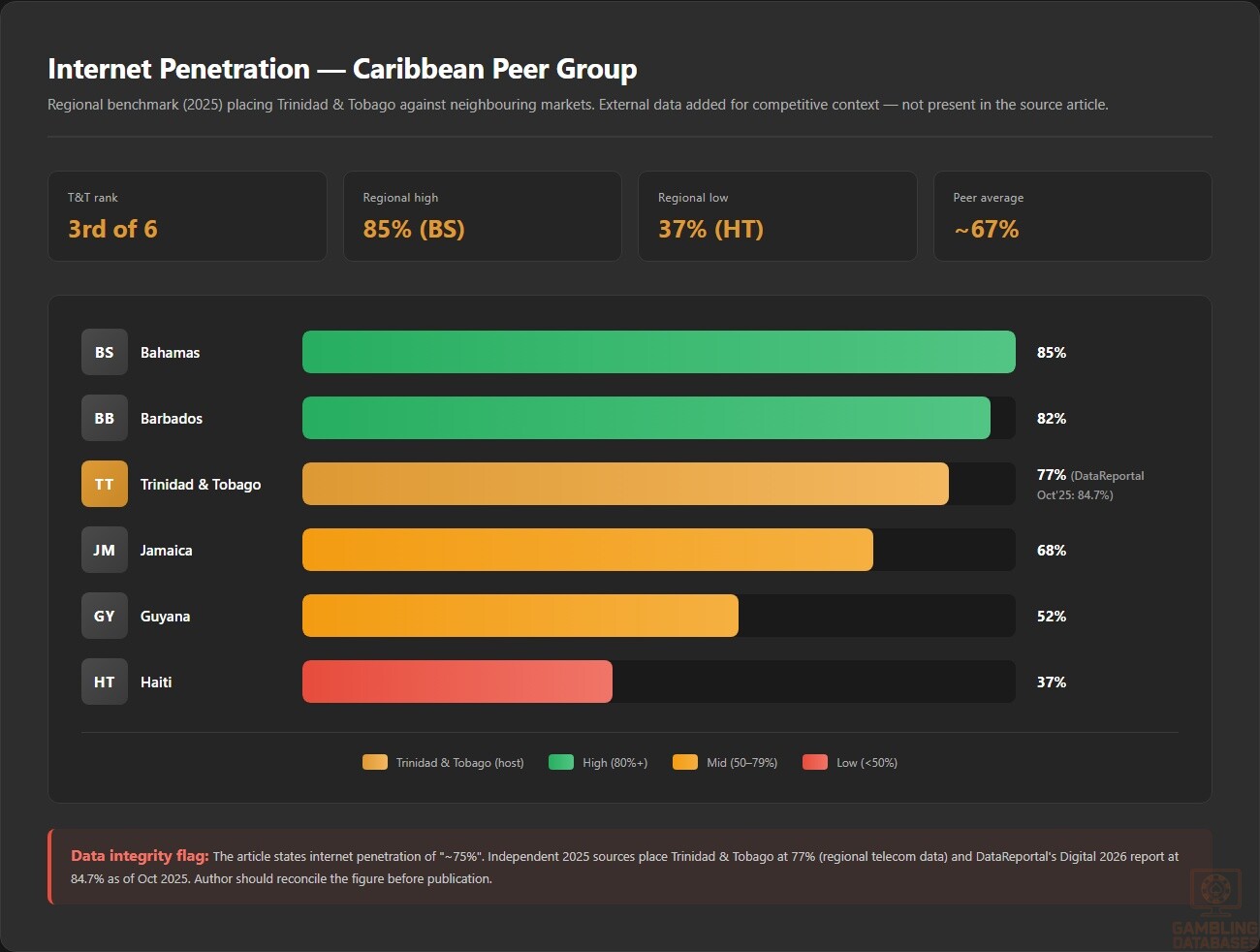
| Internet Penetration | ~75% |
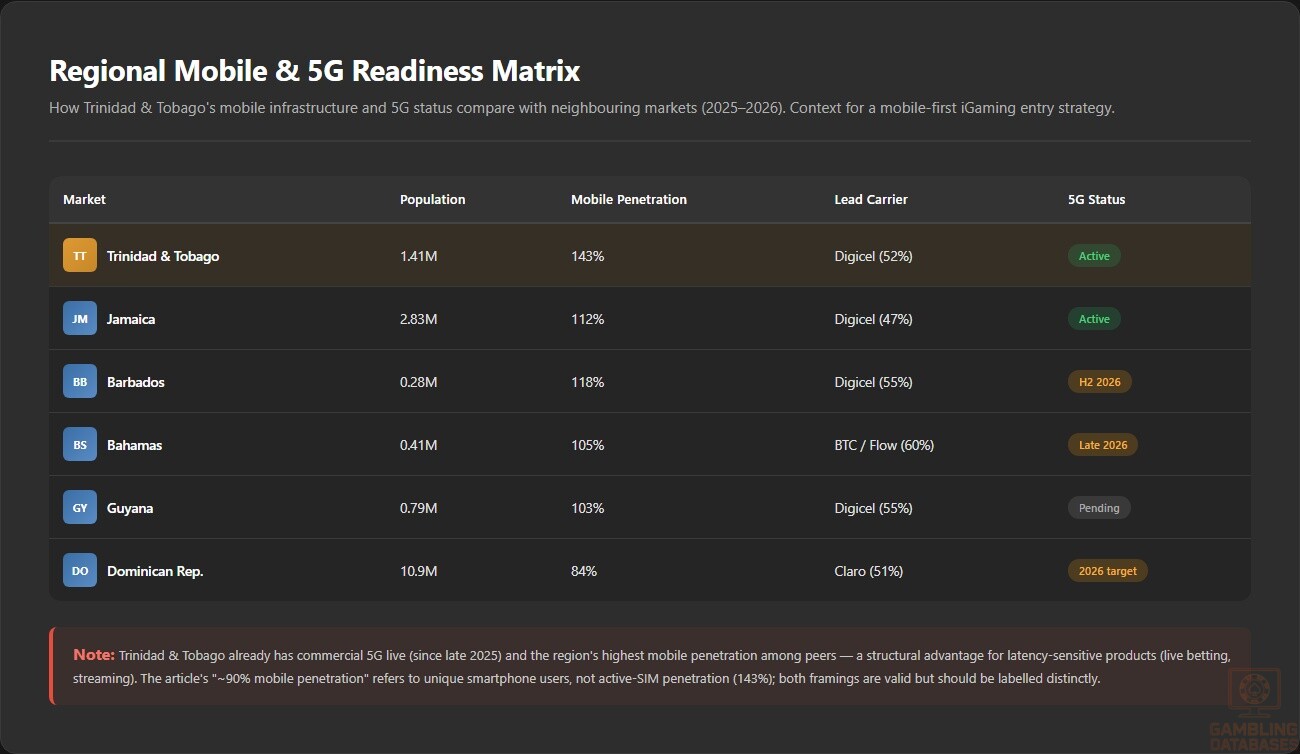
| Mobile Penetration | ~90% |
| Licensing Fees | Varies by license type; initial fees estimated $50,000+ USD |
| License Renewal Period | Annual renewals |
| Gross Gaming Revenue Tax (GGR Tax) | Up to 25% depending on game type |
| Corporate Income Tax | 30% |
| Market Size (Pre-COVID) | $440 million USD Gross Gambling Revenue |
| Projected Annual Tax Revenue (2025) | ~$74 million USD |
| Number of Licensed Operators | Approx. 10+ (including casinos, betting, lottery) |
| License Application Process Duration | 4-6 months typical |
| Responsible Gambling Measures | Mandatory self-exclusion, player limits, counseling resources |
| Anti-Money Laundering (AML) Standards | Comprehensive AML/CFT compliance required |
| Local Presence Requirement | Physical presence or local representative mandated |
| Advertising Restrictions | Permitted with content and timing limitations |
| Payment Methods Accepted | Credit/debit cards, local bank transfers, e-wallets, mobile payments |
| Market Growth Outlook (CAGR 2025-2031) | Estimated 5-7% |
| Average Revenue Per User (ARPU) | Estimated $250-400 USD annually |
| Market Penetration Rate | 15-20% active gambling population |
| Technology Infrastructure | Modern digital and mobile networks widely available |
| Business Environment | Stable political climate, supportive investment policies |
| Enforcement Actions | Regular inspections, fines, license suspension for violations |
| Recent Regulatory Amendments | Gambling Control Act (2021), amendments ongoing to expand online gaming coverage |
Section 1: Regulatory Framework and Legal Environment
Current Gambling Regulation Status
The gambling industry in Trinidad and Tobago is regulated under the Gambling (Gaming and Betting) Control Act, passed in 2021 and coming into full effect in 2025. This legislation established the Gambling Control Commission (GCC) as the sole regulatory authority governing all commercial gambling activities except the state-run National Lottery.
Land-based gambling, including casinos, sports betting venues, and slot machine halls, operates under strict licensing requirements administered by the GCC. Sports betting covers both local and international events, and lotteries are managed primarily by the National Lotteries Control Board alongside licensed private operations. The legal framework addresses all traditional gambling categories and incorporates provisions for promoting responsible gambling and consumer protection.
Land-Based Gambling Activities
Casinos in Trinidad and Tobago are fully licensed and regulated, with operational mandates that enforce compliance with consumer protection and fair play standards. Sports betting venues are widespread, reflecting growing popularity in both in-person and digital formats. Slot machine halls function under distinct licenses regulated by the GCC. Other land-based gambling includes betting shops for horse racing and event betting regulated comprehensively under the law.
Online Gambling Framework
The iGaming segment is explicitly regulated within the broader framework of the Gambling Control Act. Licensed operators are permitted to offer online casino games, sports betting, and other digital betting services. The regulatory oversight aims to prevent illegal gambling activities, such as unlicensed offerings and money laundering. Online platforms must adhere strictly to KYC, AML, and responsible gaming requirements delineated by the GCC. The Act also outlines prohibited activities, including unlicensed remote gambling operations and unauthorized payment processing for gaming transactions.
Licensed Operators and Market Players
The Trinidad and Tobago gambling market features a mix of local and international licensed operators. The GCC maintains a public register of licensed entities, which currently numbers over ten active operators across land-based and online segments. Dominant players include licensed casinos, nationally authorized sports betting companies, and the National Lottery. Market entry strategies often involve partnerships with local entities to meet operational and regulatory presence requirements. Competitive dynamics focus heavily on compliance readiness and technology integration to optimize user experience and regulatory adherence.
Licensing Framework and Requirements
Application Process and Eligibility
The licensing process is managed exclusively by the Gambling Control Commission. Applicants must demonstrate financial stability, operational integrity, and the technical capability to provide secure gaming platforms. The legislation requires all prospective licensees to undergo rigorous “fit and proper” assessments including background checks on owners, directors, and key personnel. The initial license application involves submitting a comprehensive package with corporate documentation, financial statements, business plan, technical specifications, and AML policies.
Fees for licensing vary depending on the gambling activity type and scale of operations, typically starting from $50,000 USD. The application process usually spans four to six months, during which the GCC may conduct inspections and request additional documentation to ensure full compliance before granting a license.
- Corporate registration certificate and articles of incorporation
- Financial statements for the past three years
- Detailed business and marketing plan
- Technical platform documentation including RNG certification
- AML/CFT compliance policies and procedures
- Criminal background checks for directors and beneficial owners
- Proof of minimum capital deposit
- Responsible gambling policy documentation
Local Presence and Operational Requirements
License applicants must establish a physical presence in Trinidad and Tobago or appoint a local representative responsible for regulatory communications. This ensures the GCC can execute audits, inspections, and compliance actions effectively. Operations must maintain appropriate systems for record-keeping, player data protection, and financial transactions locally or within the jurisdiction.
There are no strict restrictions on foreign ownership; however, operators are encouraged to develop partnerships with local entities to facilitate integration with the market and compliance with cultural and social responsibility norms. Annual license renewals require ongoing demonstration of compliance and operational soundness.
Compliance Obligations and Monitoring
Player Protection and Identification
Strict age-verification protocols are mandatory to prevent underage gambling. Operators must implement KYC (Know Your Customer) procedures aligned with AML (Anti-Money Laundering) standards, including customer identity verification and continuous monitoring of suspicious activities. Responsible gambling is supported through mandatory measures:
- Provision of self-exclusion programs
- Setting deposit and betting limits
- Access to counseling and support resources
- Regular player account activity reviews
- Public awareness campaigns on gambling risks
The GCC closely monitors operator adherence through regular audits and complaint investigations, fostering a culture of transparency and social protection.
Financial Monitoring and Reporting
Operators must comply with continuous transaction monitoring and periodic financial reporting to the GCC. A typical reporting cycle involves monthly submissions of gross gaming revenue (GGR), tax payments, and suspicious activity reports. Audits occur annually or as triggered by regulatory concerns:
- Submission of monthly GGR and tax reports
- Quarterly AML compliance reports
- Annual independent audit of financial statements
- Ad hoc investigations prompted by complaints or irregularities
Taxation Structure and Financial Obligations
Player Taxation
Players in Trinidad and Tobago are generally not liable for taxes on gambling winnings, as such obligations fall on operators. There are no withholding taxes imposed on player winnings, streamlining payout procedures for licensed operators.
Operator Taxation
Operators bear the primary tax burden comprising a Gross Gaming Revenue (GGR) tax, corporate income tax, and additional fixed operational taxes. The GGR tax rates vary by game type but can reach up to 25%. The corporate income tax rate is set at 30%. License renewal fees and turnover-related levies are also applicable depending on the license class and business volume.
| Tax Type | Rate | Applicable To |
|---|---|---|
| Gross Gaming Revenue Tax | 15% – 25% | All gambling activities depending on game type |
| Corporate Income Tax | 30% | Operators’ net profits |
| License Renewal Fee | Varies | Annual |
| Turnover Tax | Variable | Based on gross turnover volume |
Gambling Market Financial Performance
Before the COVID-19 pandemic, the estimated gross gambling revenue stood at approximately $440 million USD. With regulatory reforms and increasing digital penetration, the market is projected to grow steadily with an estimated annual tax revenue contribution of around $74 million USD. The land-based segment remains the largest in revenue, while online gaming is the fastest-growing sector, driven by improved regulatory clarity and mobile adoption. Operator revenues are increasingly influenced by technological adoption and compliance with newly imposed social responsibility standards.
Advertising and Marketing Restrictions
Advertising within the gambling sector is regulated to prevent exploitative or misleading promotions. Permissible advertising channels include television, radio, online digital platforms, print media, and sponsorships under specified content guidelines. There are restrictions on targeting minors, excessive promotions, and timing of advertisements during certain hours. Sponsorship by gambling companies follows regulatory oversight to ensure transparency and social appropriateness.
- Television and radio spots with content restrictions
- Online and social media advertising subject to age-gating
- Print advertising limited to adult venues/publications
- Prohibition on advertising targeting minors
- Regulated sponsorships of sporting and entertainment events
Recent Regulatory Changes and Their Impact
The passage and implementation of the Gambling Control Act in 2021 represent the most significant regulatory update in recent years. This shifted the regulatory approach from fragmented oversight to a centralized, transparent framework. The Act aims to curtail illicit activities such as money laundering and tax evasion while supporting economic diversification. Operators face higher compliance costs but benefit from clearer legal certainty and government support. Regulatory revisions continue as the GCC adapts rules for emerging digital trends and consumer protections.
Enforcement Mechanisms and Penalties
The GCC actively enforces the gambling laws through routine inspections and investigations. Penalties for non-compliance include license suspension, financial fines, and revocation, with potential criminal charges for illegal operations. Regulatory compliance has increased since the establishment of the GCC, helping to build operator accountability and consumer trust. The enforcement environment supports a level playing field and discourages unauthorized gambling activities.
- License suspension or revocation for violations
- Monetary fines proportional to offense severity
- Criminal prosecution for unlicensed gambling
- Public warnings and blacklisting of offenders
- Continuous monitoring and follow-up audits
Section 2: Demographics and Consumer Analysis
Population Demographics and Distribution
Trinidad and Tobago has a total population of approximately 1.4 million, characterized by a relatively young demographic profile. The median age is around 33 years, with a balanced gender ratio close to 1:1 between males and females. A significant proportion of the population is under 35, offering a sizable potential customer base for the iGaming sector.
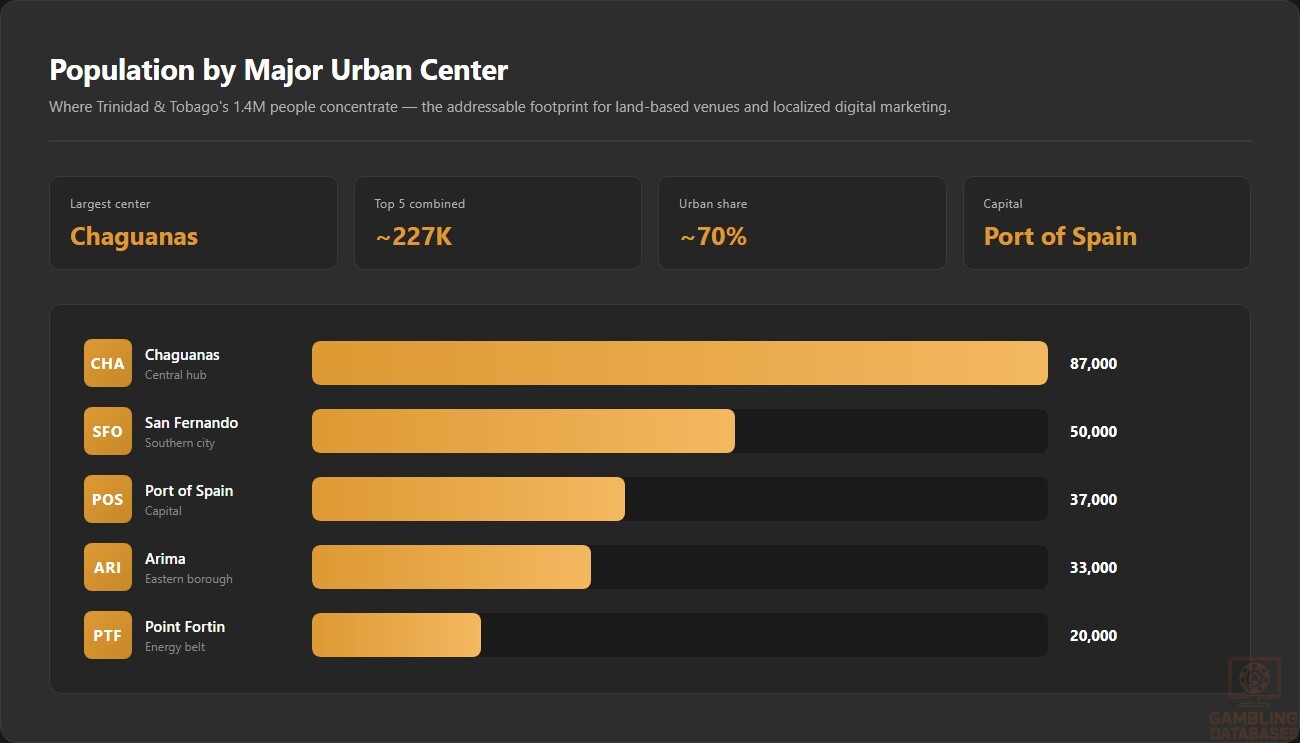
Urban areas concentrate the majority of inhabitants, with roughly 70% residing in urban centers. This urbanization supports strong internet connectivity and access to gambling venues, while more rural areas see lower engagement due to infrastructure constraints.
| Age Group | Percentage of Total Population |
|---|---|
| 0-14 years | 23% |
| 15-24 years | 18% |
| 25-54 years | 42% |
| 55-64 years | 10% |
| 65 years and over | 7% |
Geographic Distribution
The major population centers include the capital, Port of Spain, and other urban hubs that serve as economic and commercial centers. Economic disparities exist among regions, with energy sector activity concentrated in specific areas influencing local wealth distribution. Internet access and gambling venue density mirror this urban economic centralization.
- Port of Spain (approx. 37,000 residents)
- San Fernando (approx. 50,000 residents)
- Arima (approx. 33,000 residents)
- Chaguanas (approx. 87,000 residents)
- Point Fortin (approx. 20,000 residents)
The concentration of casinos, sports betting shops, and lottery outlets aligns with urban clusters, with supplementary online gambling availability compensating for venue scarcity in rural zones.
Economic Indicators and Consumer Spending Power
The country’s GDP is roughly $25 billion USD with a steady growth forecast of 3-4% annually. The economy is diversified but heavily reliant on energy, manufacturing, and services, which together compose over 80% of the GDP. Economic resilience supports rising disposable income, critical for consumer spending in entertainment sectors such as iGaming.
Per capita income levels average near $17,000 USD annually, marking a middle-income economy by regional standards. Consumer spending patterns reveal a growing inclination towards digital services and entertainment, fueled by increasing internet access and mobile device penetration.
| Indicator | Value |
|---|---|
| GDP (Nominal) | $25 billion USD |
| GDP Growth Rate | 3-4% annually |
| Per Capita Income | $17,000 USD |
| Service Sector Contribution | ~55% |
| Industry Sector Contribution | ~30% |
| Agriculture Sector Contribution | ~5% |
Income distribution exhibits moderate inequality, with wealth concentrated in energy and service sectors, although rising middle-class segments drive consumption expansions. Disposable income growth is expected around 4% annually, enhancing consumer capacity to engage in discretionary spending such as gambling.
Market Size and Growth Projections
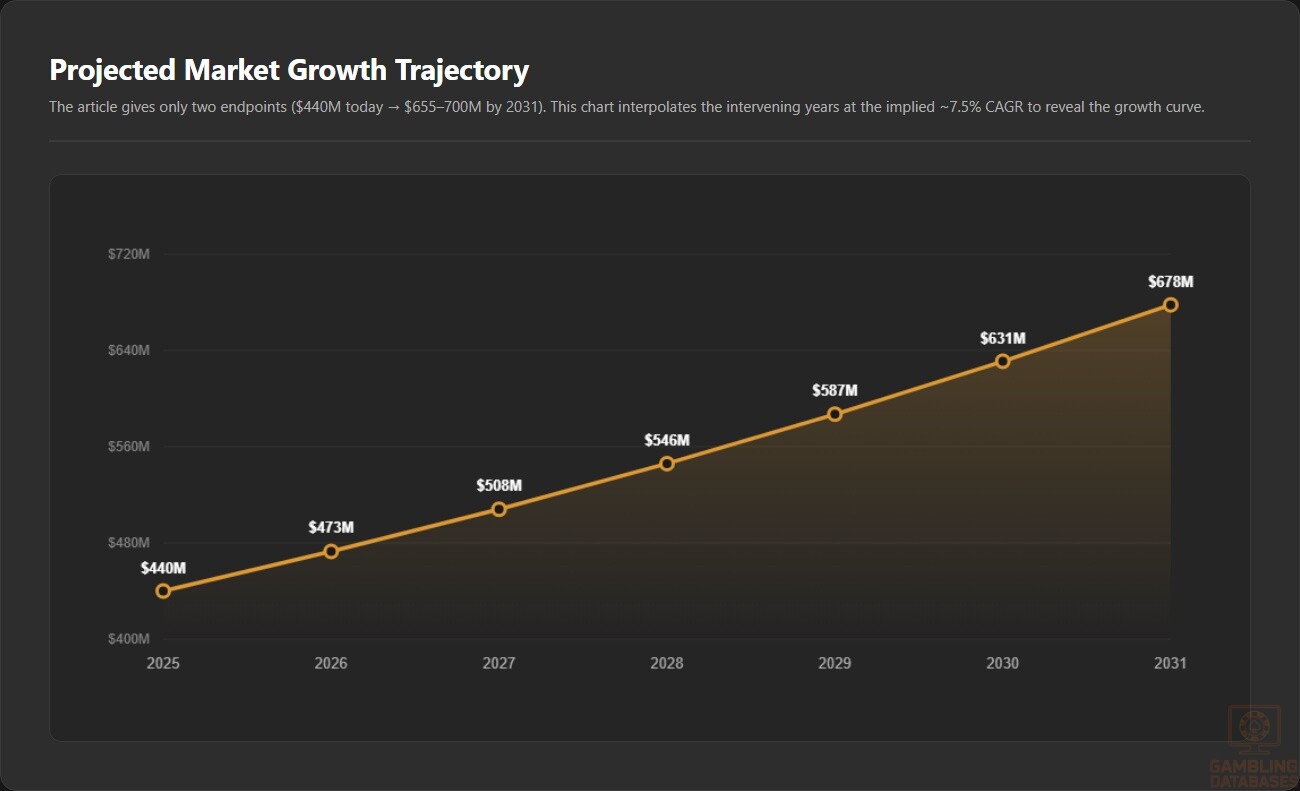
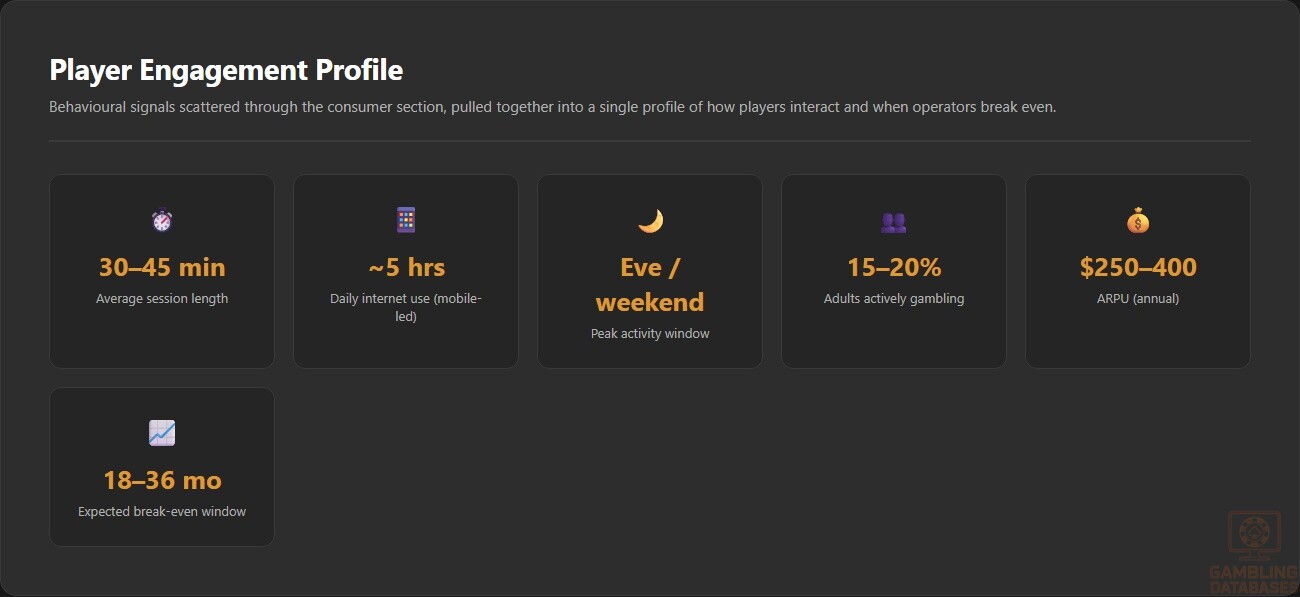
The iGaming market is currently valued at an estimated $440 million USD in gross gaming revenue, with expected growth rates (CAGR) of 5-7% through 2031. Online gambling drives most of the expansion, benefiting from increases in smartphone penetration and broadband accessibility. User base projections estimate active participation between 15% and 20% of the adult population, with ARPU (Average Revenue Per User) reaching between $250 and $400 annually.
| Metric | Value |
|---|---|
| Current Market Size (GGR) | $440 million USD |
| Projected CAGR (2025-2031) | 5-7% |
| Active Gambling Population | 15-20% |
| Average Revenue Per User (ARPU) | $250-$400 USD |
| Predicted Market Size (2031) | $655-$700 million USD |
Education, Skills, and Digital Literacy
Trinidad and Tobago boasts a literacy rate exceeding 98%, with widespread access to primary and secondary education. High levels of digital literacy are evident among the younger population segments, enabling robust interaction with online platforms. The workforce possesses adequate technical and communication skills, supporting expanding digital economy demands including the iGaming sector.
Digital fluency, particularly in urban centers, encourages adoption of internet-based entertainment, while government programs promote ICT integration in education, further enhancing future consumer sophistication and engagement potential.
Cultural and Social Factors
Communication and Language
English is the official language and dominant medium for commerce and digital communication, including online gambling platforms. The population also uses various dialects and Creole languages in informal settings; however, commercial and regulatory content is provided primarily in English.
- English (official and business language)
- Trinidadian Creole English
- Tobagonian Creole English
- Caribbean Hindustani (minority language)
- Spanish and French Creole (limited use)
Cultural Attitudes
Gambling is broadly socially accepted with traditional betting and lottery activities deeply ingrained in local culture. Religious diversity, including Christian, Hindu, and Muslim communities, promotes nuanced attitudes, with most accepting regulated gambling frameworks when consumer protection is assured. Foreign iGaming brands enjoy positive reception when they localize services and adhere to cultural norms.
Problem Gambling and Social Considerations
Prevalence of problem gambling is monitored with government and NGO initiatives focusing on prevention and support. Social responsibility requirements compel operators to contribute funding for awareness campaigns and counseling services. Risk groups include youth and economically vulnerable populations, highlighting the need for robust player protection mechanisms.
- Government-funded public awareness campaigns
- Mandatory operator contributions to support services
- Self-exclusion programs for problem gamblers
- Educational initiatives in schools and communities
- Collaboration with mental health NGOs and clinics
Political Structure and Governance
Trinidad and Tobago operates a stable parliamentary democracy with transparent governance and a pro-business regulatory outlook. Political consistency supports progressive reforms, including gambling regulation enhancements. International trade relations and agreements bolster market openness, enabling foreign investment and technology transfer necessary for iGaming market development.
Technology Adoption and Digital Behavior
Internet and Digital Usage
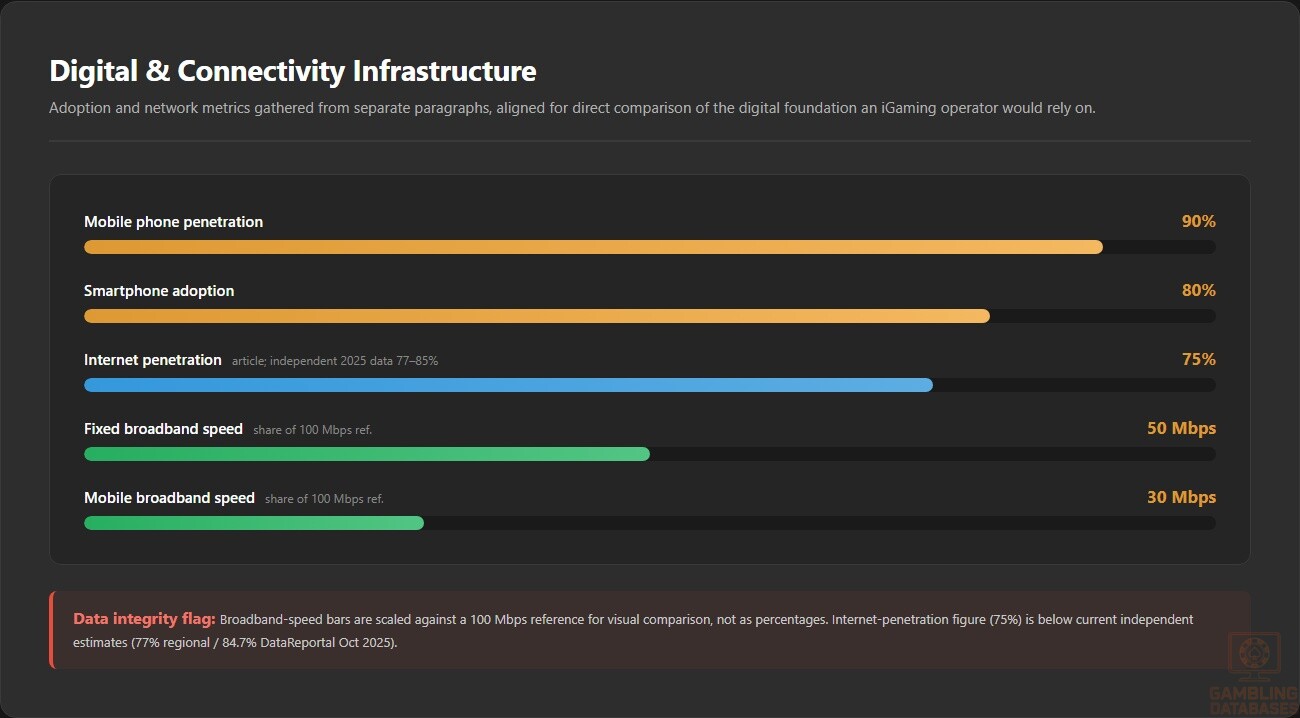
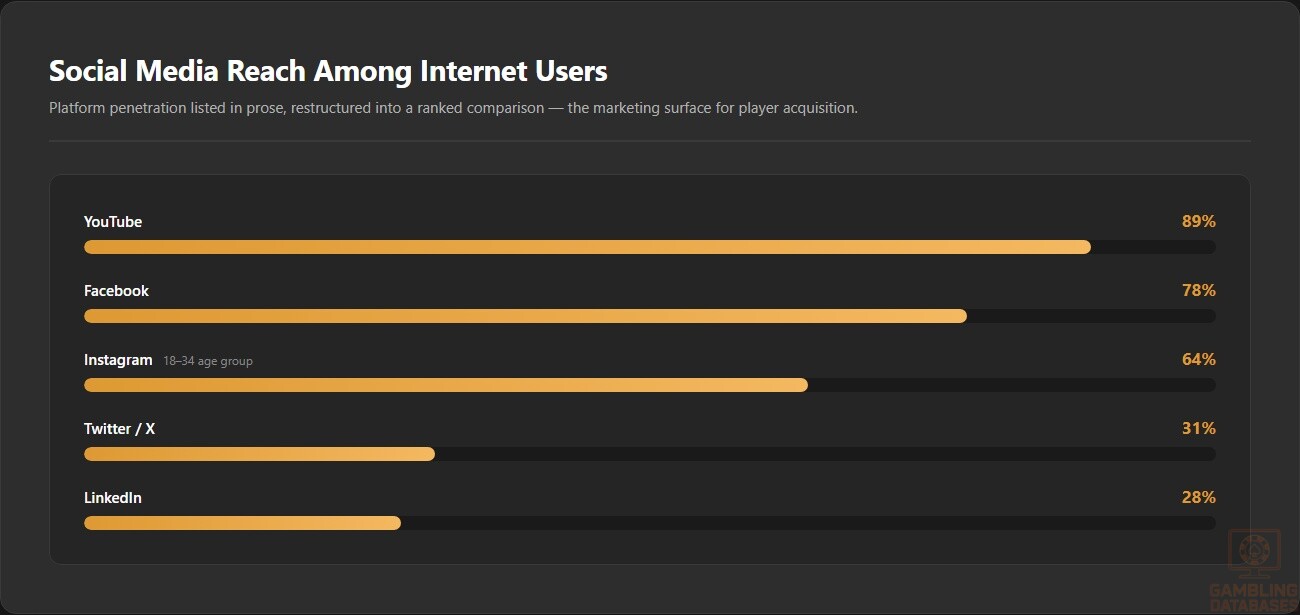
Internet penetration stands at approximately 75%, with daily average usage exceeding 5 hours, predominantly driven by mobile devices. Mobile phone penetration is higher, near 90%, reflecting the population’s affinity for smartphones as primary internet access points. Social media engagement is strong, fueling demand for digital content and interactive entertainment.
- Facebook with 78% penetration among internet users
- Instagram popular with 64% of 18-34 age group
- YouTube reaching 89% penetration with long watch times
- TikTok rapidly growing, especially in under-25 users
- Twitter used by 31%, mainly for news and discussion
- LinkedIn accessed by 28% for professional networking
Digital Payment Behavior
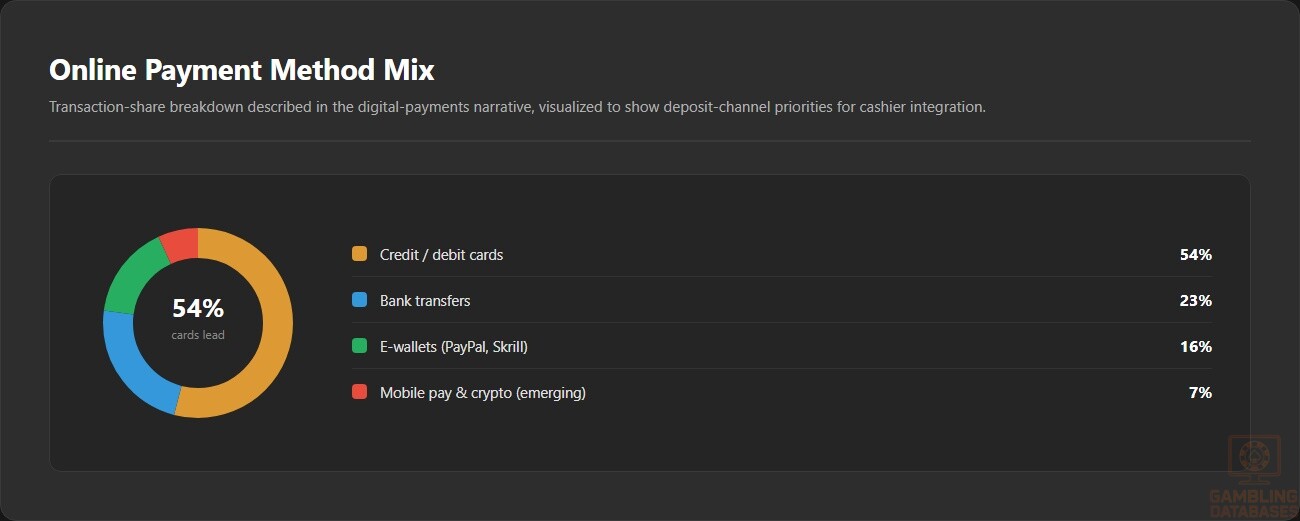
Payments for online services including gambling are dominated by credit/debit cards, bank transfers, and increasingly popular e-wallets. Mobile payment platforms gain traction among younger users due to convenience. Cryptocurrency usage remains nascent but is monitored closely by regulators for future integration considerations.
- Credit and debit cards leading 54% of online transactions
- Bank transfers representing 23%
- E-wallets such as PayPal and Skrill capturing 16%
- Mobile payment services growing rapidly
- Cryptocurrency usage limited but emerging
Gaming and Gambling Preferences
Current Market Participation
Gambling participation rates range from 15% to 20% among adults, with sports betting being the most popular activity, followed by lottery games and online casino gaming. Traditional bingo and horse racing maintain niche but stable user bases. Online betting platforms gain rapid acceptance due to ease of access and diverse offerings.
| Rank | Activity | Estimated Participation Rate (%) |
|---|---|---|
| 1 | Sports Betting | 30% |
| 2 | Lottery Games | 25% |
| 3 | Online Casino Gaming | 20% |
| 4 | Bingo | 15% |
| 5 | Horse Racing | 10% |
Consumer Behavior Patterns
Spending habits in gambling emphasize moderate average bets with increased frequency during major sports events and holidays. Online players show preferences for mobile-friendly platforms offering live betting and fast transactions. Peak activity generally occurs during evenings and weekends, with session lengths averaging 30 to 45 minutes. Retention rates improve with personalized marketing and loyalty programs supported by licensed operators.
Section 2: Demographics and Consumer Analysis
Population Demographics and Distribution
Trinidad and Tobago’s total population is approximately 1.4 million, featuring a youthful demographic with a median age near 33 years and a balanced male-to-female ratio. Nearly two-thirds of residents fall under the age of 35, representing a substantial segment for digital entertainment and iGaming engagement.
Urbanization is predominant, with around 70% of the population residing in urban areas where infrastructure and technology access are more developed. Rural regions show lower population density and limited gambling venue availability, affecting regional market penetration variably.
| Age Group | Percentage of Population |
|---|---|
| 0-14 years | 23% |
| 15-24 years | 18% |
| 25-54 years | 42% |
| 55-64 years | 10% |
| 65 years and above | 7% |
Geographic Distribution
The population largely concentrates in key urban centers that serve as economic and social hubs. These urban areas demonstrate increased internet penetration and dense networks of gambling establishments, creating hotspots for market activity. The economic landscape varies bit notably between cities due to differences in industrial presence and wealth distribution.
- Chaguanas (approx. 87,000 residents)
- San Fernando (approx. 50,000 residents)
- Port of Spain (approx. 37,000 residents)
- Arima (approx. 33,000 residents)
- Point Fortin (approx. 20,000 residents)
Online gambling accessibility partially offsets physical venue limitations in less urbanized areas, broadening market reach across the nation.
Economic Indicators and Consumer Spending Power
Trinidad and Tobago’s economy holds a nominal GDP of roughly $25 billion USD, supported by an annually growing rate of 3-4%. The economy is diversified with the services sector occupying approximately 55%, followed by industry at 30%, and agriculture around 5%. A relatively strong consumer base emerges from rising per capita income levels near $17,000 USD.
These economic conditions foster increases in discretionary spending, including digital entertainment such as iGaming, where spending correlates positively with digital adoption and urban affluence.
| Indicator | Value |
|---|---|
| GDP | $25 billion USD |
| Annual Growth Rate | 3-4% |
| Per Capita Income | $17,000 USD |
| Service Sector Share | 55% |
| Industry Sector Share | 30% |
| Agriculture Sector Share | 5% |
Household income distributes moderately unevenly, with higher earnings in industrial and urban sectors. Disposable income trends show resilience, with growing middle-class purchasing power fueling entertainment and leisure spending.
Market Size and Growth Projections
The gambling market’s gross gaming revenue currently estimates near $440 million USD with forecasted annual growth rates between 5% and 7% over the next six years. Online gaming, boosted by mobile and broadband penetration, drives much of the expansion. The active gambling population is estimated between 15% and 20%, with an average revenue per user ranging from $250 to $400 annually.
| Metric | Value |
|---|---|
| Current Market Size | $440 million USD (GGR) |
| Projected CAGR (2025-2031) | 5-7% |
| Active Gambling Population | 15-20% |
| ARPU | $250-$400 USD |
| Estimated Market Size (2031) | $655-$700 million USD |
Education, Skills, and Digital Literacy
With literacy rates exceeding 98%, Trinidad and Tobago boasts broad educational attainment. Digital literacy is strong in urban communities, where access to ICT tools and internet infrastructure is widespread. The skilled workforce aligns well with demands of the digital economy, providing a solid base for growth in online industries including iGaming.
Government initiatives to expand ICT education further empower younger demographics, enhancing future consumer engagement and sector innovation.
Cultural and Social Factors
Communication and Language
English functions as the official language and primary medium for business, regulation, and online content—including iGaming platforms. Multiple Creole dialects exist socially, but commercial communication remains predominantly English.
- English (Official and business use)
- Trinidadian Creole English
- Tobagonian Creole English
- Caribbean Hindustani (minority community)
- Spanish and French Creole (minor localized use)
Cultural Attitudes
Gambling enjoys widespread social acceptance conditioned by regulatory oversight and consumer protection. Religious and cultural diversity fosters a range of perspectives, with most accepting legally compliant gambling enterprises. Foreign iGaming operators typically find receptive markets if local cultural nuances and social responsibilities are respected.
Problem Gambling and Social Considerations
Problem gambling prevalence is monitored by government and social organizations. Regulatory mandates require operators to fund prevention and treatment programs, including education and counseling. Younger adults and financially vulnerable groups represent priority demographics for support initiatives.
- Public awareness campaigns coordinated by government bodies
- Operator-mandated financial contributions to support services
- Formal self-exclusion and cooling-off programs
- Community outreach and education programs
- Partnerships with mental health providers
Political Structure and Governance
Trinidad and Tobago is a parliamentary democracy characterized by political stability and transparent governance. Regulatory consistency and international engagement facilitate investor confidence and supportive conditions for industry growth, including the iGaming sector.
Technology Adoption and Digital Behavior
Internet and Digital Usage
Internet penetration reaches approximately 75%, with average daily user sessions around five hours. Mobile device usage tops 90%, aligned with global digital engagement trends favoring on-the-go access to services and entertainment. Social media platforms attract substantial user attention, fostering digital connectivity and content consumption.
- Facebook with 78% penetration among active internet users
- Instagram popular with 64% of younger adults (18-34 years)
- YouTube presence at 89% penetration with high viewing duration
- TikTok rapidly expanding within under-25 demographics
- Twitter used by 31% focusing on trending news
- LinkedIn utilized by 28% for professional networking
Digital Payment Behavior
Digital payment methods dominate online transactions. Credit and debit cards constitute the majority share, followed by bank transfers and increasing e-wallet adoption. Mobile payments benefit from widespread smartphone usage, while cryptocurrency adoption remains marginal but monitored for future regulatory adaptation.
- Credit and debit cards accounting for 54% of transactions
- Bank transfers holding 23% market share
- E-wallets such as Skrill and PayPal at 16%
- Mobile payment apps experiencing growth trends
- Cryptocurrency limited but emerging
Gaming and Gambling Preferences
Current Market Participation
Gambling participation among adults ranges from 15% to 20%, with sports betting as the dominant activity, followed by lotteries and online casino games. Traditional gaming forms such as bingo and horse racing maintain loyal but smaller audiences. Online platforms are rapidly gaining ground because of accessibility and product variety.
| Rank | Activity | Participation Rate (%) |
|---|---|---|
| 1 | Sports Betting | 30% |
| 2 | Lottery Games | 25% |
| 3 | Online Casino Gaming | 20% |
| 4 | Bingo | 15% |
| 5 | Horse Racing | 10% |
Consumer Behavior Patterns
Consumers trend toward moderate betting sizes with increased activity during key sporting and cultural events. Mobile-friendly interfaces with live betting options enjoy strong user preference. Peak activity subsists during evenings and weekends, with user sessions typically lasting 30 to 45 minutes. Retention improves through tailored promotions and loyalty reward programs, increasing lifetime customer value.
Section 3: Technology Infrastructure and Business Environment
Internet and Digital Infrastructure
Trinidad and Tobago’s internet penetration is approximately 75%, reflecting solid but growth-potential connectivity nationwide. Broadband services, both fixed and mobile, account for varying shares of overall internet access, with mobile internet eclipsing fixed broadband due to infrastructure costs and geographic distribution. Average fixed broadband speeds reach up to 50 Mbps, while mobile broadband averages around 30 Mbps, supporting quality online gaming experiences.
Ongoing government and private sector investments target network expansion and reliability improvements, aiming to reduce digital divides. These include fiber optic deployments and enhanced 4G LTE services in urban and semi-urban areas, contributing to the digital economy’s sustained growth.
5G and Future Technology Deployment
5G network rollout is underway, with major mobile operators piloting and expanding commercial 5G coverage, primarily in high-density urban centers. Full national coverage at scale is projected within the next 2 to 3 years, aligning Trinidad and Tobago with global digital trends. The expansion promises increased speeds, ultra-low latency, and improved capacity critical for next-generation iGaming platforms featuring live streaming, augmented reality, and real-time data analytics.
Key network operators lead the deployment, collaborating with regulatory bodies to facilitate spectrum allocation and infrastructure upgrades. The arrival of 5G is expected to stimulate deeper mobile engagement and innovation opportunities across sectors including iGaming.
Mobile Technology Ecosystem
Mobile Network Infrastructure
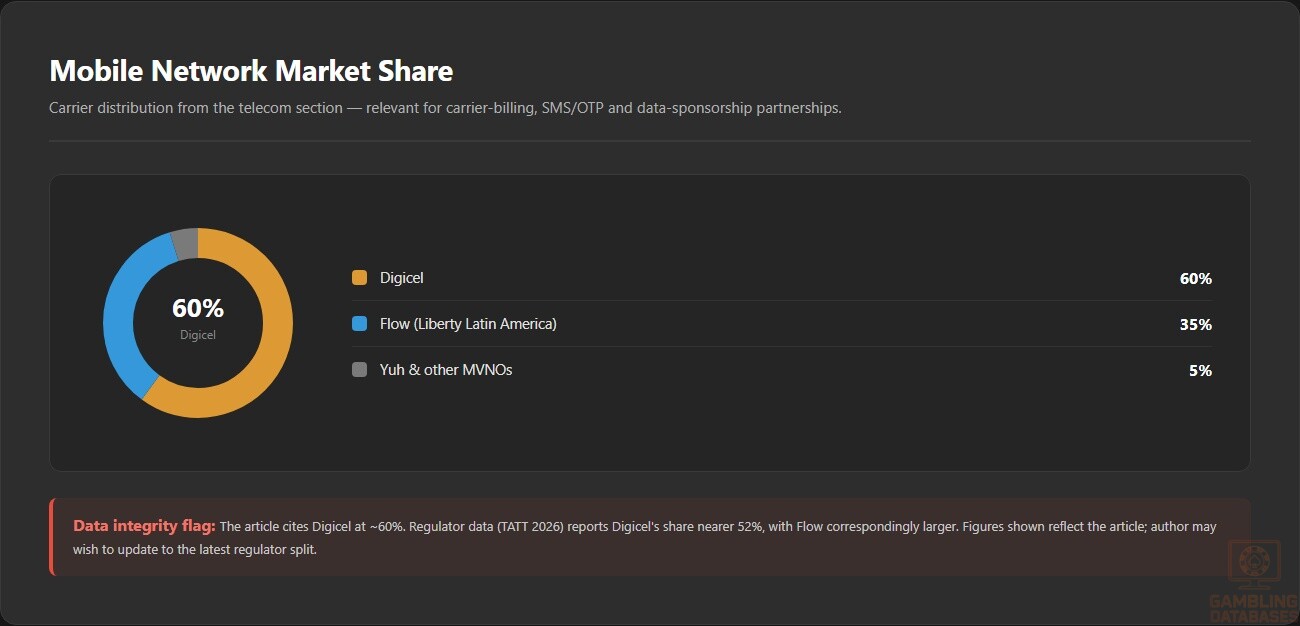
The mobile telecommunications landscape comprises several operators offering competitive coverage and services. Market share is fairly concentrated but competitive, with urban centers well-served and ongoing expansion to rural areas. Data costs remain moderate but are trending downward due to increased competition and technology advancements.
- Digicel Trinidad and Tobago: Market leader with ~60% share
- Flow Trinidad and Tobago: Second largest with ~35% share
- Yuh (digital MVNO under Digicel brand)
- Other local MVNOs with niche shares
- International roaming and satellite services for remote zones
Device Penetration
Smartphone adoption exceeds 80%, with Android devices dominating market share due to affordability and diversity of models. Premium devices such as the latest iPhones and Samsung Galaxy series hold significant presence among affluent users. Device usage patterns favor mobile apps, a crucial vector for iGaming engagement, with users exhibiting increasing preference for seamless, fast-loading mobile interfaces.
Financial Services and Payment Infrastructure
Banking System Structure
The financial sector contains several well-established banks with comprehensive digital and mobile banking offerings. Consumer account penetration is high in urban markets and growing in rural areas. Banks prioritize online transaction security and interoperability with international payment schemes, facilitating local and cross-border gambling transactions.
- Republic Bank: Largest with broad service network
- First Citizens Bank: Strong focus on SME banking
- Royal Bank of Trinidad and Tobago: International banking services
- Scotiabank Trinidad and Tobago: Robust corporate and retail banking
- Citibank Trinidad and Tobago: Specialized financial products
Payment Processing Options
Online gambling payments utilize multiple methods reflecting market diversity and user convenience. Credit and debit cards lead transaction volumes, supported by bank transfers and increasingly popular digital wallets. Mobile payment platforms gain traction among younger demographics due to integration with smartphones, offering frictionless, instant payments. Cryptocurrency remains under regulatory review but experiences tentative adoption within niche user segments.
- VISA and MasterCard credit/debit cards
- Direct bank transfers and wire services
- Digital wallets including PayPal, Skrill, Neteller
- Mobile payment platforms like Apple Pay, Google Pay
- Emerging cryptocurrency options under evaluation
E-commerce and Digital Economy
The e-commerce sector in Trinidad and Tobago is rapidly expanding, underpinned by growing consumer trust in online retail and payment security. Digital services including entertainment subscriptions, online gaming, and financial services contribute significantly to overall e-commerce turnovers. Logistics and payment infrastructure improvements enhance the attractiveness of digital marketplaces, supporting iGaming operators in seamless user engagement and monetization.
Consumer data privacy and cybersecurity remain priorities, with regulatory frameworks evolving to ensure user protection and foster confidence in digital transactions.
Business Environment and Regulatory Framework
Ease of Business Operations
Trinidad and Tobago ranks favorably in regional business indexes, benefiting from streamlined business registration and investor-friendly policies. The government supports foreign direct investment with transparent regulatory processes and incentives for technology-driven sectors. Operational costs including labor and utilities remain competitive relative to regional peers, though regulatory compliance costs for iGaming operators are moderately high due to comprehensive licensing requirements.
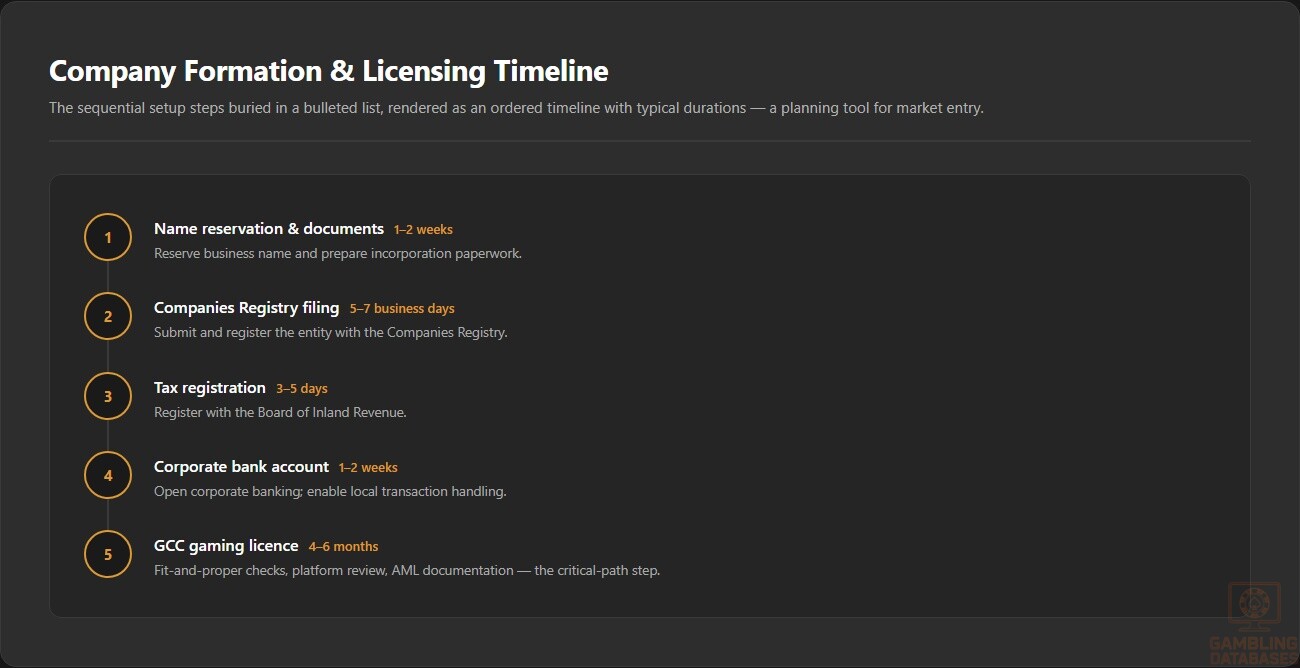
- Business name reservation and documentation preparation (1-2 weeks)
- Submission to the Companies Registry and registration (5-7 business days)
- Tax registration with the Board of Inland Revenue (3-5 days)
- Opening corporate bank accounts (1-2 weeks)
- Obtaining relevant sector-specific licenses (variable, 4-6 months)
Corporate Structure and Registration
Available entity types include Limited Liability Companies (LLCs), Corporations, and Branch Offices of foreign firms. LLCs are the most common choice for iGaming operators due to liability protections and operational flexibility. Branch offices offer ease of market entry but may face increased regulatory scrutiny. Proper legal counsel is recommended to align structure with business strategy and compliance.
- Limited Liability Company (LLC)
- Corporation
- Branch Office of Foreign Company
- Partnerships (less common for iGaming)
- Sole Proprietorship (rare for regulated gaming)
Registration requires submission of statutory documents, proof of address, directors’ details, and compliance declarations. Foreign ownership is permitted without significant restrictions, but local regulatory liaison or representative offices are mandatory to facilitate interactions with authorities.
- Certified certificate of incorporation
- Memorandum and Articles of Association
- Proof of registered office address
- Identification documents of directors and shareholders
- Tax identification registration
- Compliance certificates specific to industry licenses
Taxation Framework
Corporate income tax stands at 30% with no standard tax holidays but selective incentives in designated economic zones. The government has entered multiple double taxation avoidance treaties, supporting cross-border business efficiency. Personal income tax rates are progressive, with withholding requirements for certain payments, and mandatory social security contributions apply for resident employees.
- Double taxation treaties include countries such as Canada, the UK, China, Barbados, India, and others
- Standard corporate tax rate: 30%
- Personal income tax bracket: Progressive from 25-30%
- Social Security Contribution: Required for employers and employees
- Tax residency defined by physical presence and substantive ties
Market Entry Considerations
Optimal market entry strategies emphasize partnerships with local entities to meet regulatory requirements and leverage market knowledge. Leveraging mobile technology is critical to capture the dominant user base. Establishing strong compliance frameworks early reduces risks and supports long-term sustainability. Brand localization enhances consumer trust and engagement in Trinidad and Tobago’s diverse cultural landscape.
- Partnering with licensed local operators or representatives
- Deploying mobile-first gaming platforms
- Investing in compliance and AML capabilities
- Localizing content and customer support
- Engaging in responsible gambling initiatives
Initial investments cover licensing fees, legal services, technology deployment, marketing, and operational setup. Typical timelines span 6-9 months from corporate registration to full operational launch depending on compliance complexities.
| Cost Category | Estimated Cost (USD) |
|---|---|
| License Application and Fees | $50,000 – $100,000 |
| Legal and Consultancy Services | $30,000 – $60,000 |
| Technology Platform Setup | $100,000 – $300,000 |
| Marketing & Customer Acquisition | $50,000 – $150,000 |
| Operational Costs (Annual) | $150,000 – $400,000 |
Success Factors and Challenges
Key success factors include robust regulatory compliance, localized marketing, and leveraging mobile technologies. Challenges encompass navigating regulatory complexities, managing taxation efficiently, and addressing cultural nuances. Infrastructure limitations outside urban centers require innovative distribution and user acquisition strategies.
- Strong regulatory and compliance framework
- Effective partnerships with local stakeholders
- Mobile-optimized user experiences
- Adaptive marketing aligned with cultural preferences
- Proactive responsible gambling practices
- Regulatory approval delays and changes
- Market fragmentation and competition
- Payment processing and fraud prevention
- Technological infrastructure disparities
- Cultural sensitivities and consumer trust
Exit Strategy Planning
Market liquidity for iGaming assets in Trinidad and Tobago is developing but remains limited compared to larger jurisdictions. License transfers require regulator approval, with ownership transfer procedures specified in licensing conditions. Valuation multiples depend on revenue, compliance history, and growth prospects. Careful exit planning incorporating regulatory and contractual stipulations is essential for maximizing asset value.
FAQ: Frequently Asked Questions
1. Is online gambling legal in Trinidad and Tobago?
Yes, online gambling is legal and regulated under the Gambling (Gaming and Betting) Control Act 2021, which came into effect in 2025. Licensed operators may legally offer a broad range of digital gaming services, including online casinos and sports betting.
The law mandates comprehensive consumer protections, including anti-money laundering safeguards and responsible gaming measures. Illegal unlicensed operations are prohibited and subject to penalties.
2. What types of gambling licenses are available and what do they cover?
The Gambling Control Commission issues licenses covering all facets of gambling including land-based casinos, sports betting, lottery operations, and online gaming platforms. Each license type is tailored to specific activities with distinct compliance requirements.
License categories include:
- Casino License
- Sports Betting License
- Lottery License
- Online Gaming License
- Ancillary Service Provider Licenses (platform providers, payment processors)
3. How much does an iGaming license cost and how long does it take to obtain?
Application fees vary, typically ranging from $50,000 to $100,000 USD depending on license scope and game types. The licensing process generally takes 4 to 6 months, involving submission of detailed documentation, background checks, and platform reviews by the Gambling Control Commission.
4. Can foreign companies obtain a gambling license?
Yes, foreign companies can obtain licenses provided they comply with regulatory requirements, including appointing a local representative or establishing a physical presence. The process involves fit and proper checks and meeting financial and operational standards.
5. What are the tax obligations for iGaming operators?
Operators are subject to a Gross Gaming Revenue tax of up to 25%, a corporate income tax rate of 30%, and fixed license fees. Compliance necessitates timely reporting and payment of all applicable taxes to the Inland Revenue Division.
| Tax Type | Rate |
|---|---|
| Gross Gaming Revenue Tax | 15%-25% |
| Corporate Income Tax | 30% |
| License Renewal Fee | Varies |
6. Are gambling winnings taxed for players?
No, players are not personally taxed on gambling winnings in Trinidad and Tobago. All tax obligations are carried by operators, simplifying payout processes and improving player satisfaction.
7. What are the typical operational costs for running an online casino/sportsbook?
Key operational costs include license fees, technology platform maintenance, compliance and legal services, payment processing, marketing, and staff remuneration. These expenses can range from $300,000 to over $600,000 annually depending on scale and promotional activities.
8. What is the expected ROI timeline for entering this market?
Return on investment timelines vary, but new entrants can anticipate break-even within 18 to 36 months post-launch, depending on market penetration, marketing effectiveness, and operational efficiency.
9. What are the local presence requirements for operators?
Operators must either establish a physical office in Trinidad and Tobago or designate a local representative for regulatory communications and compliance monitoring. This ensures effective enforcement and consumer protection.
10. What payment methods are available and recommended?
Commonly accepted payment methods include credit/debit cards, bank transfers, digital wallets (PayPal, Skrill), and mobile payments. Cryptocurrency adoption is emerging but not yet widespread.
- Credit and debit cards (VISA, MasterCard)
- Bank transfers
- Digital wallets (PayPal, Skrill, Neteller)
- Mobile payments (Apple Pay, Google Pay)
- Cryptocurrency (limited usage)
11. What are the advertising and marketing restrictions?
Advertising must avoid targeting minors and must comply with content and timing restrictions designated by the regulator. Marketing campaigns require transparent messaging and responsible gambling promotion.
12. What responsible gambling measures are mandatory?
Operators must provide self-exclusion tools, set player deposit and bet limits, offer access to counseling services, monitor player behavior for signs of addiction, and participate in public awareness programs.
- Self-exclusion programs
- Deposit and wager limits
- Access to treatment and counseling referrals
- Player behavior monitoring
- Public education campaigns
13. How large is the iGaming market and what is the growth potential?
The market is valued at approximately $440 million in gross gaming revenue with projected compound annual growth of 5-7% over the next six years. Online iGaming growth is accelerating due to increasing digital penetration and favorable regulation.
14. Who are the main competitors and what is their market share?
The market features local casino operators, international sportsbook brands, and the state lottery as dominant players. Approximately 10 licensed operators collectively cover the major segments with varied market shares concentrated among a few leading firms.
15. What are the player preferences and typical spending patterns?
Players prefer sports betting, lotteries, and online casinos offered primarily via mobile platforms. Typical bets are moderate with spikes during sporting events and holidays. Engagement benefits from live betting options and loyalty rewards programs.
16. What are the key success factors and main challenges for new entrants?
Success hinges on regulatory compliance, local partnerships, mobile-first platforms, effective marketing, and responsible gambling implementation. Challenges include complex licensing, competitive pressures, payment processing, and cultural adaptation.
- Robust regulatory compliance
- Strong local partnerships
- Mobile-optimized user experience
- Localized marketing strategies
- Effective responsible gambling programs
- Regulatory complexity and evolving requirements
- Competition from established operators
- Payment processing challenges
- Infrastructure variations
- Cultural diversity and customer trust
Sources and References
- Trinidad and Tobago Gambling Regulatory Authority – Official Website – https://gcctt.org
- National Statistical Office of Trinidad and Tobago – Population and Economic Data 2024
- Central Bank of Trinidad and Tobago – Financial Statistics and Reports
- Ministry of Finance, Trinidad and Tobago – Tax Regulations and Guidelines
- World Bank – Doing Business Report 2024 – Trinidad and Tobago
- International Telecommunication Union (ITU) – ICT Statistics 2024
- Gambling (Gaming and Betting) Control Act 2021 – Government of Trinidad and Tobago
- Gambling Control Commission Annual Reports 2025
- Gaming Industry Report 2024 – Caribbean Focus
- 6W Research – Trinidad and Tobago Gambling Market Report 2025-2031
- IGaming Today – Trinidad and Tobago Market Analysis 2025
- OECD – Global Forum on Transparency and Exchange of Information for Tax Purposes: Trinidad and Tobago 2025
- Moore Trinidad and Tobago – Gambling Act Impact Analysis 2024
- Sigma World – New Gambling Legislation Trinidad and Tobago 2024
- IRD Trinidad and Tobago – Gaming and Amusement Taxes
- Telecommunications Authority of Trinidad and Tobago – Network Performance Reports 2025
- Digicel and Flow Annual Financial and Network Coverage Reports 2025
- National Lotteries Control Board – Operational Reports 2024
- Trinidad and Tobago Ministry of Digital Transformation – 5G Deployment Strategy
- Banking Sector Reports – Republic Bank, First Citizens, ScotiaBank 2024
- Trinidad and Tobago Consumer Protection Agency – Digital Services Reports
- Local NGOs and Health Ministry – Problem Gambling Research 2025
- Trinidad and Tobago Chamber of Commerce – Business Environment Reports 2024-2025
- Academic Research on Caribbean Digital Literacy and Economic Trends 2024
- Industry News Outlets – Caribbean Gambling and Technology Updates 2024-2025
- International Monetary Fund – Country Reports Trinidad and Tobago 2025