

Singapore offers a tightly regulated yet lucrative iGaming market, driven by a stable economy and high digital penetration. The nation maintains strict controls over all gambling activities, positioning licensed operators for success through clear legal pathways and robust player protections.
| Metric | Value |
|---|---|
| Gambling Legal Status | Strictly Regulated, Licensed Only |
| Regulatory Authority | Gambling Regulatory Authority (GRA) |
| Relevant Legislations | Gambling Regulatory Authority Act 2022; Gambling Control Act 2022; Casino Control Act 2006 |
| Population | 5.9 million (2025 est.) |
| GDP (Nominal) | SGD 520 billion (2025 est.) |
| GDP per Capita | SGD 88,000 |
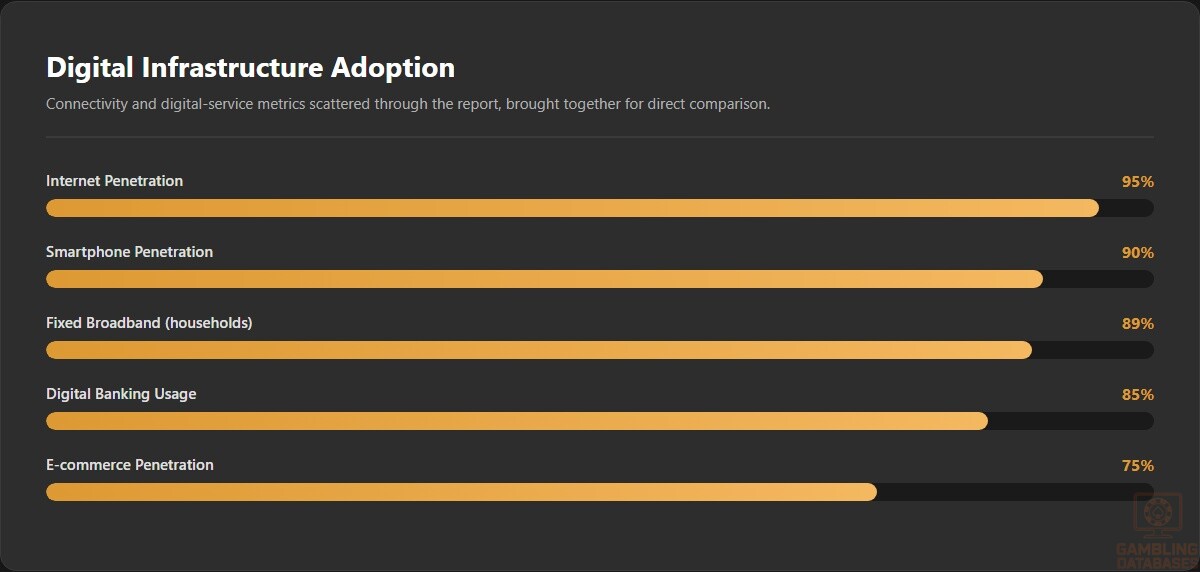
| Internet Penetration Rate | 92% |
| Mobile Penetration | 150% (multiple devices per person) |
| Licensing Authority | GRA |
| License Types | Full Licence, Class Licence for Remote Games |
| License Application Fee | Confidential (significant, subject to case-by-case) |
| License Duration | Typically 3 years, renewable |
| Minimum Capital Requirements | Not publicly specified; financial capability rigorously assessed |
| Market Entry Timeline | 6-12 months+ |
| Gross Gaming Revenue (GGR) Tax – Mass Market | 18% for first SGD 3.1bn, 22% above |
| GGR Tax – Premium Market | 8% up to SGD 2.4bn, 12% beyond |
| Player Taxation | None on winnings |
| Market Structure | Casino duopoly and regulated iGaming sector |
| Main Licensed Operators | Marina Bay Sands, Resorts World Sentosa, Singapore Pools (online monopoly operator) |
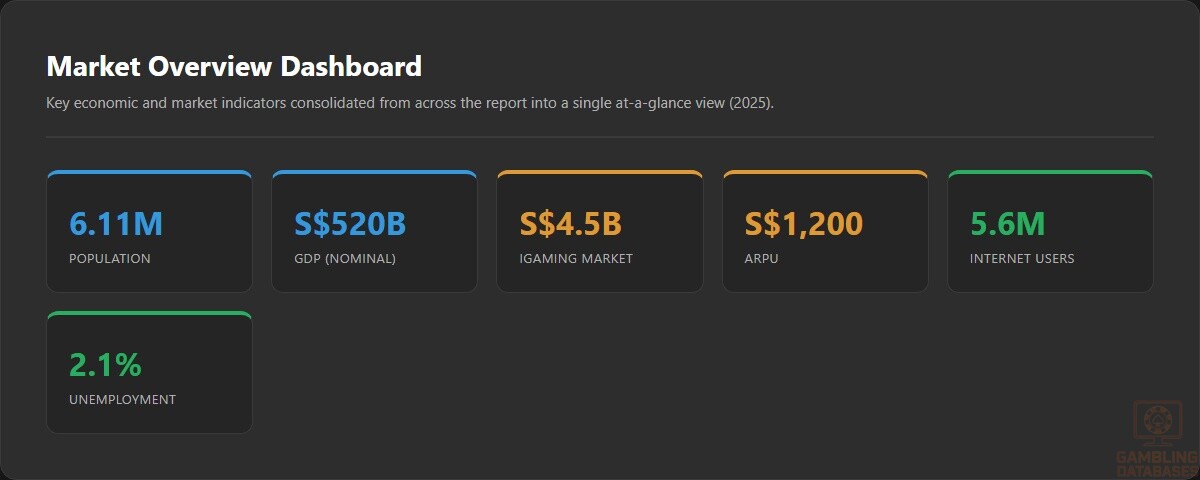
| Market Size (2025 estimate) | SGD 4.5 billion gross revenue |
| Market Growth Forecast (CAGR) | 4.5% (post-pandemic recovery) |
| Average Revenue Per User (ARPU) | SGD 1,200 |
| Regulatory Monitoring | Continuous audits, mandatory AML & KYC compliance |
| Responsible Gambling Measures | Mandatory self-exclusion, deposit limits, awareness campaigns |
| Advertising Restrictions | Strict limits on promotional content and targeting, bans on underage exposure |
| Enforcement | Fines, imprisonment for illegal operators, active blocking of illicit websites |
Section 1: Regulatory Framework and Legal Environment
Current Gambling Regulation Status
Singapore enforces a highly restrictive gambling regime, controlled by several key statutes including the Gambling Regulatory Authority Act 2022, Gambling Control Act 2022, and Casino Control Act 2006.
All forms of gambling, whether land-based or online, are illegal unless explicitly licensed or exempted by the Gambling Regulatory Authority (GRA). The government prioritizes tight regulation to mitigate social harms related to gambling and emphasizes the protection of vulnerable populations.
Land-Based Gambling Activities
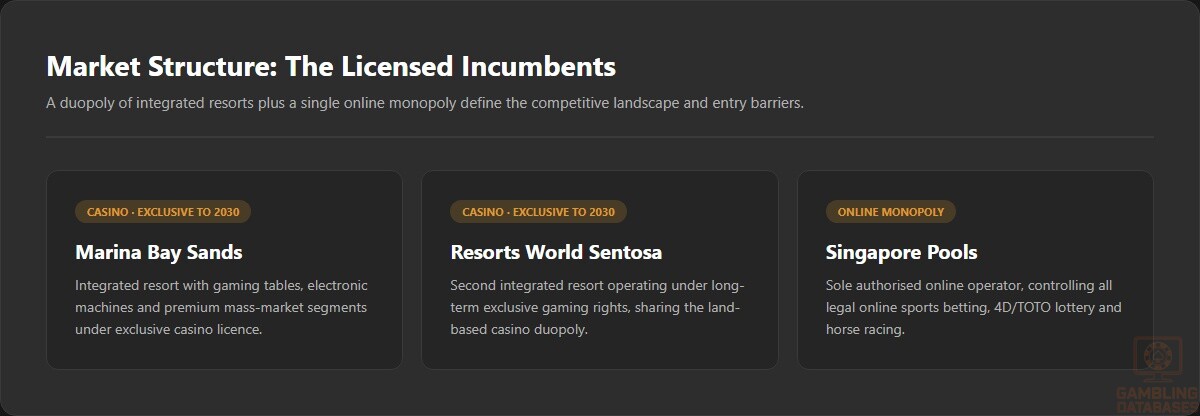
Land-based gambling in Singapore is dominated by two integrated resorts (IRs)—Marina Bay Sands and Resorts World Sentosa—operating under exclusive casino licenses extended until 2030.
These IRs offer casinos with gaming tables, electronic gaming machines, and premium mass market segments under rigorous regulatory oversight. Additionally, Singapore Pools holds the monopoly for legal sports betting, lottery, and horse racing facilities.
Other land-based gambling activities include licensed Gaming Machine Rooms operated by community organizations under strict licensing requirements. Social gambling is permitted only in very limited settings.
Online Gambling Framework
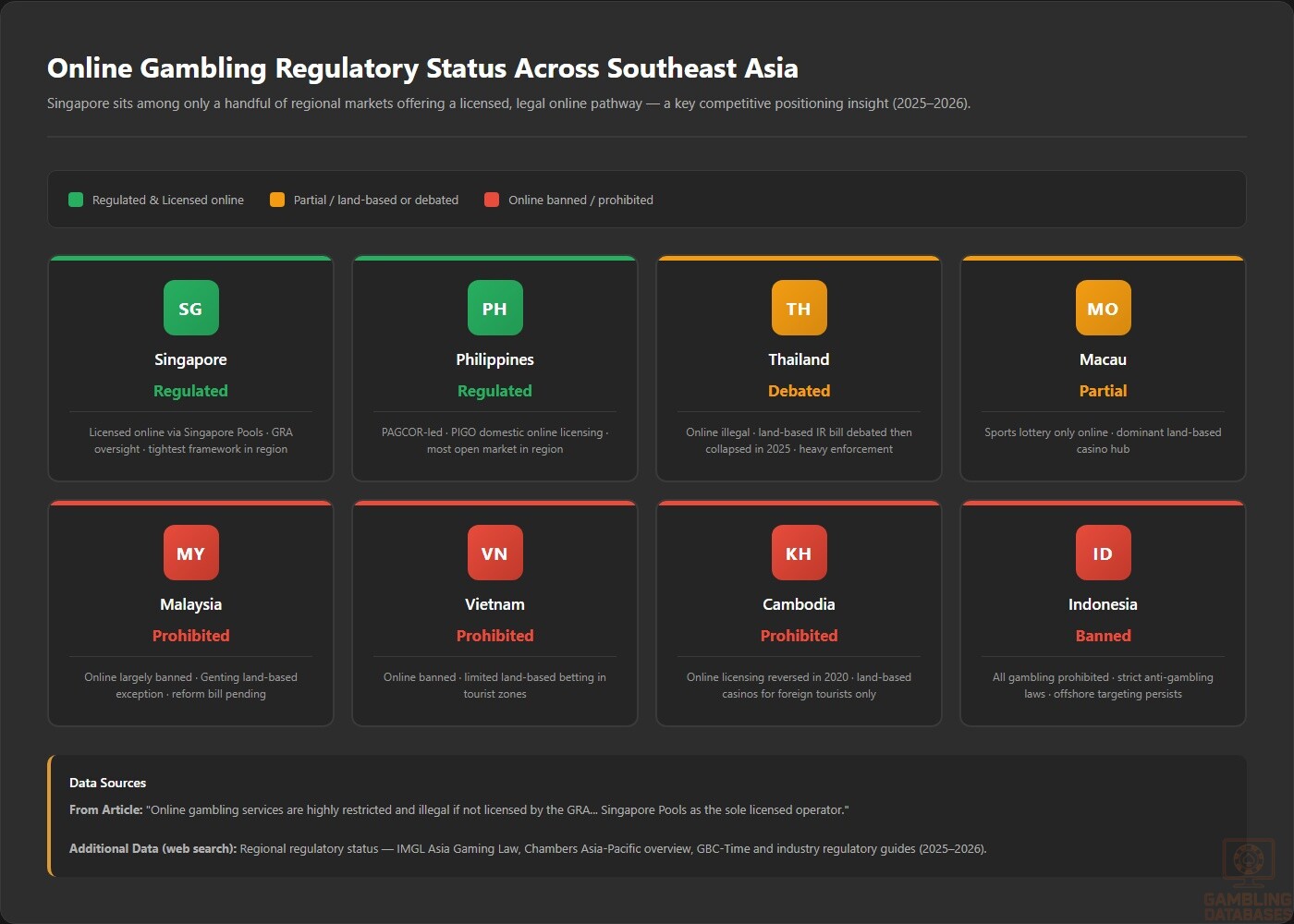
Online gambling services are highly restricted and illegal if not licensed by the GRA. The Remote Gambling Act governs online gambling, with Singapore Pools as the sole licensed operator permitted to provide online betting on lotteries, sports, and horse races.
The government proactively blocks illegal gambling websites and enforces strict prohibitions on online casino operators without licenses. Advertising and payment processing linked to unauthorized gambling operators are also prohibited.
The regulatory framework recently introduced a class licence system permitting certain lower-risk remote games under stringent conditions, expanding market opportunities within defined boundaries.
Licensed Operators and Market Players
The Singapore gambling market is structured around a duopoly of two major casino operators, Marina Bay Sands and Resorts World Sentosa. Both are licensed integrated resorts with exclusive gaming rights under long-term agreements.
Singapore Pools remains the only authorized online gambling operator, controlling all online sports betting and lottery gambling.
The competition is limited, and new entrants face significant market entry barriers including exclusivity contracts and stringent licensing criteria, positioning Singaporean market players with strong regulatory protection and commercial advantages.
Licensing Framework and Requirements
Application Process and Eligibility
The GRA is the central licensing authority responsible for vetting applications for gambling activities across Singapore, including casinos, remote gambling, and gaming machine rooms.
Applicants undergo a rigorous evaluation covering technical, financial, and security criteria, including independent audits and compliance with anti-money laundering (AML) protocols.
The licensing timeline typically spans 6 to 12 months or more, depending on the complexity and completeness of submissions.
Applicants must demonstrate financial stability, business integrity, and capacity to implement responsible gambling measures.
The following documents form the core submission requirements:
- Corporate registration and incorporation certificates
- Audited financial statements for the last three years
- Detailed business plans with financial projections
- Technical documentation of gaming platform and systems
- Background checks on directors and key personnel
- Proof of minimum capital deposits and local physical presence
- Compliance policies for AML, KYC, and responsible gaming
- Security and data protection certifications
Local Presence and Operational Requirements
Licenses typically require a physical established presence in Singapore, including registered offices and dedicated local staff for customer service and compliance.
Foreign ownership is permitted but subject to approval, with emphasis on partnership with local entities and adherence to Singapore’s laws and community standards.
Operators must maintain onshore servers or approved data centers to ensure regulatory oversight and data security.
Domains used for gambling services must be officially registered and contracted within Singapore or approved by GRA to prevent offshoring regulatory evasion.
Personnel managing gambling operations must pass background screening and have relevant industry experience.
Compliance Obligations and Monitoring
Player Protection and Identification
Singapore mandates comprehensive player protection measures under its regulatory framework, prioritizing responsible gambling and fraud prevention.
Operators implement strict age verification and Know Your Customer (KYC) protocols to prevent underage and unauthorized gambling.
- Mandatory age verification (minimum 21 years)
- Robust KYC/AML procedures for all customers
- Self-exclusion programs allowing players to restrict access
- Deposit and betting limits to mitigate problem gambling
- Regular monitoring of player behavior for signs of addiction
- Mandatory display of responsible gambling messages and resources
- Customer data privacy compliance under PDPA
- Regular reporting on compliance measures to the GRA
Financial Monitoring and Reporting
Operators must maintain detailed transaction records, with continuous monitoring for suspicious activities and compliance with AML regulations.
Reports including financial audits, suspicious transaction reports, and operational compliance logs are submitted periodically to the GRA.
- Monthly submission of financial and operational reports
- Quarterly AML and KYC compliance audits
- Immediate reporting of suspicious transactions or breaches
- Annual independent audits on financial and data security controls
Taxation Structure and Financial Obligations
Player Taxation
Players in Singapore are not subject to taxes on gambling winnings, which supports consumer participation and limits administrative burdens on the government.
Operator Taxation
| Tax Category | Tax Rate | Threshold |
|---|---|---|
| Mass Market Gross Gaming Revenue (GGR) | 18% | First SGD 3.1 billion annually |
| Mass Market GGR | 22% | Revenue exceeding SGD 3.1 billion annually |
| Premium Market GGR | 8% | First SGD 2.4 billion annually |
| Premium Market GGR | 12% | Above SGD 2.4 billion annually |
| Corporate Income Tax on Operators | 17% | Standard corporate tax rate |
License renewal fees and operational levies are subject to GRA assessment and vary based on license type and scope.
Gambling Market Financial Performance
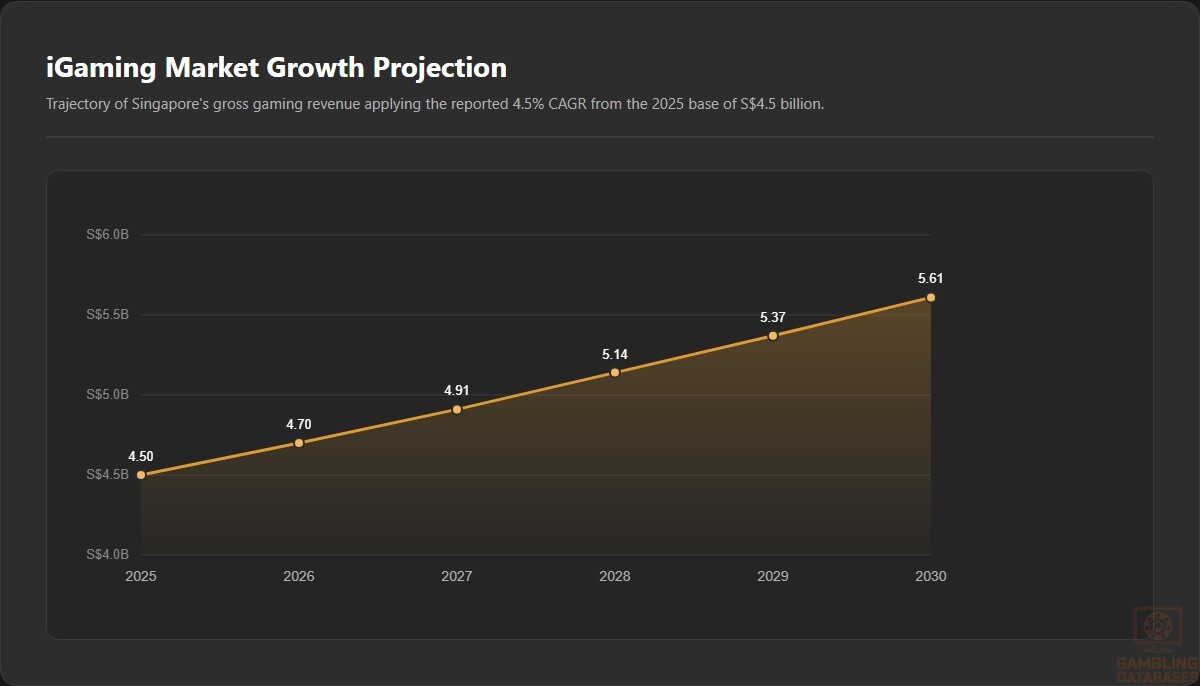
Singapore’s regulated gambling market generates gross revenues estimated at SGD 4.5 billion annually, with growth driven by both integrated resorts and online betting through Singapore Pools.
Recent years have seen a steady CAGR of approximately 4.5% post-pandemic, supported by strong tourism recovery and digital adoption.
Tax revenues from gambling contribute significantly to state coffers, reinforcing the government’s regulatory and social policy objectives.
Advertising and Marketing Restrictions
Advertising of gambling services in Singapore is tightly controlled to prevent exposure to minors and vulnerable populations.
- Prohibition of ads targeting minors or the general public via mass media
- Restrictions on promotional content with inducements or misleading claims
- Bans on gambling sponsorships in community and youth events
- Limited advertising time slots on permitted channels
- Requirements for responsible gambling disclaimers on all advertisements
These measures align with Singapore’s broader public health and social responsibility mandates.
Recent Regulatory Changes and Their Impact
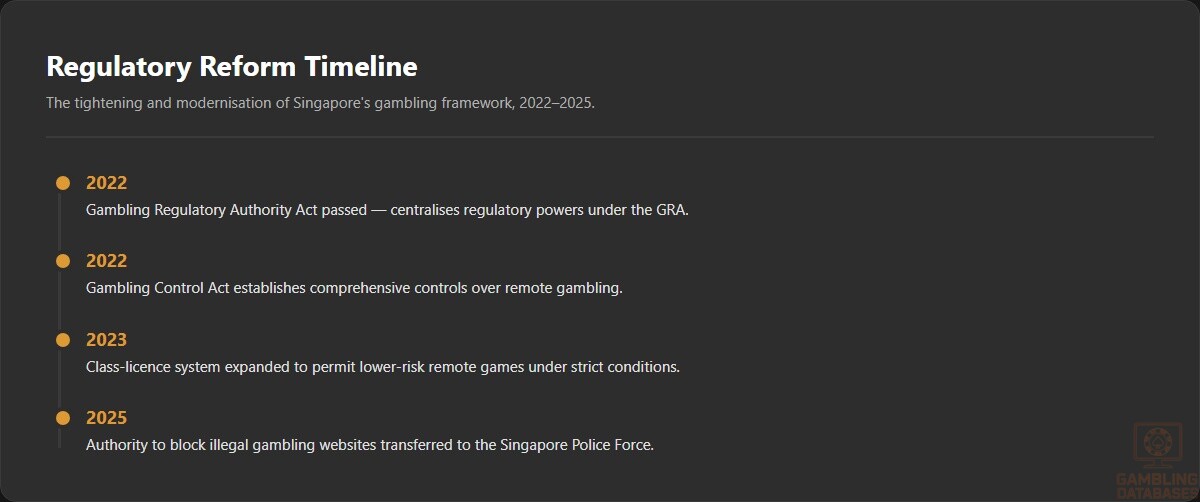
- 2022: Passage of Gambling Regulatory Authority Act centralizing regulatory powers
- 2022: Introduction of Gambling Control Act establishing comprehensive controls on remote gambling
- 2023: Expansion of class license system for lower-risk remote games
- 2025: Transfer of illegal gambling website blocking authority to Singapore Police Force
These changes have enhanced enforcement efficacy, increased compliance costs for operators, and broadened legal market opportunities under tighter controls.
Enforcement Mechanisms and Penalties
The GRA and Singapore Police jointly enforce strict penalties for illegal gambling, including fines up to SGD 200,000 and imprisonment terms extending to five years for offenders.
Enforcement actions cover operators, intermediaries, and payment service providers linked to unauthorized gambling activities.
- Fines and criminal prosecution
- Seizure and blocking of illegal websites
- Suspension or revocation of licenses for non-compliance
- Public education campaigns to reduce illegal gambling demand
- Monitoring of financial transactions for illicit conduct
Section 2: Demographics and Consumer Analysis
Population Demographics and Distribution
Singapore’s total population was estimated at 6.11 million as of mid-2025, marking a 1.2% increase year-on-year primarily driven by growth in the non-resident workforce. The citizen population comprises roughly 3.66 million, with a large segment of permanent residents adding to demographic diversity. The gender ratio is balanced with around 1,017 males per 1,000 females, reflecting a stable population structure.
The median age has been rising steadily due to aging cohorts, with a notable increase in residents aged 65 and above, aligned with global aging trends. The current median age is approximately 42 years, reflecting an advanced demographic transition. Age distribution indicates a relatively large working-age population alongside a gradually expanding senior segment, which impacts consumer behaviors and social services demand.
| Age Group | Percentage of Total Population |
|---|---|
| 0-14 years | 15% |
| 15-24 years | 13% |
| 25-54 years | 47% |
| 55-64 years | 10% |
| 65 years and above | 15% |
Singapore is a highly urbanized city-state with over 90% of the population residing in urban zones. The dense cityscape supports concentrated economic and social activity, including the presence of major gambling venues in urban centers. While classified as a single metropolitan area, key regional divisions reflect different economic hubs and residential patterns.
The internet and gambling venue accessibility is heavily centered around districts such as Marina Bay, Sentosa Island, and central business areas. This concentration facilitates market reach but also underscores a regulatory focus on locality and controlled dispersion of gaming facilities.
Economic Indicators and Consumer Spending Power
Singapore’s economy remains robust, with an estimated GDP of SGD 520 billion in 2025. The growth rate forecast is moderate, projecting between 1.5% and 2.5% annually, supported by strong sectors like finance, trade, and ICT. The country maintains a diversified and sophisticated economy with significant contributions from manufacturing, services, and technology industries.
Per capita income is one of the highest globally at around SGD 88,000, reflecting strong consumer purchasing power. Disposable income levels are correspondingly high, enabling discretionary spending on entertainment and gambling activities, despite the government’s cautious regulatory environment.
Income distribution shows moderate inequality, with a Gini coefficient near 0.45, indicative of a widening high-income segment while maintaining substantial middle-class consumption. Wealth is concentrated in urban professionals and expatriates, with significant disposable income for digital and experiential entertainment including iGaming.
| Indicator | Value |
|---|---|
| GDP (Nominal) | SGD 520 billion |
| GDP Growth Forecast | 1.5% – 2.5% |
| Per Capita GDP | SGD 88,000 |
| Gini Coefficient | 0.45 |
| Unemployment Rate | 2.1% |
The gambling market is fueled by a consumer base with steady income and growing affluence. The availability of digital payment solutions and mobile connectivity further supports rapid consumer adoption of online gambling options within the legal framework.
Education, Skills, and Digital Literacy
Singapore boasts nearly universal literacy with extensive public investment in education, reflecting among the highest PISA scores worldwide. Educational attainment is high, with a majority of the population completing secondary education and a significant share holding tertiary qualifications, particularly in technology and finance fields.
Digital literacy is pervasive with >95% of residents proficient in internet use and digital platforms. Workforce skills emphasize ICT capabilities, enabling strong engagement with online services including regulated iGaming platforms. These factors contribute to Singapore’s position as a digital hub in Southeast Asia and inform consumer behavior towards online entertainment.
Cultural and Social Factors
Communication and Language
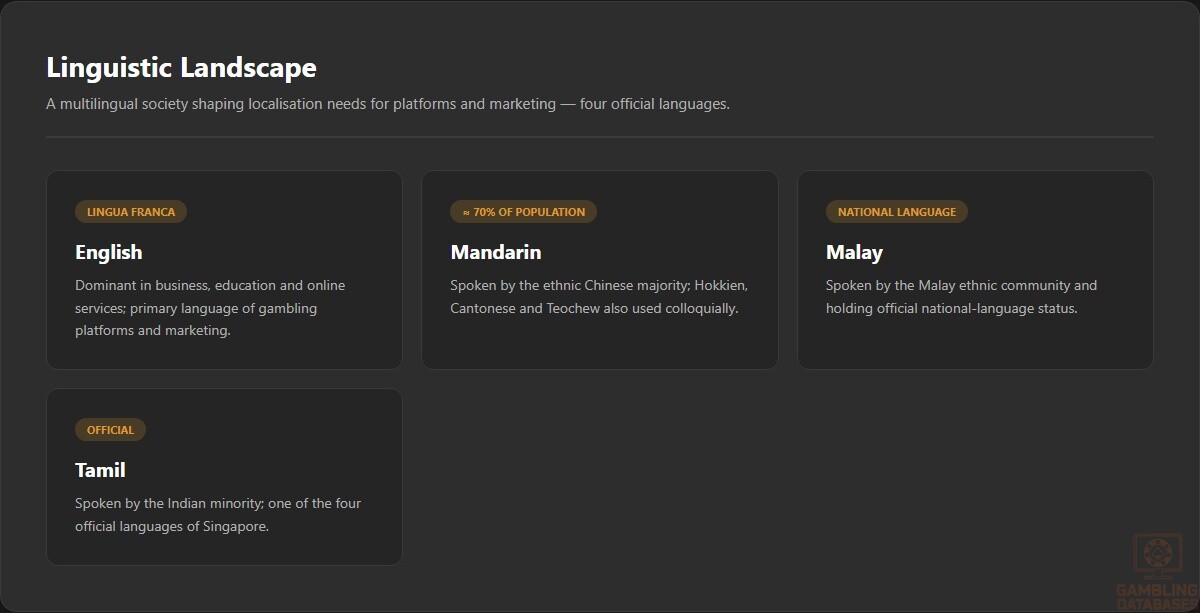
Singapore is a multilingual society with four official languages: English, Mandarin, Malay, and Tamil. English serves as the lingua franca in business, education, and digital content, dominating online gambling platforms and marketing. Mandarin is widely spoken among the ethnic Chinese majority, while Malay and Tamil serve specific communities.
- English – Official and most commonly used language in business and online services
- Mandarin – Spoken by approximately 70% of the population
- Malay – National language and spoken by Malay ethnic group
- Tamil – Spoken by the Indian minority
- Other Chinese dialects – Hokkien, Cantonese, Teochew used colloquially
Cultural Attitudes
Gambling is viewed cautiously due to strong cultural and religious influences rooted in Buddhism, Islam, and Christianity, which emphasize moral restraint. Social acceptance is mixed; while gambling as entertainment is popular, societal concerns about addiction and family welfare prevail. Foreign brand presence faces scrutiny, demanding culturally sensitive communications and strong social responsibility compliance.
Problem Gambling and Social Considerations
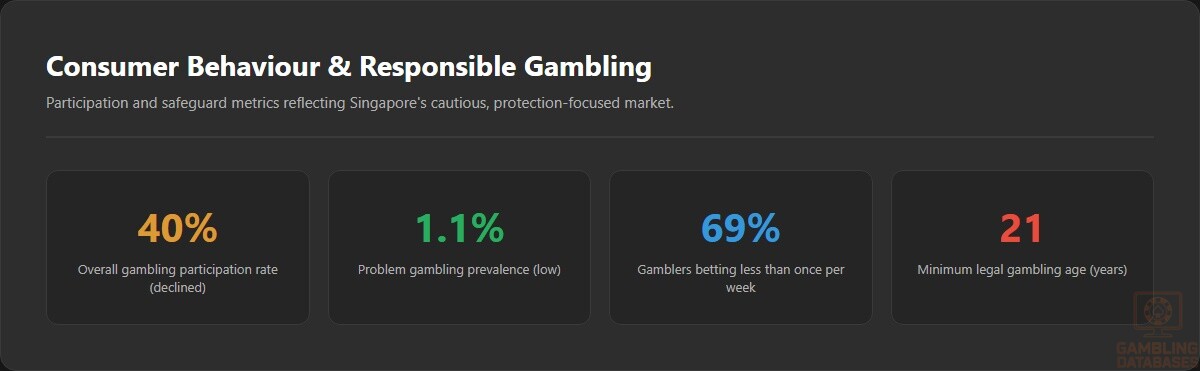
The overall gambling participation rate has declined to approximately 40%, mirroring effective regulatory restrictions and social safeguards. Problem gambling prevalence remains low at around 1.1%, supported by proactive government and community interventions.
- National Council on Problem Gambling (NCPG) programs promoting awareness
- Mandatory self-exclusion and betting limits
- Helpline and counselling services for at-risk individuals
- Public education campaigns emphasizing responsible gambling
- Collaboration with gambling operators on prevention policies
Social responsibility policies mandate operator contributions to fund treatment and preventive programs, underscoring the government’s commitment to minimizing harms while allowing regulated gambling.
Political Structure and Governance
Singapore operates a parliamentary republic known for political stability, efficient governance, and strong rule of law. Regulatory consistency and transparent policy-making create a favorable environment for business, supported by sound international trade relations and investment-friendly policies. This stability is critical for long-term market investments in the gaming sector.
Technology Adoption and Digital Behavior
Internet and Digital Usage
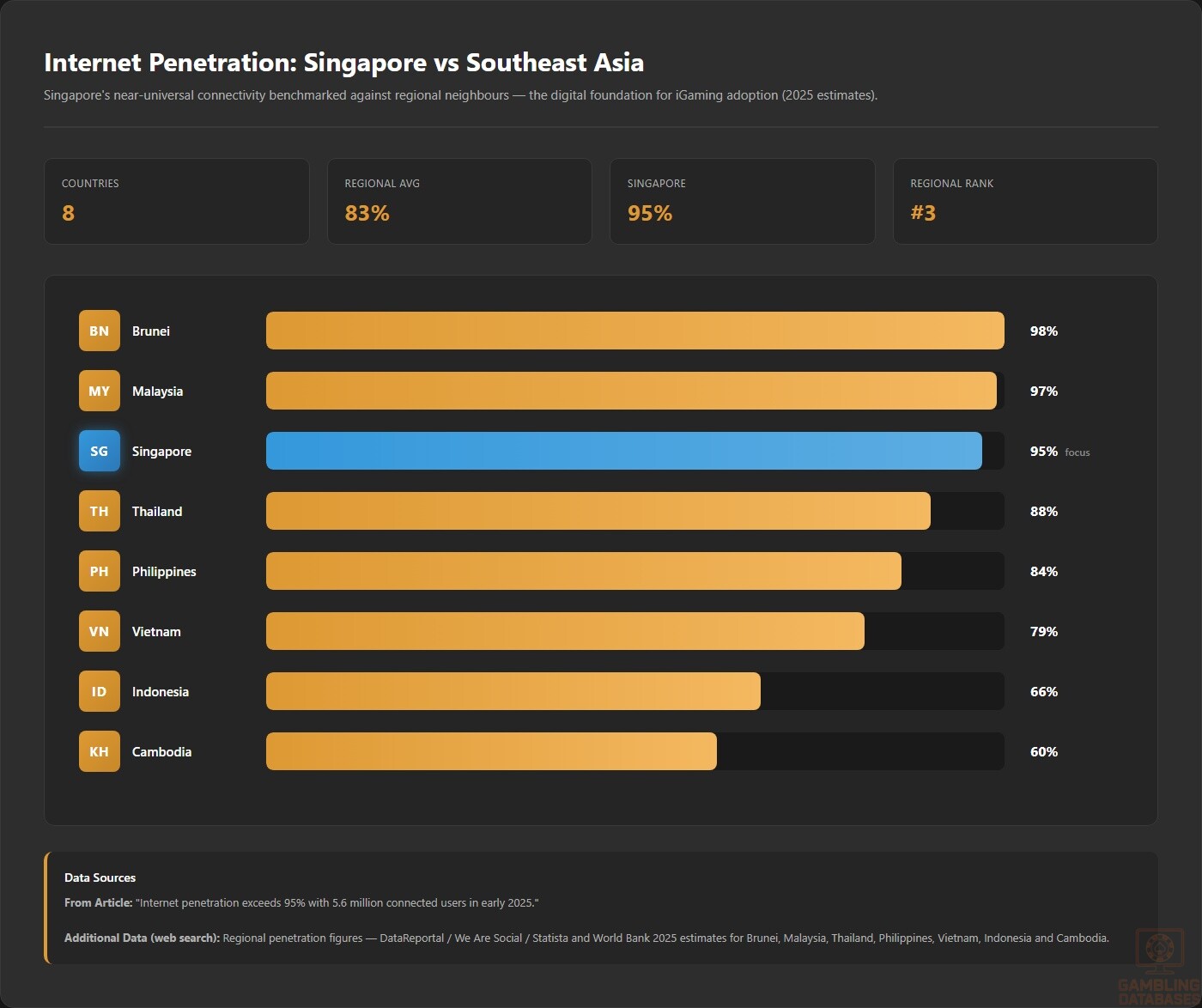
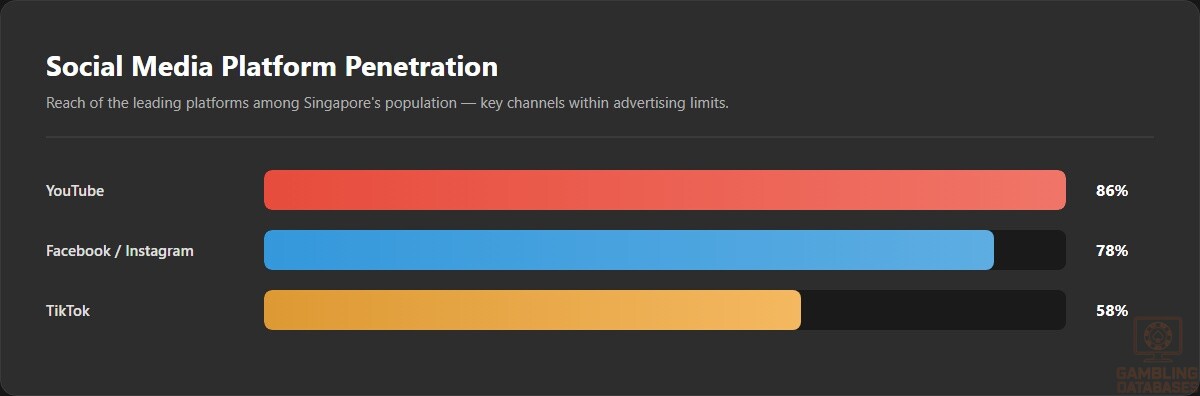
Internet penetration exceeds 95% with 5.6 million connected users in early 2025. Daily internet usage averages over 7 hours per user, driven by mobile access. Social media engagement is high, with Singaporeans using multiple platforms regularly.
- Facebook and Instagram with over 78% penetration among users
- YouTube used by 86% of the population with high video consumption
- TikTok rapidly growing, reaching 58% of the population
- WhatsApp and Telegram popular messaging platforms
- LinkedIn widely used among professionals for networking
Digital Payment Behavior
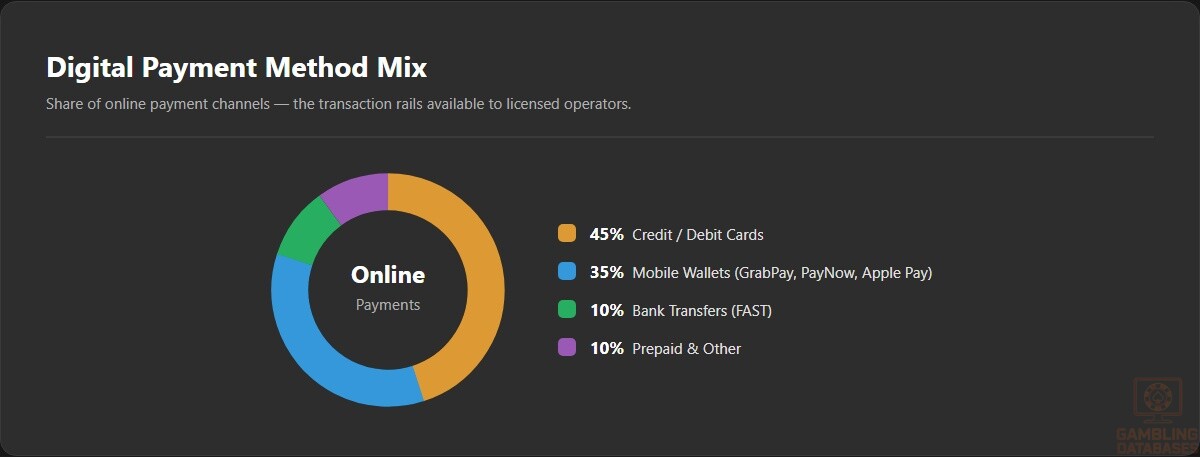
Digital payments dominate e-commerce and online transactions, with preferences shifting towards mobile wallets and contactless banking. Singapore supports multiple advanced payment systems fostering seamless gambling transactions.
- Credit and debit cards with 45% market share in online payments
- Mobile wallets such as GrabPay, PayNow, and Apple Pay with 35% share
- Bank transfers accounting for 10% of digital payments
- Cryptocurrency use remains minimal due to regulatory caution
- Prepaid payment services growing among younger demographics
Gaming and Gambling Preferences
Current Market Participation
Lottery-based games remain the most popular gambling activity, with 4D and TOTO lottery accounting for the highest participation. Sports betting follows closely, with legal channels commanding a dominant market share.
| Gambling Activity | Participation Rate (%) |
|---|---|
| 4D Lottery | 30% |
| TOTO Lottery | 29% |
| Sports Betting | 22% |
| Online Casino Betting (Illegal) | 1% |
| Horse Racing | 8% |
Consumer Behavior Patterns
Consumer spending on gambling shows conservative frequency, with 69% of gamblers placing bets less than once per week and many preferring legal and regulated venues for assured fairness and social responsibility. Peak activity aligns with major sporting events and lottery draws. Retention rates are steady, with digital platforms favored for convenience and anonymity, balanced by regulatory limits fostering responsible gaming behavior.
Section 3: Technology Infrastructure and Business Environment
Internet and Digital Infrastructure
Singapore boasts one of the world’s most advanced internet infrastructures, characterized by near-universal broadband coverage and extensive 5G deployment. Fixed broadband penetration reaches over 89% of households, complementing nearly complete mobile broadband coverage. Average broadband speeds exceed 300 Mbps, among the highest globally, supported by continuous public and private sector investments in fiber and 5G networks.
The country’s internet reliability is underpinned by multiple international submarine cable connections and redundant infrastructure, minimizing downtime and ensuring seamless connectivity for gaming operations. Data centers within Singapore offer robust infrastructure with high-security standards attracting cloud and gaming service providers.
The government’s Smart Nation initiative fuels ongoing investments in digital infrastructure, promising enhanced network capabilities and smart technologies integrated nationwide.
5G and Future Technology Deployment
Singapore leads in Southeast Asia for 5G rollout, with complete urban coverage completed in 2024 and rural or peripheral coverage expected by 2026. Key mobile network operators aggressively upgraded their networks, supporting increased data speeds and low latency essential for real-time online gaming.
Plans for 6G research and development are underway, underscoring Singapore’s ambition to remain at the forefront of digital innovation. Government incentives promote research collaborations between telecom firms, technology startups, and academia to drive future technology adoption.
The operator landscape includes several major players competing for market dominance, with ongoing spectrum auctions ensuring dynamic competition and continual service improvements.
Mobile Technology Ecosystem
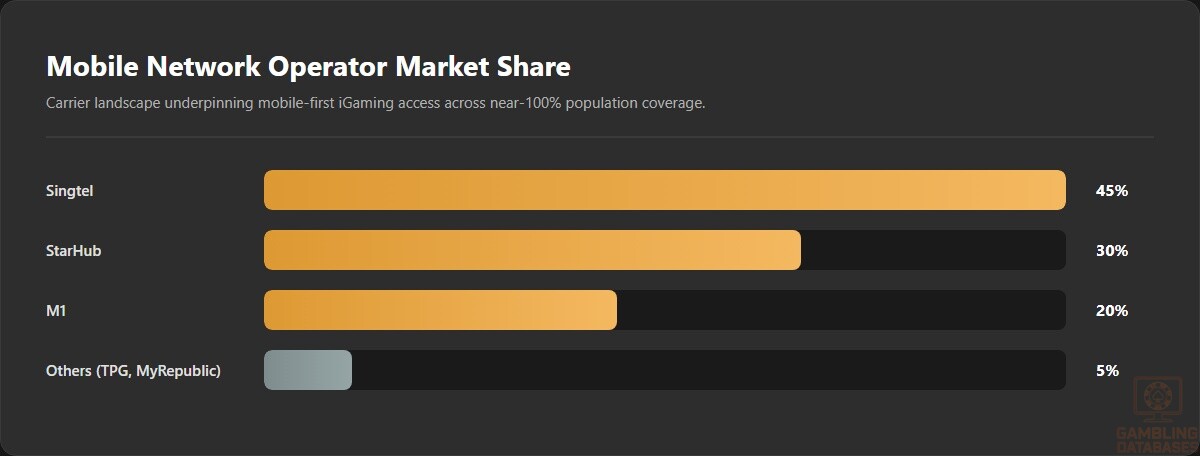
Singapore’s mobile network ecosystem comprises several key operators competing fiercely on quality and price, facilitating high mobile data consumption critical for mobile-centric iGaming access. Market coverage is comprehensive with nearly 100% population coverage and strong urban-rural service equivalency.
- Singtel – Market leader with 45% share, extensive urban and rural network
- StarHub – Second largest, 30% market share, strong customer service focus
- M1 – 20% share, competitive pricing and innovative plans
- TPG Telecom – Disruptive entrant with growing market share
- MyRepublic – Niche player focusing on fiber broadband and enterprise solutions
Smartphone penetration exceeds 90%, with most users employing premium Android and iOS devices supporting advanced graphics and secure payment capabilities crucial for first-class gaming experience. Mobile usage patterns show frequent engagement with apps and instant access as a market behavioral norm.
Financial Services and Payment Infrastructure
Singapore’s financial services sector is sophisticated, featuring extensive digital banking and payment ecosystems with a strong focus on security and innovation. Digital banking adoption is high, with more than 85% of residents using mobile banking apps regularly.
- DBS Bank – Leading bank with comprehensive digital platforms
- OCBC Bank – Strong SME and consumer banking services
- UOB – Focus on retail and corporate digital banking
- Citibank Singapore – International banking with digital services
- Standard Chartered – Expansive regional player with digital innovation
Payment processing offers a wide array of options supporting gambling transaction requirements. Card payments dominate but mobile wallets rapidly gain ground. Bank transfers remain relevant for larger transactions and regulatory compliance.
- Visa and Mastercard credit/debit cards widely accepted
- Mobile wallets including GrabPay, Apple Pay, Google Pay, and PayNow
- Bank transfers with real-time clearing via FAST system
- Prepaid cards and vouchers for enhanced security and anonymity
- Cryptocurrency transactions not widely adopted due to regulatory caution
E-commerce and Digital Economy
Singapore’s digital economy is a key pillar of national growth, with e-commerce penetration exceeding 75%. Consumers exhibit high trust in digital platforms, supported by secure payment infrastructure and effective legal frameworks. Online retail covers a broad range of goods and digital services, including entertainment and gaming.
Government initiatives encourage startups and SMEs in the digital space, boosting innovation and consumer engagement. The convergence of digital economy growth and advanced infrastructure presents ample opportunities for iGaming platform expansion.
Business Environment and Regulatory Framework
Singapore ranks consistently among the top 10 globally for ease of doing business, supported by transparent regulations, streamlined company registration, and investor protection frameworks. Operational costs are moderate relative to global financial hubs but higher than regional peers due to premium skills and infrastructure costs.
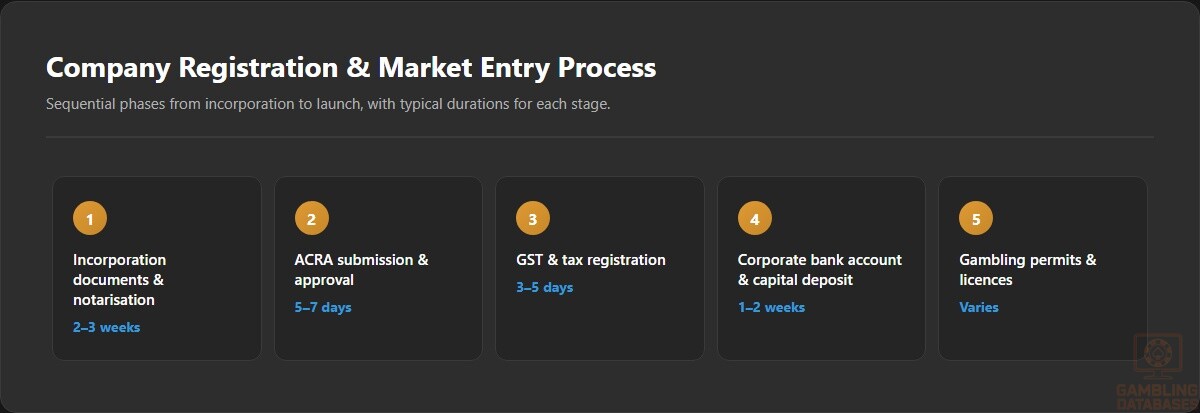
The business registration process involves structured phases ensuring compliance with local laws and tax obligations, fostering a secure and predictable environment for market entrants.
- Preparation and notarization of incorporation documents (2-3 weeks)
- Submission and approval by Accounting and Corporate Regulatory Authority (5-7 days)
- Registration for Goods and Services Tax (GST) and tax identification (3-5 days)
- Opening of corporate bank account with capital deposit (1-2 weeks)
- Obtaining necessary permits or licenses for gambling operations (varies)
Available corporate structures include Limited Liability Companies (LLCs), Branch Offices, and Representative Offices, with LLCs favored for full market participation. Foreign ownership is allowed without explicit limits but must align with regulatory requirements.
- Limited Liability Company: Separate legal entity offering full business rights
- Branch Office: Extension of foreign parent with legal limitations
- Representative Office: Limited scope, no commercial activities
Required registration documents for companies entering gambling include:
- Certified incorporation and constitutional documents
- Board resolutions authorizing operations in Singapore
- Director and shareholder identification and consent
- Proof of registered local office and contact details
- Compliance policies for Money Laundering and Responsible Gaming
- Audited financial statements and capitalization proof
Taxation Framework
Singapore imposes a competitive corporate income tax rate of 17%, supplemented by several tax incentives for technology and innovation sectors. Special economic zones provide tax holidays and depreciated tariffs for qualifying entities. Singapore maintains extensive double taxation treaties with over 80 countries including the United States, China, and the United Kingdom.
- United States
- China
- United Kingdom
- Australia
- Japan
- Germany
- France
Personal income tax rates are progressive, with maximum rates capped at 22% for high earners. Resident individuals benefit from tax reliefs and exemptions on foreign income under specific conditions. Social security contributions are employer-employee shared and mandatory under CPF schemes ensuring workforce welfare.
Market Entry Considerations
Strategic entry into Singapore’s iGaming market requires careful navigation of regulations and keen understanding of local consumer behaviors. Partnering with established local entities or Singapore Pools offers pathway advantages, while technology licensed under GRA-compliant standards ensures regulatory harmony.
- Secure all mandatory licenses and maintain strict AML/KYC compliance
- Invest in localized platform adaptations respecting linguistic and cultural norms
- Develop responsible gaming frameworks aligned with government mandates
- Leverage Singapore’s 5G and payment infrastructure for seamless customer experience
- Engage in transparent marketing respecting advertising restrictions
Initial cost estimates for market entry span licensing, technology deployment, staffing, marketing, and compliance, with capital requirements typically in the range of SGD 1 to 3 million depending on scope. Operational timelines from registration to launch range between 6 and 12 months.
| Category | Estimated Cost |
|---|---|
| License Application Fees | SGD 250,000 – 500,000 |
| Technology Platform Setup | SGD 500,000 – 1,000,000 |
| Regulatory Compliance & Legal Fees | SGD 200,000 – 400,000 |
| Marketing & Customer Acquisition | SGD 300,000 – 700,000 |
| Operational Staffing & Overheads | SGD 250,000 – 400,000 annually |
Key success factors include robust compliance systems, localized user engagement, technological excellence, and strategic partnerships. Challenges primarily revolve around regulatory complexity, high operational standards, and competitive market dominance by incumbents.
- Strong regulatory understanding and proactive compliance management
- Investment in cutting-edge technology and seamless user experience
- High-quality customer service tailored to multicultural demographics
- Scalable infrastructure to manage growth and user volume
- Flexible marketing strategies within stringent promotion rules
Exit strategy planning requires coherence with licensing authorities regarding ownership transfers and license renewals, with asset valuations influenced strongly by regulatory reputation and operational track record.
FAQ: Frequently Asked Questions
1. Is online gambling legal in Singapore?
Online gambling is legal only under strict regulation with licenses issued by the Gambling Regulatory Authority. The sole authorized online operator is Singapore Pools for lotteries and sports betting. All other forms of online gambling are prohibited and actively blocked by authorities to prevent illegal activities. Consumers accessing unauthorized platforms face legal risks.
2. What types of gambling licenses are available and what do they cover?
Singapore offers two primary license types: full licenses for integrated resorts with casino operations and class licenses covering lower-risk remote gambling, such as online betting on lotteries and sports. These licenses require rigorous adherence to technical, financial, and compliance standards. The licensing framework ensures market safety and controls operator activities effectively.
3. How much does an iGaming license cost and how long does it take to obtain?
License application fees vary based on scope and are typically between SGD 250,000 and 500,000, with evaluation periods spanning 6 to 12 months. Additional costs include compliance monitoring and renewal fees. The process involves comprehensive review stages, background checks, and mandatory technical certifications to ensure readiness and integrity.
4. Can foreign companies obtain a gambling license?
Foreign companies are eligible for licenses but must comply with local regulatory standards, including establishing a local presence and adhering to AML and responsible gaming guidelines. While foreign ownership is permitted, partnership or joint ventures with local entities are beneficial for navigating regulatory complexities and market entry dynamics.
5. What are the tax obligations for iGaming operators?
Operators pay gross gaming revenue taxes differentiated by market segments, with mass market GGR taxed at 18-22% and premium market at 8-12%. Corporate income tax stands at 17%, supplemented by other statutory fees. These tax structures balance government revenue generation with market competitiveness.
6. Are gambling winnings taxed for players?
Players in Singapore are not subject to taxation on gambling winnings, promoting participation within the regulated market. This policy simplifies compliance for players and enhances the attractiveness of licensed operators. Tax obligations remain confined to operators under current law.
7. What are the typical operational costs for running an online casino/sportsbook?
Operational costs include licensing fees, technology infrastructure, compliance and auditing, marketing expenditure, customer support, and staffing. Consolidated costs for a mid-scale operation range from SGD 1 million to 3 million annually, depending on scale and market penetration. Efficient cost management is crucial for profitability.
8. What is the expected ROI timeline for entering this market?
ROI timelines vary with investment scale and market approach but typically range from 18 to 36 months. Factors influencing ROI include licensing duration, marketing success, platform reliability, and regulatory compliance efficiency. Sustained growth depends on effective localization and responsive customer engagement.
9. What are the local presence requirements for operators?
Operators must maintain a registered office and dedicated local staff in Singapore. Physical or virtual presence with servers located in or approved by the jurisdiction is required. Local compliance officers and customer support teams ensure adherence to regulatory frameworks and enhance consumer trust.
10. What payment methods are available and recommended?
A wide range of payment methods is accepted, including Visa/Mastercard cards, mobile wallets like GrabPay and Apple Pay, bank transfers via FAST, and prepaid cards. Cryptocurrency use remains limited. Recommended methods focus on security, compliance with AML, and user convenience to facilitate smooth transactions.
11. What are the advertising and marketing restrictions?
Advertising is heavily regulated with prohibitions on targeting minors or vulnerable groups. Marketing content must include responsible gambling disclaimers, avoid misleading claims, and respect time and channel restrictions. Sponsorships in community events are strictly controlled to mitigate social harms.
12. What responsible gambling measures are mandatory?
Operators must implement age verification, self-exclusion options, deposit limits, monitoring for addictive behavior, and provide access to counselling services. Regular reporting on responsible gambling initiatives is compulsory, aligning operator practices with government and societal expectations to reduce gambling-related harms.
13. How large is the iGaming market and what is the growth potential?
The iGaming market in Singapore is valued at approximately SGD 4.5 billion, growing steadily at a CAGR of around 4.5%. The expanding digital infrastructure and rising digital literacy fuel consumer base growth. Regulatory reforms offer scope for broader remote gaming opportunities, suggesting promising expansion prospects.
14. Who are the main competitors and what is their market share?
The market is dominated by Marina Bay Sands and Resorts World Sentosa in land-based casinos, with Singapore Pools holding monopoly in online betting. Market share consolidation creates high entry barriers. Emerging class licensees and tech-driven operators seek niche segments, but incumbents retain dominant influence.
15. What are the player preferences and typical spending patterns?
Players prefer lottery-based games and sports betting with moderate betting frequency. A majority engage legally, favoring platforms emphasizing fairness and responsible gaming. Peak activity aligns with major sports events and lottery cycles. Spending tends to concentrate on low to mid-stake bets reflecting cautious consumer behavior.
16. What are the key success factors and main challenges for new entrants?
Key success factors include strong regulatory adherence, localized platform experience, technological innovation, and robust customer support. Challenges comprise navigating complex regulations, high license and operational costs, competitive market dominance, and stringent advertising limitations. Strategic alliances and scalability underpin long-term viability.
—
Sources and References
- Gambling Regulatory Authority Singapore – https://www.gra.gov.sg
- Ministry of Home Affairs Singapore – https://www.mha.gov.sg
- Singapore Department of Statistics – https://www.singstat.gov.sg
- World Bank Doing Business Report 2024 – https://www.worldbank.org
- Infocomm Media Development Authority – https://www.imda.gov.sg
- Monetary Authority of Singapore – https://www.mas.gov.sg
- National Council on Problem Gambling – https://www.ncpg.org.sg
- Economic Survey of Singapore 2025 – Ministry of Trade and Industry
- Digital 2025: Singapore Report by DataReportal
- Population in Brief 2025 – Singapore Department of Statistics
- Singapore Integrated Resorts & Casinos Licensing Act Documentation
- Singapore Tax Authority – Inland Revenue Authority of Singapore (IRAS)
- Media reports from GGRAsia, iGamingExpress, and GamblingInsider (2024-2025)
- International Telecommunication Union – ICT Data 2025
- Industry analysis from DBS BusinessClass 2025
- Academic studies on Singapore gambling trends – National University of Singapore
- World Internet Usage Statistics – StatCounter 2025
- Local government gazettes and regulatory amendments 2022-2025
- Reports on Social Media Landscape Singapore 2025 – Hashmeta and Papercuts
- Central Bank of Singapore Financial Reports 2025
- Global Gaming Expo (G2E) Asia Market Reports 2024-2025
- Singapore Digital Literacy Day Publications 2025 – ICDL Asia
- Official Singapore Police Force publications on illegal gambling enforcement
- Corporate registry documentation – Accounting and Corporate Regulatory Authority (ACRA)
- Technology infrastructure investment reports – Smart Nation Program 2025
- Payment system reports – FAST and PayNow authorities 2025
- Singapore mobile network operator annual reports 2024-2025
- E-commerce and digital economy reports – Alibaba Research and Google Singapore
- Legal advisories on gaming license applications – TKDeal, SDLCCorp
- Financial and gaming market data from IRAS and Ministry of Finance publications