Slovakia presents a rapidly evolving opportunity in the iGaming sector with a legal framework that modernized significantly in 2019. The country balances a regulated, competitive market aimed at protecting players while enabling foreign and domestic operators to participate under stringent compliance and taxation regimes.
This analysis provides a detailed overview of Slovakia’s regulatory environment, licensing procedures, tax structures, and operational requirements essential for market entry success.
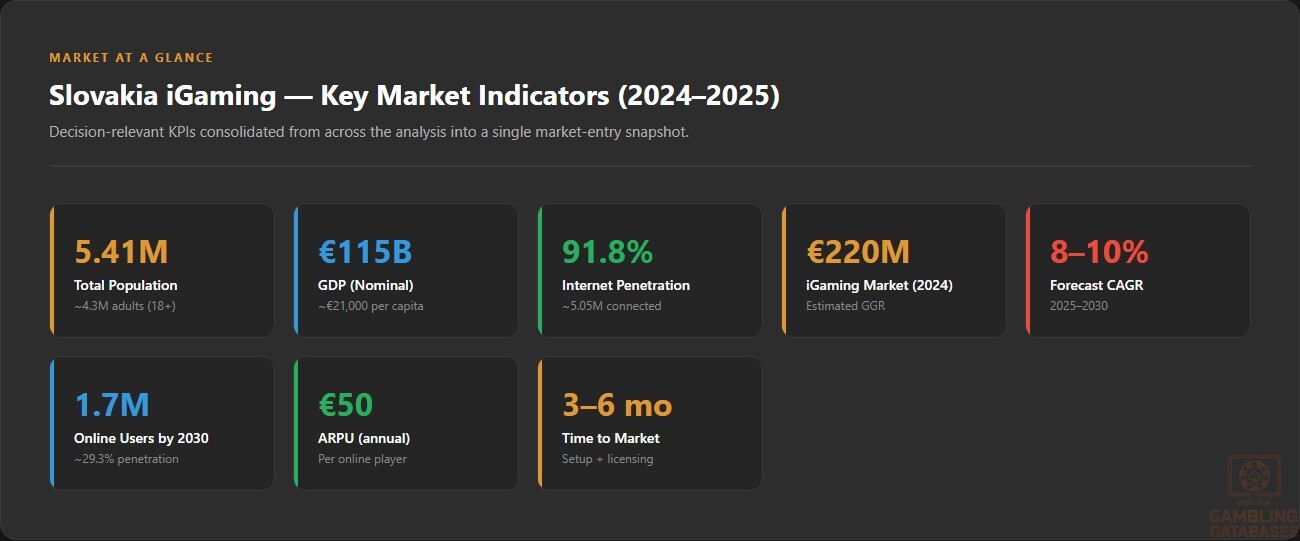
Executive Summary: Key Market Indicators
| Metric | Value |
|---|---|
| Gambling Legal Status | Legal and regulated since 2019 |
| Regulatory Authority | Gambling Regulatory Authority (ÚRHH) |
| Population | 5.45 million |
| Adult Population (18+) | Approximately 4.3 million |
| GDP (Nominal) | ~€115 billion (2024) |
| GDP Per Capita | ~€21,000 |
| Internet Penetration | ~89% |
| Mobile Penetration | ~112% |
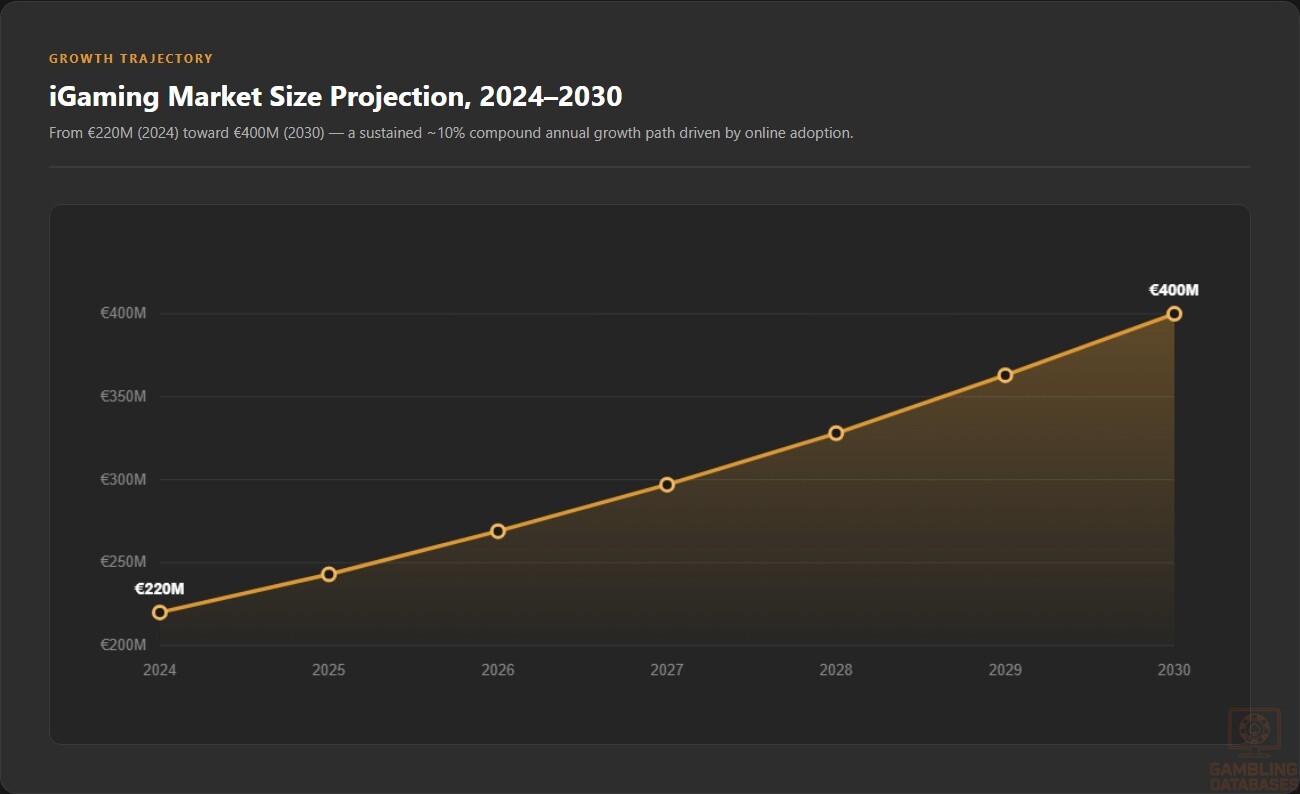
| iGaming Market Size (2024) | €220 million (estimated gross gaming revenue) |
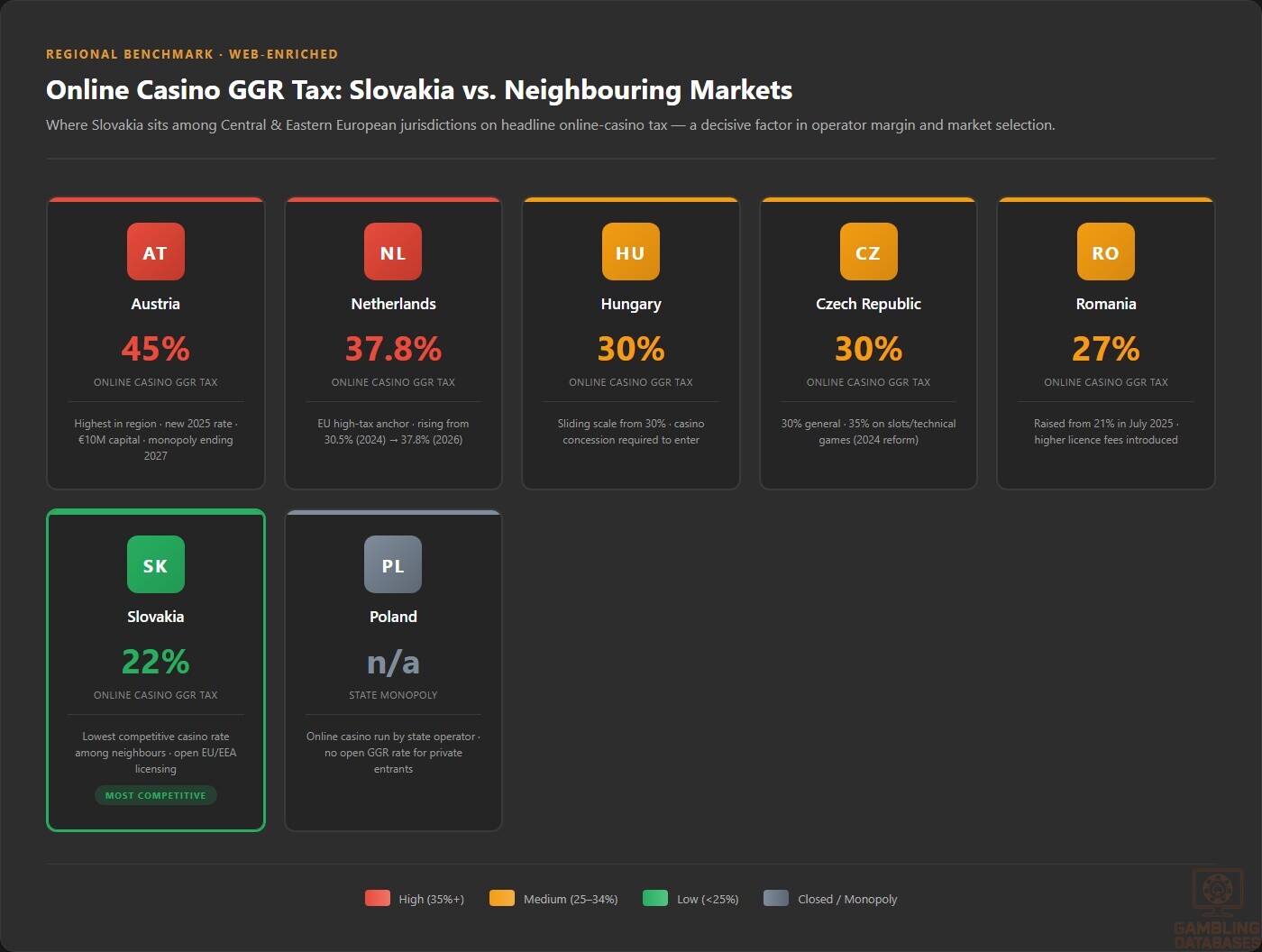
| Online Casino GGR Tax Rate | 22% |
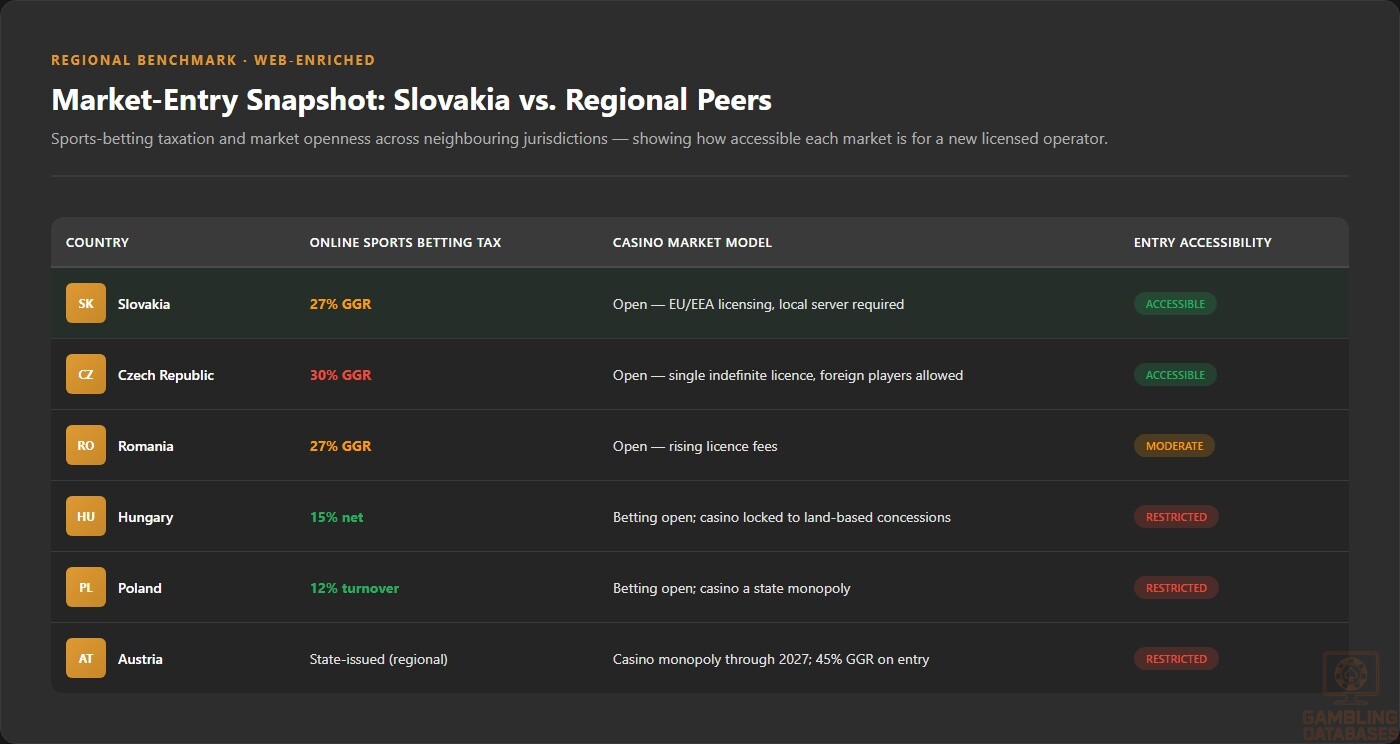
| Sports Betting GGR Tax Rate (Online) | 27% |
| Land-Based Casinos GGR Tax | Up to 27% plus municipal taxes |
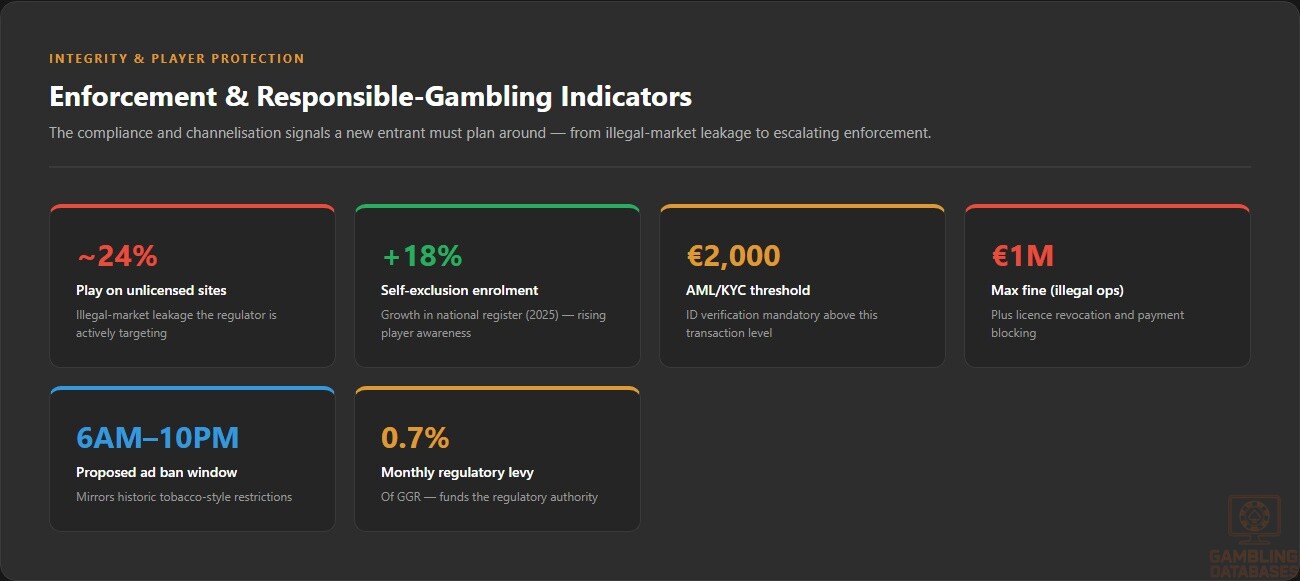
| Monthly Additional Levy on Operators | 0.7% of GGR (funds regulatory authority) |
| License Application Duration | 1 to 2 months |
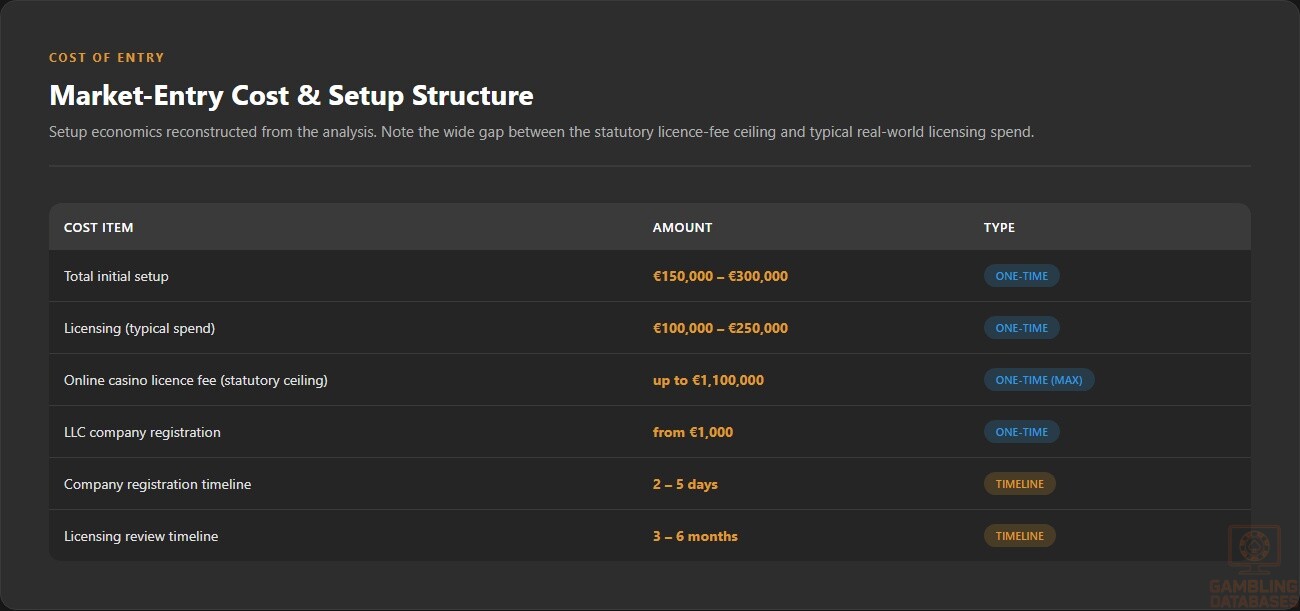
| License Fee for Online Casino | Up to €1.1 million (one-time) |
| License Term | Typically 2-5 years, some indefinite |
| Number of Licensed Operators | Over 130 land-based; several dozen online |
| Local Server Presence Required | Yes |
| Local Presence Requirement | Slovak address or EU entity with Slovak rep |
| AML Compliance | Mandatory with customer ID verification starting at €2,000 transactions |
| Mandatory Player Protection Measures | Self-exclusion register, deposit limits, time limits |
| Advertising Restrictions | Proposed ban between 6 AM – 10 PM |
| Illegal Gambling Prevalence | ~24% of players on unlicensed sites |
| Enforcement Focus | Blacklisting illegal operators and payment blocking |
| Market Revenue Growth Forecast (CAGR) | Approx. 8-10% (2025-2030) |
| Average Revenue Per User (ARPU) | ~€50 annually |
| Market Entry Barriers | High license fees, local presence, strict compliance |
| Timeline to Market Entry | 3-6 months including setup and licensing |
Section 1: Regulatory Framework and Legal Environment
Current Gambling Regulation Status
Slovakia’s gambling market is governed by the Gambling Act No. 30/2019 Coll., effective since March 1, 2019, which comprehensively regulates both land-based and online gambling activities. The legal framework balances liberalization of online gambling with strong regulatory oversight to protect consumers and ensure tax compliance. Key land-based gambling activities include casinos, sports betting venues, slot halls, and lotteries, with the state monopolizing lotteries and bingo sectors through the operator TIPOS.
The online gambling framework opened the market to international operators from the European Union and European Economic Area, subject to licensing and operational compliance. The Gambling Regulatory Authority (ÚRHH) supervises licensing, enforcement, and compliance monitoring for all gambling operations in Slovakia. The ÚRHH maintains a blacklist of unauthorized operators and conducts active enforcement to combat illegal gambling.
Land-Based Gambling Activities
Land-based gambling categories regulated in Slovakia consist of:
- Full-scale casinos operating across the country, offering table games and slots
- Sports betting venues authorized under specific licenses
- Slot machine halls, regulated with minimum slot machine quantity restrictions
- Arcades and skill games subject to licensing
- State-run lotteries and bingo, monopolized by TIPOS
Municipal authorities may impose additional regulations affecting venue operations, which has recently pressured land-based revenue performance amid rising online competition and tighter local rules.
Online Gambling Framework
The digital gambling market operates under a licensing regime that requires operators to hold two-tier licenses: a general license and specific product licenses. Operators must demonstrate financial stability, robust AML/KYC processes, and ensure server infrastructure is located within Slovakia. Online sports betting and casino games are the primary licensed products. Prohibited activities primarily include unlicensed gambling platforms and unregulated skill or video gaming if applied for gambling purposes.
Strict regulatory oversight mandates identity verification on significant deposits and wagers, adherence to responsible gambling protocols, and monthly financial reporting. The regulatory body actively enforces compliance by blacklisting illegal operators and coordinating with payment service providers to restrict unauthorized transactions.
Licensed Operators and Market Players
The Slovak iGaming market features a competitive operator landscape with a mix of domestic operators, including TIPOS’ state monopoly on lotteries, and multiple licensed international brands. Several dozen licensed online operators offer casino, poker, and sports betting products, including well-known names such as Fortuna, GG Poker, and Leon.
The market shows moderate concentration with leading operators commanding significant market shares, while niche and new entrants compete through localized product offerings and marketing. Market entry strategies emphasize compliance with Slovak regulations, local presence through European subsidiaries or representatives, and integration with national player protection registers.
Licensing Framework and Requirements
Application Process and Eligibility
The Gambling Regulatory Authority is the sole licensing body overseeing applications and compliance. The application process generally takes one to two months after submission of a complete dossier. Eligibility requires entity registration within the European Union or European Economic Area, financial solvency, and implementation of AML and technical compliance standards.
The license application fee for online casino operators can be as high as €1.1 million. Licenses typically have terms ranging from two to five years, with renewal subject to satisfactory compliance. No cap exists on the number of licenses granted, allowing multiple operators to compete.
The licensing dossier must include:
- Corporate registration certificate
- Proof of financial solvency and minimum capital
- Detailed business plan including financial projections
- Technical documentation for gaming platforms and RNG certification
- Criminal background checks for directors and key shareholders
- AML/KYC compliance programs and responsible gambling policies
- Details of server infrastructure and operational centers
- Payment process descriptions and fraud prevention measures
Local Presence and Operational Requirements
Applicants must maintain a local presence either through a Slovak subsidiary, branch, or an EU-based company with a Slovak representative. Technical infrastructure, including servers and critical gaming equipment, is required to be physically located in Slovakia to comply with data sovereignty regulations.
Foreign ownership is permitted without restrictions, but operators must demonstrate operational transparency and the ability to cooperate with local regulators. Staffing requirements mandate competent personnel for compliance, customer support, and financial audits.
Compliance Obligations and Monitoring
Player Protection and Identification
Slovak law enforces rigorous player protection measures. These include mandatory age verification (players must be 18+), comprehensive KYC processes, and AML identification checks starting at financial transactions exceeding €2,000. Operators are required to implement self-exclusion programs affiliated with the national Register of Excluded Persons, which allows players to voluntarily block their ability to gamble across all licensed platforms.
Additional responsible gambling provisions oblige operators to provide:
- Deposit limits customizable by players
- Time limits on gaming sessions
- Access to support resources for problem gambling
- Clear information on odds, payouts, and game rules
- Regular reporting to regulatory authorities on compliance metrics
Financial Monitoring and Reporting
Operators must maintain detailed logs of all financial transactions, betting activity, and player account behavior. Monthly reporting of gross gaming revenue, tax obligations, and suspicious activity is submitted to the Gambling Regulatory Authority. The Authority conducts periodic audits to verify accuracy and enforce compliance.
- Submission of monthly revenue and tax reports to ÚRHH
- Provision of player transaction and KYC data on demand
- Cooperation with anti-fraud and AML investigations
- Compliance audits conducted every 12 to 24 months
- Immediate reporting of regulatory breaches or suspicious activity
Taxation Structure and Financial Obligations
Player Taxation
Slovakia does not generally tax gambling winnings for individual players directly. Operators are responsible for gross gaming revenue taxes and withholding as required, incentivizing transparent revenue channels through licensed platforms. Players benefit from an overall tax-exempt status on their gambling profits.
Operator Taxation
| Gambling Type | Tax Rate on GGR | Additional Levies |
|---|---|---|
| Online Sports Betting | 27% | 0.7% monthly levy |
| Online Casino | 22% | 0.7% monthly levy |
| Land-Based Casinos | Up to 27% | 3% municipal tax |
| Lotteries (state monopoly) | Variable | Proceeds fund public programs |
| Other Gambling Venues | Varies by category | Variable local taxes |
The license renewal fees are proportionate to initial fees, with annual corporate income tax applied as per general Slovak tax law. Turnover taxes and fixed operational levies may apply depending on the type of license.
Gambling Market Financial Performance
Slovakia’s gambling market generated an estimated gross gaming revenue of €220 million in 2024, with online gambling contributing an increasing share supported by growing internet penetration and mobile usage. Year-on-year growth exceeds 8%, bolstered by a regulatory environment that encourages market expansion while safeguarding player interests.
Tax revenues from gambling operations contribute significantly to state budgets, financing both regulatory oversight and social programs aimed at addiction treatment and consumer protection. Land-based revenues face pressure from tightening municipal regulations and shifting player preferences towards digital channels.
Advertising and Marketing Restrictions
Slovakia enforces stringent advertising regulations. Proposed legislation aims to ban gambling advertising between 6 AM and 10 PM, mirroring restrictions historically applied to tobacco products. Advertising content must not target vulnerable groups such as minors or socially disadvantaged individuals.
- Prohibition on gambling ads during children’s programming and prime daytime slots
- Restrictions on sponsorships in sports and cultural events
- Mandatory inclusion of responsible gambling messages in all ads
- Ban on promoting credit or loans for gambling
- Limits on bonuses and promotional offers to prevent excessive gambling incentives
Sponsorships and marketing campaigns must be disclosed and approved by regulatory bodies, with penalties for breaches deterring aggressive promotional tactics.
Recent Regulatory Changes and Their Impact
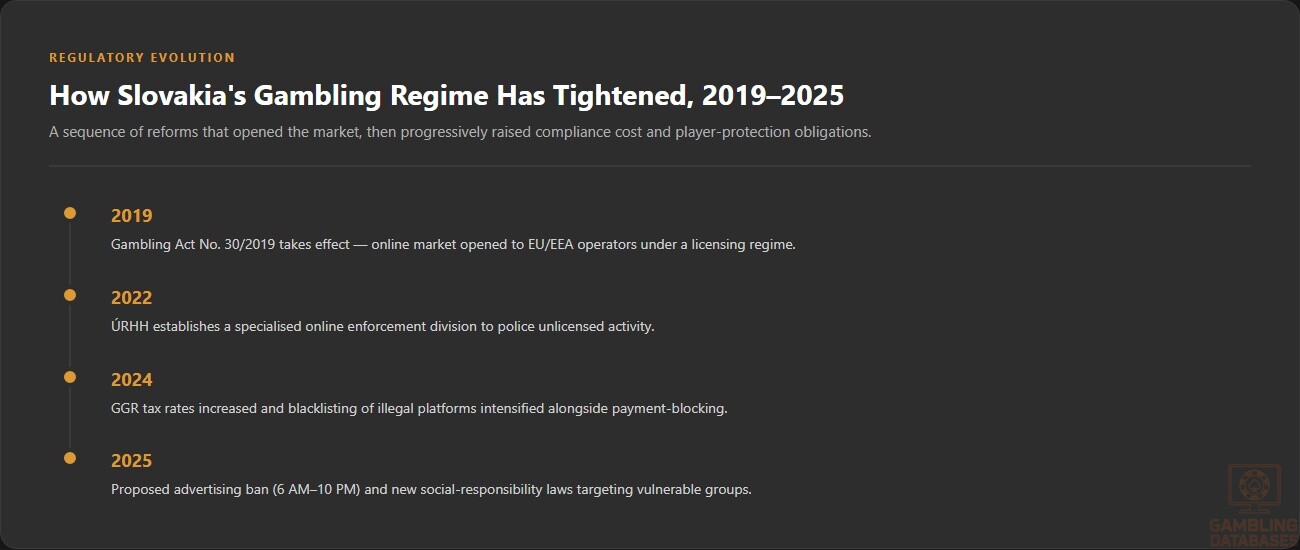
- 2019: Implementation of the new Gambling Act, opening online market licenses to EU operators
- 2022: Establishment of a specialized online enforcement division at ÚRHH
- 2024: Increase in GGR tax rates and intensified blacklisting of illegal platforms
- 2025: Proposed advertising bans and social responsibility laws targeting vulnerable populations
These regulatory evolutions have raised compliance costs and operational complexity for operators but increased market transparency and player protections. Operators have adapted through investment in local infrastructure and proactive compliance programs to maintain market presence.
Enforcement Mechanisms and Penalties
The Gambling Regulatory Authority employs a range of enforcement actions to ensure compliance, including administrative fines, blacklisting of unauthorized operators, and cooperation with financial institutions to block illegal transactions.
- Fines up to €1 million for illegal operations
- Suspension or revocation of licenses for non-compliance
- Blocking of payment processing services to unauthorized sites
- Registration of excluded persons preventing access to licensed platforms
- Criminal prosecution in cases of organized illegal gambling activities
Regular monitoring and public reporting maintain a controlled environment, supporting sustainable market growth and public confidence.
Section 2: Demographics and Consumer Analysis
Population Demographics and Distribution
Slovakia’s total population is approximately 5.41 million in 2025, with a slight population decline of about 7,000 people annually expected to continue in the near future. The median age is 42.3 years, reflecting an aging demographic pattern consistent with broader European trends. The gender balance slightly favors females, who constitute about 51.2% of the population, while males represent 48.8%.
The age distribution reveals that roughly 20.5% of residents are under 20 years old, 60.5% fall within the 20 to 64 prime working-age bracket, and 19.0% are aged 65 and above. This aging trend signals an increasing share of retired consumers, with potential implications for disposable income and leisure spending habits in the iGaming market.
| Age Group | Percentage of Total Population |
|---|---|
| 0-4 years | 4.8% |
| 5-12 years | 8.6% |
| 13-17 years | 5.4% |
| 18-24 years | 6.7% |
| 25-34 years | 11.8% |
| 35-44 years | 15.5% |
| 45-54 years | 15.7% |
| 55-64 years | 12.5% |
| 65 years and above | 19.0% |
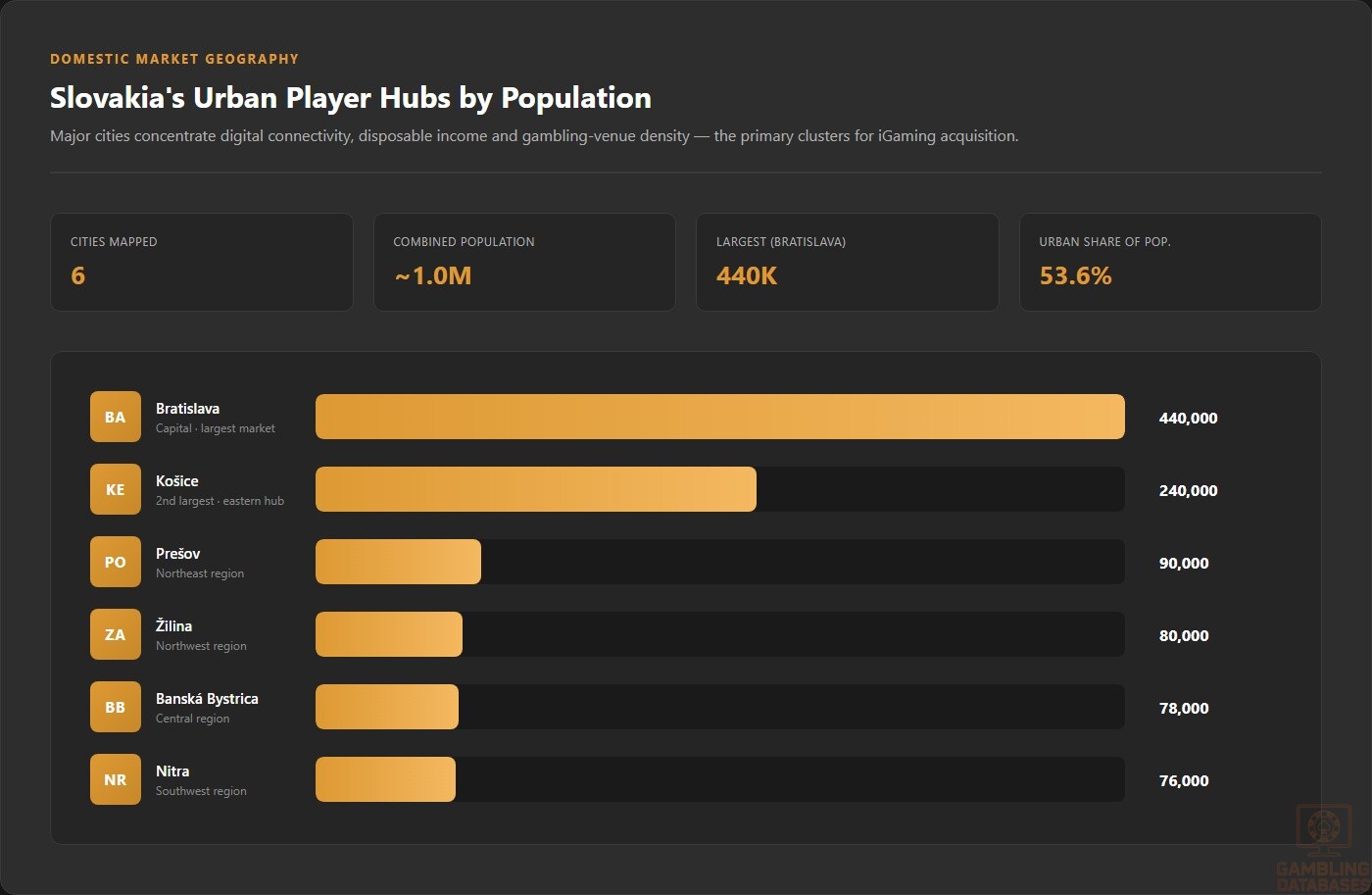
Urbanization is steady, with approximately 53.6% of the population living in urban centers as of 2025. The remaining 46.4% reside in rural areas, reflecting a moderately dispersed population distribution. Urban centers tend to have higher internet connectivity and greater access to gambling venues, which influences consumer behavior in the iGaming space.
Major cities, which serve as key economic and demographic hubs, include:
- Bratislava – Capital and largest city with around 440,000 residents
- Košice – Second largest city housing approximately 240,000 inhabitants
- Prešov – With a population near 90,000
- Žilina – Approximately 80,000 residents
- Nitra – With around 76,000 residents
- Banská Bystrica – Approximately 78,000 inhabitants
These cities exhibit higher average incomes, greater digital infrastructure, and are focal points for gambling venue concentration and iGaming player clusters.
Economic Indicators and Consumer Spending Power
Slovakia’s economy is forecasted to grow by around 1.5% in 2025, with GDP estimated at approximately €115 billion. This moderate growth is supported by private consumption, EU fund investments, and industry output, despite external headwinds such as trade barriers affecting exports.
The services sector dominates economic activity, constituting a majority share of GDP, with significant contributions from manufacturing and automotive industries. Inflation is projected at about 4% in 2025, driven partly by tax increases and wage growth.
Average household income stands at approximately €21,000 per capita, with disposable income rising steadily in urban areas. Income distribution shows moderate inequality, with middle-income consumers representing the largest segment.
Consumer spending is increasingly shifting towards digital services and entertainment, supported by growing wage levels and urbanization. This behavior supports positive prospects for the expanding iGaming market, where disposable income and leisure budgets align with digital entertainment adoption.
| Indicator | Value |
|---|---|
| GDP Growth Rate | 1.5% |
| GDP (Nominal) | ~€115 billion |
| GDP Per Capita | ~€21,000 |
| Inflation Rate | 4.0% |
| Unemployment Rate | ~5.3% |
| Average Household Income | €21,000 per capita |
| Urban Population | 53.6% |
Market Size and Growth Projections
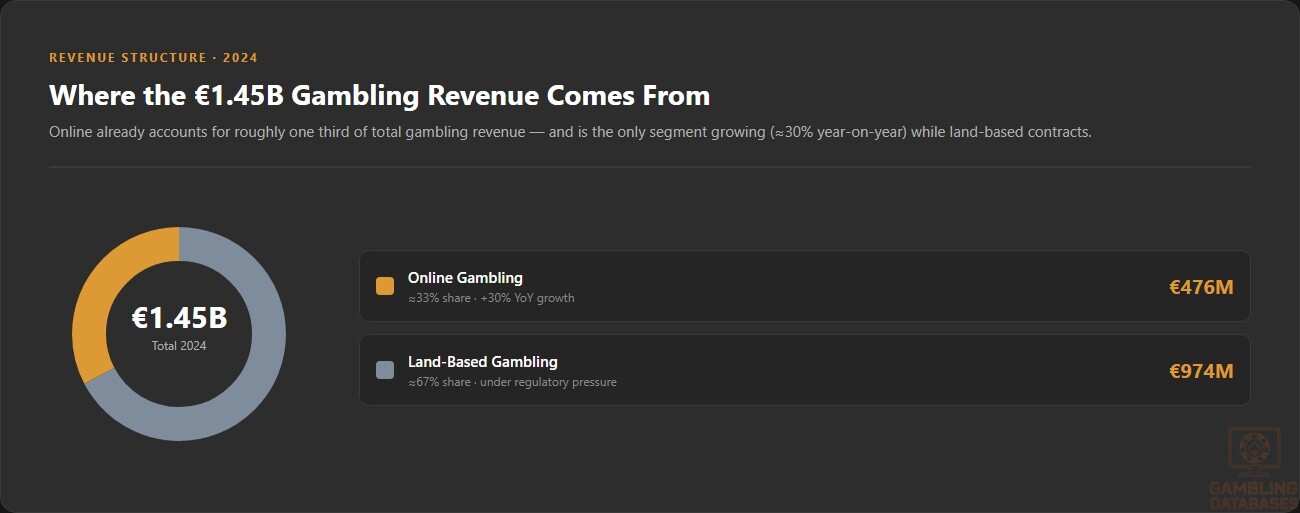
The Slovak gambling market, encompassing both land-based and online segments, generated an estimated €1.45 billion in total revenue in 2024. Online gambling experienced rapid growth with a revenue increase of 30% year-over-year, amounting to about €476 million.
Projected market growth for 2025 through 2030 suggests sustained expansion with an average CAGR of 8-10%, driven primarily by rising online platform adoption and regulatory clarity. The user base for online gambling is forecasted to reach around 1.7 million by 2030, representing approximately 29.3% penetration within the adult population.
The Average Revenue Per User (ARPU) is estimated at about €50 annually, indicating moderate spending levels per consumer consistent with regional benchmarks. However, challenges persist in the land-based sector, where stricter local regulations and competition from digital platforms are pressuring revenues.
| Metric | Value |
|---|---|
| Total Gambling Revenue (2024) | €1.45 billion |
| Online Gambling Revenue (2024) | €476 million |
| Growth Rate (2024-25) | 30% online, declining land-based |
| Forecast CAGR (2025-2030) | 8-10% |
| Projected Online Users (2030) | 1.7 million |
| Market Penetration (2025) | 29.3% |
| Average Revenue Per User | €50 annually |
Education, Skills, and Digital Literacy
Slovakia exhibits high literacy rates exceeding 99%, with significant portions of the population holding secondary and tertiary education qualifications. Digital literacy levels are progressively increasing, supported by national education reforms and growing ICT employment.
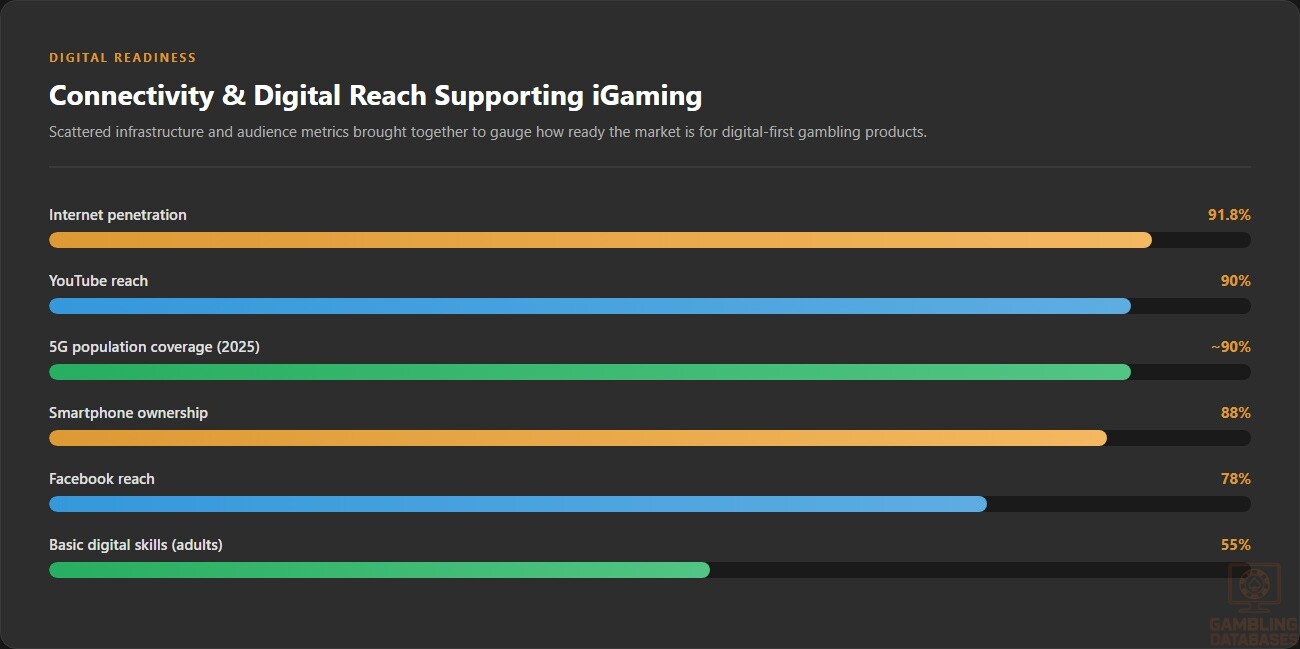
About 55% of Slovaks possess basic digital skills, slightly above the European Union average, facilitating widespread adoption of digital entertainment and financial services. The country has a growing pool of ICT specialists, important for local technology infrastructure and support of iGaming operations.
Cultural and Social Factors
Communication and Language
Slovak is the official language and primary language used in all communication, including online platforms and regulatory documentation. Minority languages include Hungarian, Roma, Czech, and Rusyn, but these are spoken by relatively small population segments.
Slovak consumers prefer Slovak-language digital content and platforms, making localization an essential market entry strategy. English proficiency is moderate, especially among younger, urban demographics involved in digital activities and gaming.
Cultural Attitudes
Gambling enjoys a moderate level of social acceptance, with a growing number of consumers engaging in regulated gaming activities. Religious influences, predominantly Catholicism, exert some conservative cultural pressure against excessive gambling, reinforcing regulatory emphasis on responsible gambling practices.
Foreign brand perception is generally positive when operators comply with local laws and demonstrate visible contributions to social responsibility. Entertainment preferences lean towards digital convenience and interaction, making online iGaming increasingly attractive.
Problem Gambling and Social Considerations
Problem gambling prevalence in Slovakia is estimated at moderate levels comparable to broader European averages, prompting governmental and regulatory initiatives for prevention and support. The national self-exclusion register has seen an 18% increase in enrollment, reflecting rising awareness and consumer protection efforts.
The government employs multiple response measures including:
- National self-exclusion registry linked to all licensed operators
- Mandatory deposit and time limits for players
- Public awareness campaigns on gambling risks
- Funding for addiction treatment programs
- Regular reporting requirements on social responsibility metrics
Political Structure and Governance
Slovakia is a parliamentary democratic republic with stable governance and regulatory consistency, supporting business confidence and long-term planning. The country benefits from full EU membership, facilitating harmonization with European standards in gambling regulation and digital market practices.
Regulatory bodies maintain close cooperation with international counterparts, ensuring alignment with anti-money laundering directives and consumer protection protocols.
Technology Adoption and Digital Behavior
Internet and Digital Usage
Approximately 91.8% of the Slovak population are active internet users in 2025, reflecting widespread connectivity. Daily internet usage averages several hours, with mobile devices playing a dominant role in access to digital content and services.
Social media engagement is robust, with popular platforms including:
- Facebook reaching about 78% of internet users
- Instagram with strong usage among younger demographics
- YouTube accessed by nearly 90% for video content
- TikTok growing rapidly, especially under age 25
- LinkedIn used widely among professionals for networking
Digital Payment Behavior
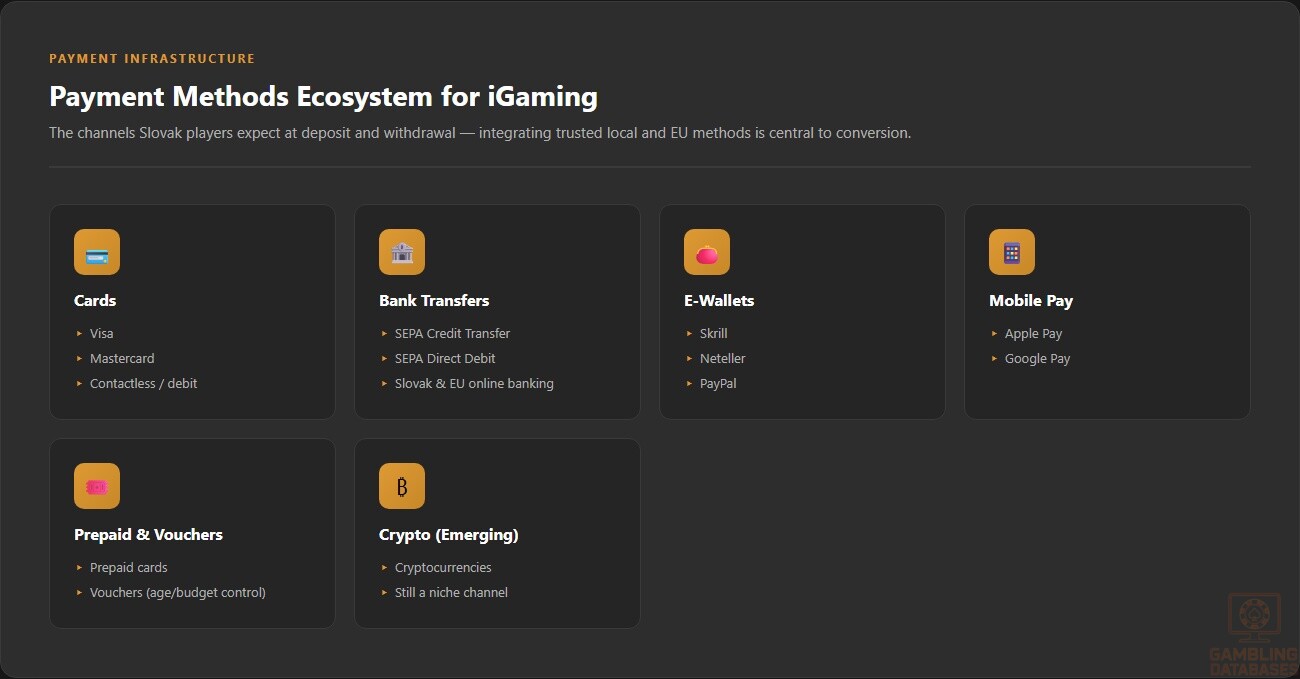
Digital payment adoption is mature, with credit and debit cards leading usage, followed by bank transfers and e-wallets. Cryptocurrencies are emerging but remain niche. Consumers favor fast, secure, and convenient payment methods integrated into online platforms, critical for seamless iGaming user experiences.
Market-leading payment methods include:
- Visa and MasterCard credit/debit cards
- Bank transfers via Slovak and EU banks
- Popular e-wallets such as Skrill and Neteller
- Mobile payment solutions e.g., Apple Pay and Google Pay
- Prepaid cards and vouchers for age and budget control
Gaming and Gambling Preferences
Current Market Participation
Participation rates in gambling show that sports betting, online casino games, and lotteries dominate across Slovak consumers. Online casino games have surged in popularity because of enhanced digital experiences and regulation that encourages market openness.
| Rank | Gambling Activity | Participation Rate (%) |
|---|---|---|
| 1 | Sports Betting | 28% |
| 2 | Online Casino Games | 25% |
| 3 | Lottery and Bingo | 22% |
| 4 | Slot Machines (Land-based) | 15% |
| 5 | Poker (Online and Offline) | 10% |
Consumer Behavior Patterns
Slovak players show a preference for multi-channel gambling experiences, combining online platforms with occasional visits to land-based venues. Peak gaming activity tends to occur during evening hours and weekends, aligning with leisure time availability.
Spending habits reveal moderate average bets with focus on fairness, security, and transparent payout structures. Retention strategies by operators emphasize personalized offers, loyalty programs, and player education about responsible gaming, which resonate well with Slovak players’ cultural emphasis on safety and trust.
Section 2: Demographics and Consumer Analysis
Population Demographics and Distribution
Slovakia’s total population is approximately 5.41 million in 2025, with a steady but slight decline reported annually. The median age has risen to 42.3 years, reflecting an aging society, with women slightly outnumbering men, comprising roughly 51.2% of the population. This demographic trend indicates an increasing proportion of older adults, impacting consumer spending and leisure activities, including gambling.
The age breakdown shows a significant working-age population between 20 and 64 years (60.5%), with youth under 20 years old at 20.5%, and those 65 years and older accounting for 19.0%. Urban residency is around 53.6%, concentrated in major cities that serve as key hubs for economic activity and digital infrastructure.
| Age Group | Percentage of Population |
|---|---|
| 0-4 years | 4.8% |
| 5-12 years | 8.6% |
| 13-17 years | 5.4% |
| 18-24 years | 6.7% |
| 25-34 years | 11.8% |
| 35-44 years | 15.5% |
| 45-54 years | 15.7% |
| 55-64 years | 12.5% |
| 65+ years | 19.0% |
Key urban centers include Bratislava (about 440,000 residents), Košice (240,000), Prešov (90,000), Žilina (80,000), Nitra (76,000), and Banská Bystrica (78,000). These cities concentrate digital connectivity and commercial gambling venues, vital for iGaming market penetration.
- Bratislava – 440,000
- Košice – 240,000
- Prešov – 90,000
- Žilina – 80,000
- Nitra – 76,000
- Banská Bystrica – 78,000
Economic Indicators and Consumer Spending Power
Slovakia’s GDP is projected to grow circa 1.5% in 2025, reaching about €115 billion. The economy is predominantly service-oriented, supplemented by manufacturing and automotive sectors. Inflation stands near 4%, driven by wage growth and tax adjustments, while unemployment remains moderate at approximately 5.3%.
Per capita income is around €21,000 annually, with disposable income rising, especially in urban populations. Consumer spending increasingly favors digital and entertainment sectors, aligning well with online gambling growth.
| Indicator | Value |
|---|---|
| GDP Growth | 1.5% |
| GDP (€ Billion) | ~115 |
| Inflation | 4.0% |
| Unemployment | 5.3% |
| Per Capita Income | €21,000 |
| Urban Population | 53.6% |
Market Size and Growth Projections
The total gambling market generated around €1.45 billion in 2024, with online gambling growing rapidly at 30% year-over-year to approximately €476 million. Growth is forecasted at 8-10% CAGR through 2030, as digital platforms expand market reach and consumer adoption increases.
The user base for online gambling is expected to reach 1.7 million by 2030, approximately 29.3% penetration. The estimated ARPU is €50 annually, reflecting moderate spend per player. Conversely, land-based revenues face pressure from tighter regulations and consumer migration online.
| Metric | Value |
|---|---|
| Total Gambling Revenue (2024) | €1.45 billion |
| Online Gambling Revenue (2024) | €476 million |
| Growth Rate | 30% (2024-25 online) |
| Forecast CAGR | 8-10% |
| Projected Online Users (2030) | 1.7 million |
| Market Penetration (2025) | 29.3% |
| Average Revenue Per User | €50 |
Education, Skills, and Digital Literacy
Education attainment is high, with near-universal literacy. Over half the population has basic digital skills, slightly exceeding EU averages. Increasing numbers of ICT professionals support digital economy growth, creating a conducive environment for advanced digital services including iGaming operations.
Cultural and Social Factors
Communication and Language
Slovak is the official and dominant language, with Hungarian, Roma, Czech, and Rusyn as minority languages. Slovak-language digital content dominates both entertainment and communication platforms, while English proficiency is moderate, especially amongst urban youth and professionals.
Cultural Attitudes
Gambling holds moderate social acceptance, tempered by religious and cultural conservatism. Foreign operators are welcomed if they comply with regulations and demonstrate responsible gambling efforts. Entertainment preferences increasingly favor digital interaction, which supports online iGaming growth.
Problem Gambling and Social Considerations
Problem gambling rates are moderate, triggering policy emphasis on consumer protection. Self-exclusion registrations increased by 18% in 2025, reflecting rising attention to addiction prevention.
- National self-exclusion registry linked to all licensed operators
- Mandatory deposit and time limits
- Public awareness and education campaigns
- Funding for treatment programs
- Regular social responsibility reporting requirements
Political Structure and Governance
Slovakia’s parliamentary democracy features regulatory stability and alignment with EU standards, promoting a predictable business environment. Cooperation with international regulators underpins anti-money laundering and player protection efforts.
Technology Adoption and Digital Behavior
Internet and Digital Usage
Internet penetration reaches approximately 91.8%, with strong mobile usage driving digital content consumption. Social media remains vibrant and central to digital life.
- Facebook – 78% user penetration
- Instagram – popular among youth
- YouTube – near 90% penetration
- TikTok – rapidly growing under 25 demographics
- LinkedIn – prominent in professional networking
Digital Payment Behavior
Digital payments are dominated by credit/debit cards, bank transfers, and e-wallets. Cryptocurrency use is emergent but still marginal. Seamless secure payments are crucial for the iGaming user experience.
- Visa and MasterCard credit/debit cards
- Bank transfers in Slovak and EU banks
- Skrill and Neteller among leading e-wallets
- Mobile payments (Apple Pay, Google Pay)
- Prepaid cards and vouchers widely used
Gaming and Gambling Preferences
Current Market Participation
The leading gambling activities are sports betting, online casino games, and lotteries. Online gambling is gaining share rapidly over land-based venues.
| Rank | Activity | Participation Rate (%) |
|---|---|---|
| 1 | Sports Betting | 28% |
| 2 | Online Casino Games | 25% |
| 3 | Lottery and Bingo | 22% |
| 4 | Land-based Slot Machines | 15% |
| 5 | Poker (Online and Offline) | 10% |
Consumer Behavior Patterns
Slovak consumers show a preference for flexible gambling sessions, combining online accessibility with occasional land-based visits. Peak activity occurs in evenings and weekends, with retention driven by trusted platforms offering clear, responsible gaming features.
Section 3: Technology Infrastructure and Business Environment
Internet and Digital Infrastructure
Slovakia’s internet penetration in 2025 exceeds 91.8%, with roughly 5.05 million connected citizens. Broadband deployment covers urban and rural areas, but gaps remain in remote regions. The average mobile broadband speeds reached 54.46 Mbps in 2024, primarily driven by Telekom and Orange, ensuring a high-quality user experience for digital entertainment and online gambling.
The country has invested heavily in upgrading its digital infrastructure, particularly in expanding fiber optic networks and 5G coverage. Current 5G rollout plans aim to reach 95% of the population by the end of 2025, supporting smart city initiatives and IoT applications. This infrastructure development is pivotal for hosting secure, reliable online platforms, especially in the iGaming sector.
5G and Future Technology Deployment
Slovakia’s 5G deployment has advanced significantly with coverage reaching approximately 90% of regional cities by late 2025. The government’s strategy prioritizes the full national coverage of 5G networks, leveraging the partnership of major telecom operators under the 2020–2025 development plan. The primary network operators—Telekom, Orange, O2, 4ka, and SWAN—are competing to expand coverage and network capacity.
Future plans include integrating 5G with IoT, autonomous vehicles, and Industry 4.0 applications. The government aims to create a secure and intelligent digital environment conducive to advanced technological innovations, essential for a modern, digital economy and sectors such as online gaming, e-commerce, and digital payments.
Mobile Technology Ecosystem
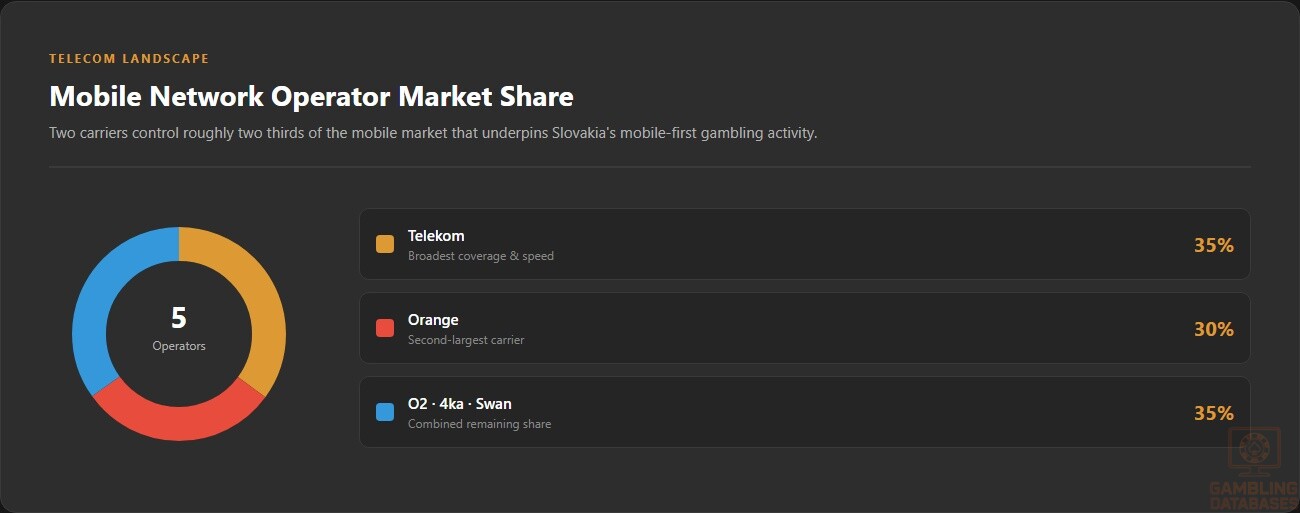
Slovakia hosts five main mobile network operators: Telekom, Orange, O2, 4ka, and Swan. Telekom holds approximately 35% market share, offering the highest speeds and broadest coverage, especially in urban areas. Orange follows with about 30%, while O2, 4ka, and Swan collectively comprise the remaining market share, with varying coverage quality and price points. The market benefits from competitive data costs, with average prices decreasing due to regulatory and infrastructural improvements.
Device penetration rates indicate over 88% of the population owns a smartphone, with Android dominating at around 70% market share. Usage patterns show intense digital activity, with Slovaks primarily engaging via mobile apps for entertainment, social media, and online payments, supporting high engagement in online gambling and e-commerce.
Device Penetration
Smartphone adoption has surged, with Android devices leading the market. Market share estimates suggest that 70% of smartphones are Android-based, while iOS holds around 30%. Usage patterns reveal that mobile devices are the primary access points for online gambling, social media, and e-commerce, driven by affordable device pricing and reliable telecom coverage.
Financial Services and Payment Infrastructure
Banking System Structure
Slovakia’s banking sector includes major banks such as Slovenská sporiteľňa, Tatra banka, Všeobecná úverová banka, UniCredit Bank, and OTP Bank. These institutions dominate domestic banking, offering extensive digital banking services including mobile apps, online account management, and e-wallet integrations. Financial stability is reinforced by adherence to EU regulations, ensuring operational security for payments and transactions.
Payment Processing Options
Popular payment methods in Slovakia include SEPA Direct Debit, SEPA Credit Transfer, Visa, Mastercard, and electronic wallets like PayPal and Skrill. Contactless payments and Apple Pay are gaining popularity, especially in urban areas. Cash transactions still account for a sizable share, especially in rural communities, but digital and alternative payment services are expanding rapidly.
- SEPA Direct Debit and Credit
- Credit and Debit Cards (Visa, Mastercard)
- E-wallets (PayPal, Skrill, Neteller)
- Mobile Payments (Apple Pay, Google Pay)
- Bank Transfers via online banking system
E-commerce and Digital Economy
The Slovak e-commerce market generated around USD 2.56 billion in 2025, with a CAGR of nearly 10%. Mobile commerce now accounts for more than 50% of all online retail transactions, driven by smartphone penetration and improved logistics. Digital trust frameworks, GDPR compliance, and better payment security have fueled confidence among consumers and merchants.
Adoption of AI and personalization tools enhances online shopping experiences. The expansion of cross-border e-commerce and local logistics infrastructure supports rapid growth, making Slovakia an attractive hub for digital trade and online gambling platforms alike.
Business Environment and Regulatory Framework
Ease of Business Operations
Slovakia ranks in the top 50 globally for ease of doing business, with streamlined registration processes completed within 3-5 days. The government has simplified procedures for foreign investors, offering incentives through free trade zones and tax advantages. Operational costs are moderate, with office rent, labor, and licensing fees competitive within the European context.
- Register business with the Slovak Commercial Register
- Obtain tax identification number (TIN)
- Open a corporate bank account
- Apply for relevant licenses and permits
- Register for VAT if applicable
Corporate Structure and Registration
Popular entity types include Limited Liability Companies (LLC), joint-stock companies, and foreign branches. LLCs are preferred for their simplicity, with registration timelines of about 2-3 days and costs starting at €1,000, including notary and legal fees. Foreign investors can own 100% of the business, with no restrictions on ownership or capital repatriation.
Registration Requirements
Registering a company requires documents such as Articles of Association, proof of address, registration form, and director identification. Foreign entities need to provide notarized incorporation certificates, translated documents, and proof of funding. The process is mostly digital, supported by dedicated government portals to streamline operations and compliance.
- Articles of Incorporation
- Proof of Address
- Valid ID and legal documents
- Bank certificate of initial capital deposit
- Tax registration certificate
Taxation Framework
Corporate Income Tax
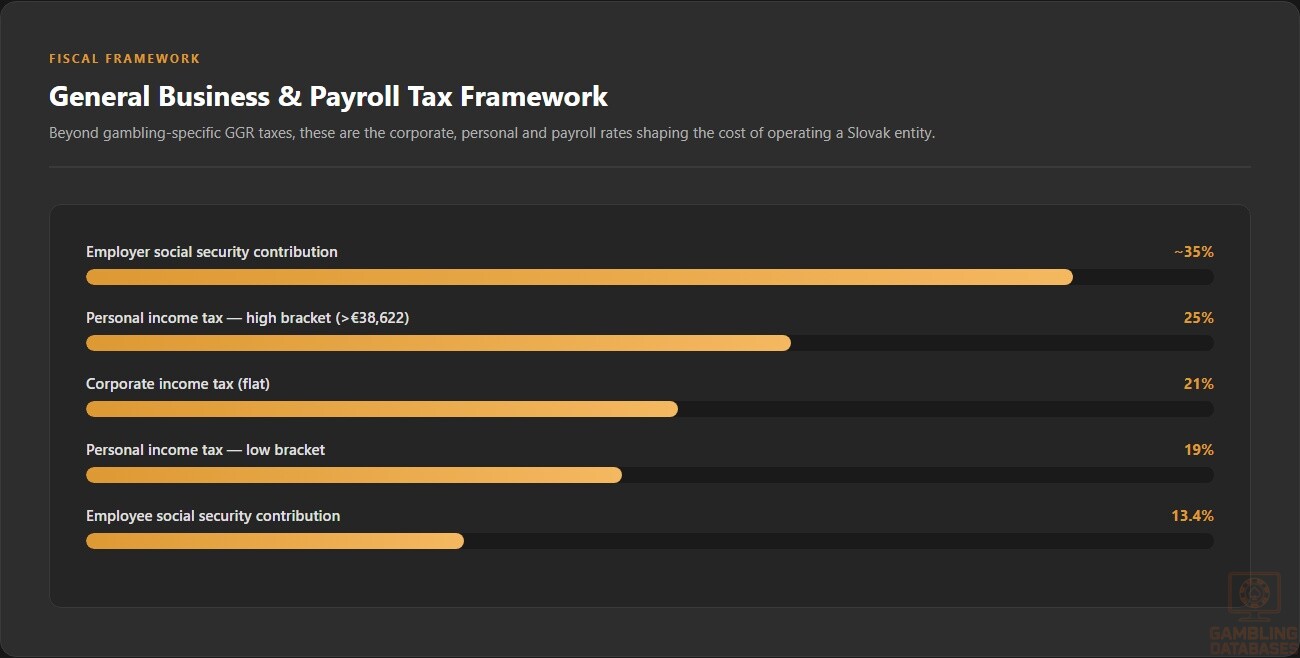
Slovakia applies a flat corporate income tax rate of 21%. Special tax zones and incentives for technology investments may provide tax benefits, while international treaties prevent double taxation with countries like Germany, the UK, the US, Japan, and Canada.
Personal Income Tax
Income tax rates are progressive, with 19% for taxable income up to €38,622 and 25% for amounts above. Social security contributions are approximately 13.4% for employees, with employers contributing about 35%. Tax residency is established if an individual spends over 183 days in Slovakia annually.
Market Entry Considerations
Recommended Entry Strategies
Successful market entry involves forming local partnerships, leveraging existing telecom and banking infrastructure, and aligning with regulatory requirements. Operators should consider local licensing, establishing a Slovak entity, and integrating trusted payment methods to build consumer trust. Strategic use of digital marketing and responsible gaming policies also enhance foothold.
- Partner with local telecom and finance firms
- Apply for a Slovak gambling license
- Establish a local subsidiary or branch
- Develop targeted marketing campaigns
- Implement responsible gaming solutions
Typical Costs and Timelines
Initial setup costs range from €150,000 to €300,000, covering licensing (€100,000–€250,000), infrastructure, and legal fees. Operational costs include staff, marketing, and compliance expenses. The licensing process generally takes 3–6 months, depending on application completeness and regulatory review.
Success Factors and Challenges
Key success enablers include robust compliance systems, local partnerships, technological innovation, and responsible marketing. Challenges involve navigating complex regulatory changes, high license fees, local market competition, and political uncertainties. Cultural alignment with local consumer preferences also plays a critical role.
Exit Strategy Planning
Market liquidity allows for license transfer or acquisition at multiples based on gross gaming revenue (GGR). Regulatory frameworks facilitate ownership changes, but license transferability depends on approval by the Slovak regulator. Valuations often reflect a multiple of annual GGR, influenced by growth prospects and market share.
FAQ: Frequently Asked Questions
1. Is online gambling legal in Slovakia?
Yes, online gambling is fully legal in Slovakia since the 2019 regulatory overhaul. Licensed operators can offer sports betting, online casino, poker, and other gaming products, with strict compliance standards enforced by the Gambling Regulatory Authority.
2. What types of gambling licenses are available and what do they cover?
Slovakia offers licenses for online casino, sports betting, poker, and other gaming activities. Each license authorizes specific product categories, requiring operators to meet technical, financial, and AML standards. Licenses are valid for 2-5 years and require renewal.
3. How much does an iGaming license cost and how long does it take to obtain?
The license application fee ranges from €100,000 to €250,000, depending on scope. The process typically takes 3 to 6 months, contingent on the submission of detailed documentation and regulatory review.
4. Can foreign companies obtain a gambling license?
Yes, foreign companies can apply for licenses, provided they establish a local presence or partner with a Slovak entity. There are no restrictions on ownership, but compliance with local standards is mandatory.
5. What are the tax obligations for iGaming operators?
Operators must pay a GGR tax of 22% for online casino and 27% for sports betting. Additional levies include monthly contributions to regulatory costs, with corporate tax at 21%. Player winnings are generally tax-exempt.
6. Are gambling winnings taxed for players?
No, gambling winnings are not taxed directly for players in Slovakia. Operators handle tax obligations through the GGR tax, and winnings are considered tax-free for individual players.
7. What are the typical operational costs for running an online casino/sportsbook?
Costs include licensing (€100,000–€250,000), platform development, marketing, staff salaries, compliance programs, and legal consulting. Initial setup can range from €150,000 to €300,000, with ongoing annual expenses.
8. What is the expected ROI timeline for entering this market?
Return on investment typically materializes within 12-24 months post-license acquisition, with breakeven achieved around 18-24 months, depending on market penetration and operational efficiency adjustments.
9. What are the local presence requirements for operators?
Operators need a physical presence via a Slovak subsidiary, branch, or EU company with local representation. Infrastructure must include server hosting within Slovakia, ensuring data sovereignty and regulatory compliance.
10. What payment methods are available and recommended?
Popular payment options include credit/debit cards, bank transfers, e-wallets, and mobile payments. Integration of trusted local and international providers enhances user trust and conversion rates.
11. What are the advertising and marketing restrictions?
Advertising restrictions prohibit promotions during certain hours and targeting minors. All marketing must comply with responsible gaming guidelines, with clear disclosures and avoidance of misleading promotions.
12. What responsible gambling measures are mandatory?
Mandatory measures include age verification, self-exclusion registers, deposit and session limits, and accessible support resources. Platforms must promote responsible gaming and report compliance metrics periodically.
13. How large is the iGaming market and what is the growth potential?
The market was valued at €220 million in 2024, with projections reaching €400 million by 2030. Growth is driven by expanding digital infrastructure, increasing internet penetration, and regulatory reforms.
14. Who are the main competitors and what is their market share?
Major operators include Fortuna, Tipsport, Tips4You, and local entities like TIPOS. International brands like Bet365 also serve Slovak players under licensing agreements, creating a competitive landscape.
15. What are the player preferences and typical spending patterns?
Players prefer online sports betting and casino games, with average annual spend around €50. Engagement peaks in evenings and weekends, with loyalty programs encouraging repeat participation.
16. What are the key success factors and main challenges for new entrants?
Success factors include compliance, innovative offerings, local partnerships, and responsible marketing. Challenges involve regulatory costs, political uncertainties, market saturation, and cultural attitudes towards gambling.
**Sources and References**
- Slovakia Gambling Regulatory Authority – Official Website
- National Statistical Office – Population and Economic Data 2024
- European Commission Digital Strategy Reports
- Slovak Ministry of Transport and Communications – Infrastructure Plans
- Bank of Slovakia – Financial and Banking Reports
- OECD Economic Outlook, 2025
- Speedtest® Connectivity Reports Slovakia, 2024
- Amcham Slovakia – Business Environment Survey 2025
- Stripe Payments Slovakia – Payment Methods Overview
- European E-commerce Reports 2025
- European Telecommunications Reports 2024
- NovalNet Payment Processing Data Slovakia, 2025
- EUROSTAT – Digital Economy Reports
- Digital Slovakia 2025 – Government Strategy Documents
- Ongoing Industry Reports from Market Research Firms
- Local Market and Industry News Portals
- World Bank – Doing Business in Slovakia
- European Central Bank – Payment Statistics
- UNCTAD – Digital Economy Index
- Slovak Investment and Trade Agency Reports
- IMF Economic Projections for Slovakia, 2025
- OECD Digital Infrastructure Reports
- ITU Telecommunication Development Reports
- Environmental and Digital Policy Statements Slovakia
- Private Sector Analyses and Whitepapers
- Academic and Policy Papers on Digital Transformation