

Thailand is undergoing a transformative shift in its iGaming regulatory landscape, positioning itself as a potential regional hub for digital and land-based gaming. While traditional gambling remains largely prohibited under the 1935 Gambling Act, the government is advancing comprehensive legislation to regulate both integrated entertainment complexes and digital games with gambling-like mechanics.
The country’s strategic location, high mobile penetration, and strong tourism base create a compelling opportunity for international operators, though market entry remains contingent on pending legislative approvals.
Executive Summary: Key Market Indicators
| Metric | Value |
|---|---|
| Legal Status of Online Gambling | Currently illegal; legalization under active consideration |
| Land-Based Casino Legalization Status | Draft Entertainment Complex Bill approved by Cabinet; pending parliamentary review |
| Projected Gross Gaming Revenue (GGR) | USD 9.1 billion annually at full maturity |
| Population | 70.2 million (2025 estimate) |
| Internet Penetration Rate | 91.2% (65.4 million users) |
| Mobile Internet Penetration | 88.0% of population |
| Smartphone Users | 65.8 million (2025 forecast) |
| Median Mobile Internet Speed | 40.69 Mbps |
| Initial Casino License Fee | THB 5 billion (~USD 145 million) |
| Annual License Fee | THB 1 billion (~USD 29 million) |
| License Duration | 30 years, renewable in 10-year increments |
| Minimum Paid-Up Capital Requirement | THB 10 billion (~USD 290 million) |
| Gross Gaming Revenue (GGR) Tax Rate | 17% (proposed) |
| Corporate Income Tax Rate | 20% (standard rate) |
| Estimated Underground Gambling Market Size | THB 155 billion (~USD 4.7 billion) annually |
| Projected Market Entry Timeline | 2027–2029 for first legal casinos |
| Regulatory Authority (Proposed) | Office of the Full-Service Entertainment Regulatory Commission |
| Primary Regulatory Body (Digital Games) | Digital Economy Promotion Agency (Depa) |
| Enforcement Agency (Digital Compliance) | Cyber Crime Investigation Bureau |
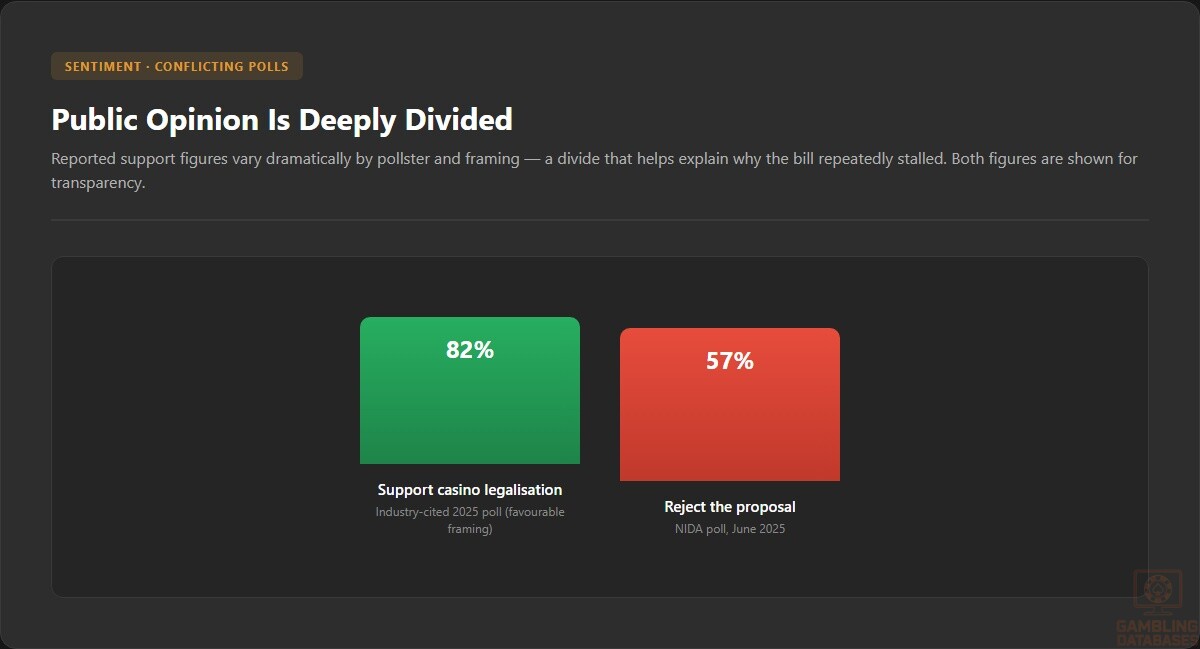
| Public Support for Casino Legalization | 82% (2025 poll) |
| Annual Tourist Arrivals (Pre-Pandemic Baseline) | 40 million |
| Mobile Gamers as Share of Total | 80%+ |
| Estimated Number of Online Gamers | 20 million+ |
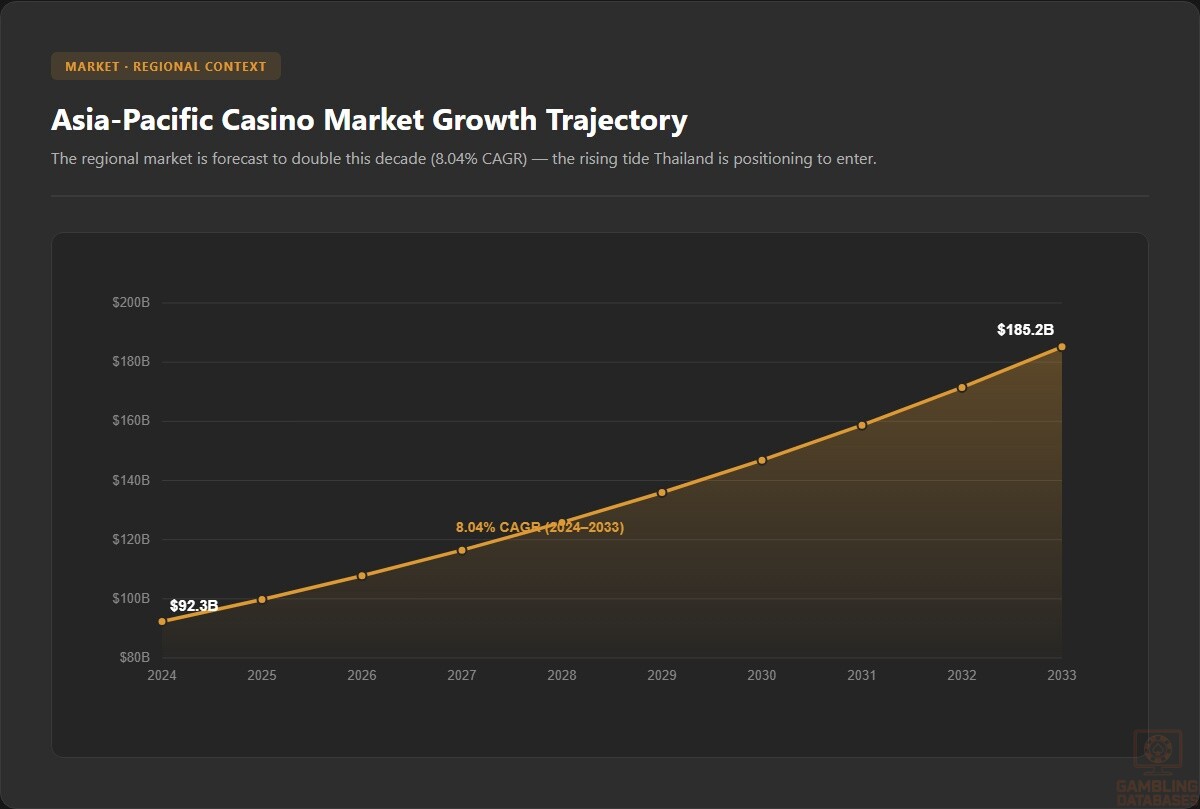
| Market Growth Rate (Projected CAGR) | 10–15% post-legalization |
| Entry Fee for Thai Nationals (Proposed) | THB 5,000 (~USD 145) per visit |
| Eligibility for Thai Casino Access | Three-year tax filing history required |
| Prohibited Activities | Online gambling, unlicensed sports betting, private casinos |
| Permitted Gambling Forms | State lottery, horse racing, licensed integrated resort casinos (pending) |
| Foreign Ownership in Casino Projects | No majority Thai ownership currently required in draft bill |
Section 1: Regulatory Framework and Legal Environment
Current Gambling Regulation Status
Thailand maintains one of the most restrictive gambling regimes in Southeast Asia, with the Gambling Act B.E. 2478 (1935) forming the foundation of its legal framework. Under this law, nearly all forms of gambling are prohibited, with only two exceptions: the government-run lottery operated by the Government Lottery Office and horse racing at licensed racetracks.
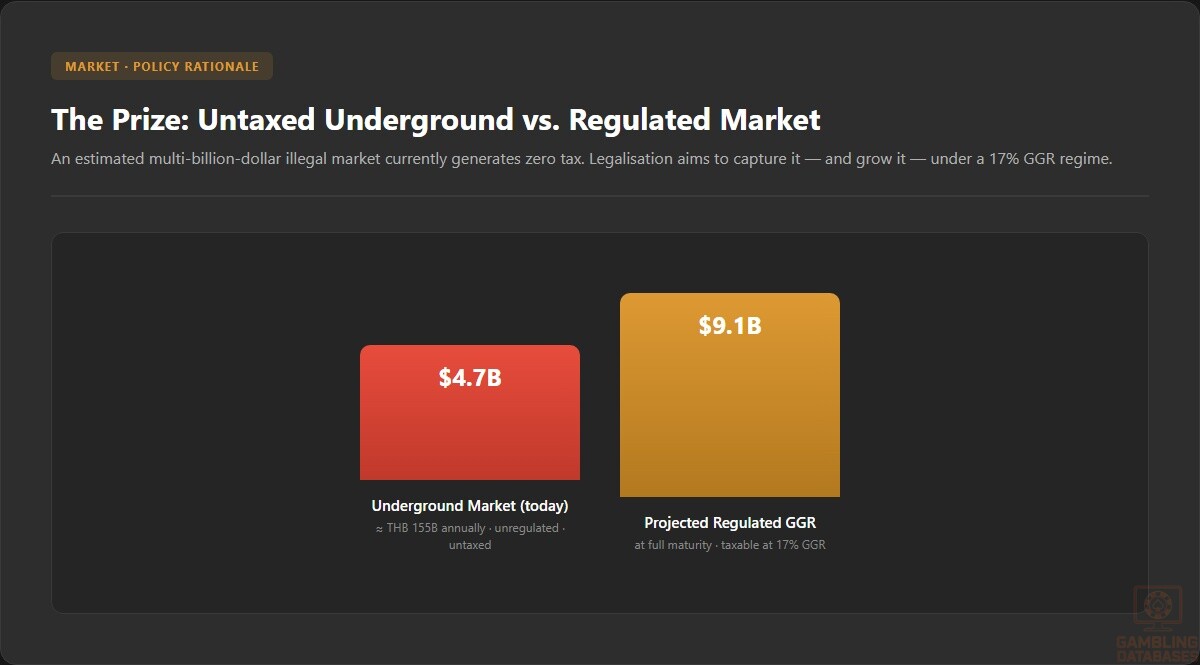
Despite these prohibitions, a vast underground gambling market thrives, particularly in sports betting and online casino platforms, with estimates suggesting illegal wagering generates approximately THB 155 billion (~USD 4.7 billion) annually. The government’s approach has historically been one of selective enforcement rather than comprehensive regulation, but this is shifting as policymakers recognize the economic potential of a formalized iGaming sector.
Land-Based Gambling Activities
Land-based gambling in Thailand is currently limited to state-sanctioned lotteries and horse racing at the Royal Bangkok Sports Club and other authorized venues. The operation of private casinos, slot machine parlors, or any other form of commercial gambling is strictly illegal and punishable by fines and imprisonment.
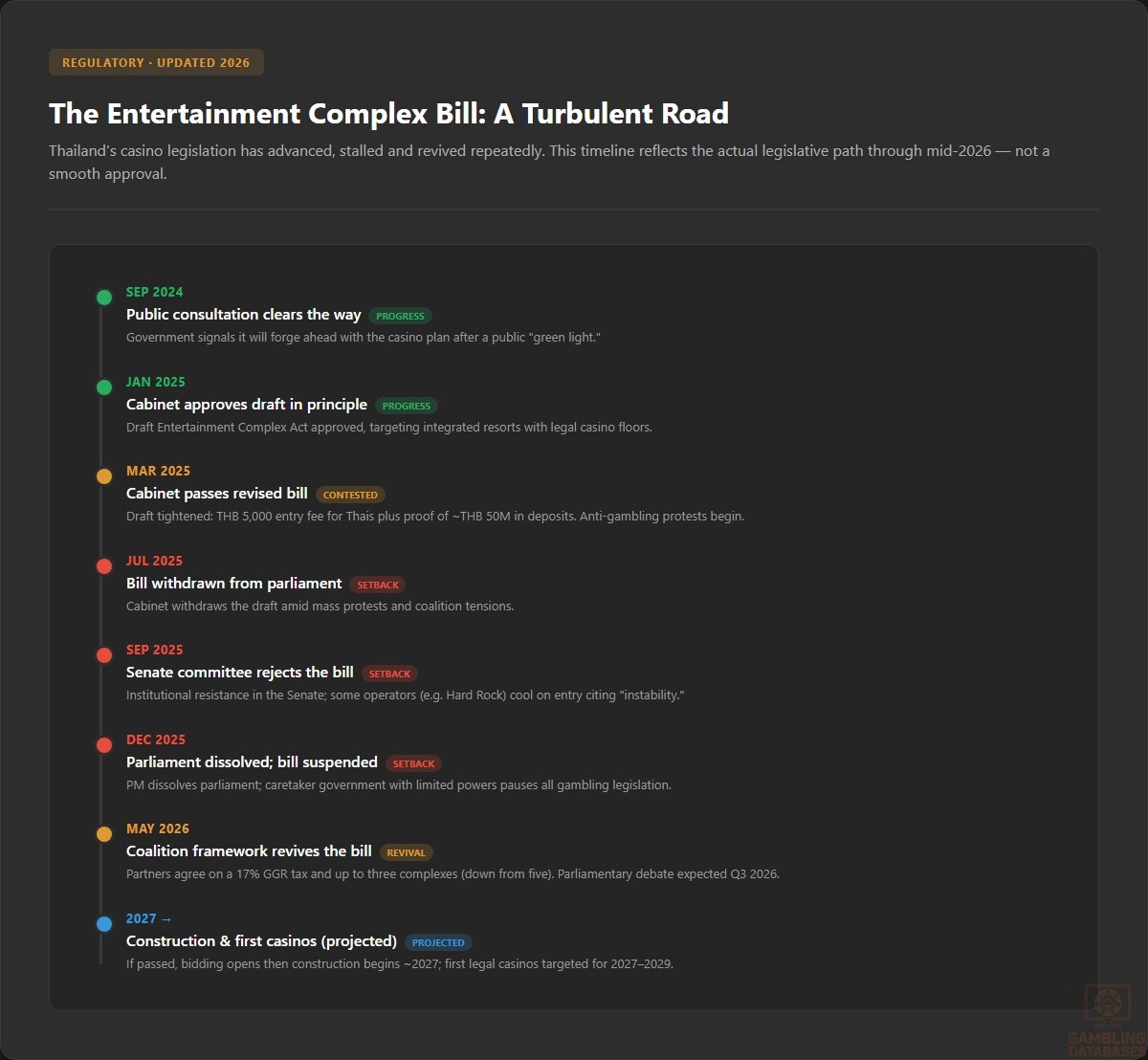
However, the draft Entertainment Complex Bill represents a fundamental shift, proposing the legalization of integrated resorts that include casinos as one component of a broader entertainment destination. These complexes would be required to include at least four additional facilities such as hotels, shopping malls, restaurants, amusement parks, or cultural zones, ensuring that gaming is not the sole attraction.
The legislation aims to channel tourism spending into a regulated environment while minimizing social harm by restricting casino floor space to no more than 10% of the total complex area.
Online Gambling Framework
Online gambling remains illegal in Thailand, and the government actively blocks access to foreign betting sites. The Penal Code criminalizes both the operation of online gambling platforms and the act of placing bets through them. However, enforcement is complicated by widespread use of virtual private networks (VPNs) and offshore operators targeting Thai users.
The proposed legalization of online gambling is still in early stages, with the government focusing first on land-based casinos. A separate but related initiative, the Promotion of the Game Industry Act, targets digital games with “hidden gambling” mechanics such as loot boxes, randomized reward systems, and in-game prize draws.
This bill, spearheaded by the Digital Economy Promotion Agency (Depa), aims to establish transparency and consumer protection standards for game developers, distinguishing between skill-based games and those reliant on chance. If passed, it would empower the Cyber Crime Investigation Bureau to suspend non-compliant games and audit operators for fairness and safety.
Licensed Operators and Market Players
Currently, there are no legally licensed online gambling operators in Thailand, and the land-based casino market remains unlicensed pending the passage of the Entertainment Complex Bill. However, the competitive landscape is already taking shape, with major international operators expressing strong interest in entering the market.
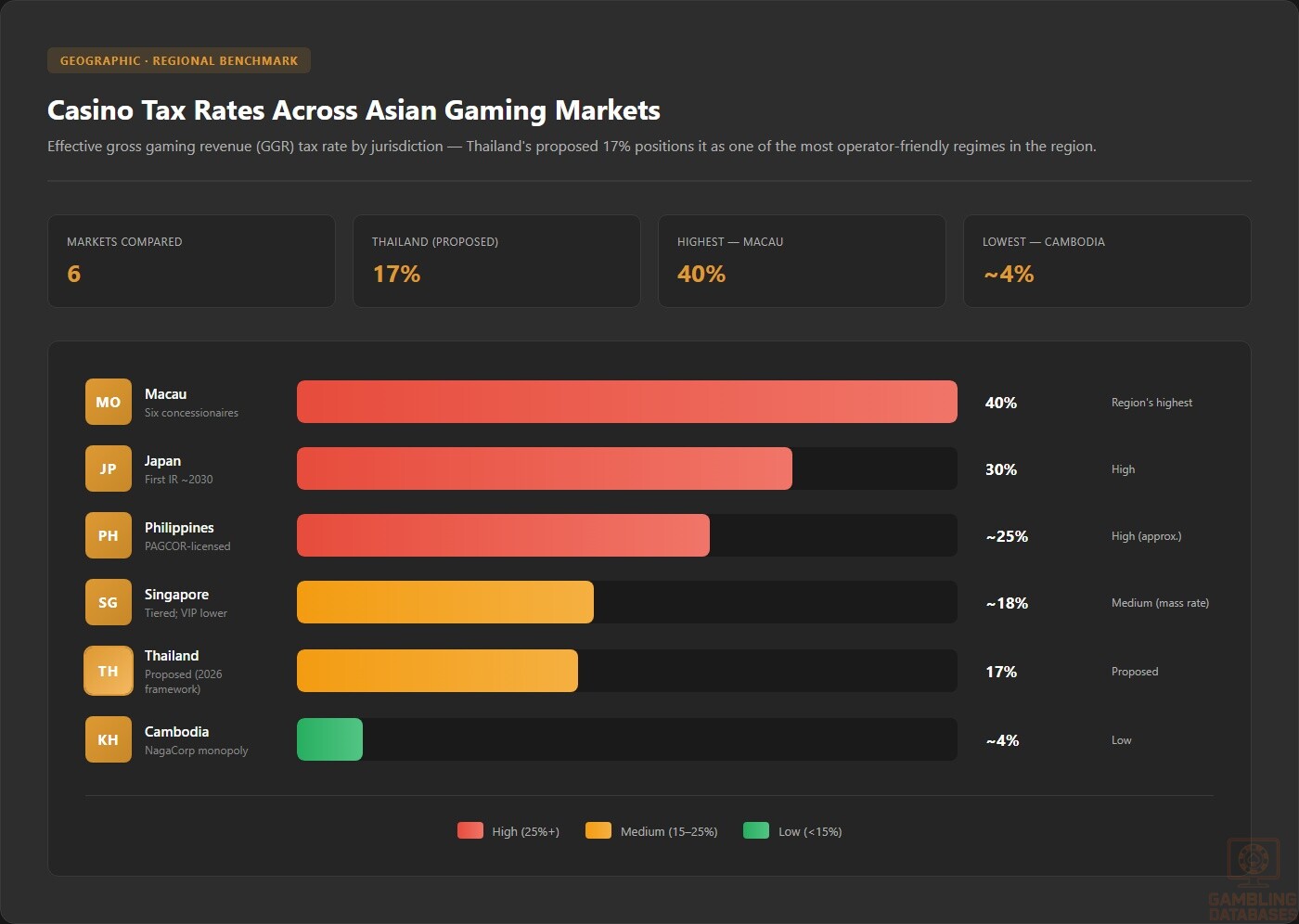
Companies such as Las Vegas Sands, MGM Resorts, Galaxy Entertainment, and Wynn Resorts have conducted feasibility studies and are preparing bids for integrated resort development. These global players are attracted by Thailand’s strategic location, robust tourism infrastructure, and the proposed 17% GGR tax rate, which is significantly lower than rates in Macau (40%) and Japan (30%).
On the domestic side, Thai game developers like Jima Apps, Kiragames, and PIXIO are prominent in the mobile gaming sector, creating popular titles such as Soccer Super Star and Royal Casino. These local studios are well-positioned to form partnerships with international operators, leveraging their understanding of regional preferences and cultural nuances.
Licensing Framework and Requirements
Application Process and Eligibility
The licensing framework for integrated entertainment complexes is defined in the draft Entertainment Complex Bill, which outlines a rigorous application process designed to ensure financial stability, operational competence, and compliance with national standards. Applicants must be Thai-registered companies, either private or public, with a minimum paid-up capital of THB 10 billion (~USD 290 million).
The application process involves multiple stages, beginning with a formal submission to the Office of the Full-Service Entertainment Regulatory Commission, the proposed regulatory body. This is followed by a comprehensive review of the applicant’s financial statements, business plan, technical specifications, and corporate governance structure.
The Cyber Crime Investigation Bureau will conduct background checks on all directors and beneficial owners to ensure no criminal history related to fraud, money laundering, or organized crime.
The licensing process includes the following key requirements:
- Submission of audited financial statements for the past three years demonstrating financial stability
- Provision of a detailed business plan outlining market strategy, projected revenues, and employment generation
- Technical documentation of the gaming platform, including RNG certification and cybersecurity protocols
- Criminal background checks for all directors, executives, and major shareholders
- Proof of minimum capital deposit of THB 10 billion in a licensed Thai bank
- Environmental impact assessment and urban planning compliance documentation
- Commitment to responsible gambling measures, including self-exclusion systems and player protection tools
- Evidence of partnerships with local hospitality and tourism providers
- Comprehensive anti-money laundering (AML) and know-your-customer (KYC) compliance framework
- Submission of a detailed facility design adhering to space allocation requirements
Local Presence and Operational Requirements
Operators of integrated entertainment complexes must establish a substantial physical presence in Thailand, with the entire resort, including the casino, located within zones designated by a Royal Decree. The draft bill specifies that the casino must be part of a larger complex that includes at least four of the following facilities: shopping malls, hotels, restaurants, sports stadiums, gaming areas, swimming pools, amusement parks, or cultural promotion zones.
This requirement ensures that the development contributes to broader economic goals beyond gaming revenue.
Operational requirements include:
- Maintenance of a registered headquarters and operational management team in Thailand
- Compliance with Thai labor laws, including minimum wage and employee benefits standards
- Implementation of a local hiring policy with targets for Thai workforce participation
- Adherence to strict operating hours as determined by the Entertainment Complex Policy Committee
- Prohibition on offering online or remote gambling services to individuals outside the physical premises
- Compliance with alcohol service regulations and designated smoking areas
- Integration with national payment systems such as PromptPay and TrueMoney
- Real-time data reporting to the regulatory authority on gaming activity and financial transactions
Foreign ownership is permitted under the current draft, with no requirement for Thai majority control, though this could change during parliamentary review. The government encourages foreign investment but expects operators to collaborate with local businesses to maximize economic spillover effects.
Compliance Obligations and Monitoring
Player Protection and Identification
The regulatory framework places a strong emphasis on player protection, recognizing the risks associated with problem gambling and financial harm. Operators will be required to implement a comprehensive responsible gambling program, including mandatory age verification, spending limits, session time controls, and self-exclusion mechanisms.
The system will integrate with Thailand’s national ID database to verify the identity and age of all patrons, both Thai nationals and foreign visitors.
Mandatory player protection measures include:
- Real-time age verification using national ID and biometric data
- Implementation of deposit and loss limits that can be set by the player or enforced by the operator
- Session time alerts and mandatory breaks after extended play periods
- Self-exclusion registry allowing players to ban themselves from all licensed venues
- Employee training on identifying signs of problem gambling and intervention protocols
- Public education campaigns on responsible gaming funded by operator contributions
- Provision of access to counseling and support services for affected individuals
- Transparent display of odds and payout rates for all games
Thai citizens will face additional restrictions to prevent excessive gambling. To enter a licensed casino, they must register as patrons and pay a THB 5,000 (~USD 145) entry fee per visit. They must also demonstrate a three-year history of tax filings, proving financial stability and economic participation. This replaces an earlier proposal that required a THB 53 million (~USD 1.5 million) asset threshold, which was deemed too restrictive.
Financial Monitoring and Reporting
Financial compliance is a cornerstone of the regulatory framework, with operators subject to strict monitoring of transactions, revenue reporting, and anti-money laundering controls. The system is designed to prevent illicit financial flows while ensuring accurate tax collection.
All financial transactions within the casino must be conducted through traceable channels, with cashless payments encouraged through e-wallets and digital banking platforms.
The reporting process follows a structured sequence:
- Daily reconciliation of all gaming transactions, including wins, losses, and jackpots
- Weekly submission of financial summaries to the regulatory authority via a secure portal
- Monthly audit of financial statements by an independent, licensed accounting firm
- Quarterly submission of detailed GGR reports, broken down by game type and player origin
- Annual comprehensive audit and public disclosure of financial performance
Operators must also implement real-time transaction monitoring systems capable of detecting suspicious activity, such as structuring, rapid cycling of funds, or unusual betting patterns. Any transaction exceeding THB 2 million (~USD 58,000) must be reported to the Anti-Money Laundering Office (AMLO) within 24 hours.
Taxation Structure and Financial Obligations
Player Taxation
Players in Thailand are not subject to taxation on gambling winnings, whether from lotteries, horse racing, or future casino play. This is consistent with the government’s approach of taxing operators rather than consumers, a model designed to encourage participation in the legal market.
However, winnings from illegal gambling activities are not protected, and individuals involved in unlicensed operations may face penalties under the Penal Code. The absence of player taxation is a key incentive for both domestic and international visitors to use licensed facilities once they become available.
Operator Taxation
| Tax Type | Rate | Notes |
|---|---|---|
| Gross Gaming Revenue (GGR) Tax | 17% | Applied to net win, excluding jackpots and promotional payouts |
| Corporate Income Tax | 20% | Standard rate applied to net profits after all deductions |
| Value-Added Tax (VAT) | 7% | Applied to non-gaming revenue (accommodation, food, retail) |
| Withholding Tax on Dividends | 10% | Applied to distributions to foreign shareholders |
The 17% GGR tax rate is a key competitive advantage, positioning Thailand below regional peers such as Macau (40%), Singapore (15–20% with additional levies), and Japan (30%). This rate is expected to attract high-margin operators and encourage reinvestment in the local economy.
Gambling Market Financial Performance
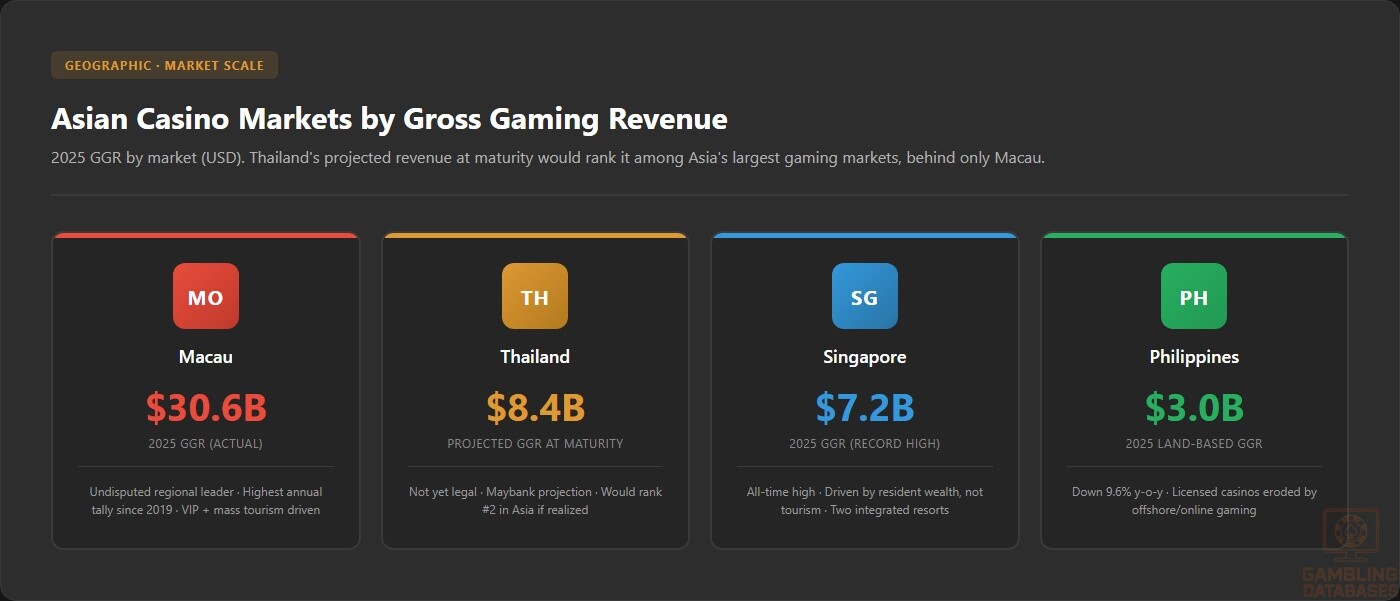
While official data on the legal gambling market is limited due to its current prohibition, estimates suggest that the underground sector generates significant economic activity. The government projects that legal casinos could generate THB 278 billion (~USD 8.39 billion) in annual revenue, with THB 195 billion (~USD 5.9 billion) coming from gaming and the remainder from non-gaming sources such as hotels, dining, and entertainment.
This would make Thailand the fourth-largest casino market in Asia, behind Macau, Singapore, and Japan.
| Indicator | Value | Source |
|---|---|---|
| Annual GGR (Projected) | USD 8.39 billion | Maybank Securities (2025) |
| Non-Gaming Revenue | USD 2.52 billion | Maybank Securities (2025) |
| EBITDA Margin (Estimated) | 34–49% | Maybank Securities (2025) |
| Initial Investment per Site | USD 3–5 billion | MGM Resorts (2025) |
Advertising and Marketing Restrictions
Advertising gambling services is strictly controlled under Thai law to prevent social harm. Permitted channels are limited, with content restrictions prohibiting appeals to minors, misleading claims, or promotions encouraging excessive gambling.
- Advertising allowed only on licensed platforms and approved media
- Use of celebrity endorsements and sponsorships strongly regulated
- Time restrictions on broadcast advertisements
- Mandatory inclusion of responsible gambling messages
- Prohibition of targeting vulnerable or underage persons
Recent Regulatory Changes and Their Impact
The most significant recent regulatory change is the introduction of the Entertainment Complex Business Act, which enables integrated casino resorts and legalizes controlled casino operations. Additionally, legislative progress towards online gambling legalization is advancing with clear frameworks anticipated by mid-2025.
Removal of previously restrictive asset requirements for Thai nationals accessing casinos, replaced by tax filing history criteria, broadens market inclusion. These changes are expected to increase operator interest, reduce illegal market share, and enhance government revenue streams while maintaining social safeguards.
Enforcement Mechanisms and Penalties
Compliance enforcement involves coordinated actions by the Ministry of Finance, Government Lottery Office, and Royal Thai Police. Penalties for illegal gambling activities include staggering fines, seizure of gaming equipment, license revocations, and imprisonment for serious offenses.
- Financial penalties scaled by violation severity
- Confiscation of unauthorized gambling devices and profits
- Criminal charges including imprisonment
- Suspension or revocation of licenses for breaches
- Frequent audits and unannounced inspections
Section 2: Demographics and Consumer Analysis
Population Demographics and Distribution
Thailand’s population is estimated at 71.6 million as of 2025, with a median age of approximately 41.2 years, reflecting a mature and aging demographic. The gender ratio stands at around 942 males per 1,000 females, indicating a slightly higher female population. Age distribution analysis shows that about 21% of the population is under 20 years old, 63% falls into the working-age group of 20 to 64 years, and 16% are aged 65 and above.
Urbanization has progressed steadily, with roughly 60% of the population residing in urban centers. The urban concentration provides a robust consumer base for iGaming products, with major urban areas exhibiting more advanced infrastructure and consumer spending power compared to rural regions.
| Age Group | Percentage of Population | Approximate Population |
|---|---|---|
| 0-19 years | 20.9% | 14.9 million |
| 20-64 years | 63.1% | 45.2 million |
| 65+ years | 16.0% | 11.4 million |
Geographic Distribution
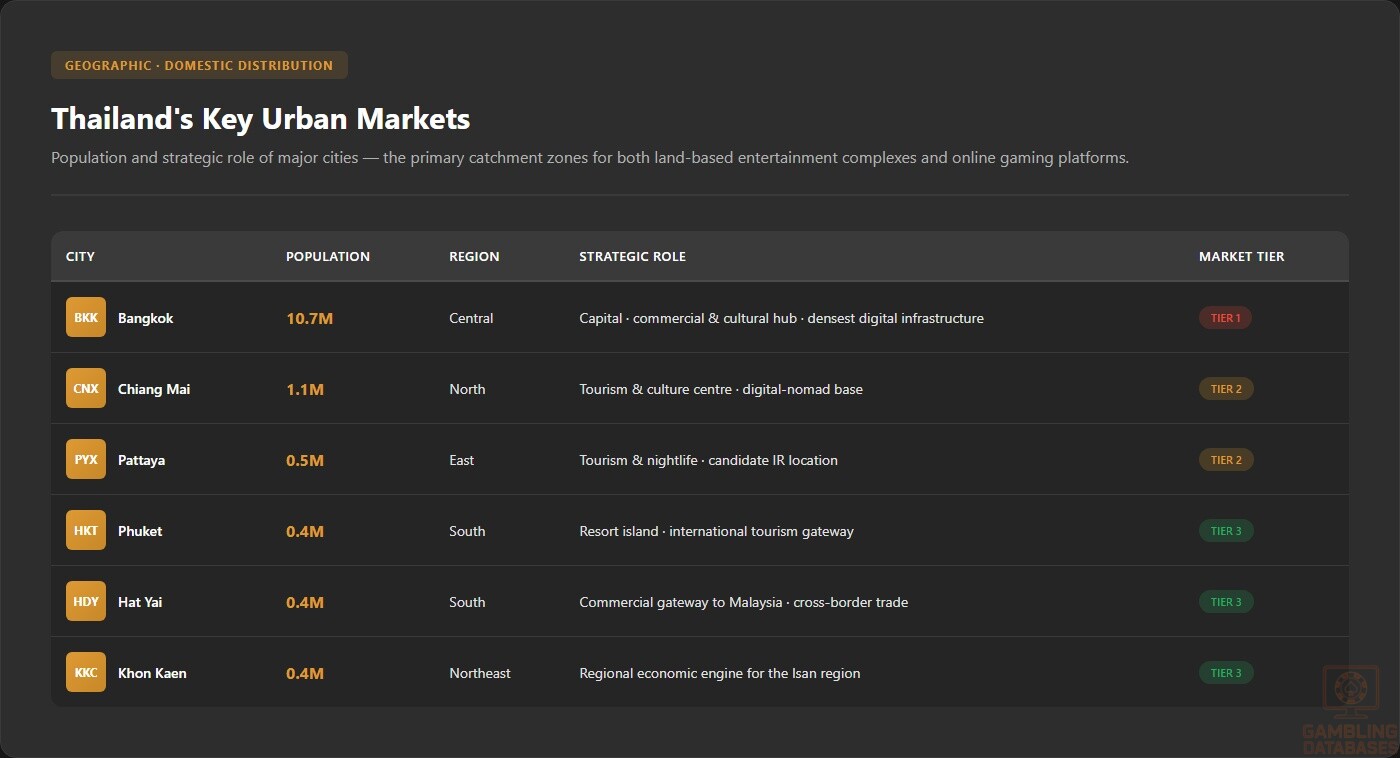
Population and economic activity are concentrated in metropolitan hubs, notably Bangkok which is home to over 10 million residents, serving as Thailand’s commercial and cultural center. Other significant urban centers include Chiang Mai, Pattaya, Phuket, Hat Yai, and Khon Kaen, which function as regional economic engines.
- Bangkok – 10.7 million
- Chiang Mai – 1.1 million
- Pattaya – 0.5 million
- Phuket – 0.4 million
- Hat Yai – 0.4 million
- Khon Kaen – 0.4 million
Internet access and digital infrastructure development are denser in these urban zones, making them the primary focus for online gaming platforms and land-based entertainment venues. Gambling venue concentration also favors these economically vibrant areas, supported by robust tourism and local disposable income.
Economic Indicators and Consumer Spending Power
Thailand’s 2025 GDP is projected at approximately USD 526 billion with a per capita GDP near USD 7,770. Economic growth is moderating to about 1.8% annually due to global trade uncertainty, but digital transformation and tourism remain critical growth drivers.
The service sector dominates the economy, contributing over 58% to GDP, followed by industry (33%) and agriculture (9%). This composition supports strong consumer spending in entertainment, hospitality, and digital services — key components aligned with iGaming market expansion.
Household income is moderately distributed, with urban households benefiting from higher median incomes and disposable income growth. Wealth disparity exists but does not significantly hinder the expanding middle class’s participation in digital economic activities such as online gaming and gambling.
| Indicator | Value |
|---|---|
| GDP (Nominal) | USD 526 billion |
| GDP Growth Rate | 1.8% |
| GDP per Capita | USD 7,770 |
| Services Sector | 58% of GDP |
| Industry Sector | 33% of GDP |
| Agriculture Sector | 9% of GDP |
| Urban Household Median Income | ~USD 12,000 annually |
| Rural Household Median Income | ~USD 6,500 annually |
Market Size and Growth Projections
The digital gaming and iGaming market in Thailand is rapidly expanding, with an estimated current revenue exceeding USD 1.5 billion. Growth forecasts predict a compound annual growth rate (CAGR) of 10-15% as legalization efforts mature and consumer adoption broadens.
The user base for online gaming surpasses 20 million active players, many engaging in daily sessions averaging over an hour of online gaming per day across various platforms. Average Revenue Per User (ARPU) is estimated between USD 70 to 90 annually, reflecting robust monetization potential especially in mobile gaming segments.
| Metric | Value |
|---|---|
| Estimated Market Revenue | USD 1.5+ billion |
| Projected CAGR | 10-15% |
| Active Online Gamers | 20+ million |
| Average Daily Gaming Sessions | 1-2 hours |
| Average Revenue Per User (ARPU) | USD 70-90 annually |
Education, Skills, and Digital Literacy
Thailand boasts a literacy rate exceeding 93%, with widespread primary and secondary education access. Digital literacy is similarly high, particularly among urban populations, supported by extensive government initiatives to promote IT skills development at all levels.
Workforce skillsets align with expanding digital sectors, including software development, e-commerce, and online marketing. This skilled labor pool enhances the country’s capacity to develop indigenous gaming content and supports the operational demands of international iGaming companies establishing local presence.
Cultural and Social Factors
Communication and Language
Thai is the official language and dominant communication medium, with English proficiency growing especially among younger and educated populations. Online content is predominantly consumed in Thai, though English remains common in international business and gaming contexts.
- Thai (official language)
- English (widely used in education and business)
- Chinese dialects (notably in urban business communities)
- Malay (southern regions)
- Various Indigenous dialects
Cultural Attitudes
Gambling has historically been socially stigmatized due to religious and cultural influences, predominantly Theravada Buddhism, which discourages indulgence in addictive behaviors. However, recent opinion polls show growing acceptance of regulated gambling as a legitimate form of entertainment, especially when linked to economic benefits such as tourism and employment.
Foreign gaming brands are viewed positively when associated with quality, safety, and responsible gambling practices. Thai consumers prefer entertainment forms that integrate social interaction, cultural relevance, and digital convenience.
Problem Gambling and Social Considerations
Problem gambling prevalence remains moderate, with vulnerable groups including lower-income and unemployed individuals. Government and NGOs are expanding public health responses focusing on prevention, education, and treatment access.
- Public awareness campaigns on gambling addiction
- Free counseling and support hotlines
- Self-exclusion registers supported by operators
- Training programs for frontline workers in gambling venues
- Research funding to monitor gambling harms and trends
Political Structure and Governance
Thailand operates as a constitutional monarchy with a parliamentary system. The political environment is relatively stable, with ongoing reforms enhancing regulatory predictability and investor protections. Strong government commitment to economic modernization underpins support for digital economy expansion, including iGaming.
International relations emphasize trade and investment partnerships, facilitating cross-border collaborations in entertainment, technology, and gaming sectors.
Technology Adoption and Digital Behavior
Internet and Digital Usage
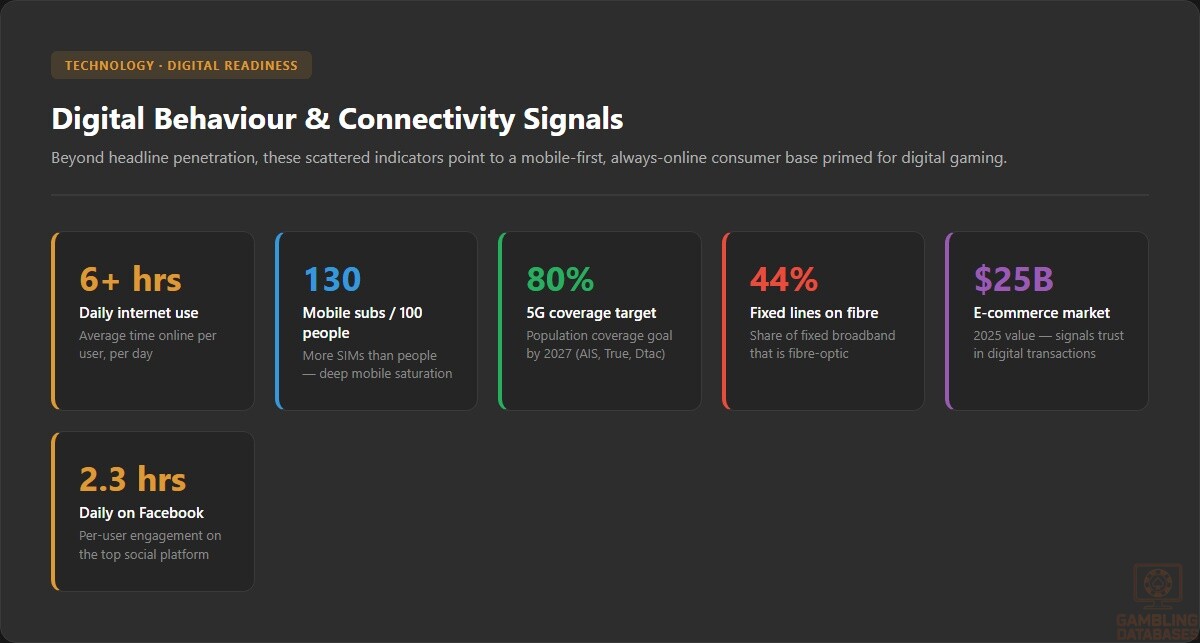
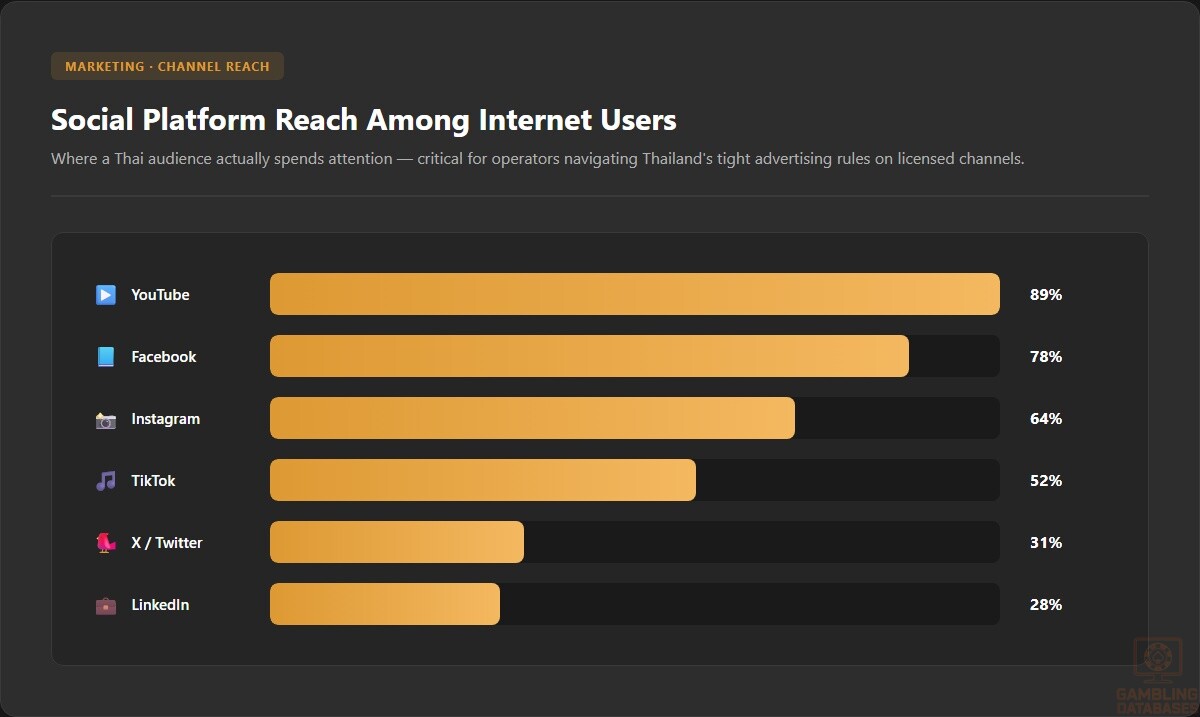
Internet penetration in Thailand reaches over 91% of the population, with widespread daily usage averaging more than 6 hours per user. Mobile devices dominate access, with over 130 mobile subscriptions per 100 inhabitants, reflecting high smartphone adoption rates.
- Facebook: 78% internet users, 2.3 hours daily
- Instagram: 64% young adult demographic
- YouTube: 89% penetration, 45 minutes daily watch
- TikTok: 52% under-25 users
- Twitter: 31% news consumers
- LinkedIn: 28% professionals
Digital Payment Behavior
Digital payments are broadly accepted, with preferences evolving towards e-wallets and mobile banking. Bank transfers and credit/debit cards remain significant. Cryptocurrency adoption is nascent but growing among younger and tech-savvy segments.
- PromptPay dominates mobile payments infrastructure
- TrueMoney and Rabbit LINE Pay popular e-wallets
- Credit and debit cards widely accepted
- Bank transfers for larger transactions
- Emerging use of cryptocurrencies for digital purchases
Gaming and Gambling Preferences
Current Market Participation
- Football betting holds the largest market share among sports betting activities
- Digital slot and casino games rapidly growing in popularity
- Lottery participation remains widespread, anchored in tradition
- Lottery-style digital games with gambling features increasing
- Emerging interest in esports betting and fantasy sports platforms
| Activity | Participation Rate (%) |
|---|---|
| Football Betting | 38% |
| Digital Casino Games | 26% |
| State Lottery | 22% |
| Lottery-Style Digital Games | 12% |
| Esports and Fantasy Sports Betting | 7% |
Consumer Behavior Patterns
Thai consumers demonstrate a preference for mobile-first gaming platforms with intuitive interfaces and social functionalities. Peak engagement occurs in evening hours and weekends, with sessions averaging 60-90 minutes. Retention is best driven through loyalty programs, gamification, and culturally relevant content integration, combining entertainment with social interaction.
Spending patterns show incremental growth, with mid-tier spending predominant but progressive increase in high-value players. Operators focusing on localized marketing and responsible gaming initiatives enjoy stronger brand loyalty.
Section 3: Technology Infrastructure and Business Environment
Internet and Digital Infrastructure
Thailand has achieved near-universal internet penetration, with over 91% of the population connected. Broadband infrastructure favors mobile access, as fiber-optic fixed broadband accounts for approximately 44% of connections, while mobile broadband constitutes the majority. Average mobile internet speed is strong at roughly 40 Mbps, supporting high-quality streaming and real-time gaming experiences critical for iGaming operators.
Reliability and uptime have improved significantly due to ongoing infrastructure investments, reducing latency and improving coverage even in semi-urban areas. International submarine cables link Thailand with key global markets, enhancing data exchange capacity and service quality.
5G and Future Technology Deployment
5G deployment is actively underway, with coverage already available in Bangkok and other major cities. Nationwide rollout targets 80% population coverage by 2027, driven by government incentives and competitive pressure among telecom operators.
Key operators include AIS, TrueMove, and Dtac, all aggressively expanding 5G to support enhanced mobile broadband, low latency applications, and emerging technologies like augmented reality and cloud gaming that will further energize the iGaming ecosystem.
Mobile Technology Ecosystem
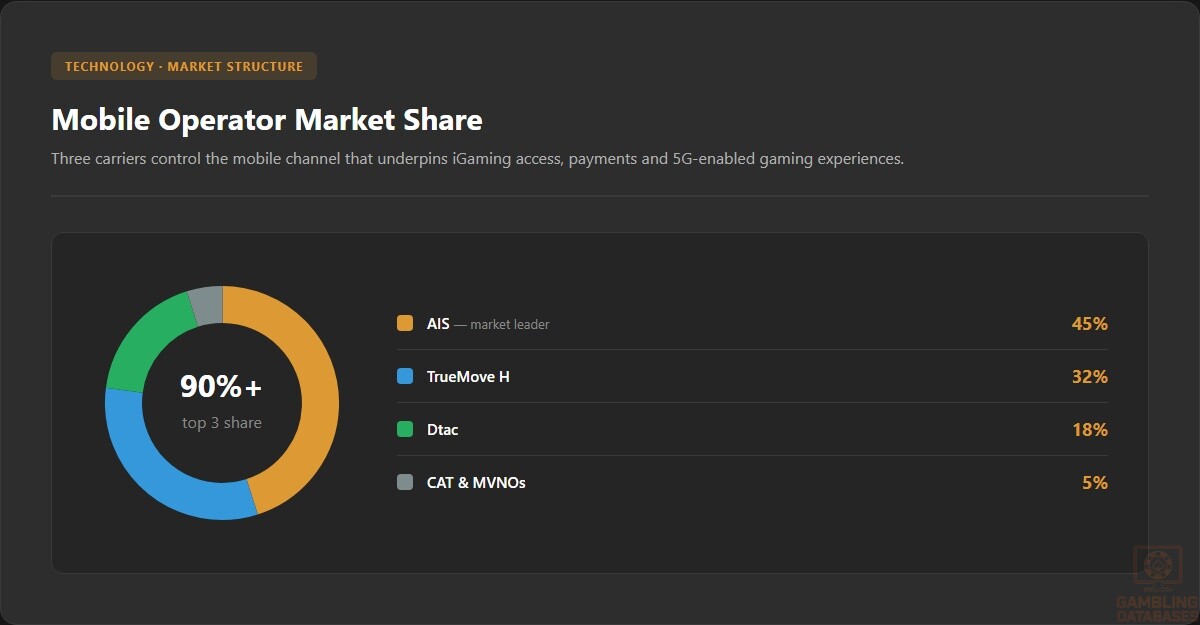
Thailand hosts a highly competitive mobile operator market, dominated by three major players controlling over 90% of the subscriber base. The market is characterized by affordable data packages, widespread smartphone adoption, and high mobile usage intensity.
- AIS: Market leader with approx. 45% market share
- TrueMove H: Holds about 32% market share
- Dtac: Accounts for 18% market share
- CAT Telecom: State-owned operator with limited mobile service but essential broadband infrastructure
- Other MVNOs: Account for remaining market segments
Smartphone penetration exceeds 80% of the population, with strong demand for Android devices favored by affordability and extensive app ecosystems. Usage patterns emphasize mobile gaming and social networking, supported by large-scale adoption of digital payment methods.
Financial Services and Payment Infrastructure
Thailand’s banking sector is robust and nationally integrated. Leading banks offer cutting-edge digital banking services with high account penetration, including mobile wallets and instant payment systems.
- Krungthai Bank: Largest state-owned bank with extensive digital reach
- Siam Commercial Bank (SCB): Known for innovative mobile apps and fintech partnerships
- Bangkok Bank: Strong regional presence and corporate banking services
- KBank (Kasikornbank): Leading private bank with integrated payment ecosystem
- TMBThanachart Bank: Growing digital-first bank segment
Payment processing benefits from infrastructure like the PromptPay system, supporting instant bank-to-bank transfers, alongside popular e-wallets such as TrueMoney and Rabbit LINE Pay. These options enhance transaction speed and security for iGaming payments.
- PromptPay: Instant interbank mobile payments system
- TrueMoney Wallet: Popular e-wallet for small and medium payments
- Rabbit LINE Pay: Integrated digital wallet with social media connections
- Credit/Debit Cards: Widely accepted for online transactions
- Bank Transfers: Frequently used for large-value payments
E-commerce and Digital Economy
Thailand’s e-commerce market has rapidly expanded, valued at over USD 25 billion in 2025. Online retail penetration is high, fueled by reliable logistics networks, digital payment adoption, and growing consumer confidence in online shopping.
Digital services encompassing streaming, mobile gaming, and social commerce thrive alongside traditional retail, positioning Thailand as a leading digital economy hub in Southeast Asia. Confidence in digital transactions translates into positive prospects for iGaming platform acceptance and growth.
Business Environment and Regulatory Framework
Thailand ranks favorably on the World Bank’s Ease of Doing Business indicators, supported by streamlined registration processes and government incentives for foreign investment. While bureaucratic complexities exist, ongoing regulatory reforms aim to reduce barriers and improve transparency.
- Prepare and notarize company registration documents
- Submit application to Department of Business Development
- Register for tax identification and VAT with Revenue Department
- Open corporate bank account and deposit required capital
- Obtain necessary business licenses including gambling-related permits
Corporate Structure and Registration
Common company structures include Limited Liability Companies (LLC), Public Limited Companies, and Branch Offices of foreign firms. LLCS offer flexibility and are preferred for new entrants, while Public Limited Companies suit larger-scale investment requiring share issuance.
Branch offices allow foreign companies to establish presence without local incorporation but face restrictions on business scope. Registration timelines range from 2 to 6 weeks depending on complexity.
- Company registration application forms
- Memorandum and Articles of Association
- List of shareholders and directors
- Proof of registered address
- Certificate of minimum capital deposit
- Tax identification application
- Director and shareholder identification documents
- Licenses applicable to specific business activities
Taxation Framework
Corporate income tax in Thailand is generally levied at 20%. Special economic zones and promoted activities enjoy reduced rates or tax holidays to encourage investment. The government has bilateral tax treaties with multiple countries, providing relief from double taxation.
- Japan
- China
- Singapore
- United States
- Australia
- United Kingdom
- Germany
- France
- South Korea
- Malaysia
Personal income tax rates are progressive up to a maximum of 35%, with mandatory social security contributions for employees and employers. Tax residency is defined by presence exceeding 180 days per year.
Market Entry Considerations
Optimal entry strategies for iGaming include forming partnerships with local hospitality or technology providers, leveraging regulatory knowledge, and utilizing established payment and marketing channels. Operators may choose to develop proprietary platforms or partner with licensed software companies.
- Joint ventures with local entities to navigate regulatory environment
- Acquisition of existing gaming-related companies
- White-label partnerships for rapid market entry
- Direct investment to build integrated resorts and digital platforms
- Strategic alliances with payment and marketing service providers
Initial setup costs are significant, driven by high licensing fees, capital requirements, and technology deployments. Cost optimization and phased investment approaches help manage financial outlays.
| Category | Estimated Cost |
|---|---|
| License Application and Fees | 145 – 175 |
| Infrastructure and Technology Setup | 50 – 80 |
| Marketing and Customer Acquisition | 20 – 40 |
| Hiring and Operational Costs (1st Year) | 15 – 30 |
| Legal and Consulting Services | 5 – 10 |
| Contingency and Miscellaneous | 10 – 20 |
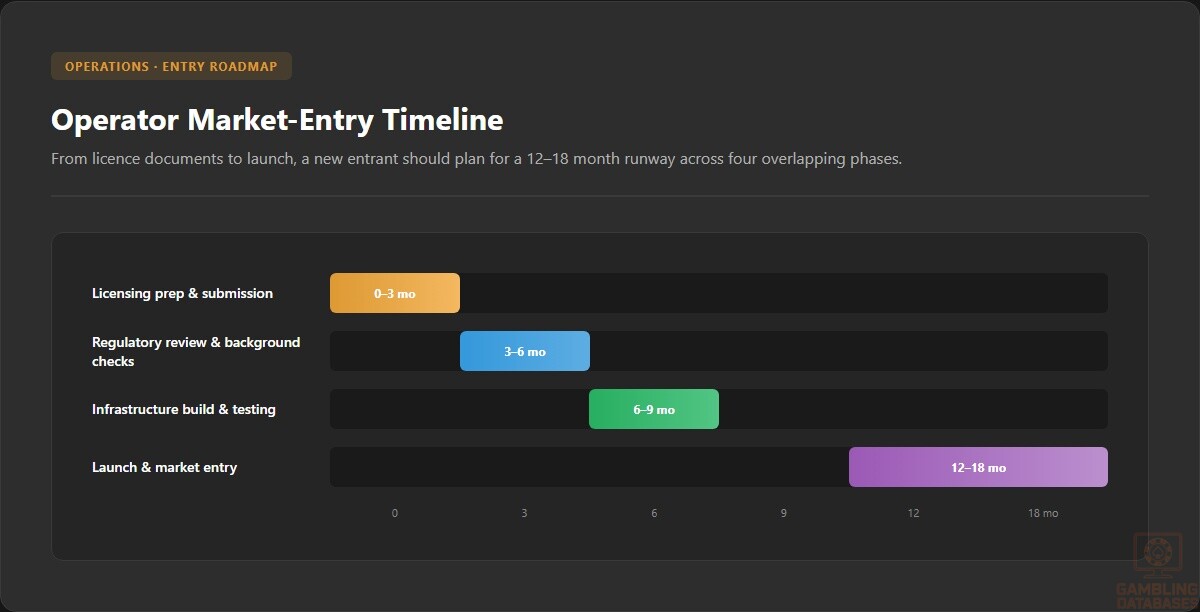
- Preparation and submission of licensing documents
- Regulatory review and background checks (3-6 months)
- Infrastructure development and testing (6-9 months)
- Launch and market entry (within 12-18 months)
Successful operators emphasize local compliance, technology excellence, and socially responsible gambling practices. Key challenges include navigating evolving regulatory frameworks, combating illegal market competition, and adapting to dynamic consumer preferences.
- Understanding evolving regulatory requirements and compliance
- Building trusted local partnerships and brand credibility
- Developing secure and compliant payment solutions
- Adopting responsible gambling frameworks
- Managing competition from unregulated operators
- Leveraging data analytics for personalized marketing
Exit strategies involve license transfer negotiations and regulatory approvals, with market liquidity influenced by the nascent but rapidly growing legal framework. Valuation multiples depend on operational scale, profitability, and license term remaining.
FAQ: Frequently Asked Questions
1. Is online gambling legal in Thailand?
Online gambling remains officially illegal but is in the process of being regulated with a new licensing framework expected to come into force by 2025-2026. Until then, accessing online betting sites is restricted and subject to enforcement. The government is prioritizing a regulated market emphasizing player protection, taxation, and anti-money laundering protocols.
2. What types of gambling licenses are available and what do they cover?
The primary license type under consideration is for integrated entertainment complexes that incorporate casinos. Additional licenses will likely cover online gaming operations, digital games with gambling features, and betting platforms. These licenses require applicants to meet stringent financial and technical standards and include operational compliance obligations throughout their term.
3. How much does an iGaming license cost and how long does it take to obtain?
License application fees for casinos are substantial, with initial fees around USD 145 million and annual renewal fees near USD 29 million. The application process may take 6 to 12 months due to comprehensive regulatory reviews, including financial audits and criminal background checks.
4. Can foreign companies obtain a gambling license?
Foreign companies can apply for licenses but must meet local operational requirements and may need to partner with Thai entities. Foreign ownership is allowed under current draft legislation without mandatory majority local ownership, though regulatory approval is essential.
5. What are the tax obligations for iGaming operators?
Operators are subject to a gross gaming revenue tax of 17%, corporate income tax of 20%, and VAT of 7% on non-gaming revenues. Withholding tax applies to dividends paid to foreign shareholders. This competitive tax structure encourages investment while ensuring government revenue.
6. Are gambling winnings taxed for players?
Players are not subject to tax on gambling winnings in legal operations, supporting consumer participation. However, income from illegal gambling can be subject to penalties, reinforcing the government’s intent to transition players to the legal market.
7. What are the typical operational costs for running an online casino/sportsbook?
Key costs include licensing fees, technology infrastructure, marketing and customer acquisition, personnel expenses, and regulatory compliance costs. Marketing can be particularly variable depending on market competition, while compliance requires ongoing investment in security and reporting systems.
8. What is the expected ROI timeline for entering this market?
ROI timelines vary, but operators can expect full return on investment within 3-5 years, contingent on market conditions, regulatory approvals, and effective brand positioning. Initial years may require heavy upfront investment to establish market presence.
9. What are the local presence requirements for operators?
Operators must establish physical offices, employ local personnel, and maintain on-ground operational teams. Online platforms must operate under licensed domains with data centers located or approved in Thailand. Compliance with labor laws and social responsibility initiatives is mandatory.
10. What payment methods are available and recommended?
Recommended payment methods include PromptPay, e-wallets like TrueMoney and Rabbit LINE Pay, credit/debit cards, and bank transfers. Cashless transactions are encouraged for fraud control and reporting accuracy. Cryptocurrency use remains emerging and is currently not a mainstream payment method.
11. What are the advertising and marketing restrictions?
Advertising is tightly regulated to prevent targeting minors and vulnerable groups. Only licensed operators can advertise on approved channels with restrictions on content, timing, and messaging requiring inclusion of responsible gambling information.
12. What responsible gambling measures are mandatory?
Mandatory measures include age verification, deposit and loss limits, session time controls, self-exclusion options, employee training, and public education campaigns. Operators must provide accessible counseling referrals and transparently display game odds and payout rates.
13. How large is the iGaming market and what is the growth potential?
The current market generates over USD 1.5 billion in revenue, with projections indicating 10-15% annual growth post-legislation. Increasing mobile penetration, legal reforms, and rising consumer acceptance make Thailand a highly attractive market with substantial upside.
14. Who are the main competitors and what is their market share?
International integrated resort operators such as Las Vegas Sands, MGM Resorts, Galaxy Entertainment, and Wynn Resorts are positioning themselves for market entry. Domestic digital developers hold strong positions in mobile gaming niches but lack licensed casino operations currently. Market shares are expected to shift with legalization and operator licensing.
15. What are the player preferences and typical spending patterns?
Players prefer mobile-first platforms with social and interactive features, mostly engaging in football betting, digital slots, and lottery-style games. Spending escalates steadily with user engagement; loyalty programs and culturally adapted content significantly impact retention and monetization.
16. What are the key success factors and main challenges for new entrants?
Success hinges on regulatory compliance, strong local partnerships, technology sophistication, and responsible gambling frameworks. Challenges include navigating evolving laws, competition from illicit providers, and achieving broad consumer trust through transparency and quality. Effective payment solutions and data analytics also underpin competitive advantage.
Sources and References
- Thailand Government Lottery Office – Official Website – https://www.glo.or.th
- Ministry of Finance, Thailand – Regulatory Announcements – https://www.mof.go.th
- World Bank – Doing Business Report 2025 – https://www.worldbank.org/en/publication/doing-business
- National Statistical Office of Thailand – Population and Economic Data 2025 – https://service.nso.go.th
- National Electronics and Computer Technology Center (NECTEC) – Digital Infrastructure Report 2025
- International Telecommunication Union – ICT Statistics 2025 – https://www.itu.int/en/ITU-D/Statistics/Pages/stat/default.aspx
- Digital Economy Promotion Agency (DEPA), Thailand – Official Website – https://www.depa.or.th
- Cyber Crime Investigation Bureau Thailand – Enforcement Guidelines
- Maybank Securities Thailand – Market Forecast Reports 2025
- Mintel Research – Esports and Gaming Trends Thailand 2023-2025
- Thai Bankers’ Association – Banking Sector Data 2025
- PromptPay System – Official Site – https://www.promptpay.info
- TrueMoney Thailand – Corporate Website
- Rabbit LINE Pay – Payment Solutions Update 2025
- World Population Review – Thailand Demographics 2025 – https://worldpopulationreview.com/countries/thailand
- OECD Economic Outlook Thailand 2025 – https://www.oecd.org
- Asian eCommerce Insight – Thailand Digital Economy 2025
- Bangkok Bank Annual Report 2025
- Kasikornbank Digital Business Report 2025
- Thailand Board of Investment – Market Entry Guidelines 2025
- Global Gaming Reports 2024-2025 – Various Analysts
- Thailand Ministry of Digital Economy and Society – Technology Reports 2025
- International Gaming Institute – Regulatory Landscape Asia 2025
- Various News Articles on Thailand Gambling Legalization 2024-2025
- Academic Studies on Gambling and Social Impact in Thailand
- Industry Whitepapers on Payment and Fintech Adoption in Southeast Asia