Turkmenistan presents a unique iGaming market landscape characterized by a semi-regulated environment dominated by land-based gambling. While legal frameworks exist primarily for physical casinos and betting shops, online gambling remains largely restricted. Despite these limitations, gradual regulatory developments and emerging market interest suggest potential opportunities for future market entry.
The country’s evolving regulatory approach, combined with a growing demand for gambling products, positions Turkmenistan as a cautiously attractive market. Operators should carefully navigate local legalities while preparing for anticipated reforms aimed at integrating digital gaming within its jurisdiction.
Executive Summary: Key Market Indicators
| Metric | Value |
|---|---|
| Gambling Legal Status | Semi-regulated (Land-based legal, Online restricted) |
| Regulatory Authority | Ministry of Economy (Primary Licensing Body) |
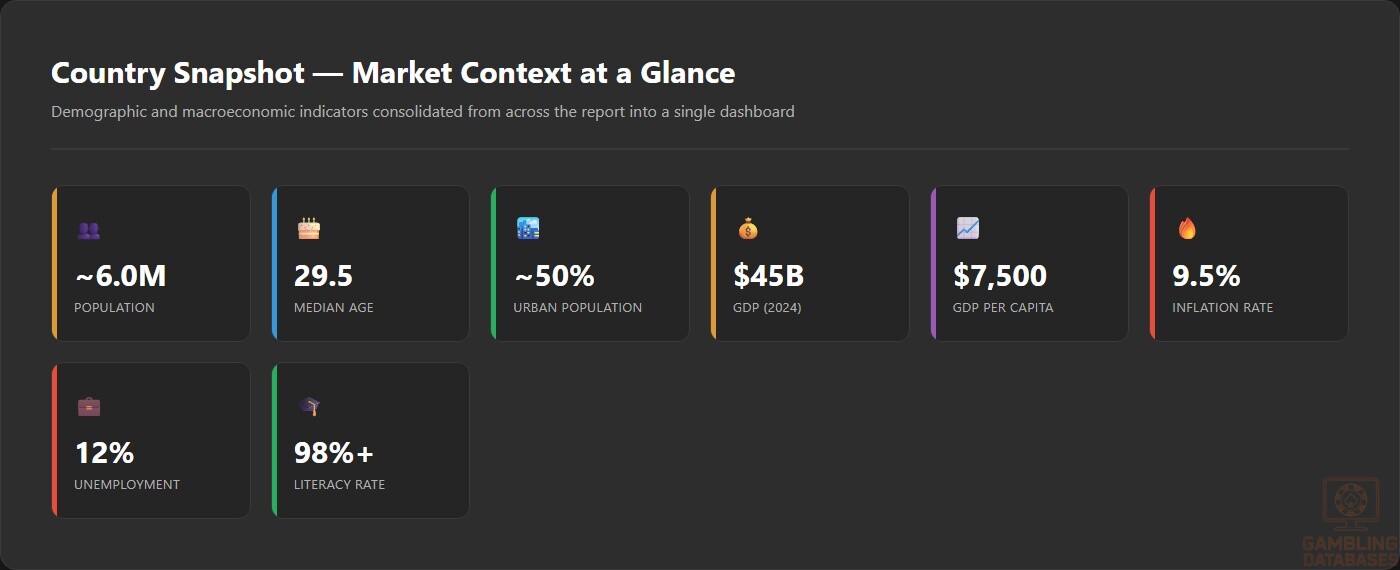
| Population | ~6 million |
| Median Age | ~29.5 years |
| Urban Population | ~50% |
| GDP (2024 est.) | ~$45 billion |
| GDP per Capita | ~$7,500 |
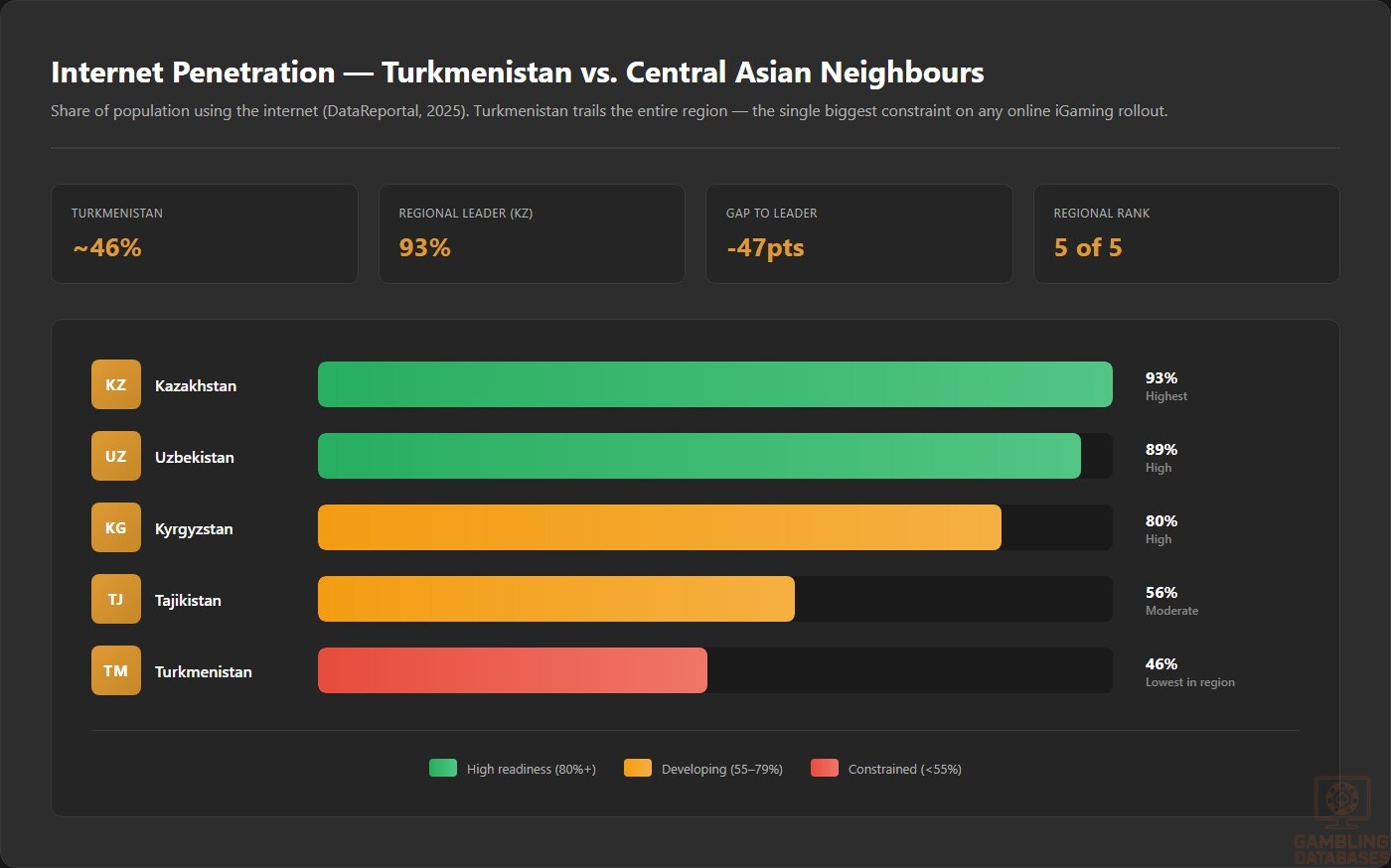
| Internet Penetration Rate | ~20% |
| Mobile Penetration | ~45% |
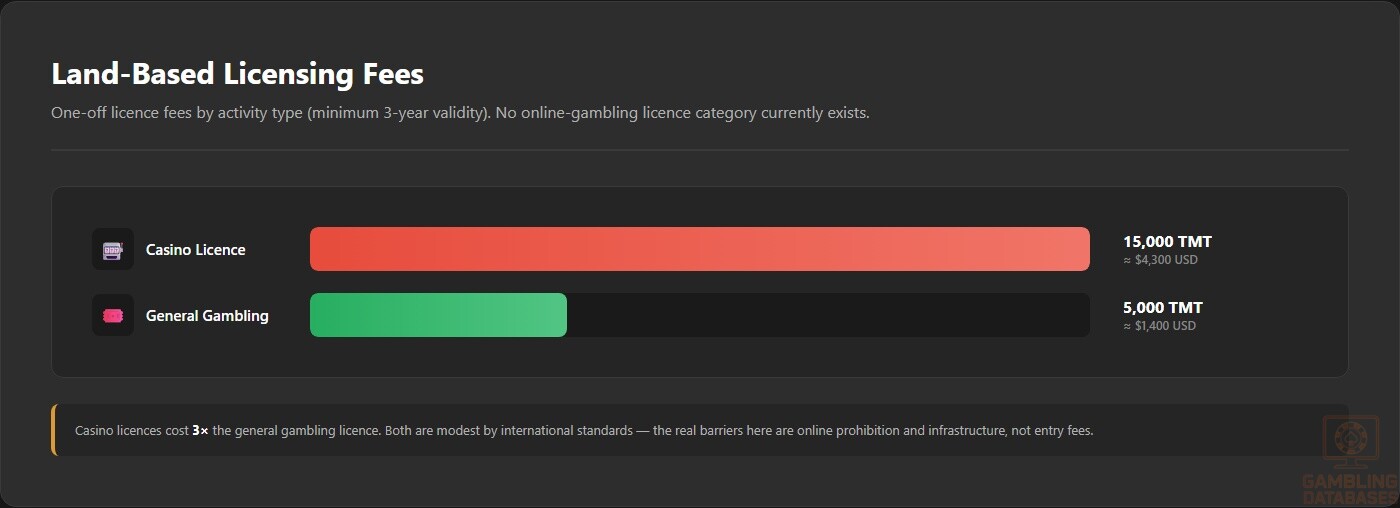
| Licensing Fees (Casinos) | 15,000 TMT (~$4,300 USD) |
| Licensing Fees (General Gambling) | 5,000 TMT (~$1,400 USD) |
| License Validity | Minimum 3 years |
| Gross Gaming Revenue (GGR) Tax | Fixed daily fees per equipment and seat |
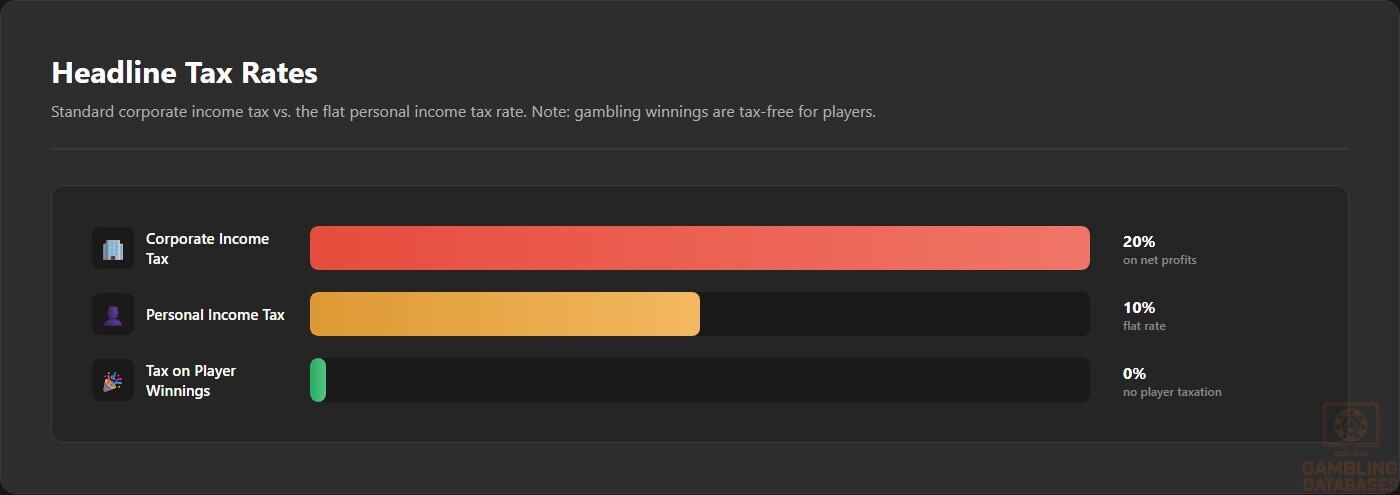
| Player Taxation | None (No tax on winnings) |
| Known Licensed Casinos | 2 (Ashgabat: Grand Casino, Ak-Altin Casino) |
| Licensed Betting Shops | Multiple licensed locations across the country |
| Online Gambling Status | Prohibited since 2016 (Legally) |
| Compliance Requirements | Identity verification, AML for licensed operators |
| Advertising Restrictions | Online gambling adverts banned since 2016 |
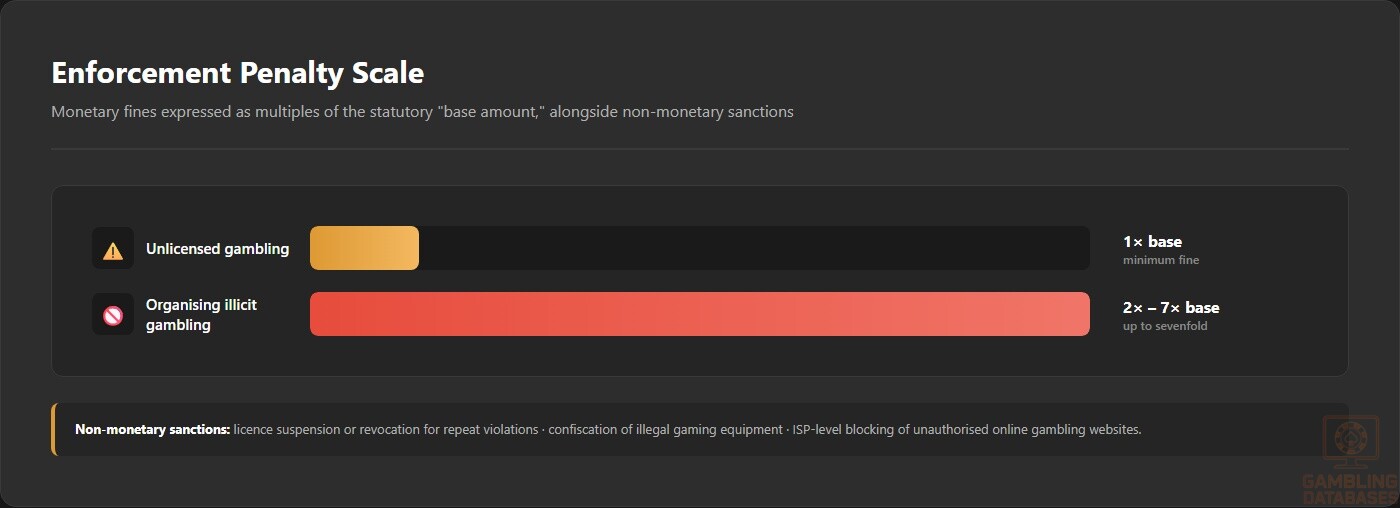
| Enforcement | Fines up to 7x base amount for violations |
| Market Barriers | Strict online prohibition, limited internet access |
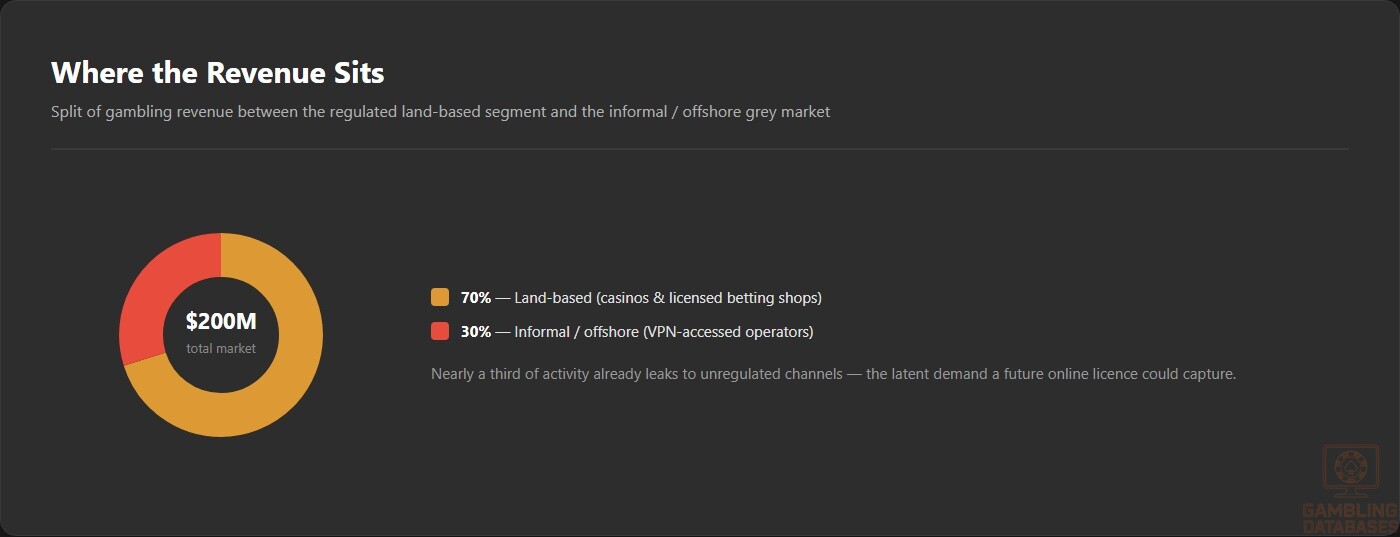
| Market Size Estimate | Approx. $200 million (land-based dominated) |
| Annual Growth Rate (CAGR) | Projected 4-6% (post regulatory updates) |
| Average Revenue Per User (ARPU) | ~$300 annually (land-based players) |
| Technology Infrastructure | Low internet, monopolized ISP (Turkmentelekom) |
| Foreign Ownership Restrictions | Partnerships typically required, limited direct foreign control |
| Regulatory Trends | Steps toward formal online license introduction anticipated |
Section 1: Regulatory Framework and Legal Environment
Current Gambling Regulation Status
Turkmenistan’s regulatory stance on gambling is described as semi-regulated with stringent controls on online activities. Gambling legislation focuses predominantly on land-based operations, explicitly permitting casinos, betting shops, and lotteries under license while online gambling activities are prohibited.
Since 2016, online gambling, including advertising thereof, has been banned by law. However, residents frequently access offshore websites and international operators, often employing VPN services to circumvent local ISP blocks imposed by the state-owned Turkmentelekom.
Land-Based Gambling Activities
Physical gambling venues are limited and highly regulated. The country hosts two licensed casinos located in the capital, Ashgabat: the Grand Casino and the Ak-Altin Casino. Alongside these, multiple licensed betting shops operate across the country, offering access to sports betting focused on popular local sports like football and horse racing.
The licensing system governs these land-based operations, with fees and taxation implemented on a fixed daily rate basis per gaming table, machine, or seat. This model aligns with the government’s intent to maintain controlled, taxable gambling environments while restricting widespread unregulated gambling.
Online Gambling Framework
Online gambling remains prohibited under the 2016 Law on Advertising, which forbids both the operation and advertisement of online gambling platforms. There is no dedicated licensing procedure or regulatory oversight for digital operators at present.
Despite the ban, international online bookmakers accessible through VPNs attract a significant portion of potential users. Due to the lack of local regulation, no domestic online licenses have been issued, creating a grey market environment where player protection measures are minimal. Cryptocurrency gambling also remains unregulated and legally ambiguous.
Licensed Operators and Market Players
The Turkmen gambling market consists primarily of a handful of licensed land-based casinos and betting outlets. The competitive landscape is concentrated, with few operators dominating the licensed segment. Leading licensed casinos include the Grand Casino and the Ak-Altin Casino, both in Ashgabat.
Licensed betting shops often represent branches of international bookmakers or local entities operating under state licenses. Due to the absence of local online licenses, the presence of local licensed online operators is non-existent. International brands accessible offshore influence consumer behavior though compliance with Turkmen regulations by these operators is limited.
Licensing Framework and Requirements
Application Process and Eligibility
The Ministry of Economy is the designated authority responsible for issuing gambling licenses in Turkmenistan. The licensing process mandates submission of extensive documentation, including corporate registration, financial reports, and location verification of intended gambling operations.
Applicants must pay fees ranging from 5,000 to 15,000 Turkmenistan Manat depending on the gambling activity. Licenses require renewal at intervals no shorter than three years. Technical standards enforced include equipment certification and operational compliance verified during inspections.
Licenses currently apply exclusively to land-based activities, with no formal procedure established for online gambling licenses. The government is nonetheless exploring regulatory frameworks to potentially introduce online gambling licensure.
Local Presence and Operational Requirements
License applicants must demonstrate a physical presence within Turkmenistan, including verified gaming premises. Local partnerships or subsidiaries are usually required for foreign investors, as direct foreign ownership restrictions remain in place.
Licenses are tied to defined geographical locations and prohibit operation under unregistered domains. Personnel engaged in operations must undergo background checks and adhere to local labor laws. Reporting to regulatory authorities on operational and financial data is mandated under the licensing terms.
Compliance Obligations and Monitoring
Player Protection and Identification
Licensed operators must comply with strict KYC (Know Your Customer) and AML (Anti-Money Laundering) protocols. These include mandatory verification of player identity, age confirmation (minimum 18 years), and prevention of underage gambling.
Responsible gambling initiatives require operators to implement self-exclusion options and provide information on gambling addiction support services. While online regulations lack specificity, land-based venues enforce document checks and restrict access accordingly.
- Mandatory age verification via official ID documents
- Comprehensive KYC checks during player onboarding
- Self-exclusion mechanisms for problem gamblers
- AML transaction monitoring and reporting
- Information disclosure about risks and support resources
Financial Monitoring and Reporting
Operators must submit regular financial reports to the Ministry of Economy, detailing revenue, tax payments, and operational expenditures. Audits are conducted to verify compliance and identify irregularities. Transaction monitoring includes daily tracking of wagers and payouts.
- Monthly financial reporting submission
- Quarterly audits by regulatory authorities
- Annual compliance certification renewal
- Immediate reporting of suspicious transactions
Taxation Structure and Financial Obligations
Player Taxation
Winnings from gambling are currently exempt from taxation in Turkmenistan, incentivizing player participation within legal land-based venues. There is no withholding or income tax applied directly to players’ gambling earnings.
Operator Taxation
Taxation is calculated through fixed fees based on gaming equipment and premises rather than percentage levies on gross gaming revenue. For example, fees per gaming table can reach up to 370 Turkmenistan Manat daily, while slot machines and seats have their respective fixed tax rates.
| Activity Type | Tax Rate (TMT per Day) |
|---|---|
| Gaming Machine | 30 TMT on weekdays, 40 TMT weekends |
| Gaming Table | Up to 370 TMT |
| Seat at Table | 7 TMT |
| Gambling Premises (per m²) | 3 TMT |
Corporate taxation on gambling operators also aligns with general business tax codes. License renewal involves payment of fee maintaining operational authorization.
Gambling Market Financial Performance
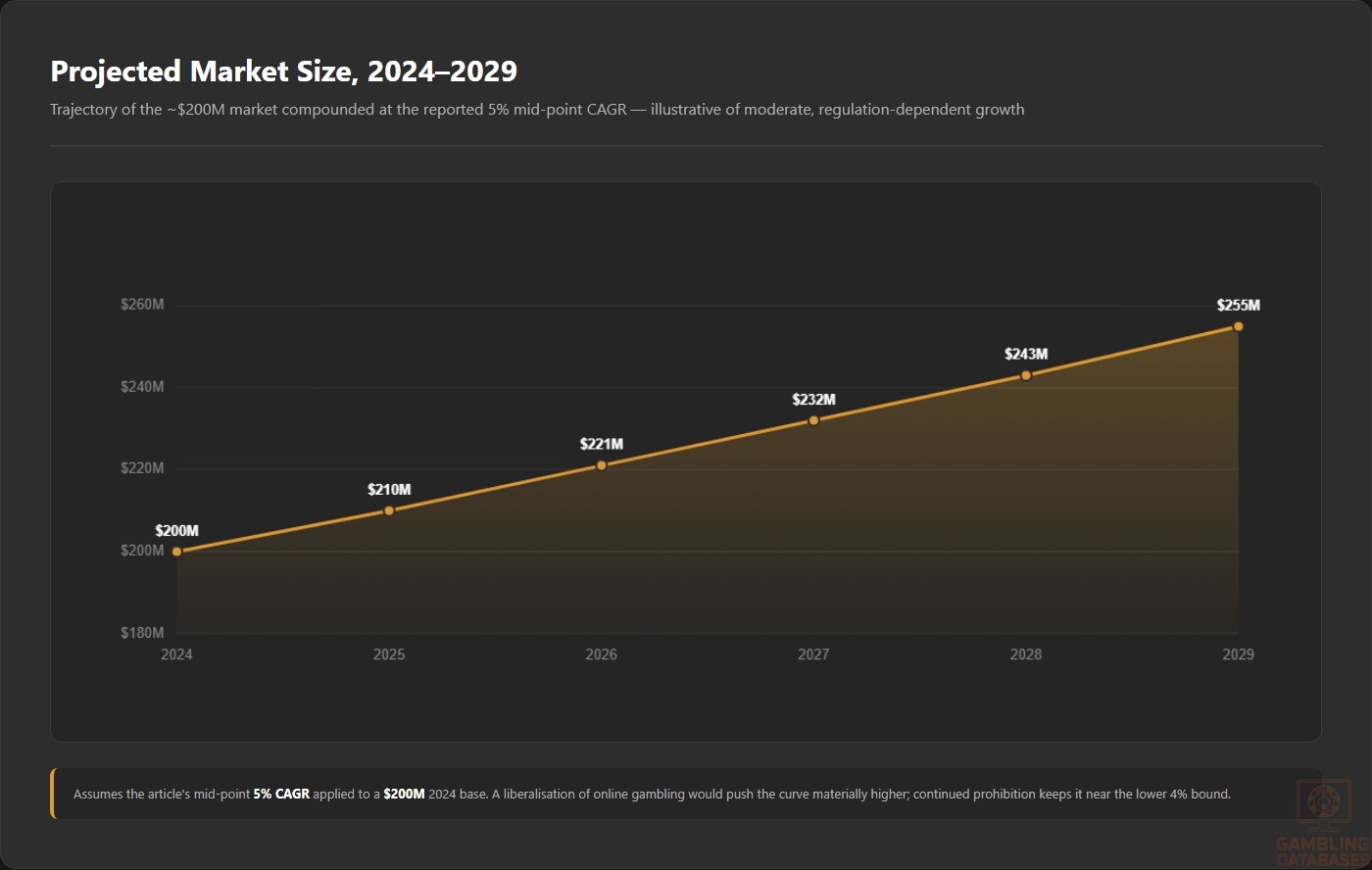
While exact figures on total wagering in Turkmenistan are sparse, land-based gaming accounts for an estimated annual market turnover of approximately $200 million. Revenues are growing moderately, with a projected CAGR of 4-6% linked to increasing consumer demand and potential regulatory liberalization.
Tax revenues from gambling contribute modestly to government budgets due to fixed-rate tax structures. Revenue distribution favors land-based casinos and betting shops, with limited contribution from online or informal sectors.
Advertising and Marketing Restrictions
Advertising for online gambling is strictly prohibited nationwide since 2016, effectively limiting market visibility to physical venues and word-of-mouth promotions. Permitted advertising channels include traditional media for licensed land-based operators under strict content guidelines.
- Ban on all online gambling advertisements
- Permitted advertising through state-approved TV and radio
- Prohibition of marketing targeting minors or vulnerable groups
- Sponsorship restrictions for events and sports teams
- Advertising time restrictions in accordance with national laws
Sponsorship and promotion must align with responsible gambling principles to avoid sanctions or license revocation.
Recent Regulatory Changes and Their Impact
The key regulatory changes emerged from the 2008 Law on Licensing and the 2016 Law on Advertising, with the latter significantly impacting online gambling by reversing prior permissiveness. These amendments increased operational costs through fixed taxation and solidified enforcement against illegal online betting.
Operators face higher compliance costs and market entry barriers, constraining rapid growth. However, regulated land-based operators benefit from a protected market and greater government oversight.
Enforcement Mechanisms and Penalties
Enforcement relies on administrative fines and operational suspensions. Penalty structures target unlicensed gambling and violations of advertising restrictions. Frequent compliance checks are conducted to enforce adherence to licensing conditions.
- Fines equal to one base amount for unlicensed gambling
- Fines between two to seven base amounts for organizing illicit gambling
- License suspension or revocation for repeated violations
- Confiscation of illegal gaming equipment
- ISP blocking of unauthorized online gambling websites
Regulatory enforcement remains cautious, balancing control with gradual market opening initiatives.
Section 2: Demographics and Consumer Analysis
Population Demographics and Distribution
Turkmenistan has a total population of approximately 6 million people, with a generally young demographic profile. The median age is around 29.5 years, reflecting a relatively youthful labor force and consumer base. Gender distribution is balanced, with males and females each composing nearly half the population.
Urbanization is moderate, with roughly 50% of inhabitants living in urban areas while the remaining half reside in rural regions. This urban-rural split impacts gambling accessibility and internet connectivity, as urban centers concentrate economic activity and gambling venues.
| Age Group | Percentage of Population |
|---|---|
| 0-14 years | 28% |
| 15-24 years | 18% |
| 25-54 years | 40% |
| 55-64 years | 8% |
| 65 years and older | 6% |
Geographic Distribution
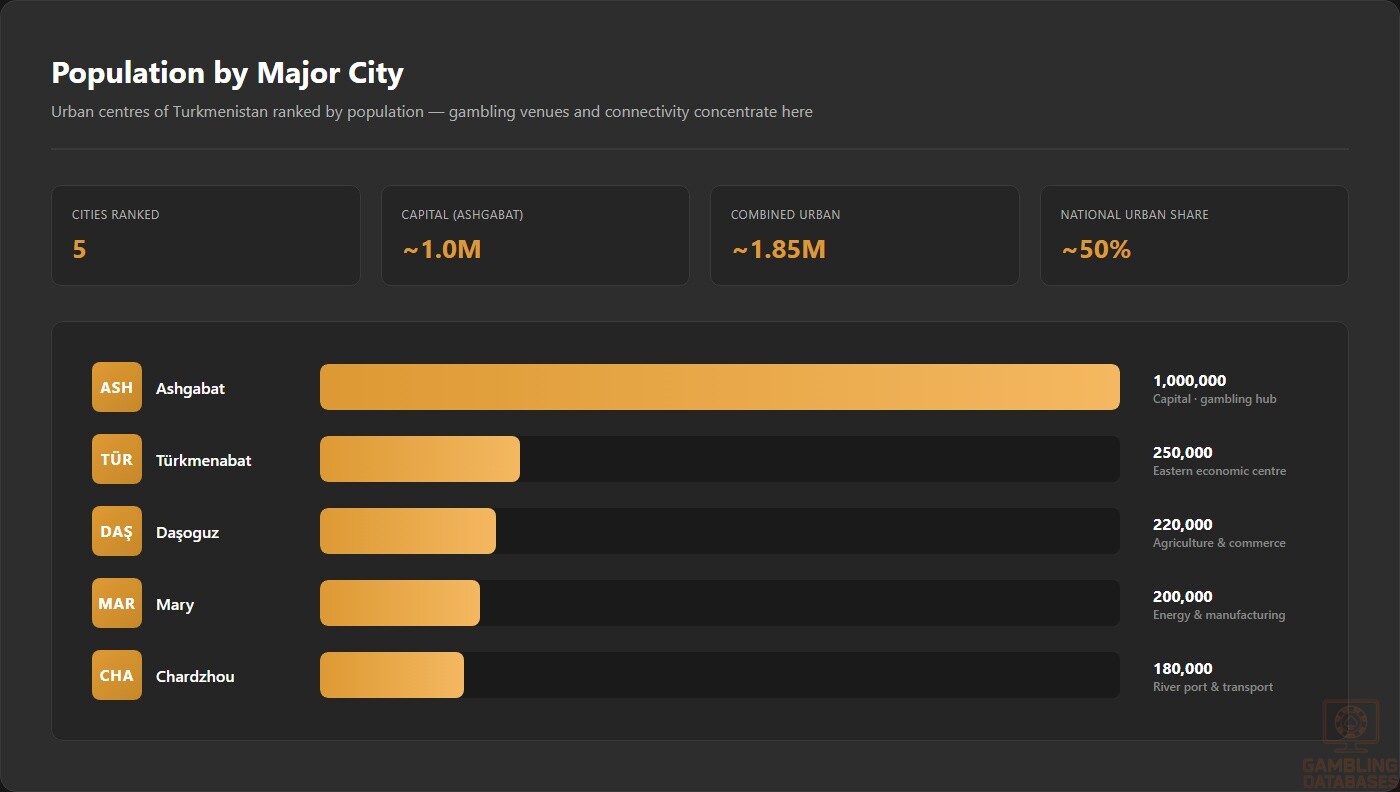
Major population centers and economic hubs are concentrated in a few cities, with Ashgabat being the capital and largest city. Other regional centers show varied economic development that influences the availability of gambling venues and consumer behavior.
- Ashgabat: ~1 million inhabitants, industrial and administrative hub
- Türkmenabat: ~250,000 inhabitants, key eastern economic center
- Daşoguz: ~220,000 inhabitants, agricultural and commerce focus
- Mary: ~200,000 inhabitants, energy and manufacturing base
- Chardzhou: ~180,000 inhabitants, river port and transport hub
Internet and mobile connectivity is strongest in these urban centers, concentrating digital consumer activity. Gambling venues are predominantly available in Ashgabat, with limited presence in other cities due to regulatory and infrastructure constraints.
Economic Indicators and Consumer Spending Power
Turkmenistan’s gross domestic product (GDP) is estimated at approximately $45 billion in 2024, reflecting moderate growth driven by natural gas exports and infrastructure projects. GDP per capita stands near $7,500, positioning Turkmenistan among middle-income economies in the Central Asian region.
The economy remains reliant on energy exports; however, diversification efforts support growing services and retail sectors. Economic forecasts indicate a stable growth trend with annual increases around 4%, supported by government investment and expanding consumer markets.
| Indicator | Value |
|---|---|
| GDP (Nominal) | $45 billion |
| GDP Growth Rate | 4.0% |
| GDP per Capita | $7,500 |
| Inflation Rate | 9.5% |
| Unemployment Rate | 12% |
Income distribution is uneven, with urban households earning significantly more than rural populations. Disposable income growth supports discretionary spending, though income inequality remains a challenge. Consumer spending is concentrated in food, utilities, and retail, with entertainment and leisure expenditures gradually increasing.
Market Size and Growth Projections
The gambling market in Turkmenistan is estimated at around $200 million, dominated by land-based casinos and sports betting outlets. Market growth is projected between 4% and 6% annually, influenced by economic expansion and potential easing of online gambling restrictions.
Consumer spend averages approximately $300 per year on gambling activities, skewed toward male urban residents aged 25-40. The user base is limited by restrictive regulations and low internet penetration but is expected to grow notably if digital market reforms occur.
| Metric | Value |
|---|---|
| Market Size (2024) | $200 million |
| Annual Growth Rate (CAGR) | 4-6% |
| Average Revenue Per User (ARPU) | $300 |
| Estimated User Base | ~600,000 |
| Revenue Concentration | 70% Land-based, 30% Informal/Offshore |
Education, Skills, and Digital Literacy
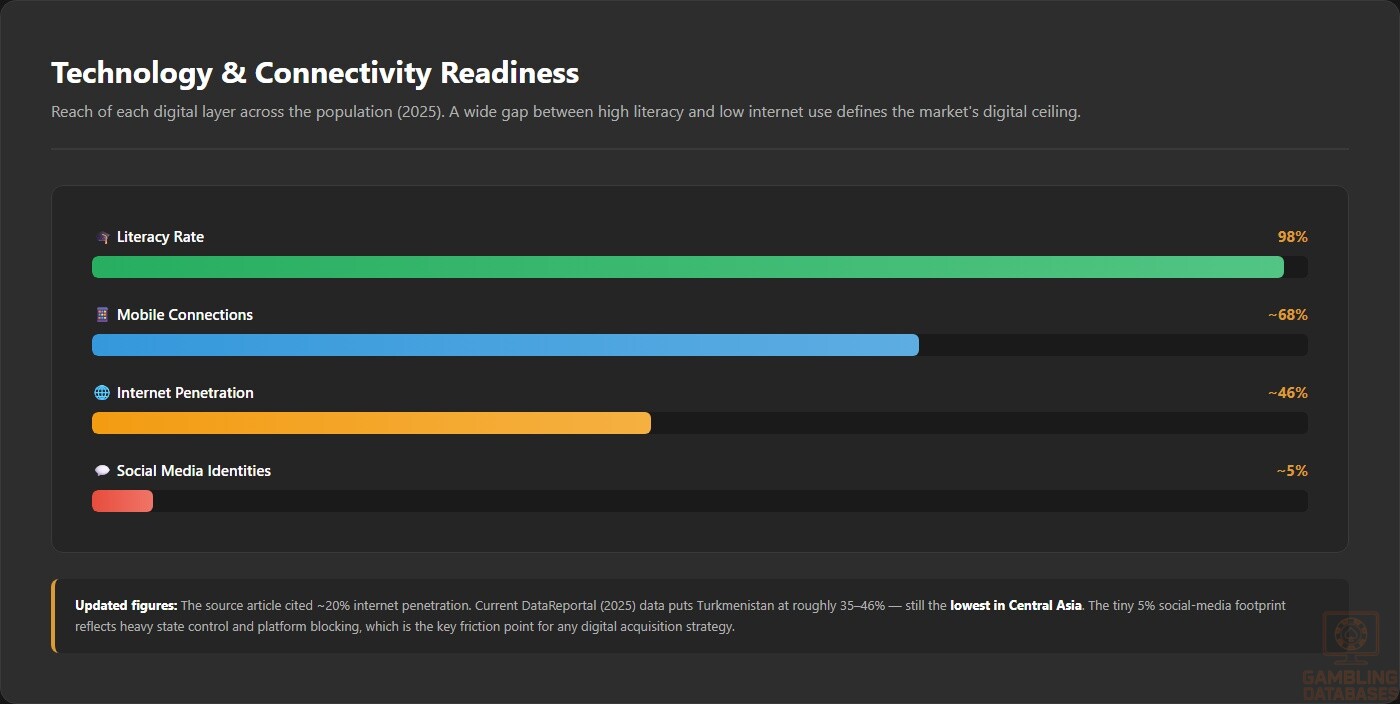
Turkmenistan boasts a literacy rate exceeding 98%, supported by compulsory primary and secondary education. Higher education institutions produce graduates in engineering, economics, and information technology, enhancing workforce capabilities.
Digital literacy, however, remains limited outside urban centers due to infrastructure gaps and restricted internet access. The workforce shows improving skills in basic digital tools but faces challenges in advanced technology adoption essential for iGaming platform development and marketing.
Cultural and Social Factors
Communication and Language
The primary language is Turkmen, spoken by the majority population, supplemented by Russian used widely in business and government. Internet content consumption favors these languages, influencing platform localization strategies.
- Turkmen (official language)
- Russian (widely spoken)
- Uzbek minorities
- Kazakh minorities
- Other minor Turkic dialects
Cultural Attitudes
Gambling acceptance is mixed, complicated by religious influences rooted in Sunni Islam which traditionally discourages gambling. However, pragmatic economic views soften attitudes, particularly in urban elites and younger demographics.
Foreign brand perception is cautious, influenced by nationalistic policies and concerns over cultural impact. Entertainment preferences lean toward sports and state-approved leisure activities, with gambling seen as a recreational but regulated pastime.
Problem Gambling and Social Considerations
Limited data exist on problem gambling prevalence; however, anecdotal evidence suggests low but rising instances linked to informal and offshore gambling access. At-risk groups include youth and unemployed males in urban areas.
- Government-supported addiction counseling centers
- Public awareness campaigns on responsible gambling
- Mandatory operator contributions to social funds
- Self-exclusion programs in land-based casinos
- Collaboration with healthcare providers for addiction treatment
Social responsibility is an emerging regulatory focus, with operators required to implement preventive measures and contribute financially to community welfare programs.
Political Structure and Governance
Turkmenistan operates under a presidential republic system with strong central control. Political stability is high but constrained by limited transparency and authoritative governance, impacting regulatory predictability.
Regulatory consistency is improving with recent legal reforms enhancing business transparency. International relations focus on regional cooperation, influencing trade and investment policies relevant to market entry considerations.
Technology Adoption and Digital Behavior
Internet and Digital Usage
Internet penetration is measured at approximately 20%, constrained by monopolistic state ISP and censorship policies. Mobile penetration is higher, near 45%, driven by affordable smartphones and expanding cellular networks.
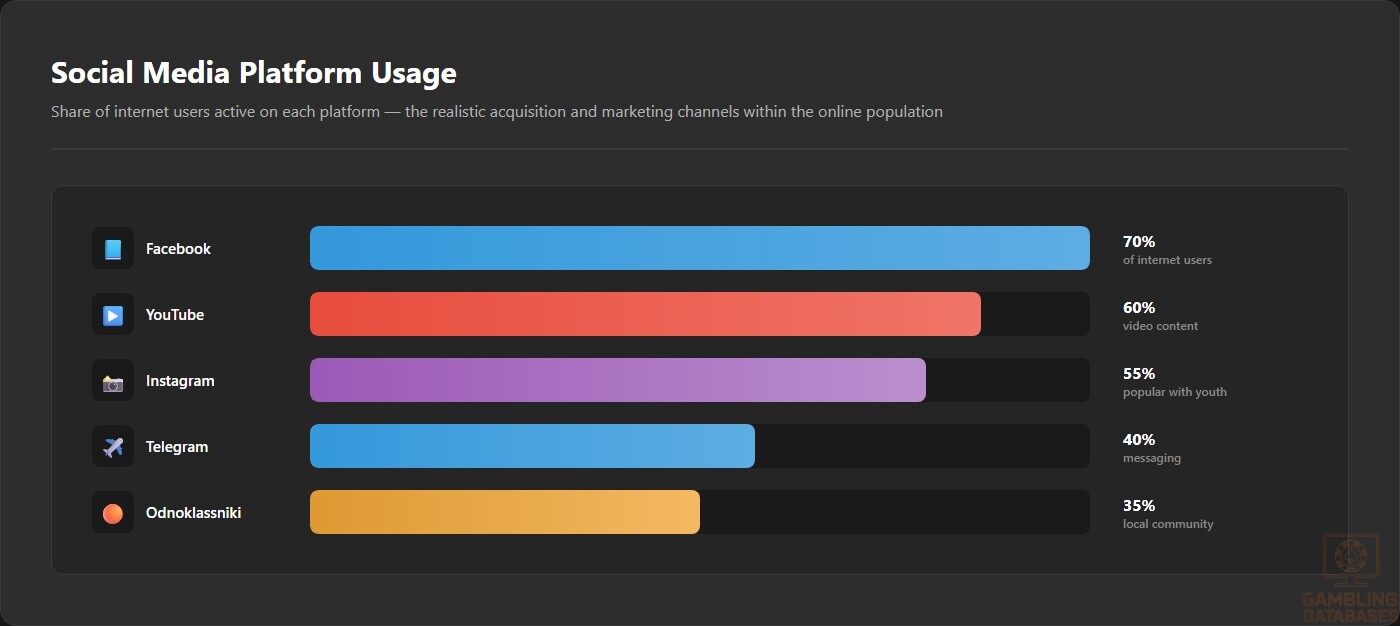
Daily internet usage averages between 2-3 hours among users, mainly for social media, messaging, and limited e-commerce. Social media engagement is concentrated on a few dominant platforms, reflecting user preferences for communication and entertainment.
- Facebook – 70% of internet users
- Instagram – 55%, popular among youth
- YouTube – 60%, key video content platform
- Telegram – 40%, widely used messaging app
- Odnoklassniki – 35%, favored for local community interaction
Digital Payment Behavior
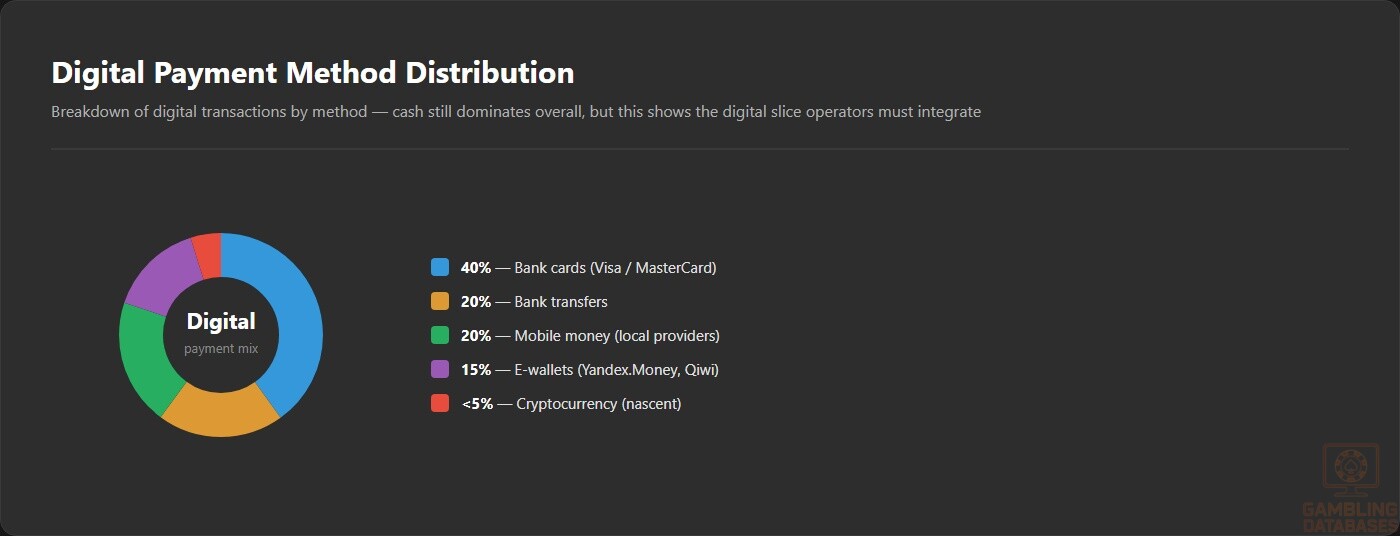
Digital payment adoption is emerging but limited, with predominant use of cash and bank transfers for transactions. E-wallets and mobile money services are gradually gaining traction, especially among younger consumers.
- Bank cards (Visa/MasterCard) – 40% of digital transactions
- Mobile money platforms (local providers) – 20%
- E-wallet services (Yandex.Money, Qiwi) – 15%
- Bank transfers – 20%
- Cryptocurrency – nascent adoption, <5%
Gaming and Gambling Preferences
Current Market Participation
Gambling participation is concentrated in land-based activities, with sports betting and casinos as dominant segments. Informal online and offline betting also attracts interest, though official data remain scarce due to regulatory limits.
- Land-based casinos (Ashgabat-centric)
- Sports betting (football and horse racing)
- Lotteries and sweepstakes
- Informal peer-to-peer betting
- Offshore online betting platforms
| Activity | Participation Rate (%) |
|---|---|
| Land-based Casino Gambling | 7% |
| Sports Betting | 12% |
| Lotteries | 15% |
| Online Gambling (Offshore) | 5% |
| Informal Betting | 6% |
Consumer Behavior Patterns
Spending habits indicate moderate average wagers with peak engagement on weekends and evenings. Players show preference for mobile-friendly platforms but are constrained by low internet penetration. Retention depends heavily on promotions, local payment options, and trust in platform security.
Session lengths commonly range between 30 minutes to 1 hour, with higher frequency of repeat visits among younger demographics. Offline gambling sees higher engagement from middle-aged males residing in urban centers, reflecting cultural and economic factors.
Section 3: Technology Infrastructure and Business Environment
Internet and Digital Infrastructure
Turkmenistan’s internet penetration remains limited at around 20%, largely reflecting restricted access and state monopoly control of the internet service provider, Turkmentelekom. Broadband connectivity is minimal outside urban centers, with most internet access via mobile networks.
Average fixed broadband speeds are modest, typically below 10 Mbps, while mobile internet speeds range between 15-25 Mbps depending on location and device. Infrastructure investment is constrained by economic priorities, limiting rapid expansion of high-speed networks.
5G and Future Technology Deployment
5G technology deployment is at an early stage, with pilot projects announced by Turkmentelekom for Ashgabat and a few regional cities. Nationwide 5G coverage remains limited, and full-scale commercial rollout is expected in the next 3-5 years as regulatory and infrastructure conditions mature.
Network operators are primarily state-controlled, impacting competition and innovation speed. Planned investment in fiber optic expansion and data center infrastructure aims to improve digital service reliability and capacity.
Mobile Technology Ecosystem
The mobile network ecosystem is concentrated with a few key providers due to state regulatory restrictions. Mobile penetration stands at approximately 45%, driven by widespread adoption of affordable smartphones and increasing mobile data packages.
- Turkmentelekom Mobile (dominant operator)
- Altyn Asyr (subsidiary focusing on mobile data services)
- TMcell (regional provider with limited coverage)
- Ashgabat Telecom (municipal network operator)
- Mobile Virtual Network Operators (MVNOs) emerging but limited
Device preferences favor mid-range Android smartphones with growing interest in 5G-capable devices among urban youth. Usage patterns indicate mobile internet as the primary digital access point across demographics.
Financial Services and Payment Infrastructure
The banking system is evolving, with a mix of national and regional banks providing digital banking services. Mobile and internet banking adoption is increasing, yet cash remains the common transaction method.
- Turkmenistan National Bank (largest market share)
- Dayhanbank (focus on agricultural financing)
- Turkmenbashy Bank (regional operations)
- Bank of Commerce and Development (business banking)
- Turkmenistan Foreign Bank (specializes in forex and international transactions)
Payment methods available for digital transactions include bank cards (Visa and MasterCard), mobile wallets, local payment gateways, and bank transfers. Cryptocurrency usage is minimal and lacks formal recognition but exists on a small scale among niche groups.
- Bank card payments (debit and credit)
- Mobile wallets (local providers)
- Bank transfer systems
- Cash on delivery for e-commerce
- Limited cryptocurrency acceptance in informal sectors
E-commerce and Digital Economy
The e-commerce market is nascent but growing steadily, reflecting increased consumer trust and digital service adoption. Online retail penetration is limited to urban centers, with IT services and financial technology playing pivotal roles in digital economic growth.
Consumer trust remains a barrier, with payment security and delivery infrastructure viewed as primary challenges. Expansion of online marketplaces and payment integration are likely to support broader digital commerce adoption.
Business Environment and Regulatory Framework
Ease of Business Operations
Turkmenistan ranks low in global ease of doing business indicators, primarily due to bureaucratic complexity, opaque regulatory frameworks, and restrictive foreign investment policies. Corporate registration can be time-consuming, costly, and requires navigating multiple government agencies.
- Preparation and notarization of incorporation documents (3 weeks)
- Submission to the Ministry of Justice for company registration (5-7 business days)
- Tax registration and obtaining tax identification number (3-5 days)
- Opening a corporate bank account and meeting minimum capital requirements (1-2 weeks)
- Obtaining specialized industry permits/licensing (varies)
Corporate Structure and Registration
Business entities primarily available include Limited Liability Companies (LLCs), Joint Stock Companies (JSCs), and Branch Offices of foreign companies. LLCs are the preferred structure for iGaming due to flexibility and ownership controls.
Foreign ownership is permitted but subject to government approval and often requires local partner involvement. Compliance with annual reporting and licensing renewal is mandatory for continued operation.
- Limited Liability Company (LLC)
- Joint Stock Company (JSC)
- Branch Office of Foreign Company
- Representative Office
- Individual Entrepreneur
Registration Requirements
Company registration necessitates comprehensive documentation and official approvals. Required documents include certified articles of association, proof of office address, founder’s identification, tax registration certificates, and banking details.
- Articles of Incorporation
- Founders’ Identification (passports or national ID)
- Proof of Registered Office Address
- Tax Registration Certificate
- Bank Account Confirmation
- Licenses for Regulated Activities
Taxation Framework
Corporate Income Tax Structure
Corporate income tax is levied at a standard rate of 20% on net profits. Companies operating within designated special economic zones may benefit from tax holidays or reduced rates for periods ranging from 3 to 7 years.
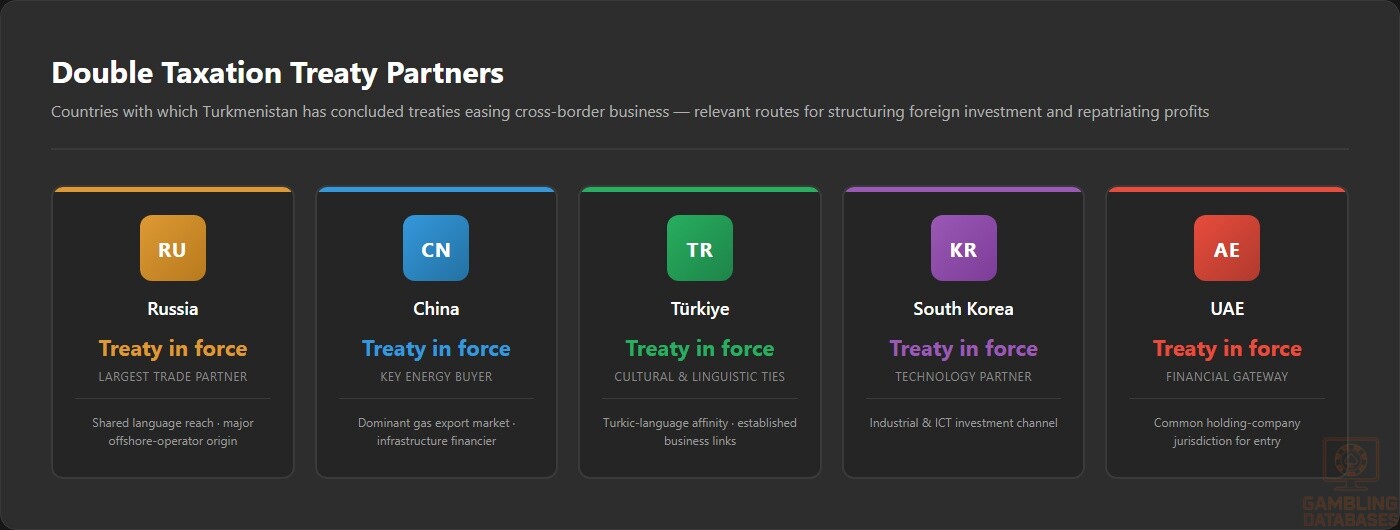
Turkmenistan has concluded double taxation treaties with several countries to facilitate cross-border business and reduce tax burdens.
- Russia
- China
- Turkey
- South Korea
- United Arab Emirates
Personal Income Tax
Individuals are subject to a flat personal income tax rate of 10%. Employers withhold taxes at source and remit to government authorities. Social security contributions are mandatory, covering pension and healthcare schemes.
Market Entry Considerations
Recommended Entry Strategies
Entering the Turkmenistan iGaming market necessitates careful planning around regulatory challenges and infrastructure limitations. Partnering with local firms improves compliance and market understanding, while phased investments mitigate risks from uncertain regulatory evolution.
- Establish joint ventures with local operators
- Focus initially on land-based or hybrid offerings
- Invest in digital infrastructure partnerships
- Monitor evolving regulatory environment closely
- Leverage mobile-first platform development
Typical Costs and Timelines
Setup costs include licensing fees, legal consultancy, technology deployment, and initial marketing. Licensing ranges from approximately $1,400 to $4,300, while company formation and compliance require additional capital investment.
- License application and renewal fees
- Legal and consulting services
- Technology and platform costs
- Staff recruitment and training
- Marketing and advertising expenses
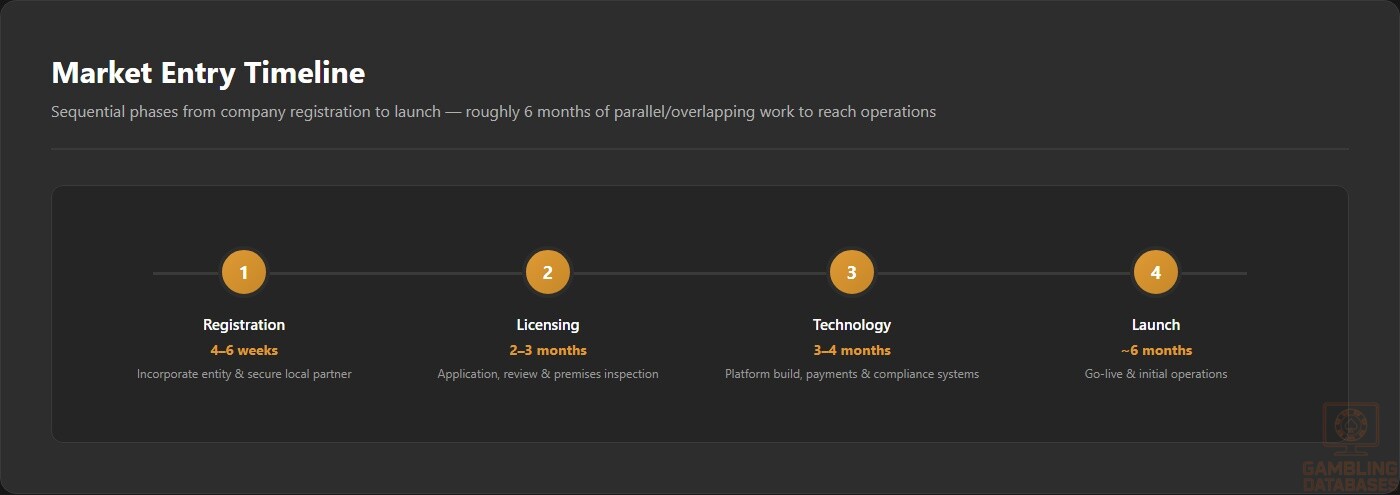
- Company registration: 4-6 weeks
- License application and approval: 2-3 months
- Technology implementation: 3-4 months
- Market launch and initial operations: 6 months
Success Factors and Challenges
Key success factors include compliance with regulatory requirements, understanding local consumer preferences, and investing in user-friendly mobile platforms. Major challenges encompass limited internet penetration, restrictive online gambling laws, and bureaucratic administrative hurdles.
- Strong government relations and compliance
- Robust KYC and AML procedures
- Localized payment solutions
- Competitive differentiated offerings
- Effective marketing within advertising restrictions
Exit strategy planning should consider license transferability restrictions and valuation discounts due to the market’s nascent state and political uncertainties.
FAQ: Frequently Asked Questions
1. Is online gambling legal in Turkmenistan?
Online gambling is officially prohibited under current laws, including a 2016 ban on online gambling operations and advertisements. No domestic online gambling licenses are issued, making any online iGaming activity unauthorized. However, residents often access offshore gambling sites via VPNs, operating in a legal grey area.
2. What types of gambling licenses are available and what do they cover?
Licenses are primarily issued for land-based gambling activities including casinos, sportsbooks, and lotteries. These licenses authorize physical operations and require strict compliance with local regulations, including tax reporting and responsible gambling measures. No licenses currently exist for online gambling operations.
3. How much does an iGaming license cost and how long does it take to obtain?
Land-based gambling licenses range from approximately 5,000 to 15,000 Turkmenistan Manat (approx. $1,400–$4,300), depending on the type of activity. The application and approval process typically takes between 2 to 3 months, involving extensive review and physical inspections for land-based operations.
4. Can foreign companies obtain a gambling license?
Foreign companies can obtain gambling licenses but usually must establish local subsidiaries or partnerships. Direct foreign ownership faces restrictions and requires governmental approvals. A local presence and partnership with domestic entities facilitate compliance and market access.
5. What are the tax obligations for iGaming operators?
Operators are subject to fixed daily fees based on gaming equipment and venue size rather than percentage-based gross gaming revenue taxes. Corporate income tax at a rate of 20% applies on net profits, with additional taxes or fees imposed depending on jurisdictional requirements and licensing terms.
6. Are gambling winnings taxed for players?
There is no personal taxation on gambling winnings in Turkmenistan. Players receive their full winnings without deductions or withholding taxes, making gambling an attractive proposition for participants within licensed environments.
7. What are the typical operational costs for running an online casino/sportsbook?
Operational costs include licensing fees, compliance and legal expenses, technology platform acquisition and maintenance, payment processing fees, marketing, and staff salaries. Initial investments are significant due to the need for secure, compliant technology and localized payment options.
8. What is the expected ROI timeline for entering this market?
The return on investment typically spans 2 to 4 years, contingent on regulatory developments and market penetration speed. ROI is influenced by initial capital outlays, consumer adoption rates, and ability to navigate regulatory complexities effectively.
9. What are the local presence requirements for operators?
Operators must have a registered physical presence within Turkmenistan, including verified office space and local staff. Foreign entities usually fulfill this via partnerships with domestic firms or establishing local subsidiaries. Regulatory bodies require proof of operational control and regular reporting.
10. What payment methods are available and recommended?
Payment methods accepted for gambling transactions include bank cards, mobile wallets, and bank transfers. Cash remains predominant, especially in land-based venues. Adoption of digital payments is growing, with mobile wallet services gaining popularity in urban areas.
11. What are the advertising and marketing restrictions?
Advertising online gambling is banned nationwide. Promotion of land-based gambling is limited to state-approved traditional media and must avoid targeting minors or vulnerable populations. Sponsorship in sports and events is tightly regulated with defined time and content restrictions.
12. What responsible gambling measures are mandatory?
Operators must implement KYC verification, self-exclusion programs, and provide information on problem gambling support services. Financial transaction monitoring under AML laws is compulsory. Social contributions to support addiction treatment are mandated to enhance community welfare.
13. How large is the iGaming market and what is the growth potential?
The Turkmenistan market is valued around $200 million, mainly driven by land-based gambling. Growth prospects of 4-6% annually depend on potential regulatory easing and technological adoption. Online market development remains uncertain but carries significant latent demand.
14. Who are the main competitors and what is their market share?
The market is concentrated, dominated by two licensed casinos in Ashgabat and several licensed betting shops. International offshore operators influence consumer behavior in the unofficial market. Market shares are not widely publicized, but local land-based operators control the regulated segment.
15. What are the player preferences and typical spending patterns?
Players prefer sports betting and casino games, with average annual spend approximating $300. Preferences skew male and urban, with peak playing times in evenings and weekends. Mobile-friendly platforms have growing appeal, constrained by internet access limitations.
16. What are the key success factors and main challenges for new entrants?
Success hinges on strict regulatory compliance, local partnership development, and effective mobile platform delivery. Challenges include low internet penetration, restrictive online gambling laws, cultural conservatism, and complex bureaucratic processes. Adapting to the evolving regulatory landscape is critical.
Sources and References
- Turkmenistan Gambling Regulatory Authority – Official Ministry of Economy Website
- National Statistical Committee of Turkmenistan – Population and Demographic Data 2024
- Turkmenistan Ministry of Finance – Taxation Laws and Guidelines
- Turkmentelekom – Telecommunications Infrastructure Reports 2025
- World Bank – Doing Business 2024 Report on Turkmenistan
- International Telecommunication Union (ITU) – ICT Statistics and Reports 2024
- Central Bank of Turkmenistan – Annual Financial and Banking Reports 2024
- Asian Development Bank – Turkmenistan Economic Outlook 2025
- Slotegrator Intelligence – Gambling Regulation and Market Analysis 2024
- iGaming Today – Market Insights and Regulatory Updates Turkmenistan 2024
- Bookmakers.bet – Turkmenistan Gambling Market Profiles 2024
- 3snet.info – Online Gambling Promotion in Turkmenistan 2023
- GamingTec – Comprehensive Guide to Gaming Licenses 2025
- Nexia Turkmenistan – Business Registration and Corporate Environment 2024
- Vixio Global Compliance – Gambling Regulatory Deadlines 2024-2025
- CASINOLANDIA.com – Currency and Payment Options in Turkmenistan Casinos
- Sumsub – iGaming Laws Worldwide 2024
- Turkmenistan Legal Portal – Laws on Advertising and Licensing 2016-2025
- International Monetary Fund – Turkmenistan Economic and Financial Statistics
- Turkmenistan Ministry of Industry and Communication – Telecommunications and Internet Growth Strategies
- Global System for Mobile Communications Association (GSMA) – Mobile Market Data 2024
- OECD – Digital Economy and Trade Statistics for Central Asia
- Asian Gambling Data Reports – Market Size and Growth Analysis 2024
- Transparency International – Business Environment and Corruption Indices 2024
- Turkmenistan Ministry of Health – Public Health Reports on Gambling Addiction
- International Labour Organization – Education and Digital Literacy Statistics
- Turkmenistan Chamber of Commerce – Foreign Investment Guidelines and Regulatory Framework
- Turkmenistan National Bank – Digital Banking Service Reports 2024
- Local News Outlets – Gambling Regulation News and Policy Announcements 2023-2025
- Academic Journals – Social and Cultural Studies on Gambling in Central Asia
- International Gaming Summit Reports – Emerging Markets Focus 2024