
Seychelles presents a uniquely competitive environment for iGaming operators, combining a liberal gambling framework, streamlined licensing, and tax-friendly policies. Current regulatory reforms and high digital penetration support strong market growth, attracting international business expansion.
Progressive legislation, multiple license types, and transparent compliance requirements position Seychelles as one of Africa’s most accessible markets for online gambling. Operators gain access to key infrastructure, favorable tax rates, and international reach, balanced by strict AML controls and evolving consumer safeguards.
| Metric | Value |
|---|---|
| Legal Status of Gambling | Fully regulated; Gambling Act 2014 & new bill pending |
| Regulatory Authority | Seychelles Gaming Authority; FSA; Gambling Commission (pending) |
| Online Gambling Allowed | Yes; Interactive Gaming License required |
| License Types | Land-based casino, slot machine venue, interactive gambling |
| License Duration | 1 year; perpetual licenses planned |
| Corporate Residency | Local Seychelles company or IBC required |
| Authorized Capital (Casino) | €50,000 (Land-based); €2,800 (Betting); €100/slot machine |
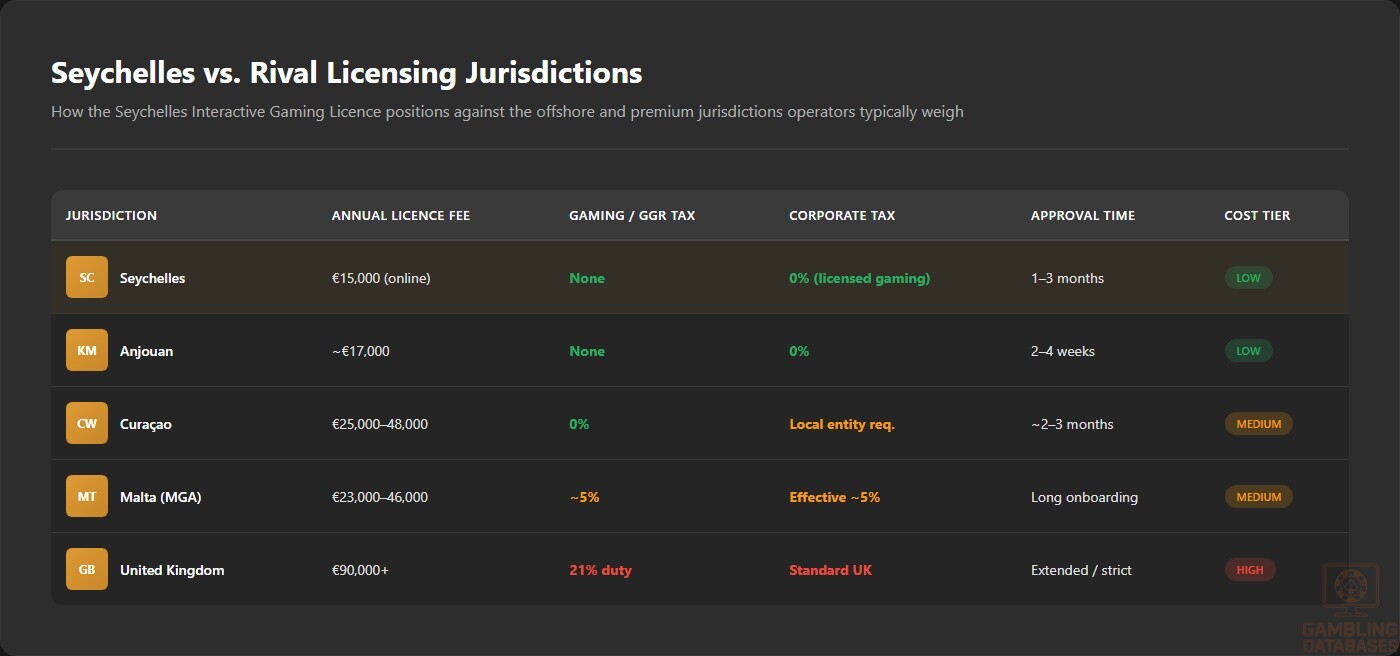
| Online Casino Annual Fee | €15,000 fixed |
| Land-Based Casino Annual Fee | €50,000 + €175/gambling table + €125/slot machine |
| Corporate Income Tax Rate | 0% for licensed gaming; otherwise progressive up to 25% |
| Gaming Taxes | None; annual fixed fees only |
| Population | 108,000 (2024) |
| Internet Penetration | 86.7% (2024) |
| Mobile Penetration | 164.8% (2024) |
| Median Internet Speed | 26.15 Mbps (fixed broadband) |
| GDP (Nominal) | US$2.3 billion (2024) |
| GDP per Capita | US$17,167 (2025 forecast) |
| Urban Population | 59% |
| Median Age | 33.3 years |
| Application Process Duration | 1–3 months average |
| Key Market Barrier | Local server and office required |
| Responsible Gaming Requirements | Strict KYC/AML, player data safeguards, audits |
| Compliance Reporting | Monthly operational and financial returns |
| Market Size Estimate (GGR) | Low-to-mid € double-digit millions; under-saturated |
| Growth Forecast (CAGR) | ~4.8% (global online segment) |
| Market Penetration (Online) | Emerging; new regulatory reforms expected 2025 |
| Average Revenue Per User (ARPU) | €150–€250 (industry estimate) |
| Foreign Operator Access | Permitted via IBC; subject to host-country restrictions |
Section 1: Regulatory Framework and Legal Environment
Current Gambling Regulation Status
Seychelles maintains a fully legalized, comprehensive framework governing all forms of gambling. The Gambling Act of 2014, soon to be replaced by the updated Gambling Bill, regulates land-based casinos, sports betting, lotteries, and interactive online gambling. Oversight is conducted by the Seychelles Gaming Authority, Financial Services Authority (FSA), and the forthcoming single Gambling Commission, with a primary mandate to enforce compliance, enhance consumer protection, and enable responsible gambling practices.
Recent regulatory reforms target streamlining procedures, consolidating regulatory oversight, and introducing perpetual licenses and fit-and-proper assessments. These changes are designed to increase market transparency and ensure strict adherence to global AML and counter-terrorism financing protocols. Operators must adhere to enhanced reporting standards and new device/software certification standards.
Land-Based Gambling Activities
Land-based gambling in Seychelles caters primarily to tourists and expatriates, featuring a select number of licensed casinos and slot venues primarily located on Mahé island. Regulatory restrictions govern operating hours, minimum age, games permitted, and responsible gambling measures. Notable licensed venues include Gran Kaz Casino Victoria, Club Liberté Casino, Paradiso Casino, and Victoria International Casino.
Casino operators must comply with annual fixed licensing fees, per-table and per-machine charges, documented game rules, security protocols, and regular financial audits. Slot machine venues are subject to equipment certification, maintenance checks, and stringent location controls. Physical security and responsible gaming standards are strictly enforced, with regular compliance inspections.
Online Gambling Framework
Online gambling is regulated under the Interactive Gaming License regime, allowing offerings such as slots, table games, live dealer titles, poker, lottery, and sportsbook operations. The framework mandates local company incorporation or IBC registration for non-residents, server hosting within Seychelles, and certified gambling software compliance—ensuring data transparency and fair play.
Operators must meet thorough technical standards, maintain player fund segregation, uphold robust data protection protocols, and demonstrate full AML/CTF compliance. Licensing authorities require detailed business plans, technical documentation, user agreement policies, and certified RNG/software audits. Annual fixed fees and frequent reporting obligations underpin continued oversight.
Licensed Operators and Market Players
The competitive landscape is characterized by a limited but growing number of licensed operators, many serving international markets due to favorable offshore status. The market includes domestic casinos, foreign-backed online entities operating via IBCs, and a handful of established slot venues. Market share remains fragmented and under-saturated, with entry opportunities available for new international and regional players.
- Gran Kaz Casino Victoria – flagship venue for table games and slots
- Club Liberté Casino – known for luxury offerings and poker events
- Paradiso Casino – tourist-centric, providing mixed games
- Victoria International Casino – established multiservice casino
- Mondcasino – prominent online operator; fast payouts, user-friendly
- Thor Casino – specializes in top-provider slots and rapid withdrawals
- PokerBet Casino – poker-focused, high player traffic
- Casinostars – multi-vertical online gaming, quick payouts
- Betpanda Casino – sportsbook and casino dual platform
Leading online brands are licensed by reputable international authorities such as MGA and UKGC, given the cross-border focus of Seychelles online operations. Offshore and domestic operators must adapt to evolving compliance obligations and robust regulatory checks.
Licensing Framework and Requirements
Gambling licenses are managed primarily by the Seychelles Gaming Authority and FSA, with amendments soon consolidating these under the Gambling Commission. Mandatory requirements include local company registration or formation of an International Business Company (for non-resident operators), designated local office, and server hosting within Seychelles.
Operators are obliged to present extensive documentation during application, along with technical certification of gaming systems and detailed financial statements. Annual licensing fees differ by category, and capital adequacy standards apply.
- State registration certificate and Articles of Association
- Certificate of Incorporation and local bank account details
- Founders’ and beneficiaries’ identification and compliance history
- Certified gambling software and slot machine documentation
- Game rules and internal regulatory documents
- Financial aggregator/banking relationship details
- Bonus policies, loyalty program descriptions
- IT security certifications and data protection policy
- Local office rental contract and proof of address
- Payment system and payout ratio disclosures
- Technical audit results
Failure to meet documentation or reporting requirements results in license denial, suspension, or future revocation. All documentation must be stored locally and regularly updated as the business evolves.
Local Presence and Operational Requirements
Every licensed entity must maintain a registered local office and hosting infrastructure within Seychelles. Operators must employ local personnel for critical functions and ensure board diversity and fit-and-proper governance assessments. Non-resident entities leverage IBC structures for international expansion, though they cannot offer services directly to Seychelles residents.
Domain registration must be compliant with local standards, and technical support systems must reside within national borders. Hosting and data storage requirements aim to bolster consumer protections and facilitate regulatory monitoring.
Compliance Obligations and Monitoring
Operators face extensive compliance obligations covering player identification, responsible gambling, and AML standards. Mandatory processes include age verification, comprehensive KYC/AML checks, and robust data security systems. Responsible gambling measures require easy self-exclusion options, visible information disclosures, and protective policies against excessive play.
- Age verification (minimum 18+)
- Comprehensive KYC/AML checks for all players
- Segregation of player funds
- Mandatory self-exclusion system
- Visible responsible gambling information
- Data protection and information security frameworks
- Monthly player activity audits
- Complaint handling and dispute resolution processes
- Financial transaction transparency
- Sanctions screening and international compliance
Operators must monitor all transactions, report suspicious activities to authorities, and participate in national AML risk assessments. Regular information updates and prompt response to player complaints are essential for license retention.
Financial Monitoring and Reporting
All license holders are mandated to maintain up-to-date operational and financial records. Monthly reporting covers bets placed, payouts, cash balances, player statistics, and transaction logs. Audit protocols ensure transparency, accuracy, and effective oversight.
- Collection and maintenance of operational data
- Monthly submission of financial and activity reports
- Independent audit confirmation (where applicable)
- Quarterly compliance review by regulatory authorities
- Immediate reporting of suspicious or flagged transactions
Failure to comply with financial monitoring obligations can result in penalty assessments, license suspension, or criminal prosecution for serious infractions.
Taxation Structure and Financial Obligations
Licensed gaming operators benefit from zero corporate income tax and gaming taxes, making Seychelles attractive for global iGaming businesses. Instead of direct taxation, the authorities levy fixed annual license fees by activity type.
| License Type | Annual Fee (EUR) | Additional Charges |
|---|---|---|
| Land-Based Casino | 50,000 | 175/table; 125/slot machine |
| Online Casino | 15,000 | None |
| Slot Machine Venue | 100/machine | Maintenance certification |
Non-payment of fees results in immediate license suspension. General business taxation applies only to non-gaming revenues according to local tax law, up to 25% progressive rates.
Gambling Market Financial Performance
Seychelles’ iGaming market is under-saturated but shows positive annual GGR growth and increasing transaction volumes. Revenue trends align with the broader continental forecast, though domestic market size remains modest by international standards. Government collections rely predominantly on fixed license fees, not gaming taxes.
| Metric | Amount |
|---|---|
| Total wagers (estimated) | €100m – €150m/year |
| Aggregate GGR growth (avg) | 4.5%–5.2% CAGR |
| Tax revenue (fees) | €0.5m – €1m/year |
| Online vs. Land-based share | Online: 40–55% (projected) |
| Payout ratio | 92–96% (industry avg.) |
Year-over-year market expansion is driven by licensing reforms, increasing digital adoption, and improved player protections.
Advertising and Marketing Restrictions
Seychelles mandates responsible promotion with strict advertising guidelines, prohibiting misleading content and restricting youth targeting. Approved channels include digital media, outdoor campaigns, sponsored events, and co-branded partnerships. Sponsorships of sporting events are conditionally permitted if responsible gaming messaging is prominent.
- Digital media (licensed platforms and affiliates)
- Outdoor advertising (billboards, transport hubs)
- In-venue promotions (casinos, hotels)
- Sponsorship (sports and cultural events)
- Print and broadcast media (conditional approval)
- Programmatic advertising (international reach)
- Social media campaigns (with age restrictions)
- Influencer partnerships (disclosure required)
- Responsible gaming content requirements
- Banned: youth-oriented channels, misleading claims
Operators must submit advertising materials for pre-approval to regulatory authorities and display responsible gaming warnings on all public-facing campaigns.
Recent Regulatory Changes and Their Impact
The Cabinet approved the enactment of the new Gambling Bill in April 2025, consolidating oversight under a single Gambling Commission, expanding perpetual license options, modernizing consumer protections, and introducing robust complaint mechanisms. The new system prioritizes innovation, fit-and-proper operator assessments, and extends technical standards for gambling devices and online platforms.
- Cabinet approval for one-stop regulatory authority (Q2 2025)
- Drafting of complaint handling and enforcement mechanisms
- Introduction of perpetual licenses (targeting multi-year approvals)
- Expanded responsible gaming and consumer protection protocols
Operators face heightened compliance costs and governance standards but benefit from simplified procedures and more transparent enforcement.
Enforcement Mechanisms and Penalties
Regulators enforce strict penalty structures via suspension, license revocation, monetary fines, public disclosure, and criminal prosecution where warranted. Routine compliance checks, random audits, and transaction monitoring help maintain industry standards.
- License suspension for fee arrears or documentation deficiencies
- Revocation for severe non-compliance or illegal activity
- Monetary fines for minor breaches and late reporting
- Criminal proceedings for fraud and AML violations
- Public disclosure of enforcement actions
- Random audit inspections
- Complaint-driven investigations
- Blacklist publication for persistent offenders
- Technical ban on non-compliant gambling sites
Maintaining high standards of compliance, transparency, and player protection remains central to the regulatory philosophy in Seychelles.
Section 2: Demographics and Consumer Analysis
Population Demographics and Distribution
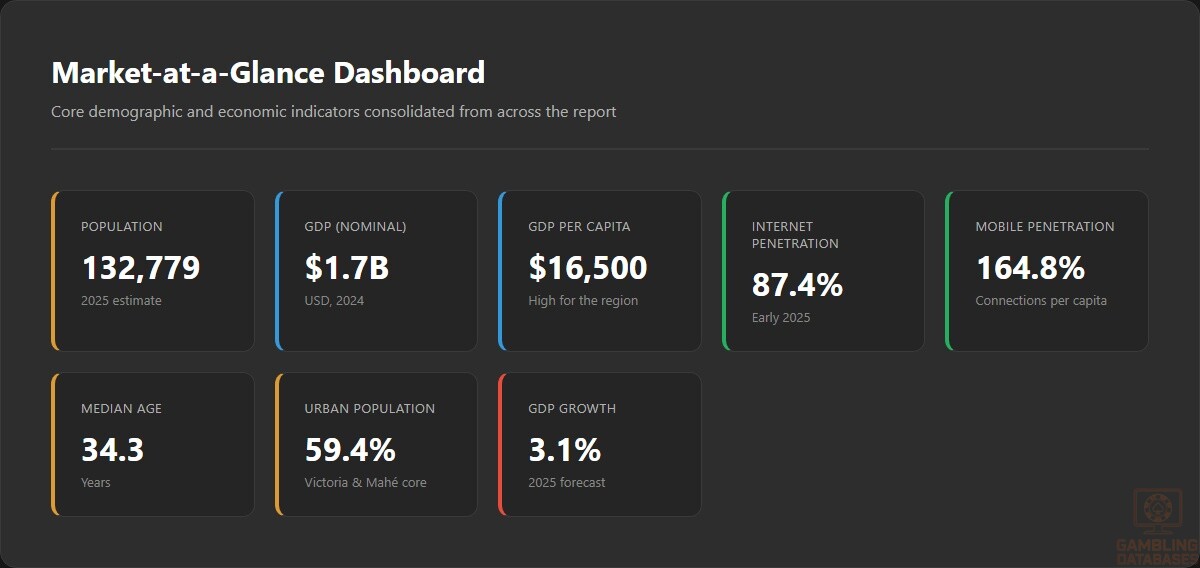
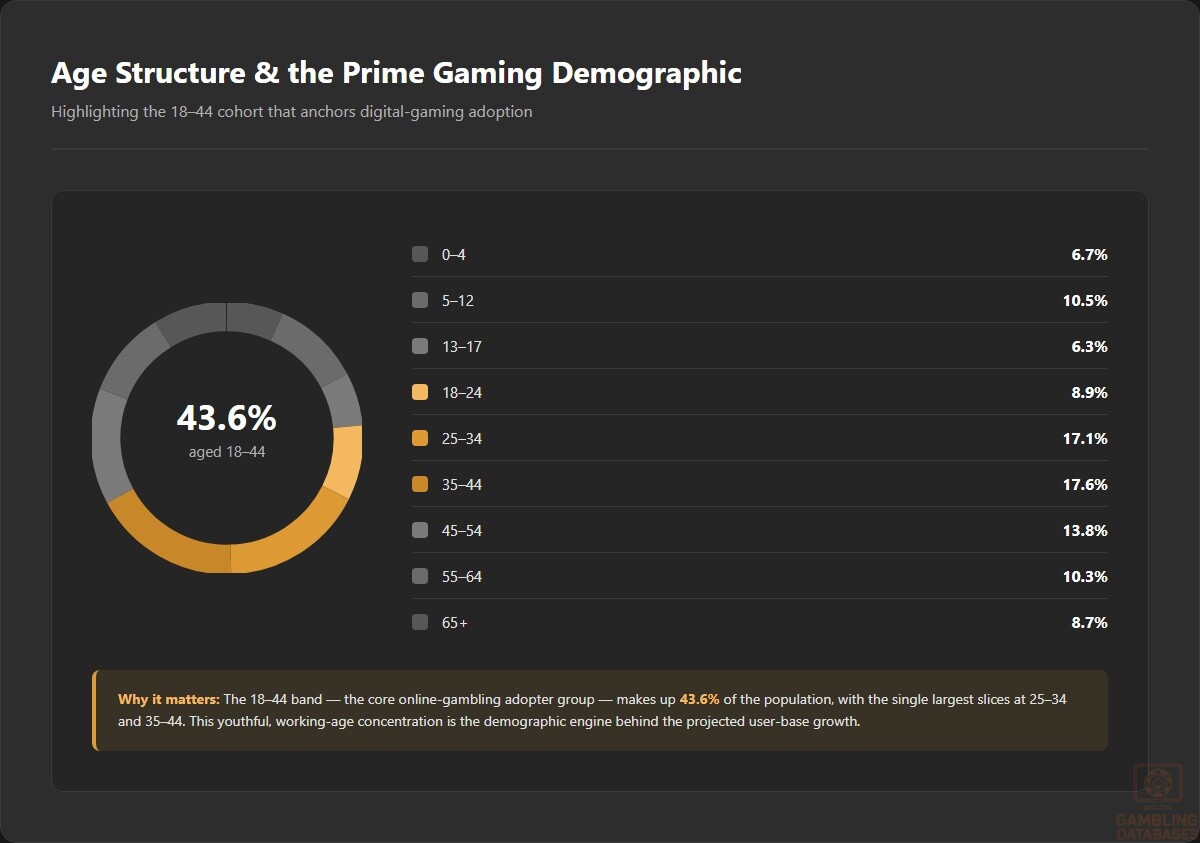
Seychelles has a total population estimated at 132,779 as of 2025, with a median age of 34.3 years. The population is moderately youthful, with approximately 30% under the age of 25, representing potential long-term players entering the iGaming market. Gender distribution is roughly 44.9% female and 55.1% male, reflecting a slightly higher male population.
Urbanization is a significant demographic factor; about 59.4% of the population resides in urban centers, with concentrations in the capital Victoria and surrounding areas. Rural populations constitute approximately 40.6%, characterized by limited access to digital services. This urban-rural divide influences gambling accessibility, with urban zones showing higher internet penetration and gambling venue density.
| Age Group | Percentage of Total Population |
|---|---|
| 0-4 | 6.7% |
| 5-12 | 10.5% |
| 13-17 | 6.3% |
| 18-24 | 8.9% |
| 25-34 | 17.1% |
| 35-44 | 17.6% |
| 45-54 | 13.8% |
| 55-64 | 10.3% |
| 65+ | 8.7% |
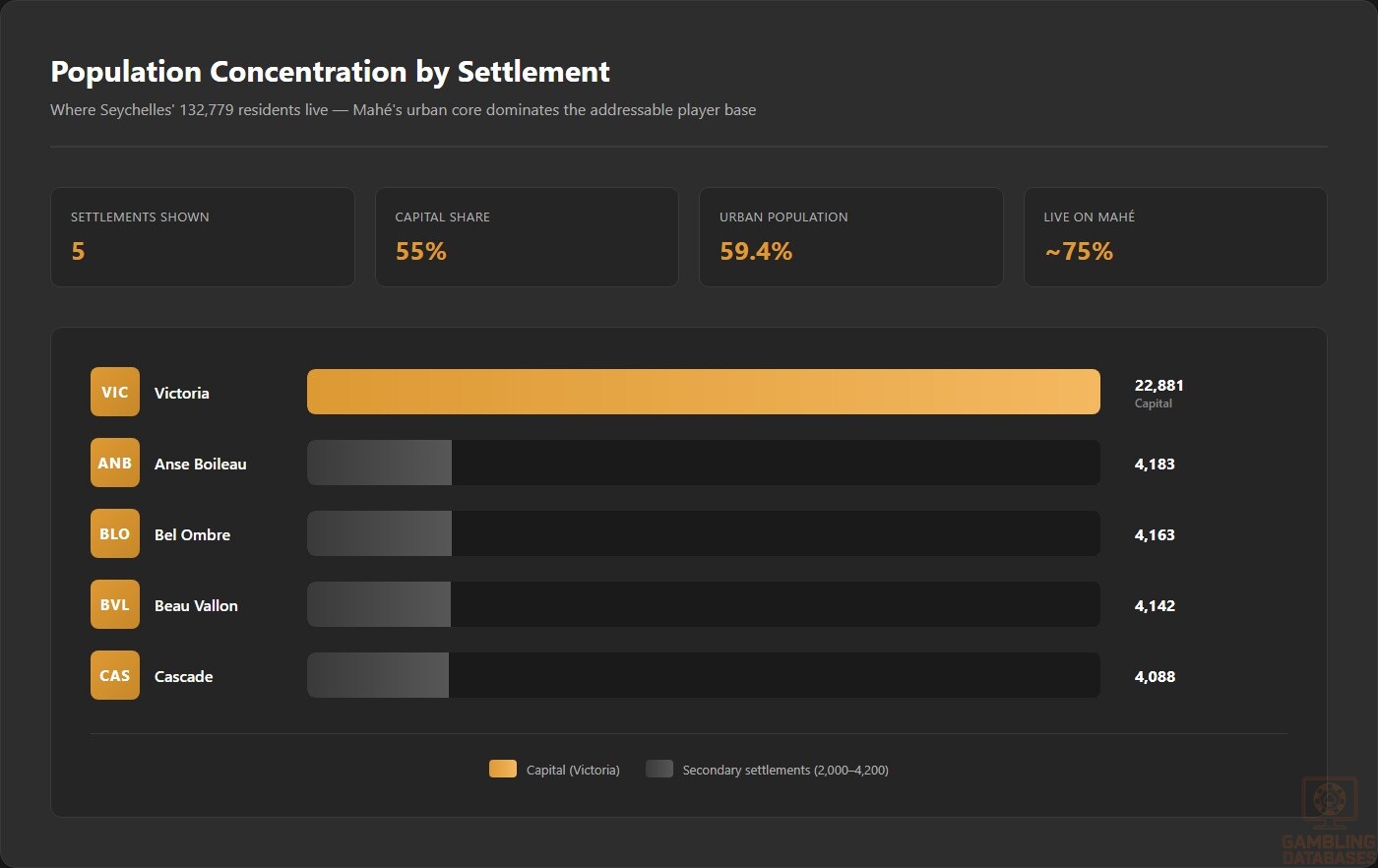
The population is unevenly distributed geographically, with three-quarters living on the main island of Mahé, particularly around Victoria. Other notable settlements include Anse Boileau, Bel Ombre, Beau Vallon, and Cascade, each housing between 2,000 to 4,000 residents. Internet infrastructure and gambling venues tend to cluster around these urban centers.
- Victoria (capital) – 22,881 inhabitants
- Anse Boileau – 4,183 inhabitants
- Bel Ombre – 4,163 inhabitants
- Beau Vallon – 4,142 inhabitants
- Cascade – 4,088 inhabitants
Economic Indicators and Consumer Spending Power
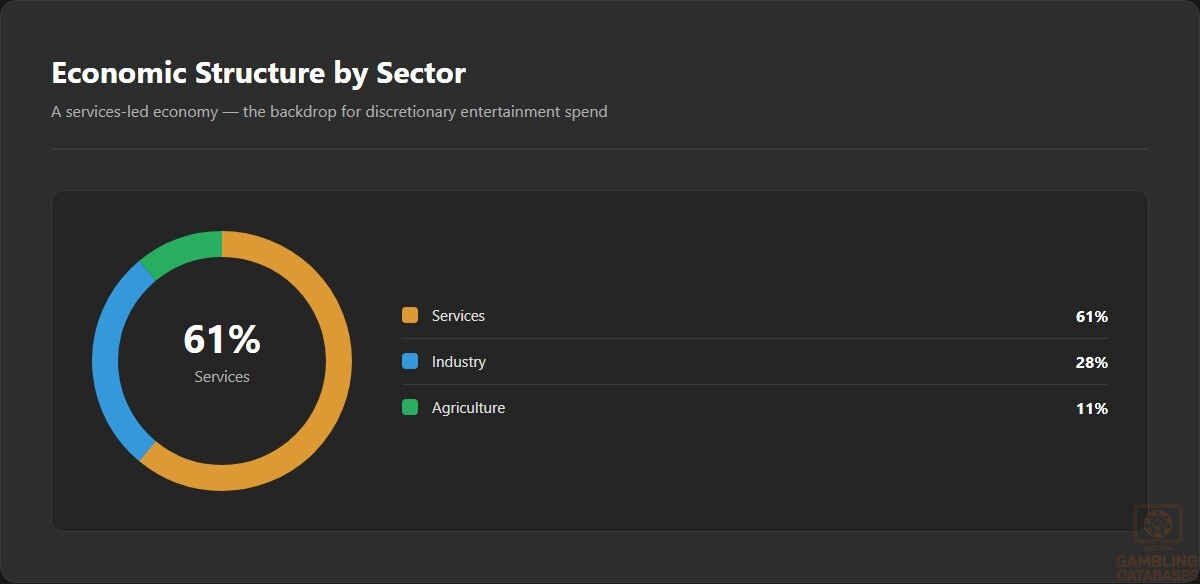
Seychelles’ GDP reached approximately $1.7 billion USD in 2024, with growth forecasted at around 3.1% for 2025. The economy relies heavily on tourism and fisheries, with a service sector dominant at over 60% of GDP. The country benefits from a relatively high GDP per capita for the region, estimated at $16,500 USD, supporting discretionary spending on entertainment such as gambling.
Household income distribution reveals a moderate middle class, though income inequality persists with wealth concentrated in urban areas. Disposable income growth is stable, fueled by expanding tourism services and increasing digital penetration. Average household income ranges widely, influenced by employment in services, public sector, and small-scale trade.
| Indicator | Value |
|---|---|
| GDP (USD) | $1.7 Billion |
| GDP Growth Rate | 3.1% (2025 forecast) |
| GDP per Capita (USD) | $16,500 |
| Service Sector Contribution | ~61% of GDP |
| Industry Sector Contribution | ~28% of GDP |
| Agriculture Sector Contribution | ~11% of GDP |
| Poverty Rate | 5.9% (2025 forecast) |
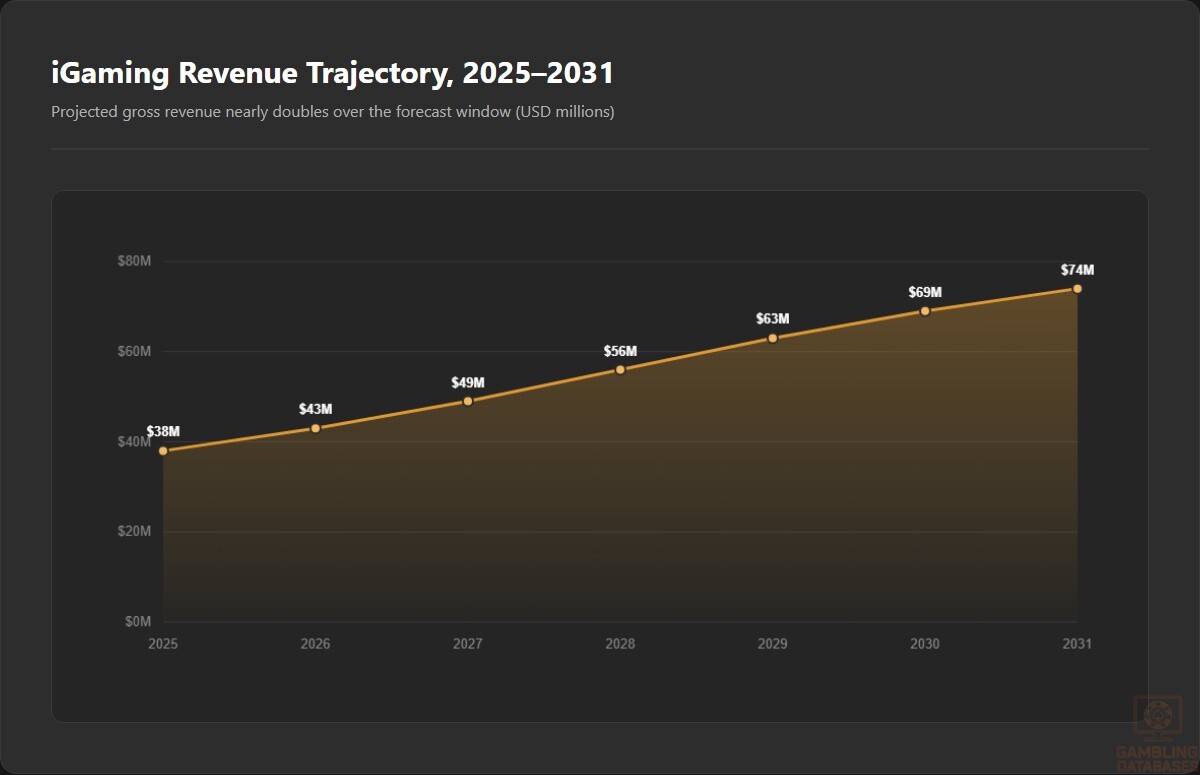
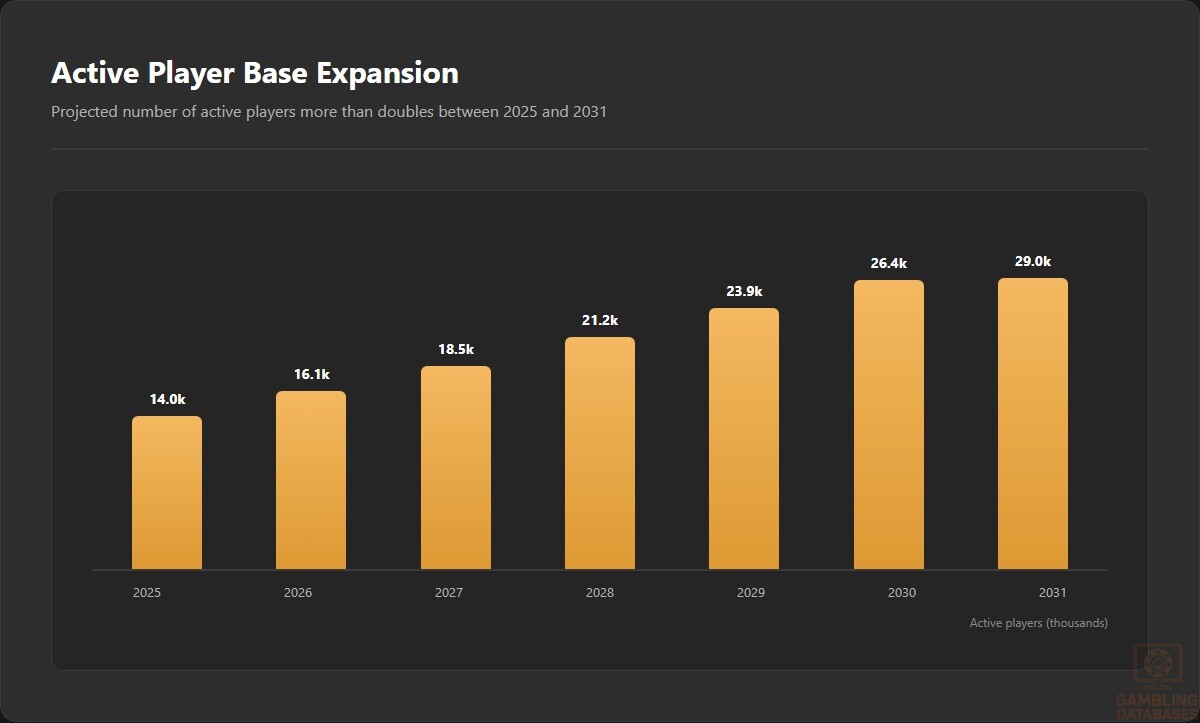
The iGaming market in Seychelles projects robust growth, with 2025 revenues near $38 million USD and expectations to nearly double by 2031, reaching $74 million USD. User base expansion and average revenue per user (ARPU) estimates of around $2,700 USD underscore strong consumer spending power in the digital gaming space.
| Year | Revenue (USD millions) | Active Players | Growth Rate (%) |
|---|---|---|---|
| 2025 | 38 | 14,000 | 11 |
| 2026 | 43 | 16,100 | 13 |
| 2027 | 49 | 18,500 | 14 |
| 2028 | 56 | 21,200 | 15 |
| 2029 | 63 | 23,900 | 13 |
| 2030 | 69 | 26,400 | 11 |
| 2031 | 74 | 29,000 | 9 |
Education, Skills, and Digital Literacy
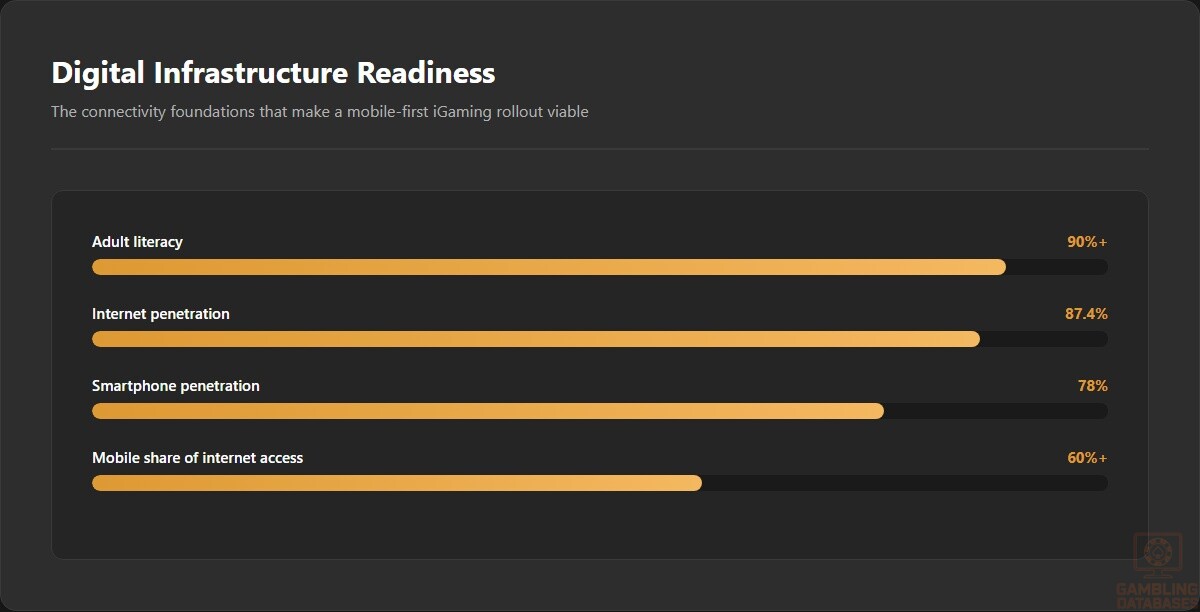
Seychelles boasts high literacy rates exceeding 90%, supported by government investment in education and recent digital literacy initiatives. Schools across the islands have incorporated information and communication technology in curricula, with public programs aimed at bridging the digital divide. Computer donations and infrastructure upgrades have enhanced student exposure to technology, fostering a digitally adept future workforce.
Adult digital literacy is rising, driven by increased mobile and internet penetration. These improvements facilitate consumer confidence in online transactions and gaming technologies, critical for sustainable growth in the iGaming sector.
Cultural and Social Factors
Communication and Language
The primary languages spoken in Seychelles are Seychellois Creole, English, and French. English is the dominant language in business, government, and digital communication. Internet content consumption largely occurs in English and French, informing language preferences for iGaming platforms targeting local users.
- Seychellois Creole (first language for majority)
- English (official language, business and online usage)
- French (widely spoken and culturally significant)
- Other languages (minimal presence)
Cultural Attitudes
Gambling enjoys moderate social acceptance, especially as a form of entertainment within urban centers and tourist zones. Religious and community norms advocate for responsible participation, supported by public awareness campaigns. International gambling brands are viewed positively due to perceived fairness and regulatory assurances, enhancing market receptivity.
Entertainment trends favor mobile and digital engagement, with younger demographics leading adoption. Social gambling and lotteries form culturally embedded recreational activities, contributing to broader consumer engagement in iGaming.
Problem Gambling and Social Considerations
While gambling is prevalent, concerns about problem gambling exist, particularly among lower-income groups seeking financial relief. The government and regulatory bodies have initiated educational programs and support systems to address at-risk populations and promote responsible gaming.
- Public education on gambling risks
- Support and counseling services for gamblers
- Self-exclusion programs mandated for operators
- Collaboration with NGOs for addiction management
- Regulatory oversight on marketing to vulnerable groups
Political Structure and Governance
Seychelles operates as a stable multi-party republic with consistent regulatory policies supporting business development and investor protection. The government emphasizes compliance, transparency, and international cooperation, enhancing Seychelles’ reputation as a credible gaming hub.
Technology Adoption and Digital Behavior
Internet and Digital Usage
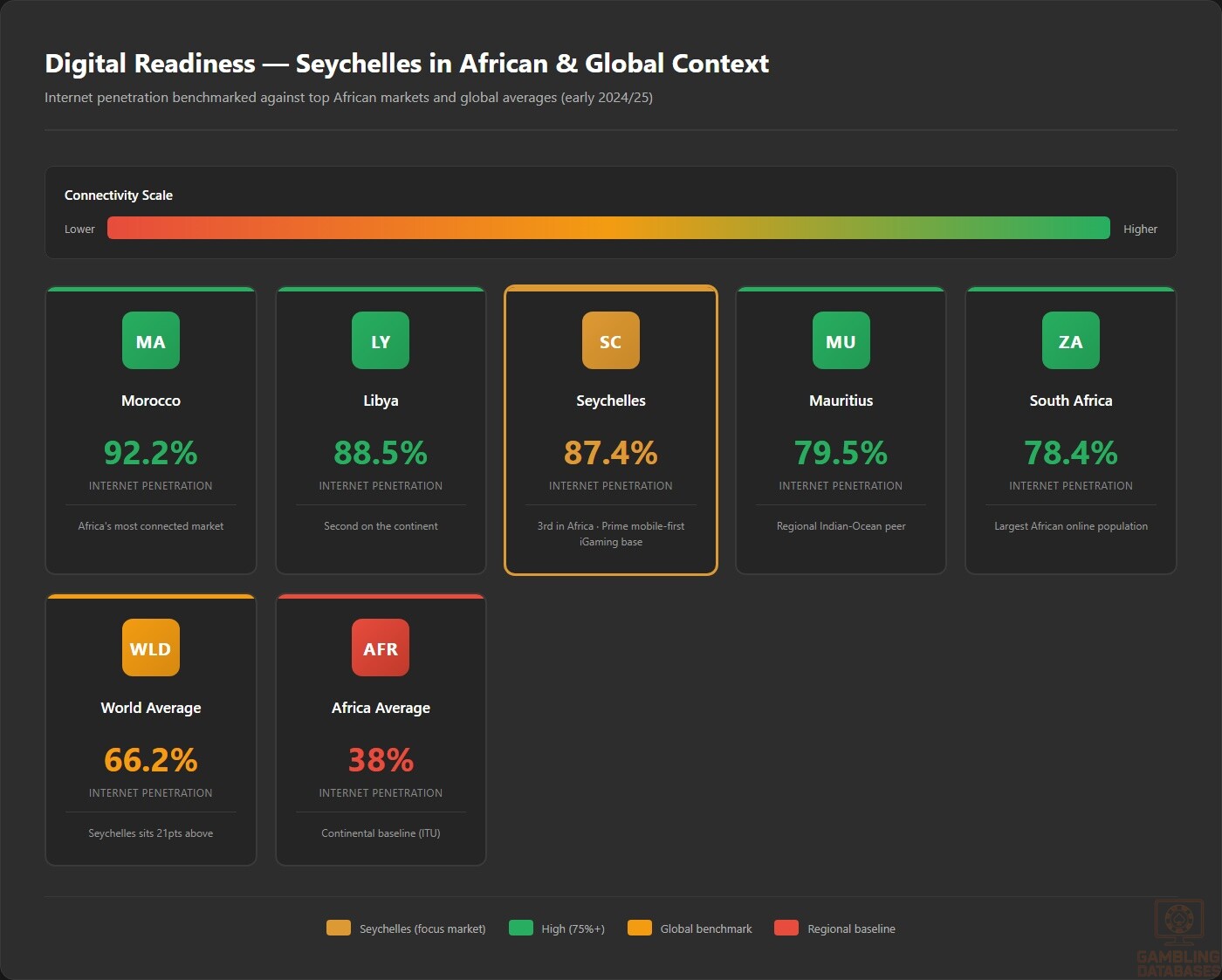
Internet penetration in Seychelles reached approximately 87.4% in early 2025, with continued growth driven by improved infrastructure and affordable data plans. Daily internet usage averages 3 to 4 hours, with mobile devices accounting for over 60% of access. Social media engagement is widespread and forms a core communication channel.
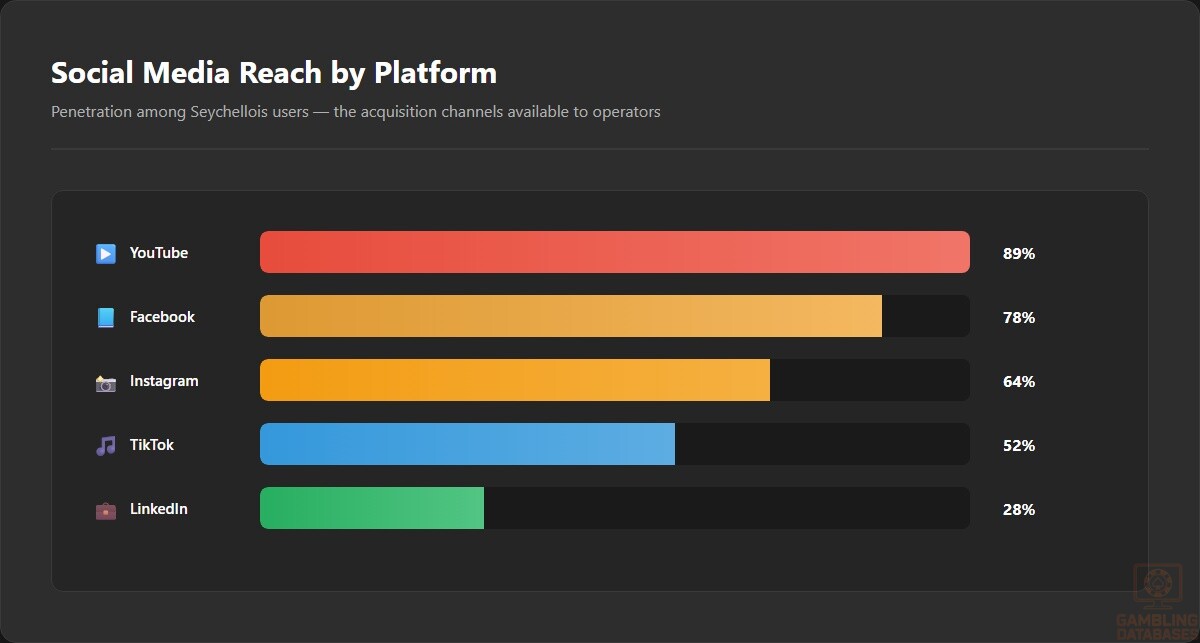
- Facebook – dominant with over 78% user penetration
- YouTube – high reach with 89% penetration
- Instagram – growing rapidly at 64%
- TikTok – emerging platform with 52% uptake under 25
- LinkedIn – used by 28% of professionals
Digital Payment Behavior
Payment methods in Seychelles are diverse, with traditional cards and bank transfers complemented by rising fintech solutions. Mobile wallets and QR code payments gain traction particularly in urban areas, supporting seamless transactions in gaming platforms.
- Visa and Mastercard prevalent across sectors
- Bank transfers via major banks (MCB, Absa, Nouvobanq)
- Mobile wallets facilitating peer-to-peer and retail payments
- Cash payments still common in rural areas
- Emerging e-wallets integrated with online gaming sites
Gaming and Gambling Preferences
Current Market Participation
Approximately 10-15% of the adult population participates in some form of gambling, with casino gaming and lottery being the most popular. Sports betting is gaining users, driven by increased digital access and interest in international sports.
- Casino games – most preferred among males aged 25-44
- Lottery – widely popular across age groups and genders
- Sports betting – fastest growing segment, youth-driven
- Slot machines – favored in land-based venues
- Online interactive gambling – emerging segment
Consumer Behavior Patterns
Consumers gravitate towards mobile-optimized platforms offering quick, convenient access with localized payment options. Peak playing times align with evenings and weekends, with sessions averaging 30-45 minutes. Loyalty programs and rewards drive retention, while players show interest in live dealer games and social gambling features, enhancing engagement.
Section 3: Technology Infrastructure and Business Environment
Internet and Digital Infrastructure
Seychelles exhibits strong digital connectivity, with internet penetration exceeding 87%. Broadband connections balance mobile internet, yet mobile remains dominant due to the archipelago’s geography. Average fixed broadband speeds are currently near 50 Mbps, while mobile download speeds average 40 Mbps, reflecting ongoing investments in fiber-optic and 4G LTE networks.
Reliability is generally high in urban zones, with occasional variability in outer islands. The government and private sector continue to invest in upgrading digital infrastructure to support broader e-services and digital commerce expansion. Ongoing initiatives to improve last-mile connectivity aim to bridge rural digital divides.
5G and Future Technology Deployment
5G networks are in early deployment phases, with major urban areas receiving initial coverage in late 2024. National rollout plans aim to achieve near-complete 5G coverage by 2027, facilitated by leading telecommunications providers competing on quality and pricing. Future plans include integration of IoT technologies and data center expansion to cater to the digital economy and demands of sectors such as iGaming.
Mobile Technology Ecosystem
The mobile market is served by several operators with competitive service offerings. Market share is divided among key players, with broadband and voice service packages bundling 4G and emerging 5G options. Mobile data remains affordable by regional standards, supporting high penetration and smartphone usage.
- Cable & Wireless Seychelles – market leader with 42% share
- MTML Seychelles – competitive pricing targeting younger users
- E-marine – regional player expanding mobile broadband
- Seychelles Telecom – extensive rural coverage and enterprise solutions
- Orange Seychelles – focused on prepaid and mobile money services
Smartphone penetration exceeds 78%, with Android devices dominating the market due to affordability. Rising consumer preference for smartphones with larger screens and faster processors supports demands for online gaming and video content consumption, pivotal for iGaming operators focusing on mobile-first strategies.
Financial Services and Payment Infrastructure
The banking sector is well-established, supporting digital transactions and corporate financing. The majority of Seychellois hold bank accounts facilitating online payments, essential for e-commerce and iGaming operations. Digital banking adoption has surged with mobile banking apps and contactless payment options now widespread.
- National Bank of Seychelles – largest with 30% market share
- MCB Seychelles – significant presence in retail and corporate banking
- Absa Bank Seychelles – international linkages and multi-currency facilities
- Nouvobanq – focused on SME banking and digital payments
- Seychelles Commercial Bank – innovative in digital product offerings
Payment processing options cover traditional cards, e-wallets, mobile payments, and local bank transfer systems. Cross-border payment gateways are integrated, supporting international operator-client transactions critical for iGaming business models.
- Visa and Mastercard widely accepted and integrated within gaming platforms
- Mobile money platforms enabling fast, secure payments
- Bank transfers through interbank networks such as Seychelles Automated Clearing House (SACH)
- International e-wallets accepted by large operators targeting foreign markets
- Cryptocurrency adoption growing, albeit with regulatory caution
E-commerce and Digital Economy
The digital economy in Seychelles is burgeoning, driven by online retail growth, expanding internet user base, and increasing consumer confidence in digital payments. E-commerce accounts for a growing share of retail, while digital services such as telemedicine and e-government create a supportive backdrop for increased technology adoption.
Consumer trust in digital purchasing and subscription models is enhanced by improved cybersecurity measures and increased financial literacy. These trends provide fertile ground for the expansion of online gambling services integrated with e-wallets and app-based ecosystems.
Business Environment and Regulatory Framework
Seychelles ranks favorably in global ease of doing business indices, with streamlined company registration and investor protection mechanisms. The government actively promotes foreign investment through sector-specific incentives and a transparent legal framework, facilitating operational stability in regulated sectors such as iGaming.
- Preparation and notarization of incorporation documents (2-3 weeks)
- Submission to Seychelles Registrar of Companies (5-7 business days)
- Registration for tax and obtaining Tax Identification Number (3-5 days)
- Opening corporate bank account and minimum capital deposit (1-2 weeks)
- Obtaining relevant business licenses and operational permits (variable timelines)
Available corporate structures include Limited Liability Companies (LLC), international business companies (IBC), and branch offices. For iGaming, LLCs or local IBCs are preferred due to operational flexibility, governance simplicity, and compliance ease.
- Local LLC – common structure with full operational control
- IBC – suitable for international operators with tax efficiency
- Branch office – used for foreign companies seeking presence without full incorporation
Company registration requires government approval and adherence to know-your-customer (KYC) norms to ensure transparency. Foreign ownership is fully permitted, enhancing Seychelles’ openness as a global business hub.
- Company incorporation certificate
- Memorandum and Articles of Association
- Proof of physical office address
- Director and shareholder identification documents
- Business plan and financial projections
- Compliance certificates for software and gaming platforms
Taxation Framework
Corporate income tax in Seychelles is standard at 15%, with tax holidays and incentives offered in special economic zones. A range of double taxation treaties supports international operators with withholding tax relief.
- United Kingdom
- France
- India
- South Africa
- Germany
- Singapore
Personal income tax rates are progressive with withholding taxes applied to salaries. Social security contributions are mandatory for employers and employees, creating a stable taxation base. Tax residency is determined based on presence and income source criteria.
Market Entry Considerations
Recommended entry strategies for Seychelles’ iGaming market revolve around establishing local subsidiaries or partnerships to fulfill licensing requirements. Leveraging local payment systems and mobile-centric platforms enhances customer acquisition. Operators benefit from focusing on both regional and tourist-driven user bases.
- Forming locally incorporated companies to meet licensing mandates
- Partnering with local service providers for payment and compliance
- Optimizing platforms for mobile-first access with multilingual support
- Engaging in responsible gambling outreach and community programs
- Implementing robust KYC and AML systems aligned with regulatory expectations
Costs associated with market entry involve license fees, regulatory compliance, marketing, technical infrastructure, and initial capital reserves. Timelines vary but competent local legal and consulting support reduces barriers and expedites operational launch.
| Cost Category | Estimated Amount (USD) |
|---|---|
| License application and renewal fees | $5,000 – $7,500 annually |
| Legal and consulting fees | $20,000 – $40,000 |
| Technical infrastructure setup | $50,000 – $150,000 |
| Marketing and customer acquisition | $30,000 – $100,000 |
| Compliance and audit costs | $15,000 – $30,000 annually |
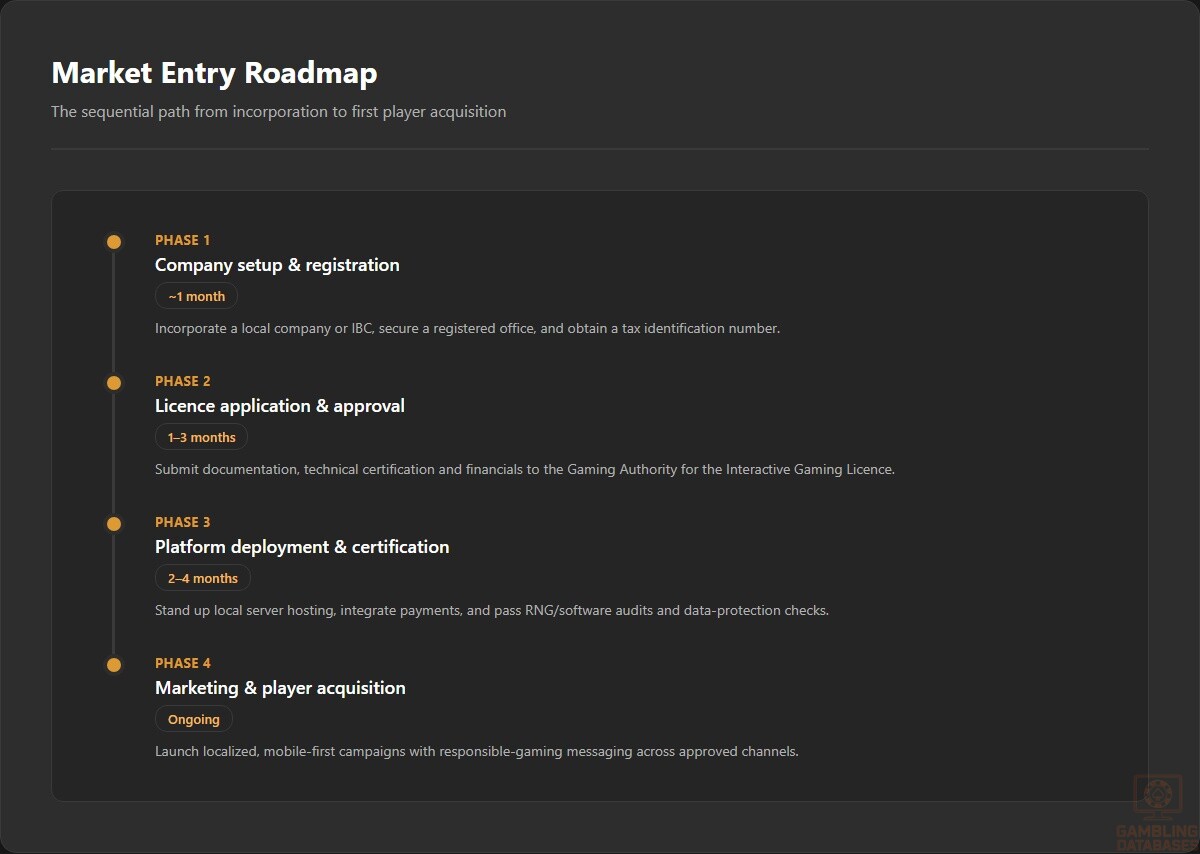
- Company setup and registration (1 month)
- License application and approval (1-3 months)
- Technical platform deployment and certification (2-4 months)
- Marketing and initial player acquisition (ongoing)
Success depends on regulatory compliance, technological robustness, effective payment integration, and cultural adaptability. Potential challenges include seasonal revenue fluctuations linked to tourism, enforcement of local server requirements, and evolving regulatory standards. Planning exit strategies involves understanding license transfer protocols and market valuation considerations.
- Clear understanding of regulatory framework and compliance
- Strong local partnerships for operational support
- Investment in secure and scalable technology platform
- Focused marketing tailored to demographic and cultural factors
- Continuous compliance monitoring and risk management
- Seasonal traffic and revenue variability
- Maintaining local server infrastructure
- Adapting to regulatory updates and tax changes
- Competition from regional operators and offshore hubs
Exit strategies should be aligned with liquidity options, license transfer possibilities, and asset valuations to ensure favorable outcomes for investors.
FAQ: Frequently Asked Questions
1. Is online gambling legal in Seychelles?
Yes, online gambling is legal and regulated in Seychelles under the Seychelles Gambling Act 2014. The regulatory regime covers online casinos, sports betting, lottery, and other interactive games. Operators must obtain appropriate licenses and comply with licensing requirements including local incorporation, server hosting, and responsible gambling measures to operate legally.
2. What types of gambling licenses are available and what do they cover?
Licenses in Seychelles encompass various categories such as casino, sports betting, interactive online gaming, lottery, and slot machine licenses. Each license type specifies permitted games and operational scope, with interactive gaming licenses allowing online casino and betting activities. This legal framework supports both land-based and digital gambling enterprises.
3. How much does an iGaming license cost and how long does it take to obtain?
License application fees start around $5,000 USD with annual renewals costing approximately $2,500 USD. The licensing process generally takes between one to three months from application submission to approval, depending on regulatory scrutiny and completeness of documents submitted by the operator.
4. Can foreign companies obtain a gambling license?
Yes, foreign companies can obtain gambling licenses but must incorporate a company within Seychelles and comply with local operational and server hosting requirements. Seychelles encourages foreign investment and has no restrictions on foreign ownership, provided all regulatory and compliance conditions are met.
5. What are the tax obligations for iGaming operators?
Operators are subject primarily to corporate income tax at a standard rate of 15%. Gambling income under specific licenses may be exempt from gross gaming revenue tax. Additional obligations include license fees and value-added tax (15%) on applicable services. Tax incentives may be available in designated economic zones to support industry growth.
6. Are gambling winnings taxed for players?
No, players in Seychelles do not pay taxes on gambling winnings. There are no withholding taxes or reporting requirements specific to player winnings, making Seychelles attractive to consumers and enhancing player retention.
7. What are the typical operational costs for running an online casino/sportsbook?
Operational costs include licensing fees, technology and platform maintenance, payment processing fees, marketing and affiliate commissions, customer support, and compliance auditing. While costs vary, typical categories include license fees ($5,000+), infrastructure ($50,000+), legal services, and ongoing marketing expenses.
8. What is the expected ROI timeline for entering this market?
Return on investment timelines usually range from 18 to 36 months, depending on market penetration strategies, initial capital outlay, and operational efficiency. Early investments in technology and compliance can accelerate breakeven points, with growing digital adoption underpinning long-term profitability.
9. What are the local presence requirements for operators?
Operators must establish a Seychelles-registered company, maintain a local office address, and host their gaming servers within Seychelles. These requirements ensure regulatory oversight, data sovereignty, and operational transparency, essential for licensing and ongoing compliance.
10. What payment methods are available and recommended?
The payment landscape includes credit/debit cards, mobile money services, bank transfers, e-wallets, and select cryptocurrency options. Platforms that integrate a variety of payment channels maximize player convenience and broaden market reach.
- Visa and Mastercard
- Mobile wallets with local operator support
- Bank transfers through major retail banks
- International e-wallets (e.g., Skrill, Neteller)
- Cryptocurrency payments under controlled regulatory frameworks
11. What are the advertising and marketing restrictions?
Advertising is tightly regulated to protect minors and vulnerable groups. Operators must include responsible gambling messages, avoid misleading claims, and comply with content/time restrictions. Sponsorships are subject to approval, and aggressive incentive promotions are limited.
12. What responsible gambling measures are mandatory?
Mandatory measures include strict age verification, self-exclusion programs, deposit and wagering limits, disclosure of game odds, and staff training on responsible gambling. Operators must provide accessible warnings and support channels for problem gambling identification and intervention.
- Age verification to exclude under-18 players
- Self-exclusion options for voluntary player removal
- Deposit and loss limits configurable by players
- Training programs for employees
- Clear communication of risks and support resources
13. How large is the iGaming market and what is the growth potential?
The Seychelles iGaming market is estimated at $38 million in 2025 and forecasted to grow at approximately 11% CAGR, reaching $74 million by 2031. Market expansion is fueled by rising digital adoption, increased tourist engagement, and regulatory support encouraging new operators.
14. Who are the main competitors and what is their market share?
The market hosts a mix of local and international licensed operators. Major players include both regional African gaming companies and international firms leveraging Seychelles as an operational base. Market shares are dynamic but moderate competition due to regulatory barriers and emerging market status.
15. What are the player preferences and typical spending patterns?
Players favor mobile-optimized casino games, interactive betting platforms, and lotteries. Session lengths average 30-45 minutes during peak times, with strong retention linked to personalized rewards and community features. Spending is concentrated among males aged 25-44, but lottery participation spans demographic groups.
16. What are the key success factors and main challenges for new entrants?
Success depends on compliance rigor, technology innovation, localization of content, payment integration, and marketing savvy. Challenges include navigating regulatory requirements, addressing seasonal revenue fluctuations, maintaining server infrastructure, and competing with established platforms.
- Comprehensive regulatory compliance
- Scalable and secure technology platforms
- Effective local partnerships and customer engagement
- Robust payment solutions supporting multiple currencies
- Continuous risk and fraud management
- High initial infrastructure investments
- Keeping pace with regulatory changes
- Building player trust in a small market
- Managing cash flow fluctuations
- Localizing marketing for diverse demographics
Sources and References
- Seychelles Gambling Act 2014 – Government of Seychelles
- Seychelles Licensing Authority Official Website
- World Bank Doing Business Report 2024
- Seychelles National Bureau of Statistics – Population and Economic Data 2024
- Central Bank of Seychelles – Financial Reports 2025
- Seychelles Ministry of Finance – Taxation Guidelines
- International Telecommunication Union – ICT Statistics Seychelles 2024
- Digital 2025: Seychelles Report – DataReportal
- Ceic Data – Seychelles Population and Urbanization Statistics
- PopulationPyramid.net Seychelles 2025
- Maarco Francis – Digital Literacy Programs Seychelles 2025
- IGaming Today – Seychelles Market Research Report 2025
- AfricaOne – Seychelles iGaming Hub Analysis 2025
- Transfi.com – Payment Methods in Seychelles 2025
- National Bank of Seychelles – Annual Report 2024
- MCB Seychelles – Corporate Banking Overview
- Telecommunications Regulatory Authority Seychelles – 2024/25 Reports
- Worldometers.info – Seychelles Demographic Indicators 2025
- Population Review – Seychelles 2025
- Futures ISS Africa – Seychelles Economic Analysis 2025
- Yogonet – Seychelles Online Gaming Regulation 2023
- Lawstrust.com – Seychelles Gambling License Information 2025
- GamingTec.com – Global Licensing Guide 2025
- Seychelles National Assembly Publications 2014-2025
- OECD Tax Policy Reviews: Seychelles 2020
- Casino.org – Seychelles Online Casinos 2025 Overview
- Novalnet.com – Payment Processing Seychelles 2025
- Countrymeters.info – Real-time Population Data Seychelles
- IGC.Services – Global iGaming Markets Report 2025
- Seylii.org – Seychelles Legal Codes and Statutes 2024