
Saint Lucia presents a unique opportunity for iGaming market entrants, offering a favorable regulatory environment and zero corporate tax on foreign-source income. While the country lacks a fully developed national online gambling regime, stringent laws govern land-based and lottery operations. The emerging regulatory framework aims to align with international standards to attract global operators.
Executive Summary: Key Market Indicators
| Metric | Value |
|---|---|
| Gambling Legal Status | Permitted under Gaming, Racing and Betting Act |
| Online Gambling National Framework | Developing; no full national remote gaming license yet |
| Land-Based Casino Operations | Closed (Treasure Bay Casino closed 2020) |
| State Lotteries | Operated by National Lotteries Authority |
| Regulatory Authorities | Saint Lucia Gaming Authority, National Lotteries Authority |
| Population (2025) | ~180,000 |
| Internet Penetration Rate | 70.1% |
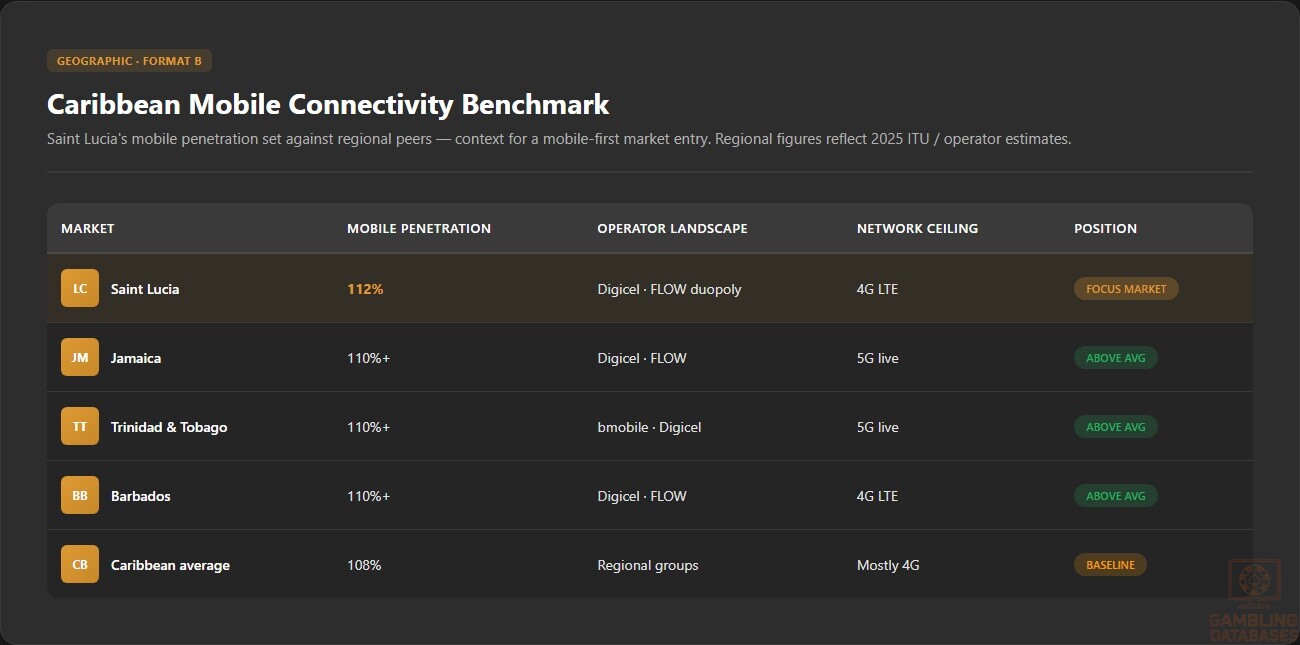
| Mobile Connection Penetration | 112% of population |
| GDP (Nominal, 2024) | Approximately $2 billion USD |
| Average Monthly Income | Data indicates moderate income levels typical of Caribbean economies |
| iGaming Licensing Fee | Varies; details under evolving regulations |
| Corporate Tax on iGaming | 0% on foreign-sourced income and remote gaming revenue |
| Gross Gaming Revenue (GGR) Tax | No separate gaming tax; taxed under corporate regime when applicable |
| VAT on Gaming Operations | Repealed for sports and gaming offices/equipment starting 2025 |
| License Application Timeline | Typically 3-6 months (expected) |
| Anti-Money Laundering Requirements | Mandatory AML policies, KYC compliance |
| Player Protection Obligations | Age verification, responsible gaming measures required |
| Advertising Restrictions | Advertising regulated with content controls |
| Tax Amnesty Program | Available until May 2025 |
| Market Entry Barriers | Moderate; absence of full online license regime limits market scale |
| Technology Infrastructure | Moderate internet and broadband penetration; improving digital ecosystem |
| Market Revenue Projections | Projected growth aligned with Caribbean online gaming trends |
| Average Revenue Per User (ARPU) | Data not yet fully established for local market |
| Market Penetration | Low but increasing with digital adoption |
| Foreign Ownership Restrictions | No explicit restrictions; partnerships encouraged |
| Operational Physical Presence | No mandatory onshore presence currently required |
Section 1: Regulatory Framework and Legal Environment
Current Gambling Regulation Status
Gambling in Saint Lucia is legalized under the Gaming, Racing and Betting Act, encompassing comprehensive rules for both land-based and digital gaming activities. The legislation strictly prohibits gambling participation by minors and enforces heavy penalties for violations. While traditional land-based casino operations were historically permitted, the closure of Treasure Bay Casino in 2020 currently leaves only state lotteries as active legal forms of gambling.
Online gambling activities are permitted, although Saint Lucia does not yet have a fully established national regulatory regime for remote gaming. Many operators access the Saint Lucian market with licenses from internationally recognized jurisdictions such as Malta or the United Kingdom. This creates an environment where offshore operators comply with Saint Lucian consumer protection standards on marketing, payments, and player fairness.
Regulatory oversight is divided between two primary authorities: the Saint Lucia Gaming Authority, responsible for all regulated gaming institutions beyond lotteries, and the National Lotteries Authority, overseeing lottery operations. Licensing categories for land-based gaming exist in legislation but remain inactive operationally as of 2025. Continued efforts aim to develop an updated, comprehensive framework aligning with global best practices for online gaming and risk management.
Land-Based Gambling Activities
Following the closure of the Treasure Bay Casino, Saint Lucia’s land-based gambling options have become limited to authorized state lotteries. No operational casino venues or dedicated sports betting shops currently exist on the island. Historically, the regulatory environment mandated strict controls over land-based venues, including age restrictions, responsible gaming protocols, and auditing of gaming devices. These rules ensure operational integrity though the sector has contracted substantially over recent years.
Online Gambling Framework
Saint Lucia’s digital gambling sector is nascent, characterized by an international license-dependent market. The national legal framework has yet to enact specific remote gaming licenses; however, the government is advancing legislation to establish a fully qualified regime. Operators targeting Saint Lucia typically hold licenses from established global jurisdictions yet must adhere to Saint Lucian standards for player protection, including fair game certification and AML compliance.
The proposed regulatory approach emphasizes consumer safeguards through mandatory age verification, rigorous know-your-customer protocols, and adherence to responsible gambling principles. The government supports transparency and the prevention of fraudulent activities by imposing reporting and auditing requirements. Advertising is regulated to prevent misleading promotions and to protect vulnerable populations, ensuring industry integrity while the market matures.
Licensed Operators and Market Players
Currently, no domestic licensed online operators exist as Saint Lucia continues to develop its remote gaming licensing framework. Market participation depends heavily on international entities holding licenses from Malta, the UK, or other reputable jurisdictions, compliant with Saint Lucian consumer and financial protection rules. The competitive landscape is therefore shaped by offshore operators accessing the local market, creating regulatory challenges in enforcement and taxation.
Entry strategies focus on compliance with AML directives and fair gaming certifications to build trust with Saint Lucian players. The recognition of licenses from established jurisdictions facilitates brand credibility, while the lack of a local licensing system limits domestic operator development. As regulatory reforms progress, a local license category is anticipated to encourage homegrown platforms and improve market transparency.
Licensing Framework and Requirements
Application Process and Eligibility
The Saint Lucia Gaming Authority administers licensing for regulated gaming sectors excluding lotteries, which remain under the National Lotteries Authority. Licensing applications require adherence to strict financial and operational standards designed to promote integrity and consumer protection.
The application process involves submitting extensive documentation to demonstrate corporate governance, technical capacity, and financial stability. This includes proof of ownership, detailed business plans, AML policies, and technical certifications for gaming platforms and RNGs. Typically, the licensing timeline ranges from three to six months, with fees assessed proportionately to the operation scale.
To apply, operators must provide evidence of compliance with AML frameworks, player protection policies, and reporting transparency. Licenses are issued based on suitability assessments conducted by the regulator to mitigate risks to the jurisdiction’s reputation and economic interests.
Required Documentation for Licensing
- Corporate registration certificate and articles of incorporation
- Audited financial statements for the past three years
- Comprehensive business plan with operational and financial projections
- Technical reports on gaming platform and RNG certification
- Criminal background checks for all beneficial owners and directors
- Proof of minimum capital deposit in a licensed bank
- Anti-money laundering (AML) and responsible gambling policies
- Ownership structure and details of senior management personnel
Local Presence and Operational Requirements
Saint Lucia does not currently mandate a physical onshore presence or local hosting for online operators. Operators may maintain corporate and operational bases outside Saint Lucia, although establishing local partnerships is encouraged to support compliance and economic ties.
Domains serving Saint Lucian players must comply with the regulatory framework, ensuring that customer data is protected and transactions are transparent. There are no explicit foreign ownership restrictions, allowing full international ownership subject to licensing conditions and reputation screening.
Compliance Obligations and Monitoring
Player Protection and Identification
Operators must implement robust player identification protocols, verifying age, identity, and location before permitting gaming activities. This typically involves submission of government-issued ID, proof of residence, or other accepted verification methods. Self-exclusion systems and responsible gambling tools are mandatory features of licensed platforms.
- Age verification to restrict underage access
- Strong KYC procedures for identity verification
- AML policies to monitor and report suspicious transactions
- Self-exclusion and player cooling-off options
- Disclosure of betting odds and game fairness information
Financial Monitoring and Reporting
Licensed operators are required to maintain detailed records of all transactions, ensuring transparency and auditability. Financial reports must be submitted periodically to the regulator, including income statements, player fund handling, and tax payments. Oversight includes independent audits of operational controls and compliance with anti-money laundering legislation.
- Submission of preliminary business and AML plans during application
- Quarterly financial reporting to the Saint Lucia Gaming Authority
- Annual independent audit of financial statements
- Immediate reporting of suspicious financial activity
Taxation Structure and Financial Obligations
Player Taxation
Saint Lucia does not impose taxes directly on player winnings. This simplifies player obligations and serves as an incentive for players to participate on licensed platforms. There are no withholding taxes on individual winnings under current law.
Operator Taxation
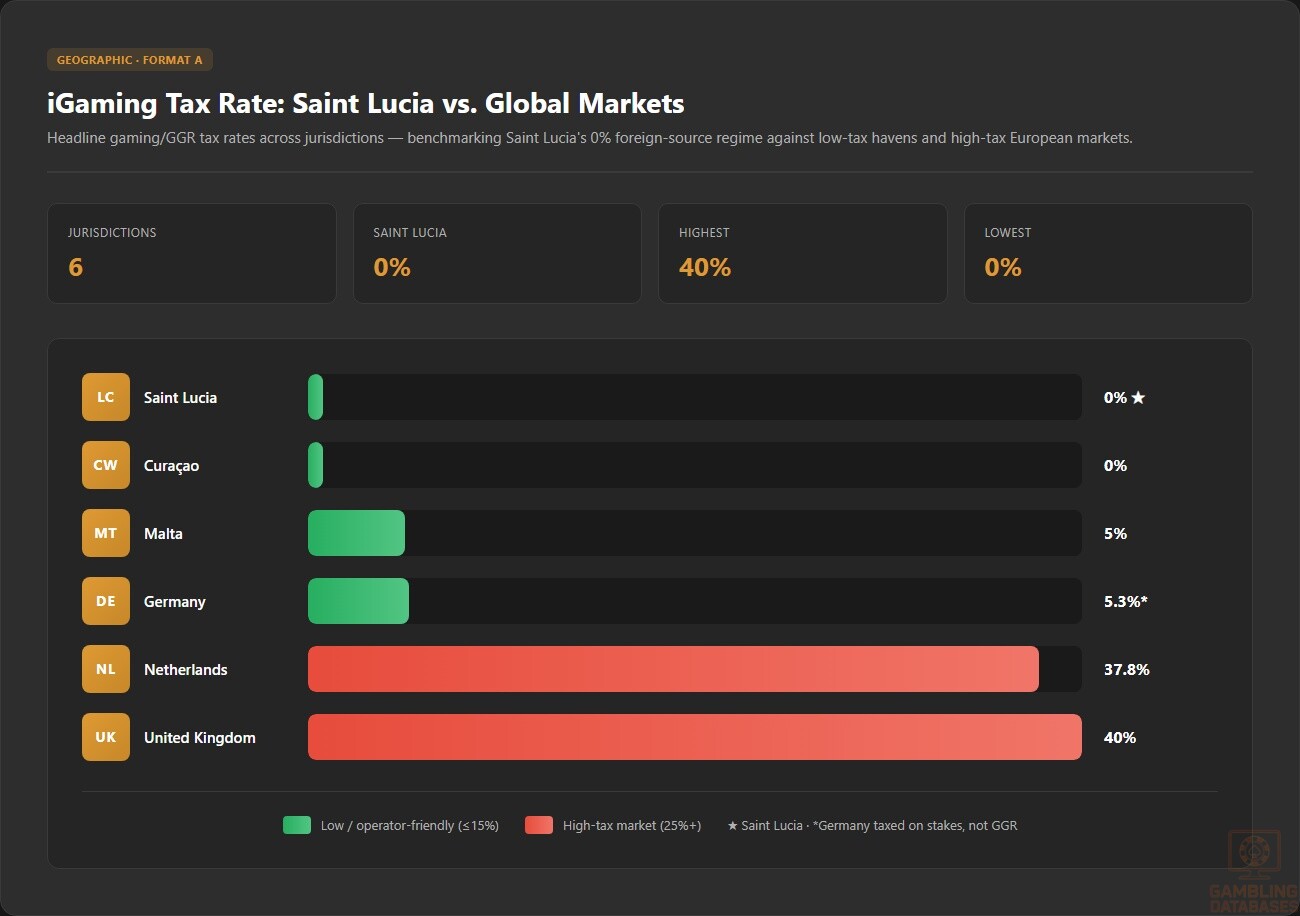
The jurisdiction benefits from a 0% corporate tax rate on foreign-source income, including revenue generated from remote iGaming operations targeting international markets. This regime encourages operators to establish licenses linked to Saint Lucia and avoid double taxation.
| Game Type | Tax Rate |
|---|---|
| Remote iGaming (foreign revenue) | 0% |
| Domestic lotteries | Standard state taxation applies |
| Land-based casinos (inactive) | N/A |
| Corporate income tax (general) | 0% for qualifying incomes |
License renewal fees and turnover-based taxes are minimal or absent for the online sector, reflecting ongoing efforts to position Saint Lucia competitively in the Caribbean gaming market.
Gambling Market Financial Performance
Due to the limited size of the domestic population and the absence of active land-based casinos, overall wagering volumes remain modest. However, remote gaming revenue linked to international players shows potential aligned with regional growth forecasts. Tax revenues from iGaming are projected to grow significantly once a formal local licensing framework is established.
Advertising and Marketing Restrictions
Advertising in Saint Lucia is subject to regulatory oversight emphasizing consumer protection and responsible messaging. Operators must avoid targeting minors or vulnerable groups and comply with content restrictions aimed at truthful and non-misleading promotions. Sponsorships and marketing campaigns are regulated to prevent excessive gambling encouragement.
- Permitted advertising channels include digital platforms, broadcasts, and print media
- Restrictions on advertising to minors and excluded persons
- Limits on promotional bonuses and inducements
- Regulated time frames for gaming advertisements
- Mandatory disclaimers on responsible gambling in promotional content
Recent Regulatory Changes and Their Impact
The regulatory landscape saw significant updates in 2024-2025 with the introduction of the Digital Gaming and Interactive Entertainment Act. This legislation paved the way for online gaming regulation and introduced tax incentives and compliance standards aligning Saint Lucia with global best practices. The repeal of VAT on gaming offices and equipment starting in 2025 boosts sector investment prospects.
Enforcement Mechanisms and Penalties
The Saint Lucia Gaming Authority enforces regulations through a structured penalty system designed to deter non-compliance. These include fines, license suspensions, and revocations for breaches such as allowing underage gambling, failing to implement AML controls, or advertising violations.
- Imposition of monetary fines for regulatory breaches
- Suspension or revocation of operating licenses
- Criminal penalties for fraud or illicit operations
- Mandatory corrective actions for compliance failures
- Public disclosure of enforcement actions to ensure transparency
Section 2: Demographics and Consumer Analysis
Population Demographics and Distribution
Saint Lucia’s population is approximately 180,000, characterized by a relatively youthful demographic profile. The median age hovers around 34 years, reflecting a balanced mix of working-age adults and younger cohorts. Gender distribution is nearly equal, with a slight female majority common in Caribbean nations.
Urbanization concentrates roughly 17% of the population in the capital, Castries, while the majority reside in smaller towns and rural areas throughout the island. This distribution impacts internet access and potential iGaming market reach, as urban centers experience higher digital penetration and infrastructure development.
| Age Group | Percentage of Population |
|---|---|
| 0-14 years | 24% |
| 15-24 years | 17% |
| 25-54 years | 42% |
| 55-64 years | 9% |
| 65 years and over | 8% |
Geographic Distribution
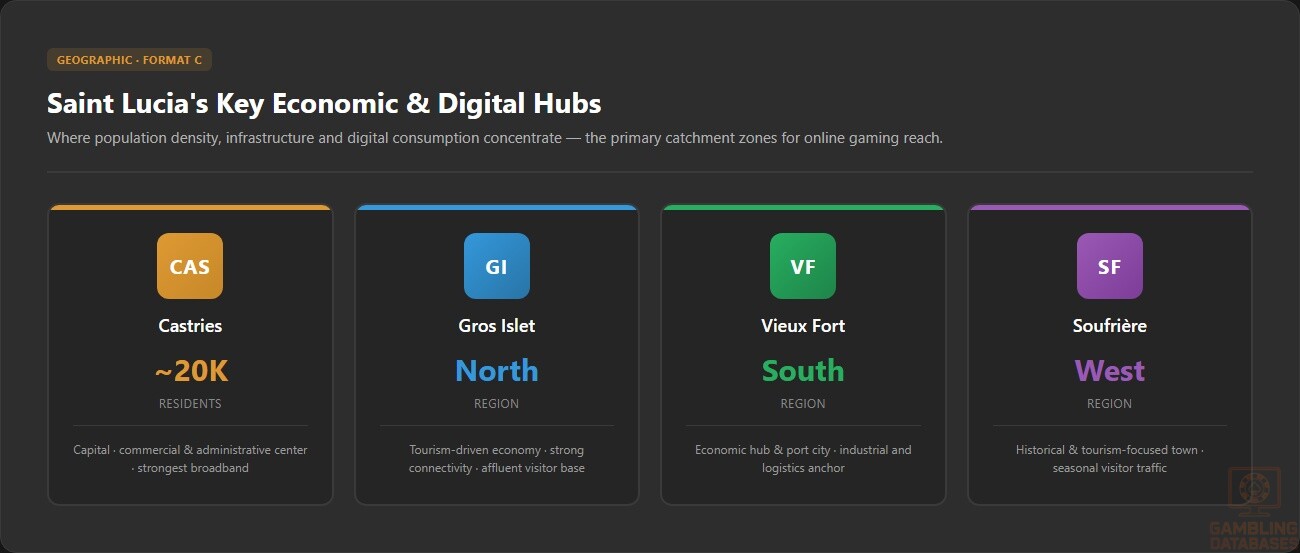
The economic activity and population density are highest around Castries, Gros Islet, and Vieux Fort. These urban hubs benefit from better internet infrastructure and access to financial services, making them focal points for digital consumption including iGaming.
- Castries – Capital city, ~20,000 residents, commercial and administrative center
- Gros Islet – Northeastern town with tourism-driven economy
- Vieux Fort – Southern economic hub and port city
- Soufrière – Historical and tourism-focused town
- Central Castries suburb areas – densely populated residential zones
The majority rural population experiences variable connectivity, influencing the digital divide and constraining online gambling market penetration outside major towns. Gambling venues, where present, are typically concentrated in or near these urban centers.
Economic Indicators and Consumer Spending Power
Saint Lucia’s nominal GDP is approximately $2 billion USD with an annual growth rate averaging 2.5%-3% forecasted over the next five years. The economy’s backbone is tourism, complemented by services and small-scale agriculture.
Per capita income levels indicate middle-income status, with household disposable income rising modestly as economic diversification efforts progress. The service sector dominates GDP contribution at around 70%, enhancing consumer access to digital technologies and entertainment expenditures.
| Economic Indicator | Value |
|---|---|
| GDP (Nominal) | $2 billion USD |
| GDP Growth Rate (Annual) | 2.7% |
| Service Sector Contribution | 70% |
| Average Household Income | $18,000 USD per year |
| Unemployment Rate | 16% |
Consumer spending is heavily orientated to tourism-related services, mobile telecommunications, and retail purchases. Digital entertainment expenditures are emerging but constrained by average income levels and cautious discretionary spending patterns amid broader economic uncertainties.
The growing middle class with increasing access to smartphones and mobile data fosters expanding opportunities for online gambling services targeted to affluents and expatriates. Market analysts forecast a steady upward trajectory in consumer spending on iGaming as economic diversification advances.
Market Size and Growth Projections
The Saint Lucian iGaming market remains in early development stages with limited domestic revenue. However, a growing number of residents engage with offshore operators leveraging international licenses. This user base is estimated in the low tens of thousands, with average revenue per user (ARPU) reflecting regional benchmarks.
| Metric | 2025 | 2030 (Forecast) | CAGR (2025-2030) |
|---|---|---|---|
| Registered Players | 22,000 | 45,000 | 15% |
| Market Revenue (USD) | $8 million | $18 million | 17% |
| Average Revenue Per User (ARPU) | $360 | $400 | 2.2% |
| Internet Users (% of population) | 70% | 85% | 4.0% |
This steady growth is driven largely by increasing digital adoption, mobile penetration, and ongoing regulatory improvements to support legitimate online gaming enterprises. Expansion efforts rely on strategic market penetration, user retention, and partnerships targeting both local residents and regional tourists.
Education, Skills, and Digital Literacy
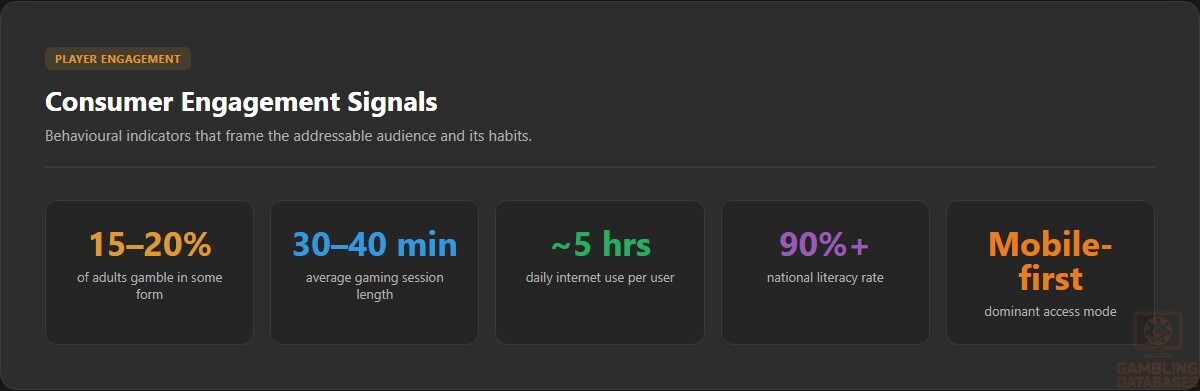
Saint Lucia boasts a strong literacy rate exceeding 90%, with consistent emphasis on education through government programs. Secondary education enrollment is robust, and technical skills related to ICT show positive annual growth trends.
Digital literacy is expanding rapidly, aided by mobile internet proliferation and educational initiatives enhancing computer skills across youth and adult populations. Workforce skills in customer service and digital marketing support emerging online business sectors such as iGaming.
The government has prioritized digital skill development through public-private partnerships and ICT training in schools, preparing the workforce for sustainable participation in the digital economy.
Cultural and Social Factors
Communication and Language
English is the official language and lingua franca across all sectors. Saint Lucian Creole French (Kwéyòl) is widely spoken in informal settings but English dominates business, education, and digital communications. Online platforms primarily operate in English, aligning content and customer service provisions accordingly.
Cultural Attitudes
Gambling holds a complex social perception: it is socially accepted when conducted responsibly yet infused with traditional caution informed by religious and family values. The Catholic Church and Protestant communities maintain a moderate opposing stance, motivating regulatory safeguards to prevent social harms.
Foreign gaming brands receive generally positive reception, particularly among younger, urban demographics who seek entertainment alternatives linked to global trends. Tourism exposure further cultivates openness to diverse gaming experiences and digital platforms.
Problem Gambling and Social Considerations
Prevalence of problem gambling is estimated at moderate levels, consistent with regional averages. Government and non-governmental organizations have launched responsible gambling campaigns and support services to mitigate social risks associated with gaming.
- Public awareness programs on gambling addiction prevention
- Self-exclusion registries maintained by licensed operators
- Counseling and rehabilitation services accessible through health authorities
- Mandatory operator contributions to social responsibility funds
- Collaboration with international bodies for research and best practices
Political Structure and Governance
Saint Lucia operates a stable parliamentary democracy with a history of political consistency and transparent governance. The government prioritizes economic diversification and investment-friendly policies, creating a conducive environment for foreign direct investment in sectors like iGaming.
Stable international relations within the Caribbean Community and Commonwealth support regulatory cooperation and market integration efforts, beneficial for cross-border gaming operations and licensing schemes.
Technology Adoption and Digital Behavior
Internet and Digital Usage
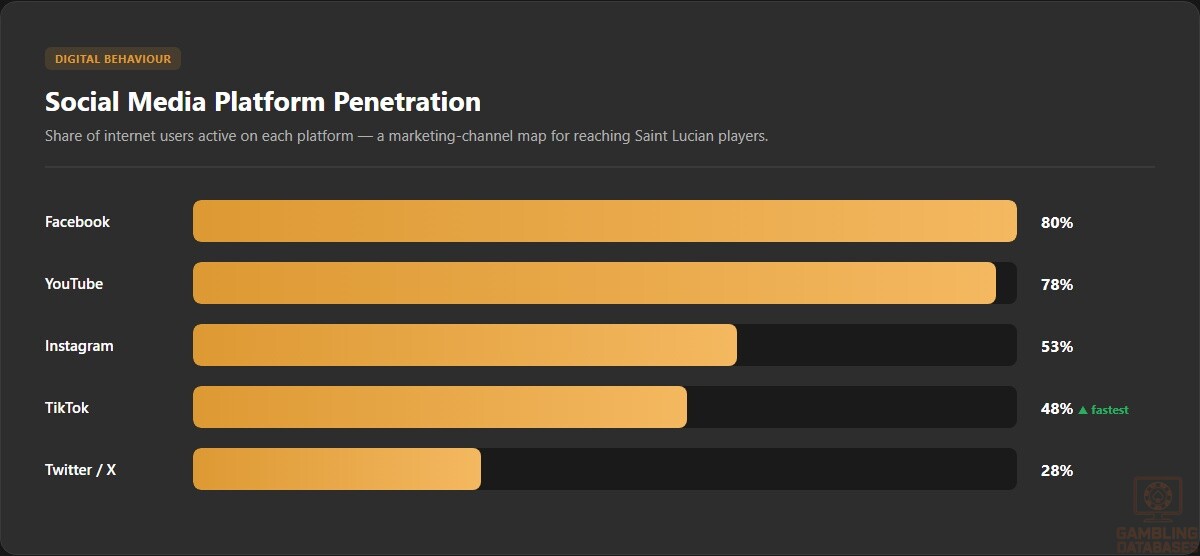
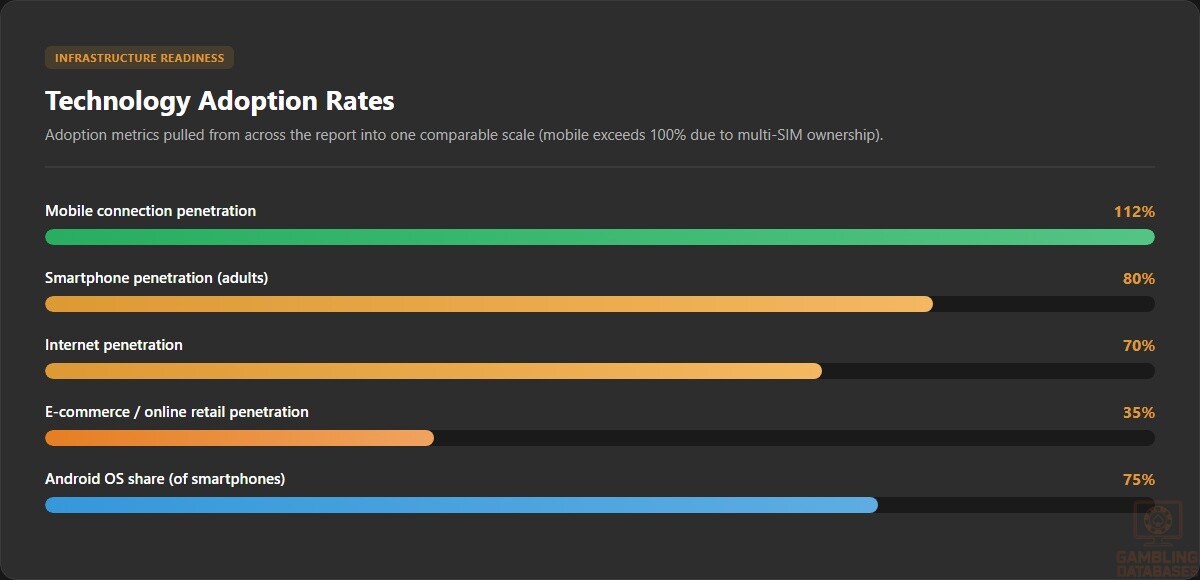
Internet penetration stands at about 70%, supported by widespread mobile adoption exceeding 110% due to multiple SIM ownership. Average daily internet usage is approximately 5 hours per user, reflecting considerable engagement with social media, video streaming, and communications.
- Facebook with 80% internet user penetration and daily activities
- YouTube accessed by 78% for video content consumption
- Instagram growing steadily with 53% penetration among youth
- TikTok rapidly expanding at 48%, especially among under-25 users
- WhatsApp used extensively for messaging and gaming community interaction
- Twitter holds a niche for news and discussion with 28% penetration
Digital Payment Behavior
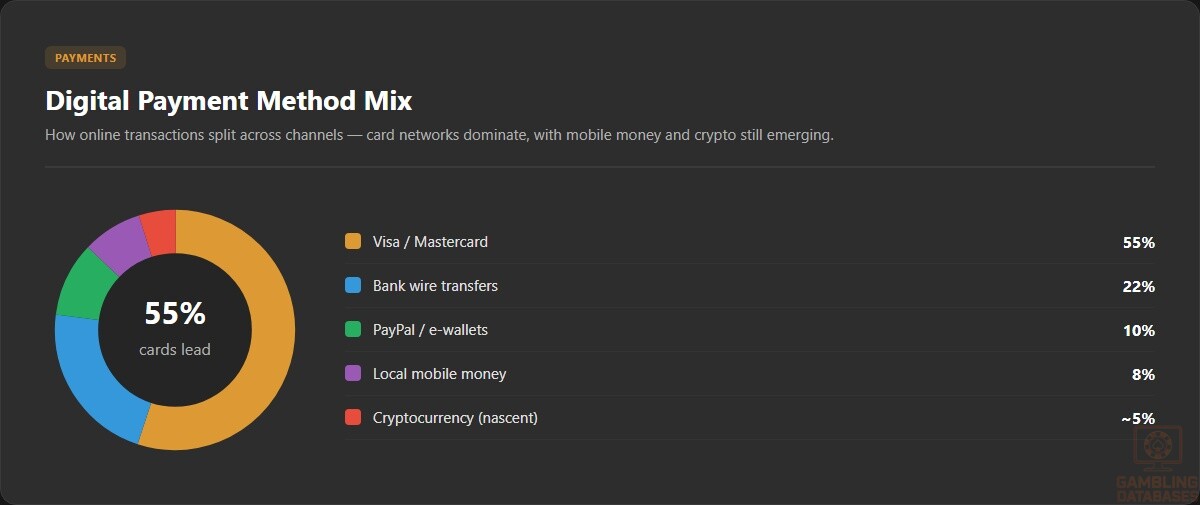
Payment methods reflect a hybrid of traditional and digital options with increasing digital wallet adoption. Credit and debit cards remain predominant for online transactions, followed by bank transfers and emerging mobile money services. Cryptocurrency use is nascent but of growing interest among tech-savvy consumers.
- Visa and Mastercard cards account for 55% of online payments
- Bank wire transfers comprise 22% of digital transaction volume
- PayPal and international e-wallets used by 10%
- Local mobile money solutions emerging at 8%
- Cryptocurrency payment gateways in early uptake phases
Gaming and Gambling Preferences
Current Market Participation
Gambling participation engages an estimated 15-20% of adults, primarily through informal betting, lottery participation, and offshore online platforms. Sports betting is highly favored, followed by lottery and casino-style games.
- Sports betting
- Lottery and raffle games
- Online slots and casino table games
- Poker and skill-based games
- Bingo
| Activity | Participation Rate (%) |
|---|---|
| Sports Betting | 38% |
| Lottery Games | 29% |
| Online Casino Games | 18% |
| Poker | 7% |
| Bingo | 5% |
Consumer Behavior Patterns
Players generally prefer mobile-first platforms, reflecting strong smartphone penetration. Peak gambling periods align with major international sports events and weekend leisure hours. Session durations average 30-40 minutes, with high retention rates among younger demographic segments.
Spending habits indicate moderate average bets with incremental increases during promotional periods. Operators emphasize loyalty programs and localized offerings to enhance engagement. Digital payment convenience and transparent gameplay are key drivers of sustained consumer trust.
Section 3: Technology Infrastructure and Business Environment
Internet and Digital Infrastructure
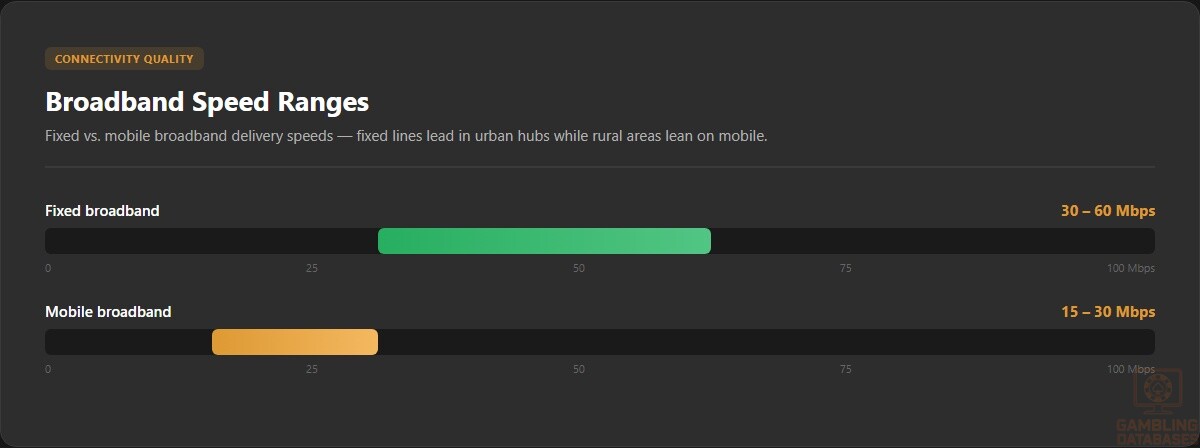
Saint Lucia has made notable advancements in its internet infrastructure, with the internet penetration rate estimated around 70%. Broadband connectivity remains concentrated in urban areas, especially Castries and Gros Islet, whereas rural zones rely more heavily on mobile networks for internet access. Average fixed broadband speeds vary from 30 to 60 Mbps, while mobile broadband offers 15 to 30 Mbps, aligning with regional Caribbean standards.
Investment in fiber-optic networks and inter-island connectivity projects is ongoing, aimed at improving latency and service breadth. Internet reliability is high in key economic hubs, supporting e-commerce and digital entertainment including iGaming services.
5G and Future Technology Deployment
The rollout of 5G technology in Saint Lucia is in early phases, with limited pilot coverage primarily in urban commercial districts. Telecom operators have publicly committed to expanding 5G availability nationwide over the next 2-3 years, with infrastructure upgrades prioritizing densification and spectrum allocation.
The market is dominated by a few key network operators cooperating on national 5G standards and shared infrastructure. Future plans include the integration of IoT services and enhanced mobile broadband designed to support more immersive online gaming experiences.
Mobile Technology Ecosystem
Mobile technology forms the backbone of digital connectivity for a large share of the population. Smartphone penetration exceeds 80% among adults, driven by affordable devices and competitive market pricing. Brand diversity is wide with Android dominating approximately 75% market share and iOS comprising most of the remainder.
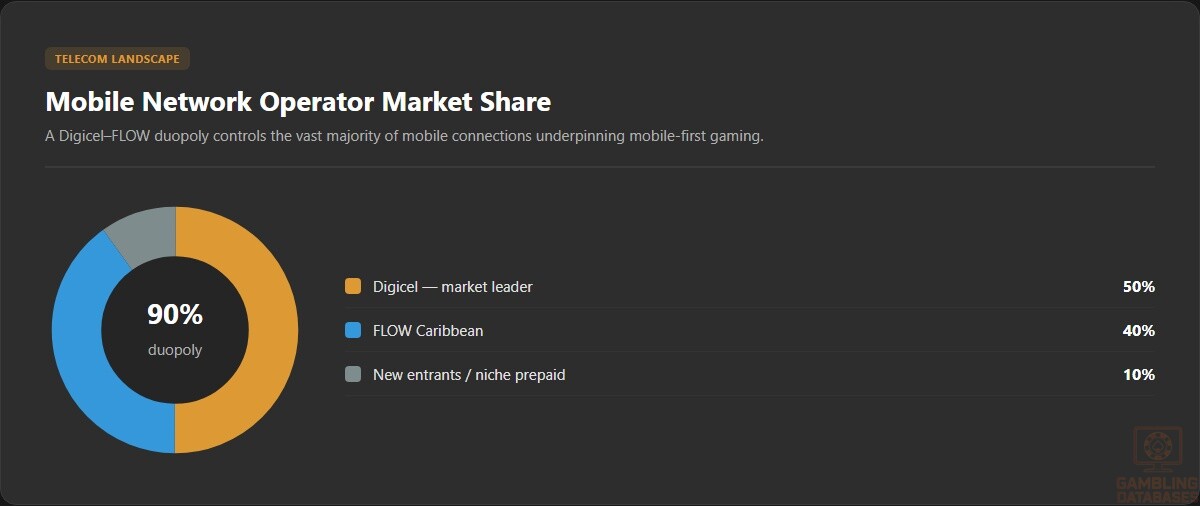
- Digicel – Market leader with approximately 50% share, known for extensive network reach
- FLOW Caribbean – Strong coverage and competitive data packages, holding ~40% market share
- New entrants focusing on urban data services and niche prepaid offerings
Mobile data plans are affordable relative to regional peers, fostering heavy social media use and digital services consumption. Consumers increasingly use smartphones for digital payments, entertainment, and gaming platforms.
Financial Services and Payment Infrastructure
The banking sector in Saint Lucia is stable and features several prominent institutions offering comprehensive digital banking solutions. Mobile banking and payment app adoption is growing rapidly, supporting the digital economy and increasing e-commerce trust.
- National Commercial Bank: Largest market share with full retail and corporate banking services
- First Caribbean International Bank: Strong international trade and foreign exchange capabilities
- Bank of Saint Lucia: Known for SME lending and electronic payment options
- Eastern Caribbean Amalgamated Bank: Regional presence with advanced online banking
- Citibank: Offers investment and wealth management services to high-net-worth clients
- Scotiabank: Key player in retail banking and digital innovation
Payment processing is well established, combining traditional card networks with emerging digital wallets and mobile money providers. Bank transfers remain a preferred method for large-value transactions, while e-wallets attract younger demographics due to convenience and speed.
- Visa and Mastercard credit/debit cards widely used
- PayPal and other international e-wallets gaining traction
- Local mobile money services growing steadily
- Bank wire transfers for corporate and high-value payments
- Cryptocurrency gateways beginning to emerge within niche online gaming environments
E-commerce and Digital Economy
Saint Lucia is experiencing rapid e-commerce growth, supported by improved payment infrastructure and increased consumer trust. Online retail penetration is approximately 35%, augmented by robust mobile usage and expanding logistics services.
Digital services, including online entertainment and gaming, represent a growing segment of the economy. Government initiatives to boost ICT skills and digital entrepreneurship further encourage market expansion and create synergies for the iGaming sector.
Business Environment and Regulatory Framework
The World Bank ranks Saint Lucia favorably in ease of doing business within the Caribbean context, highlighting streamlined processes and encouraging foreign investment policies. The government has implemented reforms to expedite company registration, tax compliance, and intellectual property protection.
Business Registration Process
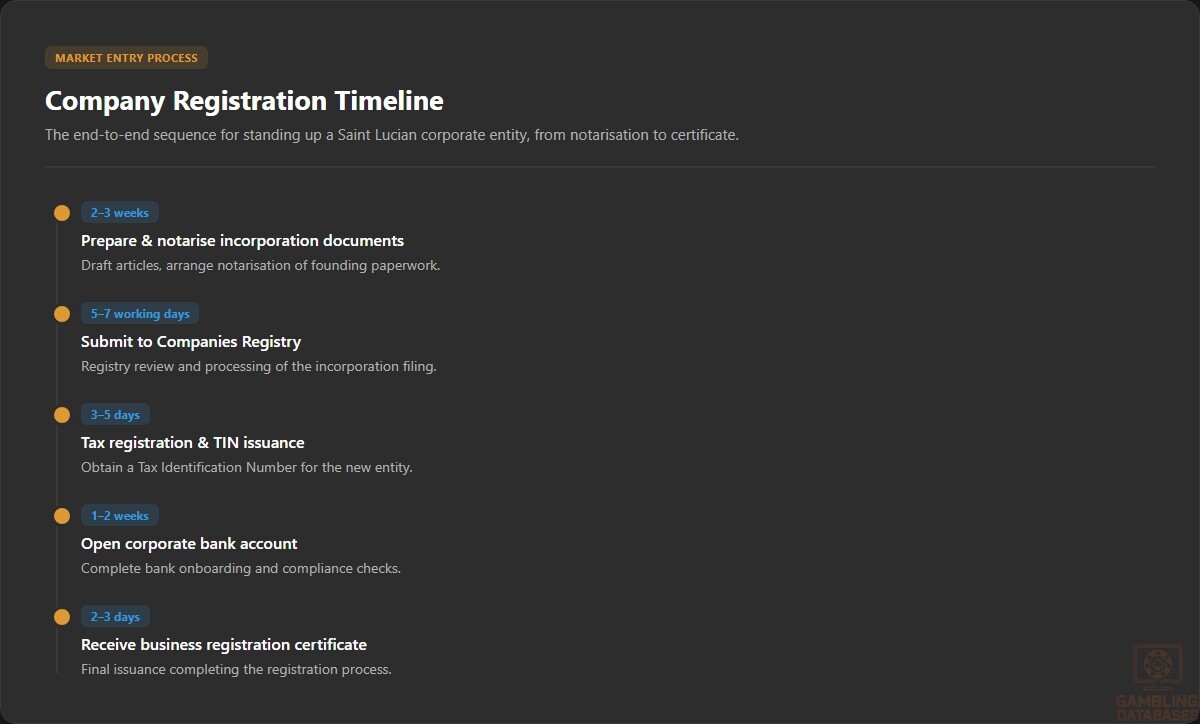
- Preparation and notarization of incorporation documents typically take 2-3 weeks
- Submission to the Companies Registry, processed within 5-7 working days
- Tax registration and issuance of Tax Identification Number within 3-5 days
- Opening of corporate bank account requiring 1-2 weeks
- Receipt of business registration certificate finalizing the process in 2-3 days
The regulatory framework promotes transparency with clear guidelines on operational compliance, licensing, and reporting obligations. Foreign investors face no significant restrictions on ownership, encouraging international participation in sectors including iGaming.
Corporate Structure and Registration
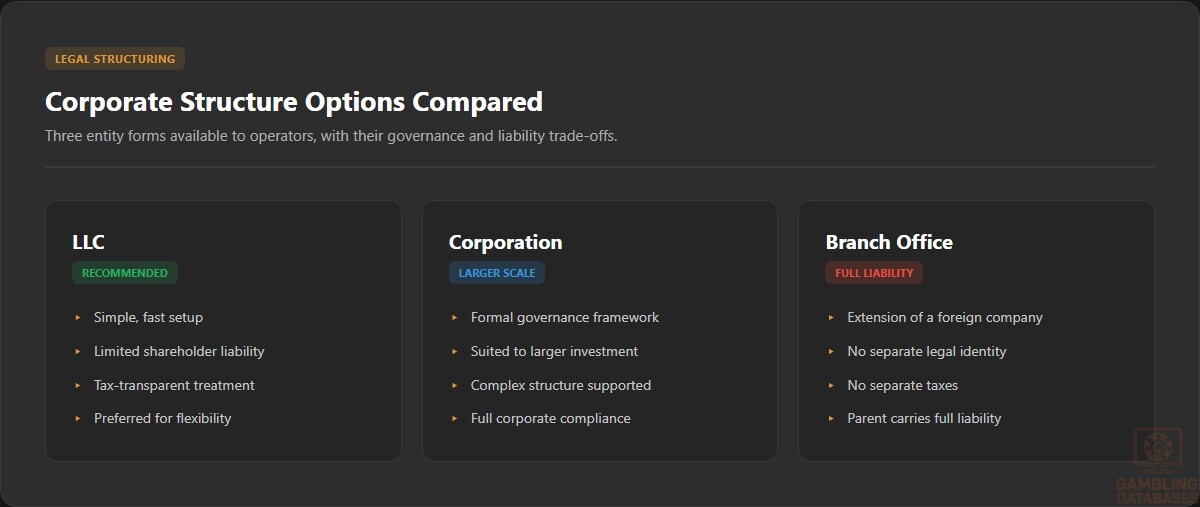
Typical corporate forms include Limited Liability Companies (LLCs), Corporations, and Branch Offices of foreign entities. LLCs are preferred for flexibility and limited shareholder liability. Corporations suit larger-scale enterprises requiring complex governance structures, while branches provide a means for foreign parent companies to operate locally without a separate legal identity.
- LLC: Simple setup, limited liability, tax transparent
- Corporation: Formal governance, suitable for larger investment
- Branch Office: Extension of foreign company, no separate taxes but full liability
Registration timelines range from 3 to 6 weeks depending on complexity. Compliance includes annual returns, maintaining registered agents, and adherence to financial reporting standards.
Required Registration Documents
- Certificate of incorporation or equivalent
- Articles of association or bylaws
- Copies of passports and proof of address for directors and shareholders
- Bank reference letters and financial statements
- Tax compliance certificates (if applicable)
- Proof of registered office address in Saint Lucia
Taxation Framework
Corporate income tax stands at a competitive flat rate; however, operators deriving revenue from foreign sources benefit from a 0% tax on foreign-sourced income. Tax holidays and special economic zones offer further incentives.
Saint Lucia has signed numerous tax treaties to prevent double taxation and encourage cross-border investment.
- United Kingdom
- Canada
- France
- Barbados
- OECS member states
Personal income tax rates are progressive with a top marginal rate around 30%. Social security contributions and withholding taxes apply to salaries and dividends according to local legislation.
Market Entry Considerations
Entry strategies should focus on forming local partnerships to navigate evolving regulatory landscapes and leverage established financial networks. Utilizing robust technology platforms with proven compliance functionalities is critical to market acceptance.
- Engage with local legal and compliance advisors for licensing
- Adapt marketing to reflect cultural nuances and regulatory limits
- Leverage mobile-first platforms to access the majority smartphone user base
- Incorporate responsible gambling tools consistent with local requirements
- Establish customer service in English to align with communication norms
| Cost Category | Estimate Range |
|---|---|
| License application and renewal | $50,000 – $100,000 |
| Legal and consulting fees | $30,000 – $70,000 |
| Technology platform and compliance | $100,000 – $250,000 |
| Marketing and customer acquisition | $50,000 – $150,000 |
| Operational working capital (12 months) | $200,000 – $500,000 |
- Initial market research and licensing strategy (1-2 months)
- License application and approval process (3-6 months)
- Platform development and localization (3 months)
- Market launch and customer acquisition (ongoing)
Challenges include regulatory uncertainty as the national iGaming licensing regime evolves, competition from international offshore operators, and building consumer trust in an emerging market. However, early entry advantages and supportive government policies provide attractive opportunities.
- Regulatory compliance complexity during licensing transition
- Limited local infrastructure outside urban centers
- Competition from established international operators
- Cultural attitudes towards gambling requiring sensitive marketing
- Building scalable customer support and payment integrations
Exit strategies focus on market valuation based on license transferability, user base, and revenue streams. The market’s regulatory maturation trend supports asset liquidity and potential acquisition by regional or global gaming companies.
FAQ: Frequently Asked Questions
1. Is online gambling legal in Saint Lucia?
Online gambling is legally recognized in Saint Lucia, though the regulatory framework for remote gaming licenses is under development. Operators often rely on internationally recognized licenses to legally provide services locally. The government enforces stringent consumer protection and AML standards. While no fully independent national online gaming license exists yet, ongoing legislative reforms signal upcoming formal licensing.
2. What types of gambling licenses are available and what do they cover?
Licenses currently cover land-based gaming (historical), lotteries, and betting operations regulated under the Gaming, Racing, and Betting Act. Online gaming licenses specific to remote operators are anticipated under new legislation. The system includes licensing categories for casinos, sports betting, lotteries, and interactive gaming platforms, though active online-specific licenses remain limited.
3. How much does an iGaming license cost and how long does it take to obtain?
iGaming license application fees range from US$50,000 to US$100,000 depending on scope and game types. The overall licensing process typically takes between 3 to 6 months from application submission to approval. Operators must also budget for regulatory compliance and auditing costs. Delays can occur as the licensing framework evolves and tests operational readiness.
4. Can foreign companies obtain a gambling license?
Foreign companies are eligible to apply for gambling licenses provided they meet regulatory criteria, including full disclosure of ownership, financial stability, and AML compliance programs. There are no explicit restrictions on foreign ownership, and partnerships with local entities are encouraged for smoother market entry. The government supports foreign direct investment in the iGaming sector as part of economic diversification.
5. What are the tax obligations for iGaming operators?
Operators benefit from a 0% corporate tax rate on foreign-sourced income, including revenue from remote gaming activities. Domestic income and lotteries are subject to standard tax rules. Operators must comply with reporting and payment obligations for gaming revenues. License renewal fees and administrative taxes apply, but no separate gross gaming revenue tax is currently levied.
| Type | Rate |
|---|---|
| Corporate Tax (Foreign-source Income) | 0% |
| Corporate Tax (Domestic Income) | 30% |
| VAT on Gaming Services | Exempt or waived as of 2025 |
| License Renewal Fee | Varies by license type |
6. Are gambling winnings taxed for players?
Players in Saint Lucia are not subject to taxation on gambling winnings. This policy encourages participation and simplifies compliance by not imposing withholding tax on individual payouts or prizes. Operators are not obligated to deduct taxes from winnings before disbursement.
7. What are the typical operational costs for running an online casino/sportsbook?
Operational costs include license fees, technology platform expenses, customer acquisition, regulatory compliance, payment processing, and customer support staffing. Marketing expenses vary but are critical to user growth. Fixed overhead such as office space is minimized by digital operations, but investment in cybersecurity and software development remains significant.
- License application and renewal fees
- Platform development and maintenance
- Marketing and affiliate commissions
- Payment processing charges
- Compliance and auditing services
8. What is the expected ROI timeline for entering this market?
Return on investment timelines vary based on scale and market penetration but generally fall within 18 to 36 months. Early movers benefit from less competition but face higher initial compliance and marketing costs. Increasing internet penetration and mobile usage underpin optimistic growth forecasts supporting sustained ROI.
9. What are the local presence requirements for operators?
Currently, Saint Lucia does not mandate physical presence for online gaming operators. However, having a registered agent or local representative facilitates regulatory communications and consumer support compliance. Some operators establish local partnerships to enhance brand positioning and regulatory relations.
10. What payment methods are available and recommended?
Popular payment methods include credit/debit cards, bank transfers, PayPal, and emerging mobile money solutions. Cryptocurrency adoption is nascent but growing. Strong compliance with AML in payment channels is crucial for license retention and consumer trust.
- Visa and Mastercard credit and debit cards
- Bank wire transfers for large transactions
- PayPal and other international digital wallets
- Local mobile money platforms
- Cryptocurrency payment gateways (limited)
11. What are the advertising and marketing restrictions?
Advertising must adhere to strict guidelines to prevent targeting minors and vulnerable populations. Marketing content is regulated to ensure truthful communication and must include responsible gambling disclaimers. Sponsorship deals are permitted but subject to time and content restrictions to avoid excessive gambling promotion.
12. What responsible gambling measures are mandatory?
Operators must implement comprehensive player protection mechanisms including self-exclusion programs, deposit limits, and clear information on odds and risks. AML compliance and age verification are compulsory. Operators contribute to social responsibility funds supporting problem gambling programs.
- Age verification to prohibit underage play
- Self-exclusion and cooling-off options for players
- Deposit and wager limits
- Transparent disclosure of game odds
- AML monitoring and reporting
13. How large is the iGaming market and what is the growth potential?
The iGaming market remains small but growing, with estimated revenues reaching $8 million in 2025 and projected to exceed $18 million by 2030. Growth drivers include rising internet penetration, regulatory modernization, and increased digital literacy. The market presents an attractive entry point for operators targeting Caribbean and regional audiences.
14. Who are the main competitors and what is their market share?
Market competition is primarily from offshore operators licensed in Malta, the UK, and other established jurisdictions. No significant local operators exist due to the evolving licensing framework. Competitive strategies focus on superior player experiences, compliance excellence, and regional marketing partnerships.
15. What are the player preferences and typical spending patterns?
Players favor sports betting and lottery games, followed by casino slots and poker. Mobile platforms dominate usage, with average session lengths of 30-40 minutes. Spending tends to be moderate, with spikes during major sporting events and seasonal promotions. Retention hinges on loyalty programs and localized content.
16. What are the key success factors and main challenges for new entrants?
Success depends on regulatory compliance, strong local partnerships, digital platform adaptability, effective marketing, and robust payment processing. Key challenges include regulatory uncertainties, infrastructural disparities, cultural sensitivities, and competition from offshore operators.
- Comprehensive licensing and compliance adherence
- Effective localization and marketing strategies
- Advanced technological infrastructure
- Transparent and secure payment processing
- Strong customer support and responsible gambling prevention
- Regulatory framework uncertainties
- Infrastructure variability between regions
- Competition from established international brands
- Cultural attitudes towards gambling
- Building trust with local consumers
Sources and References
- Saint Lucia Gambling Regulatory Authority – Official Website – http://attorneygeneralchambers.com/laws-of-saint-lucia
- National Statistical Office – Population and Economic Data 2025 – https://datareportal.com/reports/digital-2025-saint-lucia
- Central Bank of Saint Lucia – Financial Reports 2025 – https://ecseonline.com
- Ministry of Finance, Saint Lucia – Tax Regulations and Guidelines – https://npc.govt.lc/laws
- World Bank – Doing Business Report 2024 – https://worldbank.org
- International Telecommunication Union – ICT Statistics 2025 – https://itu.int
- iGaming Today – Saint Lucia Market Reports 2025 – https://igamingtoday.com
- Slotegrator Pro – Online Gambling Legal Status 2025 – https://slotegrator.pro
- CaribGaming Legal Services – Caribbean Gaming Licenses – https://caribgaming.org/licensing
- Digital 2025: Saint Lucia Report – DataReportal – https://datareportal.com/reports
- Fast Offshore Licenses – Gaming License Guide 2025 – https://fastoffshorelicenses.com
- Legal Bison – Offshore Gambling Licenses 2025 – https://legalbison.com/offshore-gambling-license
- Research and Markets – Gambling Market Report 2025 – https://researchandmarkets.com
- Pulse Internet Society – Country Report Saint Lucia 2020 – https://pulse.internetsociety.org
- Trade Economics – Internet Users in Saint Lucia 2025 – https://tradingeconomics.com
- Eastern Caribbean Central Bank Publications – Economic and Financial Data – https://eccb-centralbank.org
- Ministry of Commerce, Saint Lucia – Business Registration Procedures – https://commerce.gov.lc
- Communications Regulatory Commission – Telecommunications in Saint Lucia – https://crc.gov.lc
- World Economic Forum – Global Competitiveness Reports 2024
- International Monetary Fund – Country Reports for Caribbean Region 2025
- Local News Outlets – Saint Lucia Business News 2024-2025
- Caribbean Tourism Organization – Economic Impact Reports 2024
- Global Digital Payments Report 2025 – Various Industry Publications
- COVID-19 Impact Studies on Caribbean Digital Economics – Regional Reports
- Academic Journal: Caribbean Economic Review 2024 – iGaming and Digital Markets
- Local NGO Reports on Problem Gambling and Social Programs 2025
- Saint Lucia Chamber of Commerce Annual Reviews 2024-2025
- Mobile Network Operators Statistical Data 2025 – Telecommunications Reports
- ICT Development Index Reports 2024 – UN and Global Partners
- Saint Lucia Tax and Customs Department Guidelines 2025
- Legal Consultancy Reports – Gambling Law Updates 2024-2025
- Caribbean Economic Development Reports 2025 – Government Publications
- International Legal Analyses of Caribbean Gaming Regulations 2025
- Regional Payment Systems Reviews 2025 – Industry White Papers