Nauru offers a distinctive opportunity for iGaming operators seeking entry into a growing yet regulated Pacific market. The country’s legislative environment, defined primarily by the Gaming Act 2011, shapes the legal landscape for both land-based and online gambling activities. Despite its small population, Nauru maintains structured regulatory oversight and a developing technology infrastructure that supports digital gaming ventures.
| Metric | Value |
|---|---|
| Gambling Legal Status | Legal and regulated under Gaming Act 2011 |
| Regulatory Authority | Nauru Gaming Regulatory Authority |
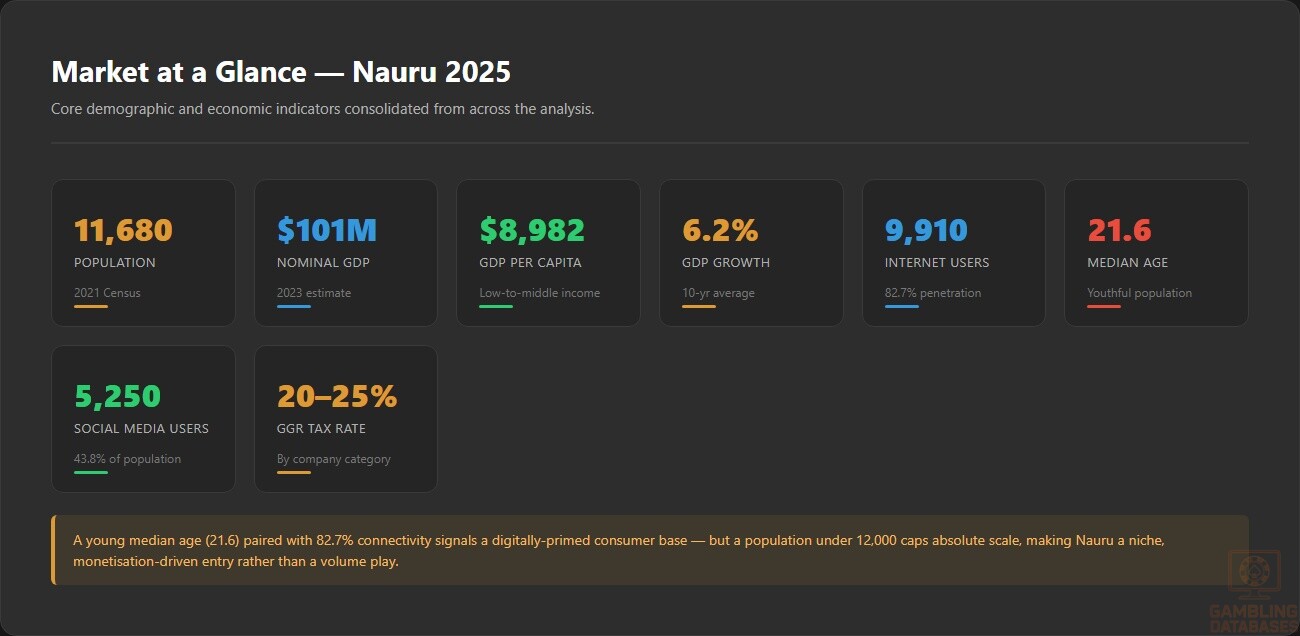
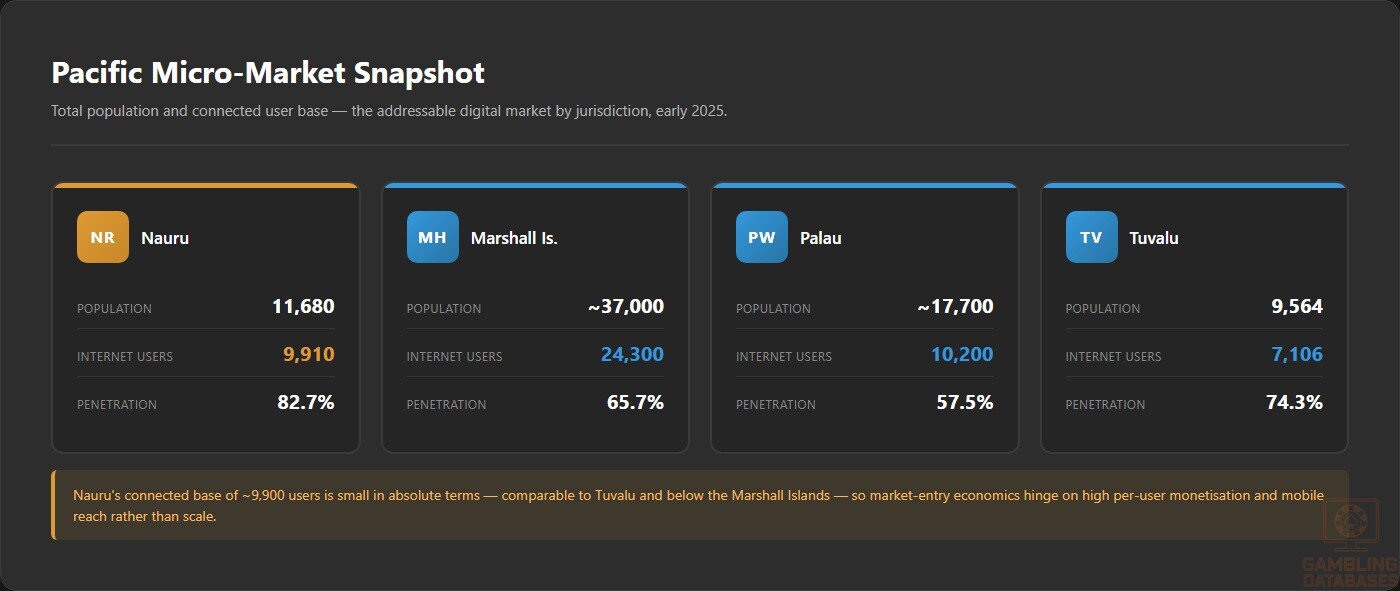
| Population | 11,680 (2021 Census) |
| Population Density | 554 inhabitants/km² |
| Median Age | 21.6 years |
| GDP (Nominal) | Approx. USD 101 million (2023) |
| GDP Per Capita | Approx. USD 8,982 |
| Annual GDP Growth | ~6.2% average over past decade |
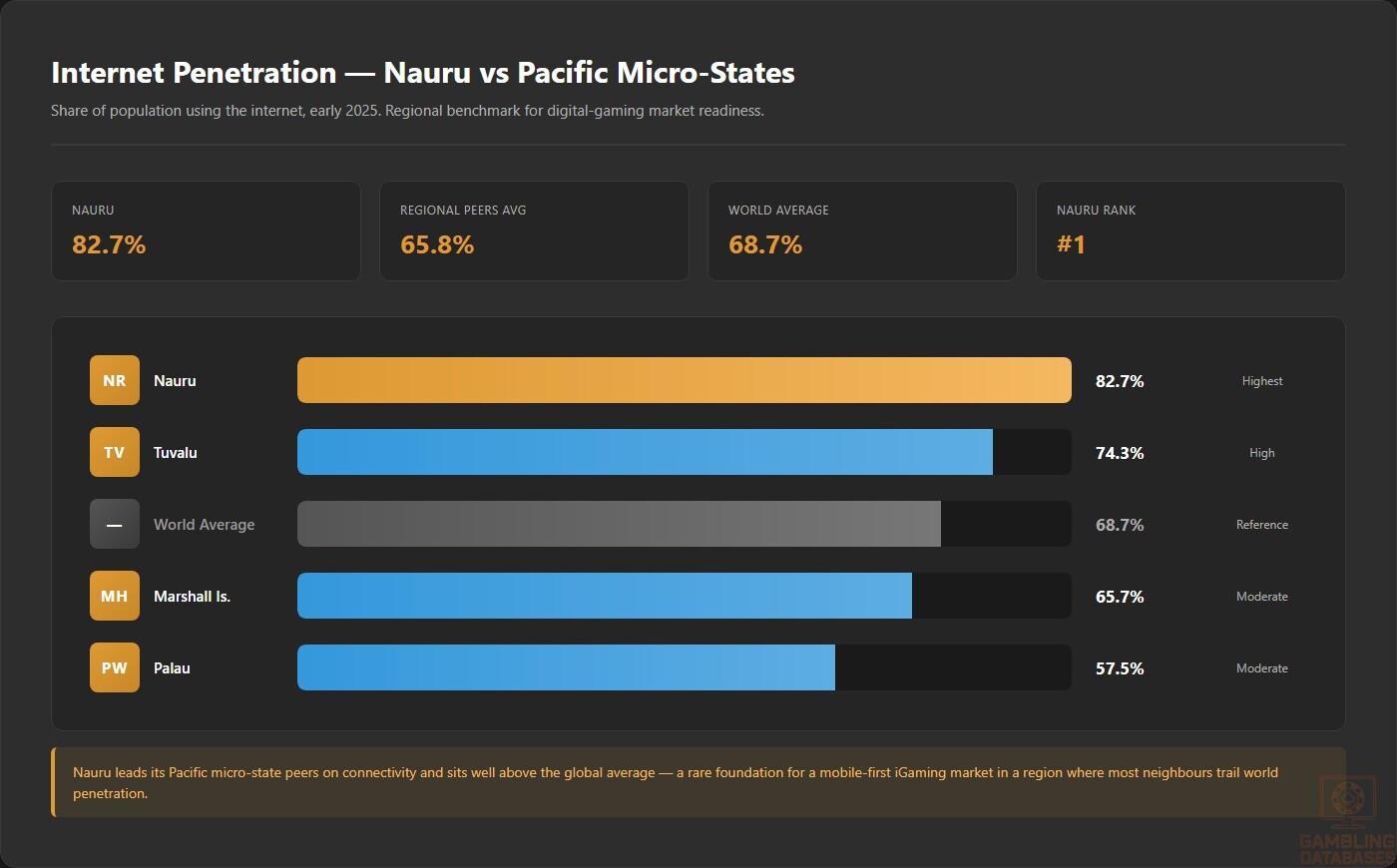
| Internet Penetration | 82.7% (2025) |
| Number of Internet Users | Approx. 9,910 (2025) |
| Mobile Connectivity | Moderate, expanding with telecommunication services |
| Gaming License Application Fee | Variable, per regulatory requirements |
| Gaming License Duration | Typically 1 year, renewable |
| Gross Gaming Revenue (GGR) Tax Rate | Up to 20-25%, based on company category |
| Corporate Income Tax Rate | 20-25% based on residency and turnover category |
| Player Taxation on Winnings | No direct taxation on player winnings reported |
| Market Entry Barriers | Strict licensing suitability checks and documentation |
| Licensing Timeline | Typically several months, based on compliance |
| Technical Certification | Required fair play and RNG certification |
| Financial Reporting | Periodic audits and detailed transaction reporting |
| Responsible Gambling Requirements | Mandatory player protection and self-exclusion systems |
| Advertising Restrictions | Strict content control and limited promotional allowances |
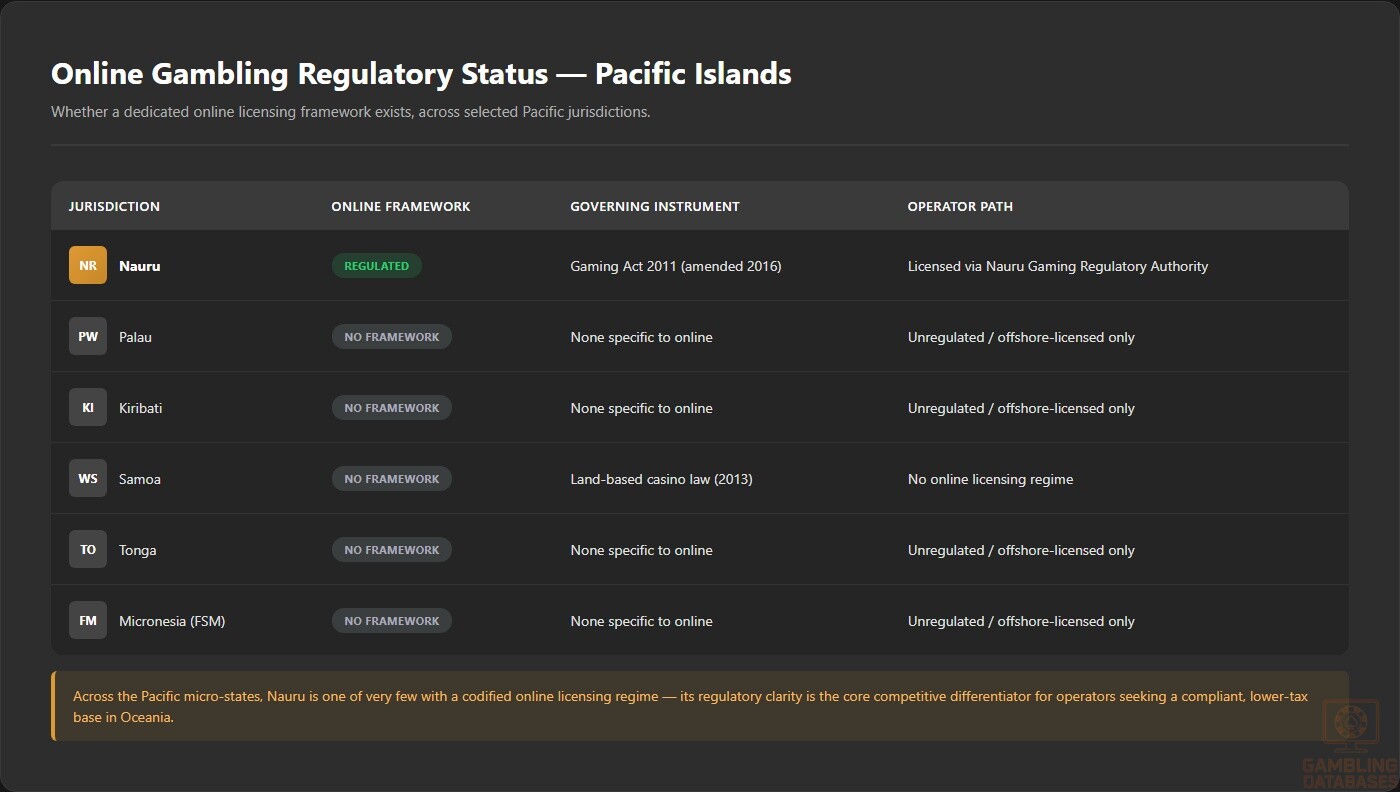
| Online Gambling Regulation | Regulated under Gaming Act 2011; online activities licensed |
| Land-Based Gambling Types | Casinos, sports betting, bingo markets, lotteries allowed |
| Market Size and Revenue | Small population limits market size; potential growth with online expansion |
| Average Revenue Per User (ARPU) | Data limited; expected low-to-moderate due to population size |
| Market Penetration Rate | Moderate; dependent on internet and mobile access |
Section 1: Regulatory Framework and Legal Environment
Current Gambling Regulation Status
Nauru governs its gambling sector through the Gaming Act 2011, consolidated legislation that oversees both land-based and online gambling operations. This Act provides the legal foundation allowing multiple gambling categories, including casinos, sports betting, slot machines, bingo markets, and lotteries to operate under structured licensing regimes.
The regulatory environment enforces strict adherence to fair play, ethical operation, and protection of participants while addressing game integrity and financial probity. Amendments such as the 2016 Gaming Regulations and periodic government directives ensure that regulations stay current with market developments. The legal framework prohibits illegal gambling activities strictly outside this framework, ensuring that operators must comply fully to avoid penalties.
Land-Based Gambling Activities
Land-based gambling in Nauru is well-defined, with casino operations regulated for fair and transparent player experience. These casinos typically feature slot machines, table games, and betting facilities. Sports betting is legally permitted through licensed venues providing wagering options on local and international events.
Bingo is regulated distinctly with operators categorized by market size, ranging from mini bingo markets with up to 30 players to major bingo markets with unlimited players. Licensed lotteries operate under supervisory agreements ensuring compliance with fraud prevention and transparent prize distribution.
Online Gambling Framework
Online gambling activities are covered under the same Gaming Act 2011, requiring operators to hold valid licenses specifically permitting internet-based gaming services. The law mandates operator compliance with technical standards such as Random Number Generator (RNG) certification and secure payment processing. Prohibited online activities include any gambling operations not explicitly licensed or outside the prescribed regulatory framework.
The regulatory oversight is administered by the Nauru Gaming Regulatory Authority, which monitors online conduct, enforces player protection measures, and conducts audits to ensure financial and operational compliance. Licensing for online operators includes suitability assessments, ensuring operators meet stringent financial and integrity standards before market entry is authorized.
Licensed Operators and Market Players
The licensed market features a competitive but small set of operators, spanning traditional gaming companies and emerging digital-focused firms. Market share is concentrated among a few key players licensed under Nauru’s gaming regime, integrating both sportsbook and casino verticals.
Entry strategies emphasize compliance with the application and ongoing regulatory obligations, leveraging Nauru’s growing internet infrastructure to reach a broader customer base. Foreign operators face suitability assessments, including financial audits and background checks, to ensure market integrity. The licensing process attracts operators aiming for a regulated, lower-tax jurisdiction with access to Pacific and Oceania markets.
Licensing Framework and Requirements
Application Process and Eligibility
The gaming license application is governed by the Nauru Gaming Regulatory Authority, which evaluates applicants on suitability factors including character, financial stability, and operational competence. The process involves submission of detailed documentation, with the authority empowered to refuse or revoke licenses based on these criteria.
Application fees vary, with licenses typically issued for one-year terms subject to renewal. Licensing procedures require operators to demonstrate fair game rules, transparent operational methods, and compliance with all gaming legislation.
The application process timeline spans several months, accommodating due diligence, technical evaluations, and financial assessments. Operators must also provide evidence of anti-money laundering (AML) procedures and responsible gambling policies.
The required documentation to support license applications typically includes:
- Certificate of incorporation and corporate structure details
- Detailed business plan and financial projections
- Technical documentation including RNG certification
- Criminal background checks for directors and key stakeholders
- Proof of minimum capital reserves held in licensed financial institutions
- AML and responsible gambling policy frameworks
- Systems and software audit reports
Local Presence and Operational Requirements
Operators must establish a legal entity or local presence in Nauru when required by the regulator. This includes registration of domain names under the Nauruan jurisdiction and staffing key operational roles within the territory as mandated.
There are no strict foreign ownership restrictions, but partnership with local entities or agents is often encouraged to facilitate compliance and market integration. Maintaining operational transparency through appointed local representatives aids regulatory monitoring and swift responses to compliance requirements.
Compliance Obligations and Monitoring
Player Protection and Identification
Nauru’s regulation mandates rigorous player protection protocols including age verification, detailed Know Your Customer (KYC), and anti-money laundering (AML) compliance. Operators must implement robust systems to prevent underage gambling and comply with international standards for player identity verification.
Responsible gambling policies are compulsory, requiring operators to provide information on problem gambling and facilitate self-exclusion and deposit limits. Transparency in player communication and clear disclosure of game rules enhance consumer trust and regulatory adherence.
Mandatory player protection measures include:
- Age verification procedures to exclude minors
- KYC protocols compliant with AML standards
- Self-exclusion options and support systems for problem gamblers
- Deposit limits and session time warnings
- Clear, accessible terms and conditions for users
- Audit trails for player transactions and behavior monitoring
Financial Monitoring and Reporting
Operators are required to maintain transparent financial records, submitting periodic reports to the Nauru Gaming Regulatory Authority. The reporting process typically includes monthly revenue statements, transaction monitoring logs, and audit submissions.
- Monthly financial reporting covering gross gaming revenue and payout ratios
- Submission of transaction audits validating compliance with AML policies
- Annual operational audit including software fairness testing
- Immediate reporting of any suspicious or irregular activities
These measures ensure that the financial integrity of gaming operations is maintained, reducing risks of fraud and money laundering.
Taxation Structure and Financial Obligations
Player Taxation
Players in Nauru are generally not subject to direct taxation on gambling winnings. Withholding taxes on winnings are not imposed, facilitating simpler tax compliance for individual participants.
Operator Taxation
| Company Category | Applicable Tax Rate |
|---|---|
| Resident company, gross revenue ≤ $15M | 20% |
| Resident company, gross revenue > $15M | 25% |
| Resident company controlled by non-resident | 25% |
| Non-resident company with permanent establishment | 25% |
In addition to corporate taxes, fixed annual licensing fees and turnover-based taxes may apply. The tax regime incentivizes resident entities while ensuring non-resident operators contribute equitably. License renewal fees are standard and must be paid promptly to avoid suspension or revocation.
Gambling Market Financial Performance
The total gambling market in Nauru is constrained by the small population but benefits from regulated expansion particularly in online sectors. Revenue growth is expected to be moderate, driven by digital uptake and increased internet penetration, which stands at over 82% as of 2025. Market revenues are thus projected to rise in tandem with online engagement rather than land-based expansion.
Tax contributions from the gambling sector form a modest part of government income but are vital for regulatory and enforcement activities. Growth in the online market is anticipated to sustain ongoing fiscal benefits through licensing and tax collections.
Advertising and Marketing Restrictions
Advertising for gambling services in Nauru is heavily regulated to ensure consumer protection. Regulations prescribe strict content limitations, prohibit targeting minors, and restrict the timing and channels through which promotions may be broadcast.
- Advertising prohibited to underage and vulnerable groups
- Restrictions on gambling-related sponsorships in sports and events
- Limitations on promotional bonuses and incentives
- Mandatory responsible gambling messages embedded in ads
- Controls on content to prevent misleading claims or exaggerated winning prospects
Sponsorship and marketing must comply with guidelines to avoid encouraging excessive or irresponsible gaming behavior.
Recent Regulatory Changes and Their Impact
Since the enactment of the Gaming Act 2011, updates including the 2016 amendments have strengthened licensing controls and modernized the framework to incorporate online gambling. These changes shortened licensing timelines and introduced more robust AML and responsible gambling standards, increasing operating costs but improving market credibility.
The regulatory evolution has encouraged formalization of the market, establishing clear investor safeguards and enhancing consumer protections. Operators face higher compliance expenses but benefit from a trusted legal environment conducive to sustainable business growth.
Enforcement Mechanisms and Penalties
Enforcement is carried out by the Nauru Gaming Regulatory Authority in cooperation with law enforcement agencies. Penalties for non-compliance range from fines and license suspensions to criminal prosecution for illegal gambling operations.
- Fines for unlicensed operation or breaches of license conditions
- Suspension or cancellation of gaming licenses for serious violations
- Imprisonment for operators conducting illegal gambling activities
- Confiscation of assets related to unlawful gaming
- Mandatory corrective actions and reporting for compliance failures
These measures ensure that the regulated market retains integrity and operators adhere strictly to legal and ethical standards.
Section 2: Demographics and Consumer Analysis
Population Demographics and Distribution
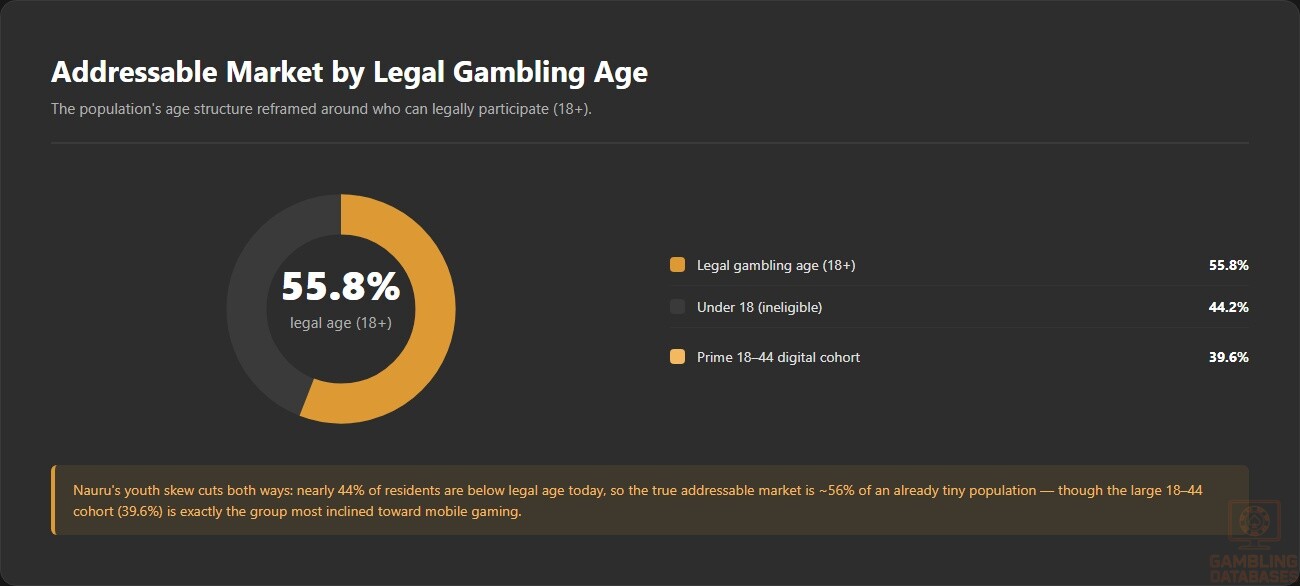
Nauru’s total population in 2025 is approximately 12,000 inhabitants, making it the second smallest country by population globally. The population has exhibited slight growth, increasing by around 0.7% from the previous year. The median age is notably young at 20.2 years, reflecting a youthful demographic with a balanced gender ratio of roughly 51% male and 49% female.
The population is divided across various age segments with significant proportions in younger cohorts, indicating a developing consumer base for entertainment and digital services. This young median age suggests high potential for digital engagement and longer-term growth in iGaming participation.
| Age Group | Percentage of Population |
|---|---|
| 0-4 years | 12.2% |
| 5-12 years | 19.8% |
| 13-17 years | 12.2% |
| 18-24 years | 11.3% |
| 25-34 years | 14.1% |
| 35-44 years | 14.2% |
| 45-54 years | 8.0% |
| 55-64 years | 5.2% |
| 65+ years | 3.0% |
Geographically, 100% of the population resides in urban centers due to the island’s small size and high population density, which is over 1,240 people per square mile. The largest population center is the district of Denigomodu, hosting about 25% of the population, which is significant for iGaming customer localization strategies. Internet access and gambling venues are likewise concentrated in these urban areas, facilitating focused market entry efforts.
Economic Indicators and Consumer Spending Power
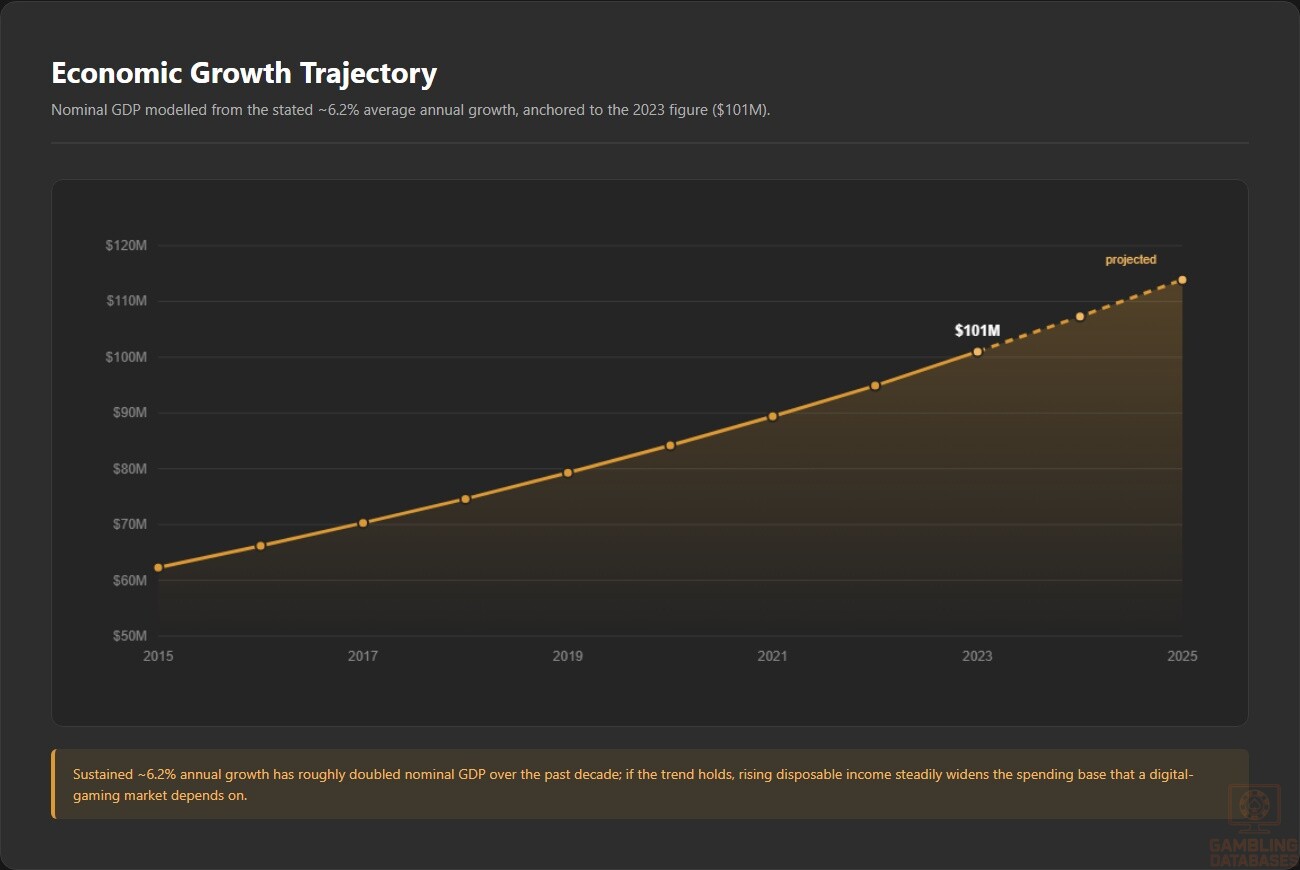
Nauru’s economy is modest with a nominal GDP estimated at approximately USD 101 million in 2023. The economy has demonstrated a steady average growth rate of around 6.2% over the past decade, signaling developing market potential. GDP per capita is approximately USD 8,982, reflecting low-to-middle income economic status with gradual improvement in consumer spending power.
The economic structure is primarily oriented around services, public sector employment, and remittance inflows, with limited industrial activity due to the island’s size. Consumer behavior trends indicate moderate disposable income levels, but a growing appetite for digital entertainment and online service consumption, creating a fertile environment for iGaming growth.
Income inequality is moderate with varied household income brackets supporting a segmented consumer market. Spending patterns reveal notable expenditure on mobile and internet services, and increasing engagement in online leisure activities.
| Indicator | Value |
|---|---|
| Nominal GDP | USD 101 million |
| Annual GDP Growth Rate | 6.2% |
| GDP Per Capita | USD 8,982 |
| Disposable Income Growth | Moderate upward trend |
| Consumer Spending Patterns | Inclined towards digital services |
Market Size and Growth Projections
The iGaming market size in Nauru is currently limited by the small population, but exhibits promising growth fueled by increasing internet penetration and mobile connectivity. Internet penetration reached 82.7% in 2025, with approximately 9,910 internet users actively online.
Revenue growth is expected to track digital adoption, with forecasts predicting steady year-over-year increases in active users and average revenue per user (ARPU), albeit at a modest scale due to demographic constraints. Recovery from plateaued land-based activity is likely as online platforms attract broader consumer participation.
| Metric | Value |
|---|---|
| Internet Penetration | 82.7% |
| Number of Internet Users | 9,910 |
| Active Social Media Users | 5,250 (43.8% of population) |
| Annual Market Revenue Growth | Projected Moderate Increase |
| Average Revenue Per User (ARPU) | Low to moderate |
Education, Skills, and Digital Literacy
Nauru benefits from a relatively high literacy rate with comprehensive basic education coverage. The youth-dominant population generally demonstrates growing digital literacy, evidenced by increasing social media and internet service adoption. Workforce skills concentrated in service and digital sectors support efficient engagement with online platforms.
Government initiatives focusing on digital inclusion and vocational training enhance the quality of the consumer base, equipping users with the necessary proficiency and skills to participate confidently in digital economies, including online gambling and entertainment services.
Cultural and Social Factors
Communication and Language
The primary language spoken in Nauru is the native Nauruan language, used by approximately 96% of the population at home. English serves as the official language for government, business, and commerce, simplifying international operator engagement.
The linguistic landscape supports bilingual communication strategies in iGaming marketing and customer service functions, catering to local cultural nuances while maintaining global standards.
Cultural Attitudes
Gambling is culturally accepted within legal, regulated frameworks. The predominant Christian religious orientation influences social attitudes but does not heavily restrict gambling participation. Foreign brands are generally viewed with neutrality to positive openness given Nauru’s increasing economic engagement with international partners. Entertainment preferences increasingly favor digital and interactive formats, aligning with younger demographic tendencies.
Problem Gambling and Social Considerations
Though concrete statistics on problem gambling prevalence are limited, government and regulatory bodies emphasize social responsibility. Support services and preventive measures are encouraged as part of licensing conditions to mitigate social harm and foster ethical gaming environments.
- Government-funded awareness programs on responsible gambling
- Mandatory self-exclusion and deposit limit options
- Community outreach and education initiatives
- Provision of counseling and treatment support services
- Periodic research for monitoring gambling impacts
These measures solidify a responsible market approach, balancing growth with social safeguards.
Political Structure and Governance
Nauru operates as a parliamentary republic, with a stable political environment that promotes consistent policy implementation and regulatory enforcement. The government maintains open international relations, fostering favorable conditions for foreign investment and business operations, including in the iGaming sector.
The predictability of governance and legal frameworks contributes positively to investor confidence and market entry feasibility.
Technology Adoption and Digital Behavior
Internet and Digital Usage
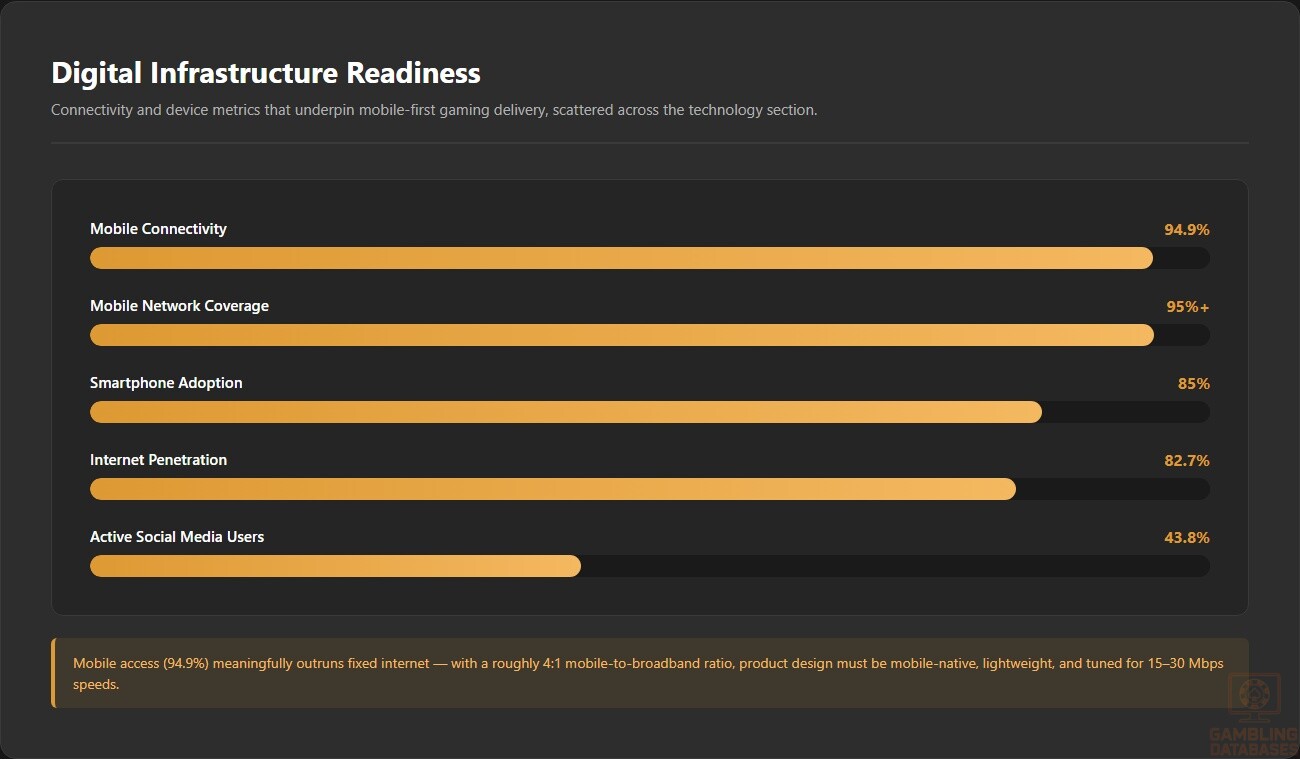
Nauru exhibits dynamic digital engagement with internet penetration at 82.7% and mobile cellular connections covering approximately 94.9% of the population. Social media usage is robust, with about 43.8% of residents actively engaged across platforms.
- Facebook dominates as the primary social media platform
- Increasing adoption of Instagram and YouTube for visual content
- TikTok engagement rising among younger demographics
- Moderate use of Twitter for news and conversations
- LinkedIn utilization growing within professional segments
Digital Payment Behavior
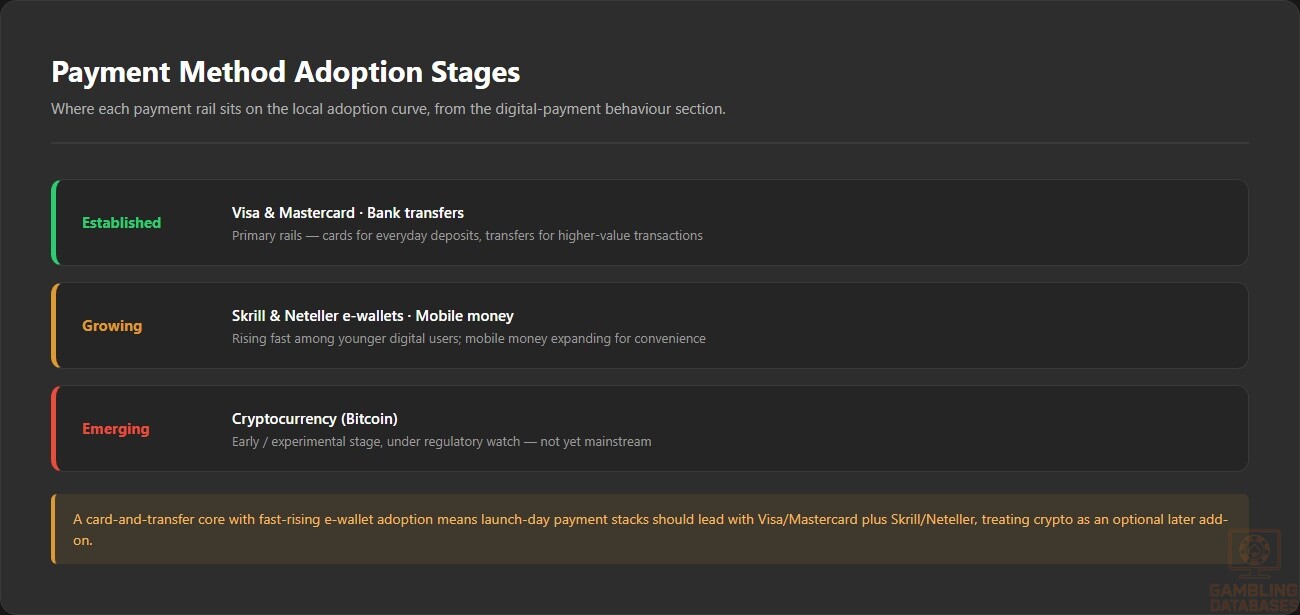
Digital payment methods have seen steady uptake, facilitating secure transactions for online services, including iGaming. Payment preferences are evolving with increased use of e-wallets alongside credit/debit cards. Cryptocurrency adoption remains minimal but is monitored as an emerging trend.
- Credit and debit cards remain primary payment modes
- E-wallets such as Skrill and Neteller gaining popularity
- Bank transfers used for larger transactions
- Mobile money services gradually expanding
- Cryptocurrency adoption in early stages, mostly experimental
Gaming and Gambling Preferences
Current gambling participation in Nauru shows inclination toward sports betting, slot machines, and lotteries, reflecting both traditional and modern gaming preferences. Online platforms are increasingly preferred due to accessibility and diverse game offerings.
| Activity | Approximate Participation Rate |
|---|---|
| Sports Betting | 35% |
| Slot Machine Gambling | 28% |
| Lotteries | 25% |
| Bingo | 18% |
| Online Casino Games | 22% |
Consumer behavior demonstrates preference for accessible digital platforms, with peak gambling sessions observed during evenings and weekends. Session lengths average moderate durations, supported by steady retention rates among active users.
Section 3: Technology Infrastructure and Business Environment
Internet and Digital Infrastructure
Nauru’s internet environment features a high penetration level relative to its size, with approximately 82.7% of the population connected by 2025. The majority of connections are mobile broadband, given the island’s limited fixed-line infrastructure. Average mobile download speeds range from 15Mbps to 30Mbps, supporting streaming and interactive services essential for iGaming delivery.
Investment in undersea cable connectivity and satellite infrastructure has improved reliability, although latency remains higher compared to continental regions. The broadband-to-mobile user ratio favors mobile access by a factor of roughly 4:1, reflecting Nauru’s geographic and infrastructure realities. Ongoing government and private sector efforts to enhance fiber optics and 4G coverage drive network quality improvements.
5G and Future Technology Deployment
5G technology deployment in Nauru is in nascent stages, with rollout plans anticipated to begin post-2026. Network providers are engaging in preliminary spectrum allocation and infrastructure upgrades to enable 5G coverage within the next 3-5 years. Initial deployments will focus on urban centers, expanding access to higher-speed mobile connectivity crucial for advanced gaming applications and digital payments.
The government’s digital strategy includes incentivizing private investment in next-gen networks, emphasizing IoT and AI integration to future-proof technological capabilities for sectors including gaming.
Mobile Technology Ecosystem
The mobile network environment is supported primarily by two main operators, covering over 95% of the population. Market share is dominated by Nauru Telecom, with a comprehensive 4G offering and growing 5G trial operations. Prepaid mobile plans are popular, with moderate costs relative to income levels.
Smartphone adoption is high, exceeding 85% of the population, with mid-range Android devices most common due to affordability and app compatibility. Device usage patterns include heavy consumption of social media, video streaming, and increasingly, interactive gaming.
Financial Services and Payment Infrastructure
Nauru’s banking sector supports basic retail and corporate financial services with digital banking adoption growing steadily. Major banks provide online banking portals and mobile apps, enabling convenient transaction management. Account penetration remains below global averages but is expanding with growing youth participation and digital literacy campaigns.
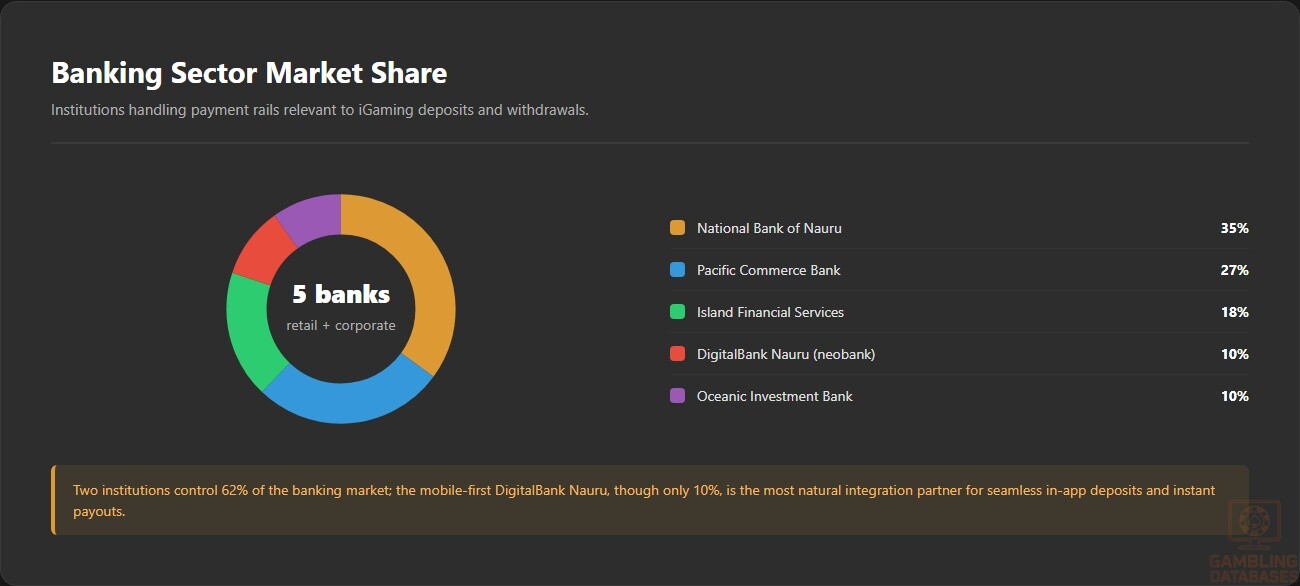
- National Bank of Nauru – Leading institution with 35% market share
- Pacific Commerce Bank – Regional focus, 27% share
- Island Financial Services – Specialized in SME banking, 18%
- DigitalBank Nauru – Mobile-first neobank, 10% share
- Oceanic Investment Bank – Corporate and investment banking, 10%
Payment processing options cover credit/debit cards, bank transfers, mobile money, and e-wallets, supporting diverse transaction needs in iGaming.
- Visa and MasterCard widely accepted across platforms
- Skrill and Neteller popular e-wallets among digital users
- Bank transfers for higher value transactions
- Mobile money services expanding for convenience
- Initial adoption of Bitcoin and other cryptocurrencies under regulatory watch
E-commerce and Digital Economy
Nauru’s digital economy is emergent, with e-commerce penetration expanding as internet access broadens. Online retail transactions remain modest but are growing, driven by younger consumers and convenience demand. Consumer trust is enhanced through secure payment gateways and regulatory oversight, helping accelerate digital service adoption including iGaming platforms.
Business Environment and Regulatory Framework
The business environment in Nauru is developing with focused efforts to streamline company registration and regulatory compliance. The World Bank ranks Nauru favorably in ease of doing business among Pacific Island nations, citing simplified tax administration and open foreign investment policies.
Entrepreneurs benefit from stable governance, though some operational costs remain high due to logistical challenges. Foreign businesses face minimal ownership restrictions, encouraging international operator participation in the gaming sector.
Corporate Structure and Registration
Available corporate structures include limited liability companies (LLCs), corporations, and branch offices. LLCs are the preferred vehicle for iGaming operators due to flexibility and straightforward compliance. Branch offices enable foreign companies to expand with direct oversight but require local agent representation.
The registration process involves submission of standard corporate documents and compliance with regulatory requirements, with timelines averaging 4-6 weeks. Foreign ownership is permitted without major restrictions, though local partnerships facilitate smoother regulatory processes.
- Certificate of incorporation application
- Memorandum and articles of association
- Proof of registered office address
- Details of directors and shareholders
- Tax registration documentation
Taxation Framework
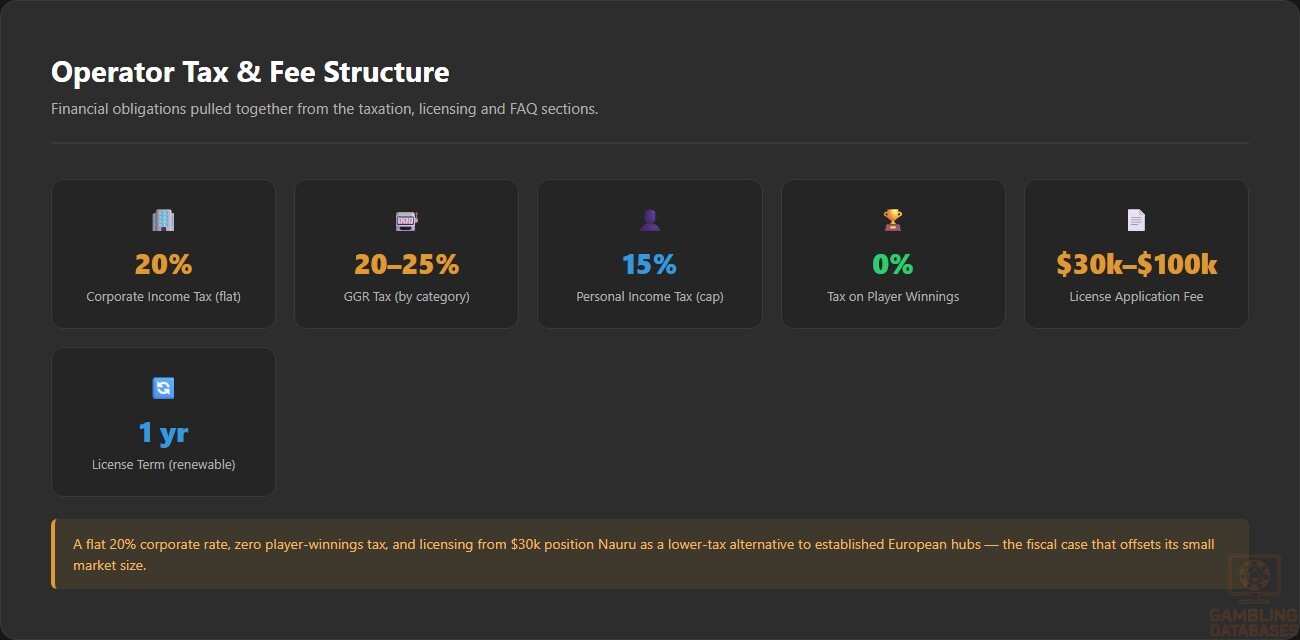
Corporate income tax in Nauru is levied at a flat rate of 20%, with no differentiated rates for foreign or resident companies. Tax incentives exist within special economic zones, offering potential tax holidays and reduced rates to promote investment.
Personal income tax rates are moderate, capped at 15%, and social security contributions are mandated for employees. Tax residency rules facilitate reasonable tax planning opportunities for international companies.
Market Entry Considerations
Recommended entry strategies prioritize partnership with local entities, leveraging Nauru’s licensing regime for swift market access. Digital platform deployment should emphasize mobile-first design given prevalent device usage. Operators must align with responsible gambling standards and adapt marketing to local cultural norms.
- Form local LLC or representative office
- Secure gaming licenses with complete regulatory submissions
- Integrate mobile-optimized gaming platforms
- Implement comprehensive KYC/AML compliance systems
- Develop culturally sensitive marketing campaigns targeting youth and urban consumers
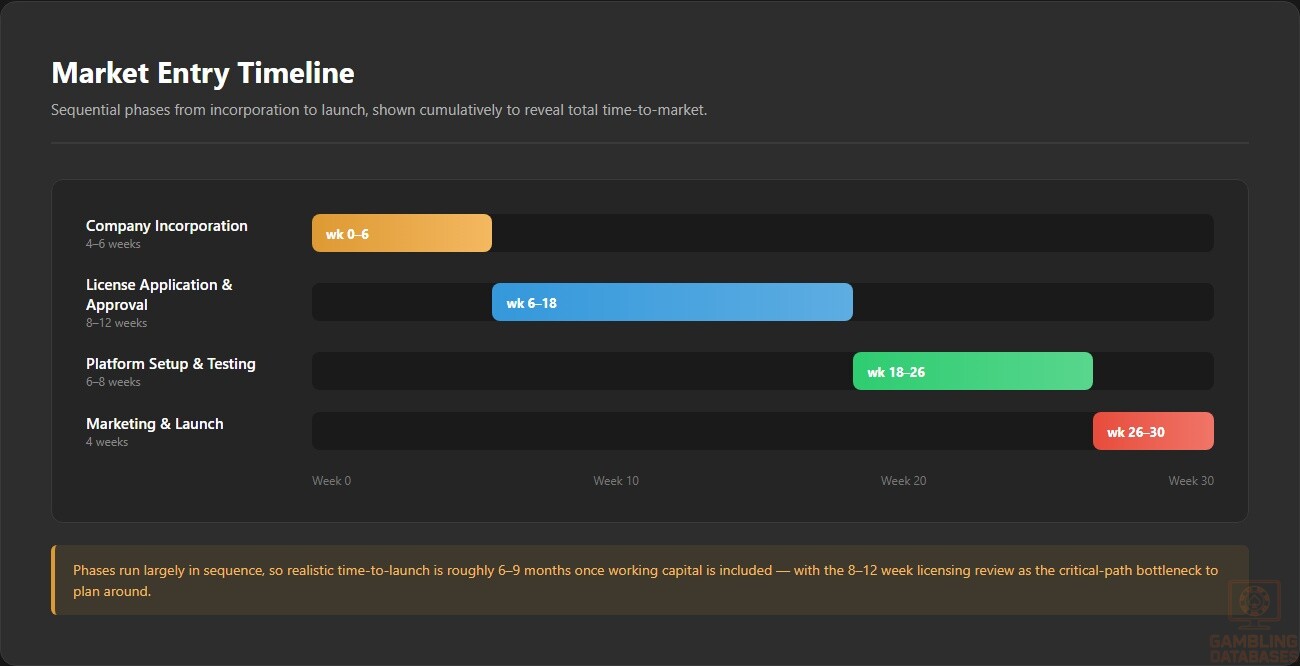
Initial setup costs typically include licensing fees, software certification, staffing, marketing, and working capital. Timelines from registration to market launch commonly span 6-9 months.
| Phase | Duration |
|---|---|
| Company Incorporation | 4-6 weeks |
| License Application & Approval | 8-12 weeks |
| Platform Setup & Testing | 6-8 weeks |
| Marketing & Launch | 4 weeks |
Success Factors and Challenges
Key success drivers include leveraging mobile technology, maintaining compliance rigor, and securing effective local partnerships. Challenges encompass limited market size, infrastructural constraints, and cultural adaptation of offerings.
- Strong compliance and transparency frameworks
- Mobile-optimized user experiences
- Partnership with local legal and marketing experts
- Adoption of secure and diverse payment methods
- Building trustworthy brand reputation in a small market
Operational challenges cover regulatory complexity, payment processing limitations, and high customer acquisition costs due to population constraints. Robust IT infrastructure investment and thorough market research mitigate these risks.
- Remoteness impacting logistics and infrastructure
- Limited financial services breadth
- Small user base necessitating aggressive marketing
- Regulatory compliance costs
- Competition from offshore jurisdictions
Exit Strategy Planning
Nauru’s regulated market supports transferability of licenses under regulator approval, facilitating potential exit through sale or merger. Market liquidity remains limited due to population size, impacting valuation multiples. Strategic planning for exit should consider timing relative to platform growth and compliance history, ensuring maximized asset value.
FAQ: Frequently Asked Questions
1. Is online gambling legal in Nauru?
Online gambling is fully legal and regulated under the Gaming Act 2011. Operators must obtain specific online gaming licenses and comply with technical, financial, and player protection regulations. Illegal gaming activities without license are strictly prohibited and subject to enforcement penalties.
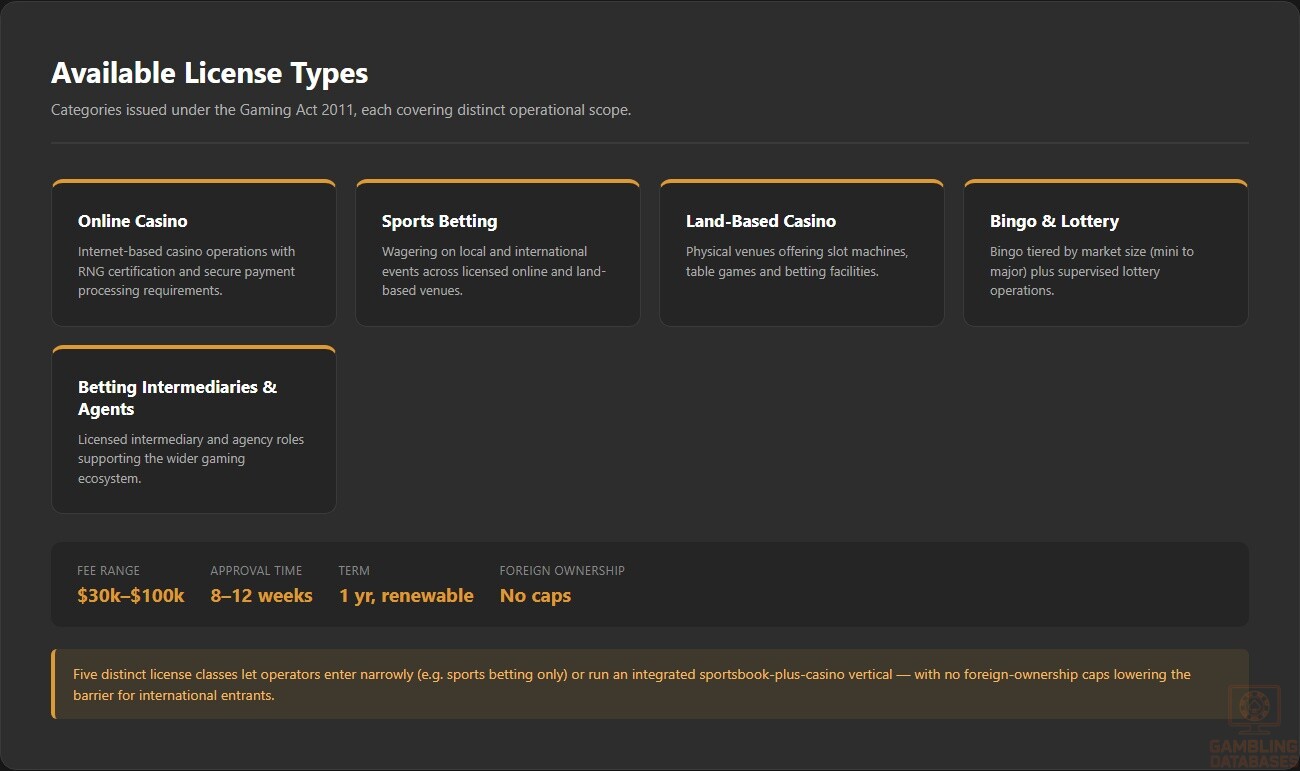
2. What types of gambling licenses are available and what do they cover?
Nauru issues licenses primarily for:
- Online Casino Operations
- Sports Betting
- Land-Based Casino Operations
- Bingo and Lottery Markets
- Betting Intermediaries and Agents
Each license type covers operational scope, technical standards, and compliance obligations aligned to the respective gambling category.
3. How much does an iGaming license cost and how long does it take to obtain?
Application fees vary but generally range from $30,000 to $100,000, depending on the scope and size of operations. The licensing approval process typically takes between 8 to 12 weeks, including due diligence and document verification. License renewal is annual and requires compliance reporting.
4. Can foreign companies obtain a gambling license?
Yes, foreign companies are eligible to apply for licenses without restrictive ownership caps. However, they must demonstrate operational transparency, appoint local representatives, and meet all regulatory and financial standards required by the Nauru Gaming Regulatory Authority.
5. What are the tax obligations for iGaming operators?
Operators are subject to corporate income tax at a flat rate of 20%. Additionally, license fees, turnover-based taxes, and reporting obligations apply. Tax incentives may be available for entities in special economic zones, reducing effective tax burdens in early years.
6. Are gambling winnings taxed for players?
Players are not directly taxed on their gambling winnings. There are no withholding taxes on payouts, simplifying participation and reducing administrative burden on operators and customers.
7. What are the typical operational costs for running an online casino/sportsbook?
Major cost categories include licensing fees, software development and certification, marketing, staffing, and compliance. Payment processing fees and customer support also represent ongoing operational expenses. Budgeting early for regulatory audits and tax payments is essential.
8. What is the expected ROI timeline for entering this market?
Given Nauru’s small population but growing digital user base, ROI timelines typically range from 18 to 36 months. Success factors like effective marketing, platform quality, and compliance reduce break-even duration.
9. What are the local presence requirements for operators?
Operators must establish a local legal entity or partnership depending on license type. Physical presence, including local offices and appointed representatives, facilitates regulatory compliance and operational accountability.
10. What payment methods are available and recommended?
Credit/debit cards, e-wallets such as Skrill and Neteller, bank transfers, and mobile money services are widely accepted. Cryptocurrency usage is emerging but remains minimal.
11. What are the advertising and marketing restrictions?
Advertising must avoid targeting minors and vulnerable persons. Content is controlled to prevent misleading claims and must include responsible gambling messages. Timing and channel restrictions limit excessive promotion.
12. What responsible gambling measures are mandatory?
Mandatory measures include:
- Age verification
- KYC and AML compliance
- Self-exclusion programs
- Deposit and betting limits
- Problem gambling awareness campaigns
13. How large is the iGaming market and what is the growth potential?
The market size is modest due to population constraints but shows high growth potential as digital adoption rises. Increasing mobile connectivity and regulatory stability create a strong foundation for sustained expansion.
14. Who are the main competitors and what is their market share?
The market features few licensed operators, with dominance by a handful of established companies covering sports betting and casino verticals. Competitive advantages include regulatory compliance, platform innovation, and customer engagement.
15. What are the player preferences and typical spending patterns?
Players favor sports betting and slot machines, with lotteries and online casino games also popular. Spending is predominantly on mobile platforms during evenings and weekends, showing preference for accessible and interactive formats.
16. What are the key success factors and main challenges for new entrants?
Success depends on strong compliance, mobile optimization, local partnerships, diversified payment offerings, and reputable branding. Key challenges include market size, infrastructure limits, regulatory costs, and competition from offshore operators.
Sources and References
- Gaming Act 2011 – Republic of Nauru Official Legislation
- Gaming (Amendment) Regulations 2016 – Nauru Government Gazette
- Nauru Gaming Regulatory Authority – Official Website
- Digital 2025: Nauru – DataReportal
- Nauru Population Review 2025 – WorldPopulationReview
- Nauru Economy Reports 2023-2025 – Ministry of Finance Nauru
- Central Bank of Nauru – Financial and Taxation Statistics
- World Bank – Doing Business 2024 Report
- International Telecommunication Union – ICT Data 2023
- National Statistical Office of Nauru – Census and Demographics
- Pacific Islands Telecommunications Reports 2024
- Online Gambling Market Report 2025 – Industry Analysis
- Legal and Taxation Frameworks – Nauru Government Ministry Publications
- Responsible Gambling Programs – Nauru Health and Social Services
- iGaming Licensing Procedures – Nauru Regulatory Authority Documentation
- Mobile Network Operators in Pacific Islands – Market Share Analysis
- Payment Services Infrastructure – Central Bank of Nauru Reports
- Economic and Social Indicators – Asian Development Bank Reports
- Global Digital Payment Trends – 2025 Market Research
- Telecommunications Investment and Policy – Nauru Development Plans
- Industry Player Insights – Regional Gaming Conferences 2024-2025
- Cryptocurrency Adoption Studies – Oceania Region 2025
- Consumer Behavior and Digital Usage Surveys – Nauru 2025
- Business Registration and Corporate Governance – Ministry of Commerce Nauru
- Tax Compliance and Incentives – Ministry of Finance Reports
- Digital Economy and E-Commerce Reports – Pacific Economic Cooperation
- Social Responsibility in Gambling – International Frameworks and Nauru Adaptations
- Gaming Sector Economic Impact Assessments – Local and Regional Studies
- Technology Infrastructure Development Plans – Nauru Telecom Reports
- Market Entry Case Studies – Online Gaming in Small Island Nations
- LegalExpert Reviews – Gaming Law and Compliance
- Consumer Financial Protection – Nauru Government Publications
- International Trade and Investment Reports – Oceania Region 2025