

Sierra Leone presents a growing opportunity for iGaming market entrants with its evolving gambling landscape and expanding digital economy. While currently lacking dedicated online gambling regulations, the country permits legal land-based gambling and operates a national lottery. This regulatory ambiguity offers both challenges and prospects for future online gaming regulation.
With a young population and increasing mobile connectivity, Sierra Leone’s iGaming sector is poised for growth if regulatory clarity and infrastructure improvements align. This analysis provides a detailed look at the country’s current regulatory environment and legal framework affecting iGaming market entry.
Executive Summary: Key Market Indicators
| Metric | Value |
|---|---|
| Gambling Legal Status | Legal with partial regulation; no specific online gambling regulation |
| Regulatory Authority | No dedicated online gambling regulator; land-based regulated under Ministry of Finance |
| Licensed Land-Based Casinos | 1 (Bintumani Hotel and Casino) |
| National Lottery Operator | Mercury International (state lottery operator) |
| Online Gambling Licensing | Not currently established; potential for future framework |
| Minimum Gambling Age | 18 years |
| Gambling Taxation Structure | Gross Gaming Revenue (GGR) tax rates currently unspecified for online; corporate tax 25% |
| Corporate Income Tax Rate | 25% |
| Withholding Tax on Dividends (Non-resident) | 10% |
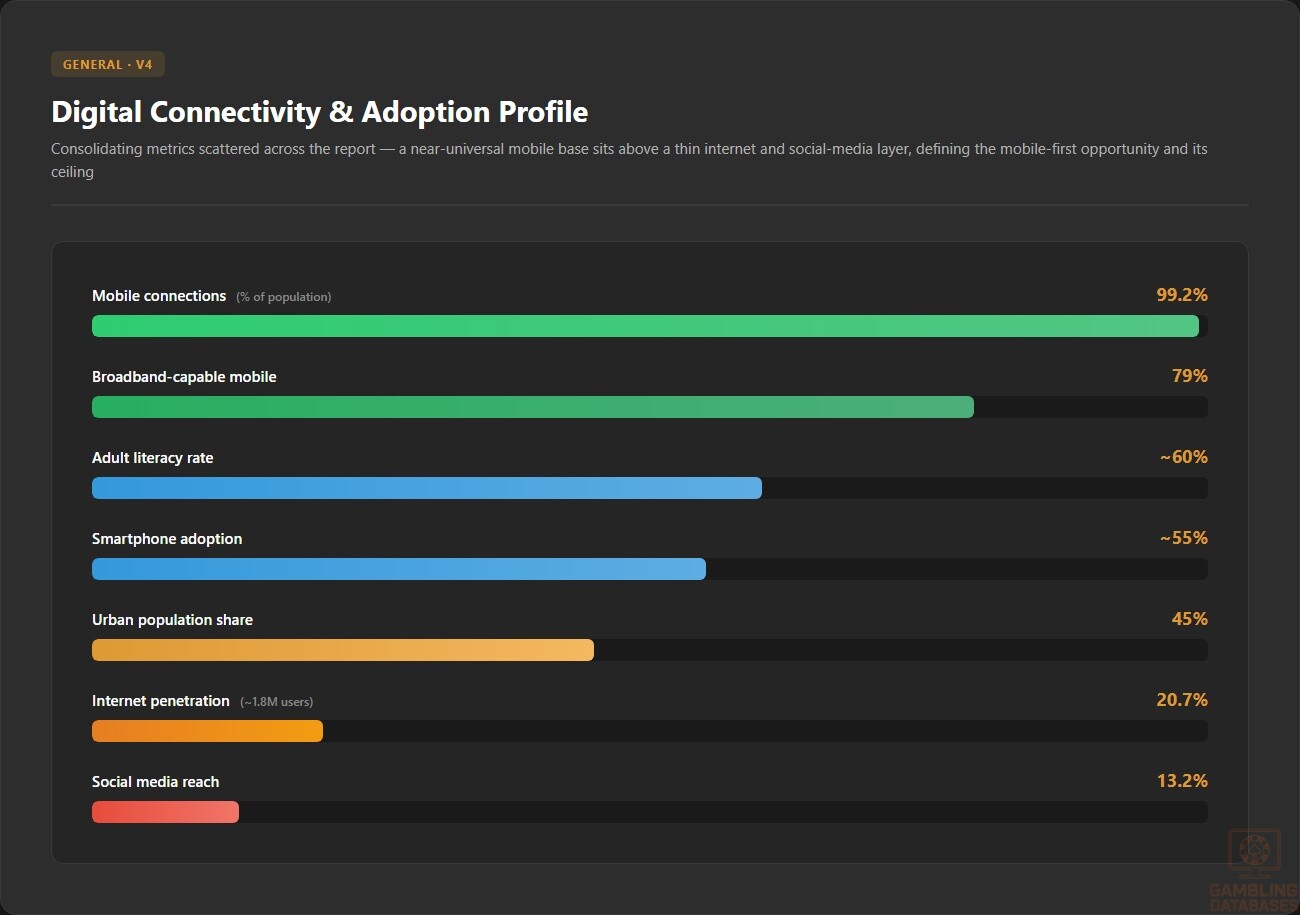
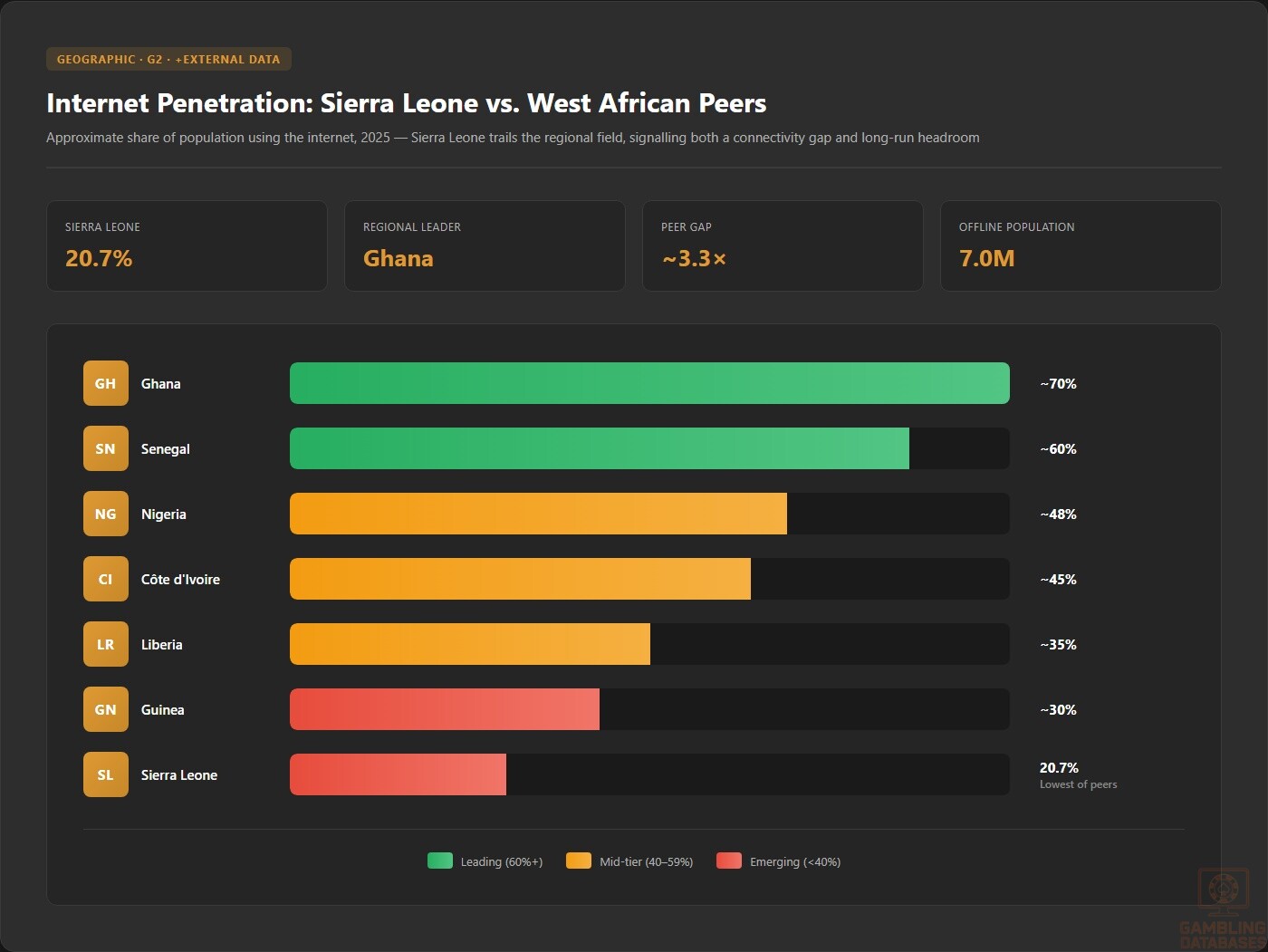
| Internet Penetration Rate | 20.7% (approx. 1.8 million users) |
| Mobile Penetration Rate | 99.2% of population; 79% broadband capable |
| Population Size | 8.8 million |
| Median Age | 19.7 years |
| Urban Population Share | 45% |
| GDP (Current Market Prices) | Approx. $7.3 billion USD (2025 forecast) |
| GDP Growth Rate | 4.5% projected annual growth |
| Digital Infrastructure | Improving but limited broadband availability and low fixed internet penetration |
| Market Size (Gambling) | Modest; dominated by land-based lottery and casino sectors |
| Online Gambling Market Status | Unregulated, with emerging operators present without licensing |
| Licensing Application Fees | Not defined for online gambling; land-based casino fees undisclosed |
| Operator Licensing Requirements | Financial stability, transparency, adherence to responsible gambling for land-based |
| License Renewal | Annual renewal implied for land-based; unknown for online |
| Compliance Obligations | KYC/AML standards applied to land-based operators; online unclear |
| Responsible Gambling Measures | Mandatory for land-based; includes player protection and audits |
| Advertising Regulations | Limited data; traditional advertising allowed under general legal provisions |
| Time to Market Entry | Dependent on regulatory developments; currently unrestricted online operation |
| Foreign Ownership Restrictions | No explicit restrictions reported |
| Business Environment Rank (Africa) | Moderate; ongoing improvements in governance and infrastructure |
| Average Revenue Per User (ARPU) | Not publicly available |
| Market Penetration (Online Gambling) | Low due to regulatory gap and internet penetration |
Section 1: Regulatory Framework and Legal Environment
Current Gambling Regulation Status
Sierra Leone maintains a legal environment where gambling is permitted across various forms, including land-based casinos and lotteries, but lacks a specific regulatory framework for online gambling.
Land-based gambling is regulated primarily through legacy legislation such as the Lotteries Ordinance of 1959, and ongoing oversight is managed by the Ministry of Finance. The country’s gambling landscape currently features one operational licensed casino—Bintumani Hotel and Casino—located near Aberdeen Hill, which offers a limited selection of gaming products.
The national lottery, operated by Mercury International, is a significant component of the regulated gambling sector. It has undergone improvements to streamline processes, increase payout speed, and scale prize offerings, reflecting government interest in optimizing gambling revenues.
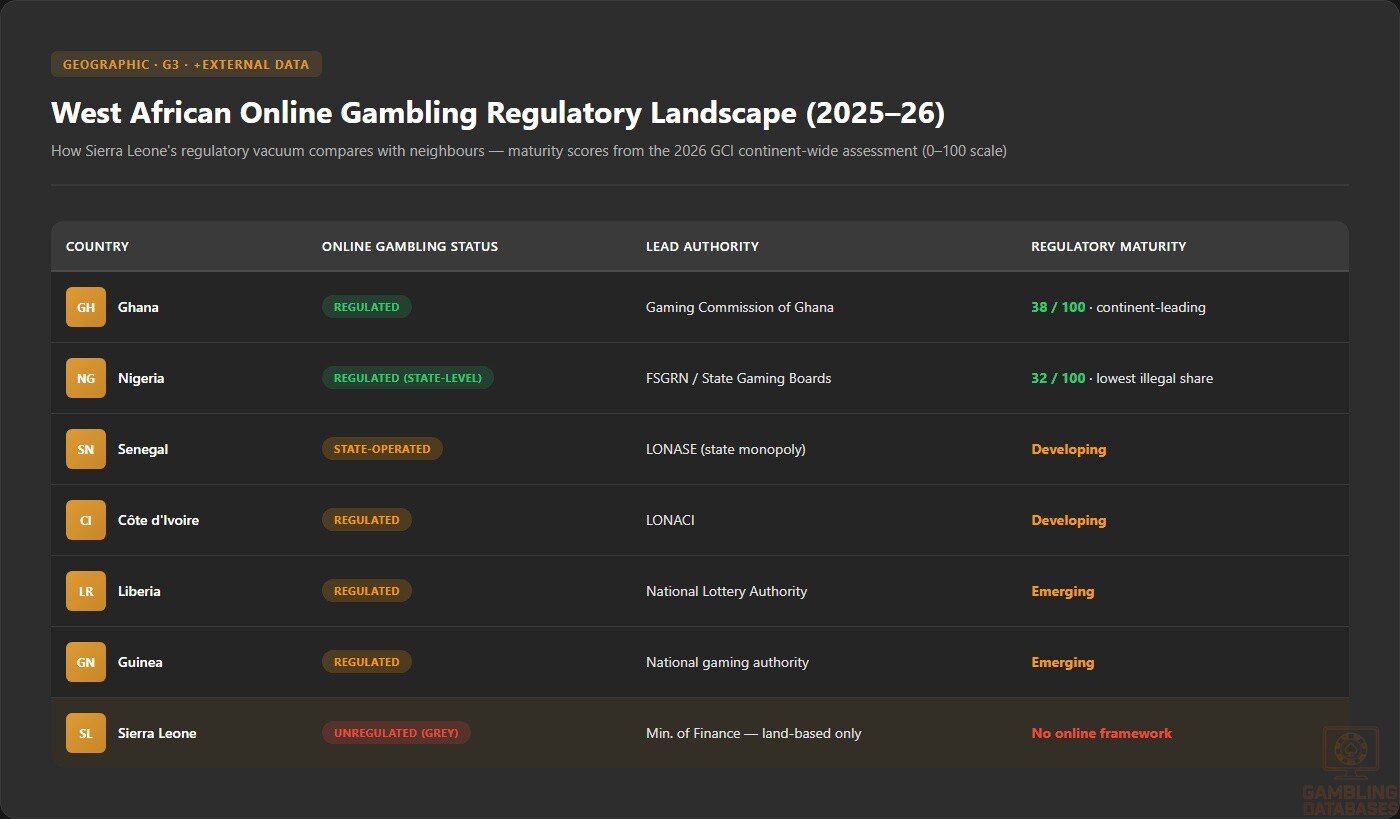
Contrastingly, the online gambling sector remains largely unregulated with no formal licensing body in place. While there is no explicit prohibition on online gambling, this regulatory vacuum leaves operators and players without official protection or oversight. Despite this, several online betting operators offer services in the country under existing commercial laws, though their legal standing is ambiguous.
Land-Based Gambling Activities
Land-based gambling in Sierra Leone includes casino gaming, sports betting, and lotteries, each regulated to varying degrees under existing laws. The Bintumani Hotel and Casino holds the sole casino license, serving a limited customer base with traditional casino offerings such as table games and slot machines.
Sports betting is increasingly popular, often operating without stringent regulatory oversight. Local betting shops and informal outlets contribute to the popularity of sports wagering, though no comprehensive licensing regime specifically governs this sector.
The lottery sector is well-established and regulated under the statutory framework, with the government granting monopoly rights to Mercury International. Lottery operations serve as a significant revenue source for public expenditure through taxation and licensing fees.
Online Gambling Framework
Online gambling in Sierra Leone currently exists in a legal gray area, with no dedicated regulatory authority or licensing system overseeing operator activities. The absence of clear regulations means no formal prohibitions exist, but neither do protections for consumers or operators.
This regulatory gap contrasts sharply with many global markets moving towards stringent online gambling oversight. The government, however, has exhibited openness toward future regulation, as evidenced by continuous improvements in lottery operations and the administration of land-based casinos. This suggests potential development of an online licensing framework in forthcoming years, likely providing legal clarity and regulatory controls.
Licensed Operators and Market Players
The competitive landscape in Sierra Leone is modest, dominated by Mercury International in the lottery sector and a single licensed land-based casino operator. Online operators currently active do so without local licensing, often managing operations from offshore jurisdictions.
Market entry strategies for prospective operators must consider this regulatory uncertainty and the nascent stage of infrastructure supporting digital gambling services. Strategic partnerships with local stakeholders and anticipation of emerging regulations will be critical for sustainable operations.
Licensing Framework and Requirements
Application Process and Eligibility
Currently, there is no established licensing procedure for online gambling operators. The land-based licensing system imposes financial and operational standards overseen by the Ministry of Finance, including profitability, integrity, and operational transparency.
Operators seeking licenses for land-based gambling must demonstrate financial stability and provide detailed business plans. Technical standards and certifications, especially regarding gaming fairness and platform security, are prerequisites though specifics remain undefined in public sources.
Application fees and procedural timelines are not publicly disclosed for online licenses, reflecting the sector’s emerging status. For land-based entities, licensing fees and renewals follow established but unpublished administrative timelines.
Local Presence and Operational Requirements
Land-based operators are required to maintain physical premises and adhere to local operational standards, including employee registration and hosting under domestic jurisdiction. Foreign ownership is permitted without explicit restrictions, though strategic partnerships with local entities may facilitate market acceptance.
No domain or server location mandates exist for online operations, given the absence of regulation, but emerging regulatory proposals may include such requirements to ensure national oversight.
Compliance Obligations and Monitoring
Player Protection and Identification
Operators of licensed land-based gambling must implement player protection protocols such as age verification and compliance with anti-money laundering (AML) regulations. Responsible gambling measures are mandated, focusing on fair play, self-exclusion options, and prevention of problem gambling.
- Mandatory age verification ensuring players are 18 years or older
- Customer identity and address verification under KYC standards
- Screening against criminal and politically exposed persons (PEP) lists
- Implementation of self-exclusion schemes for at-risk players
- Regular training of staff on responsible gambling policies
Online platforms are not yet subjected to these requirements but may adopt similar measures if regulation is introduced.
Financial Monitoring and Reporting
Licensed operators are obligated to monitor all financial transactions to detect suspicious activity, in line with AML standards consistent with Sierra Leone’s Financial Intelligence Unit (FIU) guidelines. Regular reporting of revenue, taxes, and compliance audits to the Ministry of Finance is required on an annual or more frequent basis.
- Submission of financial statements and audit reports annually
- Notification of large or suspicious transactions to regulatory authorities
- Tax filings aligned with gross gaming revenue and corporate income obligations
- Operational reports detailing player activity, complaints, and dispute resolutions
Taxation Structure and Financial Obligations
Player Taxation
There is no direct taxation on player winnings reported in Sierra Leone. Players are generally not subject to withholding taxes or declarations on gambling proceeds, aligning with a player-friendly tax environment.
Operator Taxation
| Tax Type | Rate / Description |
|---|---|
| Corporate Income Tax | 25% standard rate on profits |
| Gross Gaming Revenue Tax | Not formally specified for online gambling; land-based subject to negotiated rates |
| Withholding Tax on Dividends (Non-residents) | 10% |
| License Renewal Fees | Applicable annually; rates undisclosed publicly |
| Turnover Taxes | No publicly available data on turnover taxes |
Gambling Market Financial Performance
Sierra Leone’s gambling market is currently small but gradually expanding. The lottery and land-based casino sectors generate modest revenues contributing to government tax receipts. Although digital gambling’s financial impact remains minimal, projected economic growth and increasing digital adoption support potential market expansion in the next five years.
Year-over-year growth in the gambling sector is supplemented by the government’s willingness to innovate lottery frameworks, promote responsible gambling, and explore regulatory reform for online gaming.
Advertising and Marketing Restrictions
Gambling advertising in Sierra Leone is regulated under general advertising laws without specific provisions for gambling. There are limitations on age-targeted promotions to prevent exposure to minors. Marketing activities generally must comply with national standards on truthfulness and fairness.
- Restriction of advertising targeting persons under 18 years
- Prohibition on misleading claims about winnings or odds
- Limits on promotional offers to avoid encouraging excessive gambling
- Adherence to public decency and cultural norms in promotional content
- Sponsorships subject to transparency and anti-corruption guidelines
Recent Regulatory Changes and Their Impact
There have been no significant recent legislative changes directly impacting online gambling regulation. However, incremental updates in lottery operations and land-based casino oversight point to growing governmental interest in the broader gambling sector.
These developments suggest a potential regulatory roadmap that may introduce formal licensing and compliance frameworks for online operators in the near future, enhancing market stability and player protection.
Enforcement Mechanisms and Penalties
Sierra Leone enforces gambling laws through audits, compliance inspections, and penalties administered by the Ministry of Finance and related enforcement bodies. Sanctions for unlicensed gambling operations, particularly land-based, may include fines, suspension of activities, or criminal charges.
- Financial penalties for operating without a license
- Suspension or revocation of licenses for regulatory breaches
- Imprisonment for fraudulent activities and money laundering
- Seizure of illegal gambling equipment and proceeds
- Regular compliance audits and mandatory reporting obligations
Section 2: Demographics and Consumer Analysis
Population Demographics and Distribution
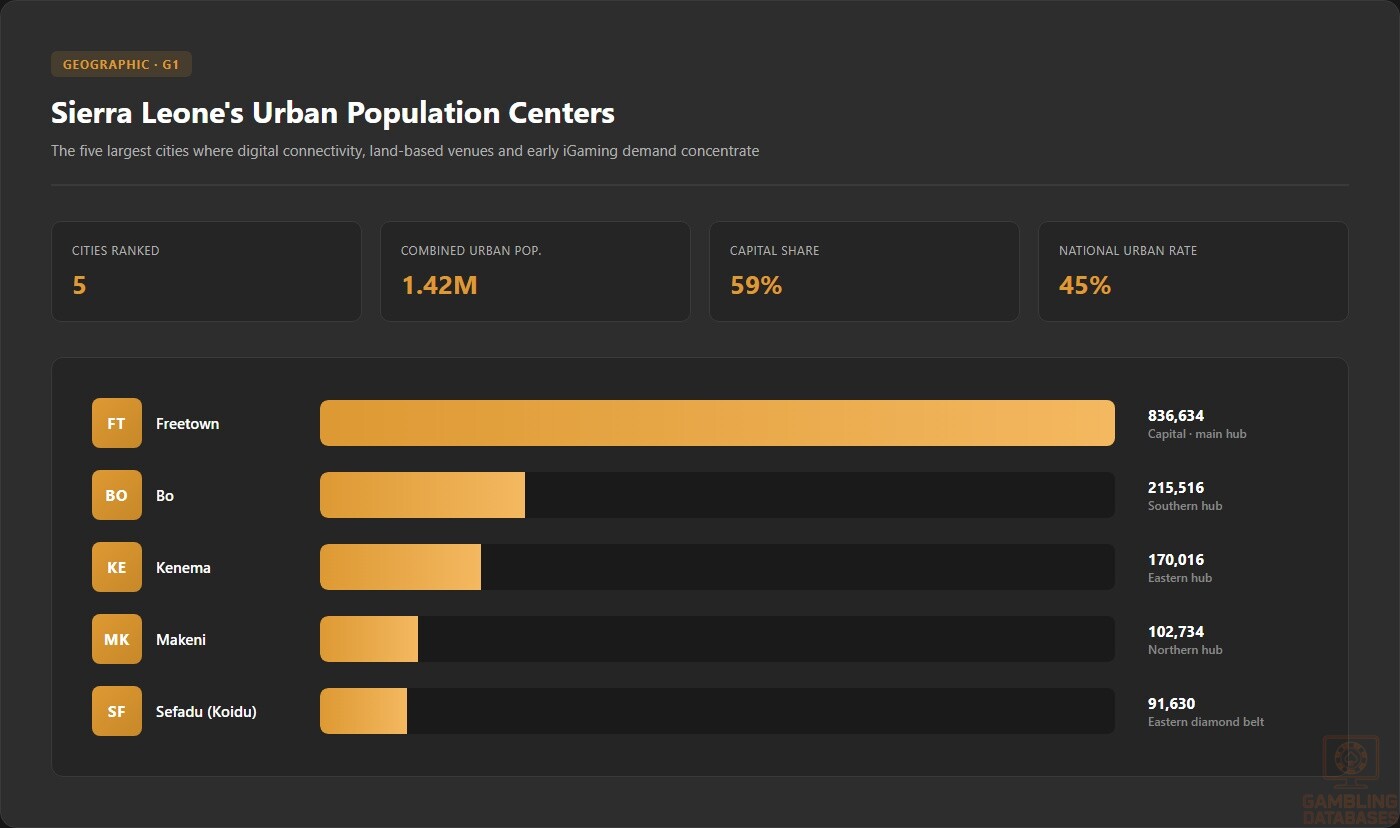
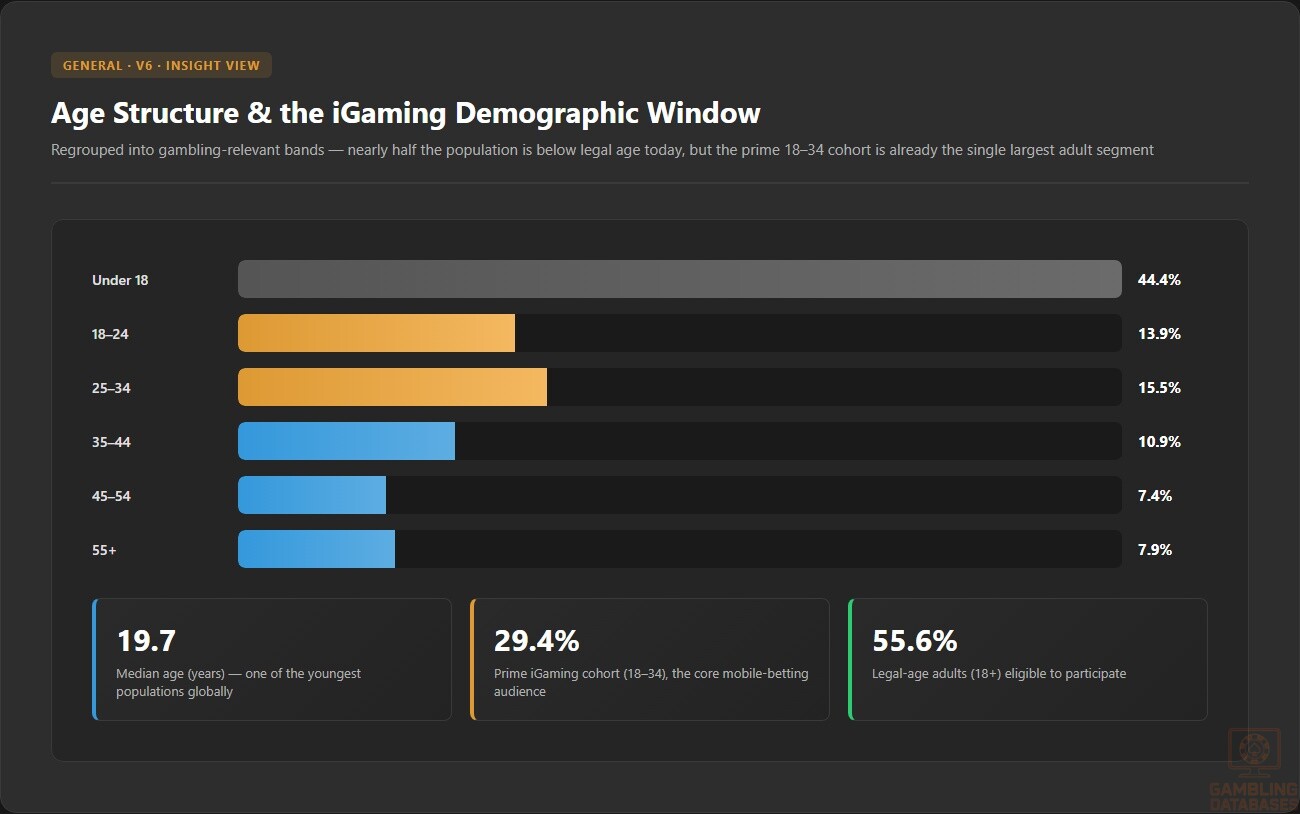
Sierra Leone’s population is estimated at approximately 8.87 million in 2025, with a young median age of 19.7 years. The population displays a nearly balanced gender ratio, with females representing 50.1% and males 49.9%. Approximately 45% of the population lives in urban centers, while 55% remain in rural areas, indicating a moderate level of urbanization.
The country exhibits a broad age distribution with significant proportions of youth under 25 years, highlighting a demographic profile favorable for long-term market growth in sectors such as iGaming.
| Age Group | Percentage of Population |
|---|---|
| 0-4 | 13.4% |
| 5-12 | 19.6% |
| 13-17 | 11.4% |
| 18-24 | 13.9% |
| 25-34 | 15.5% |
| 35-44 | 10.9% |
| 45-54 | 7.4% |
| 55-64 | 4.6% |
| 65+ | 3.3% |
The distribution reflects a broad base of young people with growing exposure to digital technology and entertainment, including gaming and betting products.
Geographic Distribution
Sierra Leone consists of several urban and rural population centers with distinct economic and infrastructure profiles. The most populous city is Freetown, the capital, with an estimated population of 836,634 residents, serving as the main hub for commerce, digital connectivity, and gambling activity.
Other major cities include Bo, Kenema, Makeni, and Sefadu, which together with Freetown form core urban economic zones conducive to market development.
- Freetown: 836,634
- Bo: 215,516
- Kenema: 170,016
- Makeni: 102,734
- Sefadu: 91,630
Urban centers account for roughly 45% of the populace, with internet access and land-based gambling venues mainly concentrated in these cities. Rural areas, encompassing 55% of the population, have limited connectivity and gambling infrastructure but offer future growth potential as digital penetration improves.
Economic Indicators and Consumer Spending Power
Sierra Leone’s gross domestic product (GDP) is projected at approximately $7.3 billion in 2025, supported by a 4.5% annual growth rate. The economy is ranked 38th in Africa by size, with continued positive growth driven by mining, agriculture, and expanding service sectors.
Per capita income remains modest, though growing, reflecting a consumer base with emerging discretionary spending power suitable for entertainment and gambling industries.
Disposable income is unevenly distributed, with significant rural-urban disparities. Urban residents exhibit greater ability to engage in discretionary spending on digital services and leisure activities, including online gaming.
| Metric | Value |
|---|---|
| GDP (Current Prices) | $7.3 billion USD |
| GDP Growth Rate | 4.5% annually |
| Per Capita GDP | Approx. $825 USD |
| Urban Population | 45% |
| Median Age | 19.7 years |
Market Size and Growth Projections
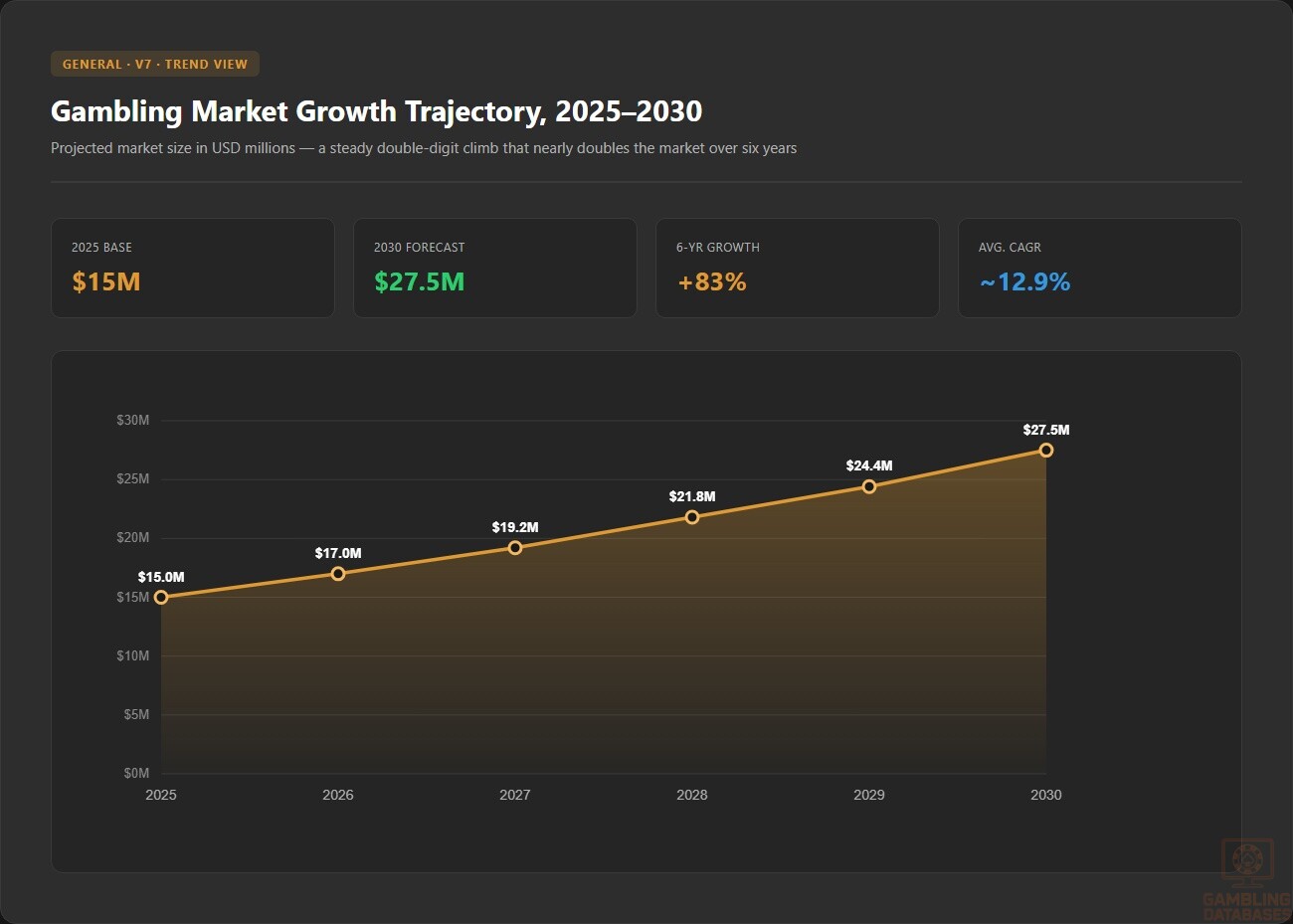
The gambling market in Sierra Leone, while currently small, shows promise due to demographic trends and improving digital infrastructure. The land-based gambling segment dominates present revenues, but emerging internet usage is expected to spur online gaming growth.
Growth projections estimate gradual expansion of digital gambling revenues with increasing consumer adoption over the next 5-7 years, driven primarily by younger populations engaging via mobile devices.
| Year | Market Size (USD million) | CAGR (%) |
|---|---|---|
| 2025 | 15 | |
| 2026 | 17 | 13.3% |
| 2027 | 19.2 | 13.0% |
| 2028 | 21.8 | 13.5% |
| 2029 | 24.4 | 12.0% |
| 2030 | 27.5 | 12.5% |
Education, Skills, and Digital Literacy
Sierra Leone exhibits progress in literacy and education levels, with an overall literacy rate nearing 60%. Several national programs focus on improving digital skills, targeting youth and underserved populations through mobile internet training and digital literacy projects.
Digital literacy remains limited but is growing rapidly due to initiatives supported by government and international organizations. These efforts bolster the potential user base for digital services including iGaming through increased familiarity with smartphones and internet navigation.
Cultural and Social Factors
Communication and Language
Sierra Leone is linguistically diverse, with English as the official language primarily used in education, government, and business. Multiple indigenous languages coexist, reflecting rich ethnic diversity.
- English (official)
- Temne
- Mende
- Krio (widely spoken lingua franca)
- Limba
- Kono
English predominates in digital content consumption and online interaction, aligning with iGaming platforms’ language needs.
Cultural Attitudes
Gambling traditionally holds social acceptance in Sierra Leone, particularly in land-based formats such as lotteries and casinos. Religious influences, notably Islam and Christianity, advocate moderation, influencing gambling participation norms and responsible play expectations.
Foreign brands are generally well-received if culturally sensitive, with players favoring accessible and trustworthy platforms reflecting local values.
Problem Gambling and Social Considerations
Data on problem gambling prevalence is limited, but anecdotal evidence highlights emerging concerns in urban areas as gambling accessibility increases. Social support systems are nascent with few formal government programs dedicated to gambling addiction recovery.
- Awareness campaigns on responsible gambling led by NGOs
- Community education programs on addiction risks
- Early-stage government monitoring of gambling harms
- Self-exclusion schemes promoted by operators voluntarily
- Increasing research efforts on social impact of gambling
Political Structure and Governance
Sierra Leone operates a stable democratic government system with evolving regulatory institutions. Political reforms emphasize regulatory consistency and enhanced governance capacity critical for business environment improvements. International relations support foreign investment and economic growth initiatives, providing a positive backdrop for market entry considerations.
Technology Adoption and Digital Behavior
Internet and Digital Usage
Internet penetration in Sierra Leone stands at approximately 20.7%, with about 1.8 million users as of early 2025. Mobile connections are nearly ubiquitous at 99.2%, with many subscribers accessing broadband services via smartphones.
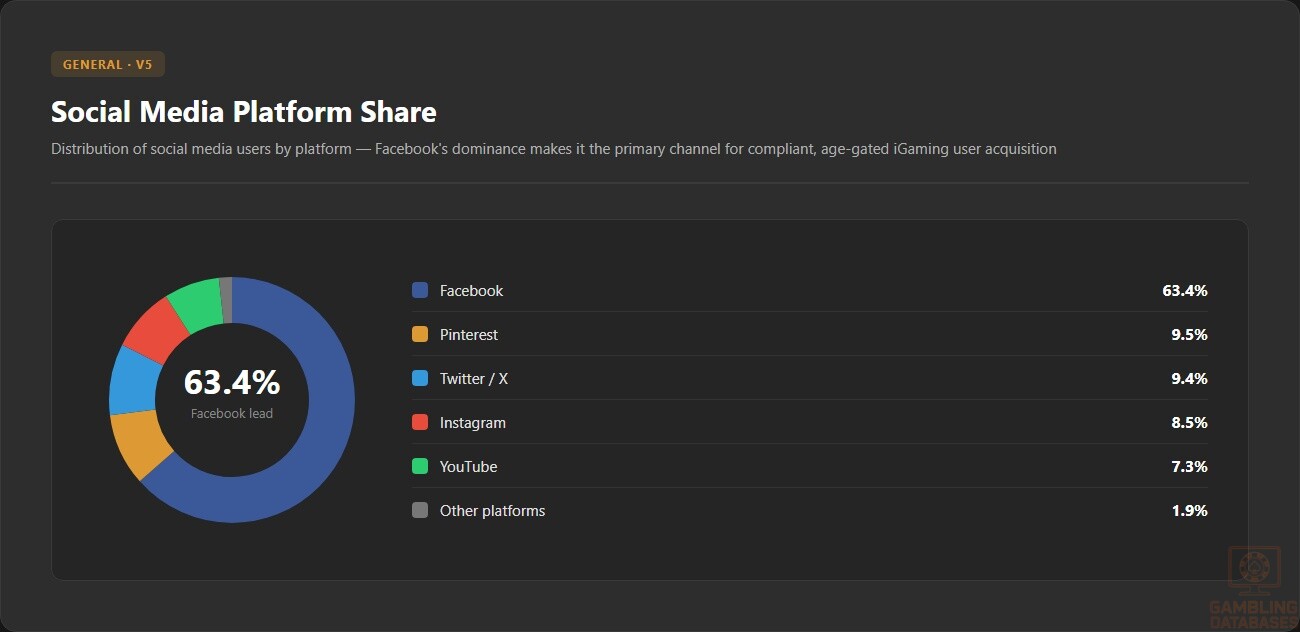
Social media engagement is expanding, reaching 13.2% of the population with increasing daily usage durations, reflecting growing digital engagement and potential for iGaming user acquisition.
- Facebook: 63.4% of social media users
- Pinterest: 9.5%
- Twitter: 9.4%
- Instagram: 8.5%
- YouTube: 7.3%
Digital Payment Behavior
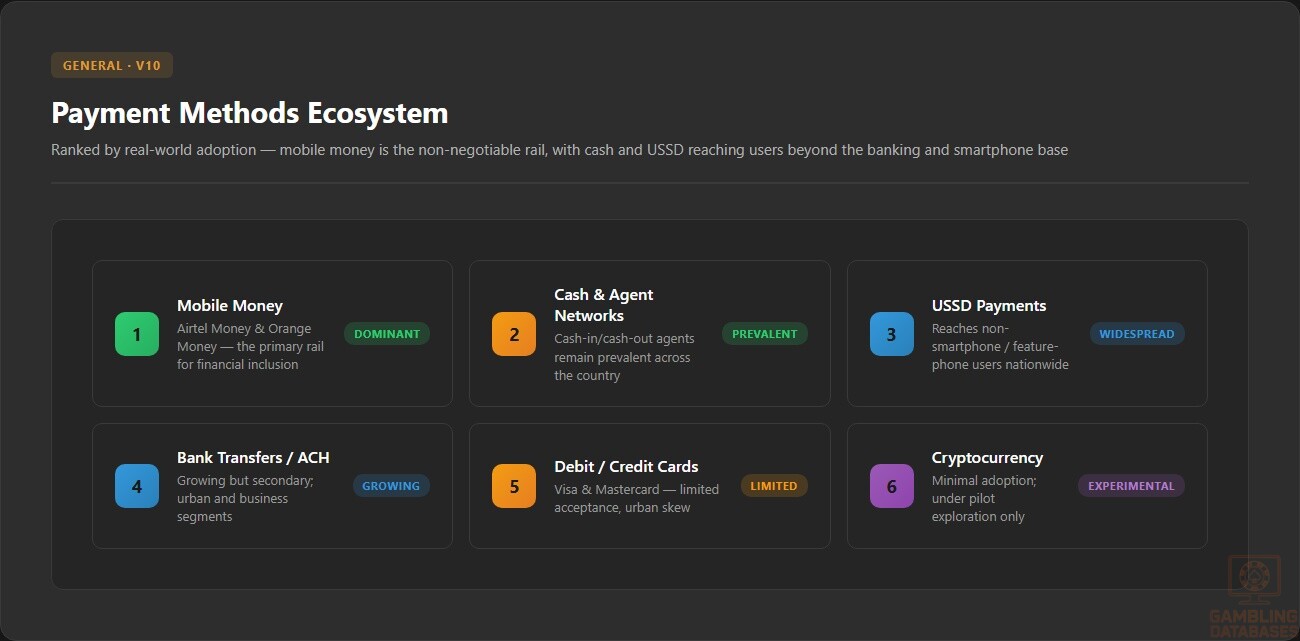
Payment methods in Sierra Leone skew heavily towards mobile money and cash-based transactions, reflecting local financial inclusion strategies. Digital wallets and bank transfers are growing but remain secondary to mobile money adoption.
- Mobile Money (e.g., Airtel Money, Orange Money)
- Bank Transfers
- Debit and Credit Cards (limited)
- USSD Payment Systems
- Cash on Delivery for goods and services
Cryptocurrency adoption is minimal but under pilot exploration for future digital financial integration, which may influence iGaming payment options.
Gaming and Gambling Preferences
Current Market Participation
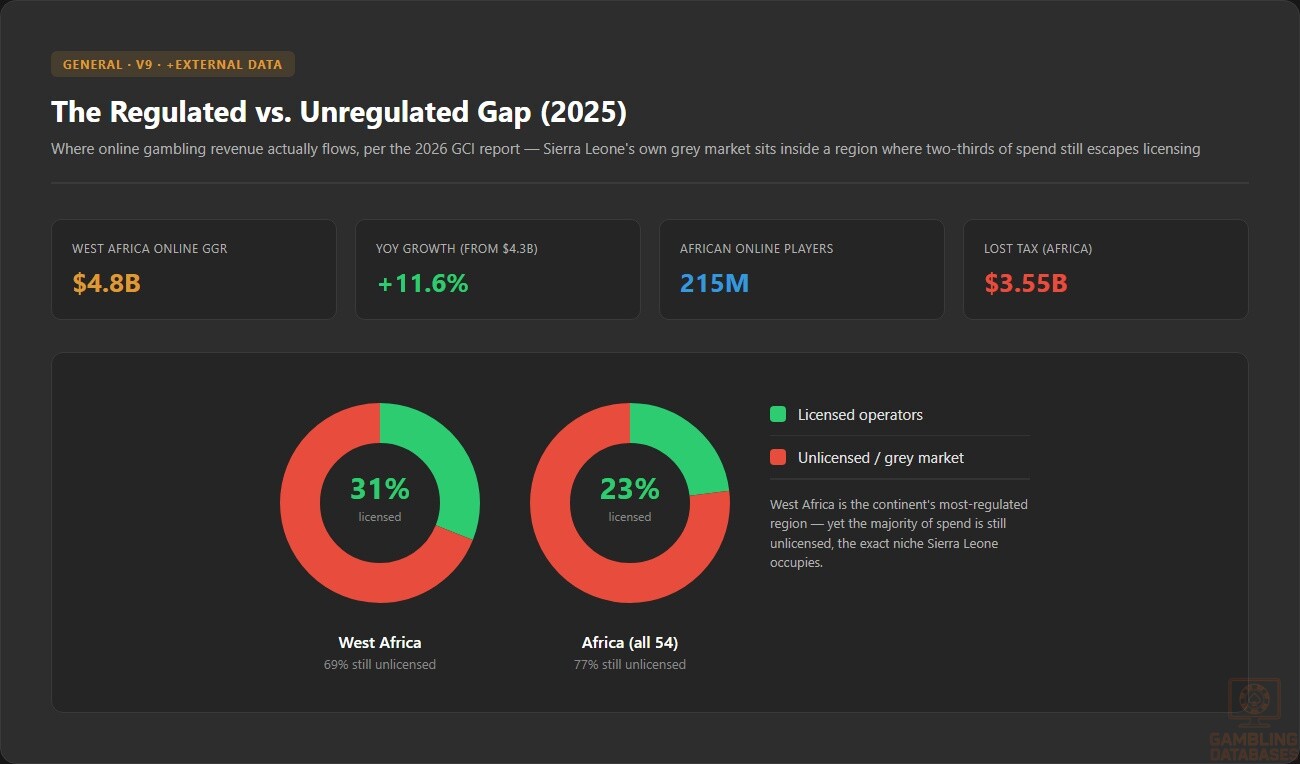
Gambling participation predominantly involves land-based lottery games and sports betting, with growing interest in digital platforms as internet access expands.
- National lotteries
- Sports betting
- Casino gaming (limited to land-based casinos)
- Informal betting pools and traditional games
- Emerging interest in online betting and virtual games
Consumer spending is cautious but gradually increasing, driven by younger demographics favoring mobile-first platforms. Peak activity is observed in evenings and weekends, with session lengths typically ranging from 15 to 45 minutes.
Section 3: Technology Infrastructure and Business Environment
Internet and Digital Infrastructure
Sierra Leone’s internet penetration is approximately 20.7% as of 2025, with a clear dominance of mobile broadband access over fixed-line connections. Fixed broadband infrastructure remains underdeveloped, reflecting challenges in urban and rural network expansion. The average mobile broadband speed is moderate, enabling basic online services and gaming but requiring further investment to support high-bandwidth applications.
Government and private sector initiatives prioritize infrastructure upgrades, with targeted investments in fiber optic networks and rural connectivity schemes aiming to enhance reliability and reduce latency across the country.
5G and Future Technology Deployment
5G rollout in Sierra Leone is in nascent stages, with pilot projects underway in key urban areas including Freetown. Full commercial coverage is anticipated over the next 3-5 years, dependent on regulatory approvals and capital investment by major telecom operators.
The telecommunications landscape features competitive players preparing for next-generation services, positioning the country to leverage 5G’s benefits for digital economy sectors including iGaming.
Mobile Technology Ecosystem
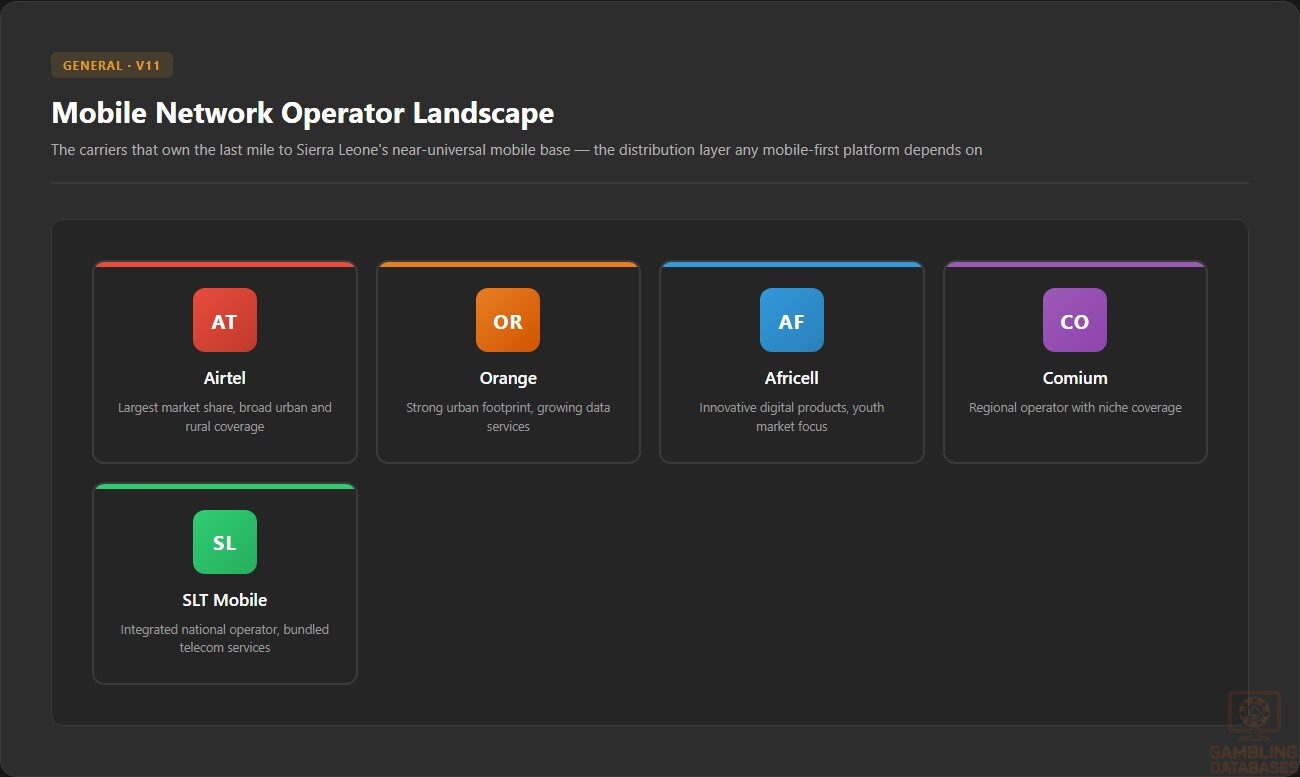
The mobile network infrastructure supports widespread coverage, penetrated by multiple operators ensuring competitive data pricing and extensive reach. Smartphone adoption exceeds 55%, predominantly featuring mid-range affordable models critical for expanding digital service consumption.
- Airtel Sierra Leone: Largest market share with broad urban and rural coverage
- Orange Sierra Leone: Strong urban footprint and growing data service offerings
- Africell: Focused on innovative digital products and youth market
- Comium: Regional operator with niche coverage
- SLT Mobile: Integrated national operator supporting bundled telecom services
Financial Services and Payment Infrastructure
The banking sector in Sierra Leone comprises a mix of domestic and international institutions, with expanding portfolios of digital banking services. Account penetration remains relatively low, disproportionately affecting rural areas. Mobile money platforms have become the principal vector for financial inclusion, significantly facilitating digital payment adoption.
- National Commercial Bank (NCB): Largest domestic bank
- Standard Chartered Bank Sierra Leone: Leading international presence
- Ecobank Sierra Leone: Regional pan-African network
- Access Bank: Rapidly growing market share
- Zenith Bank: Strategic digital banking initiatives
Payment Processing Options
Payment landscape supports multiple transaction channels, critical for iGaming operators seeking diverse options. Cash remains predominant, supplemented by mobile money, bank transfers, and limited card usage. Cryptocurrency remains experimental.
- Mobile Money (Airtel Money, Orange Money)
- Bank Transfers and Automated Clearing House (ACH) systems
- Visa and Mastercard Debit/Credit Cards (limited acceptance)
- USSD-Based Payments for non-smartphone users
- Agent Cash-In/Cash-Out Networks supporting mobile money
E-commerce and Digital Economy
The e-commerce sector in Sierra Leone is emerging, with increasing consumer trust in online transactions. Digital payments facilitate growth in retail, services, and entertainment sectors. However, logistic challenges and consumer hesitancy pose constraints to rapid expansion.
Government programs and private partnerships aim to drive digital literacy and infrastructure investment to support long-term digital economy growth, vital to the sustainability of iGaming platforms.
Business Environment and Regulatory Framework
Sierra Leone ranks moderately on World Bank’s ease of doing business index, reflecting streamlined but evolving regulatory frameworks. Business registration is straightforward but requires local engagement and compliance with multi-agency requirements.
- Company Name Reservation and Documentation Submission
- Obtaining Business Registration Certificate within 7-10 days
- Registration with National Revenue Authority for tax purposes
- Licenses and Permits Application, sector-specific if required
Foreign investment policies encourage international entrepreneurship with minimal restrictions, providing foreign companies comply with registration and tax laws. Costs relating to company setup and operational requirements are competitive for regional standards.
Corporate Structure and Registration
Entities used include Limited Liability Companies (LLCs), Corporations, and Branch Offices of foreign companies. LLCs are common for SMEs, while corporations suit larger enterprises requiring complex governance. Branch offices offer routes for foreign companies without separate entity registration.
- Limited Liability Company (LLC)
- Public Corporation
- Private Corporation
- Branch Office of Foreign Company
- Partnerships (general and limited)
Registration timelines average 10-14 days, with fees varying on entity type and sector. Foreign ownership is permitted with full equity rights and no mandatory local partner requirements.
Taxation Framework
Corporate income tax is set at 25%, with specific incentives available in designated Special Economic Zones. Tax treaties with several countries mitigate double taxation, fostering cross-border investment.
- United Kingdom
- China
- South Africa
- Germany
- United Arab Emirates
Individual income tax follows progressive rates up to 30%, including mandatory social security contributions. Withholding taxes apply on dividends, interest, and royalties per standard fiscal policies.
Market Entry Considerations
Recommended entry strategies highlight partnership formation with local stakeholders, leveraging mobile-first technology platforms, and compliance with emerging regulations. Market differentiation depends on user experience, payment flexibility, and culturally tailored offerings.
- Establish joint ventures or strategic partnerships
- Deploy mobile-optimized platforms prioritizing ease of use
- Implement robust KYC and responsible gambling systems
- Build scalable infrastructure for anticipated regulation
- Engage in targeted marketing and community outreach
| Cost Category | Estimated Cost |
|---|---|
| Licensing and Registration Fees | $50,000–$100,000 |
| Legal and Compliance Setup | $30,000–$60,000 |
| Technology Development and Integration | $100,000+ |
| Marketing and Launch Expenses | $40,000–$70,000 |
| Working Capital (12 months) | $200,000+ |
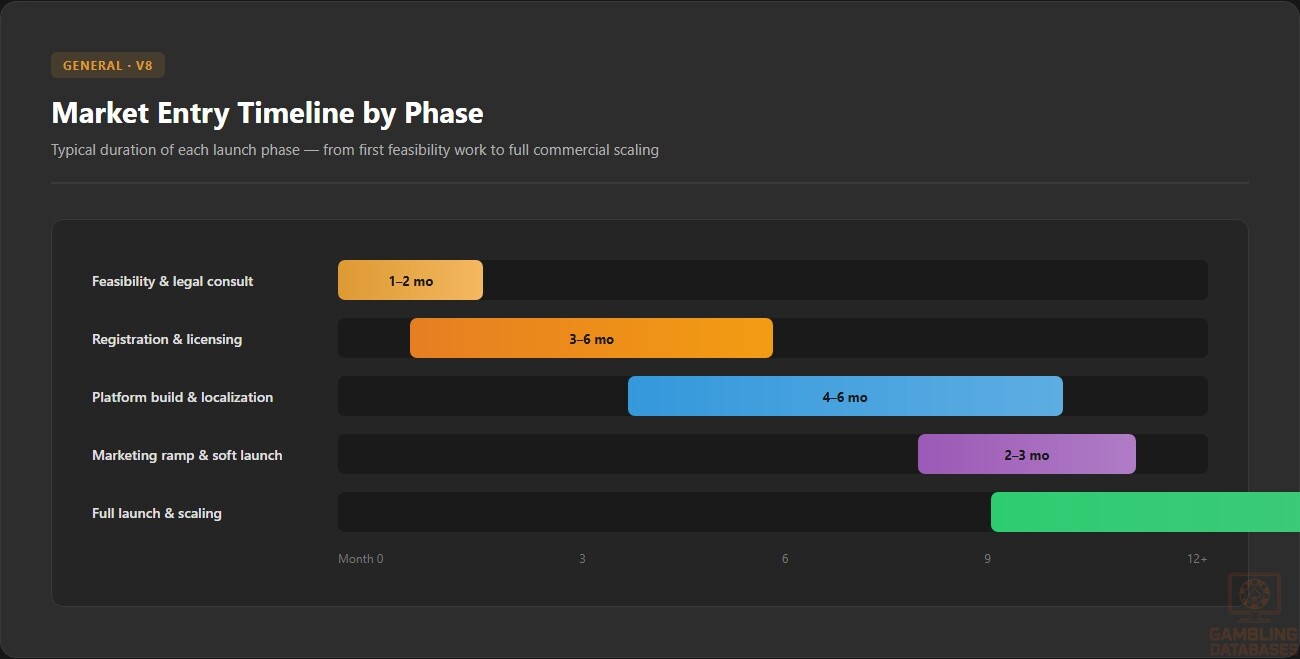
- Initial feasibility and legal consultation: 1-2 months
- Registration, licensing, and regulatory approvals: 3-6 months
- Platform development, testing, and localization: 4-6 months
- Marketing ramp-up and soft launch: 2-3 months
- Full commercial launch and scaling: 6-12 months
Key success factors include local market knowledge, flexible payment acceptance, and technological agility. Challenges involve limited broadband, regulatory uncertainty, and payment interoperability but can be mitigated through strategic planning.
- Understanding local consumer behavior
- Building trust through transparent operations
- Adapting to shifting regulatory landscape
- Ensuring payment accessibility and security
- Scalability and responsive customer support
Exit strategies should consider limited liquidity with emphasis on regulatory approvals for license transfers. Company valuation aligns with regional multiples, driven by revenue growth and operational footprint.
FAQ: Frequently Asked Questions
1. Is online gambling legal in Sierra Leone?
Online gambling operates in a legal gray zone as no specific regulations currently address it. Land-based gambling, including casinos and lotteries, is regulated under existing laws. Despite regulatory gaps, online operators serve the market largely unregulated, which presents both risks and opportunities for entrants. Future regulatory frameworks are expected to provide clarity and formal licensing paths.
2. What types of gambling licenses are available and what do they cover?
Currently, only land-based gambling licenses are formally recognized, covering casinos and lotteries. Online gambling licenses are not established but anticipated under evolving policy discussions. Land-based licenses require adherence to financial, operational, and responsible gaming standards. Entry for online operators awaits the introduction of dedicated licensing categories.
3. How much does an iGaming license cost and how long does it take to obtain?
No official license fees or timelines exist for online gaming as of now. Land-based casino licensing involves substantial fees and review periods, often spanning several months. Market entrants should expect initial registration and regulatory approvals to range between 3 to 6 months once frameworks are formalized, with fees estimated between $50,000 and $100,000 depending on scope and scale.
4. Can foreign companies obtain a gambling license?
Foreign companies are eligible to apply for land-based licenses without mandatory local ownership requirements. Full foreign equity ownership is permitted. For online operators, eligibility and requirements will be codified upon establishment of a licensing framework. Foreign entrants should prepare for local presence or partnership guidelines as regulations evolve.
5. What are the tax obligations for iGaming operators?
Corporate income tax is set at 25%, applied to profits earned in Sierra Leone. No specific gross gaming revenue taxes exist for online operators currently. License fees and renewal charges may apply. Operators must also comply with general tax filing, withholding, and transfer pricing regulations. Tax incentives may be available in Special Economic Zones.
6. Are gambling winnings taxed for players?
Players are not directly taxed on gambling winnings in Sierra Leone. No withholding tax or declaration obligation exists for prize money or betting earnings, enhancing player appeal. Tax obligations focus mainly on operators and corporate entities generating revenue through gambling activities.
7. What are the typical operational costs for running an online casino or sportsbook?
Operational costs include licensing and regulatory fees, platform development and maintenance, payment processing charges, marketing expenses, and staffing costs. Technology setup and customer acquisition require significant initial investment. Depending on scale, monthly costs can range from tens to hundreds of thousands of U.S. dollars, influenced by local compliance and payment infrastructure considerations.
8. What is the expected ROI timeline for entering this market?
The ROI is typically expected within 24 to 36 months post-launch, contingent on regulatory clarity and market acceptance. Initial capital expenditure on licensing and technology commands substantial lead time before breakeven. Revenue growth aligns with digital adoption trends and marketing effectiveness in urban centers.
9. What are the local presence requirements for operators?
Land-based operators must maintain physical offices, registered staff, and comply with local laws. For online operations, presence requirements are undefined but may include local representative offices or partnerships once regulation is formalized. Operators should anticipate possible physical or digital localization mandates.
10. What payment methods are available and recommended?
Mobile money platforms dominate payments in Sierra Leone due to widespread adoption. Bank transfers and payment cards serve urban and business segments. USSD payments support non-smartphone users. Operators are advised to prioritize mobile money interoperability alongside emerging digital wallets for broad market reach.
11. What are the advertising and marketing restrictions?
Advertising adheres to general laws prohibiting targeting minors and misleading claims. No specific gambling advertising regulations exist, but cultural sensitivities guide marketing content. Responsible advertising practices are encouraged to avoid social backlash and support player protection.
12. What responsible gambling measures are mandatory?
Land-based license holders must enforce age verification, self-exclusion, and AML procedures. Operators are required to maintain responsible gaming policies, train staff, and support problem gambling awareness. Online measures will likely mirror land-based frameworks when formalized.
13. How large is the iGaming market and what is the growth potential?
The market is currently modest, with low online penetration but strong growth prospects linked to demographic trends and improving connectivity. Forecasts estimate a double-digit CAGR over the next five years, driven by mobile adoption and regulatory development.
14. Who are the main competitors and what is their market share?
The gambling sector is led by a local lottery operator and a single licensed casino. Online market competition is fragmented with offshore operators serving Sierra Leonean consumers. New entrants face low competition locally but must address regulatory and infrastructure challenges.
15. What are the player preferences and typical spending patterns?
Players prefer national lotteries and sports betting, with casino games less prevalent due to limited venues. Mobile-first and cash-based payment preferences dominate. Session durations average 15-45 minutes, with higher activity during evenings and weekends.
16. What are the key success factors and main challenges for new entrants?
Success hinges on local market understanding, payment flexibility, regulatory compliance, and technology agility. Challenges include limited broadband, ambiguous regulations, and payment infrastructure gaps. Partnerships and phased entry strategies can mitigate these risks effectively.
Sources and References
- Gambling Regulation in Sierra Leone – igamingtoday.com
- Online Gambling News 2025 – cdpsierraleone.com
- Understanding Sierra Leone Gambling Industry – e-playafrica.com
- Are Online Casinos Legal In Sierra Leone? – lcb.org
- Sierra Leone Gambling Market Report 2025-2031 – 6wresearch.com
- Digital 2025: Sierra Leone – datareportal.com
- Sierra Leone Population and Demographics – worldometers.info
- Sierra Leone GDP and Economic Overview – worldeconomics.com
- Social Media Stats Sierra Leone – gs.statcounter.com
- Sierra Leone National Digital Learning Strategy – unesco.org
- World Bank Doing Business Report 2024 – worldbank.org
- Central Bank of Sierra Leone Financial Reports
- Ministry of Finance Sierra Leone Tax Regulations
- International Telecommunication Union – ICT Statistics
- Sierra Leone Population Pyramid 2025 – populationpyramid.net
- Sierra Leone Cities Population Rankings – populationreview.com
- Mobile Network Operators in Sierra Leone – telecomreports Sierra Leone
- Major Banks Market Share – Sierra Leone Banking Association
- Payment Processing Landscape – paymentindustryreports Sierra Leone
- Sierra Leone Digital Economy Analysis – ecommercereports Sierra Leone
- National Gambling Enforcement and Licensing Policies – official government publications
- NGO Reports on Responsible Gambling – Sierra Leone
- Academic Studies on Sierra Leone Digital Literacy and Education
- News Articles on Sierra Leone Telecom and Technology Developments
- Industry Whitepapers on African Gambling Markets 2024-2025
- Regulatory Reviews from Consulting Firms
- International Trade and Investment Reports – Sierra Leone Focus
- Cryptocurrency Adoption Reports in West Africa
- Sierra Leone Financial Intelligence Unit Guidelines
- Official Gazette and Legal Instruments Sierra Leone




The regulatory vacuum in Sierra Leone is actually interesting from a bonus-hunting perspective, but it’s also a red flag for anyone serious about clearing promotions. Without a dedicated online gambling regulator like the MGA or UKGC, there’s zero standardization on what wagering requirements actually mean. Are we talking 35x on deposit only, or 40x on deposit plus bonus? The article mentions corporate tax at 25% but doesn’t specify GGR taxation for online operators, which directly impacts how operators structure their welcome offers. If an operator launches there unregulated, they could theoretically offer 25x playthrough on a 100% match, but there’s no auditing body ensuring the RTP is actually 96.5% or that you’re not playing against rigged RNG. I’ve hunted bonuses in emerging markets before (Ghana, Zambia), and the pattern’s always the same: operators use regulatory ambiguity to offer aggressive promotions that look amazing until you hit max cashout limits buried in the terms. With 99.2% mobile penetration and only 20.7% internet penetration, most players there are accessing via mobile wallets anyway. Any operator targeting Sierra Leone right now is likely operating under no licensing framework whatsoever, which means bonus terms can change mid-playthrough. Hard pass until there’s actual regulatory clarity from the Ministry of Finance.
You’ve touched on something critical that doesn’t get enough attention in market entry discussions. The regulatory arbitrage dynamic you’re describing is exactly what we’re seeing with emerging African iGaming markets. You’re right that the 25% corporate tax mentioned in the analysis doesn’t clarify whether GGR taxation will apply to online operators differently than land-based, and that ambiguity is substantial for bonus structure economics. One thing worth adding: Sierra Leone’s current regulatory framework actually references the Lotteries Ordinance of 1959 for land-based oversight, which means any online licensing framework would likely need to either amend colonial-era legislation or create entirely new statutes. That process typically takes 18-36 months after political commitment. In the interim, operators are indeed operating in a grey zone. Your point about mobile wallet penetration (99.2%) versus broadband (20.7%) is particularly sharp for understanding where unregulated operators are concentrated—they’re targeting mobile-first, payment-agnostic players who have fewer verification options. That’s both an opportunity and a compliance nightmare. The max cashout issue you mentioned is real; we’ve documented cases where emerging market operators cap winnings at 2-5x the initial deposit regardless of bonus terms, justified by ‘risk management.’ Your Ghana and Zambia experience maps directly onto what’s developing in Sierra Leone.