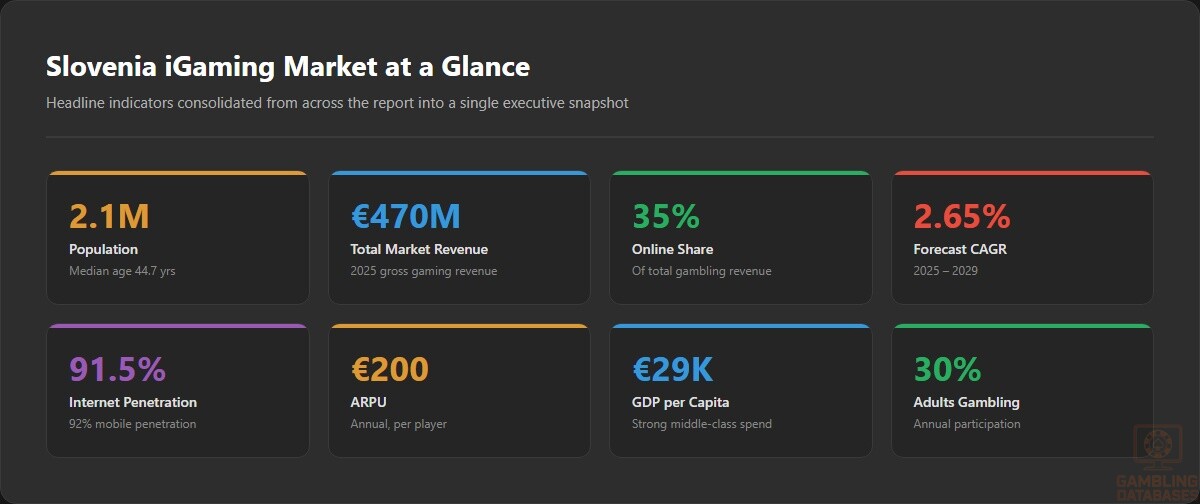
Slovenia offers a dynamic and evolving opportunity for iGaming operators, driven by ongoing regulatory reforms aimed at liberalising the market and aligning it with European Union standards. With a population of just over 2 million and growing online penetration, Slovenia’s market combines tradition with a gradual embrace of digital gaming innovation.
Recent legislative proposals are expanding licensing opportunities and loosening operational restrictions, presenting fresh avenues for international and local operators while maintaining rigorous compliance and responsible gaming requirements.
Executive Summary: Key Market Indicators
| Metric | Value |
|---|---|
| Population | 2.1 million |
| GDP per capita | €29,000 |
| Internet Penetration Rate | 86% |
| Mobile Penetration Rate | 92% |
| Language | Slovene (official) |
| Current Number of Licensed Gambling Operators | 2 (proposed increase to 5) |
| Licensing Authority | Ministry of Finance |
| Land-based Casino Concessions Available | Up to 15 |
| Gambling Halls Licenses Available | Up to 45 |
| Minimum Capital Requirement for Operators | €416,000 |
| License Application Fee (Sports Betting) | €500,000 |
| Gross Gaming Revenue (GGR) Tax Rates | 5% to 45%, varying by game type |
| Tax on Player Winnings Over €300 | 15% |
| Concession or License Fee | Based on gross revenue, from 5% to 45% |
| Projected Market Revenue (2025) | US$498 million (€470 million) |
| Projected Industry CAGR (2025-2029) | 2.65% |
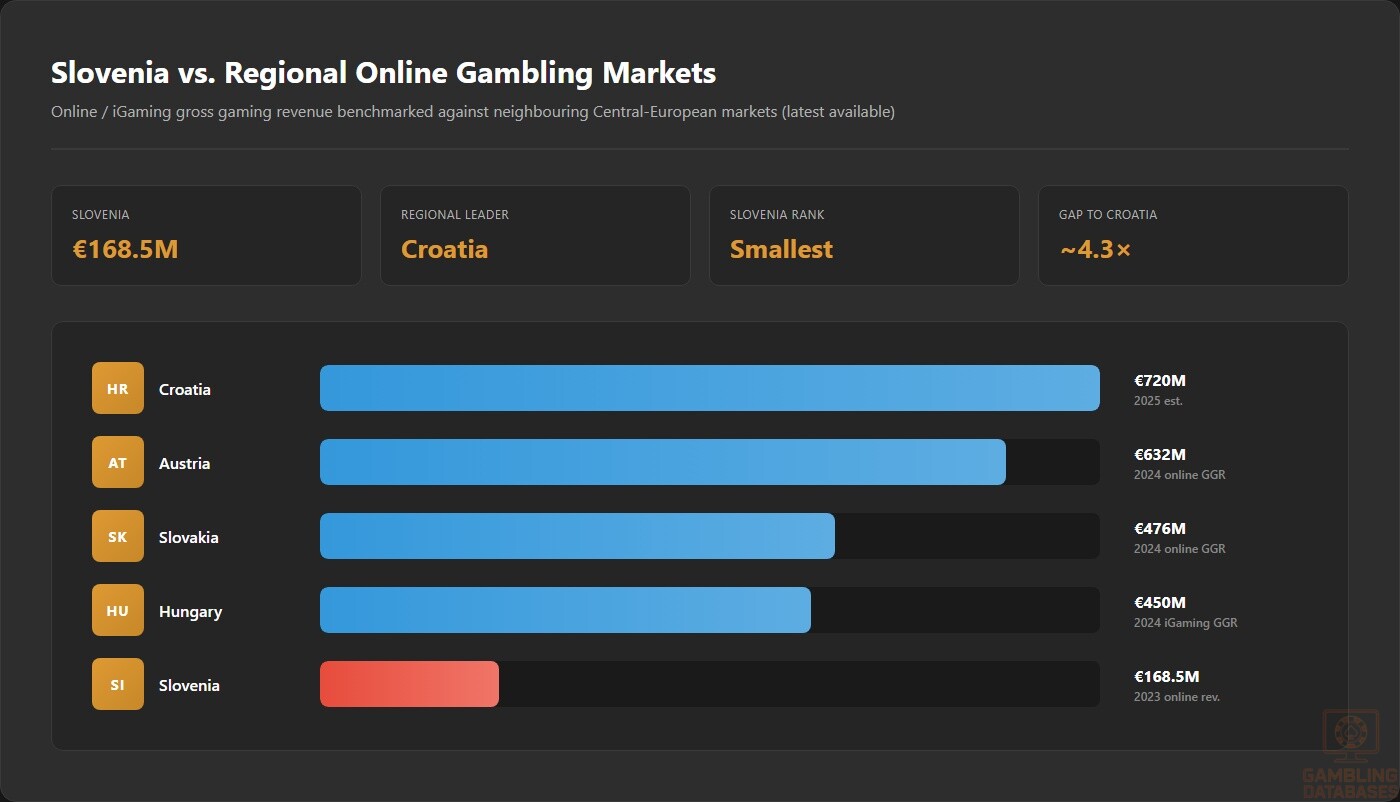
| Online Gambling Revenue (2023) | €168.5 million |
| Land-Based Casino Revenue (2019) | €161 million |
| Number of Licensed Casinos | 15 |
| Number of Gambling Halls | 45 |
| Illegal Gambling Penalties | Fines up to €250,000; imprisonment up to 8 years for serious cases |
| Responsible Gambling Measures | Mandatory warnings, self-exclusion, player limits |
| Regulatory Revision Timeline | Draft amendments tabled in 2025, enforcement from 2026 onward |
| Advertising Restrictions | Restrictions on targeting minors; mandatory risk warnings on ads |
| Foreign Operator Market Access | Currently restricted; liberalisation proposed |
| Technological Modernization | Cloud gaming allowed; RNG certification required |
| Average Revenue Per User (ARPU) | Estimated €200 annually |
| Market Barriers | High license fees, capital requirements, existing state monopolies |
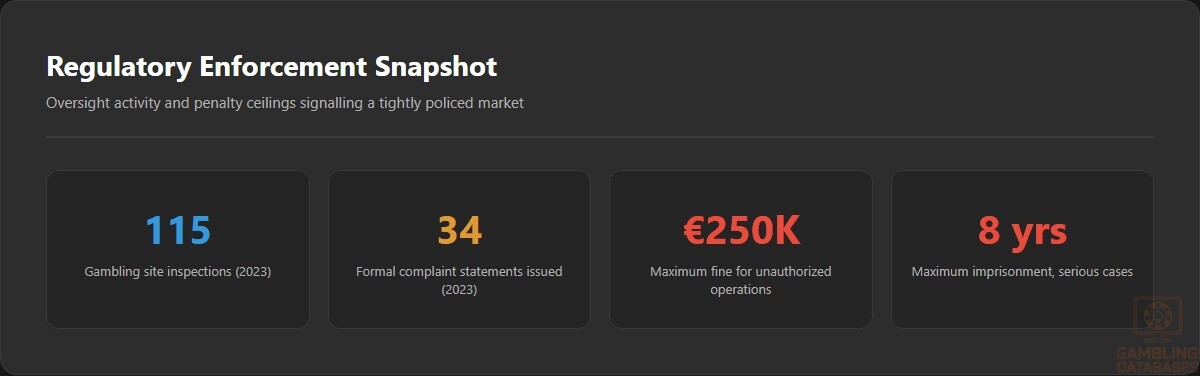
| Enforcement Inspections (2023) | 115 gambling site inspections |
| Complaints Against Operators (2023) | 34 formal statements issued |
Section 1: Regulatory Framework and Legal Environment
Current Gambling Regulation Status
Slovenia’s gambling regulatory framework governs both land-based and online gambling activities under the oversight of the Ministry of Finance. The primary legislation, the Gambling Act (last amended in 2023-25), establishes a tightly controlled environment for all types of games of chance.
The market historically operated under monopolistic structures dominated by the state-owned Lottery of Slovenia and Sports Lottery, who maintain exclusive rights over traditional lottery and sports betting. However, land-based casinos, slot machine halls, and other categories are regulated via concession systems with capped license numbers.
Online gambling is legally permitted but restricted to operators holding concurrent land-based licenses. Current gambling laws require online gaming companies to be affiliated with existing casino or lottery concession holders, limiting market entry. Foreign operators without local concessions are effectively barred from offering online gambling services, though draft laws introduced in 2025 aim to open the market to new international entrants.
Land-Based Gambling Activities
Land-based gambling in Slovenia includes operation of casinos, slot machine halls, sports betting venues, and traditional lotteries. These activities are regulated through a system of concession licenses granted by the government, with clear limits on numbers and operational conditions.
Casinhos are allowed up to 15 concessions nationwide, with venues concentrated in major urban centers and tourist destinations. Gambling halls, typically hosting slot machines and electronic gaming, are capped at 45 licenses. Sports betting remains monopolized by the national Sports Lottery with no licenses currently issued to private entities.
Slot machines and table games operating in casinos are subject to stringent regulatory controls including mandatory player identification, limits on betting amounts, and frequent government inspections to ensure compliance. Operations must also maintain responsible gambling policies including harm minimization strategies.
Online Gambling Framework
The digital gambling sector in Slovenia is governed by the same legislation as land-based gambling, with the added requirement that online operators must already possess a land-based concession. This means online gambling licenses are exclusively granted to established national operators.
The regulatory framework sets strict technological and operational standards to ensure fairness, security, and player protection. Operators must comply with extensive KYC/AML protocols, RNG certification, and secure telecommunications controls. Cloud-based gaming solutions have been recently permitted following legislative updates in 2025, reflecting technological alignment with EU standards.
Prohibited activities include unauthorized foreign-operated gambling platforms, unlicensed games of chance, and any offerings targeting underage users. Enforcement actions against illegal operators include substantial fines and potential criminal prosecution. The government continues to combat the illegal market, which challenges state revenues and licensed operators.
Licensed Operators and Market Players
The licensed gambling market comprises a small number of dominant incumbents mainly controlled by state-affiliated entities. The Lottery of Slovenia and Sports Lottery hold monopolies in lottery and sports betting.
Land-based casino concessions are held by a limited number of private and public companies, operating alongside the lotteries. The iGaming market is currently concentrated, with only two main companies licensed for online operations, though regulatory reforms propose enabling licensing of up to five operators to introduce competition.
New entrants face significant barriers due to high capital requirements, licensing fees, and operational constraints. However, market liberalization under discussion is expected to gradually diversify operator profiles, including potential foreign participants once amendments are enacted.
Licensing Framework and Requirements
Application Process and Eligibility
The Ministry of Finance supervises licensing procedures for all gambling formats, including online operations affiliated with land-based concessions. Applicants must demonstrate robust financial stability and operational capacity, supported by detailed business plans and technical compliance documentation.
Licensing fees vary by game type, with sports betting and casino operations commanding higher fees typically ranging from €200,000 to €500,000. Application timelines currently extend up to six months, but reforms aim to accelerate processing and permit issuance.
The licensing process also mandates submission of a comprehensive set of documents addressing company registration, criminal background checks, financial audits, and technical system certifications. Documentation requirements include but are not limited to:
- Certificate of incorporation and business registration
- Detailed three-year business plan
- Technical reports on gaming systems and RNG certification
- Ownership and management disclosure, including criminal background checks
- Proof of minimum capital deposit in a licensed financial institution
Local Presence and Operational Requirements
Operators must maintain a registered office or physical presence within Slovenia. Online operators must utilize Slovenian-registered domains and ensure all services are delivered through controlled telecommunication channels. The law places no explicit foreign ownership restrictions but operational compliance demands close cooperation with local regulatory authorities.
Personnel are expected to meet regulatory standards on responsible gambling training and anti-money laundering protocols. Mandatory reporting obligations on operational and financial data to the regulator form part of the ongoing licensing compliance.
Compliance Obligations and Monitoring
Player Protection and Identification
Slovenia’s gambling regulations emphasize strict player protection measures. Operators must implement robust age verification systems to prevent participation by minors. KYC and AML procedures are comprehensive, including identity verification, transaction monitoring, and suspicious activity reporting.
Responsible gambling initiatives are mandated, requiring operators to provide clear warnings about addiction risks, access to self-exclusion programs, and options for players to set deposit and loss limits. Information about support services for gambling addiction must be readily available across all platforms.
Mandatory player protection measures include:
- Strict age verification controls
- Self-exclusion program implementation
- Deposit and bet limits for players
- Mandatory risk warnings in-game and in advertising
- Access to gambling addiction support and counseling resources
Financial Monitoring and Reporting
Operators are subject to rigorous financial oversight, including mandatory reporting of gross gaming revenues, tax payments, and transaction data. Monthly and annual reports must be submitted to the Ministry of Finance alongside independent audit certifications.
The compliance timeline includes the following key steps:
- Monthly submission of financial and gaming activity reports
- Quarterly audit and verification of data by independent auditors
- Annual renewal application with comprehensive financial disclosures
- Regulator’s compliance inspections and follow-up audits
Taxation Structure and Financial Obligations
Player Taxation
Winnings from gambling activities are subject to a 15% tax rate for amounts exceeding €300. This tax is withheld at source by operators and applies to lotteries, sports betting, and casino games. Player tax liabilities do not extend to personal income tax declarations, as the withholding by operators satisfies obligations.
Operator Taxation
Operators pay gross gaming revenue-based taxes and concession fees, with rates varying according to game type and platform. Special games of chance like casino table games face concession fees calculated as a percentage of turnover, while conventional games such as lotteries have lower fixed rates.
| Game Type | Tax Rate on GGR |
|---|---|
| Casino Games | 35% – 45% |
| Sports Betting | 15% – 25% |
| Lotteries and Raffles | 5% – 10% |
| Slot Machines | 20% – 30% |
| Online Games (if licensed) | Variable, aligned with land-based rates |
Corporate income tax applies on operator profits at the standard rate of 19%. License renewal fees and fixed operational levies are also mandated, with annual obligations dependent on concession type.
Gambling Market Financial Performance
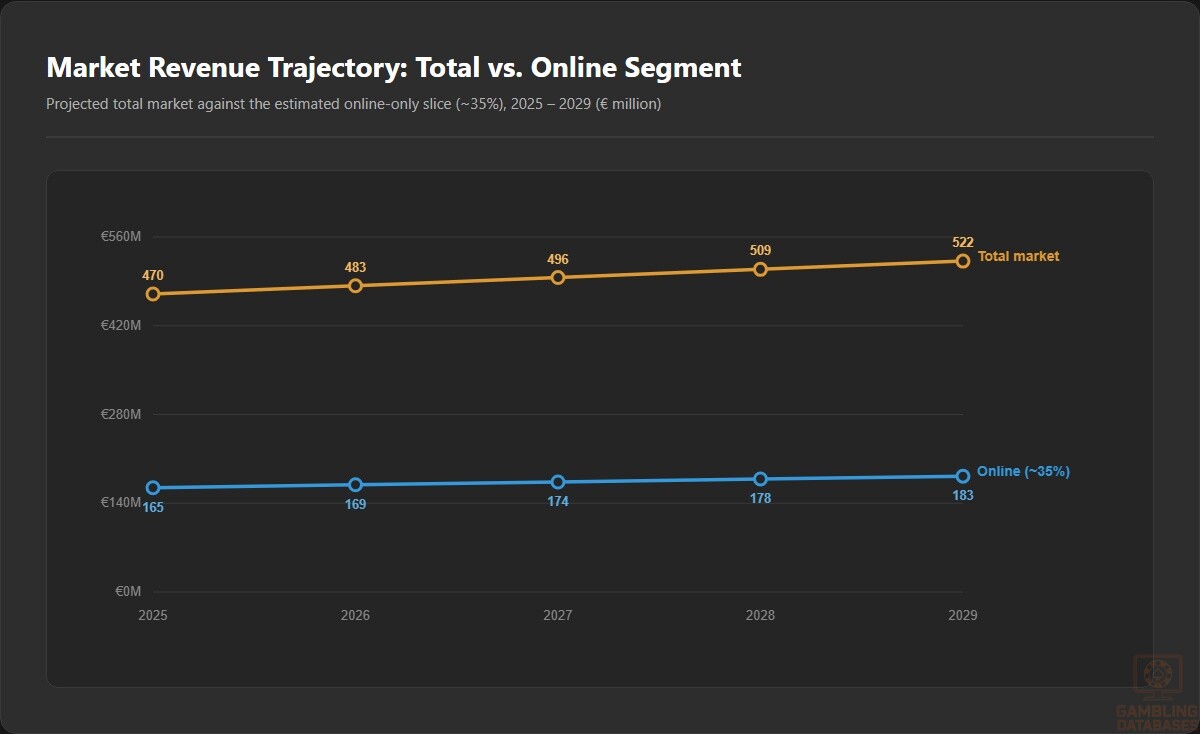
Slovenia’s gambling sector reported gross gaming revenues of approximately €470 million in 2025, with online gaming contributing over 35% of this figure. Revenues are projected to grow at a compound annual growth rate (CAGR) of 2.65% through 2029, supported by increasing digital adoption and liberalisation of market entry.
Tax revenues from gambling provide a significant contribution to public finances, with increasing payments stemming from higher online activity and expanded licensing. The transition to cloud-based and live gaming is expected to enhance player engagement and revenue diversity over the forecast period.
Advertising and Marketing Restrictions
Advertising of gambling services in Slovenia is permitted but regulated under strict guidelines to protect vulnerable populations, particularly minors and problem gamblers. The Slovenian Advertising Code imposes restrictions on messaging content, media placement, and promotional material transparency.
Key advertising rules include:
- No advertisements targeting children or adolescents
- Mandatory inclusion of risk warnings and information about gambling addiction support
- Prohibition of claims suggesting winning is guaranteed or based on player skill
- Restrictions on advertising timing and banned placement on media aimed at minors
- Requirement that only licensed operators advertise their services
Sponsorship agreements and promotional events are similarly controlled, requiring clear compliance with national and EU advertising standards. Violations may lead to suspension of advertising privileges and financial penalties.
Recent Regulatory Changes and Their Impact
Legislative amendments tabled in 2025 are aimed at modernizing and liberalizing the Slovenian gambling market. The reforms include opening licenses to additional operators, relaxing localisation requirements, and authorizing cloud gaming platforms.
These changes are expected to increase market competition, encourage technological innovation, and enhance player protections by introducing more rigorous regulatory oversight. However, incumbents retain advantages due to legacy concessions, making market penetration challenging for newcomers.
Enforcement Mechanisms and Penalties
The Slovenian regulatory authority enforces compliance through regular inspections, financial audits, and player complaint investigations. Penalties for violations range from fines to license suspension or revocation, depending on the severity of infringement.
Common enforcement actions include:
- Fines up to €250,000 for unauthorized gambling operations
- License suspensions for breaches of responsible gambling obligations
- Criminal prosecution with imprisonment up to 8 years in cases involving substantial illegal gambling
- Seizure of gambling equipment used unlawfully
- Public warnings and corrective orders issued to licensed operators
Persistent monitoring and increasing regulatory rigor enhance market integrity and public confidence, supporting the sector’s long-term sustainability and growth.
Section 2: Demographics and Consumer Analysis
Population Demographics and Distribution
Slovenia’s total population in 2025 stands at approximately 2.1 million, with a median age of about 44.7 years, indicating an aging demographic consistent with broader European trends. The gender ratio is nearly balanced, with approximately 993 men per 1,000 women, reflecting slight female predominance. Age distribution shows around 20% of the population is under 20 years old, the majority—nearly 57%—fall between 20 and 64 years, and about 23% are aged 65 or older.
The population density averages 103 people per square kilometer, with steady urbanization resulting in roughly half (50.5%) residing in urban areas. Population growth is slowly declining due to low fertility rates and moderate migration inflows, with projections showing a slight decrease in population in the upcoming years.
| Age Group | Percentage | Approximate Number |
|---|---|---|
| 0–19 years | 20% | 412,000 |
| 20–64 years | 56.9% | 1,175,000 |
| 65+ years | 23.2% | 480,000 |
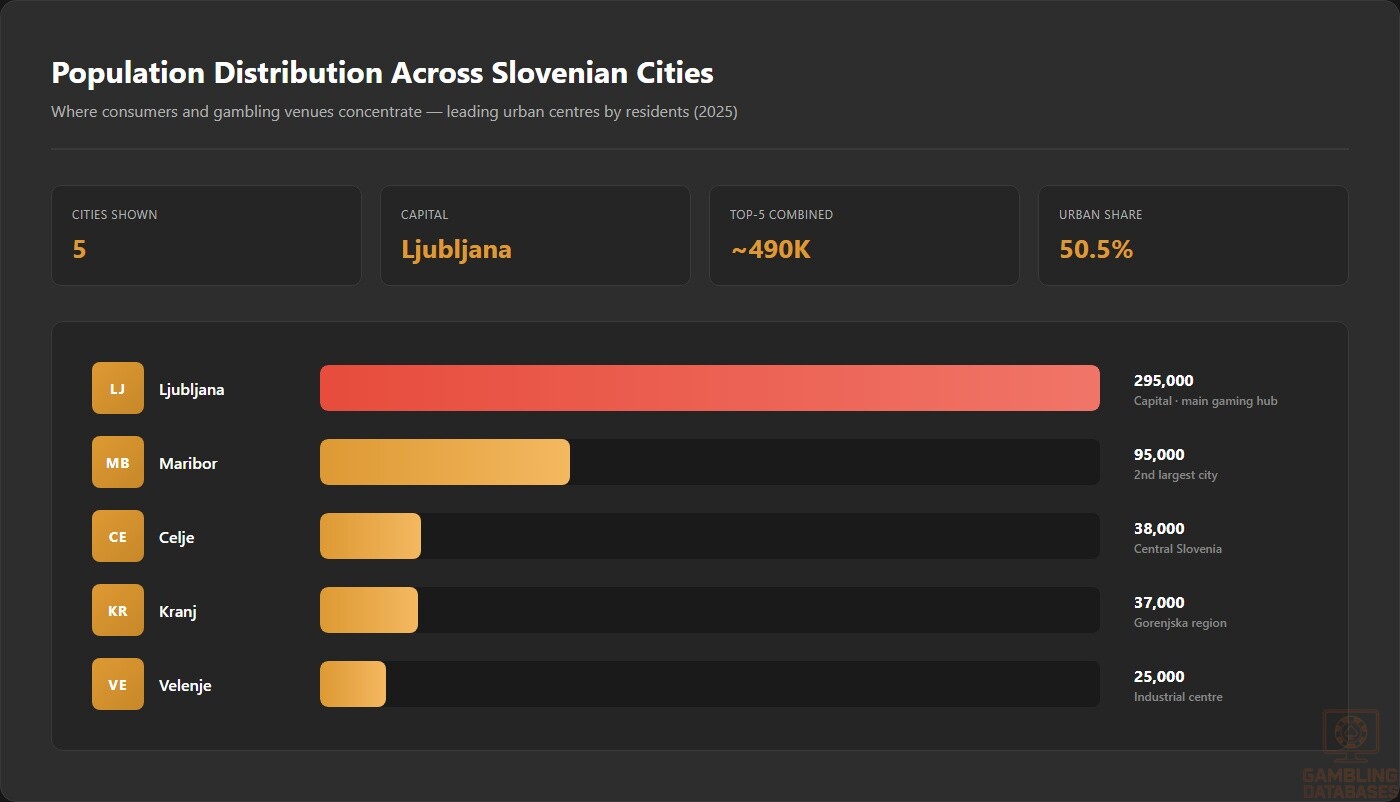
The demographic concentration is highest around the capital Ljubljana and other major cities, which also host the primary gambling venues. Population distribution is denser in western and central Slovenia, while eastern and mountainous regions remain more rural and sparsely populated.
- Ljubljana: approximately 295,000 residents
- Maribor: 95,000 residents
- Celje: 38,000 residents
- Kranj: 37,000 residents
- Velenje: 25,000 residents
Internet accessibility and modern infrastructure are most prevalent in urban centers, contributing to higher online gambling engagement relative to rural locales. Gambling halls and casinos are primarily located in these population hubs, supporting concentrated consumer activity.
Economic Indicators and Consumer Spending Power
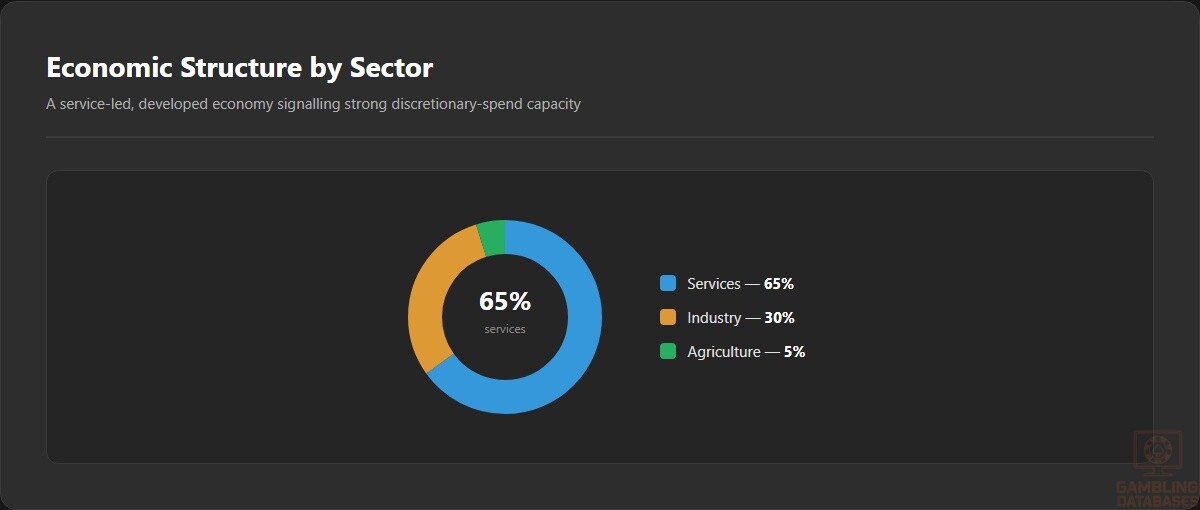
Slovenia’s GDP is forecasted to grow from approximately €56 billion in 2024 to over €58 billion in 2025, marking a healthy economic expansion at around 2%. The economy is diversified, with the service sector constituting nearly 65% of GDP, industry about 30%, and agriculture around 5%, reflecting a developed market with strong consumer spending potential.
Unemployment remains low at just under 4%, supporting steady income levels and consumer confidence. Inflation is expected to remain stable near 2%, preserving purchasing power.
Average annual household income is estimated to be near €24,000, with median disposable income slightly lower due to taxation and social contributions. Income inequality is moderate, with a Gini coefficient around 0.24, indicating relatively equitable wealth distribution compared to EU peers.
Consumer spending is growing, with a notable increase in online retail and digital services, signaling readiness for digital gaming consumption. Discretionary income dedicated to entertainment and gambling is steady, supported by strong middle-class purchasing power.
| Indicator | 2024 | 2025 (Forecast) |
|---|---|---|
| GDP (€ billion) | 56.5 | 57.8 |
| GDP Growth Rate (%) | 1.6 | 2.0 |
| Unemployment Rate (%) | 3.7 | 3.7 |
| Inflation Rate (%) | 2.0 | 2.1 |
| Average Household Income (€) | 23,700 | 24,200 |
Market Size and Growth Projections
The Slovenian gambling market, inclusive of land-based and online sectors, generated approximately €470 million in revenue in 2025. Online gambling accounts for around 35% of this total, showing rapidly increasing consumer preference for digital platforms. The market is projected to grow steadily, with an industry compound annual growth rate (CAGR) of about 2.65% through 2029.
The estimated active player base is expected to rise gradually, supported by improving internet penetration and mobile adoption. Average revenue per user (ARPU) is calculated around €200 annually, indicating moderate but stable consumer expenditure.
| Year | Market Revenue (€ million) | CAGR (%) |
|---|---|---|
| 2025 | 470 | 2.65 |
| 2026 | 483 | 2.65 |
| 2027 | 496 | 2.65 |
| 2028 | 509 | 2.65 |
| 2029 | 522 | 2.65 |
Education, Skills, and Digital Literacy
Slovenia boasts high literacy rates above 99%, with over 90% of the adult population having completed secondary education or higher. The country maintains a strong emphasis on digital skills, supported by government initiatives and educational reforms that prioritize ICT and STEM proficiency.
Digital literacy is robust, with a large share of the workforce demonstrating proficiency in internet use, digital communication tools, and software applications. This competence supports broad adoption of online services including digital entertainment and e-commerce.
Cultural and Social Factors
Communication and Language
Slovene is the official language and is predominantly used in digital content and commerce. Minority languages such as Hungarian and Italian are spoken in border regions but do not significantly impact market communication strategies.
- Slovene (90%+ of population)
- Serbian and Croatian (minority groups)
- English (widely understood, especially among younger demographics)
- German (spoken by some business communities)
- Italian (minority in southwestern regions)
Cultural Attitudes
Gambling enjoys moderate social acceptance as a form of entertainment, with historical ties to state lotteries and casino tourism. Religious influences are mild, with Slovenian society reflecting a secular orientation that supports regulated gambling activities.
Domestic players show preference for familiar gaming formats such as slots, poker, and sports betting, though openness to foreign iGaming brands is growing with digital exposure and online accessibility improving. Entertainment consumption trends prioritize convenience, favoring mobile and online platforms over physical venues.
Problem Gambling and Social Considerations
Prevalence of problem gambling is estimated at a low to moderate level consistent with European averages. Government and social organizations maintain active programs for prevention and support, integrating responsible gambling education and treatment referral systems.
Mandatory social responsibility contributions are required from licensed operators to fund these initiatives. Public awareness campaigns educate on risks and available help, reinforcing player protections as a market priority.
- Funding for addiction treatment facilities
- National awareness and prevention campaigns
- Support hotlines and counseling services
- Mandatory training for operators on responsible gambling
- Self-exclusion and player protection programs
Political Structure and Governance
Slovenia operates as a parliamentary representative democratic republic, characterized by political stability and transparent governance. Regulatory frameworks related to gambling benefit from consistency and alignment with EU legislation, supporting predictable business conditions. International relations facilitate cooperation on cross-border regulatory and enforcement issues, enhancing market oversight.
Technology Adoption and Digital Behavior
Internet and Digital Usage
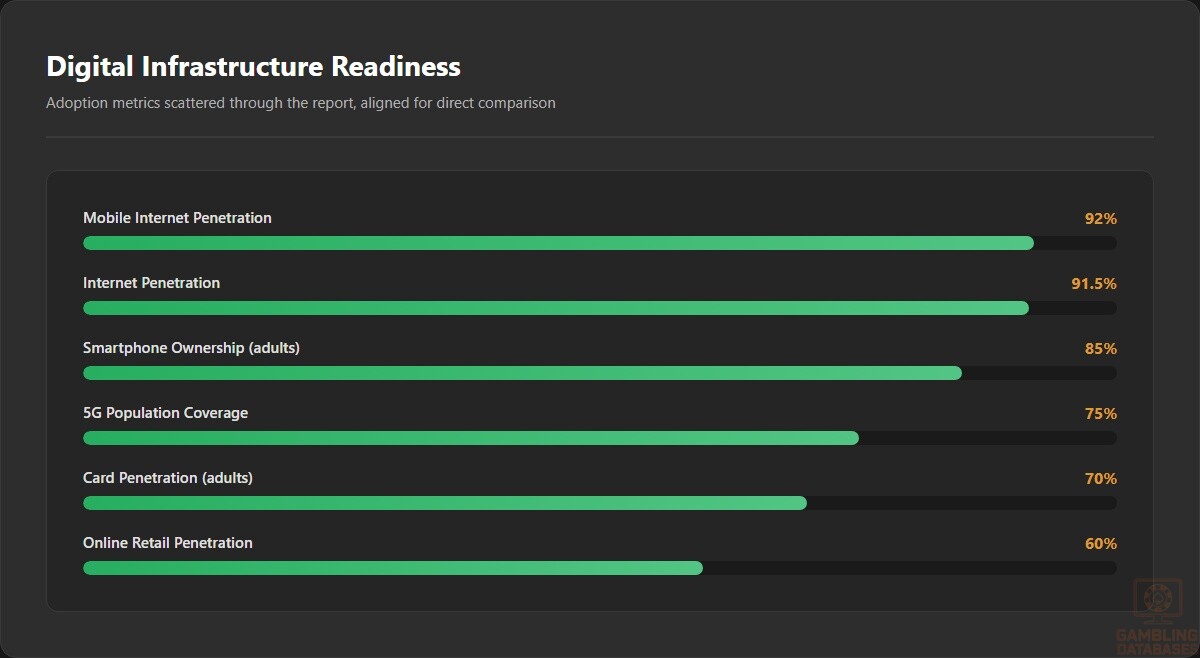
Internet penetration in Slovenia is estimated at around 91.5% of the total population, with daily active usage by the majority of users. Mobile device adoption is high, with over 85% of users accessing the internet via smartphones. Online activities include social networking, e-commerce, online banking, and digital entertainment, forming a strong foundation for iGaming engagement.
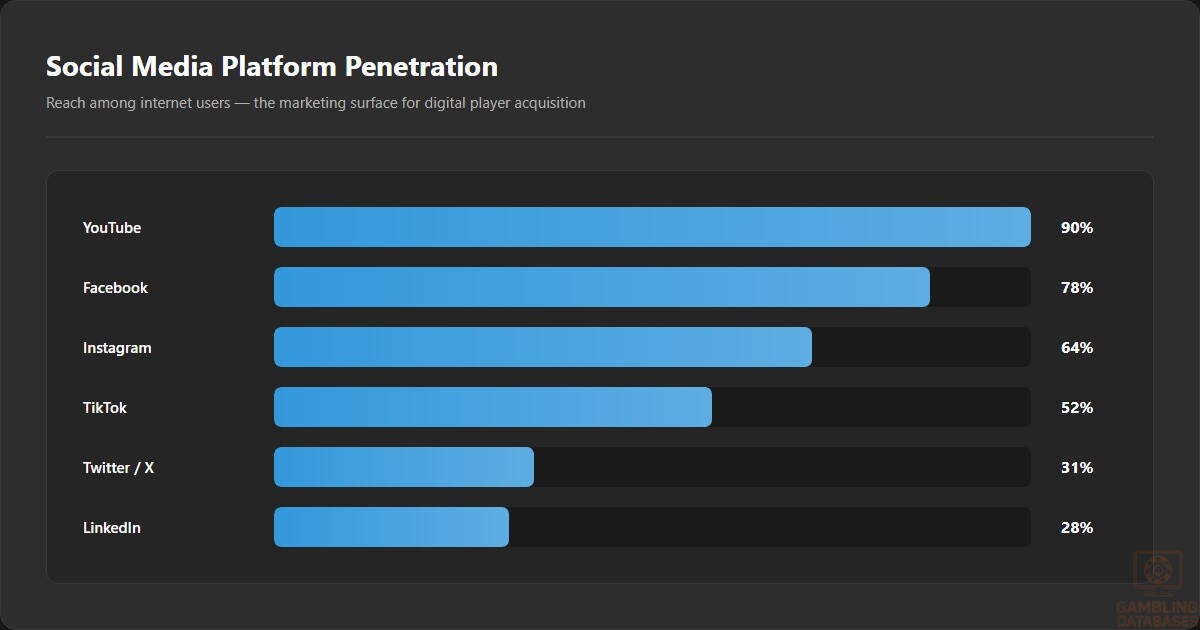
- Facebook: used by 78% of internet users, average daily engagement 2.3 hours
- Instagram: popular among ages 18-34, penetration 64%
- YouTube: nearly 90% penetration, average watch time 45 minutes daily
- TikTok: growing fast, 52% penetration among under-25 users
- LinkedIn: used by 28% of professionals for networking and career
- Twitter: 31% penetration, focused on news and updates
Digital Payment Behavior
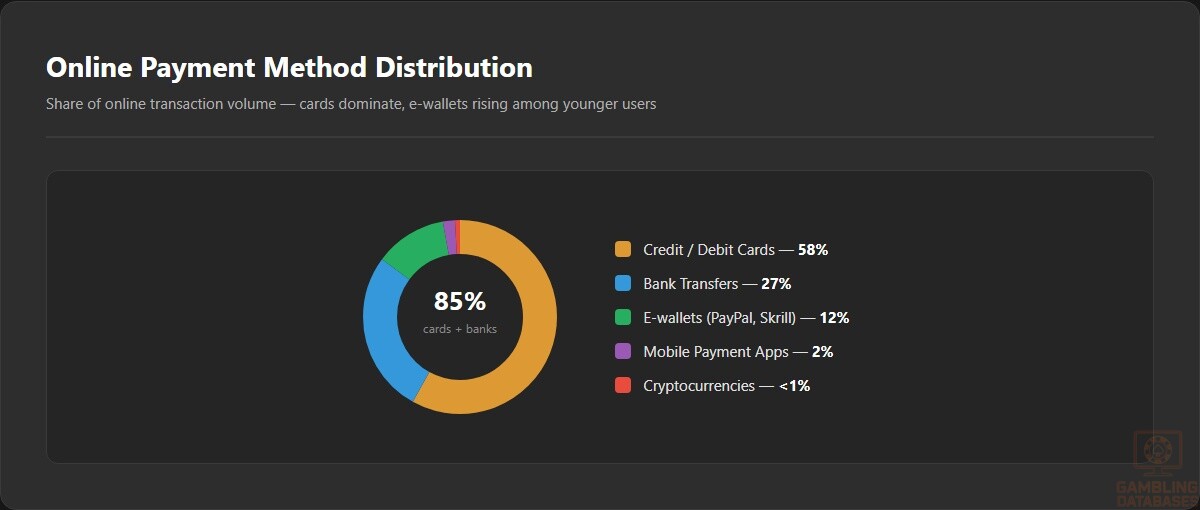
Online payments are well-established, dominated by credit and debit cards, bank transfers, and growing e-wallet adoption. Cryptocurrency use remains marginal but is slowly increasing among younger demographics and tech-savvy consumers.
- Credit/Debit Cards: 58% of online transaction volume
- Bank Transfers: 27% of online payments
- E-wallets (e.g., PayPal, Skrill): 12% and rising
- Mobile Payment Apps: emerging 5% usage
- Cryptocurrencies: <1%, early adoption phase
Gaming and Gambling Preferences
Current Market Participation
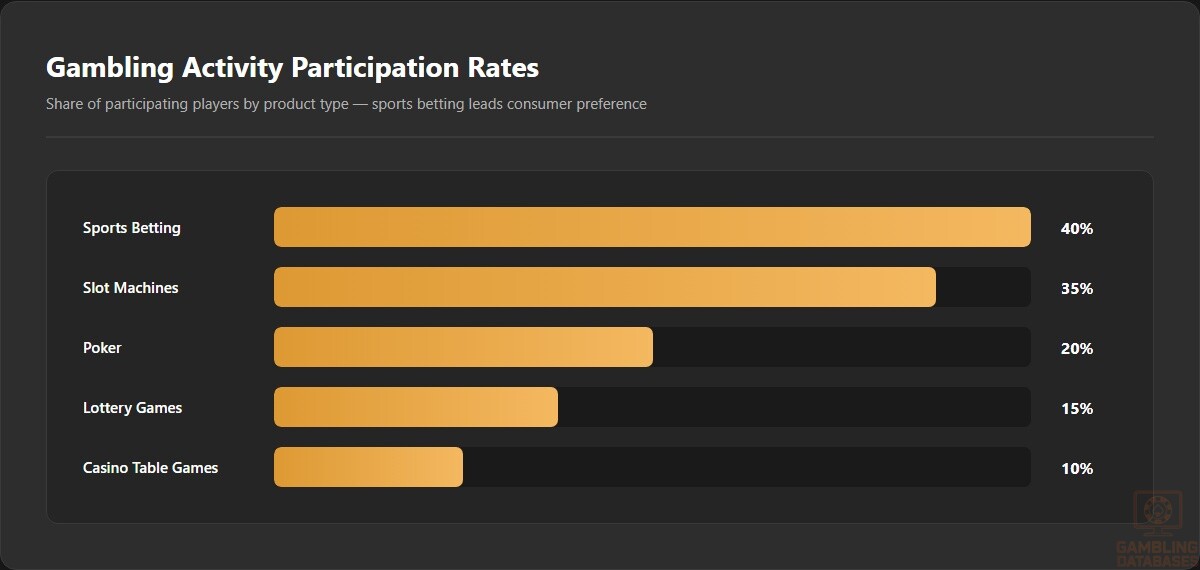
Market surveys suggest approximately 30% of the adult population participates in some form of gambling annually. Online gambling participation has surged, with sports betting, slots, and poker games dominating user preference.
- Sports betting (most popular, 40% participation rate)
- Slot machines (35%)
- Poker (20%)
- Lottery games (15%)
- Other casino table games (10%)
Consumer Behavior Patterns
Players tend to prefer accessible digital platforms offering convenience and diverse gaming options. Peak playing times coincide with evenings and weekends, with session lengths averaging 30-45 minutes per user. Retention is supported by localized bonuses and loyalty programs, while growth is driven by mobile optimization and live dealer game formats.
Section 3: Technology Infrastructure and Business Environment
Internet and Digital Infrastructure
Slovenia showcases a highly developed digital infrastructure with internet penetration reaching approximately 91.5% of the population. Broadband connectivity serves a majority of households, supplemented widely by mobile internet access. Average fixed broadband speeds exceed 150 Mbps, positioning Slovenia among the leading European countries in internet performance.
Network reliability is robust, supported by ongoing investments in fiber optic expansion and upgrades to national backbone infrastructure. The government and private sector consistently prioritize digital infrastructure modernization to ensure seamless connectivity essential for growing online industries, including iGaming.
5G and Future Technology Deployment
Slovenia’s 5G rollout began in earnest in 2023, with current coverage surpassing 75% of the population. Major urban centers enjoy near-complete 5G availability, facilitating ultra-low latency and high-speed mobile connectivity crucial for advanced gaming experiences.
Network operators plan continuous expansion aiming for nationwide coverage by 2027. The technological ecosystem supports emerging trends such as cloud gaming, augmented reality, and real-time streaming, providing fertile ground for innovative iGaming solutions.
Mobile Technology Ecosystem
The mobile telecom market is competitive and mature, featuring multiple operators providing extensive network coverage across Slovenia. Consumer data costs are moderate relative to regional standards, encouraging high mobile usage for internet and gaming applications.
Mobile Network Operators and Market Shares
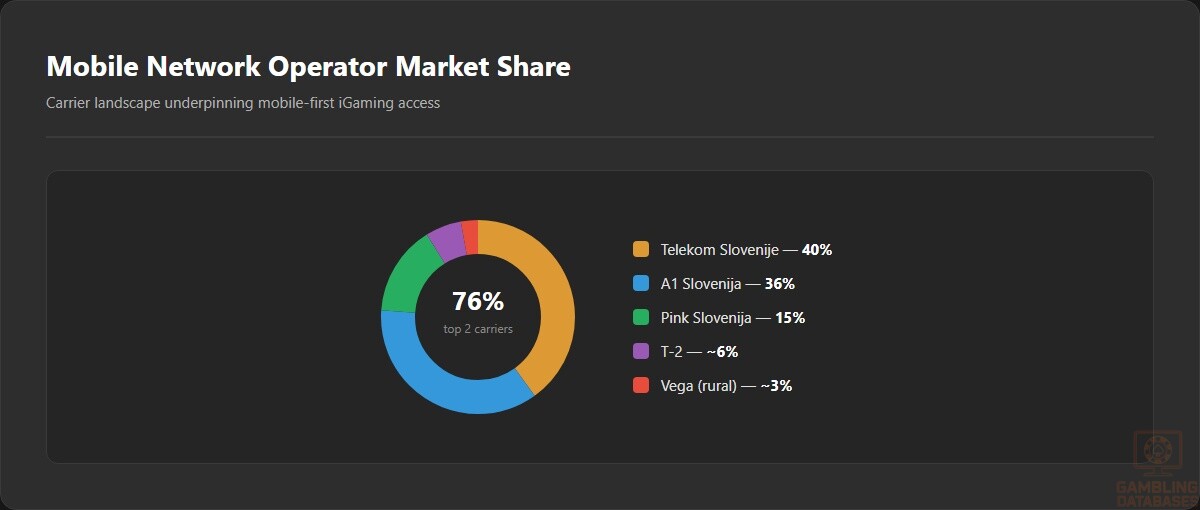
- Telekom Slovenije – leading market share at approximately 40%
- A1 Slovenija – holds around 36% market share
- Pink Slovenija – about 15% share, targeting budget segments
- T-2 – smaller but growing operator with expanding 5G network
- Vega – niche player focused on rural connectivity
Smartphone adoption is widespread, with more than 85% of adults owning smartphones. Android devices dominate the market share, though Apple’s iOS maintains a significant premium segment presence. Mobile users extensively engage with apps, including iGaming platforms, indicating a digitally native consumer base.
Financial Services and Payment Infrastructure
Slovenia’s banking sector is stable and technologically advanced, with large banks offering comprehensive digital banking services and widespread account penetration. Digital banking adoption is high, with online and mobile banking services accounting for the majority of consumer interactions.
Major Banks in Slovenia Market
- Novo Banka – market leader with robust digital offerings and SME focus
- NLB (Nova Ljubljanska Banka) – largest retail and corporate banking institution
- SKB Banka – regional bank with strong service innovation
- UniCredit Banka Slovenija – international banking presence with multi-currency services
- Abanka – niche private banking and wealth management expertise
Payment processing options cover a broad spectrum including traditional cards, e-wallets, instant bank transfers, and emerging fintech solutions. Card penetration is estimated near 70% of adults, facilitating seamless consumer transactions.
Popular Payment Processing Methods
- Visa and Mastercard credit/debit cards
- PayPal and Skrill e-wallets
- SEPA bank transfers and direct debits
- Mobile wallets including Apple Pay and Google Pay
- Klarna and other Buy Now, Pay Later (BNPL) options gaining traction
E-commerce and Digital Economy
Slovenia’s e-commerce market has witnessed steady growth, with an annual growth rate near 9%. Consumers show increasing trust in digital services, fueled by robust payment systems, protection laws, and efficient logistics networks. Online retail penetration sits at approximately 60%, with digital entertainment and gaming among the fastest growing sectors.
The governmental digital economy strategy supports startups and innovation hubs, facilitating an environment conducive to technology-driven businesses and iGaming operators seeking scalable models in a mature consumer market.
Business Environment and Regulatory Framework
Slovenia ranks favorably in World Bank ease of business indicators, reflecting streamlined company registration, transparent regulatory practices, and investor protections. Business incorporation is comparatively straightforward, though industry-specific regulations, particularly gambling, require detailed compliance.
Business Registration Process
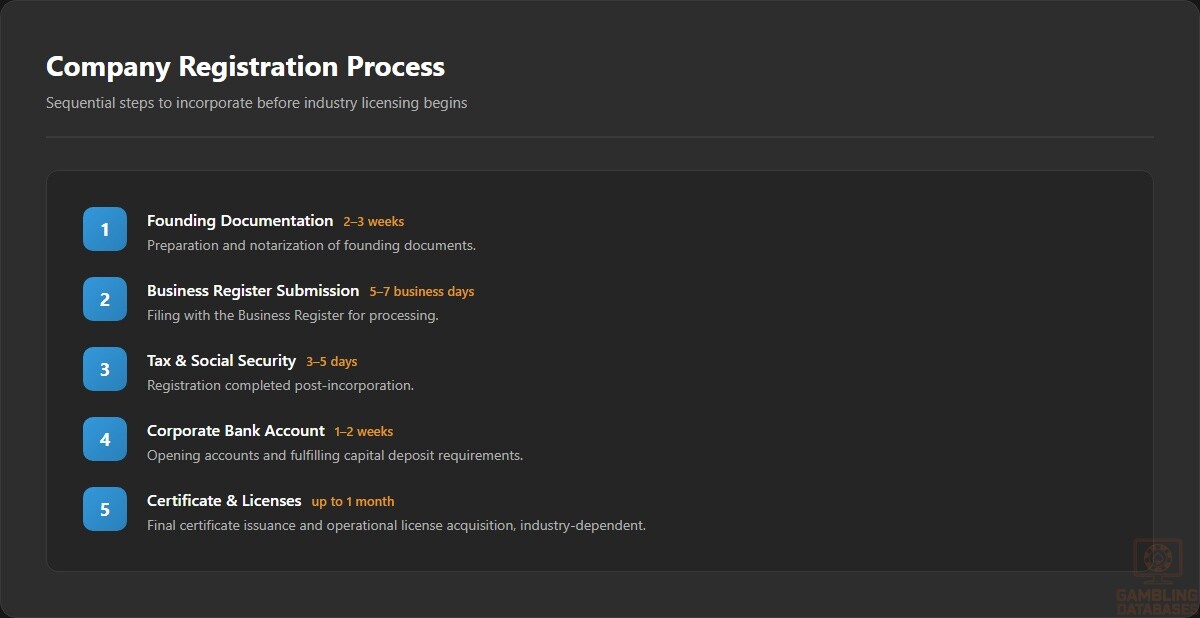
- Preparation of founding documentation and notarization, 2-3 weeks
- Submission to the Business Register with 5-7 business days processing
- Tax and social security registration within 3-5 days post-registration
- Opening corporate bank accounts and fulfilling capital deposit requirements, 1-2 weeks
- Final certificate issuance and operational licenses acquisition up to 1 month, dependent on industry
The main corporate structures include limited liability companies (LLCs), public limited companies (PLCs), and branch offices of foreign companies. LLCs are preferred for iGaming due to limited liability, tax efficiency, and simpler governance compared to PLCs.
Required Registration Documents
- Notarized articles of association
- Proof of registered office in Slovenia
- Bank confirmation of minimum capital deposit
- Tax identification number application
- Management and ownership disclosure forms
- Business plan and operational policies for regulated industries
Taxation Framework
Corporate income tax in Slovenia is set at a flat rate of 19%, with special provisions and exemptions available within free economic zones. Tax treaties with multiple countries eliminate double taxation for international operators.
Tax Treaty Countries
- Austria
- Germany
- Croatia
- Italy
- Hungary
- Other EU members and select international partners
Personal income tax applies progressively from 16% to 50% depending on income brackets. Social security contributions are also significant, affecting employment cost considerations for operators.
Market Entry Considerations
Effective entry strategies emphasize forming partnerships with local stakeholders, leveraging technology platforms compliant with Slovenian standards, and enhancing responsible gaming frameworks. Licensing reforms offer opportunities for new market entrants, but competition and regulatory scrutiny warrant robust operational planning.
Recommended Entry Strategies
- Partner with established land-based license holders for streamlined access
- Invest in technology certification and transparent compliance frameworks
- Incorporate strong marketing and localized user acquisition campaigns
- Leverage mobile-first platform development to capture younger demographics
- Focus on responsible gambling programs as brand differentiation
Typical costs of establishing an iGaming operation in Slovenia include license fees ranging from €200,000 to €500,000, legal and consulting fees averaging €50,000, and initial operating capital upwards of €500,000 to sustain activities during regulatory approval phases.
| Cost Category | Estimated Amount |
|---|---|
| License Application Fees | €200,000 – €500,000 |
| Legal and Consulting Services | €40,000 – €60,000 |
| Company Registration and Setup | €10,000 – €20,000 |
| Operational Capital Reserve | €500,000+ |
| Technology and Compliance Certification | €30,000 – €80,000 |
Market Entry Timeline
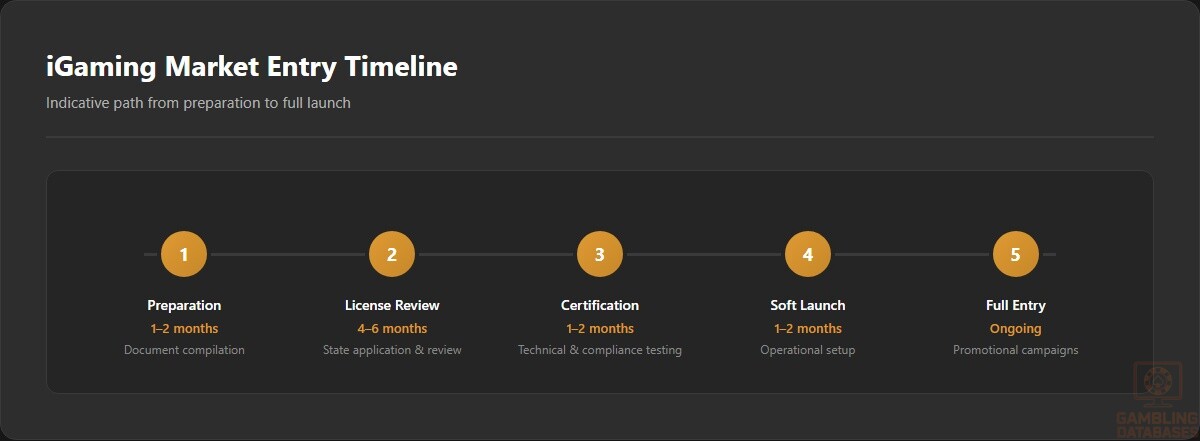
- Preparation and document compilation: 1-2 months
- License application and state review: 4-6 months
- Technical certification and compliance testing: 1-2 months
- Operational setup and soft launch: 1-2 months
- Full market entry and promotional campaigns: ongoing
Key success factors include regulatory compliance, technological innovation, local market knowledge, and customer trust. Operational challenges often involve navigating licensing complexity, meeting capital requirements, and investing in sustainable responsible gambling initiatives.
Key Success Factors
- Strong regulatory compliance and transparent operations
- Advanced technology infrastructure and secure platforms
- Local partnerships for market access and brand awareness
- Robust responsible gambling programs aligned with regulations
- Agile marketing strategies targeting digital-savvy demographics
Operational Challenges
- High upfront license and capital costs
- Ongoing regulatory reporting and compliance demands
- Competition from entrenched incumbents and monopolies
- Necessity for localized content and customer support
- Maintaining cybersecurity and data privacy standards
Exit strategy planning is essential due to market liquidity concerns and regulatory constraints on license transferability. Operators typically plan long-term investments with scalable models to maximize valuation multiples upon potential divestment.
FAQ: Frequently Asked Questions
1. Is online gambling legal in Slovenia?
Yes, online gambling is legal in Slovenia for operators holding a valid license linked to a land-based concession holder. The law requires online gaming providers to be affiliated with local licensed entities, limiting direct foreign market access pending ongoing reforms. Unauthorized online platforms are prohibited, and strict enforcement targets illegal operations. Recent legislative changes aim to broaden licensing opportunities and simplify market entry.
2. What types of gambling licenses are available and what do they cover?
Slovenia offers multiple licensing categories including lottery, casino, sports betting, slot machine halls, and online gambling linked to land-based concessions. Licenses grant rights to operate specific gambling activities under regulated conditions. Each license requires adherence to capital requirements, technical standards, and responsible gambling obligations. The government caps the number of licenses in key segments like casinos and gambling halls, managing market balance.
3. How much does an iGaming license cost and how long does it take to obtain?
iGaming license costs range typically from €200,000 to €500,000 depending on the game category and scale. The licensing process including application, document review, and certifications can take up to 6 months, although efficiency improvements are underway. Applicants must also budget for legal, compliance, and operational setup expenses. Timelines hinge on completeness of documentation and regulator responsiveness.
4. Can foreign companies obtain a gambling license?
Foreign companies can apply for a gambling license but must establish a local presence or partnership with a Slovenian concession holder. The law imposes no explicit foreign ownership restrictions but mandates compliance with local operational and reporting requirements. Market liberalization efforts seek to ease foreign entry by expanding licensing and reducing reliance on existing land-based entities.
5. What are the tax obligations for iGaming operators?
Operators are subject to gross gaming revenue (GGR) taxes ranging from 5% to 45% depending on game type, corporate income tax at 19%, and license fees. They must withhold a 15% tax on player winnings exceeding €300. Obligations include regular reporting and payment schedules to the Ministry of Finance. Tax regime aligns with EU norms but imposes distinct rates by gambling category.
6. Are gambling winnings taxed for players?
Yes, gambling winnings above €300 are subject to a 15% withholding tax by operators. This tax satisfies players’ personal income tax liabilities related to gambling gains. The withholding system ensures simplicity and compliance, reducing players’ reporting burdens. Winnings below this threshold are exempt.
7. What are the typical operational costs for running an online casino or sportsbook in Slovenia?
Operational costs include licensing fees (€200k-€500k), technology certification, staff salaries, marketing, payment processing fees, and ongoing compliance reporting. Infrastructure investments and responsible gambling program implementation add additional costs. Legal and consulting services typically contribute €40,000 to €60,000 during setup. Cost management is essential for profitability given competitive pressures.
8. What is the expected ROI timeline for entering this market?
Return on investment timelines vary between 18 to 36 months depending on the scale of operations, user acquisition success, and regulatory hurdles. New entrants face upfront costs and waiting periods for license approvals but benefit from growth in digital gambling participation. Market liberalization is expected to improve ROI prospects by reducing barriers.
9. What are the local presence requirements for operators?
Operators must maintain a registered office and operational presence within Slovenia. Online gambling providers need Slovenian domains and controlled telecommunications infrastructure. Personnel must comply with regulatory standards including training in responsible gambling. Local presence facilitates regulatory communication and compliance monitoring.
10. What payment methods are available and recommended?
Popular payment methods supporting iGaming include Visa and Mastercard credit/debit cards, PayPal, Skrill, SEPA bank transfers, and mobile wallets such as Apple Pay and Google Pay. Offering a diverse payment mix enhances user convenience and trust. Digital wallets and instant bank transfers are particularly favored by younger users.
11. What are the advertising and marketing restrictions?
Advertising must not target minors and must include responsible gambling warnings. It cannot contain misleading claims about guaranteed winnings or skill. Channels targeting youth or vulnerable groups are restricted. Licensed operators only may advertise, and sponsorship activities are tightly regulated to maintain ethical standards.
12. What responsible gambling measures are mandatory?
Operators must implement age verification, self-exclusion programs, deposit and loss limits, mandatory risk warnings, and provide access to addiction support services. Player protection remains central to licensing conditions. Regular audits ensure compliance with these measures.
13. How large is the iGaming market and what is the growth potential?
Slovenia’s iGaming market generated estimated revenues of €168.5 million in 2023, contributing over 35% of total gambling revenues. Forecasts predict growth at a CAGR of 2.65% through 2029, propelled by increasing digital adoption and regulatory reforms. Market expansion is supported by rising consumer spending and diversified gaming preferences.
14. Who are the main competitors and what is their market share?
The market is currently dominated by state-affiliated operators holding the majority of licenses. Two main companies dominate online operations, with land-based casinos controlled by a limited number of licensees. Proposed liberalization may introduce new players and diversify competitive dynamics. Market share remains concentrated with legacy operators.
15. What are the player preferences and typical spending patterns?
Players prefer lotteries, slot machines, sports betting, and online casino games in descending order of popularity. Spending tends to cluster around mobile and desktop platforms offering convenience and live gaming features. Average annual player spend is approximately €200. Peak activity occurs during evenings and weekends.
16. What are the key success factors and main challenges for new entrants?
Success hinges on regulatory compliance, technology innovation, local partnerships, and responsible gambling programs. Challenges include high capital costs, navigating licensing complexities, competitive incumbents, and meeting consumer service expectations. Being agile in marketing and adapting to evolving regulatory landscapes is critical.
Sources and References
- Slovenia Gambling Regulatory Authority – Official Website
- National Statistical Office Slovenia – Population and Economic Data 2024
- Central Bank of Slovenia – Financial Statistics and Reports
- Ministry of Finance Slovenia – Tax Regulations and Guidelines
- World Bank – Doing Business Report 2024
- International Telecommunication Union – ICT Statistics and Reports
- Gaming Industry Report 2024 – European Gaming & Betting Association
- Slovenia iGaming Market Research Report 2025 – iGamingToday
- Slovenian Statistical Office – Demographics and Economic Indicators 2025
- European Commission Digital Economy Reports
- Slovenian Ministry of Economic Development and Technology – Digital Strategy 2025
- Slovenian Telecommunications Agency Annual Report 2025
- Slovenian Gambling Act and Amendments 2023-2025
- Central European Banking Industry Reports 2024
- Slovenian Advertising Code and Regulations
- EU Digital Single Market Strategy Documents
- Slovenia Tax Authority – Corporate and Personal Tax Bulletins
- Digital 2025: Slovenia – DataReportal
- Worldometers – Slovenia Population and Demographics 2025
- Trading Economics – Slovenia Economic Indicators
- Industry Analysis – Online Gambling in Central Europe 2025
- European Gaming Regulations – CMS Expert Guide 2025
- Responsible Gambling Europe – National Policy Reviews 2024
- Novalnet – Payment Processing in Slovenia 2025
- Lisbon Addictions Center – Problem Gambling Studies Slovenia 2024
- Scaleo Blog – EU iGaming Regulations Overview 2025
- Infront Analytics – Gambling Market Trends Slovenia 2025
- Altenar – Gaming Licenses Guide 2024
- Data ECB – Slovenia Financial Data Portal
- Statista – Slovenian Gambling Market Forecast 2025
- 6WResearch – Slovenia Gambling Market 2025-2031
- GBC Time – Gambling Advertising Rules Slovenia 2024
- CountryMeters – Live Population and Demographics Slovenia 2025
- Euetp.eu – Slovenia Online Casino Guide 2025
- IBISWorld – Gambling Activities Market in Slovenia 2025
- Prikhodko Corporate Law – Internet Casino Licensing 2024
- Fonoa – Slovenia VAT and Tax Guide 2024
- Lawstrust – European Gambling Advertising Regulation 2020
- DataReportal – Digital Slovenia 2025 Statistics