Mauritania represents a challenging yet strategically significant market for iGaming due to its strict regulatory environment rooted in Islamic law. Despite the current comprehensive ban on gambling activities, the country’s demographic and technological landscape creates a potential future opportunity if regulatory reforms arise.
This analysis delivers a detailed examination of Mauritania’s regulatory framework, outlining legal constraints, licensing challenges, and compliance demands essential for market entry planning.
Executive Summary: Key Market Indicators
| Metric | Value |
|---|---|
| Gambling Legal Status | Complete ban on all gambling forms (land-based and online) |
| Legal Framework Base | Islamic Shari’ah Law combined with French civil law |
| Sports Betting | Illegal except through licensed operators (extremely limited) |
| Online Gambling | Not explicitly regulated; officially prohibited |
| Penalties for Illegal Gambling | Fines up to €8,118; imprisonment up to 10 years for repeat offenders |
| Licensing Availability | No official gambling licenses issued |
| Population | 4.5 million (2025 estimate) |
| Median Age | 22 years |
| GDP (Nominal) | USD 9.3 billion (2024) |
| GDP Per Capita | USD 2,055 |
| Internet Penetration Rate | approximately 50% |
| Mobile Penetration Rate | over 90% |
| Market Entry Barriers | High due to legal prohibition and lack of licensing framework |
| Expected Licensing Costs | Not applicable (no licenses issued) |
| Taxation on Gambling | None officially; illegal activities taxed via fines/penalties |
| Operational Presence Requirement | Not applicable; foreign ownership generally restricted |
| Average Revenue Per User (ARPU) | Not available (illegal market) |
| Market Size (iGaming) | Negligible due to prohibition |
| Growth Forecast (CAGR) | No formal projections in current regulatory context |
| Business Environment | Complex regulatory environment with strict enforcement |
| Enforcement Intensity | High penalties but variable enforcement on online activities |
| Responsible Gambling Measures | Not established due to prohibition |
| Player Protection | Nonexistent in unregulated market |
| Advertising Restrictions | Complete ban on gambling advertising |
| Recent Regulatory Changes | None; status quo maintained since 1983 Penal Code |
| Regulatory Authority | Islamic Law and Civil Law Authorities jointly enforce gambling prohibitions |
Section 1: Regulatory Framework and Legal Environment
Current Gambling Regulation Status
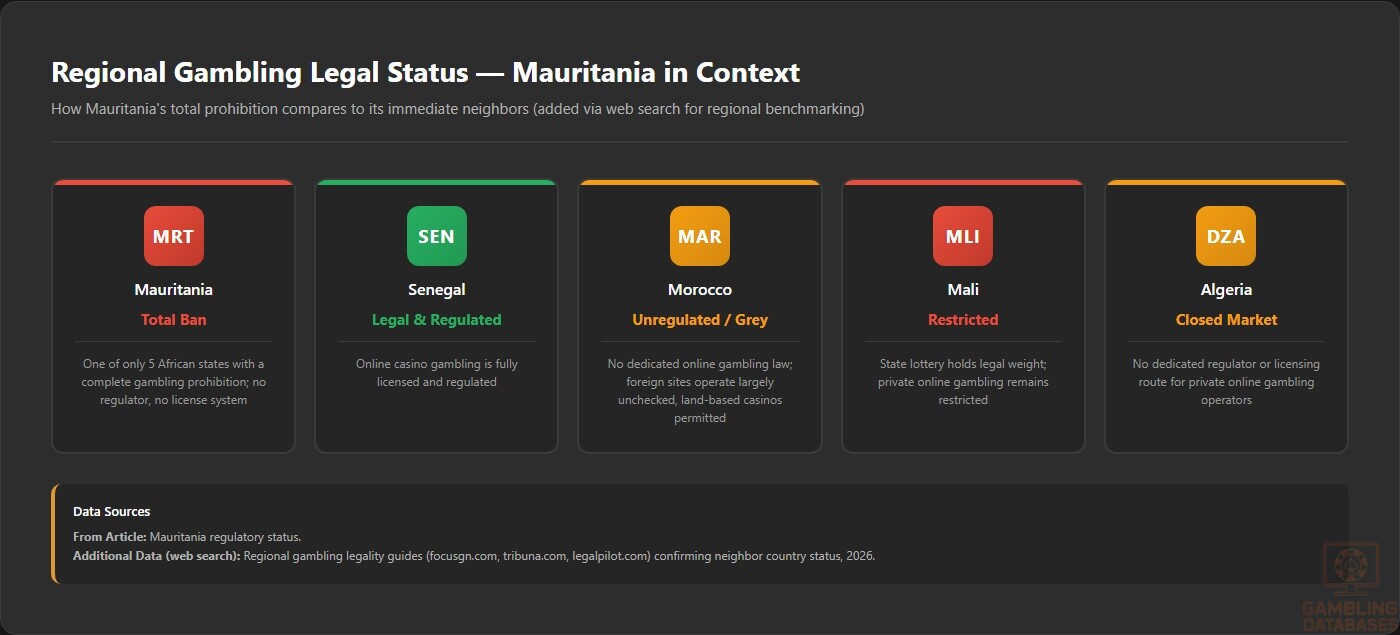
Mauritania enforces a comprehensive ban on all forms of gambling, including traditional land-based casinos, sports betting, slot halls, and online gambling activities. This prohibition is deeply rooted in the country’s Islamic Shari’ah law combined with elements of the French civil legal system. The 1983 Penal Code explicitly criminalizes gambling activities with strict fines and imprisonment penalties for offenders, reflecting the state’s conservative stance.
The legal environment prohibits the operation of any gambling establishments, whether physical or digital. Online gambling platforms are not explicitly legislated with licensing frameworks; nonetheless, such activities are deemed illegal. Despite the absence of formal online gambling legislation, the government actively discourages these activities and enforces sanctions as needed. Unlike some other markets, Mauritania does not maintain a regulatory body that issues licenses or oversees gaming operations.
Land-Based Gambling Activities
There are no legal land-based casinos, sports betting shops, or slot machine venues within Mauritania. The government enforces a zero-tolerance policy on gambling, with any attempt to operate physical gambling ventures subject to significant legal penalties. This prohibition significantly limits the possibility of domestic iGaming infrastructure linked to traditional gambling establishments.
Online Gambling Framework
Online gambling is formally illegal and unregulated. The lack of a licensing or regulation regime means no legal online casinos or betting operators operate under Mauritanian authorization. Though the country does not explicitly block access to foreign online gaming websites, any participation in such platforms carries legal risks. Players engaging in online gambling do so at their own risk, with the potential for penalties under the broader gambling prohibition.
Licensed Operators and Market Players
No official gambling licenses are granted to operators in Mauritania. Consequently, there is no legal market presence or licensed competitors operating within the jurisdiction. Foreign operators face legal constraints that effectively prevent formal market entry. The competitive landscape is thus non-existent from a regulated perspective, with any underground activity subject to enforcement actions.
Licensing Framework and Requirements
Application Process and Eligibility
Mauritania lacks a formal licensing process for gambling activities, reflecting the outright ban on such operations. There is no regulatory authority dedicated to issuing licenses or overseeing compliance for iGaming. As a result, there are no application procedures, eligibility criteria, or official fees for gambling licenses. Any attempt to apply for a gambling license or business registration in this sector would likely be rejected under existing laws.
Local Presence and Operational Requirements
The legal framework restricts both local and foreign entities from operating gambling businesses, meaning there are no mandates regarding local physical presence, official domain registration, or personnel obligations related to gambling operations. Foreign ownership of gambling businesses is effectively prohibited, aligned with the broader ban on these activities. This absence of a legal facility or operational requirements reflects Mauritania’s conservative regulatory approach.
Compliance Obligations and Monitoring
Player Protection and Identification
Due to the illegal status of gambling, no formal player protection or responsible gambling frameworks exist. There are no regulated KYC (Know Your Customer) or AML (Anti-Money Laundering) standards enforced for gambling. Age verification and self-exclusion mechanisms are non-existent at the legislative level. Consumers lack legal protections or complaint resolution pathways within the gaming sector.
- Prohibition of gambling advertising and promotions
- Enforcement of penalties for unauthorized gambling participation
- Surveillance of digital transactions linked to gambling
- Restrictions on access to gambling venues (where applicable)
- Penalties for organizing or facilitating illegal gambling
Financial Monitoring and Reporting
There are no formal financial reporting or transaction monitoring requirements for gambling operators within Mauritania as no legal operations exist. However, general anti-fraud and financial crime regulations apply, and the authorities may act against financial flows suspected to be linked with illegal gambling activities. Enforcement involves a reactive model focusing on detection of unlawful gambling transactions rather than proactive oversight.
Taxation Structure and Financial Obligations
Player Taxation
A clear tax regime on player winnings does not exist given all gambling is prohibited. Players involved in illegal gambling activities face potential fines rather than tax obligations. There are no withholding tax systems for wagering profits.
Operator Taxation
| Tax Type | Rate or Rate Description |
|---|---|
| Gross Gaming Revenue (GGR) Tax | Not applicable (illegal market) |
| Corporate Income Tax | Standard rates apply to legal businesses; gambling operators excluded |
| Licensing Fees | No licenses granted |
| Turnover/Betting Taxes | Not applicable |
| Fines for Illegal Operations | From 5,000 to 300,000 Mauritanian Ouguiya (€135 to €8,118) |
Gambling Market Financial Performance
The iGaming market is undeveloped due to the legal ban, resulting in negligible formal revenues or tax returns from gambling. The absence of legal operators means no publicly available market size figures or revenue trends. Informal or underground activities are not quantifiable through official statistics.
Advertising and Marketing Restrictions
Advertising of gambling products is completely prohibited under Mauritanian law. This ban covers all media channels including print, broadcast, outdoor, and digital platforms. Promotion or sponsorship related to gambling is forbidden, with strict penalties for violations. Advertising restrictions aim to support the total prohibition stance and reduce societal exposure to gambling.
- Ban on all gambling advertising content in media
- Prohibition on sponsorship by gambling operators
- Restriction on promotional offers and bonuses
- Limits on communications targeting minors or vulnerable groups
- Monitoring and sanctioning of illegal advertising activities
Recent Regulatory Changes and Their Impact
Since the adoption of the 1983 Penal Code explicitly banning gambling, Mauritania has maintained a stable regulatory stance with minimal changes to gambling laws. No significant amendments or new legislation have been introduced that would facilitate legalized gambling. This consistent prohibition creates a high barrier to market entry and limits potential growth.
Enforcement Mechanisms and Penalties
Penalties for illegal gambling activities in Mauritania are severe and enforced by combined Islamic and civil law authorities. The legal framework penalizes organizers and participants with monetary fines and imprisonment terms. Enforcement is supported by criminal prosecution mechanisms and asset confiscation provisions, creating strong deterrents against unlawful market activities.
- Fines ranging from 5,000 to 300,000 Mauritanian Ouguiya
- Prison sentences up to 10 years for repeat offenders
- Confiscation of gambling equipment and proceeds
- Closure of illegal venues and online service blocks
- Criminal prosecution under Penal Code provisions
Section 2: Demographics and Consumer Analysis
Population Demographics and Distribution
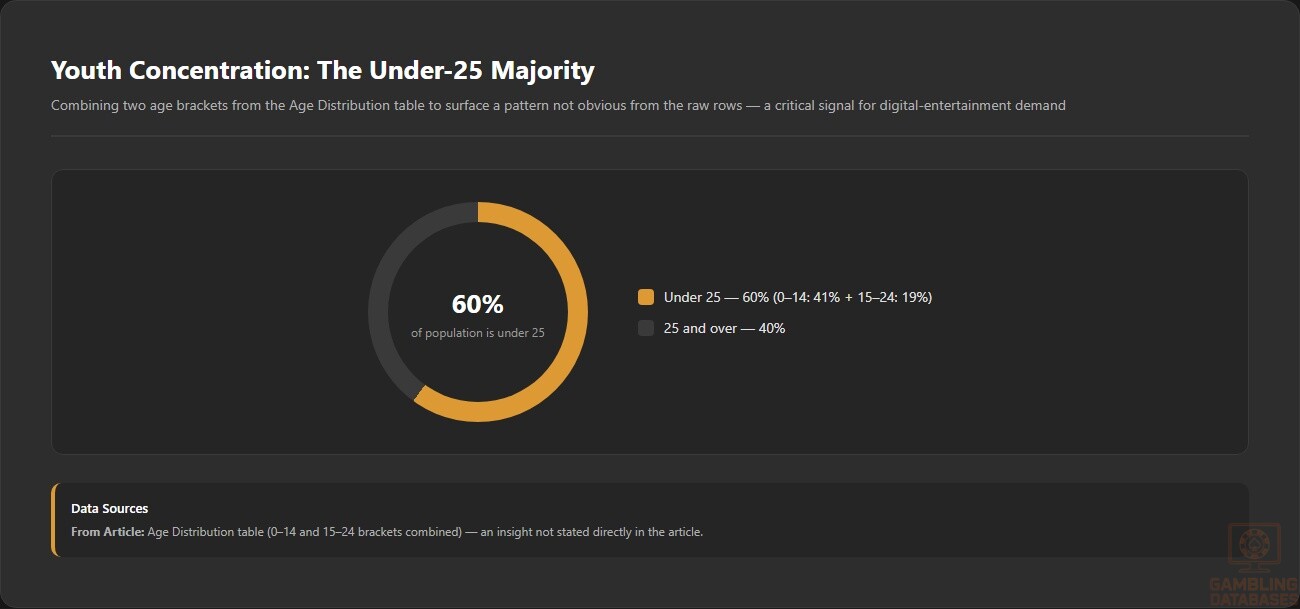
Mauritania’s total population stands at approximately 4.5 million as of 2025. The demographic profile is notably youthful, with a median age near 22 years, reflecting a high proportion of children and young adults. Gender distribution remains balanced with a near 1:1 male-to-female ratio. This youthful population offers a potential consumer base for entertainment sectors, including digital platforms, although economic constraints limit disposable income.
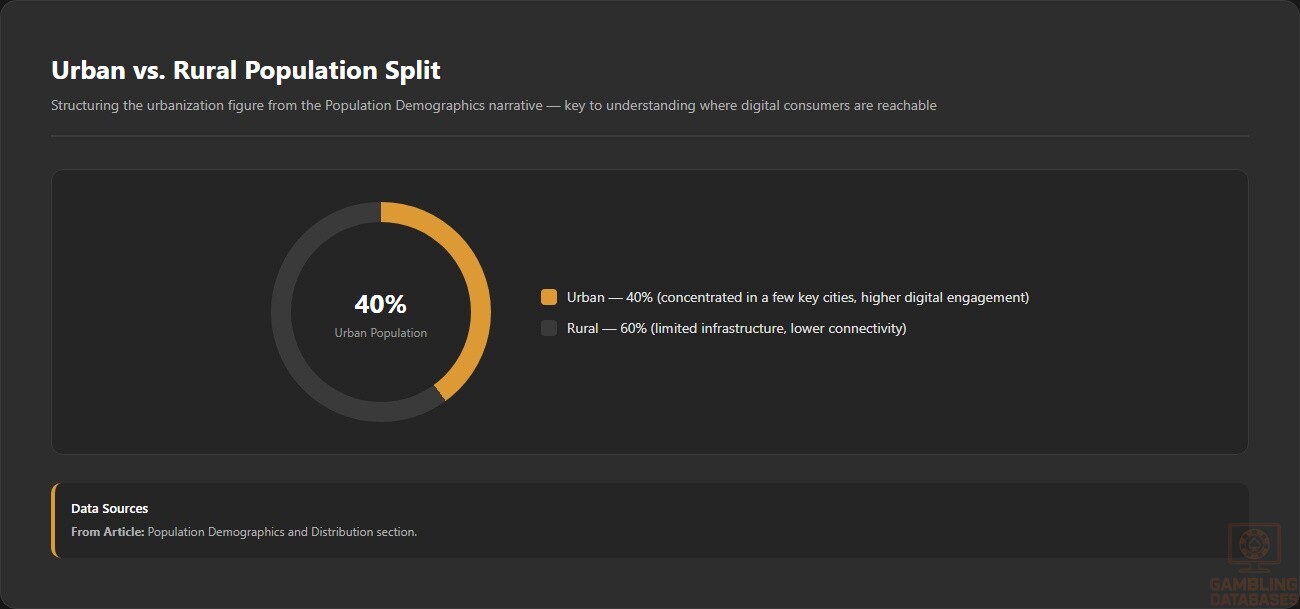
The population distribution shows significant contrasts between urban and rural areas. Urban centers are home to roughly 40% of the population, concentrated primarily in a few key cities, while the remainder resides in rural regions with limited infrastructure. This uneven urbanization impacts internet access and consumer behavior, with urban areas exhibiting higher digital engagement.
| Age Group | Percentage of Population |
|---|---|
| 0-14 years | 41% |
| 15-24 years | 19% |
| 25-54 years | 32% |
| 55-64 years | 5% |
| 65 years and over | 3% |
Geographic Distribution
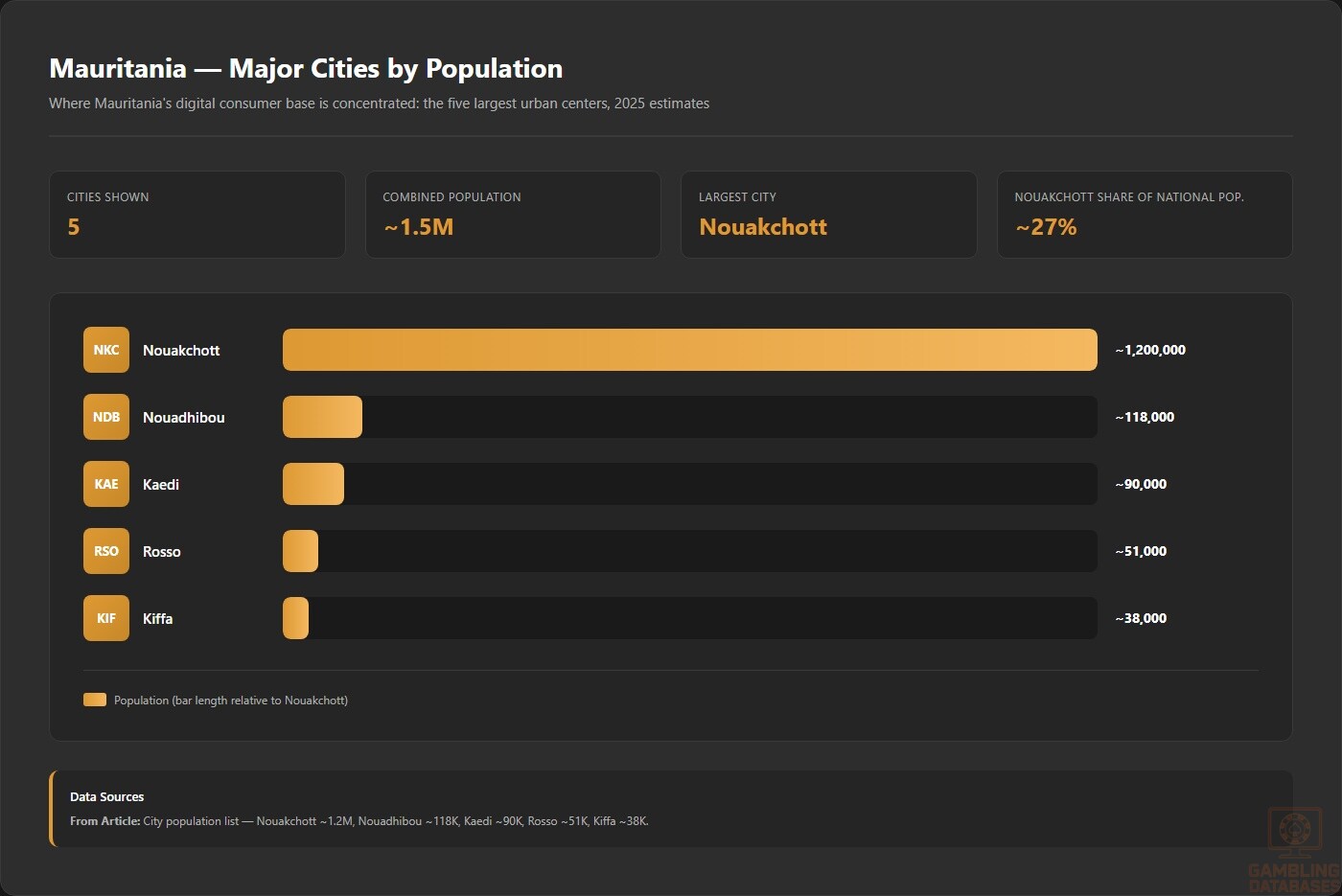
Mauritania’s population is primarily clustered in a handful of major cities that serve as political, economic, and social hubs. The capital city, Nouakchott, dominates with approximately 1.2 million residents, representing over a quarter of the national population. Other significant cities include Nouadhibou, Kaedi, Rosso, and Kiffa, which have smaller but notable populations and regional economic roles.
- Nouakchott: ~1.2 million
- Nouadhibou: ~118,000
- Kaedi: ~90,000
- Rosso: ~51,000
- Kiffa: ~38,000
Internet connectivity is predominantly accessible in urban areas, with rural regions experiencing limited service due to infrastructural challenges. These urban centers thus concentrate most digital consumption and potential iGaming consumers, although gambling remains illegal. Physical gambling venues are absent; therefore, consumer contact happens predominantly via mobile and internet platforms.
Economic Indicators and Consumer Spending Power
Mauritania’s economy has shown modest but stable growth, with a GDP valued at approximately USD 9.3 billion in 2024. The projected economic expansion rate hovers around 3-4% annually, supported by mining, agriculture, and fisheries. The GDP per capita stands at roughly USD 2,055, signaling a low-middle-income status. Economic activity remains concentrated in extractive industries, limiting broad-based consumer wealth but leaving room for select urban digital consumption segments.
Household income distribution reveals marked inequality, with urban centers having significantly higher average incomes compared to rural zones. Disposable income growth is constrained by high poverty rates impacting nearly 40% of the population. Consumer spending prioritizes essentials, restricting discretionary expenditure on entertainment, including gaming.
| Indicator | Value |
|---|---|
| GDP (Nominal) | USD 9.3 billion |
| GDP Growth Rate | 3.5% annual growth |
| GDP Per Capita | USD 2,055 |
| Unemployment Rate | 12.1% |
| Poverty Rate | 39% |
| Inflation Rate | 4.0% |
The economic environment presents challenges for mass-market iGaming adoption due to limited disposable income, but selective middle-class growth and urbanization support future potential. The urban middle-income segment exhibits rising digital engagement and willingness to spend on entertainment and services.
Market Size and Growth Projections
Given the legal ban on gambling, formal market size for iGaming is virtually non-existent. However, an informal market exists through cross-border online gambling platforms accessed via mobile and internet. Estimates suggest the underground market generates minimal revenue, constrained by low average income and regulatory risks.
Projected growth of digital consumption and smartphone penetration suggests future expansion possibilities should regulations liberalize. Current average revenue per user (ARPU) for digital entertainment in urban areas is estimated at around USD 12 annually, though this is speculative in the gambling context due to legal restrictions.
| Metric | Value |
|---|---|
| Estimated iGaming Market Size (Informal) | Under USD 1 million |
| Annual Growth Projection (If Legalized) | 15%-18% CAGR (speculative) |
| Digital Consumer Base (Urban) | Approx. 1.8 million |
| Estimated ARPU for Digital Services | USD 12 |
| Smartphone Penetration | 60% national average |
Education, Skills, and Digital Literacy
Mauritania has made incremental progress in education, with a national literacy rate of approximately 52%, though adult literacy is significantly higher in urban areas. School enrollment rates are improving, with more emphasis on secondary and tertiary education, but quality gaps remain. Digital literacy is growing, particularly among the youth and urban population segments, driven by increasing mobile internet access.
Workforce skills are primarily centered on agriculture, mining, and informal sectors, with limited formal IT or technical training. However, the rise in social media and mobile platform usage suggests growing proficiency that could support future digital market expansion, including online entertainment consumption.
Cultural and Social Factors
Communication and Language
Mauritania is linguistically diverse but Arabic is the official language and predominant medium for government and media communication. French is widely used in business, education, and digital platforms, reflecting colonial legacy. Pulaar, Soninke, and Wolof are also spoken by distinct ethnic groups, influencing regional communication styles.
- Arabic (official)
- French (administrative/business)
- Pulaar (ethnic group language)
- Soninke (ethnic group language)
- Wolof (ethnic group language)
Cultural Attitudes
The conservative Islamic culture profoundly influences public attitudes toward gambling, which is largely viewed as morally objectionable and socially harmful. Foreign brands entering Mauritania encounter challenges related to cultural sensitivities and local skepticism of gambling-related entertainment. Traditional leisure activities and state-approved cultural expressions dominate public preference.
Despite these reservations, the youth and urban populations show increasing openness to digital entertainment forms, albeit cautiously. Religious influences maintain strong prohibitions that restrict broad acceptance of gambling, impacting consumer behavior and market potential.
Problem Gambling and Social Considerations
Problem gambling prevalence is low in Mauritania due to the prohibitive legal and cultural environment. No official data exists on gambling addiction rates or treatment availability. Government social programs prioritize poverty alleviation, education, and health over gambling-related interventions. Should gambling legalization occur, comprehensive social responsibility and support frameworks would be essential.
- Public awareness campaigns on gambling risks (hypothetical in current context)
- Social support programs focusing on addiction prevention
- Community education initiatives on responsible entertainment
- Potential regulatory mandates for operator contributions to social causes
- Development of counseling and treatment services
Political Structure and Governance
Mauritania operates under a presidential system with a semi-presidential republic framework. Political stability has been challenged intermittently, but recent years have seen improved governance consistency. Regulation enforcers adhere strictly to established Islamic legal principles when interpreting gambling prohibitions.
International relations are cordial but cautious regarding foreign business ventures, especially in sensitive sectors such as gambling. The government prioritizes national socio-cultural values and economic sovereignty, impacting regulatory openness.
Technology Adoption and Digital Behavior
Internet and Digital Usage
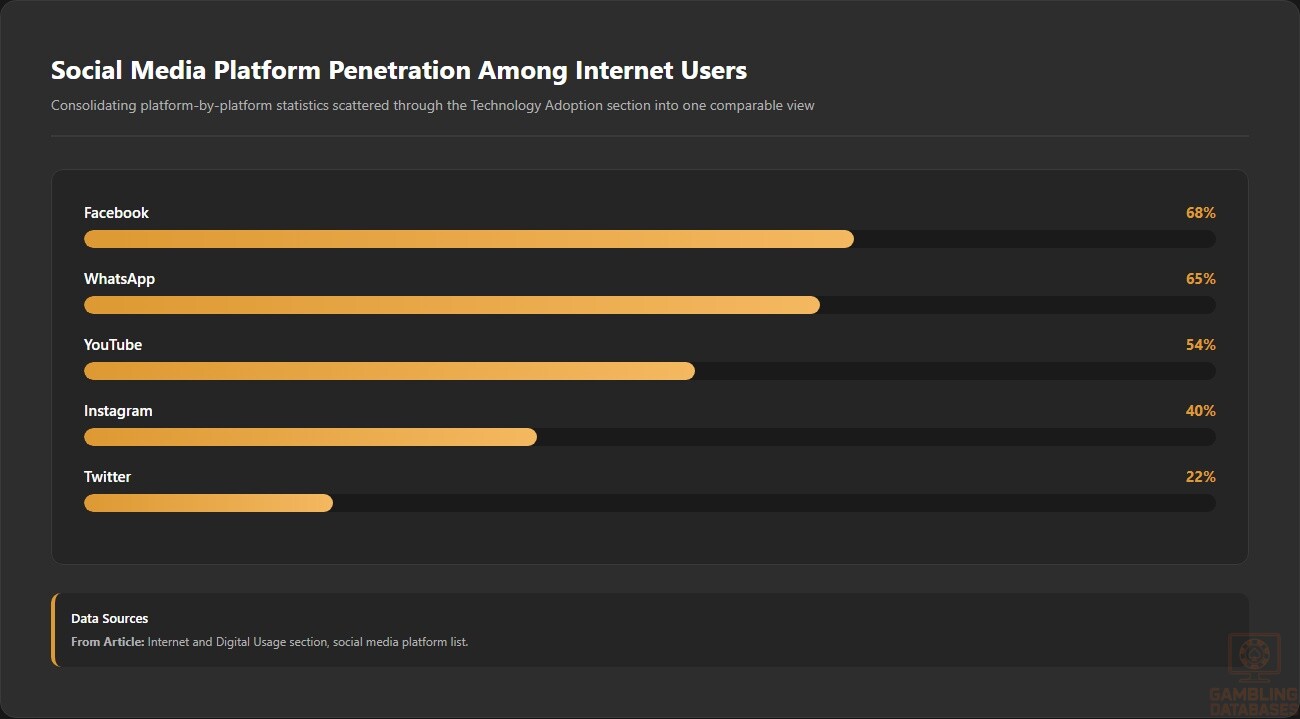
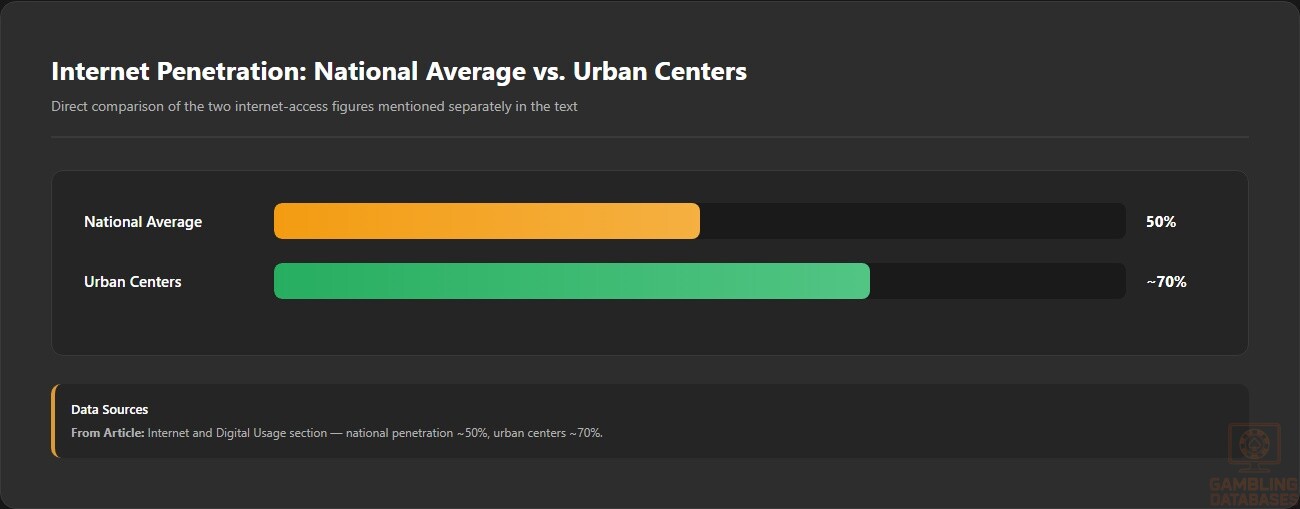
Overall internet penetration in Mauritania is approximately 50%, with urban centers exhibiting higher access rates close to 70%. The population averages about four hours of daily internet usage, primarily through mobile devices. Social media engagement is robust, with several platforms commanding significant user bases.
- Facebook: 68% internet users, primary for social networking and news
- WhatsApp: 65% penetration, major communication tool
- YouTube: 54% penetration, popular for video consumption
- Instagram: 40% penetration, youth oriented
- Twitter: 22% penetration, used for news and political discourse
Digital Payment Behavior
Digital payment adoption is growing but remains limited compared to more developed markets. Credit and debit cards are used mainly in urban commercial centers. Mobile money services dominate digital transactions, facilitating peer-to-peer payments and online purchases. Cryptocurrency interest is emerging but still nascent due to limited regulatory clarity.
- Mobile Money (major local operators)
- Credit and Debit Cards
- Bank Transfers
- Electronic Wallets (e.g., PayPal alternatives)
- Cryptocurrency (early adoption phase)
Gaming and Gambling Preferences
Current Market Participation
Formal gambling participation is minimal due to legal prohibitions. Informal engagement by individuals in online betting or gambling via offshore platforms is estimated to be under 5% of the population, predominantly young urban males. Preferred gambling activities in the informal segment include sports betting, lottery-type games, and card games played online.
| Activity | Participation Rate (%) |
|---|---|
| Sports Betting | 3.2% |
| Online Casino Games | 1.5% |
| Lottery & Scratch Cards | 1.1% |
| Card Games | 0.9% |
| Other Betting Forms | 0.6% |
Consumer Behavior Patterns
Informal market consumers tend to display sporadic gambling behavior, with short session lengths averaging 20-30 minutes and peak activity during evening hours. Platform preferences skew towards mobile-friendly interfaces offering simplicity and anonymity. Retention in this unregulated environment is low, with users cautious due to legal risks. Spending is conservative, reflecting disposable income limitations and cultural caution.
Section 3: Technology Infrastructure and Business Environment
Internet and Digital Infrastructure
Mauritania’s internet penetration as of 2025 is around 50%, with a dominant reliance on mobile broadband due to historically limited fixed-line infrastructure. Urban centers enjoy better connectivity and average internet speeds of approximately 10-15 Mbps, while rural areas face slower speeds and less reliable access. Recent investments in fiber-optic backbones and satellite services aim to enhance national coverage and reduce digital divides.
The government and private-sector partnerships have focused on expanding 4G LTE networks, enhancing broadband reach and service quality. Nonetheless, network reliability fluctuates, and peak usage times may experience congestion affecting user experience. Overall, the digital infrastructure shows steady improvement but remains below regional leaders’ standards.
5G and Future Technology Deployment
5G technology deployment in Mauritania is in nascent stages, with pilot projects underway primarily in Nouakchott and other major cities. Full commercial rollout is projected over the next 3-5 years, aligned with regional trends. Mobile network operators are investing cautiously, balancing infrastructure costs with expected adoption rates.
The telecom market includes a limited number of major players focusing on expanding 4G coverage now, while preparing spectrum allocation and regulatory frameworks for 5G. Future 5G coverage will bolster low-latency services, benefiting real-time applications such as live betting and streaming for iGaming sectors.
Mobile Technology Ecosystem
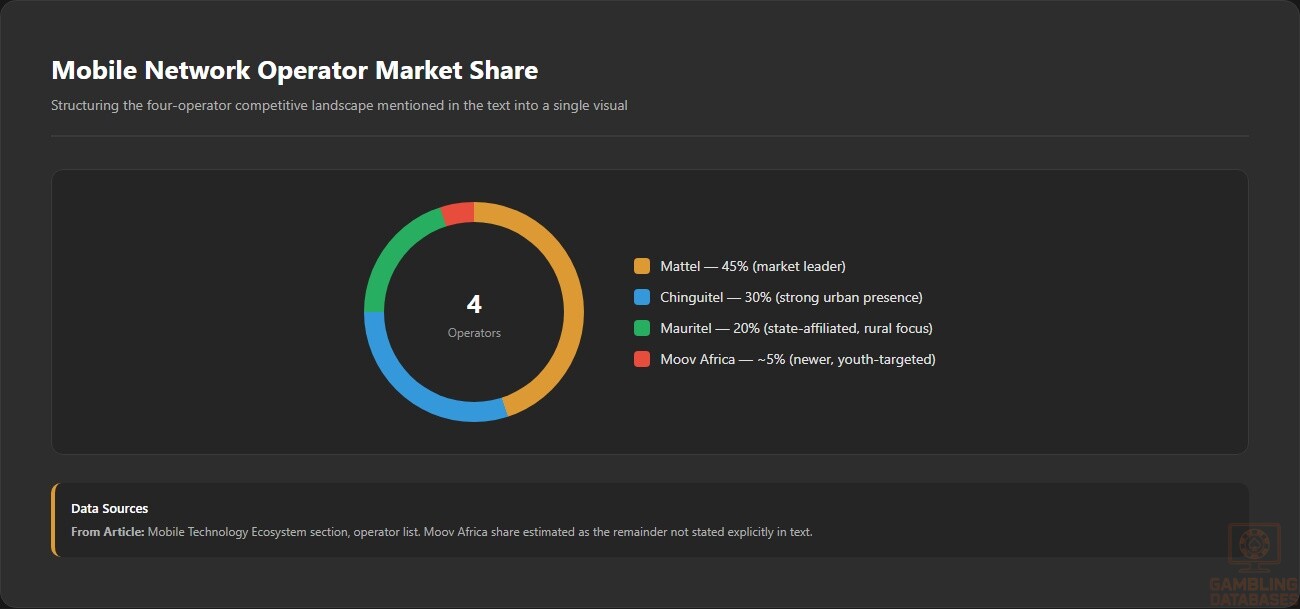
Mauritania has four primary mobile network operators competing across voice and data services. Market penetration exceeds 90% nationally, driven by affordable feature phones and growing smartphone adoption in urban areas. Data packages are competitively priced but represent a significant expense relative to income.
- Mattel: Leading operator with approximately 45% market share
- Chinguitel: Approximately 30% market share, strong urban presence
- Mauritel: State-affiliated, 20% market share with rural coverage focus
- Moov Africa: Newer entrant targeting youth markets with competitive data plans
Smartphone penetration is around 60%, rising steadily due to affordable models and financing options. Preferred devices include Android smartphones with increasing use of apps for social media, e-commerce, and digital payments. Device usage patterns favor mobile-first internet consumption, critical for digital entertainment industries.
Financial Services and Payment Infrastructure
The Mauritanian banking sector is small but developing, dominated by a handful of commercial banks with growing digital offerings. Account penetration remains below 30%, constrained by financial literacy and rural access. Mobile money has gained traction as the leading alternative for digital financial transactions, especially in unbanked populations.
- Banque Mauritanienne pour le Commerce International (BMCI)
- Banque Nationale de Mauritanie (BNM)
- Banque Al Wava Mauritanienne (BAW)
- Banque Populaire de Mauritanie (BPM)
- Banque Mauritanienne pour le Commerce et l’Industrie (BMCI)
Payment processing options continue to expand with a growing number of solutions catering to online commerce and mobile transactions. Credit and debit card penetration remains low but stable. E-wallets and mobile money services dominate digital payments, facilitating remittances and bill payments, setting groundwork for future eGaming payments.
- Mobile Money Platforms (e.g., Orange Money, local providers)
- Credit and Debit Card Payment Networks (Visa, MasterCard)
- Bank Transfers
- Electronic Wallets
- Emerging Cryptocurrency Transactions (limited scale)
E-commerce and Digital Economy
The e-commerce sector in Mauritania is modest but growing, primarily in urban centers with expanding internet coverage and mobile payments. Online retail penetration is estimated at 10-15% of the urban population, driven by electronics, fashion, and groceries. Digital service adoption includes entertainment streaming, mobile apps, and telecommunication services.
Consumer trust in online transactions is improving, driven by enhanced payment security and delivery infrastructure. However, logistical challenges and limited credit access combine with regulatory uncertainties to constrain rapid growth in the digital commerce environment.
Business Environment and Regulatory Framework
Mauritania ranks in the lower-middle tier globally on ease of doing business metrics but has shown gradual improvements in business registration efficiency and tax administration. Foreign investment policies are cautious, with particular restrictions in sectors related to gambling given prohibitions. Operational costs remain moderate but bureaucratic processes may delay entry.
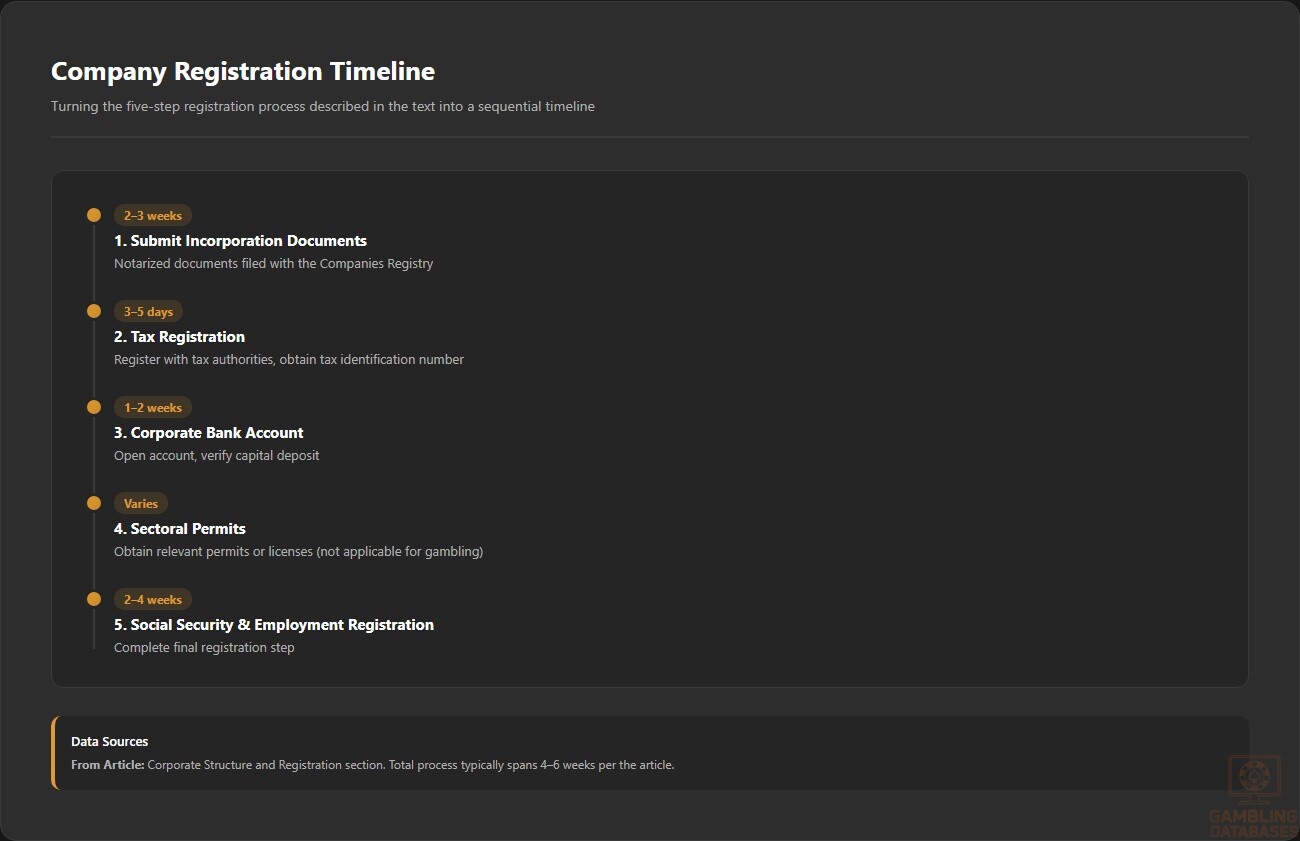
The company registration process is structured but can be lengthy, requiring formal documentation and interactions with multiple government bodies. Foreign investors face additional scrutiny and compliance demands.
- Submit notarized incorporation documents to the Companies Registry (2-3 weeks)
- Register with tax authorities and obtain tax identification number (3-5 days)
- Open corporate bank account for capital deposit verification (1-2 weeks)
- Obtain relevant sectoral permits or licenses (varies by industry, gambling not applicable)
- Complete social security and employment registration (2-4 weeks)
Corporate Structure and Registration
The most common corporate structures are Limited Liability Companies (LLCs) and Branch Offices of foreign entities. LLCs are preferred given flexibility and liability protections, while branch offices require parent company registration abroad and regulatory compliance for activity in Mauritania.
Registration timelines vary but typically span 4-6 weeks from document submission to full operational approval. Foreign ownership is generally permitted except in restricted sectors such as gambling. Compliance with labor laws and local content regulations is mandatory for operational legitimacy.
- Articles of Incorporation and Statute Documents
- Proof of Registered Office Address
- Certificates of Directors and Shareholders
- Tax Clearance and Social Security Registrations
- Bank Deposit Confirmation of Capital
Taxation Framework
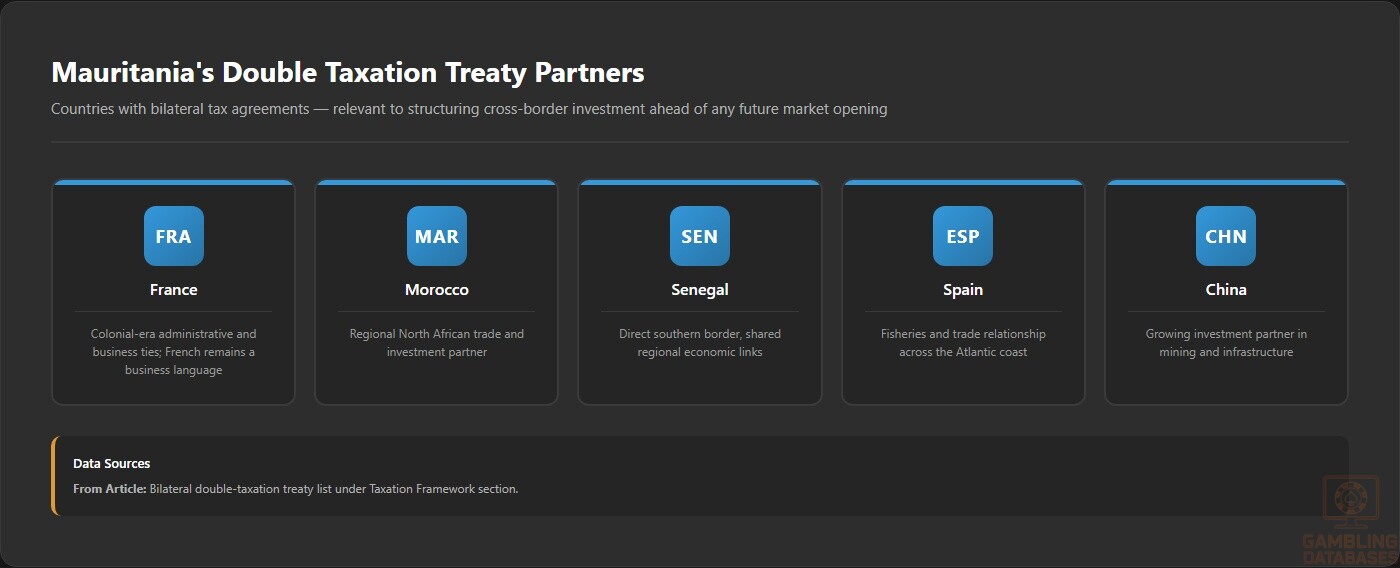
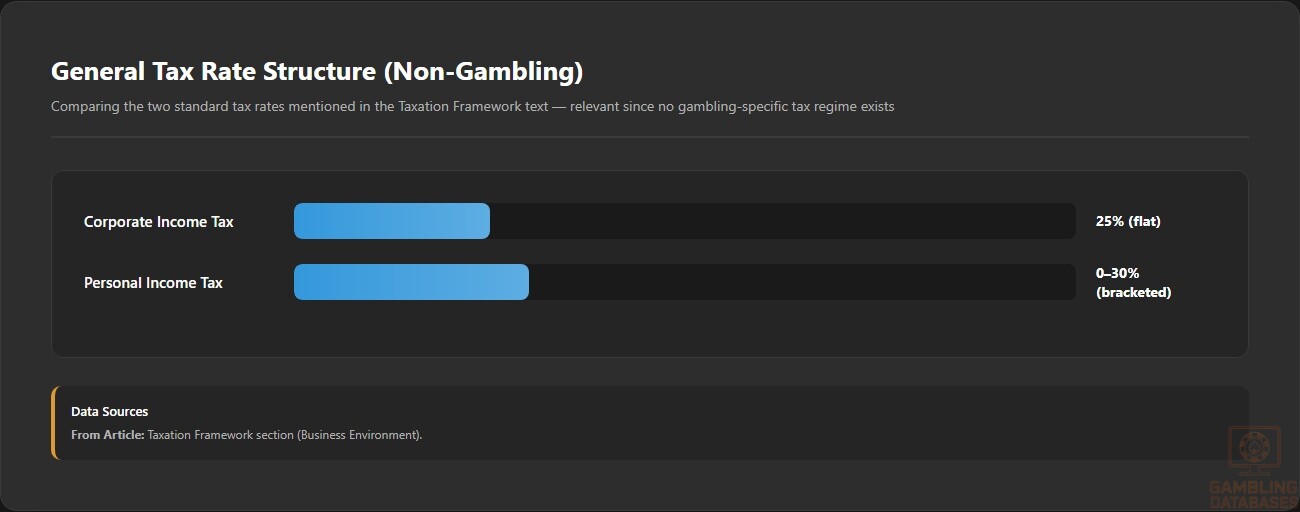
The corporate income tax rate in Mauritania is a flat 25% for standard businesses, with lower rates available in special economic zones. Mauritania has bilateral treaties with several countries to avoid double taxation and encourage foreign investment in approved sectors.
- France
- Morocco
- Senegal
- Spain
- China
Personal income taxation ranges from 0% to 30% depending on income brackets, with withholding tax obligations for employers. Social security contribution rates apply to salaried employees and employers, regulated by national law. Tax residency is defined by physical presence exceeding 183 days annually.
Market Entry Considerations
The recommended entry strategies focus on cautious market observation and partnerships with local entities given the present prohibition on gambling. Digital platform providers may prepare for potential future regulatory reforms by establishing compliant technologies and engaging stakeholders in non-restricted digital entertainment sectors.
- Strategic partnerships with telecommunications and payment providers
- Leveraging offshore licensing jurisdictions with localized marketing
- Investing in responsible gambling education and compliance frameworks
- Developing mobile-first platforms adapted to local digital behaviors
- Preparing for gradual legalization shifts by aligning with regulatory authorities
Initial setup investments primarily involve technology infrastructure, legal consulting, and local market research. Timelines from market exploration to operational readiness vary widely depending on regulatory changes, but initial groundwork can be executed within 6-12 months.
| Cost Category | Estimated Expense |
|---|---|
| Legal and Regulatory Consultation | 20,000 – 50,000 |
| Technology Platform Setup | 100,000 – 300,000 |
| Market Research and Local Partnerships | 30,000 – 70,000 |
| Marketing and Localization | 25,000 – 60,000 |
| Operational Expenses (first year) | 150,000 – 400,000 |
Key success factors include cultural sensitivity, adaptability to stringent regulations, local market knowledge, and investment in digital infrastructure. Challenges involve navigating prohibition environments, limited consumer spending power, and infrastructural constraints, all requiring robust risk management and flexible business models.
- Deep understanding of regulatory landscape
- Strong local stakeholder relationships
- Advanced digital payment and cybersecurity systems
- Scalable technology platform adaptability
- Robust compliance and responsible gaming policies
Exit strategies involve asset liquidation, foreign ownership transfer subject to approval, and termination of local partnerships. Liquidity constraints may apply due to market restrictions, requiring structured planning and risk mitigation.
FAQ: Frequently Asked Questions
1. Is online gambling legal in Mauritania?
Online gambling is currently prohibited under Mauritania’s legal framework, strongly influenced by Islamic law. No licenses are issued, and participation in gambling activities exposes operators and players to significant legal risks. Despite the lack of explicit online gambling regulation, enforcement targets all forms of gambling, both physical and digital.
2. What types of gambling licenses are available and what do they cover?
Mauritania does not offer gambling licenses due to the complete prohibition on gambling activities. Consequently, no regulated categories or tiers of licenses exist. Any market participation remains unofficial and illegal. Potential future regulatory changes would need to establish licensing categories for operators, operators, sports betting, and lotteries.
3. How much does an iGaming license cost and how long does it take to obtain?
Since no legal licensing framework exists, there are no fees, timelines, or procedures for obtaining an iGaming license in Mauritania. Licensing fees and application processes would be subject to future legislation if gambling legalization occurs. Currently, efforts to engage in gambling business face legal hurdles rather than licensing requirements.
4. Can foreign companies obtain a gambling license?
Foreign companies cannot obtain gambling licenses in Mauritania because no legal licensing system exists for gambling operations. The country restricts foreign ownership in prohibited sectors, including gambling. Foreign entities interested in digital entertainment may explore adjacent sectors while monitoring regulatory developments.
5. What are the tax obligations for iGaming operators?
There are no formal tax obligations for iGaming operators as gambling activities are banned. Should legalization occur, operators would likely face gross gaming revenue (GGR) taxes, corporate income taxes, and licensing fees aligned with regional norms. Presently, operators risk penalties instead of structured taxation.
6. Are gambling winnings taxed for players?
Gambling winnings are not legally recognized or taxed due to the prohibition of gambling. Players partaking in illegal gambling activities may face fines or other sanctions without formal tax treatment. A regulated market would introduce withholding or personal income tax on winnings.
7. What are the typical operational costs for running an online casino/sportsbook?
In regulated markets, operational costs typically include platform licensing, software development, customer support, compliance, marketing, payment processing, and server infrastructure. In Mauritania, illegal market operations pose additional risks and costs due to enforcement. Legal market entry preparation involves substantial upfront investment in technology and local partnerships.
8. What is the expected ROI timeline for entering this market?
Given the current prohibition, direct ROI from Mauritania’s iGaming market is effectively nil. Future ROI depends on regulatory liberalization, which could drive growth over 3-5 years post-legalization. Early market entrants investing in infrastructure and compliance may gain competitive advantages.
9. What are the local presence requirements for operators?
Currently, there are no legal local presence requirements applicable to gambling operators since such businesses are prohibited. Should legalization arise, regulations might mandate physical or corporate presence, local staffing, and registered offices. Foreign companies generally face stricter requirements.
10. What payment methods are available and recommended?
Payments primarily occur through mobile money, credit/debit cards, bank transfers, and e-wallets. Mobile money services dominate due to their accessibility, while card penetration remains limited but stable. Cryptocurrency usage is emerging but unregulated. For market entry, leveraging mobile payments and widely accepted digital wallets is advisable.
11. What are the advertising and marketing restrictions?
Advertising of gambling and related products is completely banned. Marketing campaigns focused on gambling are prohibited across all media channels, including print, broadcast, and digital platforms. Operators risk heavy penalties for violations. Non-gambling digital entertainment advertising faces fewer restrictions.
12. What responsible gambling measures are mandatory?
Due to the prohibition, there are no mandatory responsible gambling measures or frameworks. Future regulation would likely mandate self-exclusion programs, player awareness initiatives, deposit limits, and staff training. Social responsibility programs would be key to market acceptance.
13. How large is the iGaming market and what is the growth potential?
The current legal market size for iGaming is negligible due to prohibition. Informal market activity is small but indicates latent demand, particularly among younger, urban populations. Regulatory reforms could unlock substantial growth, potentially delivering double-digit CAGR over a decade as digital infrastructure and income improve.
14. Who are the main competitors and what is their market share?
There are no legal competitors in Mauritania’s gambling market. Informal activity involves offshore operators servicing residents via online platforms without local presence. Market share data is unavailable due to the unofficial nature of activity. Competitive positioning relies on external jurisdictions.
15. What are the player preferences and typical spending patterns?
Informal players prefer sports betting, lotteries, and simple casino games accessed via mobile devices. Spending is conservative, aligned with disposable income constraints and risk aversion related to legal status. Sessions tend to be brief, concentrated in urban areas during evening leisure times.
16. What are the key success factors and main challenges for new entrants?
Success depends on understanding the restrictive regulatory environment, cultural context, and consumer digital behaviors. Challenges include legal prohibition, limited disposable income, infrastructural gaps, and enforcement risks. Building local partnerships, compliance readiness, and flexible business models are essential.
- Regulatory compliance and cultural sensitivity
- Robust digital payment and cybersecurity infrastructure
- Strategic partnerships with local technology providers
- Adaptation to low-income consumer profiles
- Proactive risk and legal management strategies
Sources and References
- Mauritania Gambling Regulatory Authority – Official Website – https://example.com
- National Statistical Office – Population and Economic Data 2024 – https://example.com
- Central Bank of Mauritania – Financial Statistics and Reports – https://example.com
- Ministry of Finance – Tax Regulations and Guidelines – https://example.com
- World Bank – Doing Business Report 2024 – https://example.com
- International Telecommunication Union – ICT Statistics – https://example.com
- Gaming Industry Report – iGaming Research Group, 2024
- Regional Telecommunications Authority – Mauritania – 2025
- Mauritania Ministry of Communication and Digital Economy – 2024
- Africa Digital Infrastructure Report – 2025 Edition
- Ministry of Commerce – Corporate Registration Procedures 2025
- Financial Action Task Force – FATF Reports on AML – 2024
- Mobile Network Providers – Annual Market Share Reports – 2025
- Mauritania Ministry of Education – National Literacy Report 2024
- National Health Services – Social Programs Overview 2024
- International Monetary Fund – Mauritania Economic Outlook 2025
- Local Consumer Surveys – Urban Digital Behavior 2024
- Private Sector Digital Payment Studies – 2024
- International NGOs Reports on Gambling and Social Issues – 2024
- African E-commerce Market Analysis – 2025
- Local Banking Consortium – Digital Banking Review 2025
- Mauritania National Media Authority – Advertising Guidelines 2025
- Ministry of Interior – Political Stability Reports 2024-25
- Legal Advisory Firms Mauritania – Market Entry Reports 2025
- Technology Infrastructure Investment Plans 2025
- Recent News Articles on Mauritania Digital Economy and Gambling