The Philippines presents a rapidly expanding opportunity for iGaming operators with a mature regulatory environment governed primarily by PAGCOR. The market offers strong growth potential driven by rising digital adoption and evolving legislation, balanced by increasing compliance requirements to curb gambling-related risks.
Understanding the complex legal landscape including licensing, taxation, and player protection is critical for successful market entry. This analysis dissects regulatory frameworks shaping the iGaming sector in the Philippines.
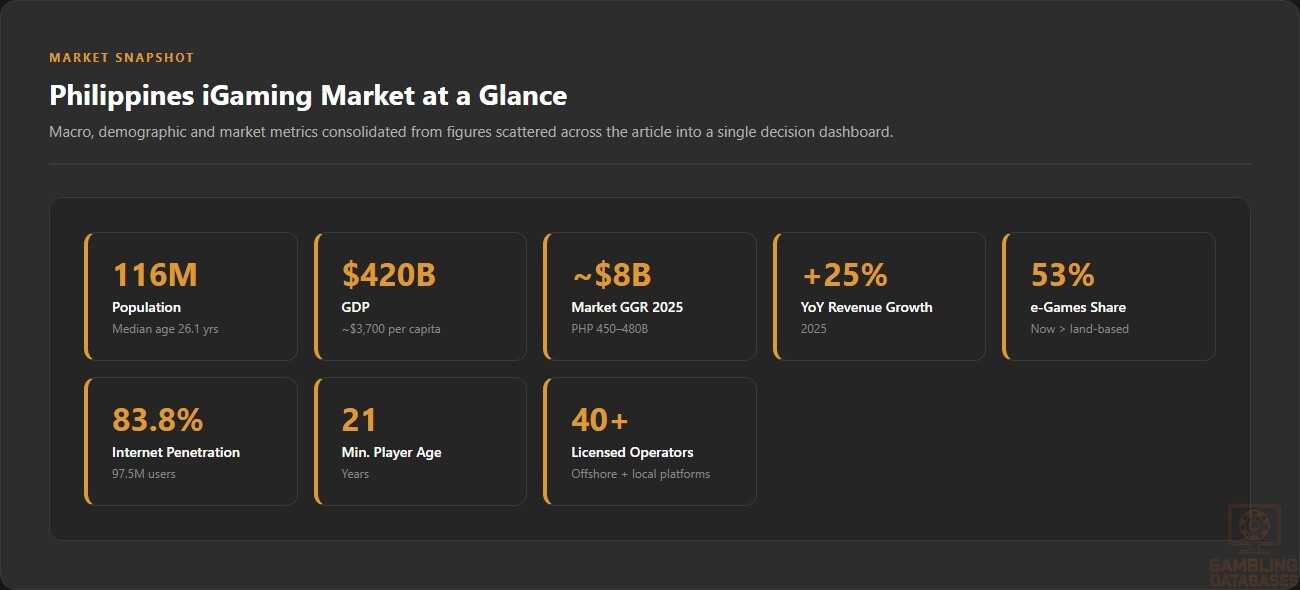
Executive Summary: Key Market Indicators
| Metric | Value |
|---|---|
| Gambling Legal Status | Legal and regulated with licensing |
| Primary Regulator | Philippine Amusement and Gaming Corporation (PAGCOR) |
| Population | 114 million (2025 estimate) |
| Urbanization Rate | 47% |
| GDP | Approx. $420 billion USD |
| GDP Per Capita | ~$3,700 USD |
| Internet Penetration | 74% of population |
| Mobile Penetration | 113 subscriptions per 100 people |
| Online Gaming License Cost | $40,000 – $50,000 USD |
| License Application Timeframe | 13 to 18 weeks |
| Gross Gaming Revenue (GGR) Tax Rate | 30% for e-Games operators (reduced in 2025) |
| Corporate Income Tax | 25% |
| Minimum Capital Requirement | Up to $200,000 USD depending on foreign ownership |
| Market Size (GGR) | Approx. PHP 450-480 billion (~$8 billion USD) |
| Year-on-Year Revenue Growth | 25% increase in 2025 |
| Market CAGR (2024-2029 forecast) | 10.4% |
| Average Revenue Per User (ARPU) | Strong growth driven by e-Gaming sector |
| Licensed Offshore Gaming Operators | 30+ |
| Authorized Local Casino Online Platforms | 10 |
| Responsible Gambling Measures | Mandatory age verification, spending caps, self-exclusion |
| Player Age Limit | 21 years minimum |
| Payment Restrictions | Dedicated gambling accounts, transaction limits |
| Advertising Restrictions | Ban on primetime TV, public ads removal by Aug 2025 |
| Anti-Money Laundering Compliance | Strict KYC, biometric verification, regular audits |
| Licensing Fees (Annual) | Varies by license type, approx. PHP 10 million (~$200K USD) |
| Foreign Ownership Limits | No explicit bans; financial capital varies by percentage owned |
Section 1: Regulatory Framework and Legal Environment
Current Gambling Regulation Status
The Philippine gambling framework is comprehensive, encompassing both land-based and online gaming under the oversight of PAGCOR, the government regulatory authority. Legal gambling includes casinos, sports betting, electronic gaming machines, bingo, and authorized online platforms. The state favors regulated expansion but imposes stringent compliance to mitigate social and financial risks.
Land-Based Gambling Activities
Land-based gambling operations cover integrated resorts with casinos in key economic zones such as Metro Manila, Clark, and Cebu. Activities include table games like baccarat and roulette, slot machines, bingo halls, and sports betting outlets. PAGCOR licenses multiple operators that combine physical casino presence with complementary hospitality services to attract both local and foreign players.
Online Gambling Framework
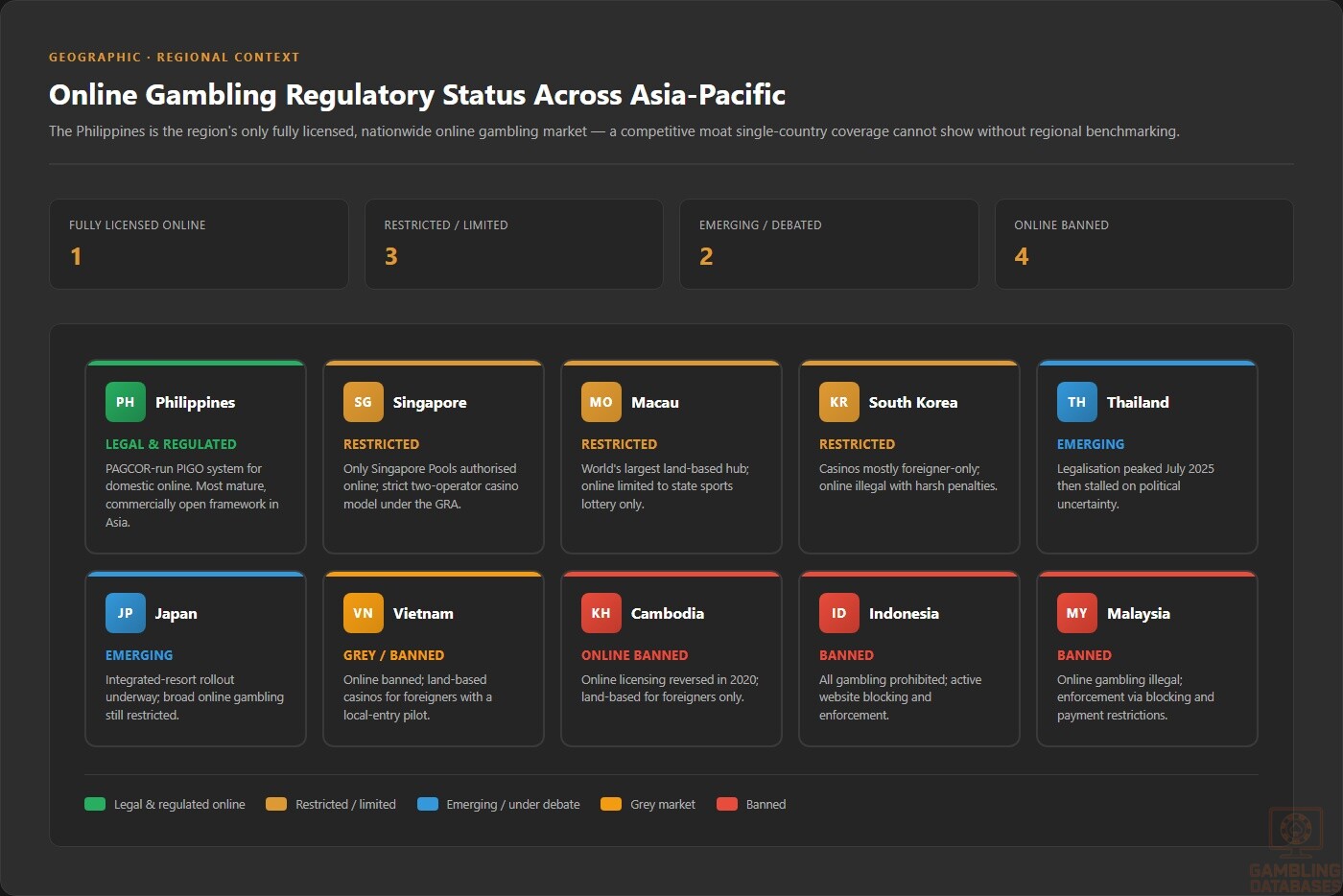
Online gambling is regulated through licenses issued primarily to offshore gaming operators (POGOs) and authorized local casino operators offering remote platforms to Filipinos and international customers. The regulatory framework mandates separate internet gaming licenses with criteria focused on platform security, monetary transactions, and responsible gaming enforcement.
The Philippines uniquely allows overseas-facing online gambling operations but prohibits local residents from playing in those offshore-based platforms to minimize local social harm. Licensed operators face restrictions on advertising to the local market and must integrate anti-money laundering (AML) and know-your-customer (KYC) protocols with biometric identity verification.
Licensed Operators and Market Players
The competitive landscape includes around 30+ licensed offshore gaming operators with varied market shares. Additionally, 10 licensed local casino operators run approved online platforms providing live dealer games and electronic game varieties domestically. Pangasinan operators dominate the retail sector, while offshore operators focus on international markets primarily targeting Chinese customers, who cannot legally gamble in mainland China.
Licensing Framework and Requirements
Application Process and Eligibility
PAGCOR controls issuance of gaming licenses, with an application process taking approximately 13 to 18 weeks. Applicants must submit incorporation documents, detailed business plans, audited financial reports, and technical certifications of gaming platforms.
- Letter of intent to PAGCOR Chairman
- Notarized and duly accomplished application forms
- Corporate registration and ownership documents
- Financial statements for the last three years, audited
- Gaming platform certification including RNG compliance
- Background checks on directors and beneficial owners
- Proof of minimum capital deposit in a licensed Philippine bank
- AML and KYC policies documentation
Application fees vary by license type: internet casino licenses typically cost $50,000 USD, while sports betting licenses are approximately $40,000 USD. The license requires a substantial deposit that varies from $100 (mostly Filipino-owned) up to $200,000 USD for predominantly foreign ownership.
Local Presence and Operational Requirements
Operators must have a legally registered entity in the Philippines to qualify. Physical presence requirements vary but often include operational offices locally staffed with qualified personnel. Domain registrations must be compliant with PAGCOR mandates, and data localization measures are increasingly emphasized.
Foreign ownership faces no explicit bans but capital and deposit requirements escalate with higher percentages of foreign investment. Partnerships with local stakeholders are common to facilitate regulatory relations and market understanding.
Compliance Obligations and Monitoring
Player Protection and Identification
The regulatory framework mandates stringent player identification processes to enforce age limits and deter fraudulent activity. Minimum player age is 21 years. Operators must deploy KYC measures including biometric verification, continuous monitoring of betting behaviors, and the facility for self-exclusion.
- Age verification at account registration and periodically thereafter
- Biometric authentication integrated with national ID systems
- Daily and monthly spending caps applied to player accounts
- Self-exclusion programs accessible to all players
- Responsible gambling educational resources and support links
- Continuous risk profiling and transaction monitoring
Financial Monitoring and Reporting
Operators must comply with mandatory reporting procedures including transaction monitoring and suspicious activity reporting to PAGCOR and relevant AML bodies. Financial audits are conducted periodically, and operators must maintain segregated accounts for player funds.
- Submission of regular financial and transaction reports to PAGCOR
- Provision of updated KYC and AML records
- Cooperation with PAGCOR audits and inspections
- Rectification and compliance actions as mandated by regulatory notices
Taxation Structure and Financial Obligations
Player Taxation
Players are taxable on gambling winnings above specified thresholds, with withholding tax mechanisms enforced by operators. Individual tax rates and procedures align with the national revenue code to ensure compliance without overburdening casual players.
Operator Taxation
| Game Type | Gross Gaming Revenue Tax Rate | License Renewal Fee |
|---|---|---|
| e-Games (online casino, bingo) | 30% (reduced from 35%) | PHP 10 million (approx. $200K) |
| Land-based Casinos | 25%-30% | Determined per contract |
| Sports Betting | 20% | Varies by operator |
| Other Gambling Activities | Varies | Annual compliance fee |
Operators are also subject to the corporate income tax of 25%. Turnover-based taxes and fixed charges may apply depending on the license type and operational scope. Renewals require reaffirmation of financial standing and compliance history.
Gambling Market Financial Performance
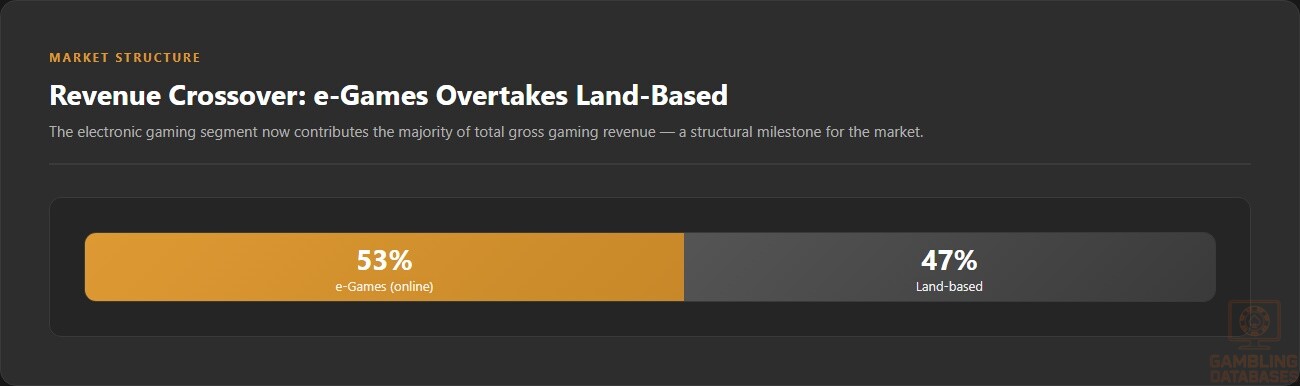
The Philippine gambling sector reported gross gaming revenue (GGR) between PHP 450 billion and 480 billion (~$8 billion USD) in 2025, growing by 25% year on year. The e-Games or electronic gaming segment now constitutes over 53% of the total market, overtaking traditional land-based revenue shares.
Revenue distribution favors integrated resorts and online operators with strong market segmentation focused on domestic and offshore players. Tax revenues from the sector constitute a significant portion of government income, facilitating continued regulatory vigilance and industry support.
Advertising and Marketing Restrictions
Advertising activities face strict limitations to protect public interest. PAGCOR banned gambling advertising in public spaces and primetime television as of August 2025. Online promotional content must include responsible gaming warnings and avoid targeting minors or vulnerable populations.
- Prohibition of gambling ads on broadcast primetime TV
- Ban on outdoor advertisements in public places
- Mandatory responsible gaming messages in all promos
- Limitations on celebrity endorsements and influencer marketing
- Sponsorship restrictions for events targeting minors
Recent Regulatory Changes and Their Impact
Recent initiatives in 2025 include proposed increases in gross gaming revenue tax to 40%, enhanced KYC/AML compliance standards, and tighter payment transaction controls. The Central Bank introduced mandatory use of separate gambling accounts and daily deposit caps to prevent problem gambling.
Legislative proposals continue to debate banning offshore gambling altogether, with lobbying by operators shaping policy outcomes. These regulatory evolutions force operators to recalibrate their compliance frameworks and investment strategies while navigating political uncertainties.
Enforcement Mechanisms and Penalties
PAGCOR enforces compliance through a combination of financial penalties, license suspensions, and criminal prosecution for serious violations. Regular audits and mystery shopper operations monitor operator adherence to regulatory obligations.
- Fines for AML/KYC breaches and false reporting
- Temporary or permanent suspension of operating licenses
- Revocation of licenses for repeated violations
- Criminal charges against fraudulent or corrupt practices
- Blacklisting and exclusion of non-compliant operators
Section 2: Demographics and Consumer Analysis
Population Demographics and Distribution
Core Population Metrics
The Philippines had a population of approximately 116 million in early 2025, with a median age of 26.1 years, indicating a young and dynamic demographic profile. The population is nearly equally split by gender, with 50.1% female and 49.9% male, contributing to balanced consumer behavior patterns across sectors.
Urban and rural distribution remains relatively even, with 48.8% of the population residing in urban centers and 51.2% in rural areas. This distribution influences digital access, infrastructure development, and market penetration strategies for iGaming and financial services.
| Age Group | Percentage of Population |
|---|---|
| 0–4 | 7.7% |
| 5–12 | 15.4% |
| 13–17 | 10.0% |
| 18–24 | 13.0% |
| 25–34 | 17.1% |
| 35–44 | 13.5% |
| 45–54 | 10.2% |
| 55–64 | 7.4% |
| 65+ | 5.7% |
Geographic Distribution
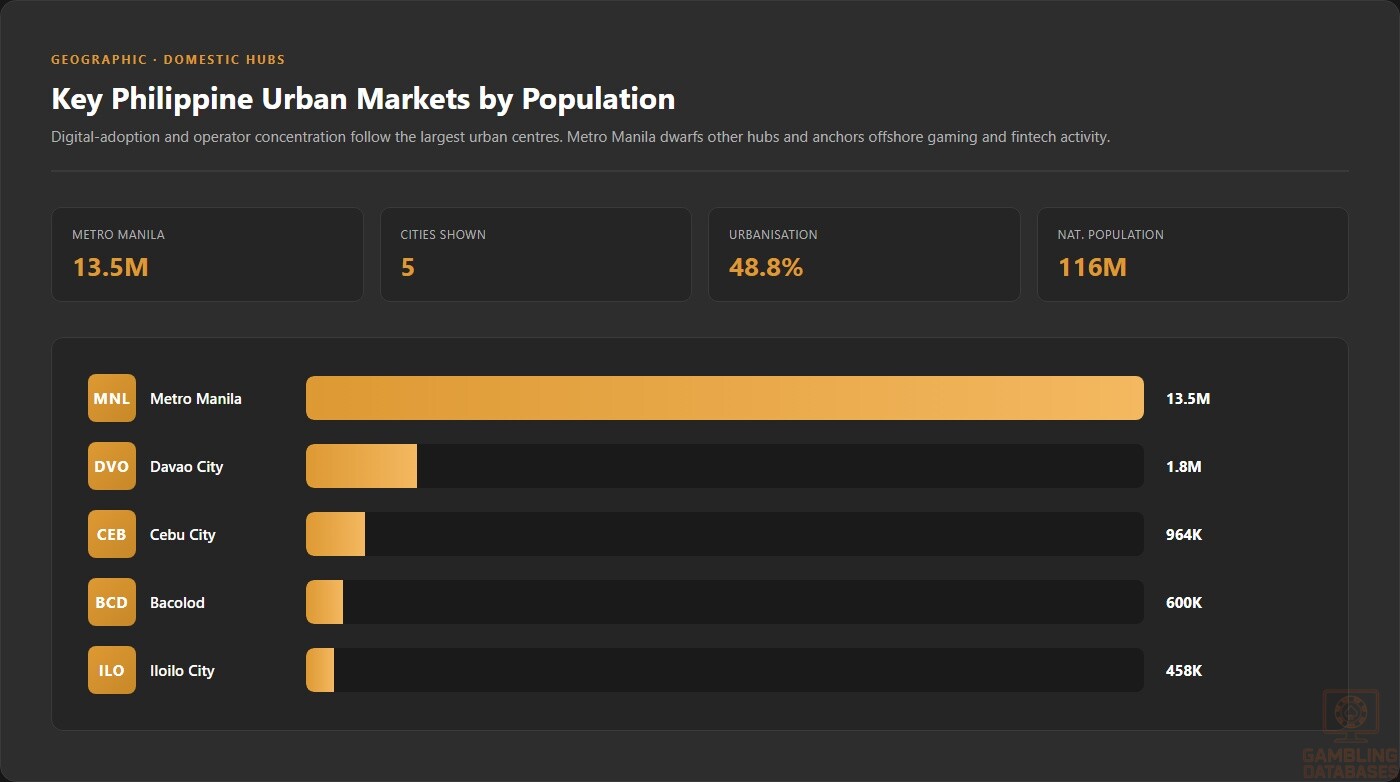
Major urban centers such as Metro Manila, Cebu City, Davao City, and Bacolod serve as economic and technological hubs, hosting the majority of internet users and digital service adoption. Metro Manila alone accounts for over 13 million residents and is the primary location for offshore gaming operators and fintech innovation.
- Metro Manila: 13.5 million population, highest internet penetration
- Cebu City: 964,000 residents, growing tech startup ecosystem
- Davao City: 1.8 million, key Mindanao economic center
- Bacolod: 600,000, emerging digital workforce hub
- Iloilo City: 458,000, expanding BPO and IT services
Regional disparities exist in connectivity and digital access, with Luzon showing higher infrastructure development compared to Visayas and Mindanao. However, government initiatives are improving broadband access nationwide, enabling broader participation in online activities including iGaming.
Economic Indicators and Consumer Spending Power
GDP and Economic Performance
The Philippine economy reached a GDP of approximately $420 billion USD in 2025, supported by strong growth in services, remittances, and digital industries. The country maintains a 10.4% CAGR forecast for the iGaming sector through 2029, outpacing broader economic growth.
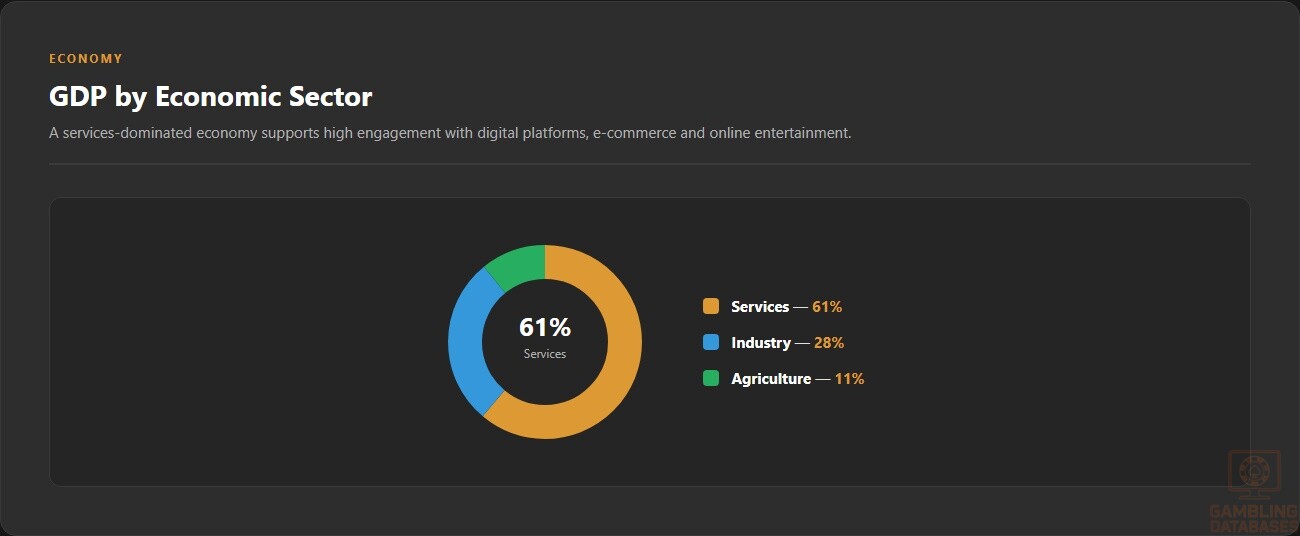
The service sector dominates economic output, accounting for 61% of GDP, followed by industry at 28% and agriculture at 11%. This structure supports high engagement in digital platforms, e-commerce, and online entertainment, creating fertile ground for iGaming expansion.
Income and Wealth Distribution
Average monthly household income in urban areas ranges from PHP 30,000 to PHP 50,000 (~$540–$900 USD), with higher disposable income among the 25–34 age group, who represent the most active digital consumers. Median income remains modest, but digital financial inclusion is expanding access to credit and payment tools.
Income inequality persists, with a Gini coefficient of 0.42, but mobile-first financial solutions are bridging gaps in access. The rise of gig economy platforms and remote work has increased digital transaction volumes, particularly among younger demographics.
Market Size and Growth Projections
The iGaming market generated PHP 450–480 billion (~$8 billion USD) in gross gaming revenue in 2025, with year-on-year growth of 25%. The e-Games segment now contributes over 53% of total revenue, surpassing land-based casinos.
| Year | GGR (PHP Billion) | GGR (USD Billion) | Year-on-Year Growth |
|---|---|---|---|
| 2025 | 465 | 8.2 | 25% |
| 2026 | 510 | 9.0 | 9.7% |
| 2027 | 560 | 9.9 | 9.8% |
| 2028 | 615 | 10.9 | 9.8% |
| 2029 | 675 | 12.0 | 9.8% |
Annual growth is expected to stabilize around 9.8% through 2029, driven by platform innovation, regulatory clarity, and increasing digital adoption. Average Revenue Per User (ARPU) is rising due to enhanced engagement and product diversification.
Education, Skills, and Digital Literacy
Literacy rates exceed 98% among adults aged 15–24, with strong emphasis on English language proficiency, making the Philippines one of the most English-literate countries in Asia. This facilitates global business process outsourcing (BPO) and digital service delivery, including iGaming customer support and content creation.
Digital literacy is high among youth, with 98.9% of internet users engaging with chat and messaging apps monthly. Educational institutions increasingly integrate technology, preparing a workforce skilled in digital tools, data analysis, and online communication, supporting the growth of tech-driven industries.
Cultural and Social Factors
Communication and Language
While Filipino and English are the official languages, regional dialects such as Cebuano, Ilocano, and Hiligaynon are widely spoken. English remains dominant in business, education, and digital platforms, enabling seamless integration with international iGaming operators and content providers.
- Filipino (Tagalog): National language, used in media and government
- English: Primary language of instruction and business communication
- Cebuano: Spoken by 20% of population, dominant in Visayas and Mindanao
- Ilocano: Common in Northern Luzon
- Hiligaynon: Widely used in Western Visayas
Cultural Attitudes
Gambling is culturally embedded, with informal betting common during social events such as wakes and festivals. This tradition supports acceptance of regulated iGaming, though religious institutions, particularly the Catholic Church, express concerns about addiction and social harm.
Foreign brands are generally well-received, especially in digital and financial services. Entertainment preferences lean toward social, interactive content, with strong engagement in live streaming, mobile games, and social media challenges, creating opportunities for gamified iGaming experiences.
Problem Gambling and Social Considerations
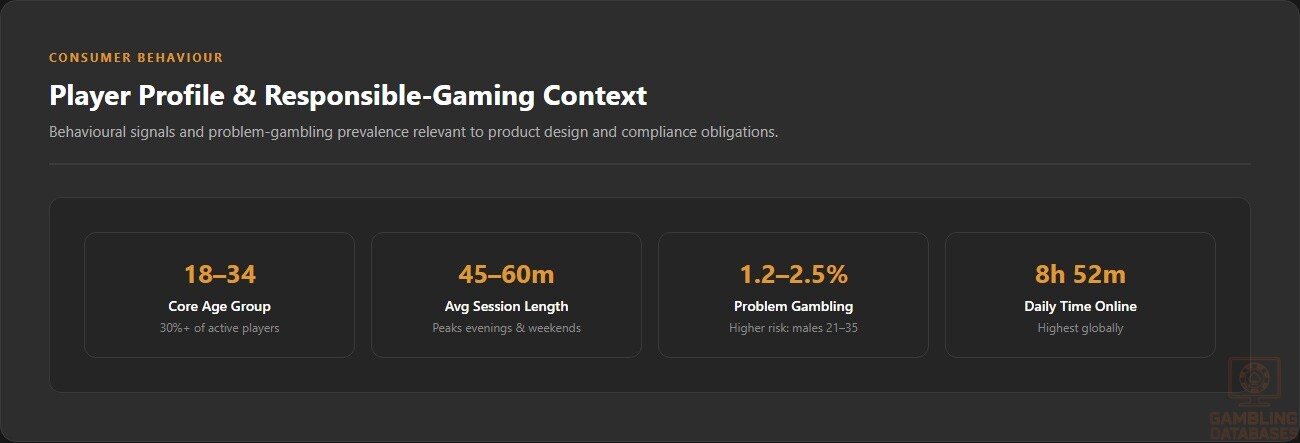
Problem gambling affects an estimated 1.2% to 2.5% of adult gamblers, with higher risk among males aged 21–35. At-risk populations include low-income individuals and those with limited financial literacy, prompting regulatory emphasis on responsible gaming measures.
- Mandatory age verification and biometric identification
- Daily and monthly spending caps on player accounts
- Self-exclusion programs accessible through PAGCOR
- Public awareness campaigns on gambling risks
- Partnerships with mental health organizations for support
- Operator-funded responsible gaming initiatives
- Real-time monitoring of betting behavior patterns
Government and industry collaborate on harm reduction, with operators required to contribute to social programs and fund addiction treatment services, aligning with broader financial inclusion and consumer protection goals.
Political Structure and Governance
The Philippines operates under a presidential representative democratic republic, with stable governance supporting economic reforms and digital transformation. Regulatory consistency has improved under PAGCOR’s oversight, though legislative debates on gambling taxation and offshore operations create policy uncertainty.
International relations remain strong with key Asian economies, facilitating cross-border investment and digital payment integration. The country’s participation in ASEAN supports regional cooperation on financial regulation, cybersecurity, and digital trade frameworks.
Technology Adoption and Digital Behavior
Internet and Digital Usage
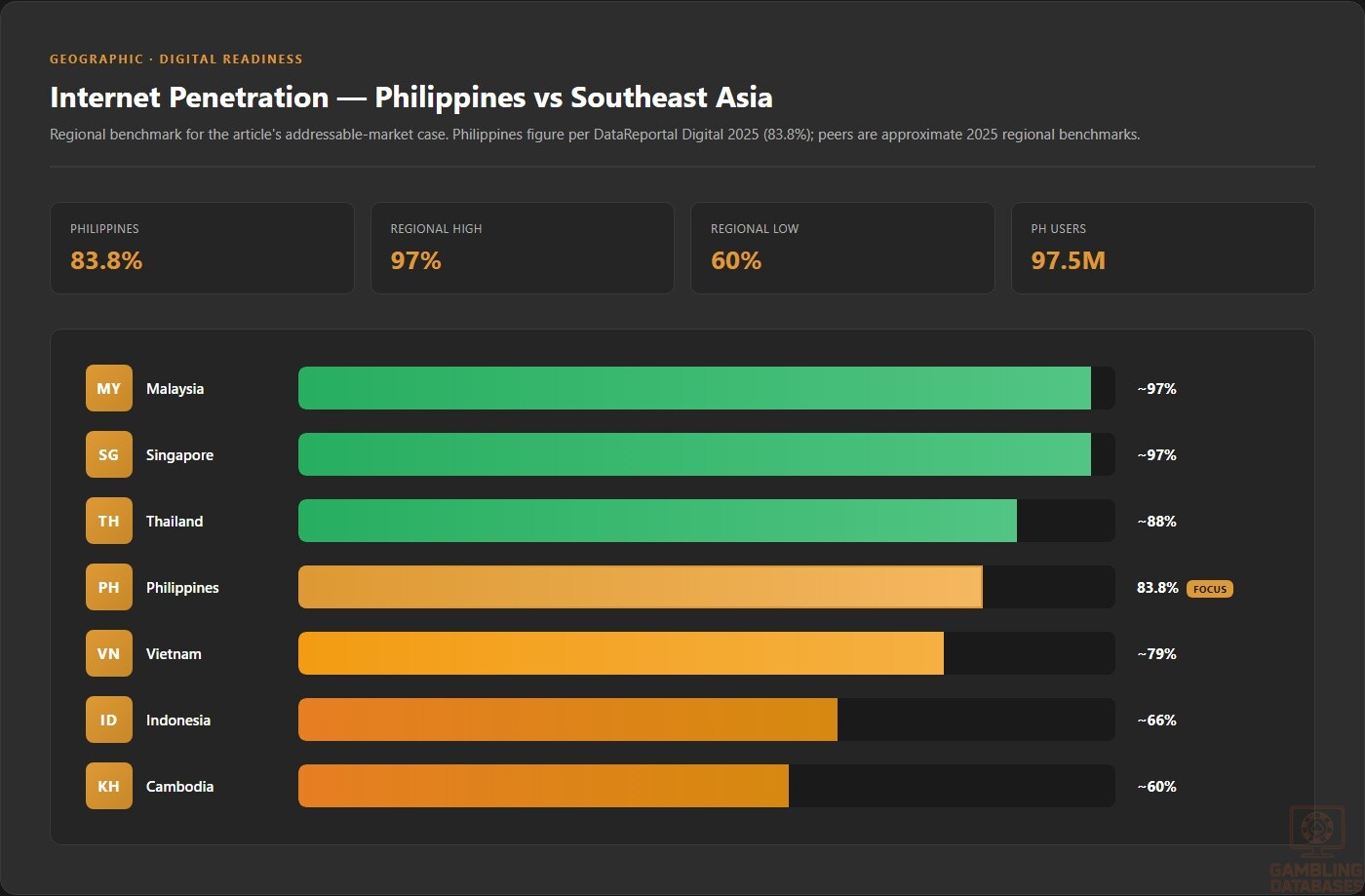
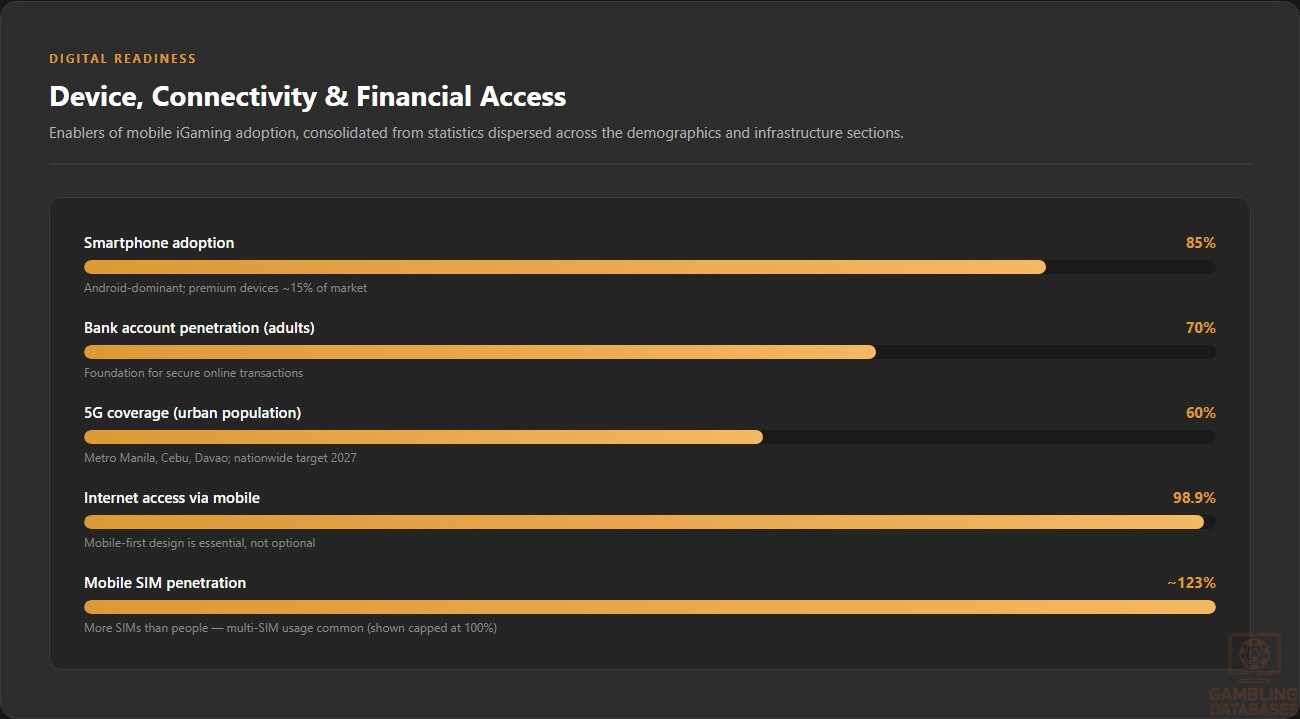
Internet penetration reached 83.8% in early 2025, with 97.5 million users, and Filipinos spend an average of 8 hours and 52 minutes online daily, the highest globally. Mobile devices account for 98.9% of internet access, primarily via cellular data.
| Platform | Users (Millions) | Penetration (% of Population) |
|---|---|---|
| Internet Users | 97.5 | 83.8% |
| Social Media Users | 90.8 | 78.0% |
| 90.8 | 78.0% | |
| YouTube | 57.7 | 49.6% |
| TikTok | 62.3 | 64.0% |
- Facebook: 90.8 million users, 78% penetration, dominant in advertising
- YouTube: 57.7 million users, primary source of video content
- TikTok: 62.3 million users, fastest-growing platform among youth
- Instagram: 22.9 million users, strong visual engagement
- Messenger: 61.8 million users, key for customer interaction
Digital Payment Behavior
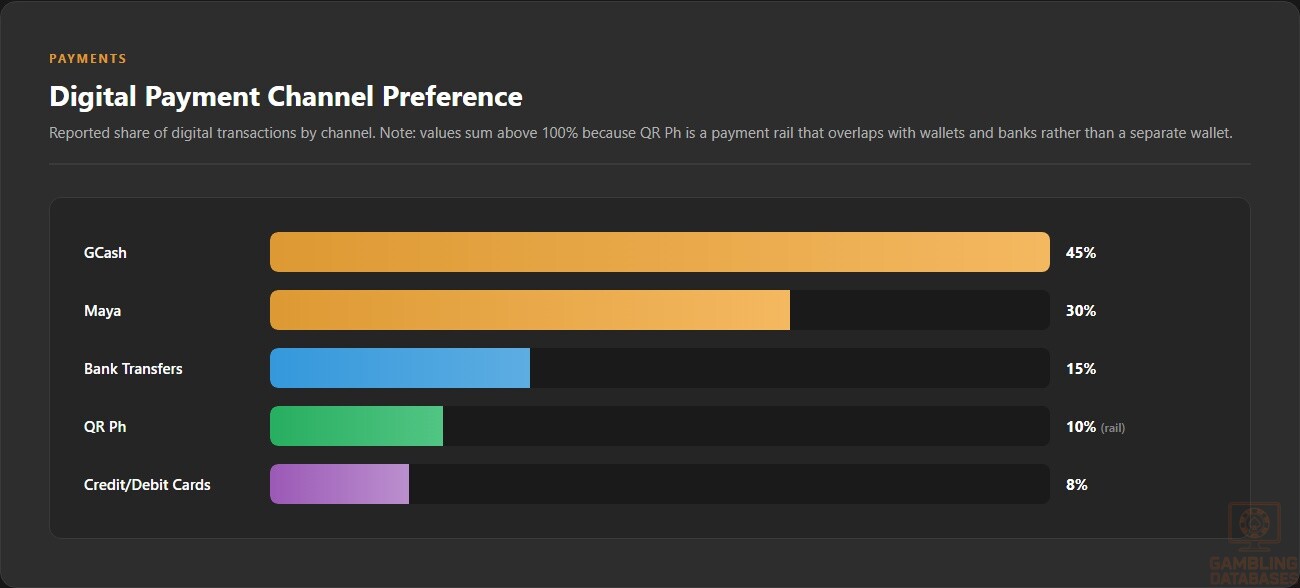
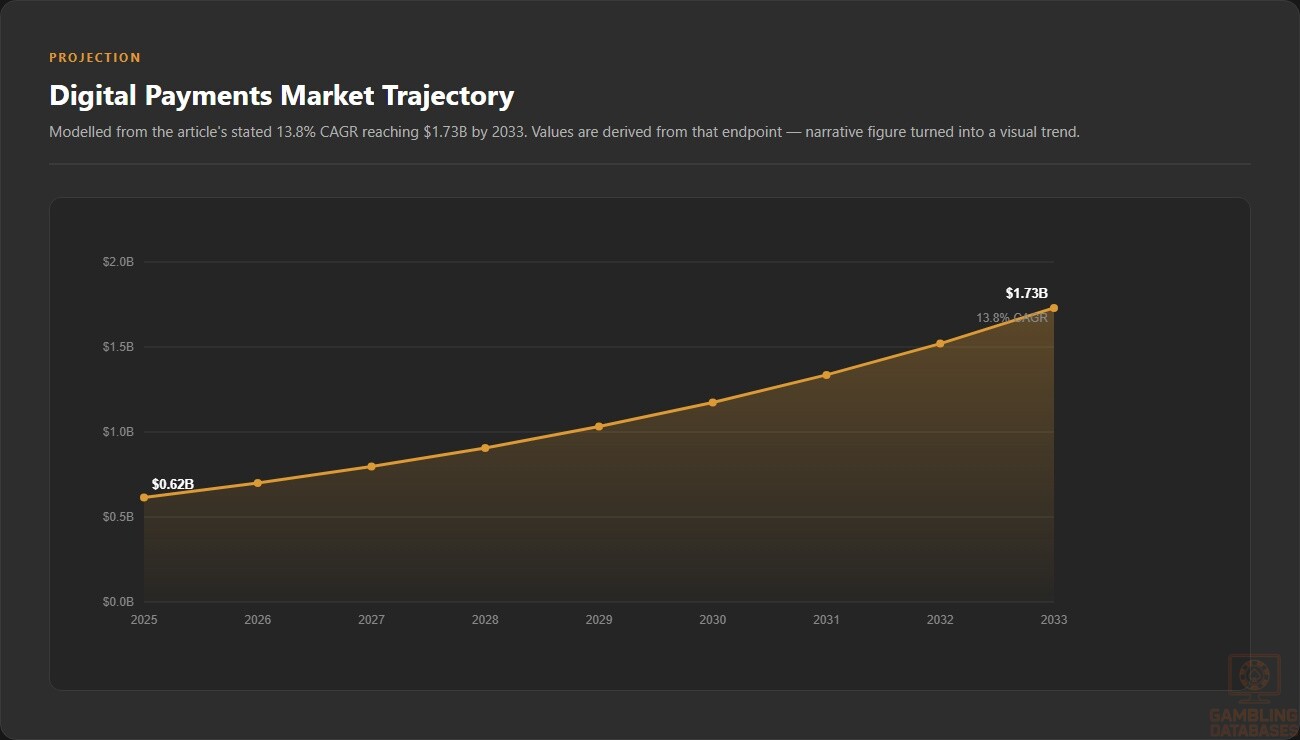
Digital payment adoption is accelerating, with the market projected to reach $1.73 billion USD by 2033, growing at a 13.8% CAGR. Mobile wallets dominate transactions, supported by government-backed initiatives like QR Ph and real-time fund transfers via InstaPay and PESONet.
- GCash: 45% market share, most popular e-wallet
- Maya: 30% share, strong among urban professionals
- Bank Transfers: 15% share, used for larger transactions
- Credit/Debit Cards: 8% share, limited by low card ownership
- QR Ph: 10% share, expanding in retail and food services
Cash remains prevalent, especially in rural areas, but digital transactions are rising due to convenience, security, and government incentives. Buy-now-pay-later (BNPL) services are gaining traction, particularly in e-commerce, enhancing spending capacity among younger consumers.
Gaming and Gambling Preferences
Current Market Participation
Online gaming participation is widespread, with the highest engagement among the 18–34 age group, who represent over 30% of active players. Mobile gaming dominates, with casual and social games preferred, but interest in skill-based and live dealer games is growing.
- Mobile Casino Games: Most popular, accessible via smartphones
- Live Dealer Games: Increasing demand for real-time interaction
- Sports Betting: Strong during major events like basketball and boxing
- E-Sports Betting: Emerging trend among youth
- Lottery and Bingo: Traditional favorites with digital adaptation
Player preferences favor fast-paced, socially integrated experiences with instant rewards. Localization of content, including language, themes, and payment methods, significantly enhances engagement and retention.
Consumer Behavior Patterns
Spending habits show peak activity during evenings and weekends, with session lengths averaging 45–60 minutes. Retention is driven by bonuses, loyalty programs, and social features such as live chat and community challenges.
Platform preferences lean toward mobile-optimized sites and apps, with 98.9% of users accessing services via smartphones. Operators that integrate with popular messaging apps and social networks achieve higher conversion and engagement rates.
Section 3: Technology Infrastructure and Business Environment
Internet and Digital Infrastructure
The Philippines’ internet penetration rate stands at approximately 74% as of 2025, driven largely by mobile broadband access due to extensive cellular network development. Fixed broadband services serve predominantly urban areas, with average fixed broadband speeds near 50 Mbps, whereas mobile broadband averages 25 Mbps depending on location.
Infrastructure investments have surged, particularly in fiber optic networks connecting metropolitan regions and enhancing data center capabilities. Network reliability has improved, yet challenges remain in rural and island provinces due to geographic dispersion and infrastructure costs.
5G and Future Technology Deployment
The 5G rollout commenced in late 2023 and has expanded rapidly, currently covering about 60% of urban populations, including Metro Manila, Cebu, and Davao. Major network operators are accelerating deployment plans to reach nationwide coverage by 2027, supported by government incentives and private investment partnerships.
The evolving 5G landscape creates opportunities for iGaming platforms to leverage low latency and high-speed connectivity, enhancing mobile gaming experiences, live-streaming, and real-time betting functionalities.
Mobile Network Infrastructure
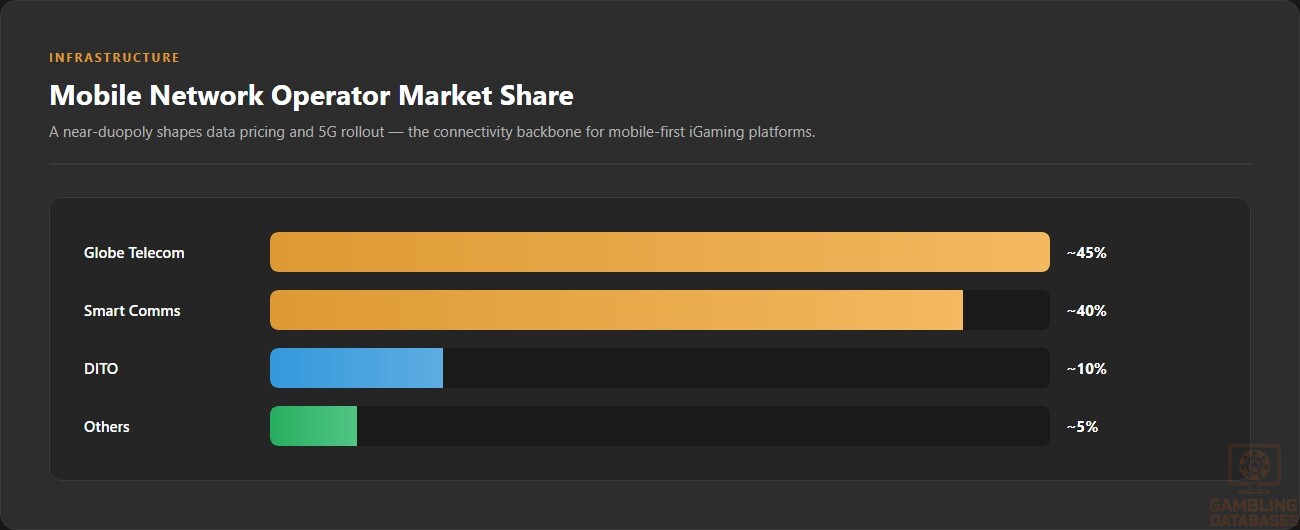
Mobile networks are dominated by a few major operators providing comprehensive service coverage and extensive subscriber bases. Market competition has resulted in competitive data pricing and improved services, with dense 4G LTE infrastructure and growing 5G availability.
- Globe Telecom – Market leader with approximately 45% market share, offering extensive 4G and expanding 5G services
- Smart Communications – Second largest provider, holding about 40%, aggressively rolling out 5G networks
- DITO Telecommunity – New entrant with roughly 10%, focused on expanding coverage to underserved regions
- SUN Cellular – Subsidiary under major brands, serving niche segments with competitive plans
- Converge ICT Solutions – Growing presence in fixed broadband, bundling services with mobile operators
Device Penetration
Smartphone adoption exceeds 85% of the population, with Android devices dominating due to affordability and availability. Premium devices account for 15% of market share, largely concentrated in urban and affluent demographics. Mobile gaming applications are widely used, contributing to increased engagement in mobile iGaming platforms.
Financial Services and Payment Infrastructure
Banking System Structure
The Philippine banking sector is well-developed with several large institutions leading in retail and corporate banking. Digital banking adoption has accelerated, supported by governmental digitization initiatives. Bank account penetration has increased to about 70% of adults, providing a solid foundation for secure transactions in online gambling.
- BPI (Bank of the Philippine Islands) – Largest market share, advanced digital banking services
- BDO Unibank – Leading retail bank known for extensive branch and ATM networks
- Metrobank – Strong corporate client base with growing digital offerings
- Philippine National Bank (PNB) – Competitive in consumer and SME segments
- EastWest Bank – Emerging digital bank with niche services
Payment Processing Options
Payment methods for iGaming operators include a broad spectrum of options enabling local and international transactions. E-wallets, credit/debit cards, and bank transfers are predominant, supplemented by emerging cryptocurrency acceptance within regulatory boundaries.
- Credit/Debit Cards (Visa, Mastercard)
- Local Bank Transfers (via Instapay and PesoNet)
- E-wallets (GCash, PayMaya, Coins.ph)
- Cryptocurrency payments (Bitcoin, Ethereum – regulated)
- Cash-in/cash-out via physical outlets and remittance centers
E-commerce and Digital Economy
The Philippine e-commerce market has grown robustly, surpassing $15 billion USD in 2024, supported by expanding mobile internet and digital payments. Consumer trust in online transactions has improved, facilitating the growth of online services, including digital entertainment and gambling.
Integration of digital wallets and cashless payment systems in retail and services reflects a modern economy with high adoption rates, benefiting iGaming operators by providing seamless financial interactions for users.
Business Environment and Regulatory Framework
Ease of Business Operations
The Philippines ranks 95th globally in the World Bank’s Doing Business 2024 report, reflecting moderate complexity in starting and operating a business. Regulatory frameworks have improved with efforts to reduce red tape, though bureaucratic hurdles and processing delays persist in certain areas.
Foreign investment is encouraged, especially in sectors deemed critical for economic growth like technology and digital services. Tax incentives and special economic zones cater to new businesses aiming to enter the iGaming market.
Business Registration Steps
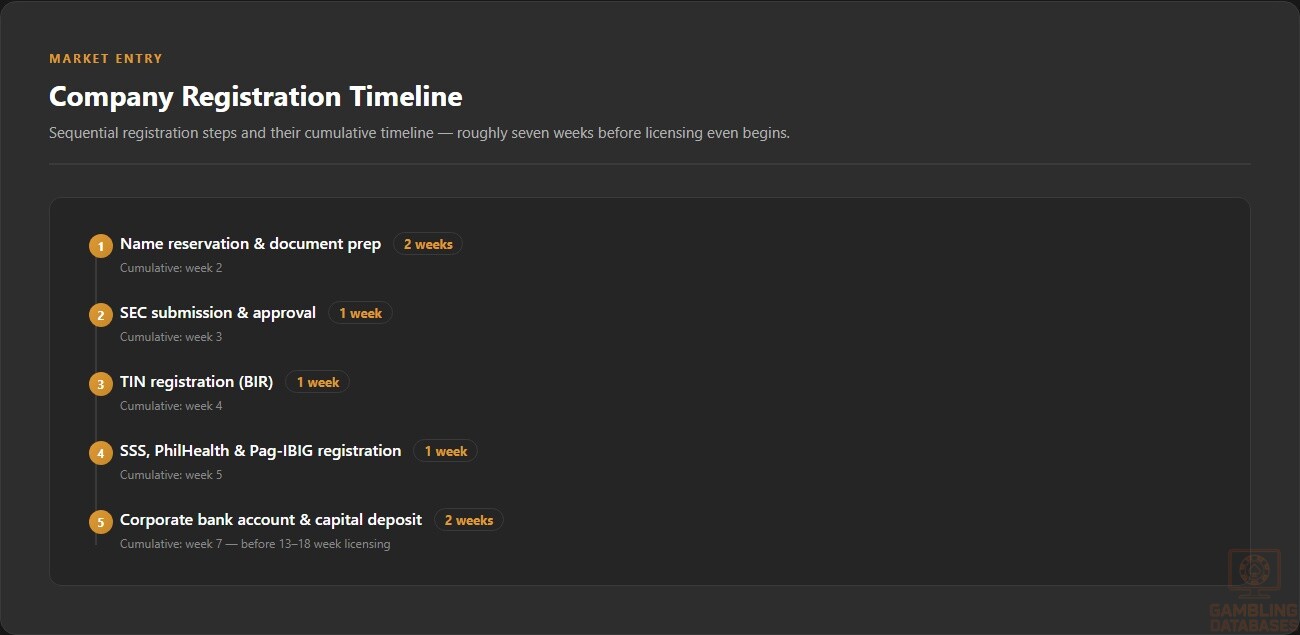
- Company name reservation and documentation preparation (2 weeks)
- Submission to Securities and Exchange Commission (SEC) and approval (1 week)
- Tax Identification Number (TIN) registration with the Bureau of Internal Revenue (BIR) (1 week)
- Social Security System (SSS), PhilHealth, and Pag-IBIG Fund registration (1 week)
- Opening of corporate bank accounts and capital deposit (2 weeks)
Corporate Structure and Registration
Common business entities include stock corporations, limited liability companies, and branch offices of foreign firms. Establishing a domestic corporation is recommended for iGaming operators to meet licensing requirements and maintain local presence.
Stock corporations allow for greater flexibility in ownership and investment while complying fully with Philippine law. Branch offices serve as extensions of foreign companies but face restrictions on certain business activities. Legal counsel is critical in selecting the appropriate entity structure to maximize operational efficiency and compliance.
Required Registration Documents
- Articles of Incorporation and By-Laws
- SEC approval receipt of company name
- Clearance from the Department of Trade and Industry (DTI) or SEC
- Taxpayer Identification Number (TIN) issuance certificate
- Mayor’s Business Permit or Local Government Unit (LGU) clearance
- Proof of registered business address
- List of company officers and directors
- Bank certificate of capital deposit
Taxation Framework
Corporate Income Tax Structure
The standard corporate income tax rate in the Philippines is 25%, with reduced rates available for companies registered in special economic zones offering tax holidays and exemptions on import duties. Bilateral tax treaties with over 50 countries help mitigate double taxation risks and facilitate international business relations.
- United States
- Japan
- South Korea
- Singapore
- Malaysia
- China
- Australia
- United Kingdom
- Germany
- France
Personal Income Tax
Individuals pay progressive personal income taxes ranging from 20% to 35% depending on earnings. Tax residency is determined by physical presence exceeding 180 days annually. Social security contributions and mandatory health insurance premiums are withheld alongside income tax to ensure social protection compliance.
Market Entry Considerations
Recommended Entry Strategies
Successful market entry involves leveraging local partnerships, obtaining appropriate licenses, and investing in robust technology infrastructure. Platforms combining mobile optimization and comprehensive payment solutions are preferred by users. Compliance with regulatory mandates and proactive engagement with PAGCOR enhance operational longevity and brand reputation.
- Joint ventures with established local gaming operators
- Acquisition of existing license holders to expedite market access
- Investment in dedicated local offices adhering to compliance standards
- Adoption of advanced fraud detection and AML systems
- Focus on mobile-first platform development due to high smartphone usage
Typical Costs and Timelines
Market entry costs vary widely based on scale and license scope. Initial licensing fees range from $40,000 to $50,000 USD, while regulatory deposits for foreign-owned licenses can exceed $200,000 USD. Operational setup expenses including legal, technological, and marketing efforts typically approach $500,000 USD in the first year.
| Cost Category | Estimated Amount (USD) |
|---|---|
| License Application Fees | $40,000 – $50,000 |
| Regulatory Capital Deposit | $100,000 – $200,000 |
| Legal and Consulting | $50,000 – $100,000 |
| Technology and Platform Development | $150,000 – $200,000 |
| Marketing and Customer Acquisition | $100,000+ |
- License application and approval (3-4 months)
- Corporate registration and tax compliance setup (1-2 months)
- Platform development and testing (3-5 months)
- Marketing launch and scaling operations (ongoing post-launch)
Success Factors and Challenges
Key success factors include regulatory compliance, technology reliability, and localized customer support. Challenges arise from complex licensing requirements, competition from entrenched operators, and evolving regulatory policies. Cultural nuances and payment processing logistics necessitate tailored business approaches to ensure market relevance.
- Strong compliance frameworks aligned with PAGCOR mandates
- Efficient mobile-optimized user experiences
- Robust AML and KYC systems with biometric verification
- Local partnerships to navigate regulatory and business environments
- Adaptability to evolving regulatory and taxation landscapes
Exit strategies should consider license transfer restrictions and market valuation fluctuations. Operators often build value through sustained revenue growth and innovation, positioning for acquisition or partnership opportunities in the Asia-Pacific region.
FAQ: Frequently Asked Questions
1. Is online gambling legal in the Philippines?
Yes, online gambling is legal and regulated in the Philippines under PAGCOR’s jurisdiction. Licensed operators can offer services compliant with regulatory standards. However, offshore online gambling providers are restricted from serving local residents to mitigate social harm. The government actively monitors and licenses both land-based and online gambling activities.
2. What types of gambling licenses are available and what do they cover?
PAGCOR issues several license types including:
- Integrated Resort Casino licenses covering land-based casinos
- Philippine Offshore Gaming Operator (POGO) licenses for overseas-facing online gaming
- Internet Gaming Licenses for local online casino platforms
- Sports Betting Licenses for authorized operators
- Electronic Gaming Machine (EGM) licenses for physical and online formats
Each license has specific compliance, capital, and operational requirements tailored to its scope.
3. How much does an iGaming license cost and how long does it take to obtain?
License fees vary by type, with internet gaming licenses typically costing between $40,000 and $50,000 USD. Foreign ownership licenses require capital deposits up to $200,000 USD. Application processing times range from 13 to 18 weeks, contingent on completeness of submission and regulatory review speed.
4. Can foreign companies obtain a gambling license?
Yes, foreign companies are eligible to obtain iGaming licenses in the Philippines but must register locally with PAGCOR. Ownership restrictions are flexible but large foreign stakes require higher capital deposits. Partnerships with local entities are common to facilitate regulatory compliance and market participation.
5. What are the tax obligations for iGaming operators?
Operators must pay a gross gaming revenue (GGR) tax, currently 30% for e-Games, alongside the standard corporate income tax of 25%. License renewal fees and turnover-based taxes may also apply. These taxes ensure significant government revenue while supporting regulatory oversight.
6. Are gambling winnings taxed for players?
Yes, players are subject to taxation on gambling winnings above specified thresholds. Operators withhold the tax at source to simplify compliance. The rates align with national income tax regulations, imposed to maintain transparency and legal conformity.
7. What are the typical operational costs for running an online casino/sportsbook?
Operational costs include license fees, capital deposits, technology infrastructure, staff salaries, marketing, and compliance expenditures. Legal and consulting fees form a significant portion, along with technological investments for platform security and user experience enhancements.
- Licensing and regulatory fees
- Technology development and maintenance
- Customer support and administrative staff
- Marketing and user acquisition
- Compliance and audit expenses
8. What is the expected ROI timeline for entering this market?
Return on investment typically occurs within 2 to 4 years, depending on scale, market penetration, and operational efficiency. Strategic partnerships and strong compliance can accelerate profitability, whereas delays in licensing or customer acquisition may extend the break-even period.
9. What are the local presence requirements for operators?
Operators must establish a physical office in the Philippines with designated compliance staff. Domain registration and operations must align with PAGCOR rules. The local presence facilitates audit processes, regulatory communication, and community engagement.
10. What payment methods are available and recommended?
The Philippine market supports a variety of payment options including credit/debit cards, bank transfers via Instapay and PesoNet, and e-wallet platforms such as GCash and PayMaya. Cryptocurrency payments are emerging but remain regulated. Operators benefit from offering a diverse range to accommodate local preferences.
- Credit/Debit Cards
- E-wallets (GCash, PayMaya)
- Bank Transfers
- Cryptocurrencies
- Cash-based payment centers
11. What are the advertising and marketing restrictions?
Gambling advertising is strictly regulated. Public and primetime television advertising is prohibited since mid-2025. Online promotions must include responsible gambling messaging and are monitored for compliance. Influencer marketing and sponsorships targeting vulnerable demographics face additional scrutiny.
12. What responsible gambling measures are mandatory?
Operators must implement:
- Age verification for all players (minimum 21 years)
- Self-exclusion programs
- Spending and deposit limits
- Ongoing risk assessment and monitoring
- Educational resources and player support services
13. How large is the iGaming market and what is the growth potential?
The Philippine iGaming market was valued at around $8 billion USD in 2025, growing at an annual rate of 25%. Forecasts project a CAGR of 10.4% through 2029, driven by expanding mobile usage, digital payments, and favorable regulatory modernization. The market remains one of the fastest-growing in Southeast Asia.
14. Who are the main competitors and what is their market share?
The market features over 30 licensed offshore operators and approximately 10 authorized local platforms. The largest segments are dominated by established integrated resorts and prominent offshore POGOs, with no single entity exceeding 20% market share nationally. Competition revolves around product innovation, user experience, and regulatory compliance.
15. What are the player preferences and typical spending patterns?
Players predominantly engage in sports betting and online casino games via mobile devices. Typical session times last 30 to 60 minutes, with a preference for low to medium stakes balanced by occasional high-value bets. Retention is strongly linked to personalized promotions, loyalty programs, and responsible gaming support.
16. What are the key success factors and main challenges for new entrants?
Success hinges on compliance excellence, adaptive technology platforms, strong local partnerships, and culturally relevant marketing. Challenges include navigating evolving regulatory environments, managing competition, overcoming infrastructure gaps, and mitigating social risks associated with gambling.
- Robust regulatory compliance systems
- Mobile-optimized platforms
- Effective local partnerships
- Strong AML and KYC implementation
- Agile adaptation to policy changes
Sources and References
- Philippine Amusement and Gaming Corporation (PAGCOR) – Official Regulatory Guidelines – https://www.pagcor.ph
- National Statistics Office of the Philippines – Population and Demographics 2024 – https://psa.gov.ph
- Bangko Sentral ng Pilipinas – Financial and Payment Systems Reports – https://www.bsp.gov.ph
- Department of Trade and Industry Philippines – Business Registration Processes – https://www.dti.gov.ph
- World Bank – Doing Business 2024 Report – https://www.doingbusiness.org
- International Telecommunication Union (ITU) – ICT Data and Statistics 2024 – https://www.itu.int
- Globe Telecom Annual Report 2024 – https://www.globe.com.ph
- Smart Communications Corporate Website – https://smart.com.ph
- DITO Telecommunity Official Site – https://www.dito.ph
- Philippine Digital Payments Coalition – Market Data 2024 – https://digitalpayments.ph
- Asian Gaming Industry Report 2024 – [Publisher Name]
- Philippine Securities and Exchange Commission (SEC) – Corporate Registration Information – https://www.sec.gov.ph
- Bureau of Internal Revenue (BIR) – Tax Regulations and Guidance – https://www.bir.gov.ph
- Philippine Department of Information and Communications Technology (DICT) – Infrastructure Reports – https://dict.gov.ph
- e-Games Tax Policy Updates – Philippines Finance Department – https://www.dof.gov.ph
- Philippine Statistics Authority – Household Income and Expenditure Survey – https://psa.gov.ph
- Philippine Social Welfare Policy on Problem Gambling – https://dswd.gov.ph
- Market Intelligence Reports – Southeast Asia iGaming Trends 2024 – [Industry Publisher]
- Central Bank Monetary and Financial Statistics – https://www.bsp.gov.ph
- Philippine Advertising Standards Council – Marketing Compliance Guidelines – https://www.adstandards.ph
- Asian Telecommunications Association – Network Expansion Data 2024 – https://www.asianta.org
- Philippine Economic Zone Authority (PEZA) – Investment Incentives – https://www.peza.gov.ph
- Local Government Unit Business Permitting Information – https://www.lgu.gov.ph
- Philippine Overseas Gaming Operators (POGO) Official Registry – PAGCOR – https://www.pagcor.ph
- Philippine Consumer Protection Council – Digital Payment Reports 2024 – https://www.consumer.gov.ph
- Asia-Pacific Economic Cooperation (APEC) Digital Economy Reports 2024
- The Economist Intelligence Unit – Country Reports Philippines 2024
- Global Betting and Gaming Consultants – Market Analysis 2024
- World Economic Forum – Digital Transformation Reports 2024
- Philippine Health Insurance Corporation (PhilHealth) – Social Contributions Data – https://www.philhealth.gov.ph
- Financial Crimes Enforcement Network – AML Guidelines Philippines