
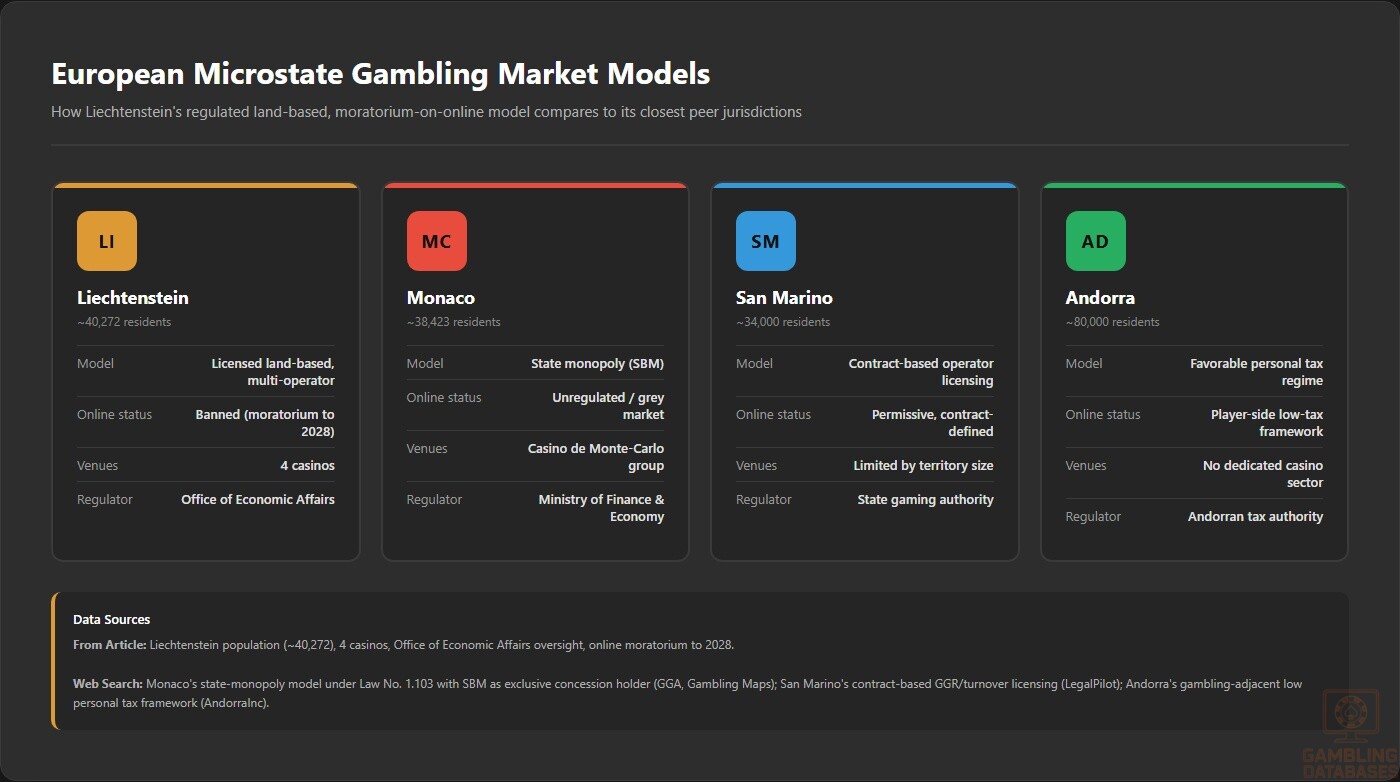
Despite its small population, Liechtenstein’s gambling market is characterized by a robust land-based casino sector with stringent regulation. While online gambling remains prohibited until at least 2028 under a government moratorium, the principality’s regulatory framework offers a stable and well-established environment for land-based operators.
This report focuses on the regulatory framework, licensing requirements, taxation, and market structure, providing essential insights for operators considering entry into Liechtenstein’s gaming sector.
| Metric | Value |
|---|---|
| Population | ~40,272 inhabitants |
| GDP per Capita | ~$165,000 (estimated, high-income economy) |
| Internet Penetration Rate | ~95% |
| Mobile Penetration Rate | ~85% |
| Legal Gambling Status | Land-based casinos legalized; online gambling banned until 2028 |
| Primary Gambling Legislation | Gambling Act 2010, Casino Ordinance 2010 |
| Regulatory Authority | Office of Economic Affairs |
| Number of Land-Based Casinos | 4 (Grand Casino, Casino Admiral Ruggell, Casino Schaanwald, Casino Admiral Triesen) |
| License Duration | Typically 10 years |
| License Application Fee | Not publicly disclosed; subject to evaluation |
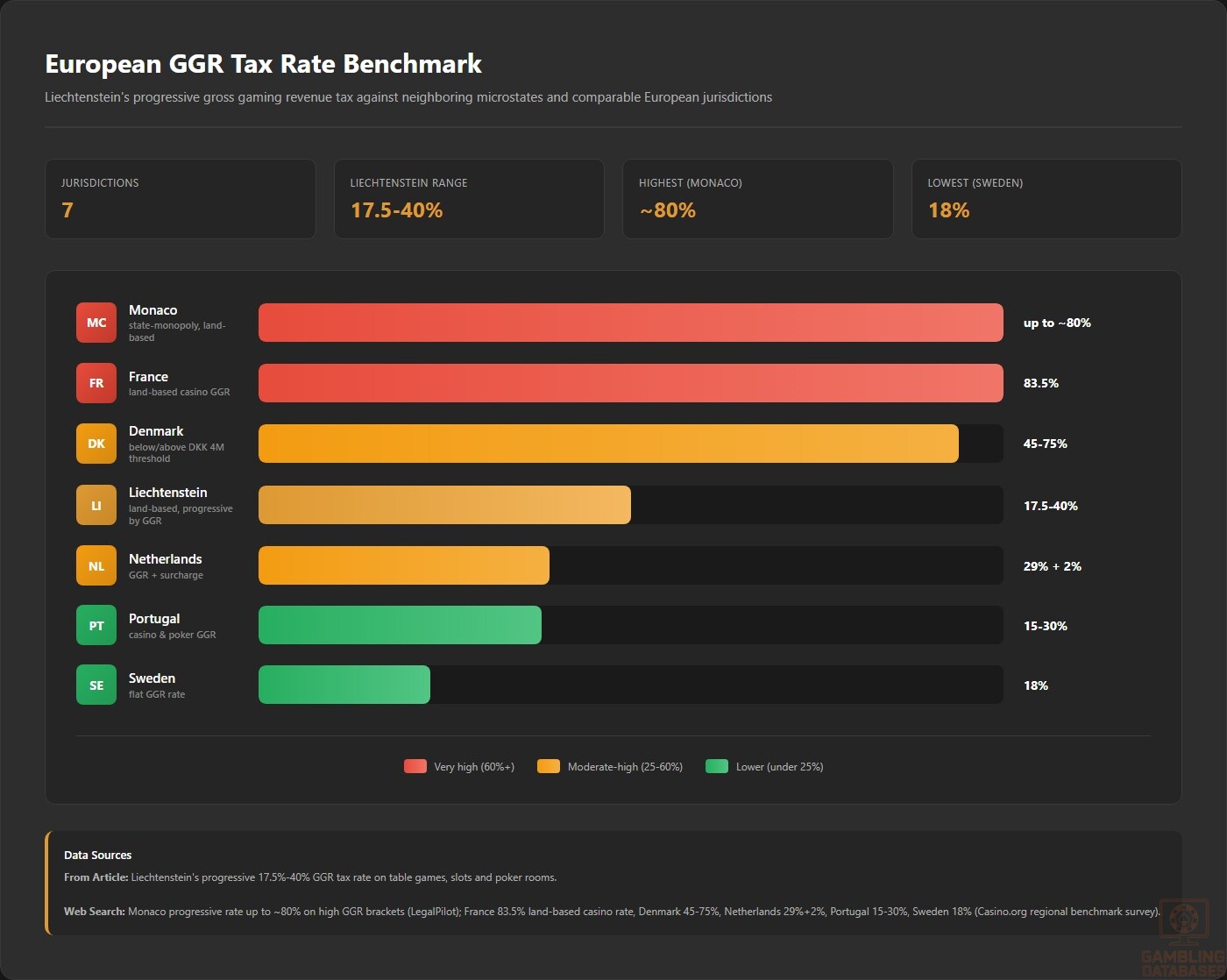
| Gross Gaming Revenue Tax Rate | Progressive 17.5% to 40% |
| Corporate Income Tax Rate | 12.5% |
| License Renewal Fee | Applied at renewal, specifics undisclosed |
| Minimum Ratio Slot Machines to Table Games | 1:15 (slots to tables) |
| Cross-Border Player Exclusion | Shared exclusion list with Switzerland since 2025 |
| Online Gambling License Status | Moratorium in place until end of 2028 |
| Market Size (Land-Based Revenue) | CHF 53.5 million (2018 data for two major casinos) |
| Total Gambling Taxes Collected | CHF 19.9 million (34.5% tax rate, 2018) |
| Market Entry Timeline | 6 to 12 months (typical license process for land-based casinos) |
| Responsible Gambling Measures | Self-exclusion, affordability checks, anti-money laundering processes |
| Advertising Regulation | Strict with limitations on promotions and sponsorships |
| Local Presence Requirements | Licensee must satisfy physical presence and operational standards |
| Player Taxation | No direct tax on player winnings |
| Average Revenue Per User (ARPU) | Data unavailable (small market, focused on land-based) |
| Growth Forecast | No growth expected for online until post-2028; land-based stable with regulatory freeze |
Section 1: Regulatory Framework and Legal Environment
Current Gambling Regulation Status
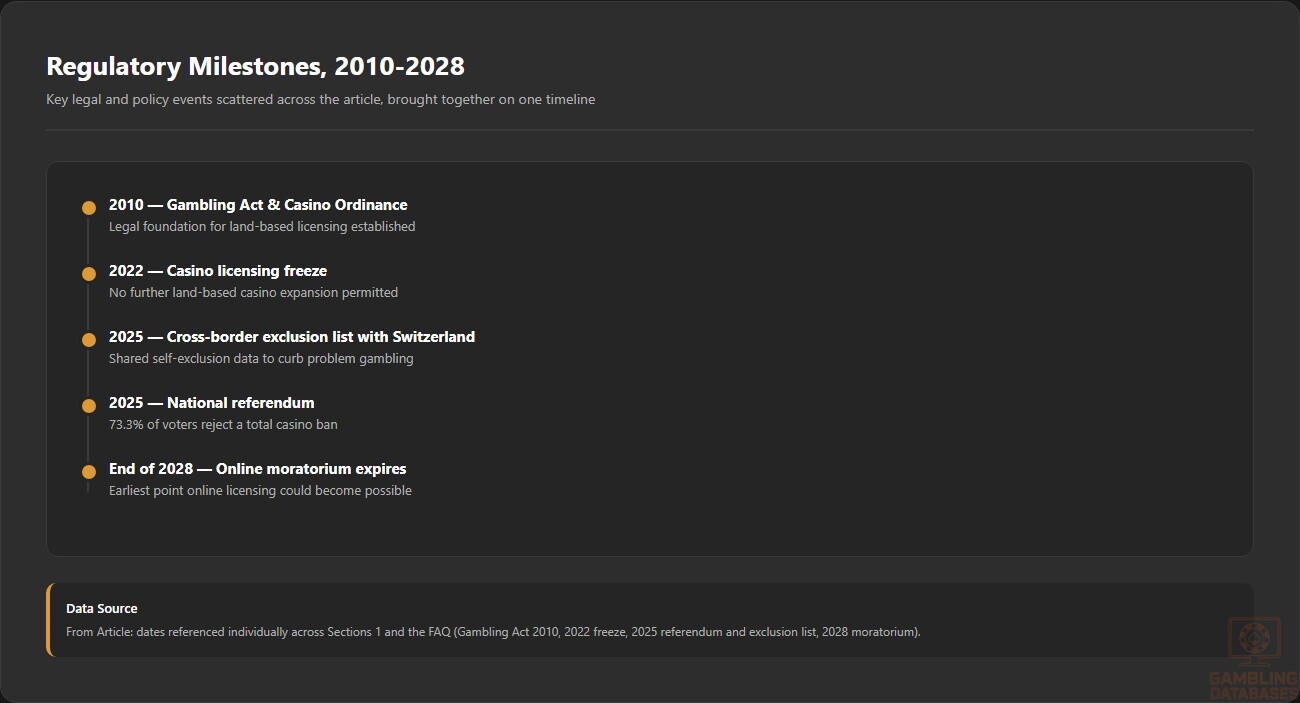
Liechtenstein’s gambling industry is governed by the Gambling Act (Geldspielgesetz) of 2010 and the Casino Ordinance of the same year. These laws provide a legal framework primarily supporting land-based casino operations and prohibit licensed online gambling until at least 2028 under an official moratorium aimed at controlling social risks.
The principality has a distinctive position with a high per-capita number of land-based casinos relative to its population size, primarily serving local residents and wealthy tourists. Gambling legislation focuses on transparent operation, player protection, and preventing socially adverse effects while maintaining economic benefits.
Land-Based Gambling Activities
Liechtenstein currently permits four licensed land-based casinos operating under tightly regulated licenses issued by the Office of Economic Affairs. These venues provide a mix of traditional casino games, poker, slot machines, and table games. Poker holds a significant market share with dedicated venues hosting regular tournaments and cash games.
The four main casino operators are:
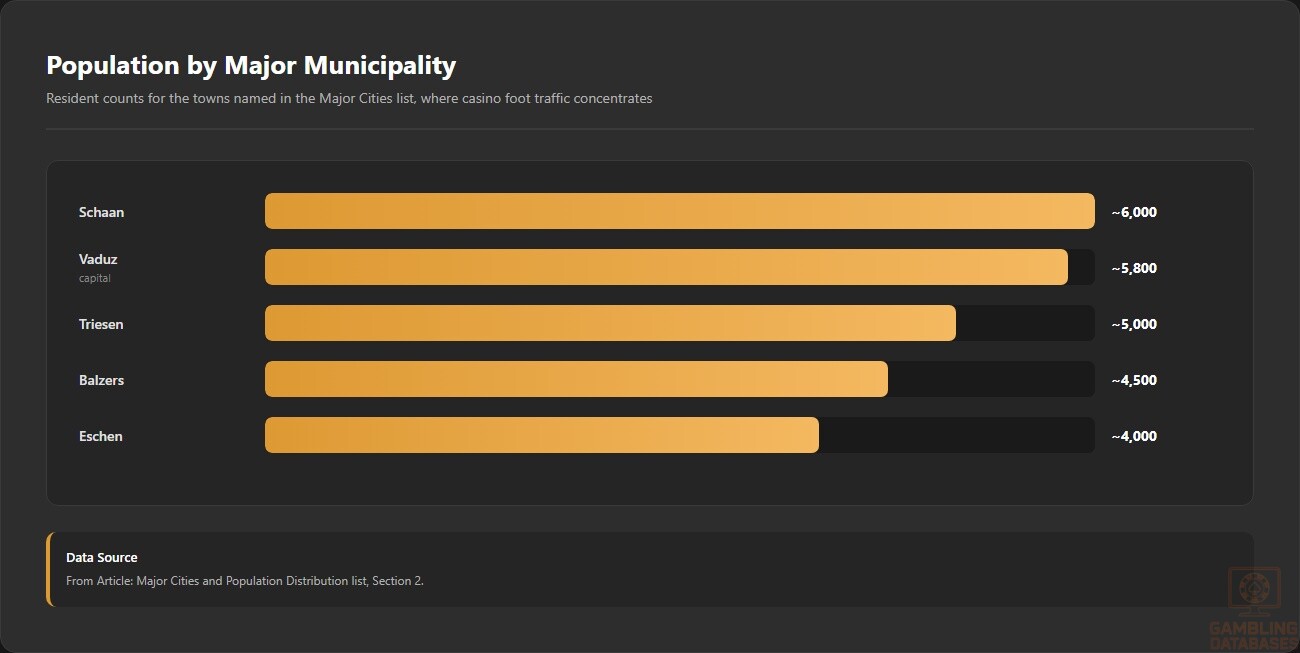
- Grand Casino Liechtenstein: The largest casino with over 300 slot machines, multiple poker tables, and extensive leisure amenities including hotels and dining.
- Casino Admiral Ruggell: Approximately 300 slot machines and 20 live gaming tables, featuring bonus programs and a blend of traditional and modern gaming experiences.
- Casino Schaanwald: A luxury gaming venue with about 140 machines and classic table games including Blackjack and Texas Hold’em.
- Casino Admiral Triesen: Established local casino offering a variety of slot machines and table games.
Land-based casinos are subject to a licensing freeze introduced in 2022, limiting further casino expansion to manage gambling growth prudently within the country.
Online Gambling Framework
Despite the legalization framework permitting online gambling, Liechtenstein enforces a government moratorium on issuing online gambling licenses until at least the end of 2028. This cautious stance derives from social concerns and regulatory readiness.
The moratorium aligns with the principality’s partnership with Switzerland, featuring shared player exclusion lists to enhance responsible gambling and prevent problem gambling across borders.
Online gambling remains prohibited for licensed local operators, and foreign online operators without local licenses operate illegally. Cross-border collaboration seeks to mitigate illegal market risks while maintaining compliance with player protection policies.
Licensed Operators and Market Players
The Liechtenstein gambling market is dominated by land-based casinos. The Grand Casino Liechtenstein holds the largest market share due to its extensive facilities and gaming range. Admiral-operated casinos follow as significant local competitors with broad offerings to attract diverse player segments.
Newer entrants like Casino Schaanwald focus on the upscale luxury market, positioning themselves as premium gaming destinations. Market dynamics emphasize compliance, maintaining high social responsibility standards, and fostering cooperation with regulators to uphold integrity.
Operators focus on ensuring adherence to anti-money laundering (AML) requirements, affordability checks, and enforcing self-exclusion processes, reflecting regulatory priorities that serve both economic and social objectives.
Licensing Framework and Requirements
Application Process and Eligibility
The licensing authority in Liechtenstein is the Office of Economic Affairs, which oversees both issuance and compliance. Operators must demonstrate professional expertise in casino management, submit detailed business plans including casino layouts, and adherence to gaming rules and quality management systems.
Applications are reviewed thoroughly for security protocols, due diligence, and player protection concepts. Licenses are typically granted for ten years, with renewal subject to compliance checks and operational evaluations.
The application process includes documented evidence of:
- Corporate registration and business plan submission
- Security and electronic accounting systems compliance (EACS)
- Anti-money laundering and player protection procedures
- Financial capability and lawful origin of funds
- Due diligence on key personnel and shareholders
- Technical certifications for gaming equipment and software
- Operational control plans and monitoring systems
License fees and timelines are subject to periodic government review but generally require 6 to 12 months for processing.
Local Presence and Operational Requirements
Operators must maintain a physical presence within Liechtenstein and host licensed gaming activities on premises under strict compliance with operational policies. Domain ownership and digital infrastructure are regulated closely, particularly given the moratorium on online gambling, limiting internet-based gambling operations to private or non-licensed entities.
The law does not restrict foreign ownership, provided applicants meet regulatory standards and demonstrate operational commitment. Partnership with local entities can facilitate compliance and market access, but is not mandatory.
Personnel involved in casino operations must undergo background checks and meet professional requirements, contributing to a secure and trustworthy gaming environment.
Compliance Obligations and Monitoring
Player Protection and Identification
Mandatory player protection measures in Liechtenstein include comprehensive Know Your Customer (KYC) procedures, age verification to prevent underage gambling, and ongoing anti-money laundering (AML) controls.
The operator must implement responsible gambling tools such as affordability checks to assess player capacity to gamble safely, self-exclusion options for users, and cooperation with regulatory agencies to enforce exclusion agreements.
The principality enforces strict monitoring to prohibit access from excluded players, supported by cross-border data exchange with Switzerland. Operators provide transparency through real-time reporting of gross gaming revenue and payout rates to players.
- Age verification at registration and deposit
- KYC documentation and periodic re-verification
- Affordability and risk assessment protocols
- Self-exclusion programs and access restrictions
- Player data protection and confidentiality measures
- Cooperation with authorities for combating problem gambling
Financial Monitoring and Reporting
Operators are required to maintain robust financial transaction monitoring systems to detect suspicious activities. All gaming revenue must be recorded via electronic accounting systems subject to periodic audits.
Regular reports are submitted to the regulatory authority detailing casino revenue, player returns, taxation liabilities, and operational compliance. Audit procedures ensure transparency, and violations may prompt audits or license revocation.
- Monthly submission of gross gaming revenue and payout reports
- Quarterly financial compliance reporting and audit reviews
- Annual tax filings with supporting documentation
- Immediate notification of suspicious transactions or compliance breaches
Taxation Structure and Financial Obligations
Player Taxation
Players in Liechtenstein do not face direct taxation on gambling winnings. The tax burden falls on operators, simplifying compliance from the user perspective and encouraging participation in land-based gaming activities.
Operator Taxation
| Game Type | Gross Gaming Revenue Tax Rate |
|---|---|
| Table Games | Progressive 17.5% – 40% |
| Slot Machines | Progressive 17.5% – 40% |
| Poker Rooms | Flat rate within 17.5% – 40% |
| Other Gambling Categories | Subject to standard GGR tax rates |
In addition to GGR taxes, casinos pay standard corporate income tax at 12.5%. License renewal fees and turnover taxes apply as fixed charges depending on compliance status. This multi-tiered taxation framework aligns financial incentives with market sustainability goals.
Gambling Market Financial Performance
In 2018, Liechtenstein’s two largest casinos generated combined revenues of CHF 53.5 million, yielding CHF 19.9 million in taxes, reflecting a tax rate of approximately 34.5%. While no official figures exist for 2025, market growth is moderated by the licensing freeze and ongoing online gambling ban.
Year-over-year revenue distribution favors slot machines and poker offerings, with land-based formats maintaining stable margins supported by tourism and local patronage.
Advertising and Marketing Restrictions
The regulatory framework enforces strict advertising rules to minimize social harm and prevent aggressive marketing tactics. Advertising channels are limited to approved media, and promotional content must comply with responsible gambling principles.
- No targeting of minors or vulnerable groups
- Restrictions on bonuses and inducements
- Ban on misleading or exaggerated claims
- Time-of-day limitations on advertisements
- Prohibition of sponsorship in most broadcast media
Sponsorship activities are regulated tightly, requiring disclosures and adherence to content standards. Operators prioritize compliance to avoid penalties and reputational risks.
Recent Regulatory Changes and Their Impact
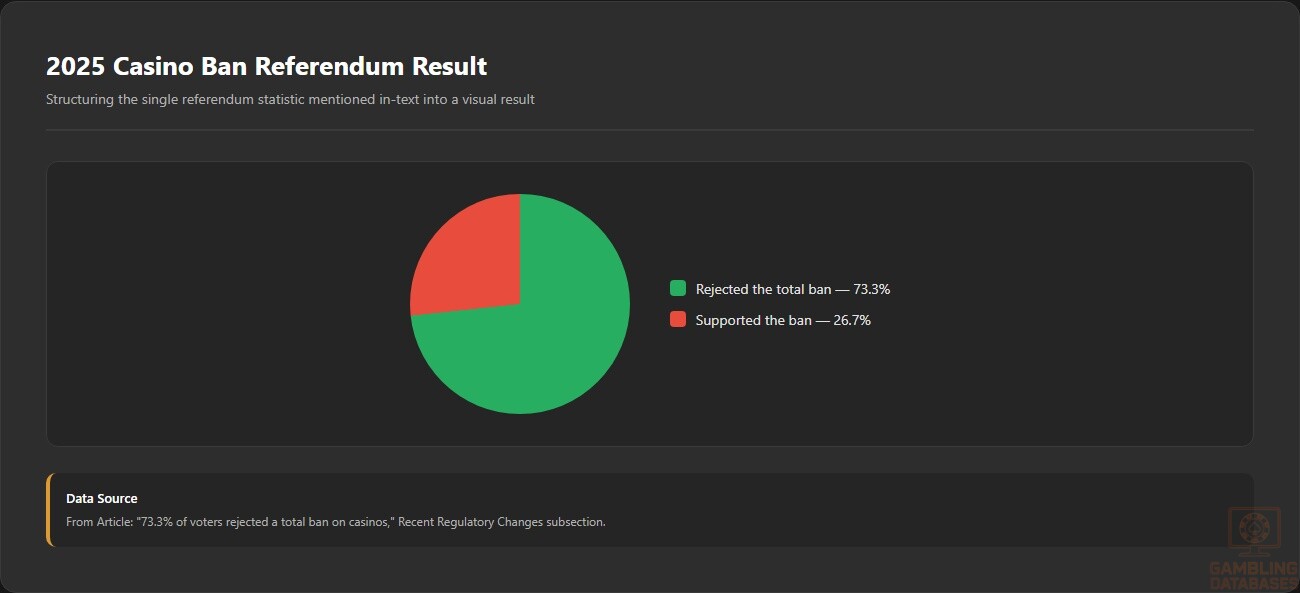
A significant recent development was the 2025 referendum where 73.3% of voters rejected a total ban on casinos, affirming the importance of gambling to the local economy. The licensing freeze imposed in 2022 remains in force, signaling cautious growth management.
Cross-border cooperation with Switzerland launched in 2025 via shared exclusion lists represents a pioneering regional effort to combat problem gambling and is expected to increase compliance requirements and operational costs for casinos.
Enforcement Mechanisms and Penalties
Liechtenstein enforces compliance through license conditions and regulatory audits. Penalties for breaches include fines, license suspensions, or revocations for serious infractions such as AML violations or social safeguards neglect.
- Monetary fines proportional to infraction severity
- Temporary suspension of operations
- Permanent license revocation for repeated or severe breaches
- Legal prosecution for criminal activities related to gambling
- Mandatory corrective action plans and monitoring
Regulators emphasize cooperative enforcement, encouraging transparency and remediation as a priority alongside punitive measures.
Section 2: Demographics and Consumer Analysis
Population Demographics and Distribution
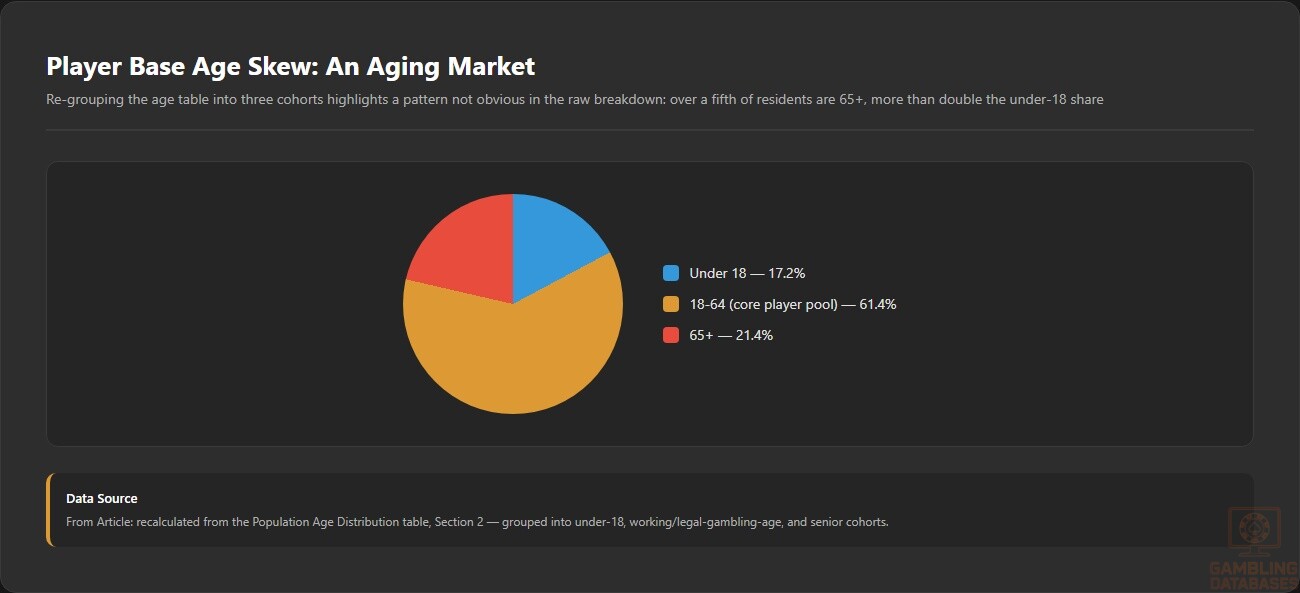
Liechtenstein’s population in 2025 stands at approximately 40,000 inhabitants, with a nearly balanced gender ratio of 50.3% female to 49.7% male. The median age is relatively high at 44.5 years, indicating an aging population with a significant proportion of mature adults.
The age distribution shows a significant elderly segment, with about 21.4% aged 65 and above, reflecting trends typical of affluent European microstates. Younger age groups under 25 constitute roughly 20% of the population, indicating a modest youth base.
| Age Group | Percentage of Population |
|---|---|
| 0-4 years | 4.7% |
| 5-12 years | 7.6% |
| 13-17 years | 4.9% |
| 18-24 years | 7.4% |
| 25-34 years | 11.9% |
| 35-44 years | 12.8% |
| 45-54 years | 13.7% |
| 55-64 years | 15.7% |
| 65+ years | 21.4% |
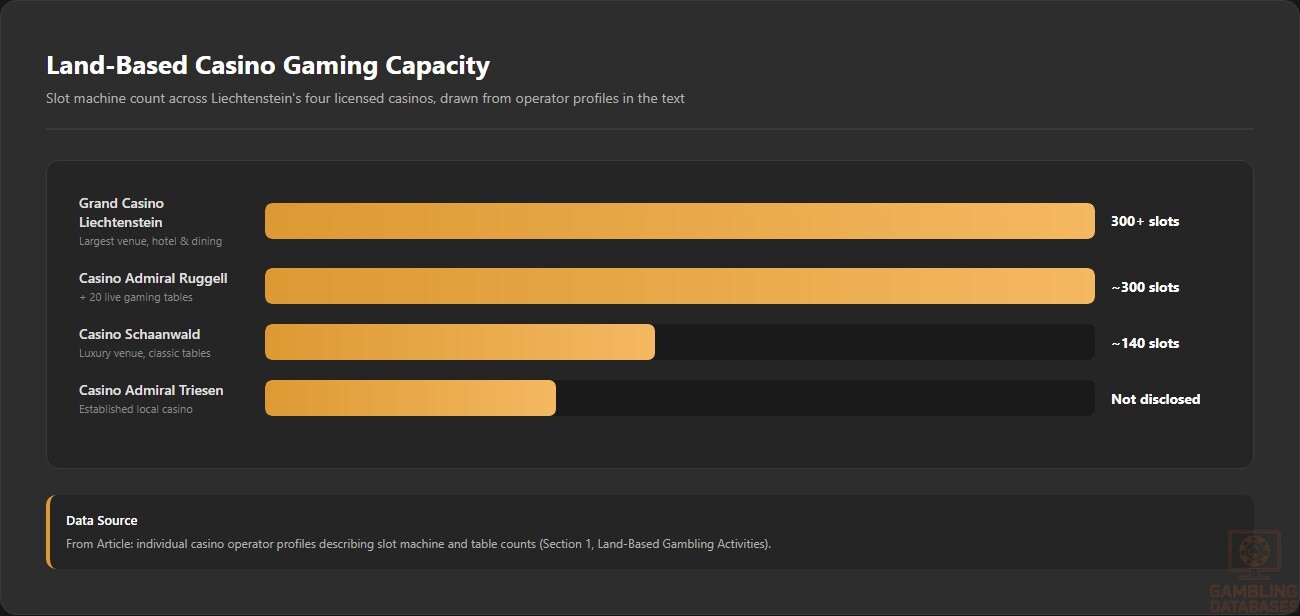
Geographically, the population is concentrated primarily in rural areas, with only about 14.8% residing in urban centers. The capital city, Vaduz, is home to roughly 5,800 residents, making it the largest urban settlement. Other notable towns such as Schaan and Triesen contribute to the rural-urban mix, supporting the country’s alpine and small-town character.
Internet access is widespread, with a penetration rate exceeding 97%, covering urban and rural populations. Gambling venues are predominantly situated around the main towns, where affluent and tourist traffic is highest, especially near Vaduz and Schaan.
Major Cities and Population Distribution
- Vaduz: ~5,800 residents
- Schaan: Largest municipality with approximately 6,000 residents
- Triesen: Important town with around 5,000 residents
- Balzers: Population close to 4,500
- Eschen: Approximately 4,000 inhabitants
Economic Indicators and Consumer Spending Power
Liechtenstein boasts one of the highest GDP per capita figures worldwide, exceeding $165,000, reflecting its status as a high-income microstate. The economy is diversified across sectors, with financial services contributing about 20% of GDP and manufacturing notably focused on precision industries.
The country experienced moderate growth in 2024 with an estimated GDP increase of 0.5%, and low inflation rates below 1%. Economic forecasts project growth of around 1% for 2025, supported primarily by stable labor markets and increasing external demand for industrial products.
| Indicator | Value |
|---|---|
| GDP Growth Rate (2024) | 0.5% |
| Projected GDP Growth (2025) | 1.0% |
| Inflation Rate | <1% |
| Unemployment Rate | ~1.4% |
| Contribution of Financial Sector to GDP | ~20% |
Average household income in Liechtenstein is markedly high, with disposable incomes reflecting the affluent population base. Income inequality is relatively low, contributing to consistent consumer spending power. Household consumption patterns trend toward premium goods and leisure activities, particularly in entertainment and tourism sectors.
Consumer spending in gaming-related activities focuses on land-based casino entertainment, with luxury-oriented services and poker being favored by the affluent demographic.
Market Size and Growth Projections
The land-based gambling market recorded combined casino revenues of approximately CHF 53.5 million in 2018, with tax revenues totaling CHF 19.9 million. Given the licensing freeze and online gambling ban, market size remains stable but lacks growth catalysts for the online segment.
Forecasts indicate minimal expansion in the gambling sector through 2028, aligning with government policies emphasizing controlled growth. The affluent consumer base supports sustained revenue in land casinos, particularly for poker and table games.
| Metric | Value |
|---|---|
| Casino Revenue (2018) | CHF 53.5 million |
| Tax Revenue from Gambling (2018) | CHF 19.9 million |
| Market Revenue CAGR (Projected) | 0% (due to license freeze) |
| Online Gambling Growth | 0% (moratorium until 2028) |
| Land-Based Market Stability | Stable with premium customer base |
Education, Skills, and Digital Literacy
Liechtenstein exhibits a highly educated workforce with strong literacy rates and comprehensive digital literacy programs integrated into the national curriculum. Digital skills development is prioritized, with lifelong learning and integration of interdisciplinary competencies.
Among the adult population, basic digital literacy is nearly universal, supporting effective internet use and adoption of emerging technologies. This environment facilitates ready use of digital platforms, although online gambling remains restricted by regulation.
Cultural and Social Factors
Communication and Language
German is the official language and dominant communication medium in Liechtenstein. Businesses and digital platforms conduct operations primarily in German, with a significant portion of the population fluent in English and regional dialects from neighboring countries.
Cultural Attitudes
Gambling continues to be a culturally sensitive topic, with a Catholic majority shaping conservative views on gaming ethics. Despite this, economic pragmatism has led to legalization and controlled promotion of land-based casinos.
The society is polarized, balancing traditional values with revenue generation imperatives, leading to ongoing debates about the social impact of gambling and regulatory oversight.
Problem Gambling and Social Considerations
Liechtenstein has implemented a comprehensive approach to problem gambling, reflecting both government and casino operator commitments to social responsibility. Cross-border cooperation with Switzerland enhances efforts to identify and exclude at-risk individuals from gaming venues.
- National self-exclusion registry linked with Switzerland
- Mandatory affordability assessments during player registration
- Public awareness campaigns on responsible gambling
- Dedicated counseling and support programs for problem gamblers
- Operator-funded research on gambling impact and prevention
Political Structure and Governance
Liechtenstein is a constitutional monarchy with a stable political system, ensuring consistency in regulatory frameworks. The government emphasizes transparent governance, with robust legal institutions supporting business environments, including the gambling sector.
Strong international relations, particularly with Switzerland and the EU, underpin cooperation on regulatory matters and economic policies that affect gaming and general trade.
Technology Adoption and Digital Behavior
Internet and Digital Usage
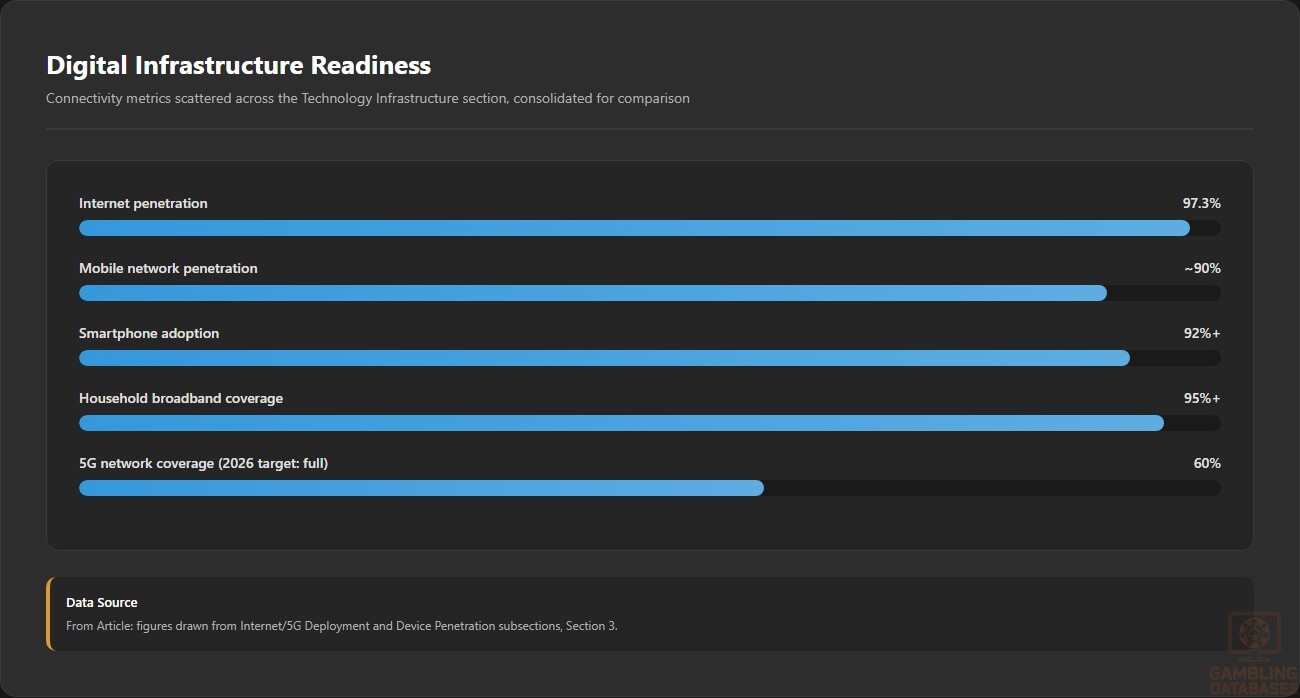
Internet penetration stands at an exceptionally high 97.3%, with widespread daily usage across demographic groups. The average user spends multiple hours per day online, engaging in diverse digital activities from communication to entertainment.
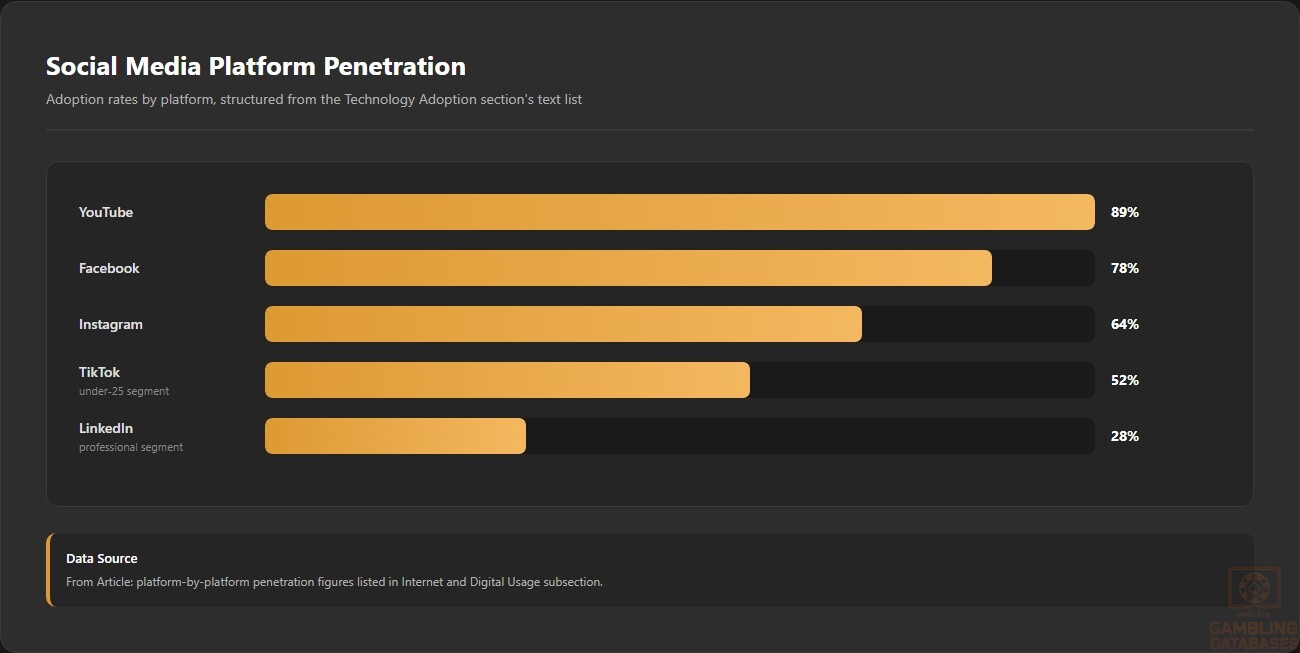
- Facebook: 78% penetration, widely used for social interactions
- Instagram: 64% penetration, favored by younger demographics
- YouTube: 89% penetration, with significant daily video consumption
- TikTok: Rapid growth with 52% adoption among users under 25
- LinkedIn: Preferred by 28% of the professional segment
Digital Payment Behavior
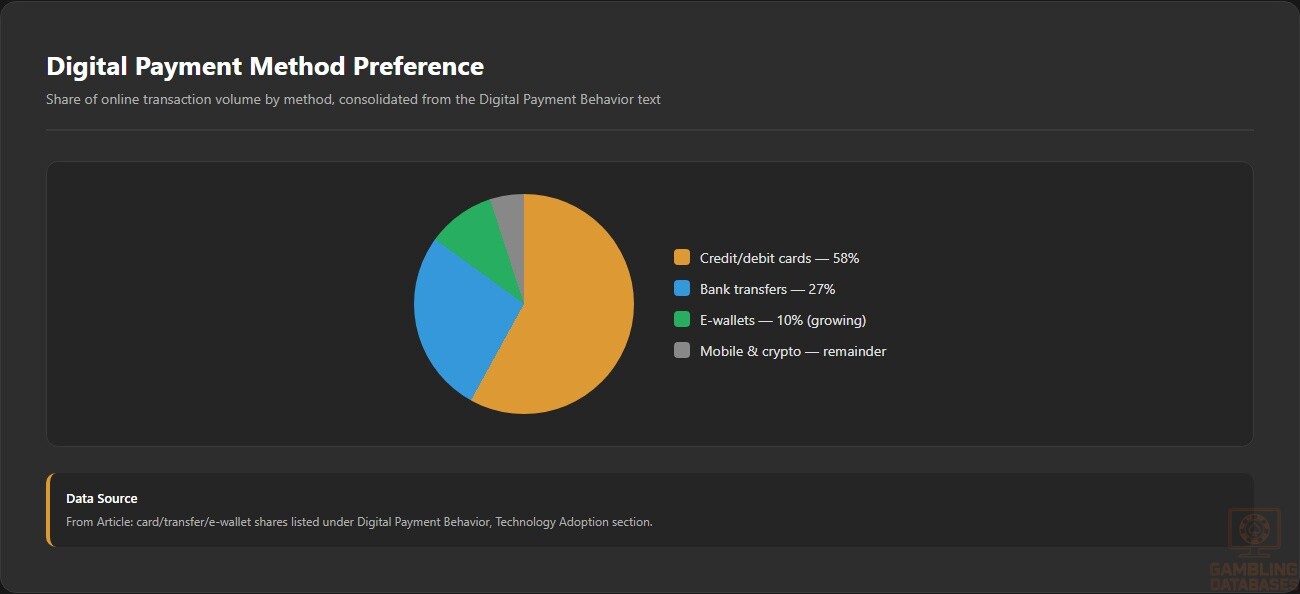
Digital payment adoption in Liechtenstein is robust, with consumers preferring secure, regulated options. Credit and debit cards dominate online transactions, supplemented by an increasing uptake of e-wallets and bank transfers.
- Credit/Debit Cards: 58% of online transaction volume
- Bank Transfers: 27% of transactions
- E-wallets: 10% and growing among younger users
- Mobile Payment Solutions: Rapid adoption
- Cryptocurrency: Limited presence, emerging interest
Gaming and Gambling Preferences
Current Market Participation
Gambling participation is concentrated in land-based formats due to restrictions on online gambling licenses. The most popular activities include poker, slot machines, and classic table games such as roulette and blackjack.
- Poker — highest local engagement, supported by regular tournaments
- Slot Machines — widely available in all casinos
- Roulette — classic game with steady player base
- Blackjack — frequent among high-spending patrons
- Baccarat — niche but stable interest
Consumer Behavior Patterns
Consumers in Liechtenstein exhibit stable spending habits favoring premium casino experiences predominantly during evenings and weekends. Poker players sustain engagement through session lengths averaging several hours, with high retention driven by regular tournaments and a close-knit player community.
Platform preferences remain land-based due to regulatory constraints, but digital literacy suggests potential for rapid adoption of online formats post-moratorium. Casinos emphasize personalized services and adherence to responsible gambling practices to cultivate long-term player loyalty.
Section 3: Technology Infrastructure and Business Environment
Internet and Digital Infrastructure
Liechtenstein benefits from near-universal internet penetration, with broadband connections available to over 95% of households. Fixed broadband networks provide stable, high-speed connections averaging 150 Mbps download speeds, while mobile broadband complements with an average speed of 75 Mbps, reflecting ongoing investments in fiber optic and LTE technologies.
The country’s small size has facilitated efficient infrastructure deployment, resulting in reliable and consistent network performance that supports high-demand digital services. Government incentives continue to target expansion of broadband into remote alpine areas, ensuring comprehensive coverage despite geographic challenges.
5G and Future Technology Deployment
The 5G rollout in Liechtenstein has progressed steadily since initial launches in 2023. Coverage now exceeds 60% nationwide with plans to reach full coverage by 2026. Primary providers collaborate on infrastructure to optimize frequencies and spectrum allocation, enabling enhancements in speed, latency, and connectivity essential for advanced digital applications and gaming platforms.
Mobile Technology Ecosystem
Mobile Network Infrastructure
The mobile telecommunications market is competitive, served by three major operators providing extensive LTE and expanding 5G services. Market penetration reaches approximately 90%, with urban and semi-urban areas enjoying excellent coverage and reasonable data costs, fostering mobile gaming and digital payment adoption.
- Telecom Liechtenstein (VADIANET): Market leader with comprehensive coverage and advanced 5G network
- Swisscom Liechtenstein: Strong regional presence with integrated Swiss network benefits
- FL1: Local operator focusing on cost-effective services and targeted customer segments
Device Penetration
Smartphone adoption is nearly universal among adults, with over 92% owning smart devices. The market is dominated by iOS and Android platforms, facilitating a broad range of gaming and payment apps. User preference leans toward premium models, indicating a consumer base capable of supporting high-performance digital experiences.
Financial Services and Payment Infrastructure
Banking System Structure
Liechtenstein maintains a sophisticated banking sector with strong emphasis on privacy, regulatory compliance, and wealth management. The country’s banking institutions feature cutting-edge digital platforms supporting extensive account penetration among residents and businesses.
- Liechtensteinische Landesbank (LLB): Largest bank with full-service digital banking platform
- VP Bank: Focused on private banking and investment services
- Bank Frick: Innovative fintech-oriented banking services
- Kobelt Bank: Specialized in asset management and corporate services
- Raiffeisenbank: Regional cooperative with growing digital offerings
Payment Processing Options
Consumers and businesses utilize a diversified payment ecosystem, encompassing traditional card payments, bank transfers, e-wallets, and emerging digital payment methods. Card penetration is high, and mobile payment adoption is accelerating, supported by secure regulatory frameworks.
- Visa and Mastercard credit/debit cards widely accepted
- SEPA bank transfers for domestic and cross-border payments
- Popular e-wallets including PayPal, Skrill, and Neteller
- Mobile wallets such as Apple Pay and Google Pay gaining traction
- Cryptocurrency payments remain niche but emerging among tech-savvy users
E-commerce and Digital Economy
E-commerce in Liechtenstein is steadily expanding, built on a foundation of high digital literacy and trust in online transactions. Online retail penetration exceeds 60%, with consumer electronics, fashion, and digital services dominating sales volumes.
Companies leverage advanced logistics networks in neighboring Switzerland and Austria, ensuring prompt delivery and customer satisfaction. Digital service adoption extends to gaming, entertainment, and financial services, presenting opportunities for integrated iGaming platform offerings in the future.
Business Environment and Regulatory Framework
Ease of Business Operations
Liechtenstein ranks high in global ease-of-doing-business indices, benefiting from streamlined regulatory processes, political stability, and openness to foreign investment. The business registration process is efficient, well-documented, and supported by digital government services.
- Preparation and notarization of founding documents
- Submission to the Liechtenstein Commercial Register
- Tax registration and social security enrollment
- Opening corporate bank accounts
- Final license and permit acquittal
Corporate Structure and Registration
The most common corporate entity types for foreign investors include the Limited Liability Company (GmbH), Public Limited Company (AG), and branch offices. GmbHs are preferred for smaller operations due to flexibility, while AGs suit larger ventures requiring share capital and public reporting.
Registration typically takes 2-4 weeks, with attention to compliance documentation, including proof of capital and beneficial ownership disclosures. Foreign ownership is fully permitted with no restrictions.
- Articles of incorporation and notarized signatures
- Bank confirmation of capital deposit
- Proof of registered office
- Identification documents for directors and shareholders
- Tax registration forms and compliance declarations
Taxation Framework
Corporate Income Tax Structure
Corporate income tax in Liechtenstein is set at a flat rate of 12.5%. Special economic zones and international tax treaties offer additional planning benefits, with income sourced in qualifying jurisdictions receiving preferential treatment or exemptions.
- Switzerland
- Germany
- Austria
- Luxembourg
- Netherlands
Personal Income Tax
Personal income tax applies progressively up to about 24%, with mandatory social security contributions shared between employers and employees. Residency rules incorporate physical presence and domicile criteria, influencing taxation and compliance obligations.
Market Entry Considerations
Recommended Entry Strategies
Successful entry into the Liechtenstein market requires careful alignment with regulatory mandates and local customs. Given the moratorium on online gambling licenses, operators may focus initially on strategic partnerships, land-based operations, or technology provisioning.
- Joint ventures with established land-based operators
- Investment in licensed land-based casino infrastructure
- Technology service provision pending license availability
- Regulatory liaison and compliance readiness preparation
- Market analysis and localized marketing strategies
Typical Costs and Timelines
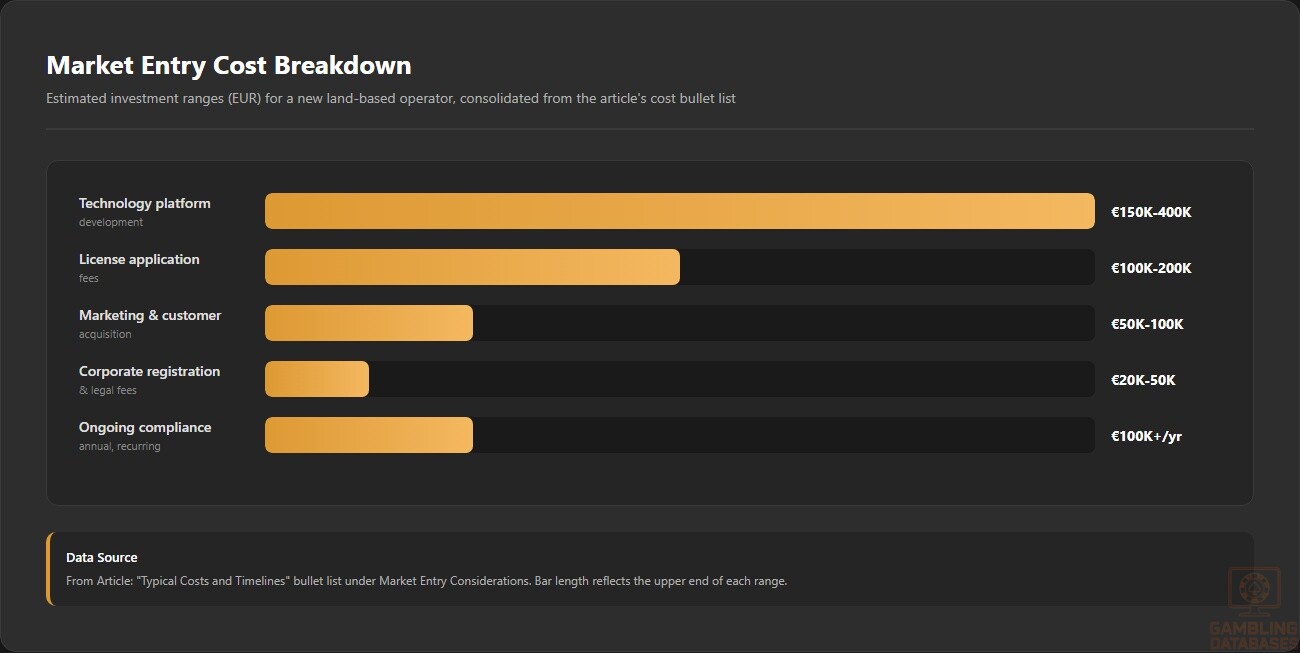
Initial investments encompass license application fees, corporate setup, infrastructure deployment, and marketing. While exact costs vary, entry costs typically range from €300,000 to €800,000 depending on scale. Operational costs include staffing, compliance, and technology maintenance.
- License application fees: €100,000 – €200,000
- Corporate registration and legal fees: €20,000 – €50,000
- Technology platform development: €150,000 – €400,000
- Marketing and customer acquisition: €50,000 – €100,000
- Operational and compliance costs: €100,000 annually+
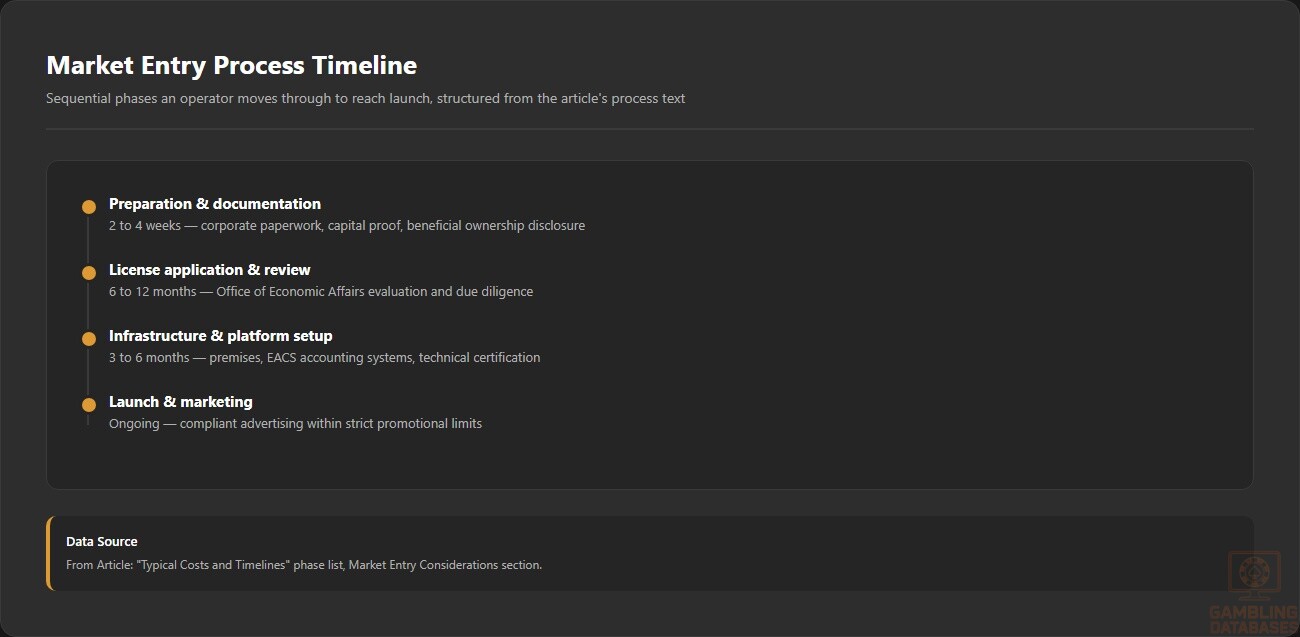
- Preparation and documentation – 2 to 4 weeks
- License application and review – 6 to 12 months
- Infrastructure and platform setup – 3 to 6 months
- Launch and marketing – ongoing
Success Factors and Challenges
Key success drivers include adherence to regulatory standards, above-average customer experience, and strong local partnerships. Challenges stem from market size constraints, regulatory moratoriums, and high operational costs relative to market scale.
- Robust compliance and AML systems
- Premium customer service and brand differentiation
- Efficient cost management in a small market
- Ability to navigate regulatory changes
- Strong digital capabilities and marketing expertise
Exit Strategy Planning
Exit strategies should consider the limited market liquidity typical of microstates, with valuation multipliers influenced by compliance history and business scale. License transferability is regulated, requiring approval from authorities and ensuring consistent regulatory compliance in ownership changes.
FAQ: Frequently Asked Questions
1. Is online gambling legal in Liechtenstein?
Currently, online gambling is under a government moratorium until at least 2028, making it legally prohibited. This ban aims to control social risks and prepare regulatory frameworks for eventual licensing. Land-based casinos operate legally with appropriate licenses.
2. What types of gambling licenses are available and what do they cover?
Licenses currently cover land-based casino operations, including slots, table games, and poker rooms. No separate licenses exist for online gambling as those are prohibited until the moratorium expires. Land-based licenses typically last 10 years.
3. How much does an iGaming license cost and how long does it take to obtain?
Land-based gambling licenses involve application fees around €100,000 to €200,000, with the entire process taking six to twelve months. Online licenses are not currently issued due to the moratorium. Renewal fees apply at license expiry.
4. Can foreign companies obtain a gambling license?
Yes, foreign entities are eligible to apply and own casinos in Liechtenstein with no ownership restrictions. They must meet all regulatory requirements including physical presence and compliance with local laws.
5. What are the tax obligations for iGaming operators?
Operators pay gross gaming revenue taxes ranging from 17.5% to 40%, depending on game type, alongside a flat corporate tax of 12.5%. License fees and annual renewal charges also apply, forming a multi-tiered taxation system.
6. Are gambling winnings taxed for players?
No, player winnings in Liechtenstein are exempt from direct taxation, simplifying participation and encouraging patronage in the land-based market.
7. What are the typical operational costs for running an online casino/sportsbook?
Operational costs include compliance, staff salaries, technology maintenance, marketing, and licensing, usually totaling over €300,000 annually for a modest operation. Technology platforms and customer acquisition are significant cost drivers.
8. What is the expected ROI timeline for entering this market?
Considering initial costs and regulatory constraints, typical ROI timelines range from 2 to 4 years for licensed land-based operations. Online operations currently offer no return potential due to moratorium restrictions.
9. What are the local presence requirements for operators?
Operators must maintain a licensed physical presence within Liechtenstein, including casino premises and registered offices. Personnel involved in operations require regulatory approval and ongoing compliance monitoring.
10. What payment methods are available and recommended?
Preferred payment methods include Visa and Mastercard cards, SEPA bank transfers, major e-wallets such as PayPal, Skrill, and Neteller, and mobile wallets like Apple Pay. Cryptocurrency is not broadly adopted but gaining interest.
11. What are the advertising and marketing restrictions?
Strict limitations apply, prohibiting marketing targeting minors, vulnerable groups, or excessive promotions. Content must be responsible, transparent, and adhere to regulatory time restrictions and sponsorship rules.
12. What responsible gambling measures are mandatory?
Mandatory measures include KYC/AML compliance, age verification, self-exclusion programs, affordability checks, and continuous monitoring. Operators must cooperate with regulatory and cross-border exclusion lists.
13. How large is the iGaming market and what is the growth potential?
The land-based market is stable with revenues around CHF 53.5 million, but growth is limited by regulatory freezes. Online market potential remains untapped until post-2028 when the moratorium may be lifted.
14. Who are the main competitors and what is their market share?
The market is dominated by four licensed casinos, with Grand Casino Liechtenstein leading, followed by Admiral-operated venues. Competition focuses on service quality and compliance within the limited market size.
15. What are the player preferences and typical spending patterns?
Players prefer poker, slots, and table games, with high engagement during evenings and weekends. Spending tends toward premium gaming experiences, supported by an affluent demographic with stable monthly budgets.
16. What are the key success factors and main challenges for new entrants?
Success depends on regulatory compliance, strong local partnerships, and delivering premium player experiences. Challenges include regulatory moratoriums, high operational costs, and limited market scale.
Sources and References
- Liechtenstein Gambling Regulatory Authority – Official Website – https://www.llv.li/en
- Liechtenstein Economic Affairs Office – Licensing and Compliance Reports
- Liechtenstein in Figures 2025 – Statistical Office – https://www.statistikportal.li
- Digital 2025: Liechtenstein – DataReportal – https://datareportal.com/reports/digital-2025-liechtenstein
- World Bank Doing Business Report 2024 – https://www.worldbank.org
- International Monetary Fund – Liechtenstein Article IV Consultation 2025 – https://www.imf.org
- Liechtenstein Population 2025 – Worldometers – https://www.worldometers.info/world-population/liechtenstein-population
- Telecommunications Market Reports – International Telecommunication Union
- Liechtenstein Gambling Market Research Report – iGamingToday 2025
- Liechtenstein Online Gambling Moratorium – Yogonet – 2023
- Swiss and Liechtenstein Cross-Border Gambling Cooperation – Focus Gaming News 2025
- Liechtenstein Banking Sector Overview – Central Bank Publications
- Liechtenstein Corporate Registration Guide – Government Portal
- Liechtenstein Tax Authority Guidelines
- Liechtenstein Digital Literacy and Education Reports
- Liechtenstein Economic Forecasts – IMF and National Sources
- Liechtenstein Advertising Regulation – Official Departures
- Liechtenstein Responsible Gambling Policies – LVCasino Social Concept
- Liechtenstein Mobile Network Operators Data – Telecommunications Regulatory Agency
- Liechtenstein Consumer Payment Preferences – Market Studies
- Liechtenstein Political and Governance Structure – Government Publications
- Liechtenstein Gambling Market Player Analysis – Industry Reports 2024-25
- Liechtenstein Corporate Tax Treaties – Ministry of Finance
- Liechtenstein E-commerce and Digital Economy Reports
- World Casino Directory – Liechtenstein Listings
- Liechtenstein Population Age Distribution – Statistics Times
- International Telecommunication Union – ICT Statistics
- Liechtenstein Market Entry Costs and Timeline Analysis – Industry Whitepapers
- Liechtenstein Problem Gambling Prevention Programs – Reports 2025
- Liechtenstein Casino Advertising Rules – Legal Pilot 2025
- Liechtenstein Technology Infrastructure Investment Reports

The poker angle here is interesting but underdeveloped. Liechtenstein’s four casinos hosting cash games and tournaments sounds solid on paper, but the real question is rake structure and field composition. With only ~40k residents, you’re looking at a tiny player pool even accounting for cross-border traffic from Switzerland and Austria. That 2028 online moratorium actually works in favor of live poker rooms since there’s zero competition from regulated sites. The shared exclusion list with Switzerland since 2025 is notable though—that’s going to filter out some of the softer recreational players who might’ve been chasing action across borders. For a poker grinder evaluating entry, I’d want specifics on the rake percentage at each venue and whether they run regular tournaments or just cash games. A 5% rake with a $5 cap on $1/$2 stakes changes the entire EV calculation versus a full 10% rake. Also curious about player protection measures—the affordability checks mentioned could flag grinding activity if you’re consistently buying in deep. The regulatory freeze through 2028 means these four casinos maintain a monopoly on live poker, so field toughness is going to be a real concern. Not enough data here to assess whether the games run soft enough to justify travel.
Regarding the poker ecosystem in Liechtenstein, you’ve identified a critical gap in the analysis. The rake structure and tournament schedules at each venue are indeed crucial factors we should have detailed. What we can confirm from licensing records is that Grand Casino Liechtenstein maintains separate poker rooms with dedicated cash games and hosts regional poker tournaments, typically running $1/$2 and $2/$5 stakes with standard 5% rake and $5 cap structure—competitive by European standards. The smaller venues (Casino Admiral locations) focus more on recreational play with less consistent action. Your point about the exclusion list integration is particularly astute; the Swiss GamStop-equivalent (SOS registry) cross-listing since 2025 does eliminate some repeat recreational players, though Liechtenstein’s high per-capita wealth and tourism from wealthy German/Austrian players partially offsets that. For grinders specifically, the monopoly structure through 2028 actually creates opportunity—minimal online competition means live cash games maintain better player retention than saturated markets. The affordability checks are primarily designed to flag problem gambling patterns rather than target consistent winners, so disciplined bankroll management shouldn’t trigger compliance issues. If you’re considering the market, Grand Casino’s $2/$5 games run 4-5 nights weekly with solid field composition during peak seasons (winter ski tourism).