
Lebanon presents a distinctive iGaming market with a unique blend of land-based gambling traditions and emerging digital gaming opportunities. The regulatory environment is characterized by exclusivity and high taxation, dominated by established local operators.
The country’s conservative regulatory stance coupled with increasing digital infrastructure development creates both challenges and openings for new market entrants seeking to navigate Lebanon’s regulated monopoly system.
Executive Summary: Key Market Indicators
| Metric | Value |
|---|---|
| Population | ~6.1 million |
| GDP (Nominal) | Approx. USD 20 billion |
| GDP per capita | ~USD 3,200 |
| Internet Penetration | ~87% |
| Mobile Penetration Rate | ~90% |
| Legal Gambling Status | Strict regulation with limited exceptions |
| Exclusive Land-Based Casino | Casino du Liban (Monopoly) |
| Online Gambling License | Exclusive license to BetArabia (Casino du Liban) |
| Minimum Gambling Age | 21 years |
| Main Regulating Authorities | Ministry of Interior and Municipalities; Ministry of Finance |
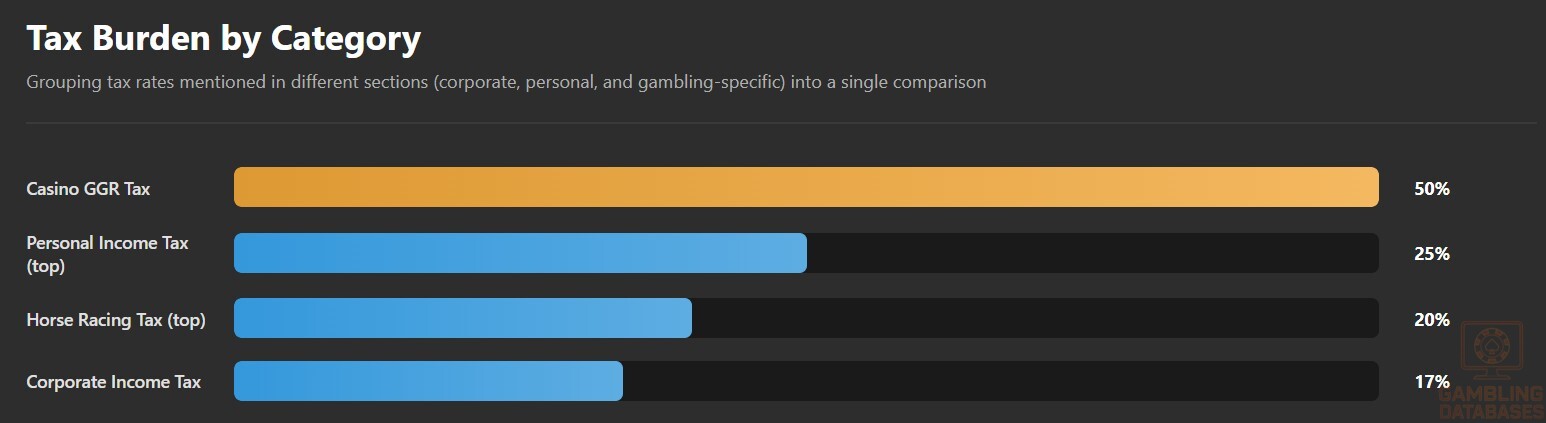
| GGR Tax Rate (Casino/Online) | 50% |
| Horse Racing Betting Tax | 15-20% of turnover |
| Lottery Tax Structure | Fixed annual fee or revenue share |
| License Application Fee | Government set, confidential |
| License Duration | Up to 30 years for Casino du Liban (staggered tax rates) |
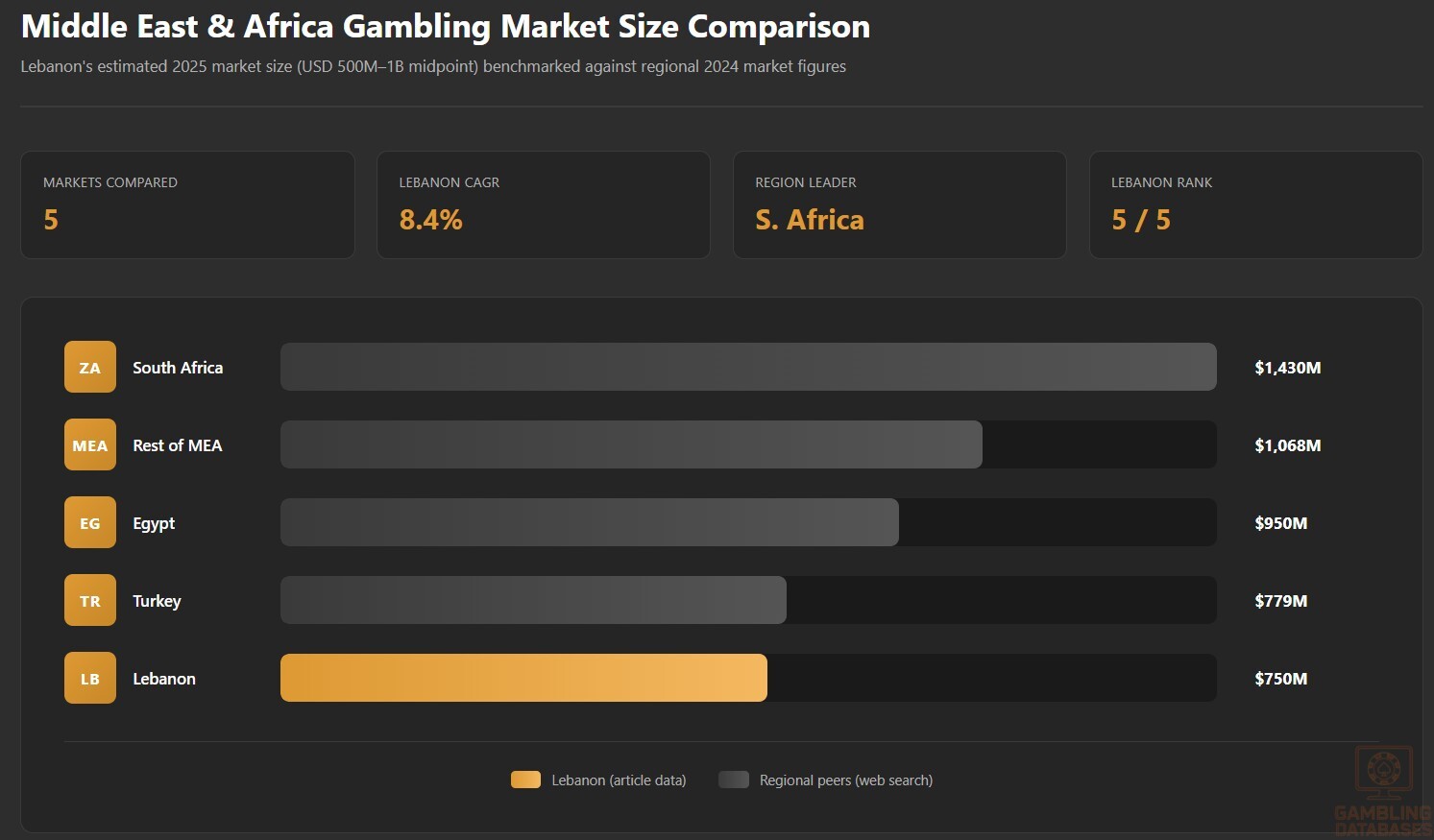
| Market Size (2025 estimate) | USD 500 million – 1 billion |
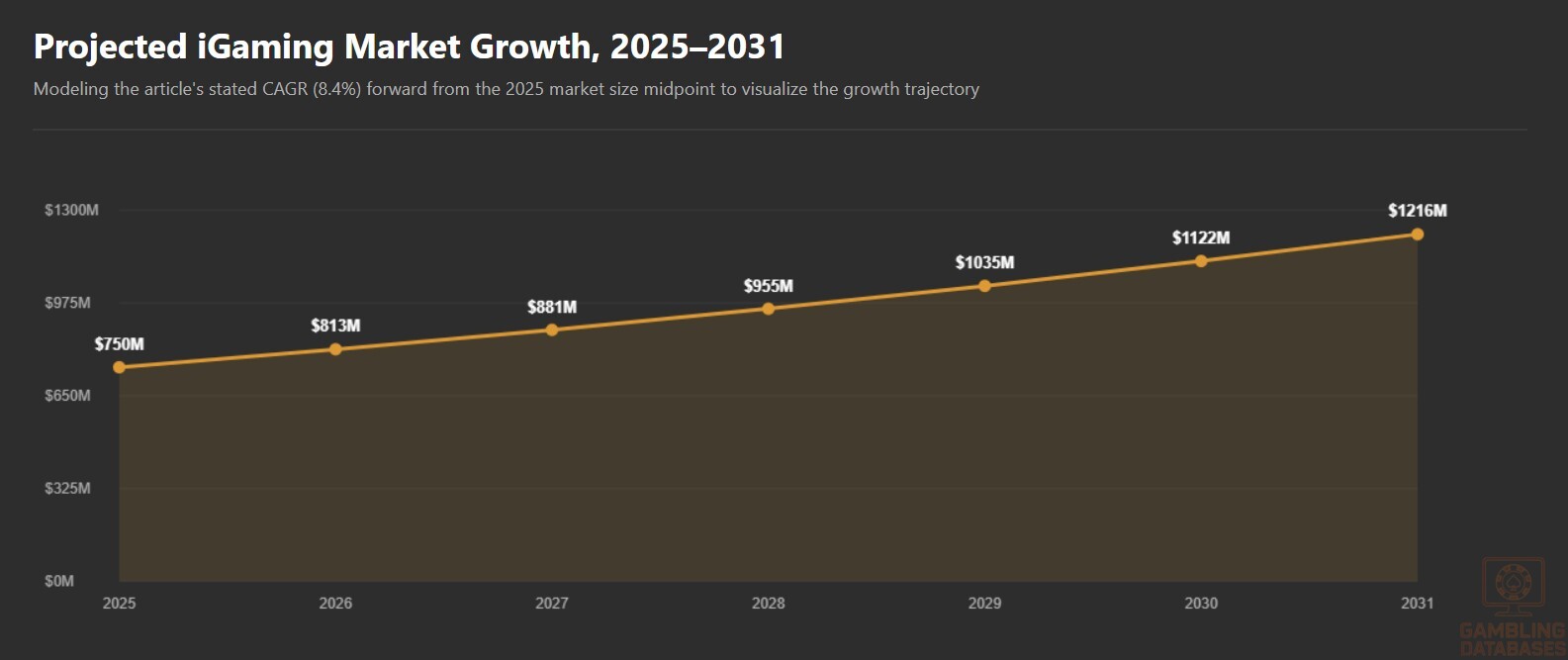
| Projected CAGR (2025-2031) | 8.4% |
| Average Revenue Per User (ARPU) | Confidential/market-dependent |
| Market Penetration Rate | Growing mobile user base |
| Typical Licensing Timeline | 6-12 months (monopoly licensing) |
| Operational Foreign Ownership | Restricted; licenses granted mainly to local entities |
| Compliance Standards | AML/KYC, Responsible Gambling, Financial Reporting |
| Advertising Restrictions | Strict content and channel limits |
| Enforcement Mechanisms | Fines, imprisonment, license suspension |
| Reported Illegal Gambling Measures | ISP blocks, license enforcement intensification |
| Technology Infrastructure | Strong mobile networks supporting online gaming |
| Key Local Market Players | Casino du Liban, BetArabia |
| Regional Competitiveness | Emerging market with exclusive licensing approach |
| Business Environment | Challenging due to exclusivity and regulatory conservatism |
Section 1: Regulatory Framework and Legal Environment
Current Gambling Regulation Status
Lebanon’s gambling landscape is governed by a conservative legal framework that predominantly restricts gambling activities while allowing specific exceptions under government control. The Lebanese Penal Code criminalizes most gambling, including unlicensed casino games and betting, but grants limited licenses to designated operators for land-based and online gaming.
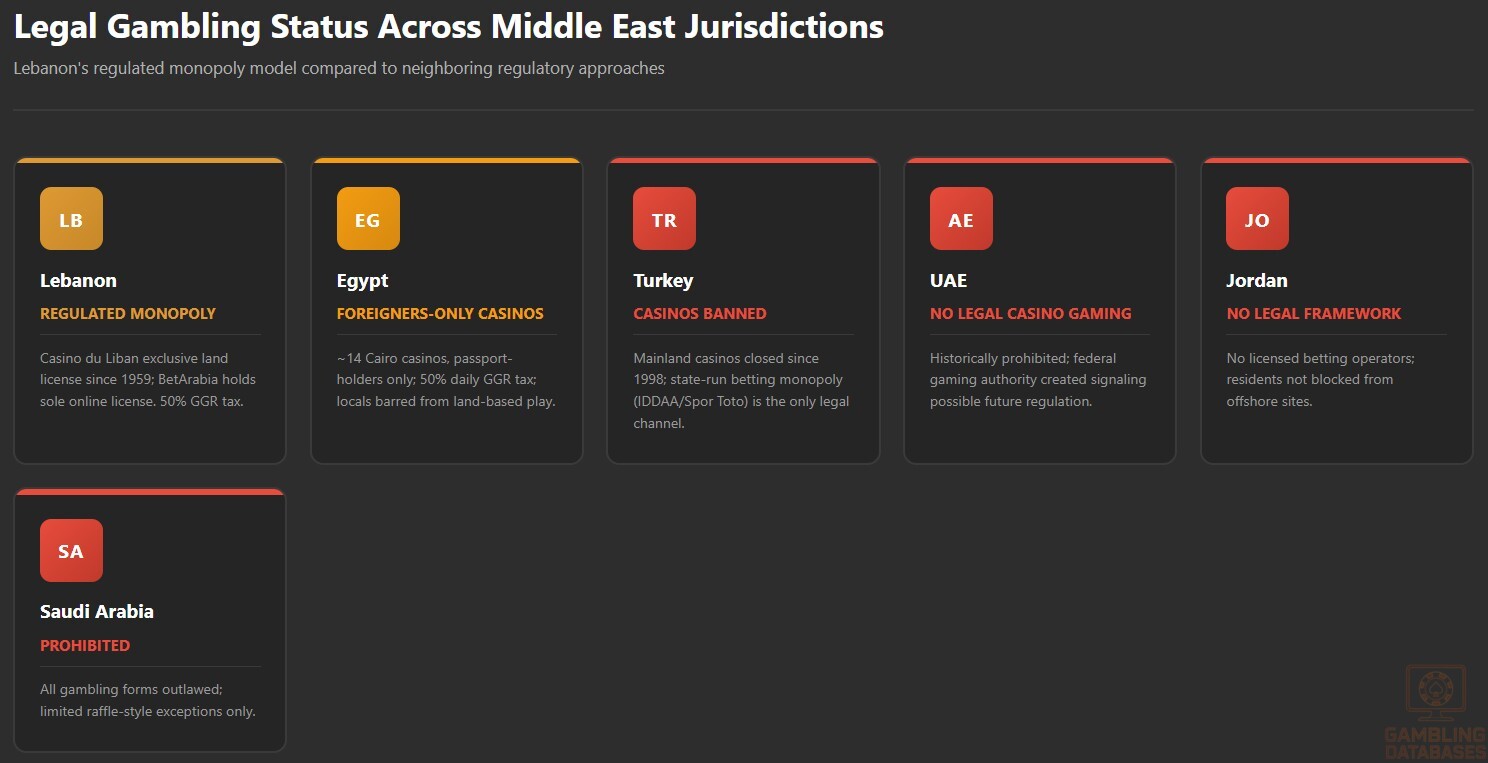
The centerpiece of legal gambling is the Casino du Liban, which holds an exclusive license to operate physical casino games such as poker, blackjack, roulette, and slot machines. It is the sole legal land-based casino operator, maintaining a government-sanctioned monopoly since its establishment in 1959.
In addition to casino operations, regulated horse racing betting is permitted at licensed tracks with specific wagering regulations. The government also authorizes lottery operations via state-sanctioned platforms, which contribute to regulated gaming revenue streams.
Land-Based Gambling Activities
Land-based gambling is narrowly defined in Lebanon: it consists mainly of casino activities under Casino du Liban’s monopoly and authorized horse racing betting venues. The government does not permit independent casinos or slot halls beyond this exclusive operator, effectively controlling the physical gambling market through sole licensure.
Other gaming activities such as sports betting and poker rooms outside Casino du Liban remain largely unregulated or illegal, with enforcement measures targeting unauthorized operators.
Online Gambling Framework
Lebanon recently formalized its online gambling regulatory framework by granting an exclusive online gaming license to BetArabia, the digital arm of Casino du Liban. This licensing model prohibits other operators from legally offering online casino or sports betting services within the country.
The Ministry of Finance oversees this exclusivity, with BetArabia operating under close government supervision and technological restrictions enforced against unlicensed platforms. The monopoly approach is distinctive within the Middle East and aims to maintain regulatory control while addressing the rising consumer demand for digital gaming options.
Though Lebanon does not currently provide a multi-license regime or broader regulatory framework for competitive online gaming operators, discussions continue about modernizing laws to support innovation and increased market competition.
Licensed Operators and Market Players
The Lebanese iGaming market is monopolized by very few licensed entities. Casino du Liban operates all land-based gambling, while BetArabia holds the only authorized license for online gaming and sports betting. This market structure excludes foreign operators unless partnered directly with the state-sanctioned entities.
The exclusivity significantly limits new entrants but provides operational stability and centralized regulatory oversight for the dominant players. These operators maintain partnerships with international technology providers to enhance service offerings and maintain compliance with regulatory standards.
Licensing Framework and Requirements
Application Process and Eligibility
Licensing authority lies primarily with the Ministry of Interior and Municipalities in coordination with the Ministry of Finance. Licenses are granted directly by government decree, notably under exclusive terms for Casino du Liban and its digital counterpart BetArabia.
The licensing process includes rigorous financial, technical, and legal scrutiny. Applicants must demonstrate financial stability, compliance with AML/KYC standards, and operational capability in regulated markets. The application timeline for licenses under the monopoly framework typically spans 6 to 12 months, subject to regulatory review.
Document requirements for license applications include but are not limited to:
- Corporate registration and incorporation documents
- Audited financial statements for previous three years
- Detailed business plan and financial projections
- Technical platform certifications including RNG and software audits
- Criminal background checks for key executives and owners
- Proof of minimum capital deposit held in Lebanese banking institutions
- Compliance policies for AML, responsible gambling, and data protection
- Operational management and personnel qualifications
Local Presence and Operational Requirements
License holders must maintain a physical presence in Lebanon, including registered office and operational staff based locally. Domain registration for online platforms must reflect Lebanese jurisdiction, supported by accessible customer service and compliance departments on Lebanese soil.
Foreign ownership is subject to strict regulatory approval, with partnerships often required with local entities to obtain licenses. Such structures ensure government oversight and foster local economic participation.
Operational mandates include rigorous reporting obligations, technology audits, and adherence to national financial and anti-corruption laws.
Compliance Obligations and Monitoring
Player Protection and Identification
The Lebanese framework mandates stringent player identity verification and protection measures. The legal minimum age for gambling is 21 years, and operators must implement effective age verification procedures to prevent underage access.
Compliance with KYC and AML regulations is enforced through detailed player due diligence processes, including identity documentation, transaction monitoring, and risk assessments. Responsible gambling initiatives require operators to provide self-exclusion programs, limits on betting amounts, and public awareness campaigns to minimize gambling-related harm.
Mandatory player protection measures include:
- Age verification at account registration and gameplay
- Robust KYC procedures aligned with AML laws
- Self-exclusion mechanisms and cool-off periods
- Deposit and loss limits configurable by players
- Transparent game rules and payout information
- Regular player risk assessments and intervention protocols
- Information disclosure on responsible gambling resources
- Prohibition of advertising targeting minors or vulnerable groups

Financial Monitoring and Reporting
Operators are required to establish comprehensive financial controls, including transaction monitoring, suspicious activity reporting, and periodic submission of detailed financial statements to regulatory authorities.
- Implement real-time monitoring systems for suspicious transactions.
- Report suspicious activities to the Financial Intelligence Unit (FIU) promptly.
- Submit quarterly and annual financial reports detailing turnover, player fund flows, and tax remittances.
- Facilitate independent audits of financial and operational compliance annually.
Taxation Structure and Financial Obligations
Player Taxation
Players are subject to no direct taxation on gambling winnings; all tax obligations fall on operators. The state assumes withholding duties on certain regulated gaming winnings indirectly through operator taxation.
Operator Taxation
| Gambling Type | Tax Rate | Basis for Tax |
|---|---|---|
| Casino du Liban | 50% | Gross Gaming Revenue (GGR) |
| Horse Racing Betting | 15-20% | Total Turnover |
| Government Lottery | Fixed annual fee and/or revenue share | Proceeds or Turnover |
The casino operates under a progressive taxation model where rates have increased over the license term but currently stand at an effective 50% GGR tax. Renewal fees for licenses and turnover taxes may apply depending on contractual terms.
Gambling Market Financial Performance
The Lebanese gambling sector considers Casino du Liban as the dominant revenue source, with market size estimates ranging between USD 500 million and 1 billion annually. Revenue growth is projected at a CAGR of 8.4% through 2031, driven largely by mobile gaming expansion and digital platform adoption.
Horse betting and lottery activities contribute smaller but significant streams of taxable revenue, with regulatory oversight ensuring compliance and funds tracking.
Advertising and Marketing Restrictions
Marketing of gambling services adheres to stringent regulatory controls to prevent misleading or excessive promotion. Advertising channels are regulated to avoid targeting minors and vulnerable populations.
Permissible advertising usually excludes broadcasting during certain hours, with restrictions on content type, messaging tone, and incentive promotions to foster responsible gambling practices.
- Ban on advertising to minors or vulnerable groups
- Restrictions on broadcast advertising times
- Prohibition of misleading or deceptive claims
- Limitations on bonus and incentive promotions
- Regulated sponsorship visibility in public events
Recent Regulatory Changes and Their Impact
Recent legislative measures have focused on granting an exclusive online gaming license to BetArabia, formalizing digital gambling regulation for the first time. Discussions continue about reforming the licensing regime to introduce competition and flexibility in the online segment.
Increased enforcement against illegal gambling includes ISP-level blocking of unauthorized sites and fines or imprisonment for violations, impacting operator costs and strategic market positioning.
Enforcement Mechanisms and Penalties
The Lebanese regulatory framework enforces compliance through fines, license suspensions, and criminal penalties, including imprisonment for illegal gambling operations or failure to comply with AML regulations.
- Monetary fines up to significant amounts in Lebanese pounds
- License revocation or suspension for breaches
- Imprisonment terms ranging from months to one year for serious offenses
- Confiscation of assets related to illegal gambling activity
- ISP blocks for unauthorized online gambling websites
Section 2: Demographics and Consumer Analysis
Population Demographics and Distribution
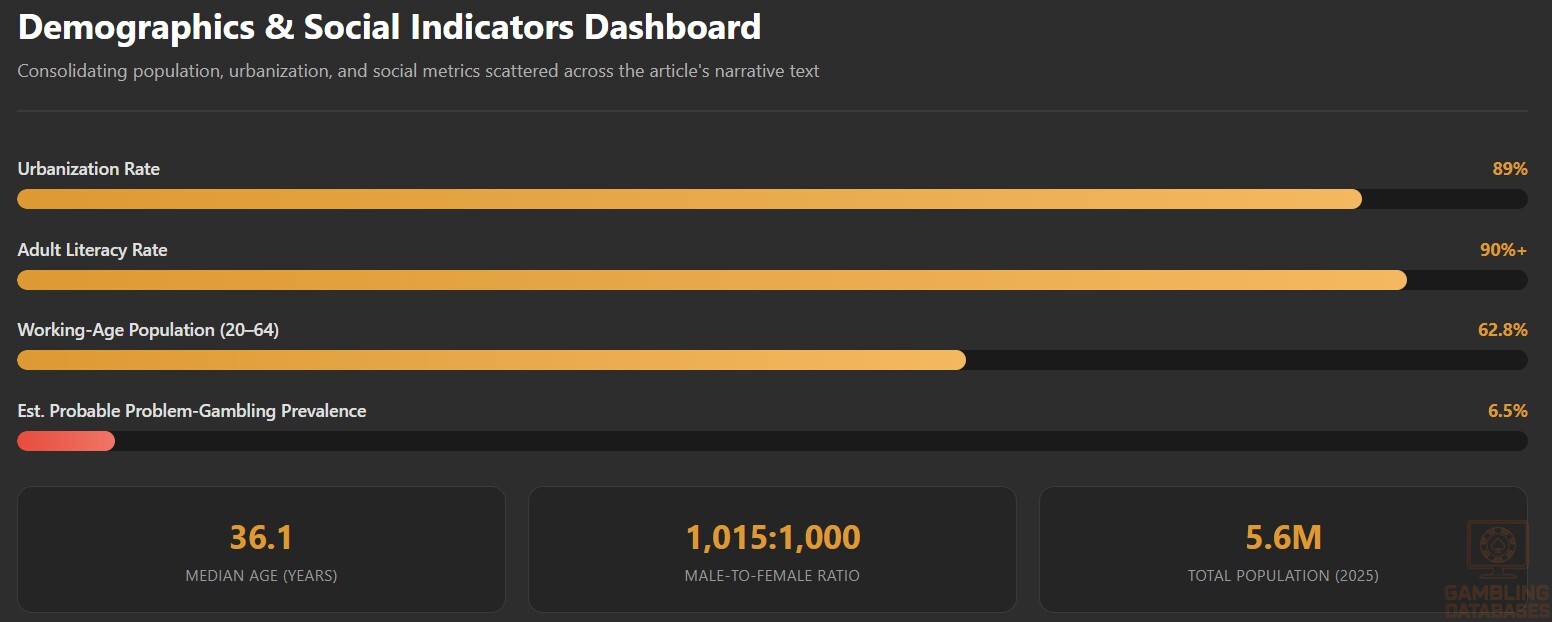
Lebanon’s total population is approximately 5.6 million as of 2025, showing a declining trend due to net emigration and demographic shifts. The median age is rising, currently at 36.1 years, reflecting an aging population alongside youthful cohorts.
The gender ratio is relatively balanced with about 1,015 men per 1,000 women. Age distribution indicates that about 26% of the population is under 20 years, while the bulk, nearly 63%, fall within the working-age bracket of 20-64 years. Older adults 65+ constitute roughly 11% of the population.
| Age Group | Percentage of Population | Population Estimate |
|---|---|---|
| 0-19 years | 25.9% | ~1,454,000 |
| 20-64 years | 62.8% | ~3,519,000 |
| 65+ years | 11.3% | ~631,000 |
Urbanization is high with around 89% of the population residing in urban areas, primarily concentrated in a handful of major cities. Urban centers show much higher internet accessibility and greater exposure to modern consumer brands including iGaming platforms.
Geographically, population density varies significantly, with metropolitan areas such as Beirut exhibiting dense concentrations compared to rural zones where gambling participation is less prevalent. Internet penetration aligns closely with urban distribution, driving digital engagement in cities.
Major Cities and Population
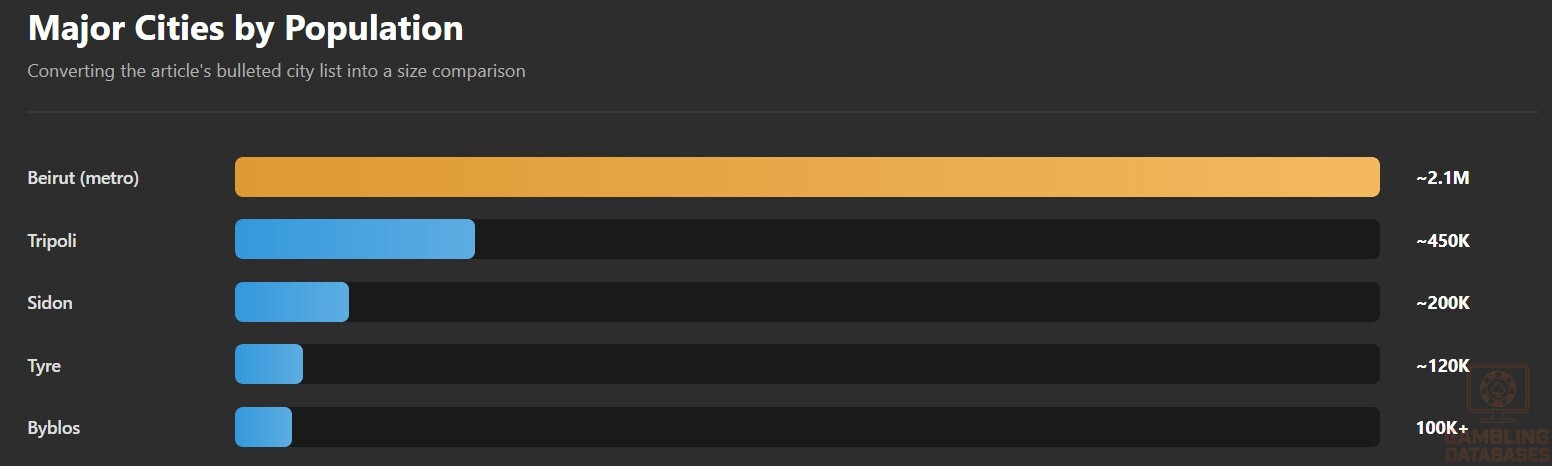
- Beirut – Capital city, largest urban center with ~2.1 million people including greater metro area
- Tripoli – Northern port city, approx. 450,000 residents
- Sidon – Major southern city with around 200,000 inhabitants
- Tyre – Coastal city with approx. 120,000 population
- Byblos – Historic city with over 100,000 residents
Economic Indicators and Consumer Spending Power
Lebanon’s economic environment remains fragile but shows signs of cautious recovery, with real GDP projected to grow by 4.7% in 2025. Despite multifaceted crises since 2019, gradual reform progress and resumed tourism are supporting economic activity.
GDP per capita is estimated around USD 3,200 currently but wealth distribution is uneven due to high inflation and unemployment. The economy is dominated by the service sector, including banking and tourism, which play vital roles in consumer spending capacity.
Household income is highly stratified, with a small affluent class and a larger middle-income group experiencing constrained purchasing power. Disposable income trends show challenges from inflationary pressures, but digital entertainment expenditures such as iGaming display resilience and growth potential.
| Indicator | Value |
|---|---|
| GDP Growth | 4.7% |
| GDP per Capita | ~USD 3,200 |
| Inflation Rate | Projected 15.2% |
| Unemployment Rate | Approx. 20% |
| Service Sector % of GDP | ~61% |
| Industry Sector % of GDP | ~28% |
| Agriculture Sector % of GDP | ~11% |
The iGaming market is estimated to generate revenues between USD 500 million and 1 billion. Forecasted compound annual growth rate (CAGR) from 2025 to 2031 stands at approximately 8.4%, driven largely by younger consumers with growing internet and mobile access.
| Metric | Value |
|---|---|
| Market Size (2025) | USD 500M – 1B |
| Projected CAGR (2025-2031) | 8.4% |
| User Base Growth | Strong growth in 18-34 age group |
| Average Revenue Per User (ARPU) | Market confidential |
Education, Skills, and Digital Literacy
Lebanon boasts high literacy rates exceeding 90%, supported by widespread compulsory education and numerous higher education institutions. Digital literacy is increasing rapidly as internet and smartphone penetration climb.
The workforce predominantly consists of young adults skilled in technology, business, and services sectors. E-health literacy studies reveal growing competency among adult internet users, reflecting broader digital awareness beneficial for online gaming adoption.
However, disparities exist between urban and rural areas, with metropolitan residents enjoying enhanced access to digital tools, infrastructure, and e-commerce, fostering a culture receptive to online entertainment and gambling platforms.
Cultural and Social Factors
Communication and Language
Lebanon is linguistically diverse, with Arabic as the official language complemented by widespread French and English usage, especially in digital and business contexts. Internet content consumption frequently occurs in English, Arabic, and French, catering to a trilingual audience.
Prevalent Languages and Dialects
- Arabic (Modern Standard and Lebanese dialect)
- French widely used in education and media
- English predominant in business and technology sectors
- Armenian and Kurdish minority languages
- Other regional dialects in smaller communities
Cultural Attitudes and Gambling Perception
Gambling occupies a complex position socially and culturally. Traditional casino gambling has historical acceptance, primarily through Casino du Liban as an entertainment venue attracting both locals and tourists. However, religious and conservative segments often view gambling negatively, influencing regulatory caution.
Online gambling is gaining acceptance, particularly among youth and urban populations, motivated by convenience and entertainment value. Foreign gambling brands generally face cautious scrutiny, with preference for government-affiliated operators perceived as more trustworthy and regulated.
Problem Gambling and Social Considerations
Studies indicate a growing rate of gambling-related problems, with an estimated 6.5% prevalence of probable pathological gambling among adults, higher than global averages. Government and NGOs focus on responsible gambling education and support services.
Social responsibility is mandated in licensing, with operators required to contribute to public programs addressing addiction, awareness, and treatment. Emerging self-exclusion regimes and helplines form part of the public health approach.
- Public awareness campaigns on gambling risks
- Self-exclusion and limit-setting programs
- Mandatory operator contributions to addiction charities
- Counseling and support helpline services
- Research funding for gambling harm mitigation
Political Structure and Governance
Lebanon operates a parliamentary democratic system marked by sectarian power-sharing and political fragility. Governance challenges impact regulatory consistency, but commitment to reform agendas offers potential for regulatory stability beneficial to business.
International relations emphasize engagement with regional and global economic institutions, supporting trade and investment frameworks. Regulatory decisions tend to balance local sovereignty with openness to foreign partnerships under strict controls.
Technology Adoption and Digital Behavior
Internet and Digital Usage
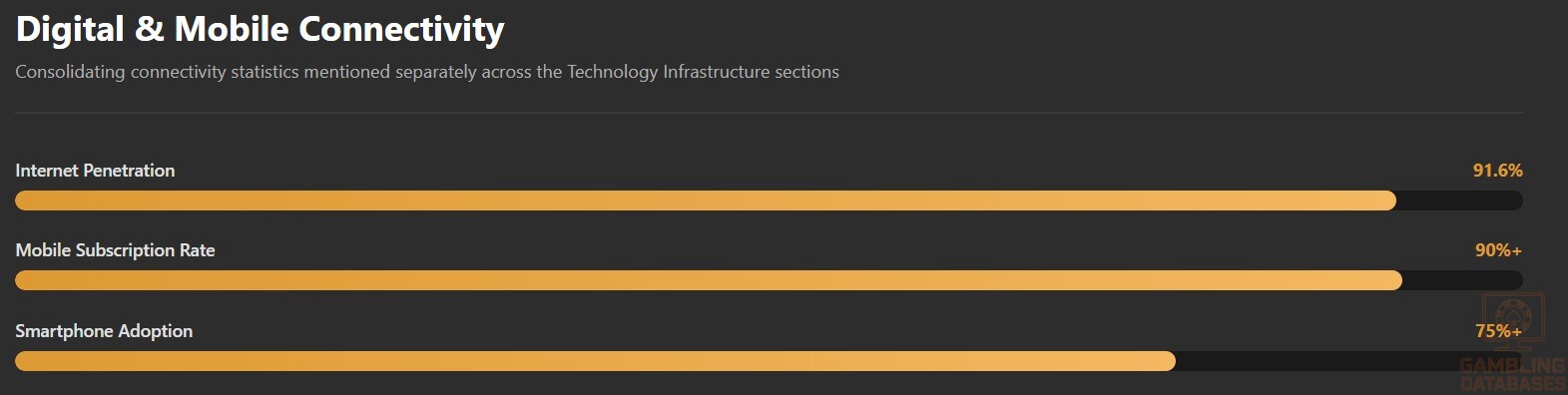
Internet penetration stands at approximately 91.6% with over 5.3 million active internet users. Mobile subscriptions exceed 90%, supporting widespread digital engagement and enabling mobile-first consumption of online gaming.
Daily internet usage averages several hours, with high engagement on social media and streaming platforms, fostering a digitally savvy consumer base receptive to iGaming advertising and social interactions.
Most Popular Social Media Platforms
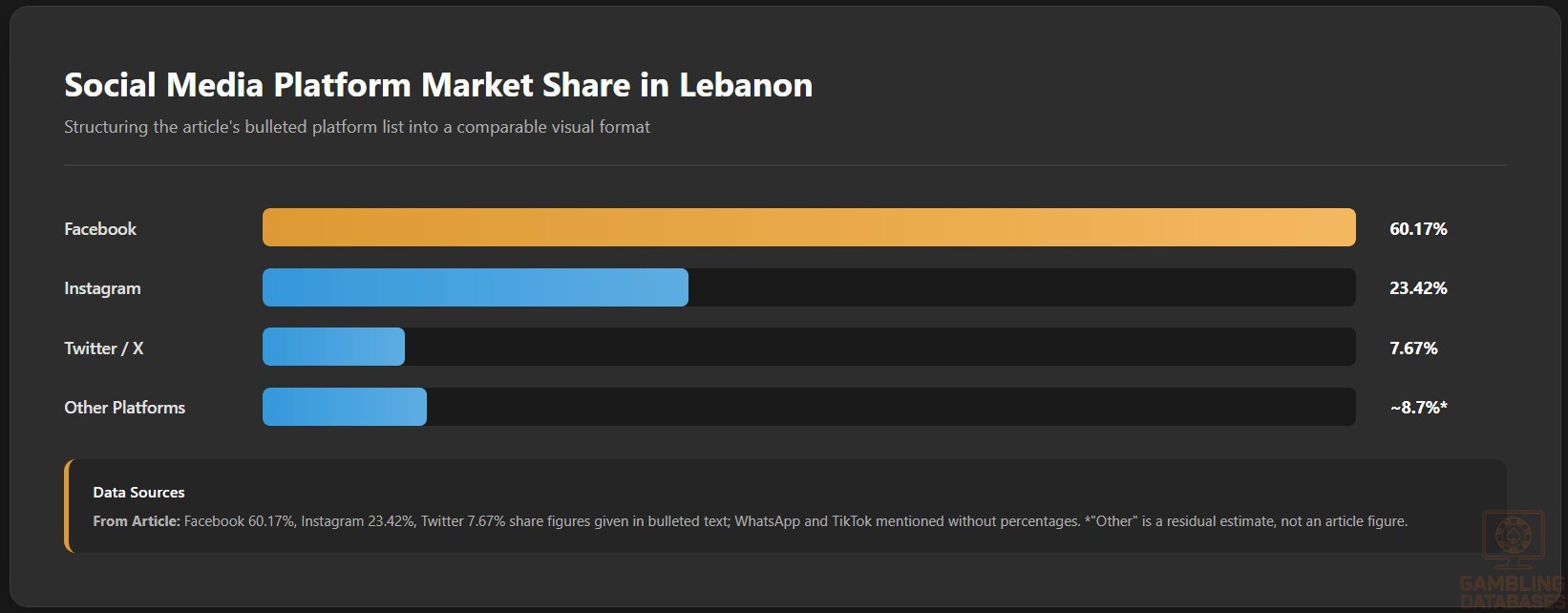
- Facebook: 60.17% market share, leading platform for communication
- Instagram: 23.42%, popular for visual content and younger demographics
- Twitter: 7.67%, niche for news and real-time engagement
- WhatsApp: Extensive use for messaging and community groups
- TikTok: Rapid growth in under-25 user base
Digital Payment Behavior
Payment methods for online transactions show a mix of credit and debit cards, bank transfers, and e-wallets with increasing adoption. Cryptocurrency remains niche but expanding among tech-savvy younger cohorts.
Popular Payment Methods by Market Share
- Credit and Debit Cards (Visa, Mastercard)
- Bank Transfers through Lebanese banks
- Local and Regional E-wallets (e.g., OMT, Payfort)
- Mobile Payment Solutions (SMS payments, mobile wallets)
- Cryptocurrency for select micropayments and adventurous users
Gaming and Gambling Preferences
Current Market Participation and Popular Activities
Gambling participation in Lebanon is concentrated among young adults aged 18 to 34, with urban residents exhibiting the highest engagement levels. Legal casino games dominate physical gambling, while online casino games and sports betting are rapidly expanding digitally.
| Rank | Gambling Activity | Participation Estimate |
|---|---|---|
| 1 | Online Casino Games (Slots, Table Games) | 35% |
| 2 | Sports Betting (Online and Some Land-Based) | 25% |
| 3 | Land-Based Casino Gaming | 20% |
| 4 | Horse Racing Betting | 10% |
| 5 | Lottery and Instant Win Games | 8% |
Consumer Behavior Patterns
Lebanese gamblers prefer short, frequent sessions primarily accessed through mobile devices. Peak activity occurs during evenings and weekends, aligning with leisure time. Spending behavior shows strong responsiveness to localized promotions, with retention highest among platforms offering robust customer service and responsible gaming tools.
Trust and regulatory assurance influence platform choice, favoring licensed operators associated with Casino du Liban or BetArabia. Cross-device play (mobile and desktop) contributes to user engagement, with social media integration playing a growing role in player acquisition and retention.
Section 3: Technology Infrastructure and Business Environment
Internet and Digital Infrastructure
Lebanon’s internet penetration is robust, with an estimated 91.6% of the population having access as of 2025. Fixed broadband infrastructure coexists with widespread mobile internet use, but broadband penetration remains relatively low compared to mobile access.
Average fixed broadband speeds hover around 25-40 Mbps, while mobile networks increasingly offer 4G LTE coverage nationwide. Internet reliability is challenged in some regions due to infrastructure limitations and intermittent power supply but ongoing investments are improving network resilience.
5G and Future Technology Deployment
Lebanon has begun phased 5G rollouts primarily in Beirut and major urban areas, driven by competitive mobile operators. Full national coverage is expected within the next 3-5 years, with government and private sector collaboration to enhance digital infrastructure.
The telecommunications landscape includes several operators aggressively pursuing advanced technologies to capture increasing mobile data demand, supporting growing mobile gaming and iGaming segments.
Mobile Technology Ecosystem
Mobile Network Infrastructure
Lebanon’s mobile market is served by a handful of key operators with significant market shares. Quality of coverage is strong in urban centers but weaker in remote rural areas, reflecting infrastructure investment disparities.
- Alfa Telecom: Largest market share, leading in urban 4G/5G coverage
- Touch Mobile: Strong competitor with extensive high-speed data footprint
- Ogero Telecom: Government-owned fixed-line provider also deploying mobile networks
- MTV Telecom: Emerging operator focusing on niche markets
- Lebanon Data Network: Specialized in data and internet services
Device Penetration
Smartphone adoption in Lebanon exceeds 75%, with younger consumers showing a preference for Android devices due to affordability. Premium market segments favor iOS devices for their ecosystem and app experience.
Mobile usage patterns reveal heavy reliance on apps for social media, communication, and entertainment, driving demand for mobile-optimized iGaming platforms offering seamless cross-device experiences.
Financial Services and Payment Infrastructure
Banking System Structure
Lebanon’s banking sector features several well-established banks with advanced digital banking platforms supporting online account management, payments, and international transactions. Though domestic instability impacts financial services, major banks maintain robust operational capacity.
- Bank Audi – market leader in retail and corporate banking with sophisticated digital channels
- Byblos Bank – strong SME focus and digital innovation
- Bank of Beirut – key regional player facilitating cross-border transactions
- Blom Bank – multinational presence with comprehensive e-banking services
- Credit Libanais – diversified product suite and mobile app adoption
Payment Processing Options
Available payment methods cater to a mix of traditional and digital preferences suitable for iGaming transactions. Card acceptance is widespread, supported by credit and debit products aligned with global payment networks.
- Visa and Mastercard credit/debit cards
- Local bank transfers using secured platforms
- Regional and local e-wallets (e.g., OMT, Payfort)
- Mobile wallet solutions integrated with telecommunication operators
- Cryptocurrency payment gateways gaining traction
E-commerce and Digital Economy
Lebanon’s e-commerce market remains emergent, driven by urban consumers and SME digitization efforts. High mobile penetration and improved logistics foster growing online retail activity, with digital service adoption expanding rapidly among youth and professionals.
Trust remains a critical factor in purchase decisions, prompting merchants and payment processors to emphasize secure payment gateways and consumer protection programs. This environment creates favorable conditions for digital entertainment and iGaming monetization.
Business Environment and Regulatory Framework
Ease of Business Operations
Lebanon ranks moderately on the World Bank’s Ease of Doing Business index. Administrative and regulatory procedures are characterized by bureaucratic hurdles and inefficiencies, but ongoing reforms aim to simplify company registration and licensing processes.
Foreign investment policies favor joint ventures and partnerships with local entities, enabling foreign firms to participate within regulatory constraints. Operational costs vary widely depending on sector and location but are generally competitive versus regional peers.
Corporate Structure and Registration
Common business entities include Limited Liability Companies (LLC), Joint Stock Companies (Corporations), and Branch offices of foreign companies. LLCs are favored for ease of setup and flexibility, while Corporations suit large ventures requiring greater capital and shareholder structures.
Branch offices offer foreign firms a presence without separate incorporation but face restrictions in certain regulated sectors.
Registration Requirements
Registration timelines range from 4 to 8 weeks, subject to document verification and regulatory approvals. Costs include administrative fees, notary charges, and compliance-related expenses. Foreign ownership requires governmental approval, often necessitating local partnership agreements.
Key required documents for company registration typically include:
- Articles of association and memorandum of incorporation
- Valid identification of shareholders and directors
- Proof of local registered office
- Tax identification number registration
- Bank account opening documentation
- Licensing approvals for regulated sectors
- Compliance certificates for AML and anti-corruption laws
Taxation Framework
Corporate Income Tax Structure
Lebanese corporate income tax is set at a standard rate of 17%, with some exemptions available for small enterprises and select economic zones. Tax treaties with multiple countries mitigate double taxation and encourage foreign investment.
- France
- United Arab Emirates
- Cyprus
- United Kingdom
- Switzerland
Personal Income Tax
Personal income tax rates in Lebanon are progressive, with brackets ranging from 2% to 25%. Withholding taxes apply on dividends, interest, and royalties. Social security contributions are mandatory for employed individuals and employers.
Market Entry Considerations
Recommended Entry Strategies
New entrants benefit from strategic partnerships with local licensed operators to navigate regulatory exclusivity. Leveraging cutting-edge technology and local market insights facilitates compliance and consumer trust building. Multi-channel platform offerings targeting mobile users increase market penetration.
- Form joint ventures or partnerships with Casino du Liban or BetArabia
- Invest in licensed platform technology with strong compliance support
- Focus on mobile-first user experiences and social media marketing
- Implement rigorous AML, KYC, and responsible gambling systems
- Leverage localized promotions while adhering to advertising restrictions
Typical Costs and Timelines
Initial market entry requires investment in licensing fees, technology acquisition, compliance programs, and local operations, with typical timelines for full operation spanning 6 to 12 months.
- License application and government fees
- Technology platform procurement and certification
- Compliance and legal consulting services
- Local operational setup and staffing
- Marketing and consumer acquisition costs
| Phase | Estimated Duration |
|---|---|
| Pre-application & Partner Identification | 1-2 months |
| License Application and Approvals | 3-6 months |
| Technology Integration and Testing | 2-3 months |
| Operational Setup and Staff Training | 1-2 months |
| Launch and Marketing Initiatives | Ongoing |
Success Factors and Challenges
Success depends on navigating regulatory exclusivity, aligning with state mandates, and differentiating in a monopolistic market. Challenges include operational costs, infrastructure limitations, and socio-cultural acceptance.
- Strong partnership with licensed operators
- Robust compliance and risk management frameworks
- Technology adaptability and mobile-optimized platforms
- Effective marketing within regulatory restrictions
- Continuous engagement with regulators and stakeholders
Exit Strategy Planning
Market exit must consider license transfer restrictions, regulatory approvals, and asset valuation. Given the monopoly and partnership nature, exit options typically involve stakeholder buyouts or license reassignment under government oversight.
FAQ: Frequently Asked Questions
1. Is online gambling legal in Lebanon?
Yes, online gambling is legal but tightly regulated under an exclusive license granted to BetArabia, the digital arm of Casino du Liban. No other operators are permitted to offer online casino or sports betting services legally. The regulatory framework aims to control market integrity, ensure player protection, and enforce taxation.
2. What types of gambling licenses are available and what do they cover?
Lebanon maintains a limited licensing framework with two primary categories: an exclusive land-based casino license held by Casino du Liban and an exclusive online gaming license held by BetArabia. Additionally, licensed operators offer horse racing betting and state lotteries under separate governmental authorization.
3. How much does an iGaming license cost and how long does it take to obtain?
Costs are government-set and confidential but are understood to be substantial given the exclusivity and market potential. The licensing process typically spans 6 to 12 months with rigorous evaluation phases requiring detailed financial, technical, and legal documentation.
4. Can foreign companies obtain a gambling license?
Foreign companies cannot obtain standalone gambling licenses in Lebanon. They must partner or joint venture with the licensed local monopoly holders. This ensures regulatory compliance and local presence while restricting full foreign ownership and control.
5. What are the tax obligations for iGaming operators?
Operators are subject to a 50% tax on gross gaming revenue for casino activities, with other gambling segments like horse racing taxed at 15-20% of turnover. Corporate income tax at 17% applies separately. Taxation is comprehensive, incentivizing compliance but imposing high operational tax burdens.
6. Are gambling winnings taxed for players?
No, players do not directly pay taxes on gambling winnings. Taxation is collected at the operator level, though transparent reporting of winnings is required to combat illegal activity and money laundering.
7. What are the typical operational costs for running an online casino/sportsbook?
Costs include licensing fees, technology platform integration, compliance and security systems, local operational expenses, marketing, and payment processing fees. These can be significant due to exclusive licensing and regulatory scrutiny.
8. What is the expected ROI timeline for entering this market?
ROI varies based on investment scale and market conditions but typically ranges from 2 to 4 years. Success depends on partnering with license holders, acquiring market share, and managing operational costs effectively.
9. What are the local presence requirements for operators?
Operators must maintain a physical office in Lebanon with local staff for compliance, customer support, and operational management. This ensures regulatory oversight and adherence to national legal standards.
10. What payment methods are available and recommended?
Preferred payment methods include credit/debit cards, bank transfers, regional e-wallets, and growing usage of mobile payment systems. Cryptocurrency is an emerging option for tech-savvy consumers but currently niche.
11. What are the advertising and marketing restrictions?
Advertising gambling products is heavily regulated, prohibiting targeting minors or vulnerable groups. Restrictions include limited broadcast hours, bans on misleading claims, and caps on promotional incentives to ensure responsible marketing practices.
12. What responsible gambling measures are mandatory?
Mandatory measures include robust KYC/AML procedures, self-exclusion programs, deposit limits, loss limits, transparent gameplay information, and operator contributions to public awareness and addiction treatment initiatives.
13. How large is the iGaming market and what is the growth potential?
The Lebanese iGaming market is estimated between USD 500 million and 1 billion, with projected growth at a CAGR of 8.4% through 2031. Growth is fueled by increasing internet penetration, mobile device adoption, and rising consumer interest in online entertainment.
14. Who are the main competitors and what is their market share?
Market competition is limited due to monopoly licensing, dominated by Casino du Liban and its online licensee BetArabia. Potential entrants must negotiate partnerships, as no other operators have legal market access currently.
15. What are the player preferences and typical spending patterns?
Players favor mobile-optimized platforms offering slots, table games, and sports betting. Sessions are typically short and frequent, with spending influenced by localized promotions. Trust in licensed operators is a major determinant of player loyalty.
16. What are the key success factors and main challenges for new entrants?
Success depends on strong local partnerships, compliance excellence, mobile technology integration, and effective marketing within regulatory bounds. Challenges include navigating exclusivity, high taxation, infrastructure constraints, and conservative social attitudes towards gambling.
Sources and References
- Lebanon Gambling Regulatory Authority – Official Website
- Casino du Liban Corporate Reports 2025
- BetArabia Licensing and Market Data 2025
- Lebanon Ministry of Finance – Tax Regulations 2025
- Lebanese Ministry of Interior and Municipalities
- World Bank – Doing Business Report Lebanon 2024
- Lebanese Central Administration of Statistics
- International Telecommunication Union – ICT Statistics Lebanon 2025
- Digital 2025 Lebanon Report – DataReportal
- Lebanese Ministry of Economy and Trade
- Bank Audi Annual Financial Report 2024
- Byblos Bank Market Analysis 2025
- Blom Bank Digital Banking Integration Report
- Lebanon Economic Monitor Spring 2025 – World Bank
- IGaming Today – Lebanon Market Research Report 2025
- Local Telecom Operators: Alfa, Touch, Ogero data sheets 2025
- Lebanese Social Media Usage Report – NapoleonCat 2025
- Middle East Online Payment Landscape – Payfort Analysis 2025
- PMCID Publications on Gambling and Digital Literacy Lebanon
- Lebanese Ministry of Public Health – Gambling Harm Prevention Programs
- Legal and Regulatory Reviews – Nahas Legal Lebanon 2025
- Lebanese Tax Authority Publications 2024-2025
- Lebanese National Bank Reports 2024
- International Monetary Fund – Lebanon Economic Reviews
- News Articles: Sigma World, iGamingExpress, Gambling Insider 2025
- Academic Journals on Lebanese Gambling Behavior and AML Compliance
- Lebanese Transport and Communications Ministry Reports
- World Population Review – Lebanon 2025
- ReliefWeb Lebanon Reports 2025
- Lebanese Ministry of Telecommunications Annual Report 2025
- Lebanese Social Surveys on Consumer Technology Adoption
- Legalpilot Lebanon Gambling Law Summaries 2025
- Tax Summaries PwC Lebanon 2024
The BetArabia app on Android is basically unusable during peak hours. Live betting crashes constantly, sometimes mid-slip. The mobile web version actually loads way faster and doesn’t freeze. Has anyone else had this issue or is it just me? Tried reinstalling but same problem persists. Really frustrating when you’re trying to catch odds movement.
The Android app stability issue you’re describing aligns with feedback we’ve received from other users in the Lebanese market. The crash-during-live-betting pattern specifically suggests either insufficient server-side capacity handling during peak wagering windows or inadequate connection state management in the app code. A few practical steps: try clearing the app cache (not just uninstalling), check whether you’re on WiFi versus mobile data during crashes, and see if the crashes correlate with specific bet types or markets. If the web version performs reliably, that’s diagnostic—it usually indicates the native app has memory leaks rather than backend issues. You might also report the crash logs directly to BetArabia support with your device model and Android version; they can correlate that against their crash analytics. Given the monopoly structure, there’s no competitive alternative, but documented performance complaints do influence how operators prioritize development resources for the next build cycle.
Thanks for the troubleshooting tips. Tried the cache clear and using WiFi only—still crashes during live betting though, especially on accumulators. The web version is definitely more stable. Kind of annoying that they’re the only legal option in Lebanon but can’t seem to keep the app functioning properly during peak times.
That’s telling data—the crash pattern specifically on accumulators combined with WiFi stability suggests the app might struggle with complex bet-slip serialization under load rather than a general memory issue. Accumulators generate heavier API calls because each leg needs real-time odds validation. Since the web version handles this better, the native app’s event handling is likely the culprit. This is worth escalating to BetArabia’s technical team with that specific detail: crashes occur on accumulator bets during peak liquidity windows but not on single bets. That level of specificity helps them prioritize the fix. In a monopoly market, customer service responsiveness sometimes lags because there’s no churn risk, but performance complaints on popular bet types do eventually get attention.
Lebanon’s iGaming market structure is textbook monopoly economics with some interesting compliance implications. The 50% GGR tax on casino and online operations coupled with BetArabia’s exclusive license creates barriers to entry that effectively lock out new operators. Compare this to MGA-regulated jurisdictions where licensing costs run 5-15k EUR annually versus Lebanon’s confidential fee structure, and you’re looking at completely different market dynamics. The projected 8.4% CAGR through 2031 seems conservative given the 87% internet penetration and 90% mobile reach, but execution risk is substantial. If the Ministry of Interior enforces the current AML/KYC compliance standards at the same rigor as European regulators, player lifetime value could suffer through verification delays. The 6-12 month licensing timeline for monopoly grants is telling: this isn’t a jurisdiction chasing market share, it’s protecting state revenue. That 500 million to 1 billion USD market size estimate depends heavily on whether illegal gaming enforcement intensifies or stagnates.
Regarding the tax structure and licensing barriers you mentioned, you’ve identified a critical friction point. The 50% GGR rate is genuinely among the highest globally when you account for Lebanon’s operating costs. For context, Malta’s MGA licenses typically face 8-15% effective taxation after compliance expenses, and Curacao operators work with substantially lower overhead. What’s particularly relevant here is how the confidential license fee structure creates opacity around total cost of entry. This actually compounds player acquisition costs because new operators can’t transparently model their unit economics before committing capital. The enforcement question is equally important. Lebanon’s ISP-based blocking mechanisms for illegal gambling sites suggest regulatory intent is genuine, but implementation consistency varies. If that enforcement tightens, you’d likely see migration of players toward the licensed BetArabia platform, which could expand that market size estimate upward. Have you tracked whether player retention metrics from other monopoly-structure markets (like Portugal pre-2015) show similar patterns?