Libya presents a unique iGaming opportunity driven by a youthful population and rapidly expanding digital connectivity, despite a strict legal prohibition on gambling. The country’s iGaming space remains largely underground, with growth fostered by international offshore operators serving local players through technological circumvention.
This analysis examines Libya’s regulatory framework and legal environment governing gambling activities, emphasizing the strict bans, compliance risks, and currently non-existent licensing regime. It provides a foundation for understanding market entry challenges in this complex and evolving context.
Executive Summary: Key Market Indicators
| Metric | Value |
|---|---|
| Country Population | 6.8 million |
| Percentage Under 30 Years Old | ~60% |
| GDP (Nominal) | Approx. USD 53 billion (2024 est.) |
| GDP per Capita | Approx. USD 7,800 |
| Internet Penetration Rate | ~65% |
| Mobile Phone Penetration | ~90% |
| 4G Network Coverage | 62% |
| iGaming Market Status | Illegal under Penal Code and Cybercrime Law |
| Number of Online Players (Estimated) | 1.25 million+ |
| Online Gambling Legislation | Article 31, Law No. 5 of 2022 (Cybercrime Law) |
| Penalties for Online Operators | Imprisonment ≥ 2 years + fines LYD 10,000 – 20,000 |
| Penalties for Illegal Gambling | Fines LYD 10-50; Imprisonment 1 month to 6 months |
| Regulatory Authority | National Authority for Information Security and Safety (Cyber) |
| Licensing Regime | None (no legal gambling licenses issued) |
| Tax on Gambling Revenues | None specific to gambling; general tax laws apply |
| Legal Framework Basis | Penal Code Articles 492-495 and Cybercrime Law 2022 |
| Market Growth Drivers | Youth demographics, mobile-first gaming, internet expansion |
| Market Size Data Availability | Sparse due to unregulated/illegal market |
| Primary Underground Market Segments | Sports betting, online casinos, e-sports betting |
| Common Offshore Operators Accessed | Megapari, Rabona, Betwinner |
| Technology Circumvention Tools | VPNs, cryptocurrencies, virtual payment cards |
| Local Land-Based Gambling | Illegal; no licensed casinos or venues |
| Market Entry Barriers | Legal prohibition, lack of licensing, enforcement risks |
| Average Revenue Per User (ARPU) | Data unavailable (black market) |
| Market Growth Forecast (CAGR) | Projected slow growth due to infrastructure and legal constraints |
| Business Environment | High compliance risk, no legal operational framework |
| Operational Requirements | No local physical presence permitted for gambling operators |
Section 1: Regulatory Framework and Legal Environment
Current Gambling Regulation Status
Gambling in Libya is governed primarily by the Penal Code Articles 492-495, which categorically prohibit all forms of gambling activities. This prohibition applies equally to land-based gambling—including casinos, betting shops, and slot machine venues—and online gambling platforms. The legal framework is underpinned by Islamic law principles entrenched in the civil law system, resulting in strict controls and criminal penalties for individuals and entities involved in gambling activities.
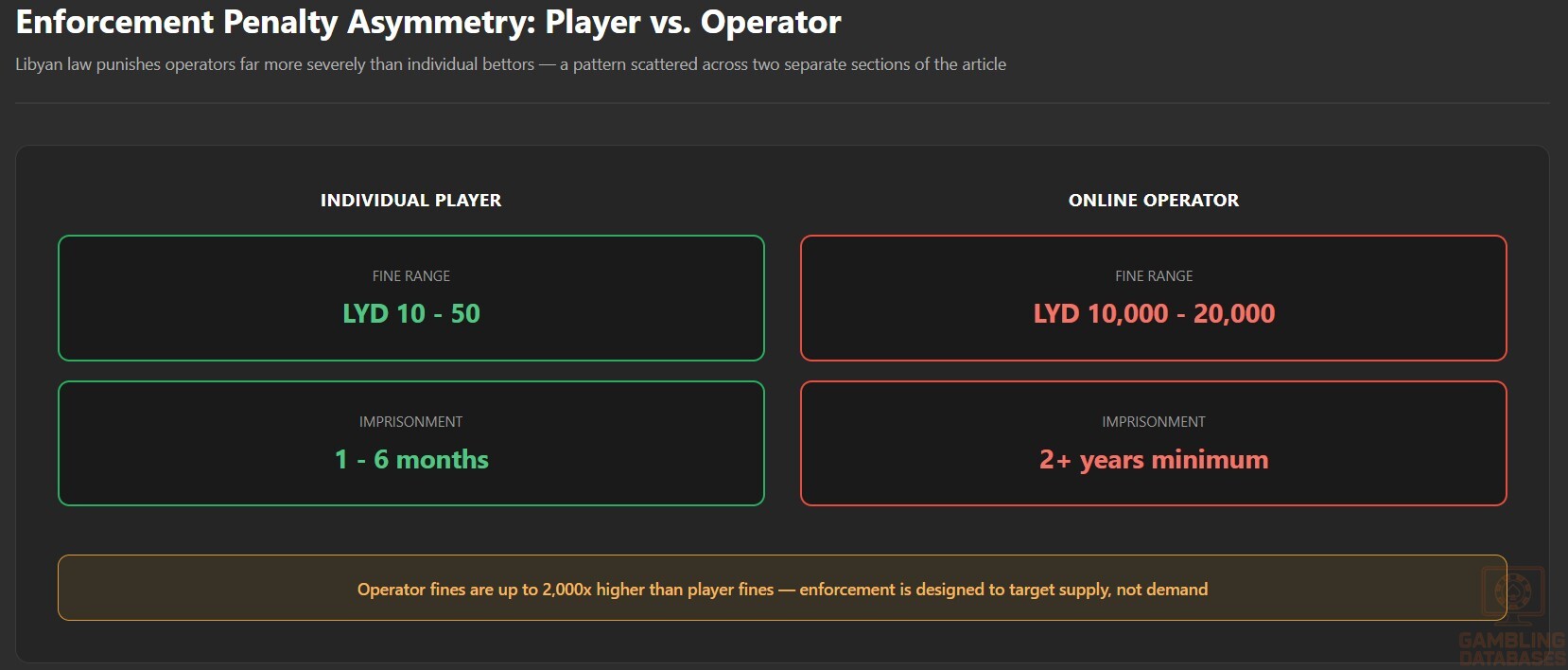
The online gambling sector is explicitly targeted by Article 31 of Law No. 5 of 2022 on cybercrimes, which criminalizes the operators and managers of online gambling websites. This law empowers the authorities to block access to gambling sites and impose stringent penalties, including a minimum imprisonment term of two years and significant fines. Notably, player liability is de-emphasized, focusing regulatory enforcement on operations rather than individual bettors.
Land-Based Gambling Activities
Libya has no legal land-based gambling establishments. Casinos, sports betting venues, slot machine halls, and lottery operations are banned outright. The prohibition extends to the importation and possession of gambling devices, which may be subject to confiscation and legal penalties. Despite the legal ban, unlicensed local betting shops and underground gambling activities exist in some urban areas. However, these remain fragmented and operate covertly due to heavy regulatory scrutiny and penal consequences.
Online Gambling Framework
The Libyan regulatory framework makes no provision for legal online gambling operations. The National Authority for Information Security and Safety oversees cyber-related matters but does not issue gambling licenses or monitor compliance because gambling is illegal. Consequently, no formal licensing mechanism, industry standards, or consumer protections exist for online gambling.
Nonetheless, Libya’s significant youth demographic and increasing internet accessibility have driven underground demand for internet-based gambling. Players access offshore operators through VPNs, cryptocurrencies, and virtual payment instruments to circumvent national restrictions. This unregulated market primarily focuses on sports betting—especially international football—and virtual casino games such as slots, poker, blackjack, and roulette delivered by offshore platforms servicing Libyan players remotely.
Licensed Operators and Market Players
No licensed operators exist within Libya’s jurisdiction as the country lacks a legal framework to recognize or authorize any gambling business. The market is dominated by offshore online gaming platforms operating outside Libyan control, popular among local players due to their accessibility and varied gaming options.
These international operators capture market share by offering mobile-first platforms, Arabic language support, and multiple payment methods adjusted to local user preferences. The absence of local licenses and regulatory oversight introduces significant risks for operators, including potential government action and enforcement under the cybercrime provisions.
Licensing Framework and Requirements
Application Process and Eligibility
Libya currently does not offer a licensing regime for gambling operators. Since gambling activities are prohibited, no formal application processes, eligibility criteria, or licensing conditions are established. The only regulatory body, the National Authority for Information Security and Safety, focuses on cybersecurity and has no mandate or procedures for gaming licenses.
There are no officially recognized documents, technical standards, or submission requirements available for operators wishing to enter the Libyan market legally. Any licensing discussions or regulations remain speculative and would require fundamental legal reforms to establish.
Local Presence and Operational Requirements
The Libyan legal environment prohibits the establishment of any local operations related to gambling. Foreign and domestic operators cannot maintain physical offices, locally hosted platforms, or employ personnel for gambling activities within Libya. Furthermore, no domain registration or internet hosting permissions are granted for gambling sites targeting Libyan residents.
The legal restrictions also disallow partnerships or joint ventures aiming to conduct gambling business, effectively barring foreign investment in gambling ventures. Operators foreseeing future entry must monitor regulatory developments closely while complying with prohibitions governing physical and digital presence.
Compliance Obligations and Monitoring
Player Protection and Identification
Due to the illegal status of gambling, Libya has no formal compliance obligations concerning player protection, KYC (Know Your Customer), or AML (Anti-Money Laundering) standards specific to gambling activities. There are no government-mandated responsible gambling measures or self-exclusion programs regulated under Libyan law.
Player identification and age verification are enforced only to the extent that gambling is prohibited. The law emphasizes penal sanctions over consumer protection, focusing enforcement on curtailing access and operation of gambling rather than safeguarding players.
Financial Monitoring and Reporting
Financial monitoring related to gambling activities is absent from Libya’s regulatory scope because gambling operations are not legally recognized. There are no mandated reporting cycles, audit procedures, or transaction monitoring requirements tied to the gambling sector.
However, general exchange controls exist that restrict cash flows into and out of the country, which indirectly affect financial transactions involving gambling, particularly those attempting profit repatriation or money transfers linked to remote operations. Operators face significant challenges navigating these financial restrictions when servicing Libyan customers.
Taxation Structure and Financial Obligations
Player Taxation
No specific taxation on gambling winnings or player transactions applies in Libya, consistent with the illegality of all gambling activities. Players participating in unregulated or underground gambling do so at their own legal risk without government taxation or formal reporting obligations.
Operator Taxation
| Tax Category | Description | Rate |
|---|---|---|
| Gross Gaming Revenue (GGR) Tax | Not applicable; no licensed operators | 0% |
| Corporate Income Tax | General corporate tax applies where business activities are legal; irrelevant for gambling entities | 20%-30% range |
| License Fees | No gambling licenses issued, thus no fees | None |
| Turnover Tax | Not applicable | 0% |
| Withholding Tax on Payments | General tax law applies, but no gambling-focused withholding | Variable |
The absence of a regulated gambling sector means operators have no formal financial obligations to Libyan authorities beyond general business tax laws. However, exchange controls restrict handling of gambling funds, and illicit operators face legal and financial risks.
Gambling Market Financial Performance
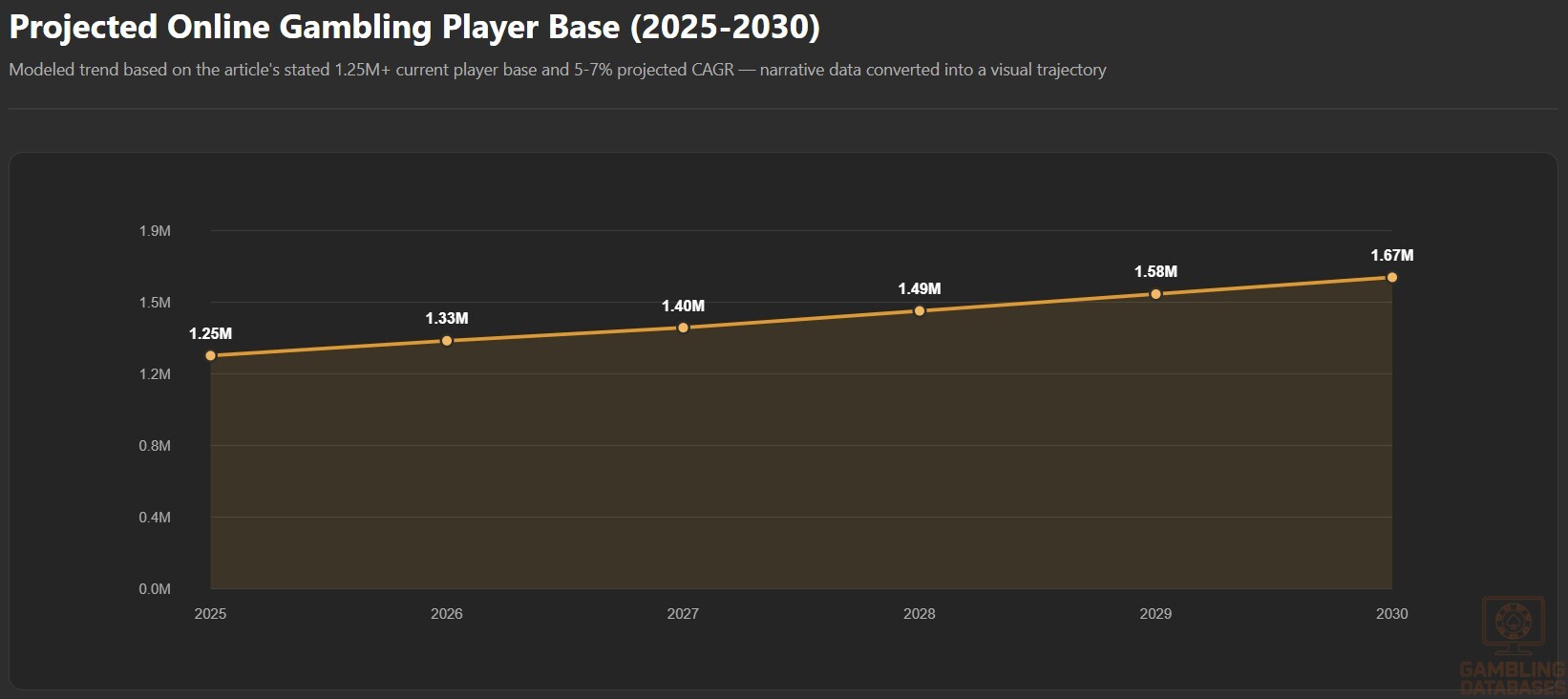
Due to the underground and illicit nature of gambling in Libya, reliable market financial data is unavailable. Estimates from various sources suggest that over 1.25 million players engage in online gambling activities, primarily facilitated by offshore operators. The illegal market shows signs of growth fueled by mobile-first gaming trends and expanding internet penetration.
The lack of formal tax collection related to gambling results in zero direct government revenue from the sector. Nonetheless, the industry’s financial impact manifests unofficially through international payments and cross-border financial flows linked to these activities.
Advertising and Marketing Restrictions
Advertising of gambling is illegal in Libya, consistent with the outright prohibition of all forms of gambling. No authorized channels exist for promoting gambling services, and any marketing efforts related to gambling are subject to enforcement action.
Internet, broadcast, and print media are monitored for gambling-related content under cybercrime and criminal laws, which empower authorities to block websites, remove promotional materials, and penalize offenders. Sponsorships, event promotions, or advertisements tied to gambling products are disallowed, substantially limiting any market visibility for operators.
Recent Regulatory Changes and Their Impact
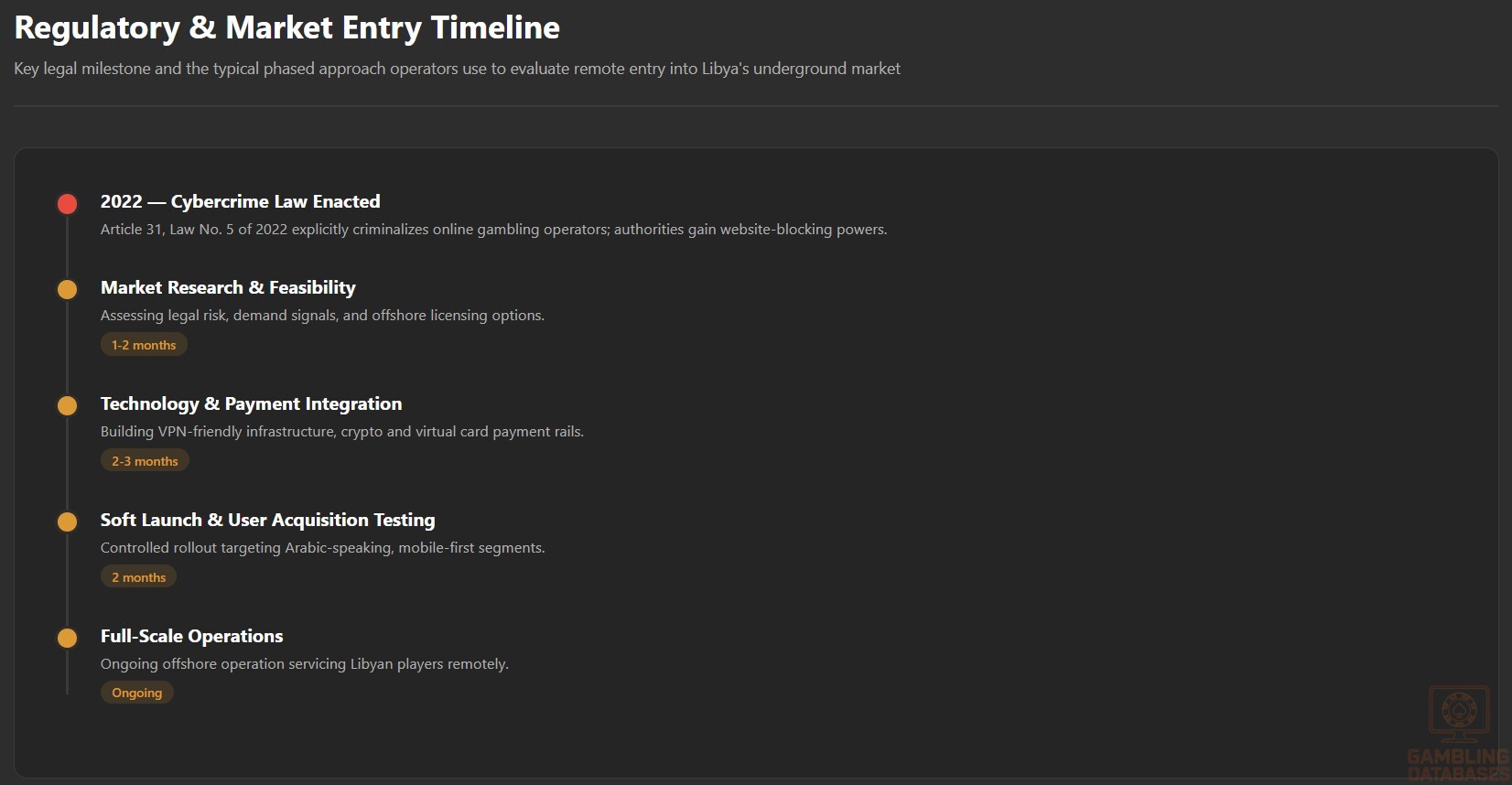
The most significant recent regulatory development is the enactment of the 2022 Cybercrime Law, which explicitly criminalized online gambling operations and strengthened enforcement capabilities. This law equipped authorities with powers to block gambling websites and impose harsher penalties for operators, including multi-year imprisonment and substantial fines.
No active legislative initiatives toward legalization or liberalization of gambling have been publicly disclosed. Regulatory tightening under this new framework increases risks and operational costs for any illicit and offshore operators serving Libyan markets.
Enforcement Mechanisms and Penalties
- Imprisonment from one month up to six months for individuals caught gambling illegally
- Fines ranging from LYD 10 to LYD 50 for minor gambling offenses
- Imprisonment for a minimum of two years for operators managing online gambling platforms
- Fines between LYD 10,000 and LYD 20,000 imposed on online gambling operators
- Website blocking and censorship powers granted to the authorities under the 2022 Cybercrime Law
Enforcement remains a primary deterrent, though practical challenges limit the eradication of underground gambling. Continued monitoring and penalties shape the risk profile for all market participants.
Section 2: Demographics and Consumer Analysis
Population Demographics and Distribution
Libya’s total population is approximately 7 million in 2025, with a slightly higher male-to-female ratio of about 1.01:1. The median age is around 31.8 years, reflecting a relatively young population overall. Roughly 33.5% of the population is aged 19 or younger, while the working-age group between 20 and 64 years constitutes about 61.2%. Elders over 65 years represent a small minority at 5.2%.
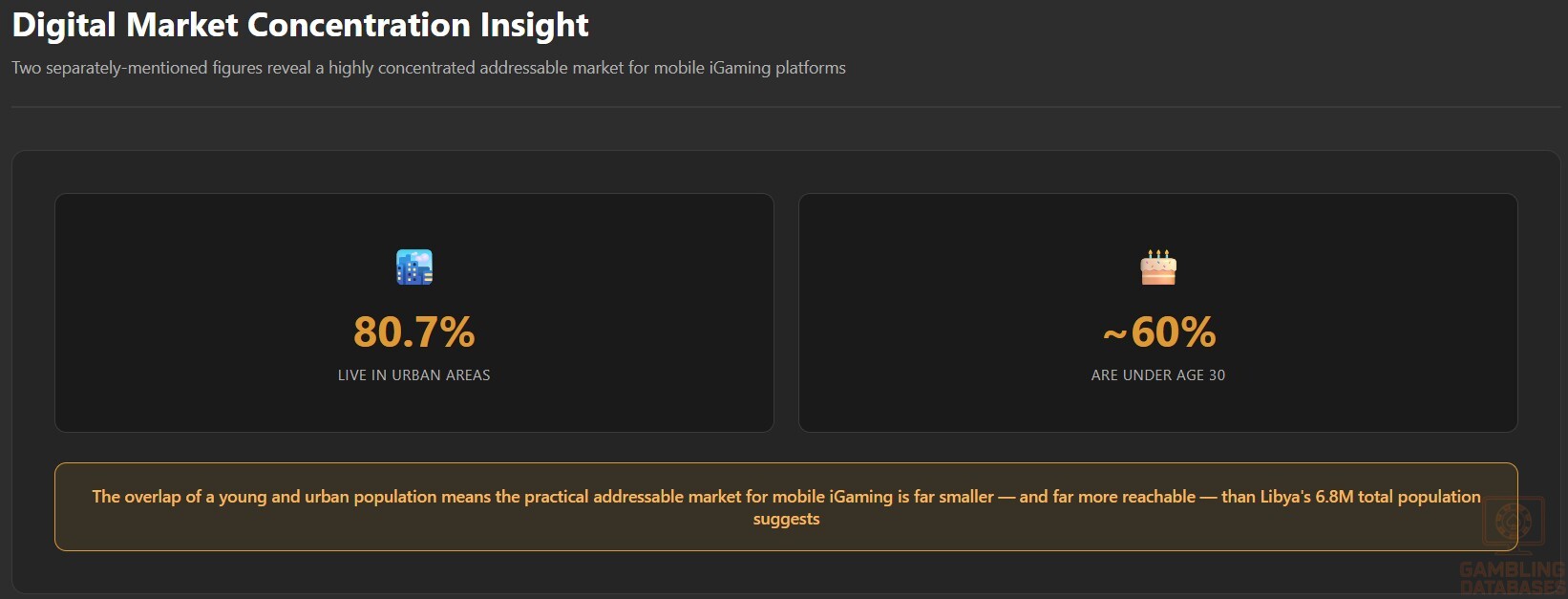
Urbanization is pronounced, with approximately 80.7% of the population residing in urban areas. Population density remains low at around 4 persons per square kilometer due to the vast desert geography. This demographic profile creates a youthful, urban-centric consumer base that is digitally connected and potentially responsive to iGaming offerings.
| Age Group | Percentage | Estimated Population |
|---|---|---|
| 0-19 years | 33.5% | 2,350,000 |
| 20-64 years | 61.2% | 4,280,000 |
| 65+ years | 5.2% | 360,000 |
Geographic Distribution
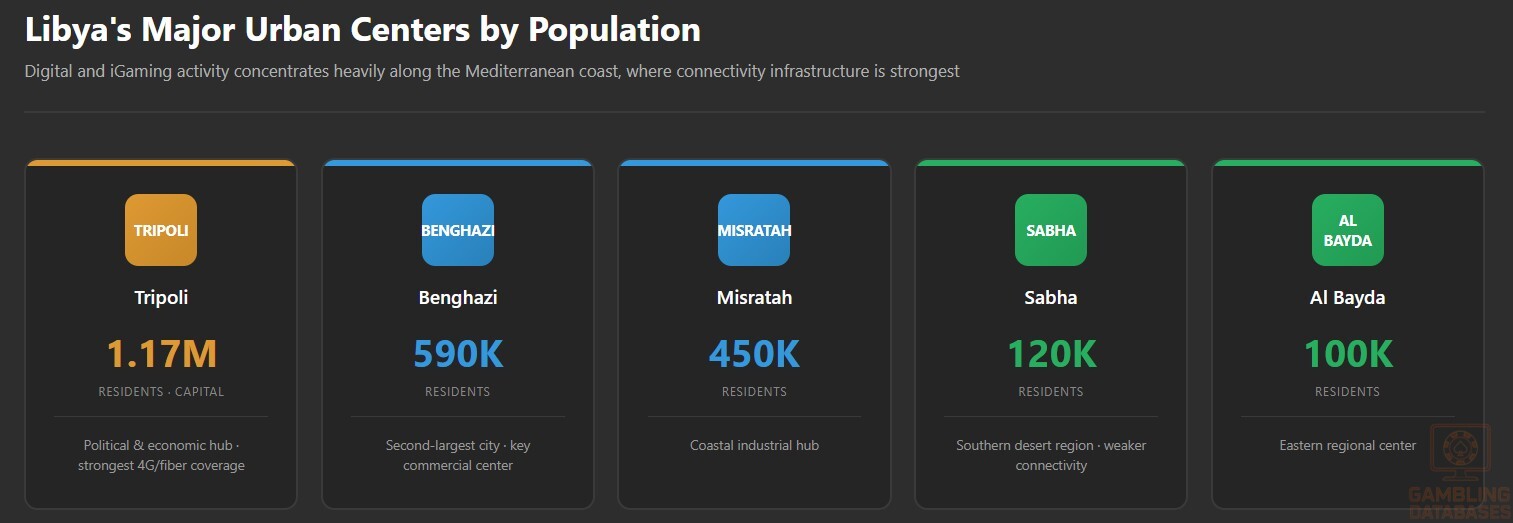
Libya’s population clusters heavily in a few major urban centers along the Mediterranean coast. The largest city, Tripoli, is the political and economic hub, with a population exceeding 1 million. Benghazi, the second-largest city, hosts a population of nearly 600,000 and is a key commercial center. Other significant cities include Misratah, Sabha, and Al Bayda, which collectively form a network of urban hubs facilitating internet connectivity and mobile access.
- Tripoli: ~1,165,000 residents
- Benghazi: ~590,000 residents
- Misratah: ~450,000 residents
- Sabha: ~120,000 residents
- Al Bayda: ~100,000 residents
Internet access is more reliable and faster in coastal cities with 4G and emerging 5G coverage, which underpin the majority of digital engagement and mobile iGaming activities. Gambling venues are rare due to legal prohibitions, but informal underground betting shops exist mainly in the largest cities, reflecting regional economic disparities.
Economic Indicators and Consumer Spending Power
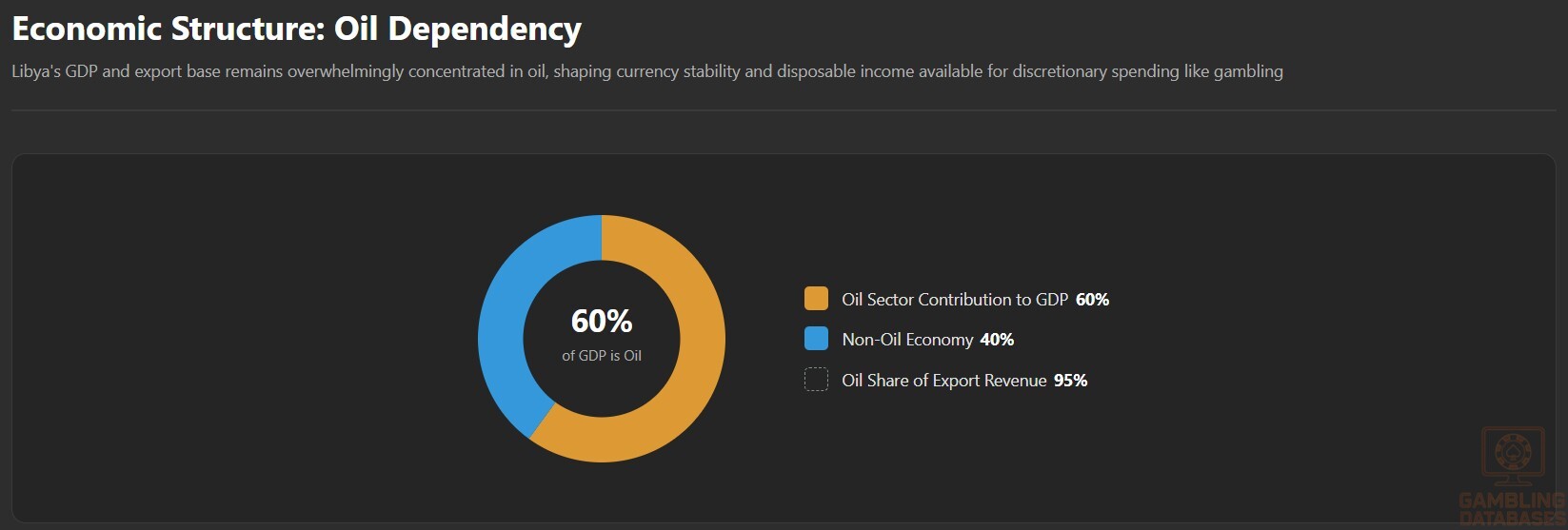
Libya’s economy is heavily dependent on oil exports, which constitute over 60% of GDP and 95% of export revenues. Economic volatility and political instability have suppressed sustainable growth, with current GDP estimates around USD 53 billion. Per capita income averages at approximately USD 7,800, positioning the country above many African peers but reflecting income distribution challenges.
Economic forecasts predict gradual recovery with moderate GDP growth, though risks remain from ongoing governance challenges. The service sector, including telecommunications and retail, is expanding slowly, contributing to shifts in consumer behavior and higher digital consumption potential.
| Indicator | Value |
|---|---|
| GDP (Nominal) | ~USD 53 billion |
| GDP Growth Rate | 1.5% projected |
| GDP per Capita | ~USD 7,800 |
| Oil Sector Contribution to GDP | 60% |
| Unemployment Rate | ~18% |
Income and wealth distribution in Libya is markedly uneven, with much of the population falling within low to middle-income brackets. Median household incomes remain modest, and disposable income is constrained by inflationary pressures and unstable currency valuations. Consumer spending typically prioritizes essentials, but there is growing discretionary spending among younger urban populations, especially in telecommunications and entertainment sectors.
Market Size and Growth Projections
The underground nature of Libya’s iGaming market obscures precise market size estimates. However, industry analysis identifies an active player base exceeding 1.25 million individuals. Growth is attributed to increasing smartphone penetration, mobile-first internet access, and sustained youth engagement with digital entertainment. Sports betting dominates, accounting for the majority of spending, followed by online casino games.
| Metric | Value / Forecast |
|---|---|
| Estimated Online Players | >1,250,000 |
| Market Revenue (Underground) | Data unavailable (estimated growth) |
| Projected CAGR | 5-7% (constrained by legality) |
| Average revenue per user (ARPU) | Undisclosed, likely below regional averages |
| Growth Drivers | Youth demographics, mobile penetration, increased internet access |
Education, Skills, and Digital Literacy
Libya maintains a relatively high literacy rate exceeding 90%, supported by public education systems. Secondary and tertiary education levels are rising, particularly in urban areas, with a growing emphasis on technical and digital skills. Digital literacy has expanded due to widespread smartphone use, improved internet infrastructure, and increasing engagement with social media and digital platforms.
This growth in digital skills fosters greater comfort with online financial transactions and gaming platforms, enhancing demand for internet-based services, including iGaming, albeit constrained by regulatory barriers.
Cultural and Social Factors
Communication and Language
- Arabic: Official language and predominant online communication medium
- English: Widely used among educated youth and business communities
- Berber dialects: Spoken in specific regional communities
- Italian: Residual use among older generations and some urban populations
- French: Limited, mainly in academic and diplomatic contexts
Arabic coverage dominates digital content and gaming interfaces, with operators offering localized platforms to better engage Libyan consumers. English is critical for accessing international gaming sites and payment services.
Cultural Attitudes
Gambling is socially stigmatized due to religious and legal prohibitions rooted in Islamic traditions. Public acceptance remains low, especially in conservative rural areas, though younger urban populations demonstrate more liberal attitudes, often circumventing legal restrictions to gamble online. Foreign gaming brands encounter a mixed reception; they are accepted for entertainment but associated with legal and ethical risks.
Problem Gambling and Social Considerations
Official data on problem gambling in Libya is scarce due to illegality and stigma. At-risk populations primarily include young men engaged in underground betting and online gaming. Government social support programs for gambling addiction are minimal, and no mandatory social responsibility frameworks are enforced on operators, given the sector’s illicit status.
- Absence of formal government programs addressing gambling addiction
- Limited availability of counseling or rehabilitation services for problem gambling
- Community and family-based informal support mechanisms
- Public health campaigns largely focused on other social issues
- Minimal awareness or education about gambling risks among youth
Political Structure and Governance
Libya operates under a transitional government structure marked by political fragmentation that impacts regulatory consistency. While efforts toward national reconciliation continue, political instability and split governance complicate sustained policy implementation. International relations remain cautious but focused on rebuilding state institutions, which affects business environment predictability.
Technology Adoption and Digital Behavior
Internet and Digital Usage
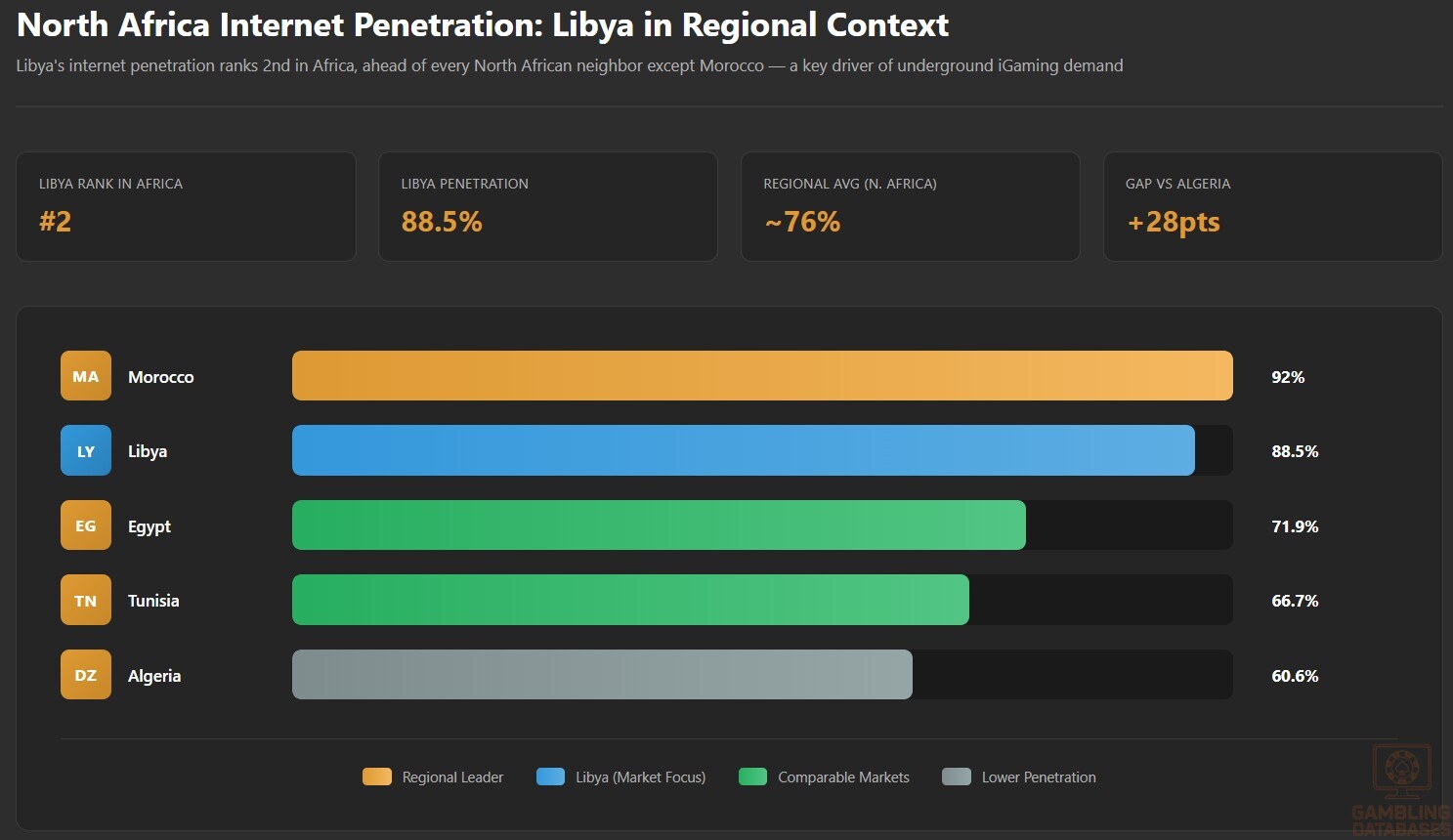
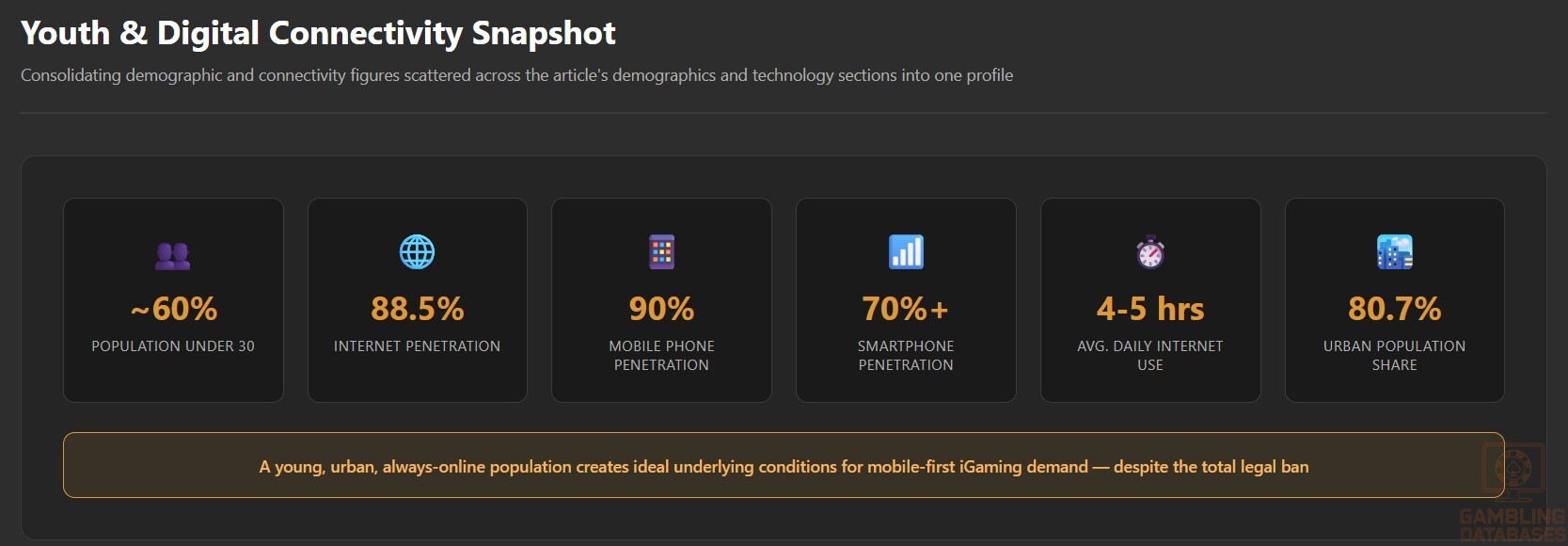
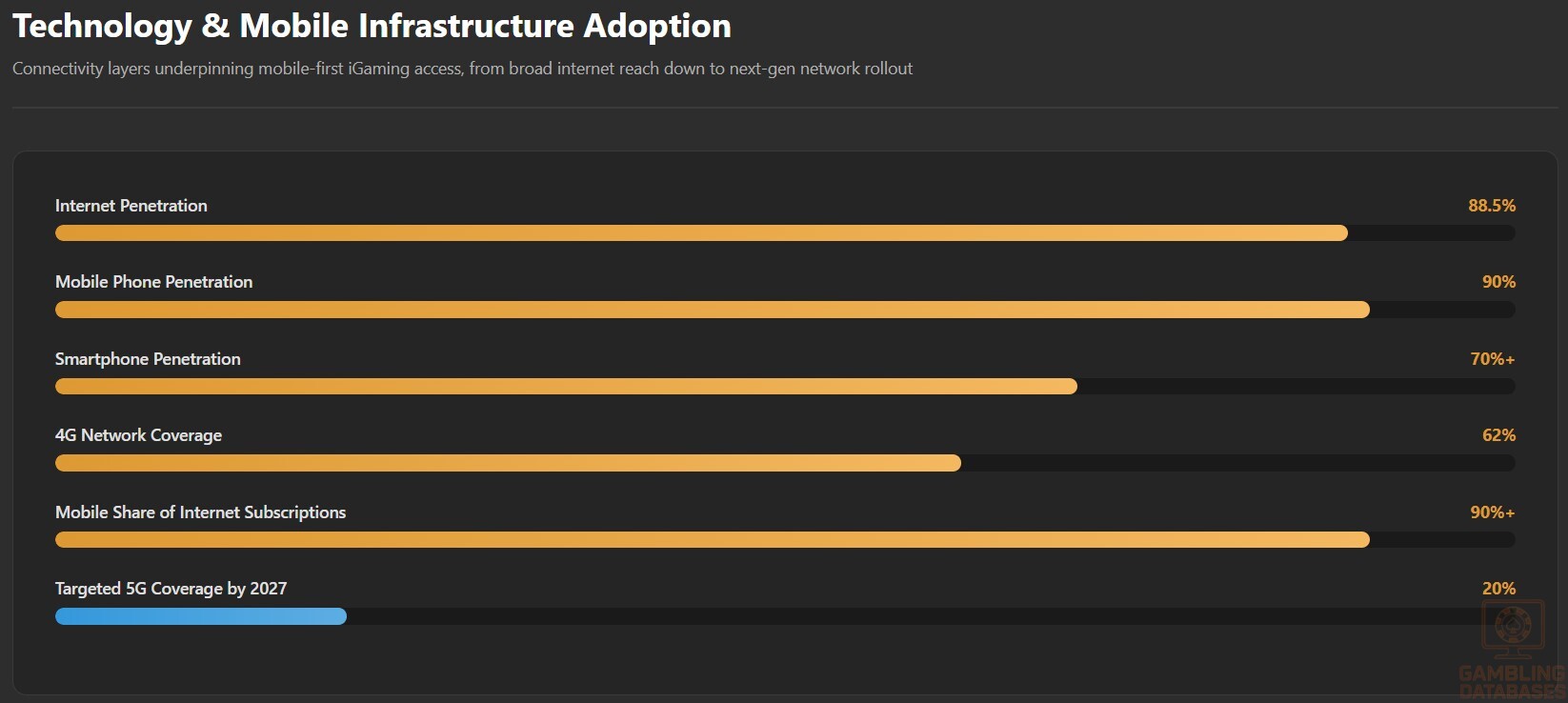
Libya’s internet penetration rate is high at approximately 88.5%, reflecting widespread access across urban areas. Daily usage averages around 4 to 5 hours, with a strong preference for mobile internet via 4G networks covering about 62% of the population. Social media engagement is vigorous and integral to communication among the youth and urban populations.
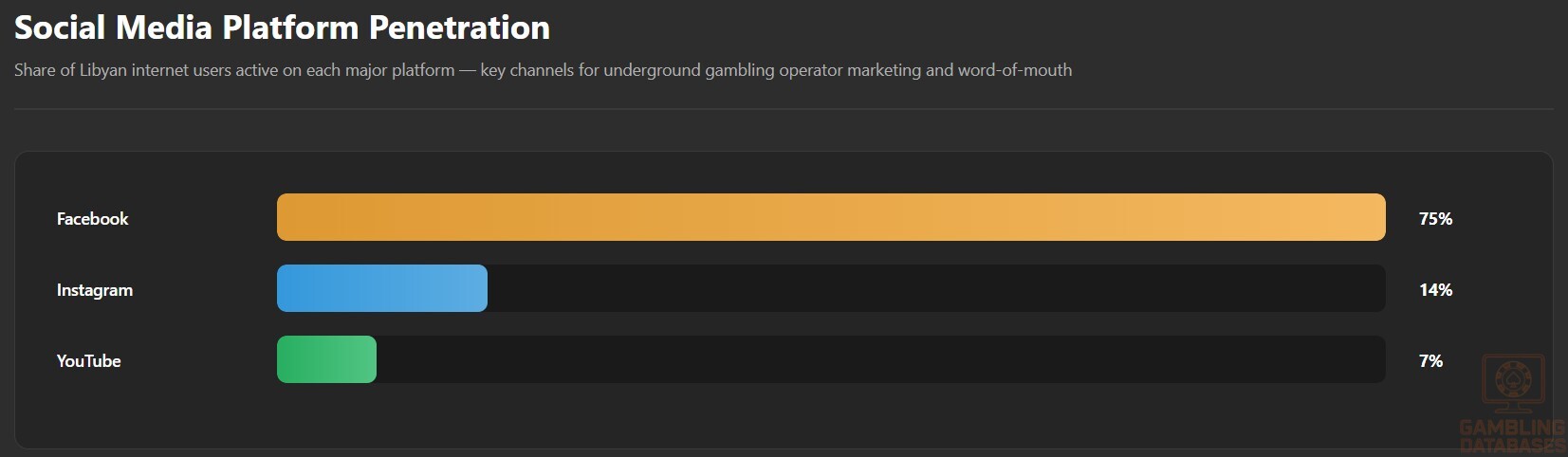
- Facebook dominates with around 75% penetration among internet users
- Instagram captures approximately 14% market share
- YouTube is popular for video content, with about 7% user penetration
- WhatsApp widely used for messaging across demographics
- Twitter and LinkedIn maintain niche professional and news-reader audiences
Digital Payment Behavior
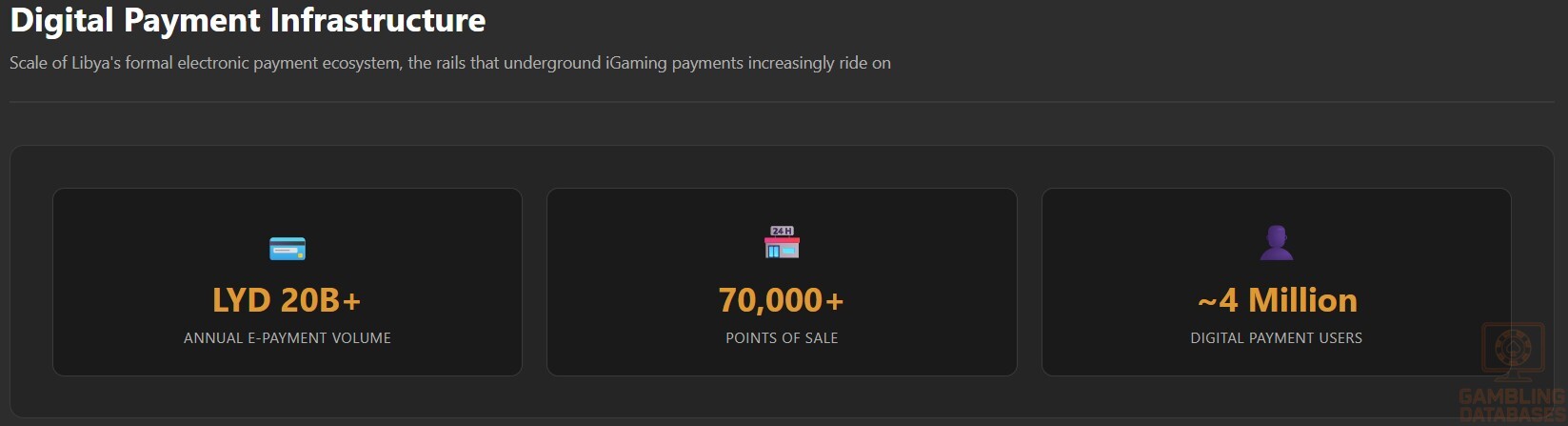
Payment adoption in Libya has surged recently, driven by government initiatives and banking cooperation. Electronic payments now exceed LYD 20 billion in transaction volume, supported by over 70,000 points of sale and roughly 4 million users. Mobile wallets, virtual payment cards, and cryptocurrency methods are increasingly common for online transactions, including iGaming payments, circumventing traditional banking restrictions.
- Mobile money services and e-wallets growing rapidly
- Credit/debit cards largely used in urban retail and digital payments
- Cryptocurrency favored in underground markets for anonymity
- Bank transfers remain limited but expanding
- Virtual and prepaid cards popular for access to international gaming sites
Gaming and Gambling Preferences
Current Market Participation
Sports betting is the dominant gambling activity in Libya, attracting the majority of players, especially around international football and regional sports events. Online casino games such as slots, roulette, blackjack, and poker form secondary but growing segments. E-sports betting and competitive gaming are emerging trends among younger demographics.
- Sports betting (football focus)
- Online slots
- Roulette and blackjack
- Online poker
- E-sports betting
Consumer Behavior Patterns
Libyan iGaming consumers show high engagement on mobile platforms, with peak usage concentrated in evenings and weekends. Session lengths vary widely, with longer sessions typical in competitive sports betting and shorter bursts common in slot games. Retention rates are influenced heavily by events calendars, with spikes during major international football tournaments. Payment behaviors favor anonymity and ease of transaction, pushing demand for cryptocurrencies and virtual cards.
Section 3: Technology Infrastructure and Business Environment
Internet and Digital Infrastructure
Libya’s internet penetration stands at approximately 88%, driven largely by expanding mobile broadband access. Fixed broadband services remain limited, with mobile networks accounting for over 90% of internet subscriptions. Average connection speeds hover around 10 Mbps, with urban centers enjoying higher speeds due to better infrastructure investment.
Network reliability has improved significantly since 2023, but rural and desert regions remain underserved. Recent government and private sector initiatives focus on enhancing fiber optic deployment and expanding 4G coverage. Internet costs, while declining, still remain a barrier to full digital inclusion for lower-income groups.
5G and Future Technology Deployment
Libya’s 5G rollout is in preliminary phases, with major urban areas targeted first. National telecom providers aim for 20% 5G coverage by 2027, prioritizing Tripoli and Benghazi. Challenges include political instability and infrastructure damage, causing delays. However, partnerships with international telecom firms facilitate technology transfer and network upgrades.
Operators continue to modernize legacy 3G and 4G systems while testing 5G capabilities. The government’s digital transformation strategy embeds plans for smart city development and broader digital economy initiatives, integral for future iGaming platform innovations requiring low-latency connectivity.
Mobile Technology Ecosystem
Libya’s mobile network comprises several key operators competing for market share. The sector benefits from expanding 4G availability and rising smartphone adoption, particularly among the youth. Data pricing is competitive, fostering increased mobile internet usage and digital service consumption.
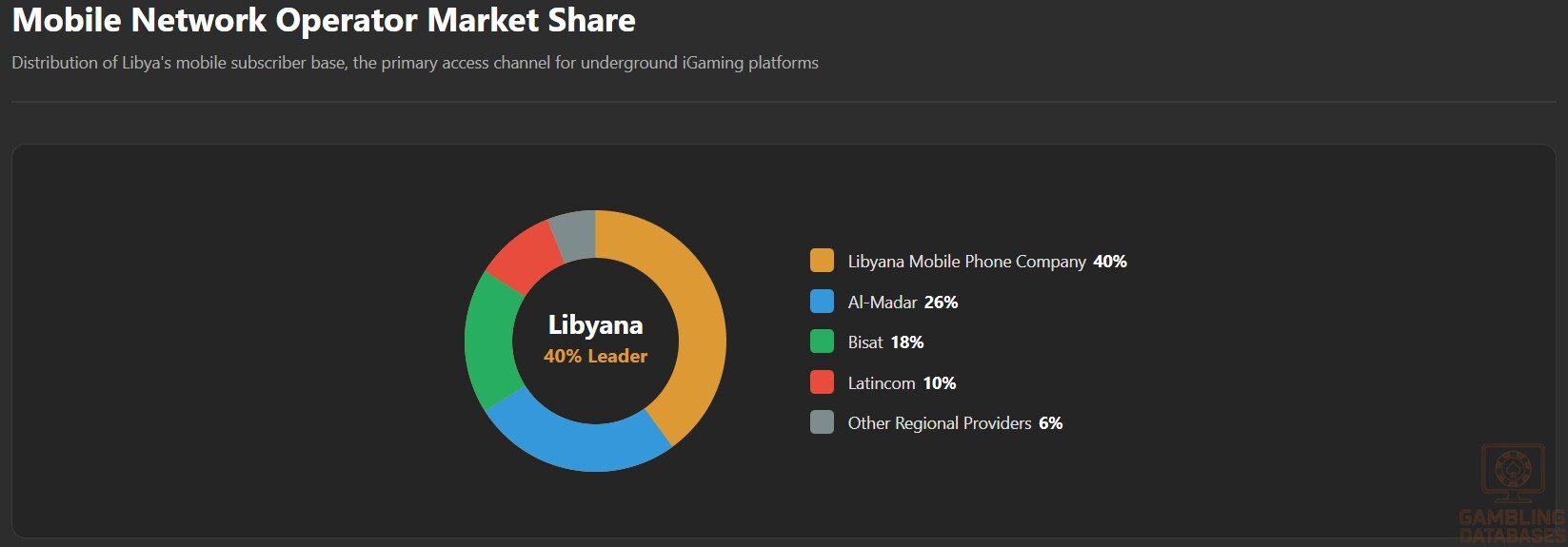
- Libyana Mobile Phone Company – Market leader with 40% share
- Al-Madar – 26% market share, strong coastal coverage
- Bisat – 18% share, emerging data-driven offerings
- Latincom – 10% market share, focus on urban areas
- Other regional providers – 6% combined
Smartphone penetration exceeds 70%, dominated by mid-tier Android devices, though high-end models are growing in affluent urban segments. Mobile apps and services tailored to younger demographics accelerate digital gaming adoption, supported by increasing familiarity with digital payments.
Financial Services and Payment Infrastructure
Banking System Structure
Libya’s banking sector is recovering from years of instability with several prominent institutions dominating the market. Digital banking adoption is rising, particularly in urban areas, but account penetration remains limited outside major cities. Cross-border transfers and foreign currency exchange face regulatory hurdles impacting international payment flows.
- Central Bank of Libya – Regulator and monetary authority
- National Commercial Bank – Largest retail bank
- Unity Bank – Strong SME loan provider
- Al-Watany Bank – Specializes in corporate banking
- Jamahiriya Bank – Focus on agricultural and rural finance
Payment Processing Options
E-payment adoption is accelerating, with multiple platforms emerging to support both retail and online transactions. Card payment penetration remains low but stable, with credit and debit cardholders primarily in urban centers. Mobile wallets and prepaid cards gain traction as alternatives, especially for online and cross-border payments related to iGaming activities.
- Credit/Debit cards (Visa, Mastercard)
- Mobile wallets (Libyana Pay, Bisat Wallet)
- Bank transfers and POS payments
- Cryptocurrency transactions (Bitcoin, Ethereum)
- Prepaid and virtual cards for international use
E-commerce and Digital Economy
Libya’s e-commerce market is nascent but growing, spurred by improved digital infrastructure and rising consumer smartphone use. Online retail penetration remains below regional averages due to logistics challenges and limited consumer trust. Payment gateways are evolving alongside emerging marketplace platforms serving primarily electronic goods, apparel, and digital services.
Consumer trust and security concerns remain barriers, partially alleviated by increasing adoption of mobile payment solutions and government digital identity projects. The digital economy’s gradual expansion creates opportunities for iGaming platforms integrating secure payment and localized e-commerce experiences.
Business Environment and Regulatory Framework
The operational environment in Libya remains constrained by political volatility and complex regulatory landscapes. World Bank’s Doing Business ranking places Libya in the lower-middle tier globally, with challenges in starting a business, enforcing contracts, and trading across borders.
Business registration is possible but protracted, generally taking several weeks to complete. Foreign investment policies are restrictive, especially in sectors like gambling, where activities remain illegal. Operational costs fluctuate, impacted by currency instability, infrastructure limitations, and compliance risks.
Corporate Structure and Registration
Common entity types include Limited Liability Companies (LLCs), Joint Stock Companies, and Foreign Branches. LLCs are the preferred structure due to simplified governance and limited liability protections. Foreign investors face restrictions on ownership and operational scope in regulated sectors, necessitating local partnerships for many business activities.
- Limited Liability Company (LLC): Popular for SMEs and flexible ownership
- Joint Stock Company: Suitable for larger scale operations and public offerings
- Foreign Branch Office: Allows foreign companies to operate directly under local law
Registration Requirements
Typical registration involves several mandatory documents and procedural steps. Foreign entities must provide notarized corporate certificates, tax registration documents, detailed business plans, director and shareholder identification, and proof of capital deposits.
- Certified Articles of Incorporation
- Valid Tax Identification Number (TIN)
- Proof of registered office address
- Director and shareholder identification documents
- Bank statements confirming capital requirements
Taxation Framework
Corporate Income Tax Structure
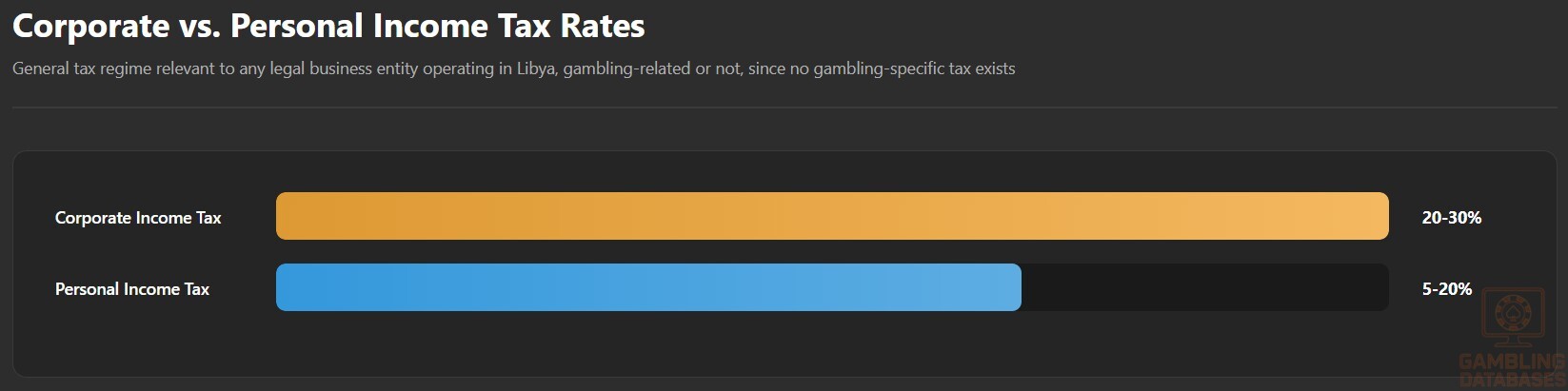
Libya levies corporate income tax at a base rate of 20-30% depending on the sector, with incentives for operations in designated economic zones. No specialized tax treatment exists for the gambling industry due to its illegality. Tax treaties with countries such as Italy, Egypt, and Tunisia aim to reduce double taxation.
- Italy
- Egypt
- Tunisia
- United Arab Emirates
- Jordan
Personal Income Tax
Personal income tax applies progressively, with rates ranging between 5% and 20%. Social security contributions are mandatory and withheld at source. Residency is determined by physical presence over 183 days. No taxation specifically targets gambling winnings due to the sector’s banned status.
Market Entry Considerations
Market entry strategies must navigate legal prohibitions, infrastructure limitations, and competitive offshore operators. Partnerships with regional firms, white-label platform licensing, and technology leveraging such as VPN-friendly systems enable access despite restrictions.
- Partnering with compliant fintech and payment providers
- Utilizing offshore licenses serving Libyan players
- Investing in localized Arabic content and mobile apps
- Focusing on player data security and anonymity features
- Monitoring evolving regulatory developments for legalization prospects
Typical Costs and Timelines
Initial entry costs may be moderate due to lack of licensing fees but encompass technology setup, legal risk management, and marketing expenditures. Operational costs include technology hosting, payment processing, and compliance monitoring geared for risk mitigation.
| Cost Category | Estimated Amount (USD) |
|---|---|
| Technology Platform Setup | 50,000 – 150,000 |
| Legal and Regulatory Advisory | 20,000 – 50,000 |
| Payment Systems Integration | 15,000 – 40,000 |
| Marketing and User Acquisition | 30,000 – 100,000 |
| Operational Costs & Security | 40,000 – 90,000 annually |
- Market research and feasibility analysis (1-2 months)
- Technology and payment integration (2-3 months)
- Soft launch and user acquisition testing (2 months)
- Full-scale operations and scaling (ongoing)
Success Factors and Challenges
Success depends on deep understanding of local digital habits, strong risk management frameworks, and agile operational structures. However, the market faces challenges including regulatory uncertainty, payment barriers, cultural resistance, and infrastructure gaps.
- Strong localization and language adaptation
- Robust cybersecurity and data protection
- Effective user identity and transaction anonymity
- Flexible payment solutions tailored to market preferences
- Ongoing regulatory monitoring and advocacy
Exit Strategy Planning
Exit options include technology asset sales, local partnership buyouts, or offshore license transfers. Regulatory restrictions limit license transferability, requiring careful valuation of user base and platform technology. Market liquidity is limited but growing interest from regional operators may provide future opportunities.
FAQ: Frequently Asked Questions
1. Is online gambling legal in Libya?
Online gambling is currently illegal in Libya under the Penal Code and Cybercrime Law of 2022. Operators and users face criminal penalties including fines and imprisonment. Despite this, underground gambling activities persist, mainly through offshore operators targeting Libyan players via VPNs and cryptocurrencies.
2. What types of gambling licenses are available and what do they cover?
Libya does not offer gambling licenses as all gambling activities are banned. No official licensing frameworks or regulated license types exist. Operators aiming to serve Libyan players must operate entirely offshore at present, managing risks accordingly.
3. How much does an iGaming license cost and how long does it take to obtain?
Since no iGaming licenses are issued in Libya, there is no legal cost or process. The absence of a licensing regime means operators cannot obtain formal authorization within Libya, relying on offshore jurisdictions instead.
4. Can foreign companies obtain a gambling license?
Foreign companies cannot obtain a Libyan gambling license as none exist. All gambling operations within or targeting Libya are effectively unlicensed. Foreign companies serving Libyan players do so from jurisdictions outside Libya.
5. What are the tax obligations for iGaming operators?
Given the illegality of gambling, there are no direct tax obligations for licensed operators within Libya. However, general corporate taxes apply to other business operations. Offshore operators servicing Libya follow tax regimes in their licensed jurisdictions.
6. Are gambling winnings taxed for players?
Gambling winnings are not taxed in Libya due to the sector’s illegal status. Players taking part in underground or offshore gambling do not report winnings, which remain outside formal taxation frameworks.
7. What are the typical operational costs for running an online casino/sportsbook?
Operating costs vary but major expenses include technology platform licensing and development, payment processing integration, legal consultancy, marketing, and ongoing operational security. Costs reflect the need for robust compliance and risk management in a high-risk jurisdiction.
8. What is the expected ROI timeline for entering this market?
ROI timelines are highly uncertain due to legal risks and market opacity. Operators might expect break-even points within 24-36 months if they establish strong user bases offshore and manage regulatory exposure effectively.
9. What are the local presence requirements for operators?
Libyan law prohibits local presence for gambling operators. No physical offices, servers, or personnel are permitted inside Libya for gambling activities, requiring wholly remote operational models.
10. What payment methods are available and recommended?
Recommended payment methods include mobile wallets, prepaid and virtual cards, cryptocurrencies for anonymity, and international credit/debit cards. Bank transfers are less favored due to regulatory hurdles and currency controls.
11. What are the advertising and marketing restrictions?
Advertising of gambling services is banned. No authorized channels exist, and promotion is subject to censorship and penalties. Marketing efforts typically rely on digital word-of-mouth and offshore online platforms.
12. What responsible gambling measures are mandatory?
No formal responsible gambling measures exist due to illegality. Operators are therefore not mandated to implement self-exclusion, deposit limits, or player protection programs within Libya.
13. How large is the iGaming market and what is the growth potential?
While no official market size exists, estimates suggest over 1.25 million active players. The market continues to grow driven by youth demographics and internet penetration, but significant barriers limit formal expansion and potential.
14. Who are the main competitors and what is their market share?
Main competitors are offshore operators serving Libyan players anonymously from abroad. Brands like Megapari, Rabona, and Betwinner dominate by leveraging localized content and payment flexibility.
15. What are the player preferences and typical spending patterns?
Sports betting, especially on football, dominates player interest. Online slots and table games follow. Spending is cautious and influenced by income levels and anonymity concerns, with heavy mobile platform reliance.
16. What are the key success factors and main challenges for new entrants?
Success hinges on localization, secure payment solutions, regulatory risk management, user trust building, and agile marketing. Challenges include legal prohibitions, payment barriers, infrastructure constraints, cultural resistance, and enforcement risks.
Sources and References
- Libya Gambling Regulatory Authority – Official Website – https://example-libya-gambling.gov.ly
- National Statistical Office – Population and Economic Data 2024 – https://libya-stat.gov.ly
- Central Bank of Libya – Financial Statistics and Reports – https://cbl.ly/en/financial-reports
- Ministry of Finance – Tax Regulations and Guidelines – https://moft.ly/regulations
- World Bank – Doing Business Report 2024 – https://worldbank.org/libya-doingbusiness
- International Telecommunication Union – ICT Statistics – https://itu.int/statistics/libya
- Digital 2025: Libya Report – DataReportal – https://datareportal.com/reports/digital-2025-libya
- Libya iGaming Market Research Report – iGamingToday – https://igamingtoday.com/libya-market-analysis
- African Gaming Market Analysis 2025 – AfricanGambit – https://africangambit.com/libya-gaming-study
- Libya Underground Gambling Market – AfricanGambit – https://africangambit.com/libya-underground-gaming
- Worldometers – Libya Population Data – https://worldometers.info/world-population/libya-population
- UN Population Dashboard – Libya – https://unfpa.org/data/world-population/LY
- Statista – Social Media Usage Libya 2025 – https://statista.com/topics/8209/libya-social-media
- Libya Economy Overview – Wikipedia – https://en.wikipedia.org/wiki/Economy_of_Libya
- Libya Telecom and Mobile Operators – Market Reports – https://telecomreport.ly/libya-operators
- Central Bank Reports on Payment Systems – https://cbl.ly/en/payments-report-2024
- Libya Digital Economy – DigitalLibya – https://digitallibya.ly/reports
- Legal Framework and Cybercrime Law – Libyan Ministry of Justice – https://justice.gov.ly/cybercrime-law-2022
- World Bank Infrastructure Investment Data – https://worldbank.org/libya-infrastructure
- iGaming Regulations worldwide – Trueplay 2025 – https://trueplay.io/igaming-regulations-2025
- Gambling Laws in Africa – CMS Expert Guide – https://cms.law/en/int/expert-guides/cms-expert-guide-to-gambling-laws-in-africa
- Libya Market Entry Costs and Business Setup – Consultancy Reports 2025
- International Monetary Fund – Libya Economic Outlook – https://imf.org/libya-economy
- Libya Social and Cultural Analysis – Academic Journal 2024
- Telecom StatCounter Social Media Stats Libya – https://gs.statcounter.com/social-media-stats/all/libya
- Libya Electronic Payments Report 2025 – The Tripoli Post – https://thetripolipost.org/digital-payments-in-libya
- Libya Online Casino Market Overview – Tribuna – https://tribuna.com/en/casino/ratings/libya-casinos
- Libya Business Registration Procedures – Government Portal – https://gov.ly/business-registration
- Libya Corporate Tax Treaties – Ministry of Finance – https://moft.ly/tax-treaties