
Luxembourg presents an emerging yet tightly regulated iGaming market offering strategic access to the EU’s robust financial and technological ecosystem. Its developed infrastructure and progressive regulatory updates create opportunities for responsible operators.
| Metric | Value |
|---|---|
| Gambling Legal Status | Licensed and Regulated |
| Regulatory Authority | Luxembourg Ministry of Justice and the Gaming Commission |
| Population | 634,000 (2025 est.) |
| Median Age | 39 years |
| GDP (Nominal) | €73 billion (2024 est.) |
| GDP Per Capita | €115,000 (highest EU) |
| Internet Penetration | 98% of population |
| Mobile Penetration | 110% (SIM cards per 100 people) |
| License Types | Online Casino, Sports Betting, Poker, Lottery |
| License Application Fee | €50,000 |
| Annual License Fee | €30,000 – €100,000 based on revenue |
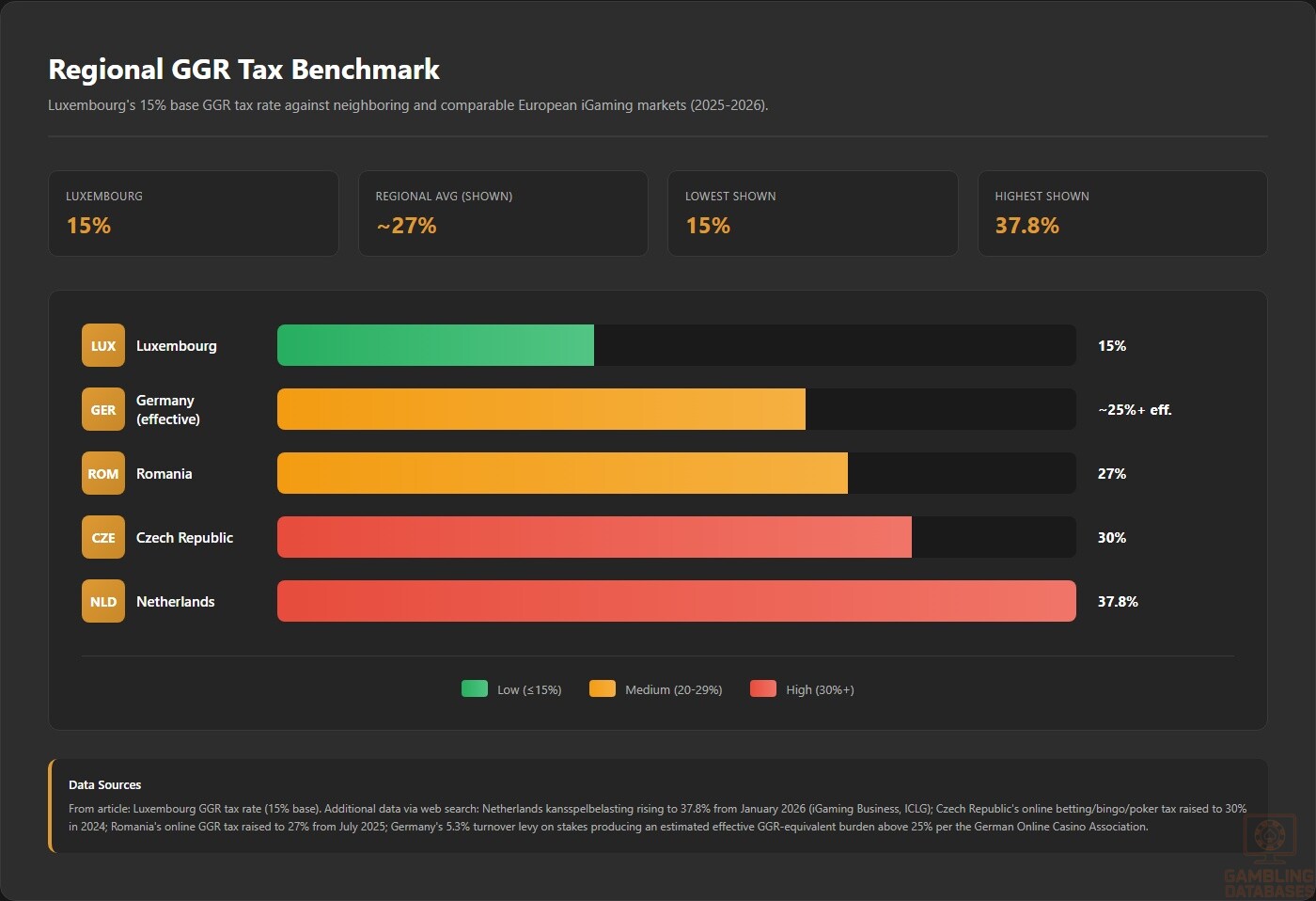
| Gross Gaming Revenue Tax | 15% standard, up to 20% for certain games |
| Corporate Tax Rate | 24.94% |
| Compliance Reporting Frequency | Monthly |
| KYC Requirements | Strict AML, ID verification, proof of address |
| Responsible Gambling Measures | Mandatory self-exclusion, deposit limits, session time monitoring |
| Market Entry Timeline | 6-9 months typical |
| Local Presence Requirement | Office or representative in Luxembourg |
| Number of Licensed Operators | Fewer than 10 (market still nascent) |
| Estimated Market Size | €100 million annual GGR |
| Average Revenue Per User (ARPU) | €1,200 |
| Market Growth Forecast (CAGR 2025-30) | 8% |
| Payment Methods Supported | Credit/Debit Cards, E-wallets, Bank Transfers, Mobile Pay |
| Advertising Restrictions | Strict controls on gambling ads on broadcast and digital media |
| Enforcement Body | Luxembourg Police and Financial Intelligence Unit |
| Player Age Limit | 18 years |
Section 1: Regulatory Framework and Legal Environment
Current Gambling Regulation Status
Gambling activities in Luxembourg are governed by a stringent legal framework under the Gaming Act, which covers both land-based and online gaming. Land-based gambling includes casinos, betting shops, and lottery operations regulated closely by the Ministry of Justice and the Gaming Commission. Online gambling has been formally regulated since 2023, focusing on licensing, player protection, and anti-money laundering compliance.
Land-Based Gambling Activities
Luxembourg’s land-based gambling landscape comprises a limited number of licensed casinos operating under strict regulatory conditions. Sports betting venues and slot machine halls operate with licenses issued by the Gaming Commission. The country does not have widespread commercial bingo halls or arcade-style venues. Operators are required to implement strong player protection and responsible gambling measures.
Online Gambling Framework
The online gambling framework in Luxembourg mandates a comprehensive licensing scheme covering casino games, sports betting, poker, and lotteries. Operators must undergo rigorous compliance checks including financial stability, technical platform certification, and player identity verification. Certain gambling forms such as unlicensed betting and games of chance without a license are prohibited. The supervisory authority enforces strict adherence to AML and responsible gambling protocols.
Licensed Operators and Market Players
The Luxembourg iGaming market remains in a nascent phase with fewer than ten operators holding valid licenses. Market leaders include international firms entering through partnerships or establishing local subsidiaries. Competitive dynamics are influenced by high regulatory standards and the emphasis on secure, transparent gaming environments. New entrants typically pursue joint ventures or strategic alliances with established licensed entities to navigate compliance requirements and market entry barriers.
Licensing Framework and Requirements
Application Process and Eligibility
The licensing process is administered by the Luxembourg Ministry of Justice in coordination with the Gaming Commission. Applicants must demonstrate financial robustness, technical capability, and comprehensive compliance programs. Application fees are fixed at €50,000 with annual renewals reflecting revenue scale. The streamlined application process typically takes between 6 to 9 months from submission to approval.
The licensing framework requires submission of multiple documents:
- Corporate registration certificate and articles of incorporation
- Audited financial statements for the past three years
- Detailed business plan including market strategy and financial forecasts
- Technical documentation of the gaming platform and RNG certification
- Criminal background checks for directors and beneficial owners
- Proof of minimum capital deposited in regulated financial institutions
- Compliance policies for AML and responsible gambling
- IT security and data privacy measures documentation
Local Presence and Operational Requirements
Operators must establish a physical presence either through an office or a local representative in Luxembourg. The gaming platform’s domain and customer service must comply with Luxembourg regulatory mandates. Personnel directly responsible for compliance and customer relations are required to reside within Luxembourg or the EU. Foreign ownership is permitted but subject to regulatory review ensuring transparent ownership structures and operational accountability.
Compliance Obligations and Monitoring
Player Protection and Identification
Player protection is a core regulatory focus with mandatory implementation of strict age verification and KYC procedures. Operators are required to follow AML standards closely, verifying identity documents and monitoring suspicious transactions. Responsible gambling policies including self-exclusion programs, deposit limits, and session duration tracking are compulsory. Informational disclosures must be clear, accessible, and regularly updated to educate players on risks and protections.
Mandatory player protection measures include:
- Strict age verification to prevent underage gambling
- Comprehensive KYC to verify identity and residency
- AML transaction monitoring and reporting
- Mandatory self-exclusion system availability
- Deposit and wagering limits to control player exposure
- Real-time session duration and activity monitoring
- Clear disclosures on responsible gambling policies
- Provision of resources and support for problem gamblers
Financial Monitoring and Reporting
Operators must maintain detailed financial records and submit compliance reports monthly to the regulatory authorities. Transaction monitoring systems track deposits, withdrawals, and bets to detect fraud and money laundering attempts. Annual independent audits of financial operations and technical systems are compulsory. Regulators reserve the right to conduct unscheduled inspections and system reviews.
The reporting process is as follows:
- Monthly submission of financial reports
- AML and KYC compliance reports
- Annual external audits and technical evaluations
- Regulatory review and feedback loops
Taxation Structure and Financial Obligations
Player Taxation
In Luxembourg, gambling winnings are generally exempt from personal income tax for players. No withholding tax is deducted on player winnings, positioning the market as player-friendly.
Operator Taxation
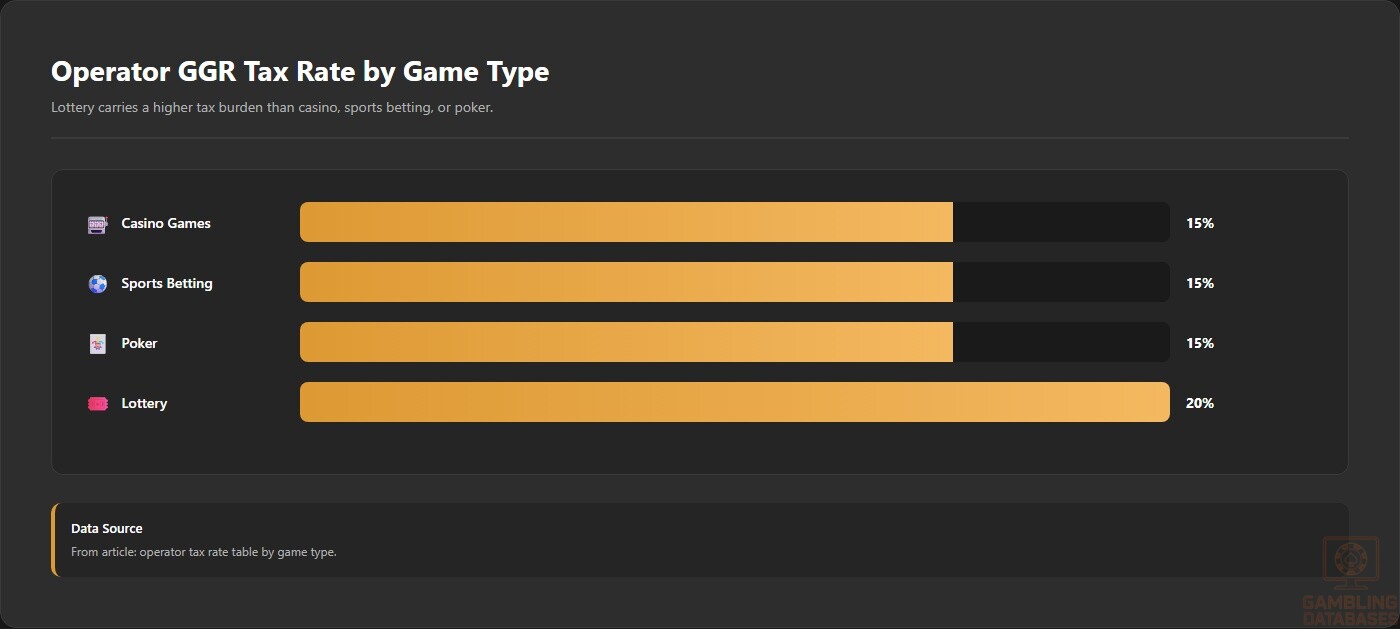
Operators face a Gross Gaming Revenue (GGR) tax varying by game category with a general base rate of 15%. Certain games such as lotteries attract a higher GGR rate of 20%. Corporate income tax applied at the standard rate of 24.94%. Annual license renewal fees and turnover-based taxes also supplement fiscal obligations.
| Game Type | GGR Tax Rate |
|---|---|
| Casino Games | 15% |
| Sports Betting | 15% |
| Poker | 15% |
| Lottery | 20% |
Gambling Market Financial Performance
The Luxembourg gambling market has shown steady growth with total wagers rising annually, driven by increased online gaming adoption and stable land-based operations. Revenue distribution favors online casino games and sports betting, currently representing the largest segments in gross gaming revenue contributions. Tax revenue from operators forms a significant portion of government income from gambling, reinforcing the sector’s economic importance.
Advertising and Marketing Restrictions
Advertising of gambling products is tightly regulated to prevent targeting minors and vulnerable groups. Permitted channels include limited digital platforms, specialist magazines, and event sponsorship under strict content guidelines. Restrictions include bans on advertising during certain hours, and prohibitions on misleading or aggressive marketing tactics.
The permitted advertising channels include:
- Television and Radio during restricted hours
- Digital channels (limited scope)
- Sports event sponsorship
- Print specialist media
- Outdoor advertising with strict location limits
Recent Regulatory Changes and Their Impact
The most recent major regulatory update in 2023 introduced unified licensing for online gaming, simplifying previously fragmented approval processes. This reform shortened license processing times and enhanced AML and responsible gambling standards. Operator costs increased due to higher compliance burdens, but market transparency and player trust improved.
Enforcement Mechanisms and Penalties
Enforcement is rigorous with penalties ranging from financial fines and license suspensions to criminal prosecutions. Regulators actively monitor compliance through audits and investigations, maintaining a secure and trustworthy gambling environment.
- Fines for non-compliance with licensing conditions
- Suspension or revocation of licenses
- Criminal penalties for fraud or illegal gambling operations
- Seizure of unauthorized gaming equipment
- Regulatory audits and investigations
Section 2: Demographics and Consumer Analysis
Population Demographics and Distribution
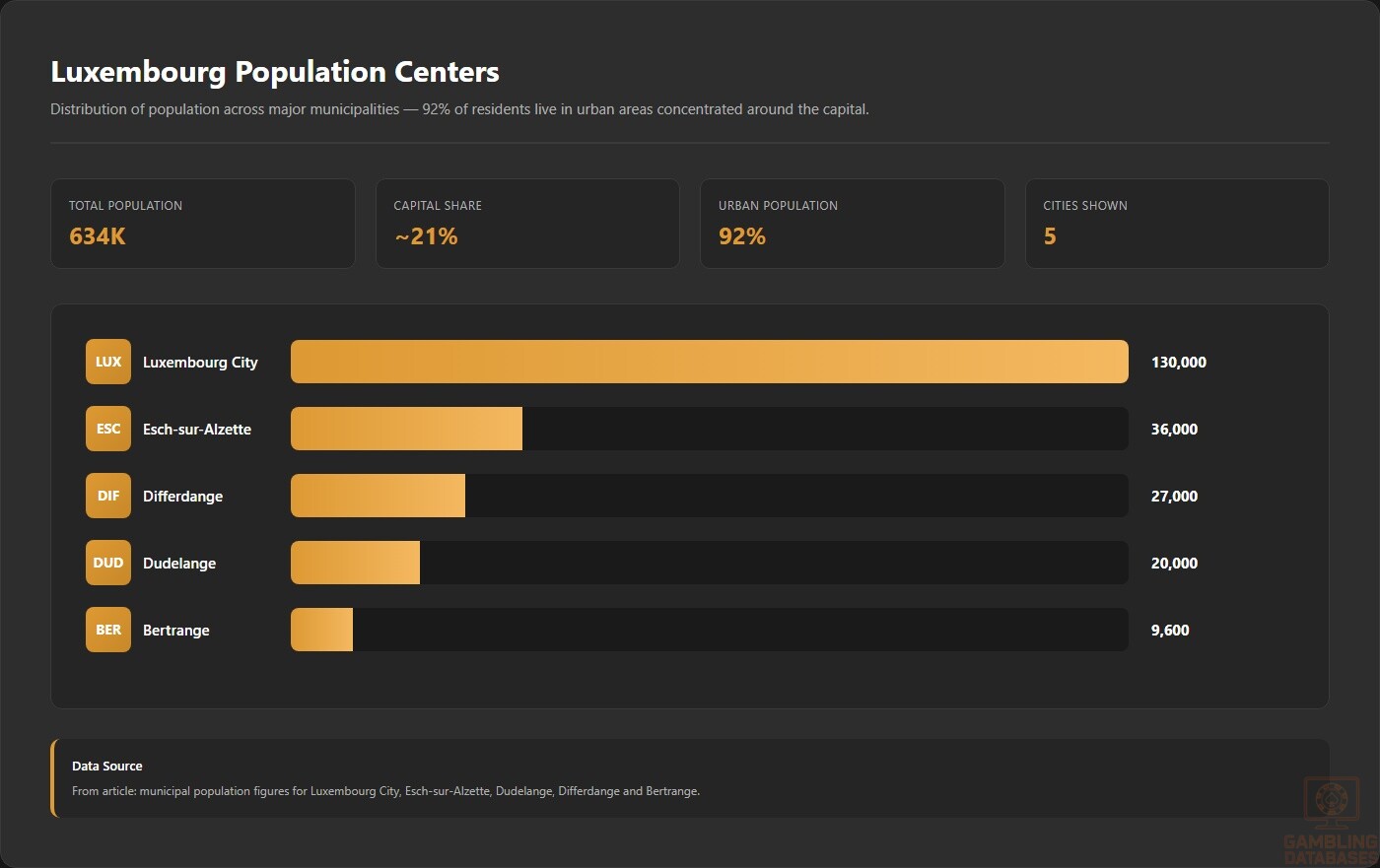
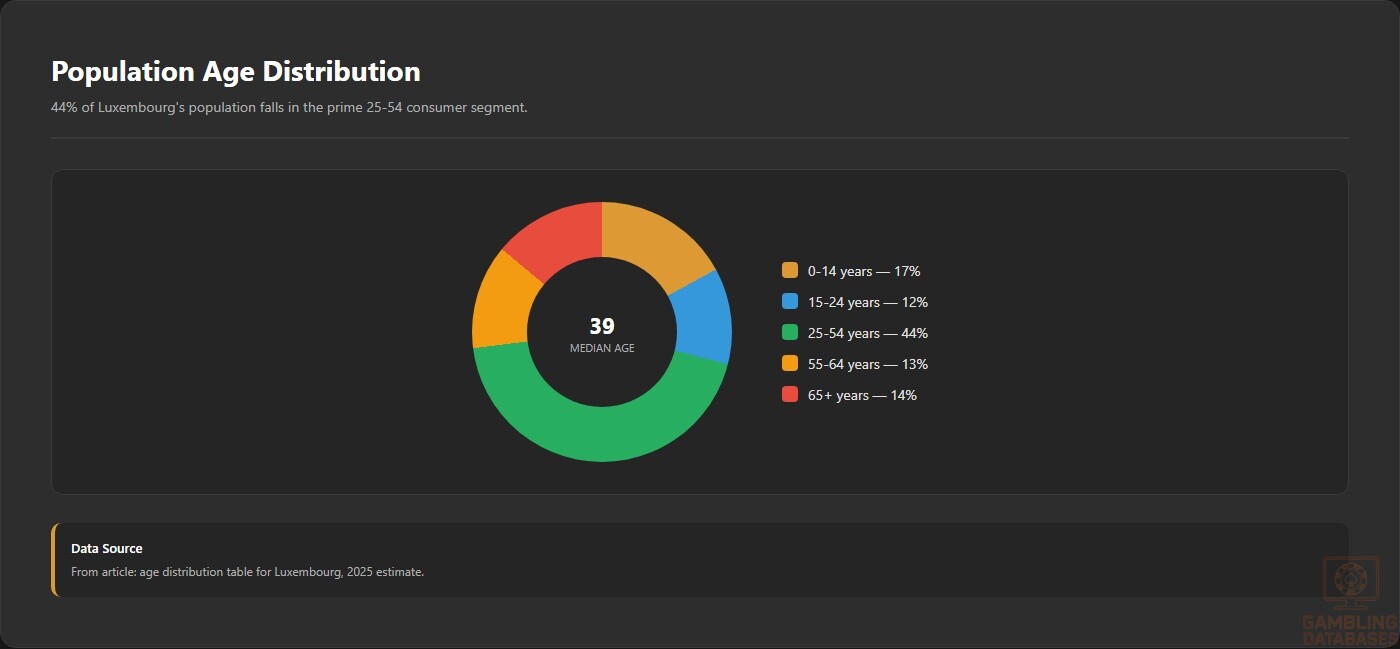
Luxembourg has a total population of approximately 634,000 as of 2025. The population displays a balanced gender ratio with an almost equal number of males and females. The median age stands at 39 years, reflecting a mature and economically active demographic. Age distribution is varied, with a significant portion of the population aged between 25 and 54 years, representing the prime working and consumer base.
| Age Group | Percentage of Population |
|---|---|
| 0-14 years | 17% |
| 15-24 years | 12% |
| 25-54 years | 44% |
| 55-64 years | 13% |
| 65 years and above | 14% |
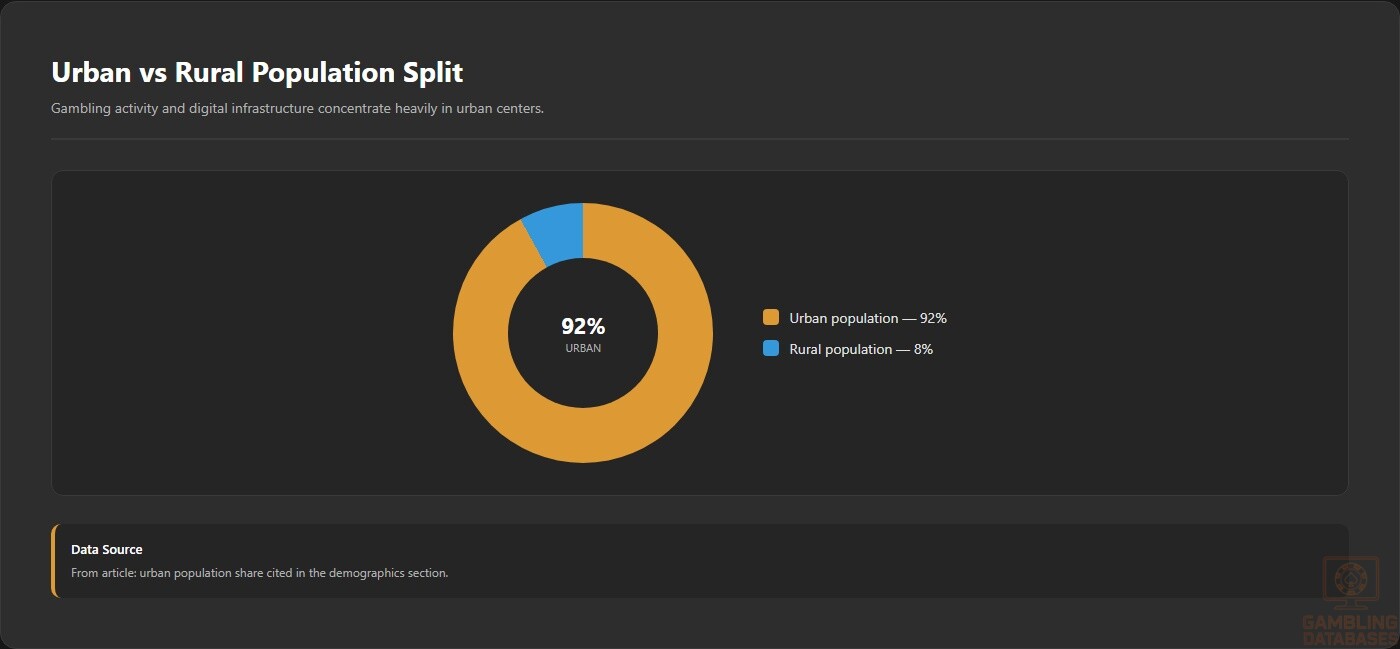
The urban population constitutes about 92% of total residents, concentrated mainly in Luxembourg City and its metropolitan area. Rural areas hold less than 10%, with lower population density and fewer economic opportunities. Urban centers are hubs for digital infrastructure, gambling activity, and consumer commerce.
Geographic Distribution
Luxembourg’s major economic and population centers are concentrated within its southern and central regions. The capital city, Luxembourg City, serves as the financial center and main urban hub, influencing national consumption patterns. Other urban areas contribute varying degrees of regional economic activity, with industrial and logistic zones supporting the broader economy.
- Luxembourg City: Approx. 130,000 residents
- Esch-sur-Alzette: Approx. 36,000 residents
- Dudelange: Approx. 20,000 residents
- Differdange: Approx. 27,000 residents
- Bertrange: Approx. 9,600 residents
Internet access is nearly universal in urban regions, facilitating the growth of online gambling platforms. Land-based gambling venues are also centered predominantly in Luxembourg City, benefiting from dense population and tourist flows.
Economic Indicators and Consumer Spending Power
Luxembourg’s economy boasts a high GDP estimated at €73 billion in 2024, benefiting from robust growth in finance, technology, and logistics sectors. Economic growth forecasts indicate a steady annual increase of around 2.5%, consistent with Western European trends. The service sector dominates with over 70% of GDP contribution, followed by industry and construction. The business environment supports high consumer spending power with rising disposable incomes.
The country’s per capita GDP is the highest in the European Union, at approximately €115,000. Household incomes remain strong across urban centers, supporting stable consumer expenditure. Income inequality remains moderate, with a Gini coefficient around 0.30, reflecting relative income distribution equity.
Disposable income growth has fueled increased engagement in leisure and entertainment sectors, including gaming activities. Consumer spending patterns show a rising preference for digital services, convenience, and online entertainment platforms.
Market Size and Growth Projections
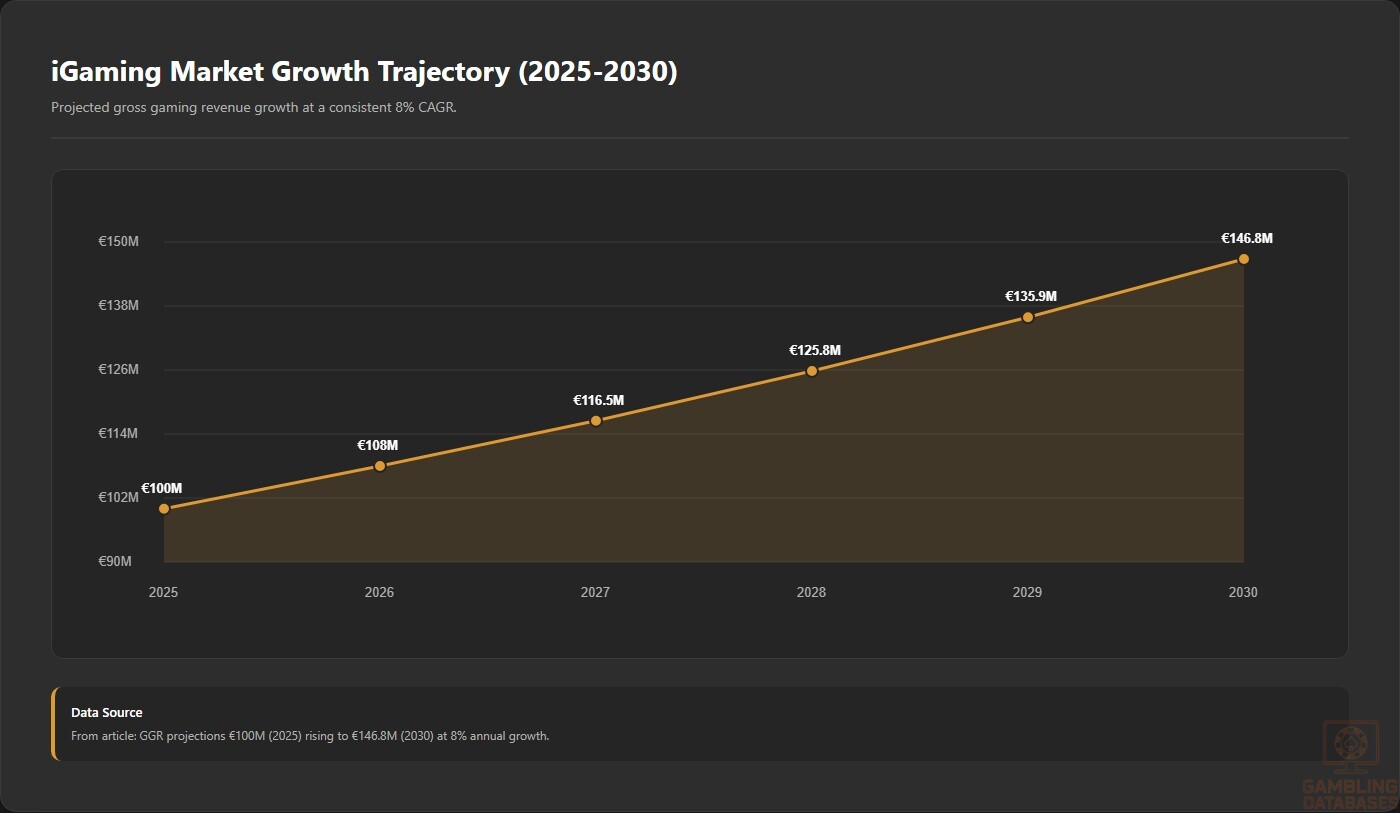
The iGaming market in Luxembourg is in its early stages but shows promising growth potential. Estimated current gross gaming revenue (GGR) stands around €100 million annually, with projections suggesting an average annual growth rate (CAGR) of 8% through 2030. The user base is expected to expand steadily, supported by increasing internet penetration and regulatory clarity.
Average Revenue Per User (ARPU) is approximately €1,200, driven by premium player segments and high disposable incomes. Historical revenue data indicate sustained growth in online casino and sports betting segments, which dominate consumer interest and spend.
| Year | Estimated Market Size (€ million) | Annual Growth Rate (%) |
|---|---|---|
| 2025 | 100 | – |
| 2026 | 108 | 8 |
| 2027 | 116.5 | 8 |
| 2028 | 125.8 | 8 |
| 2029 | 135.9 | 8 |
| 2030 | 146.8 | 8 |
Education, Skills, and Digital Literacy
Luxembourg boasts high literacy rates exceeding 99%, supported by comprehensive education systems catering to multiple languages. Education attainment levels are strong, with significant proportions of the population holding tertiary qualifications, particularly in business, IT, and finance disciplines. Digital literacy is widespread, particularly among younger generations, enabling seamless adoption of online platforms and digital payment systems.
The workforce is highly skilled and multilingual, fostering a conducive environment for iGaming operators requiring technical, regulatory, and customer service expertise. Ongoing government initiatives further promote digital skills development aligned with Luxembourg’s smart economy goals.
Cultural and Social Factors
Communication and Language
Luxembourg is linguistically diverse; however, the main languages influencing communication and digital interactions are Luxembourgish, French, and German. Internet and gaming content predominantly utilize French and English, with English gaining traction as a business and digital lingua franca.
- Luxembourgish (national language)
- French (administrative and digital media)
- German (education and media)
- English (business and international communication)
- Portuguese (significant immigrant community)
Cultural Attitudes
Gambling is generally accepted within Luxembourg’s culture but remains regulated with an emphasis on responsible conduct and consumer protection. Religious influences are modest with a largely secular population, allowing liberal attitudes towards entertainment choices. Foreign brands are well received, particularly those aligning with regulatory compliance and corporate social responsibility.
Entertainment consumption patterns favor digital streaming, video games, and interactive online platforms, positioning iGaming as a complementary leisure activity. High consumer expectations for trustworthiness and transparency influence operator strategies.
Problem Gambling and Social Considerations
Problem gambling prevalence is comparable to regional averages, with targeted efforts from authorities and NGOs to address social risks. Vulnerable populations include younger adults and individuals with pre-existing financial difficulties. Government and private sector partners have implemented response measures to promote social responsibility and provide assistance.
- Mandatory operator contributions to gambling addiction programs
- Government-funded awareness campaigns
- Available counseling and support hotlines
- Self-exclusion registries managed centrally
- Research and monitoring initiatives on gambling impact
Political Structure and Governance
Luxembourg operates as a stable constitutional monarchy with a parliamentary democracy, ensuring a predictable regulatory environment. Political stability supports consistent enforcement of gaming regulations and regular legislative updates. The country maintains strong international ties within the EU and global financial networks, facilitating cross-border business operations and compliance alignment.
Technology Adoption and Digital Behavior
Internet and Digital Usage
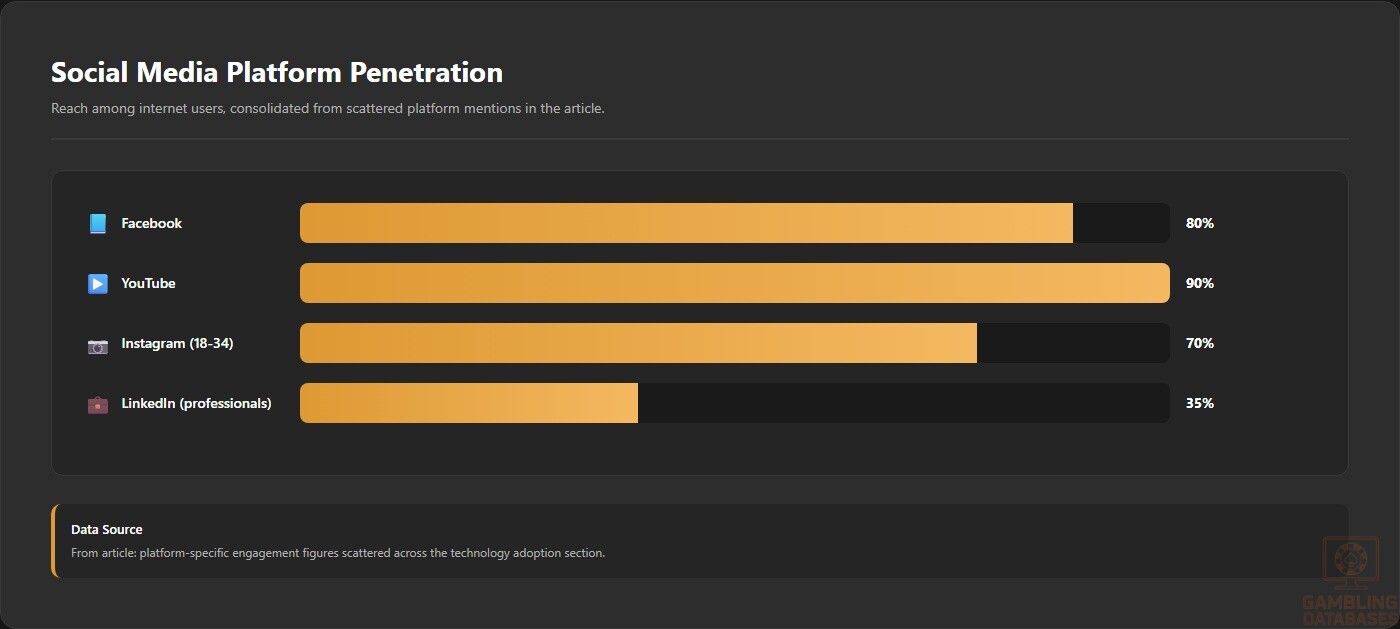
Internet penetration stands at an exceptional 98%, with high daily usage averaging 6.5 hours across demographics. Mobile adoption exceeds 110% penetration, with multiple SIM card ownership common. Social media usage is deeply integrated into daily routines, with multiple platforms engaging diverse age groups.
- Facebook engaging 80% of internet users
- Instagram popular with 70% of 18-34 year-olds
- YouTube penetration at 90%, key for video content
- TikTok rapidly growing among under-30 users
- LinkedIn utilized by 35% of working professionals
- Twitter maintains niche news and sports following
Digital Payment Behavior
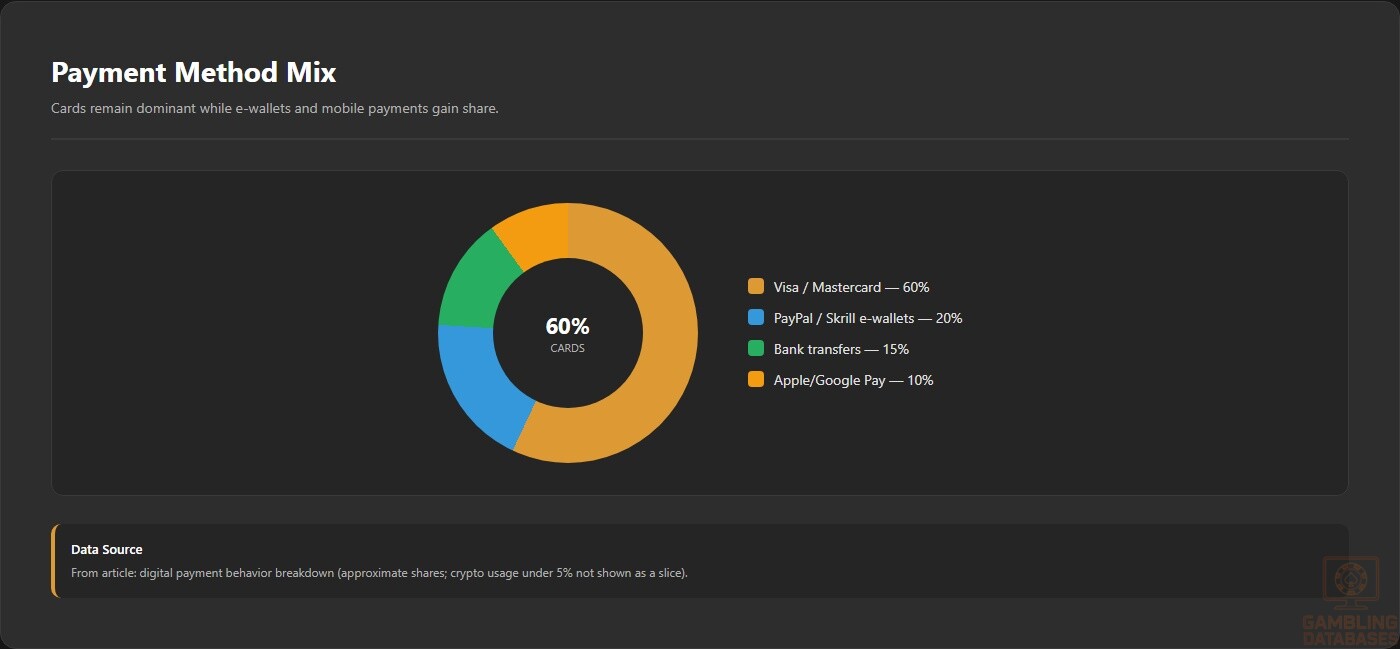
Luxembourg consumers show strong preference for digital payment methods. Credit/debit cards remain dominant, with increasing adoption of e-wallets and mobile payments. Bank transfers are frequently used for higher-value transactions. Cryptocurrency usage is emerging but remains limited within regulated frameworks.
- Visa and Mastercard credit/debit cards (60% market share)
- PayPal and Skrill e-wallets (20%)
- Bank transfers and direct debits (15%)
- Mobile payments via Apple Pay and Google Pay (10%)
- Cryptocurrency payments in niche segments (less than 5%)
Gaming and Gambling Preferences
Current Market Participation
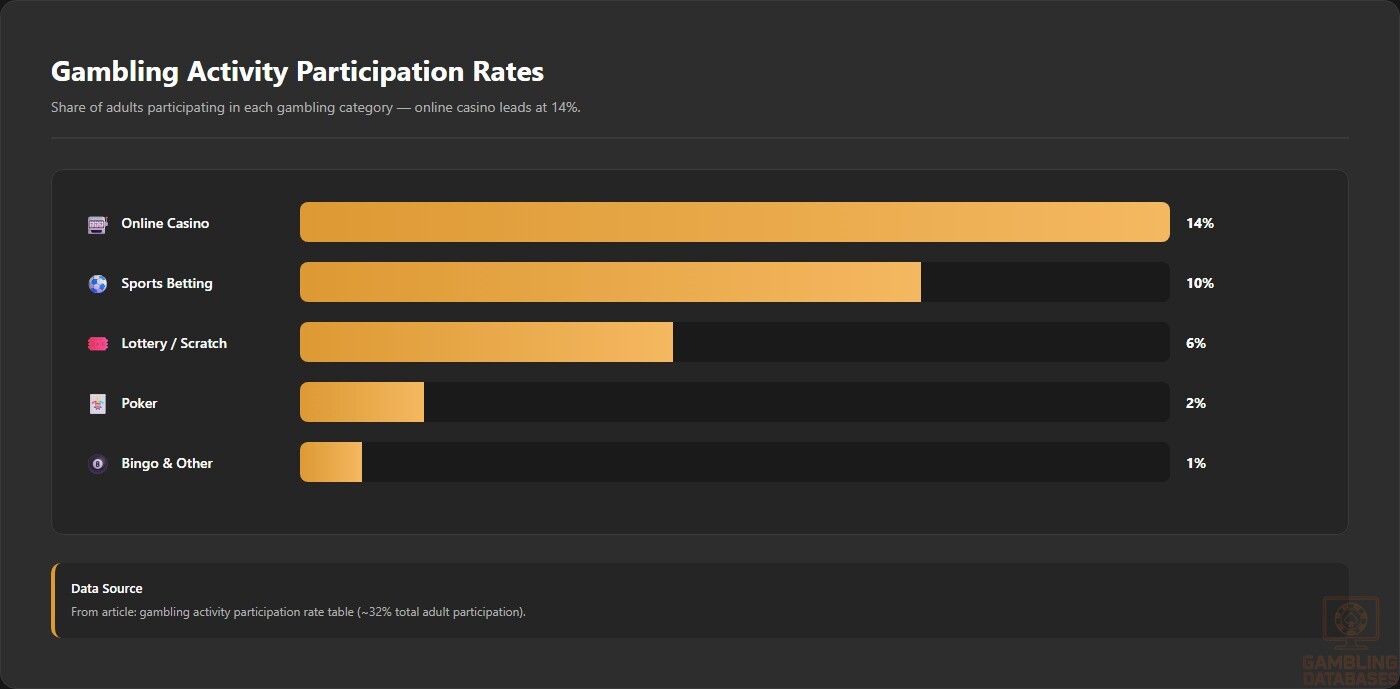
Participation in gambling activities among adults is estimated at approximately 32%. Online casino games and sports betting are the leading categories, with lottery games maintaining significant traditional appeal. Poker and skill-based games attract smaller but dedicated user bases.
| Activity | Participation Rate (%) |
|---|---|
| Online Casino Games | 14 |
| Sports Betting | 10 |
| Lottery and Scratch Cards | 6 |
| Poker | 2 |
| Bingo and Other Games | 1 |
Consumer Behavior Patterns
Luxembourg gambling consumers manifest high engagement during weekends and evening hours, with average session lengths of approximately 45 minutes. Platform preference leans heavily toward mobile applications optimized for rapid, interactive play. Retention is supported by personalized offers and loyalty programs. Spending patterns indicate moderate but consistent wagering supported by affluent disposable income.
Section 3: Technology Infrastructure and Business Environment
Internet and Digital Infrastructure
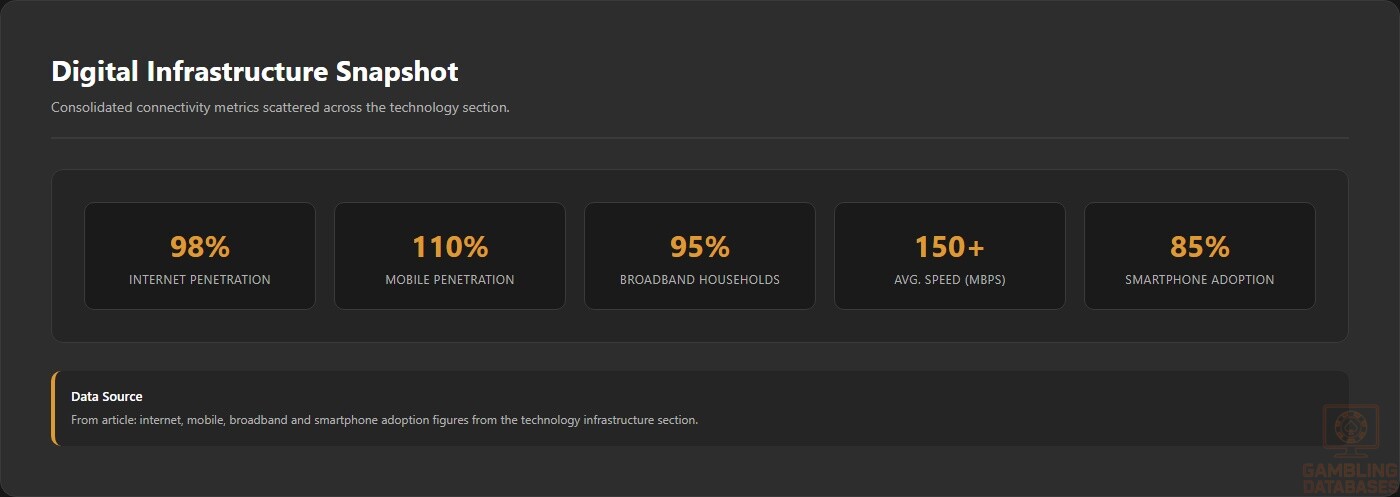
Luxembourg benefits from highly developed internet connectivity, with broadband access available to over 95% of households. Fixed broadband penetration remains steady, complemented by a significant uptake in mobile internet usage. Average downstream speeds exceed 150 Mbps, ensuring high-quality user experiences for bandwidth-intensive applications such as online gaming. Investments in fiber-optic networks and data centers have continually enhanced reliability and reduced latency across the country.
Network infrastructure investments prioritize resilience and scalability, positioning Luxembourg as a digital hub. Internet reliability ranks among the highest in Europe, with minimal downtime and robust cybersecurity frameworks in place to protect data integrity and consumer privacy.
5G and Future Technology Deployment
Luxembourg has achieved near-complete 5G coverage in urban areas with ongoing expansions targeting suburban and rural regions. The government and telecom operators have collaborated to accelerate rollout timelines, with anticipated nationwide 5G availability by 2026. Advanced network capabilities support next-generation gaming technologies, including augmented reality and cloud gaming.
The mobile network operator landscape includes several major players actively investing in spectrum acquisition and technology upgrades. Public and private partnerships facilitate innovation through pilot projects and smart city initiatives leveraging 5G and IoT ecosystems.
Mobile Technology Ecosystem
Mobile network infrastructure is competitive, with multiple operators ensuring comprehensive coverage and competitive data pricing. Mobile connectivity quality is high across Luxembourg, enabling widespread use of smartphones for gaming, payments, and social activities.
- Orange Luxembourg: Leading market share with extensive urban and rural coverage
- POST Luxembourg: Strong national presence and data service offerings
- Eltrona: Specialized in fiber and mobile bundles, expanding 5G capabilities
- Join Experience: Emerging MVNO targeting younger demographics with affordable plans
- LuxGSM: Historical operator maintaining niche customer base
Smartphone adoption exceeds 85% of the population, with a preference for premium Android and iOS models. Mobile gaming accounts for a significant portion of overall playtime, supported by performance-optimized applications and mobile-friendly websites.
Financial Services and Payment Infrastructure
Luxembourg’s banking sector is mature, comprising several major institutions offering comprehensive digital services. Strong regulatory frameworks enhance consumer trust and facilitate secure online payment processing essential for iGaming operations. High internet banking penetration supports widespread adoption of e-wallets and real-time bank transfers.
- Banque et Caisse d’Épargne de l’État (BCEE): Market leader with advanced digital offerings
- BGL BNP Paribas: Significant retail and corporate presence across Luxembourg
- ING Luxembourg: Focused on innovation and digital banking solutions
- Raiffeisen Bank Luxembourg: Strong cooperative model with local focus
- POST Finance: State-backed financial services with competitive digital tools
The payment processing ecosystem is diverse and mature, supporting extensive card acceptance, e-wallet options, and secure transfer protocols. Transaction approval times are rapid, ensuring efficient fund flows for online gaming customers.
- Visa, Mastercard, and Maestro credit/debit cards widely accepted
- Digital wallets such as PayPal, Skrill, Neteller integrated with local operators
- Instant bank transfer systems including SEPA and MyBank
- Mobile payment solutions including Apple Pay and Google Pay growing rapidly
- Limited but increasing cryptocurrency adoption in compliance environments
E-commerce and Digital Economy
Luxembourg’s e-commerce sector is expanding quickly, supported by affluent consumers and excellent logistics infrastructure. Online retail penetration exceeds 70%, with strong consumer confidence in digital transactions. Cross-border e-commerce flourishes due to favorable tax regimes and multilingual capabilities. Digital services such as cloud computing, finance apps, and gaming platforms exhibit high adoption rates, reflecting broad digital economy integration.
Business Environment and Regulatory Framework
Luxembourg ranks highly in World Bank assessments for ease of doing business, with streamlined company registration and investor-friendly policies. The government promotes foreign direct investment through incentives and consistent regulatory enforcement. Operating costs remain competitive relative to other Western EU countries, balancing high-quality infrastructure with skilled labor availability.
- Prepare and notarize required incorporation documents
- Submit registration dossier to the Luxembourg Business Register
- Register for tax and social security with relevant authorities
- Open a corporate bank account and deposit minimum authorized capital
- Obtain operational permits and sector-specific licenses as needed
Corporate Structure and Registration
The common legal entity types suitable for iGaming businesses include the Société à Responsabilité Limitée (SARL), Société Anonyme (SA), and branch offices. The SARL is favored for SMEs due to simpler governance, while the SA suits larger operations requiring greater capital. Branch offices enable foreign companies to establish presence without full incorporation, though with more limited liability shielding.
Registration timelines range from two to six weeks depending on complexity, with costs influenced by legal fees and share capital requirements. Foreign ownership is fully permitted but subject to transparency and anti-money laundering reviews.
- Articles of association and memorandum of incorporation
- Proof of shareholder identities and beneficial ownership
- Bank statements evidencing capital deposits
- Business plans and projected financial statements
- Compliance policies (AML, data security, responsible gaming)
- Director and manager identification documents
Taxation Framework
Corporate income tax is levied at a combined rate of approximately 24.94%, including municipal business tax. Special economic zones provide selective exemptions promoting innovation and international business activities. Luxembourg benefits from a broad network of double tax treaties facilitating tax-efficient cross-border operations.
- Belgium
- France
- Germany
- Netherlands
- United Kingdom
- Switzerland
- United States
Personal income tax is progressive, reaching up to 42%, with social security contributions applying separately. Tax residency rules determine applicable obligations, with withholding taxes on dividends and capital gains carefully regulated.
Market Entry Considerations
Optimal market entry requires robust regulatory compliance strategies aligned with Luxembourg’s stringent standards. Partnerships with local entities facilitate smoother licensing and market penetration. Technology platforms should emphasize security, scalability, and seamless multi-language support for diverse users. Strategic focus on compliance and responsible gaming fosters reputation and long-term sustainability.
- Establish local legal entity or partnership with licensed operator
- Invest in certified secure gaming platforms and technical infrastructure
- Develop comprehensive compliance programs for AML and player protection
- Deploy multilingual marketing strategies tailored to local culture
- Engage with regulatory bodies proactively for licensing and audits
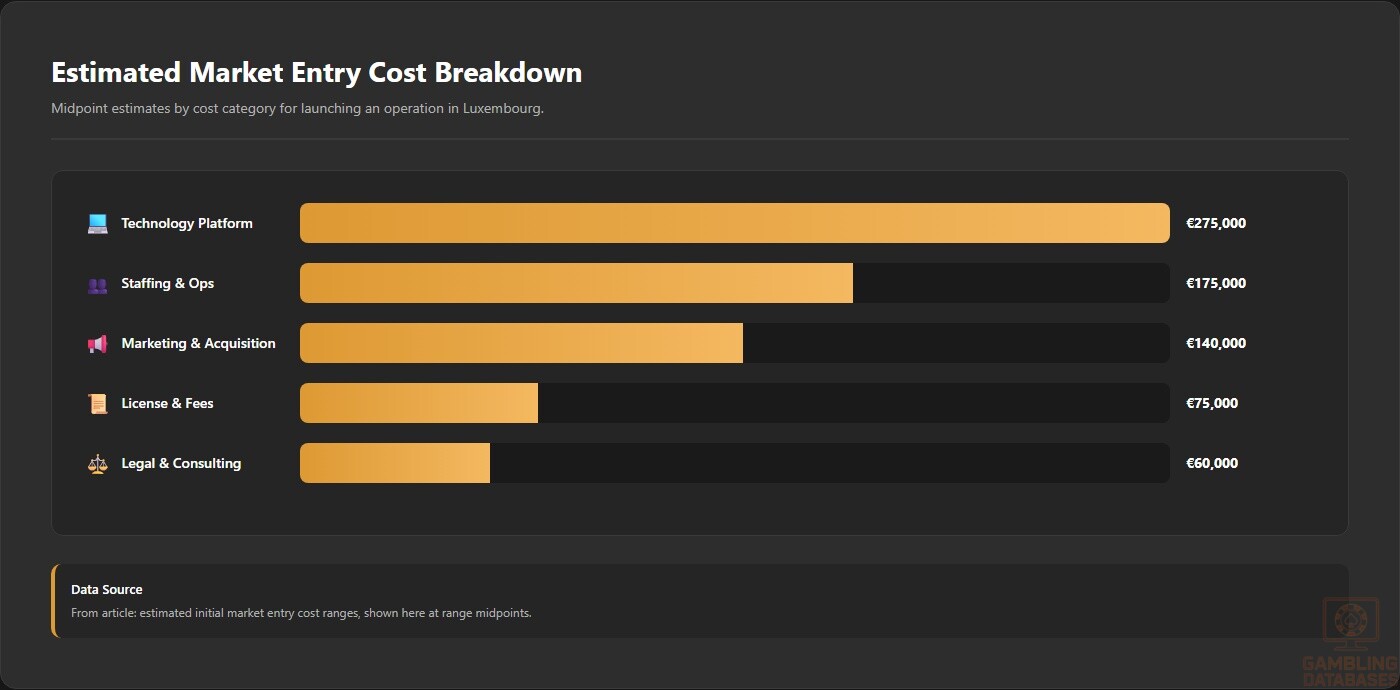
Typical startup costs include licensing fees, technology investments, staffing, and marketing. Timelines for market launch range from 6 to 12 months depending on licensing speed and operational readiness.
| Cost Category | Estimated Range |
|---|---|
| License Application and Fees | €50,000 – €100,000 |
| Technology Platform Setup | €150,000 – €400,000 |
| Legal and Consulting Services | €40,000 – €80,000 |
| Local Staffing and Operations | €100,000 – €250,000 |
| Marketing and Customer Acquisition | €80,000 – €200,000 |
Success Factors and Challenges
Critical success factors include regulatory compliance expertise, advanced technology adoption, strong local partnerships, and culturally nuanced marketing. Challenges encompass navigating complex regulatory landscapes, competitive pressures from entrenched operators, and evolving player preferences. Cybersecurity and data privacy remain paramount concerns affecting trust and brand reputation.
- Strong regulatory knowledge and relationship management
- Investment in scalable, secure gaming technologies
- Effective multi-language customer support
- Robust AML and responsible gambling frameworks
- Agility in adapting to market trends and consumer behavior
Exit strategies consider market liquidity and regulatory approval for license transfers, with valuation multiples influenced by revenue growth and compliance records. Planning ahead ensures smooth divestment or partial ownership sales.
FAQ: Frequently Asked Questions
1. Is online gambling legal in Luxembourg?
Yes, online gambling is legal and regulated since 2023 under a comprehensive licensing framework. Operators must obtain licenses covering casino games, sports betting, poker, and lotteries. Strict regulatory oversight ensures player protection and anti-money laundering compliance while prohibiting unlicensed gaming activities.
2. What types of gambling licenses are available and what do they cover?
The licensing regime includes categories for online casino gaming, sports betting, poker, and lotteries. Each license type requires adherence to specific technical standards and operational protocols. This differentiation ensures specialized supervision suited to the unique risk profiles of each game type, fostering a safe and transparent market.
3. How much does an iGaming license cost and how long does it take to obtain?
License application fees start at €50,000 with annual renewal fees scaled by revenue ranging between €30,000 and €100,000. The licensing process typically takes 6 to 9 months, involving thorough compliance checks, documentation review, and technical audits to verify operational readiness.
4. Can foreign companies obtain a gambling license?
Foreign companies are eligible to apply for licenses, provided they establish a local presence or appoint a representative in Luxembourg. Applicants must demonstrate transparent ownership, financial stability, and compliance capabilities. The regulatory framework welcomes international operators while maintaining high standards for market security.
5. What are the tax obligations for iGaming operators?
Operators face a Gross Gaming Revenue tax of 15% for most games, with lottery games taxed at 20%. Additionally, corporate income tax at approximately 24.94% applies on profits. Annual license renewal fees and turnover tax obligations supplement the fiscal framework, necessitating diligent financial planning.
6. Are gambling winnings taxed for players?
Gambling winnings are exempt from personal income tax in Luxembourg, with no withholding applied on player payouts. This player-friendly tax treatment incentivizes participation and supports market growth while aligning with European regulatory standards.
7. What are the typical operational costs for running an online casino or sportsbook?
Operational costs include licensing fees, technology infrastructure, staffing, marketing, payment processing, and compliance management. Ongoing expenses require significant investment in platform maintenance, customer support, and regulatory reporting to sustain market presence and competitiveness.
8. What is the expected ROI timeline for entering this market?
Return on investment timelines typically range from 18 to 36 months, influenced by market entry speed, customer acquisition efficiency, and operational cost control. Mature operators with strong compliance and marketing strategies tend to achieve faster breakeven points.
9. What are the local presence requirements for operators?
Operators must establish either a physical office or appoint a local representative. Regulatory personnel responsible for compliance and customer support typically need to reside in Luxembourg or within the EU to facilitate regulation adherence and efficient communication.
10. What payment methods are available and recommended?
Recommended payment options include credit and debit cards (Visa, Mastercard), e-wallets (PayPal, Skrill, Neteller), instant bank transfers via SEPA, and mobile payment solutions like Apple Pay and Google Pay. Cryptocurrency use is emerging but remains limited and tightly regulated.
11. What are the advertising and marketing restrictions?
Advertising is strictly regulated to prevent exposure to minors and vulnerable groups. Operators must avoid aggressive or misleading marketing, limit ads during certain time frames, and adhere to content restrictions. Sponsorships and digital campaigns require regulatory approval.
12. What responsible gambling measures are mandatory?
Mandatory measures include strict age verification, self-exclusion programs, deposit and wagering limits, real-time monitoring of play sessions, and transparent disclosures. Operators must also provide access to support resources for problem gamblers and contribute to public awareness initiatives.
13. How large is the iGaming market and what is the growth potential?
The market size is currently estimated at €100 million annual gross gaming revenue, with projected growth at a compound annual rate of 8% through 2030. Growth drivers include increasing digital penetration, regulatory clarity, and rising consumer disposable income.
14. Who are the main competitors and what is their market share?
The market features fewer than ten licensed operators, consisting of international gaming firms and local subsidiaries. Market share is fragmented with leading brands focusing on regulatory compliance, platform security, and localized customer experiences to capture market segments.
15. What are the player preferences and typical spending patterns?
Players prefer online casino games and sports betting, with lottery games maintaining traditional appeal. Spending is characterized by moderate but consistent wagering, higher engagement during weekends and evenings, and a strong preference for mobile-accessible platforms supporting quick and interactive play.
16. What are the key success factors and main challenges for new entrants?
Success hinges on regulatory expertise, advanced technology infrastructure, local partnerships, and culturally attuned marketing. Challenges involve navigating complex licensing processes, competing with established operators, and maintaining cybersecurity and compliance in a dynamic environment.
Sources and References
- Luxembourg Gambling Regulatory Authority – Official Website
- National Statistical Office – Population and Economic Data 2024
- Central Bank of Luxembourg – Financial Statistics and Reports
- Ministry of Finance – Tax Regulations and Guidelines
- World Bank – Doing Business Report 2024
- International Telecommunication Union – ICT Statistics
- Luxembourg Ministry of Justice – Gaming Act Documentation
- Luxembourg Ministry of Economy – Market Reports 2024
- Luxembourg Telecommunications Authority – Network Performance Reports
- National Institute for Statistics and Economic Studies – Demographic Data
- European Commission – Digital Economy Reports
- Luxembourg Financial Intelligence Unit – AML Compliance Reports
- Luxembourg Ministry of Education – Literacy and Skills Surveys
- Luxembourg National Social Services – Gambling Addiction Resources
- Luxembourg Chamber of Commerce – Business Registration Guidelines
- Luxembourg Tax Administration – Corporate and Personal Tax Policies
- Luxembourg Internet Providers Association – Broadband and Mobile Data
- International Gaming Regulatory Insights
- Luxembourg Digital Payments Consortium – Market Analysis 2024
- Luxembourg Consumer Behavior Study – University Research 2023
- Luxembourg Banking Sector Review – Central Bank Publications
- Luxembourg E-commerce Market Report – Industry Analysts 2024
- Luxembourg Advertising and Marketing Regulatory Authority
- Luxembourg Ministry of Health – Responsible Gambling Initiatives
- Luxembourg Information Technology and Cybersecurity Reports
- Luxembourg International Trade Reports – Ministry of Foreign Affairs
- Luxembourg Mobile Network Operators Association
- Luxembourg National Statistics Portal
- Luxembourg Gaming License Application Procedures – Regulatory Authority
- Luxembourg Online Gambling Growth Forecasts – Industry Report 2024
- Luxembourg Social Media Usage Statistics – Marketing Firms 2024
- Luxembourg Consumer Protection Agency Reports
- Luxembourg Gaming Industry Workshops and Conferences – 2024 Proceedings
- Luxembourg Legal Framework for Digital Services
- Luxembourg Tax Treaty Network Overview
- Luxembourg Responsible Gaming Foundation Publications
- Luxembourg Technology Infrastructure Investment Reports
- Luxembourg Digital Economy Strategy Documents
- Luxembourg National Cybersecurity Agency Reports


The Luxembourg framework here is interesting from a regulatory math perspective, but I’m curious about how the 15-20% GGR tax actually impacts operator profitability models. Let me break down what I’m seeing: if we assume a typical online casino operates at 96.5% RTP (industry standard for slots), that leaves 3.5% house edge. Then you layer on the 15% standard GGR tax, which means operators keep roughly 85% of their gross gaming revenue after tax. The real question is whether that 85% covers licensing fees (30k-100k annually), compliance overhead, payment processor cuts (typically 2-3%), and customer acquisition costs. For a small operator in Luxembourg hitting the €100M market estimate, if they capture even 2% of that, they’re looking at €2M GGR annually. After the 15% tax, that’s €1.7M, minus their license fee, payment processing (let’s say €60k on that volume), and they’re probably breaking even or barely profitable unless they’ve optimized their customer retention metrics significantly. The ARPU of €1,200 per user is telling though. If that’s accurate, an operator needs roughly 1,667 active players to hit €2M GGR annually. The 6-9 month market entry timeline also suggests there’s real friction in the licensing process, which likely weeds out operators who can’t sustain burn rates during that period. I’d want to see actual operator financial disclosures before making entry decisions here.
You’ve identified a critical blind spot in the market analysis. Your profitability breakdown is sound, and the tension between the €100M market estimate and the sub-10 licensed operators is indeed significant. A few additional data points worth considering: Luxembourg’s strict AML compliance reporting (monthly frequency mentioned in the framework) creates ongoing operational costs beyond initial licensing. Payment processor friction is real here too—many major processors require higher compliance documentation for EU jurisdictions, which can add 1-2% to transaction costs beyond standard rates. On the ARPU calculation, that €1,200 figure likely skews toward high-variance players or includes sports betting revenue alongside casino revenue, which typically have different retention curves. The 8% CAGR forecast through 2030 suggests the market expects consolidation around 3-5 profitable operators rather than the current sub-10 field. Your point about customer acquisition cost sustainability during the 6-9 month licensing window is particularly sharp—many operators undercapitalize for this phase and either fail to launch or launch with inadequate player liquidity. If you’re modeling entry scenarios, also factor the local presence requirement; maintaining a Luxembourg office or representative adds €50k-100k annually in overhead that isn’t always separated in operator financial projections.