Croatia’s iGaming market is emerging as a strategically attractive destination for operators, driven by regulatory modernization and expanding digital infrastructure. The government has implemented robust reforms emphasizing consumer protection and market integrity while introducing competitive licensing and taxation regimes.
As Croatia aligns with EU standards and enhances its regulatory framework, both local and international operators face new opportunities and challenges in entering this rapidly evolving market.
| Metric | Value |
|---|---|
| Gambling Legal Status | Legal, Regulated under Games of Chance Act |
| Regulatory Authority | Ministry of Finance |
| Population | Approx. 3.9 million |
| Adult Population (18+) | ~3.1 million |
| GDP (Nominal) | €69 billion (2024) |
| Average Income per Capita | €14,800/year |
| Internet Penetration Rate | 85% |
| Mobile Penetration Rate | 93% |
| Land-Based Gambling Licenses (Casino) | 20 licenses |
| Land-Based Gambling Licenses (Betting) | 20 licenses |
| Land-Based Gambling Licenses (Slot Machines) | 55 licenses |
| Online Gambling Licenses | Extension of land-based licenses; government granted |
| Minimum Share Capital (Casino) | €530,891 |
| Minimum Share Capital (Betting) | €530,891 |
| Bank Guarantee (Casino) | €199,084 |
| Bank Guarantee (Betting) | €663,614 – €1,990,842 (based on bet volume) |
| Annual License Fee (Casino) | €66,361 + €398,168 (online casino extension) |
| Annual License Fee (Betting) | €132,722 + €398,168 (online betting extension) |
| Monthly Licensing Fee (Casino) | 15% of net turnover |
| Monthly Licensing Fee (Betting) | 5% of total bets |
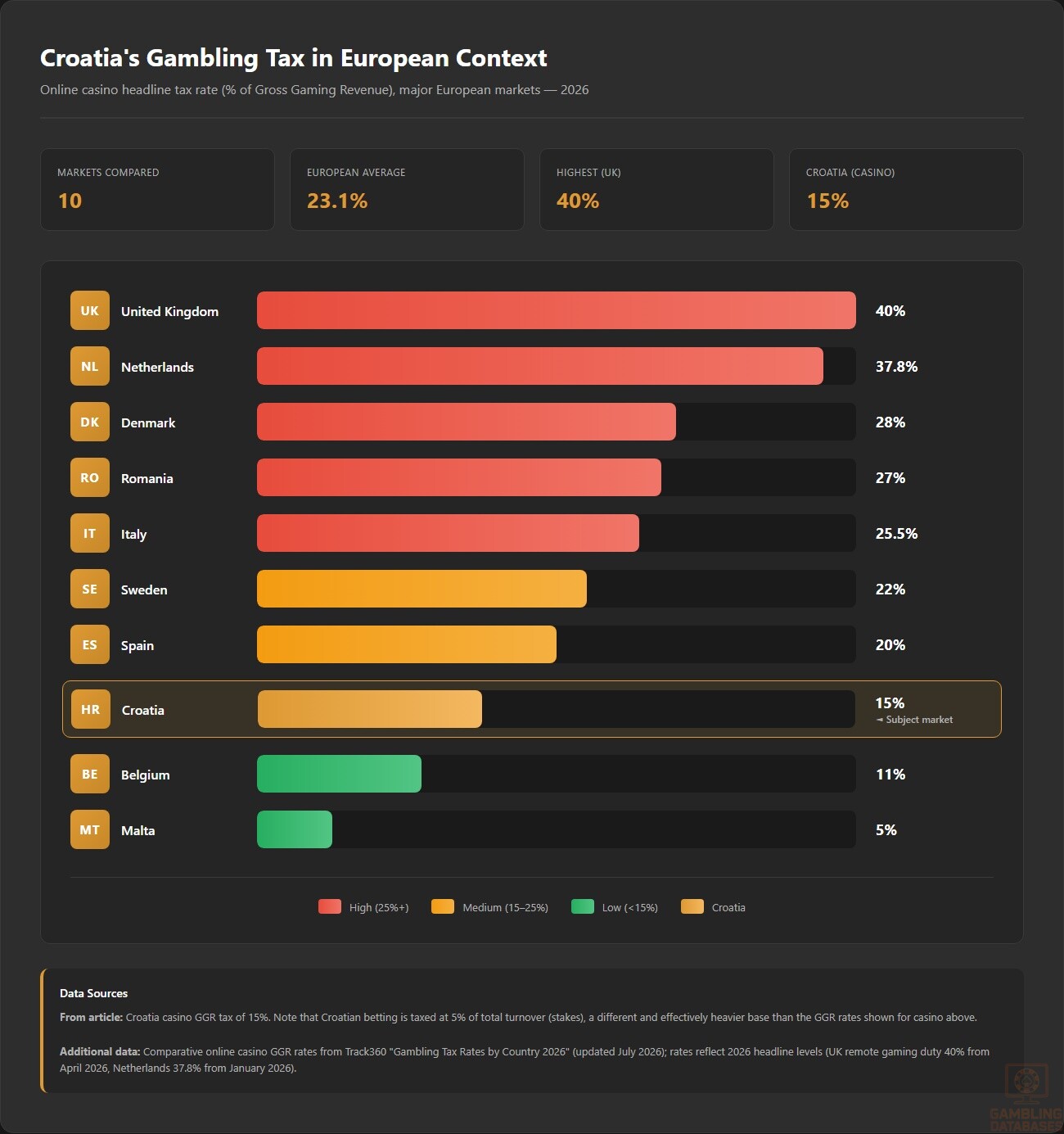
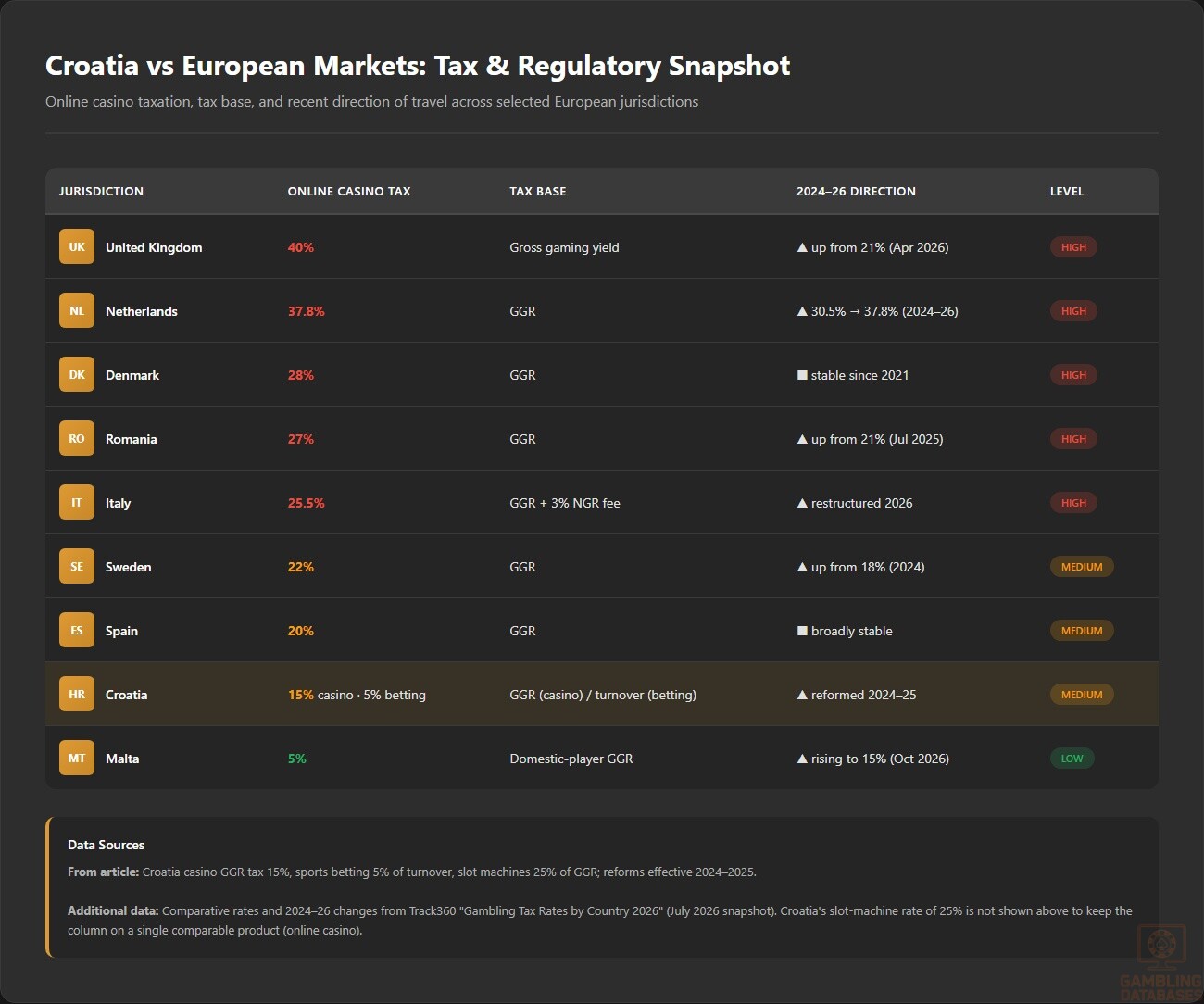
| Gross Gaming Revenue Tax Rates | Casinos 15%, Slot Machines 25%, Betting 5% |
| Player Winnings Tax (Progressive) | 10%-30% based on winnings scale |
| License Validity Period | 15 years |
| Operator Physical Presence | Required (registered seat in Croatia) |
| Enforcement Mechanisms | Fines up to €67,000, imprisonment, license revocation |
| Responsible Gambling Measures | Self-exclusion, age verification, advertising restrictions |
| Market Size (Gaming Revenue, 2025) | Projected €720 million |
| Market Growth Forecast (CAGR) | 6.5% (2025-2030) |
| ARPU (Annual) | €230 per active player |
| Market Penetration Rate | Approx. 25% of adult population |
Section 1: Regulatory Framework and Legal Environment
Current Gambling Regulation Status
Croatia’s gambling industry operates under the Games of Chance Act, the fundamental legal framework covering all gambling activities. This includes land-based and online casinos, sports betting, slot machine halls, lotteries, and other games of chance. The law establishes licensing protocols, operational standards, tax obligations, and consumer protection measures that govern the market.
Recent reforms, initiated since mid-2024 and fully effective by 2025, modernize Croatia’s gambling laws with a strong emphasis on public health, player protection, and combating unauthorized offshore operators. This regulatory evolution aligns the country more closely with European Union gambling standards.
Land-Based Gambling Activities
The land-based gambling sector is diverse, operating under a capped license regime with strict operational requirements. Key categories include casino operations, sports betting shops, slot machine halls, and lottery services. Casinos are limited to a maximum of 20 operational licenses, with similar caps for sports betting (20 licenses) and slot machines (55 licenses).
Casino operators must meet substantial financial prerequisites, including minimum share capital and bank guarantees, ensuring operational stability and player fund security.
Sports betting venues operate with requirements for a minimum number of physical outlets and employees, creating significant entry barriers for new entrants in the land-based space.
Online Gambling Framework
Online gambling in Croatia is regulated as an extension of the land-based licensing system. Operators must first obtain a physical gambling license before applying for an online authorization, issued by the government. This structure ensures robust control over operators and helps prevent unauthorized offshore activities.
Technical standards mandate operators to host gaming servers within Croatia and comply with strict software approval processes to guarantee fairness and security. Online gambling is permitted for individuals aged 18 and over, with mandatory real-time player identification and verification procedures.
Prohibited activities include unlicensed online gaming operations, unregulated promotional practices, and offshore platforms bypassing the Croatian licensing regime.
Licensed Operators and Market Players
The Croatian iGaming market demonstrates a competitive mix of domestic and international operators. Dominant local entities include Hrvatska Lutrija (state lottery), Supersport, and Germania Sport, which maintain strong brand equity and widespread networks. International operators participate primarily through partnerships or acquisitions, leveraging Croatia’s strategic EU location.
The current market favors established operators with significant capital and local presence due to high entry and operational costs. Market consolidation is ongoing as smaller players struggle to meet the evolving regulatory demands.
Licensing Framework and Requirements
Application Process and Eligibility
Licensing in Croatia is regulated by the Ministry of Finance. The process begins with company registration within Croatia, followed by tender applications for specific land-based gambling licenses. Online gambling licenses are granted as additional government-issued authorizations contingent on the land-based license.
Upon meeting eligibility, operators submit detailed documentation and financial guarantees outlined below. Licenses are granted based on merit, financial benefits proposed, and adherence to strict regulatory criteria.
The licensing application requires submission of the following key documents and certifications:
- Certificate of corporate registration and articles of incorporation
- Financial statements audited for the past three years
- Detailed business plan including market strategy and projections
- Technical documentation verifying gaming platform compliance
- Criminal background checks of directors and beneficial owners
- Proof of minimum share capital and bank guarantees
- Certificates confirming software certification and RNG approval
- Evidence of physical operational facilities and workforce
Application fees vary by license type but include annual and monthly fees based on turnover or placed bets, as well as fixed yearly fees. Typical timelines for approval range between 3 to 6 months, depending on the license complexity.
Local Presence and Operational Requirements
Operators must maintain a registered office within Croatia and employ qualified personnel to fulfill operational and compliance functions locally. Physical presence is mandated not only for land-based venues but also as a prerequisite for online license eligibility.
Domain registration specific to Croatian jurisdiction (.hr) is required for online platforms. Foreign ownership is generally permitted, but operators must comply with local laws and may be required to form partnerships with Croatian entities to facilitate market entry and compliance.
- Registered local office presence
- Qualified managerial and operational staff
- Physical venue ownership or leasing (for land-based)
- Hosting of gaming servers within Croatian territory
- Local domain registration for online gambling sites
Compliance Obligations and Monitoring
Player Protection and Identification
Strict age verification controls are in place to bar minors from gambling activities. Croatia enforces Know Your Customer (KYC) and Anti-Money Laundering (AML) protocols consistent with European standards, involving mandatory identity verification before account creation and wagering.
The regulatory framework mandates a national self-exclusion program allowing players to voluntarily restrict their access to gambling. Operators must provide real-time monitoring to identify problematic gaming behavior and intervene as necessary.
Player protection measures include:
- Mandatory age verification for all players
- Real-time identity authentication procedures
- Implementation of self-exclusion and national blocking registers
- Limits on betting amounts and session durations
- Transparent information on gambling risks and responsible gaming options
- Regular reporting of suspicious transactions and behaviors
Financial Monitoring and Reporting
Operators are required to monitor all financial transactions for compliance with anti-fraud and AML laws. Detailed records of bets, payouts, and player funds must be maintained and submitted regularly to regulatory authorities.
Reports typically include monthly summaries of net turnover, tax liabilities, and suspicious activity reports. Audits by government-appointed bodies are conducted periodically to ensure data integrity and operator compliance.
- Monthly financial and operational report submission
- Independent annual audits of gaming systems and finances
- Real-time transaction monitoring for fraud and money laundering
- Notification of regulatory body regarding any breaches or anomalies
Taxation Structure and Financial Obligations
Player Taxation
Croatia employs a progressive personal tax on gambling winnings, effective as of April 2025. The rates start at 10% for winnings up to €1,500 and escalate to a maximum of 30% for winnings exceeding €70,000. This tax replaces previous thresholds that exempted small winnings, thereby broadening the tax base substantially.
Operator Taxation
| Gambling Activity | Tax Rate |
|---|---|
| Casino Games | 15% of Gross Gaming Revenue (GGR) |
| Slot Machines | 25% of GGR |
| Sports Betting | 5% of total bets |
| Annual Fixed Fees (Casino Location) | €100,000 per venue |
| Annual Fixed Fees (Online Casino) | €600,000 |
| Annual Fixed Fees (Betting Operators) | €200,000 (physical), €400,000 (online) |
License renewal involves payment of annual fees proportional to the type and scale of operations. Additionally, levies apply on specific gaming machines, such as €2,000 per slot machine annually, with higher fees for electronic roulette devices.
Gambling Market Financial Performance
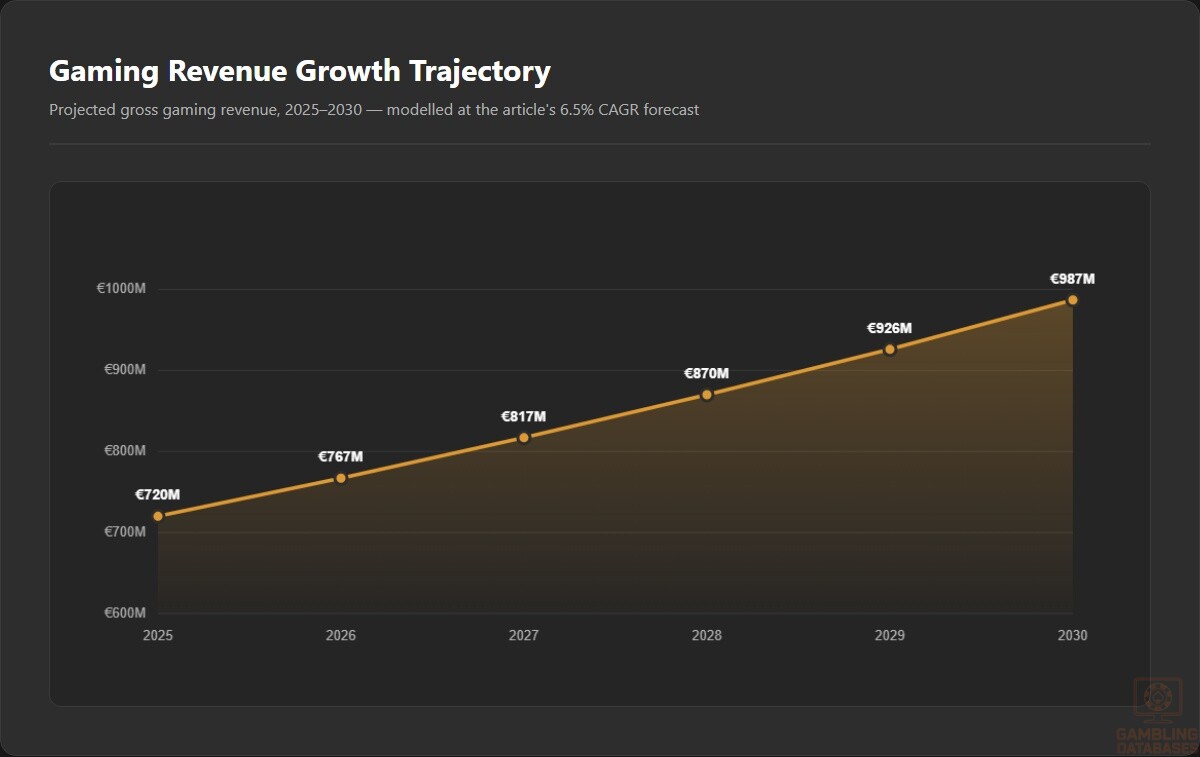
Revenue from Croatia’s gambling market is projected to reach approximately €720 million in 2025, supported by increasing internet access and mobile usage. Growth is forecasted at a CAGR of 6.5% through 2030, emphasizing digital expansion and market maturation.
The tax contribution from gambling funds addiction prevention programs, sports development, and social initiatives, allocating roughly 11% of revenue to public health efforts. Market revenues are distributed predominantly between operator profits, player winnings, and state taxes, reflecting a balanced financial ecosystem.
Advertising and Marketing Restrictions
Strict advertising regulations prohibit gambling promotions in printed media and public spaces, particularly during prime viewing times between 6 am and 11 pm. Use of celebrities or well-known figures in marketing campaigns is banned to reduce minors’ exposure.
Restrictions also include:
- Ban on outdoor advertising in schools and religious vicinity
- Prohibition on self-service betting terminals in public places
- Regulations on digital marketing content and targeted advertising
- Mandatory display of responsible gambling messages in all ads
- Limits on bonuses and promotional offers to avoid gambling addiction
Recent Regulatory Changes and Their Impact
Since 2024, Croatia has embarked on significant legislative reform to strengthen consumer protections and curtail illegal gambling operations. New measures include increased licensing fees, heightened tax rates, and enhanced enforcement mechanisms.
The regulatory overhaul threatens smaller operators with increased costs, driving market consolidation and encouraging mergers. Stricter advertising and player identification policies aim to reduce youth exposure and gambling harm while stabilizing the legal market.
Enforcement Mechanisms and Penalties
The Croatian Ministry of Finance actively enforces gambling laws through multiple mechanisms. Penalties for non-compliance range from substantial fines to criminal prosecution, including imprisonment for up to eight years in severe cases.
License revocation and immediate cessation of unlicensed operations are common enforcement actions. Regular audits and monitoring ensure ongoing compliance, with particular focus on preventing money laundering and protecting vulnerable groups.
- Monetary fines ranging from €6,700 to €67,000
- Imprisonment up to 8 years for illegal operations
- License suspension or revocation
- Mandatory closure of unauthorized betting points
- Financial penalties for advertising violations
- Blocking access to unlicensed online gambling sites
Section 2: Demographics and Consumer Analysis
Population Demographics and Distribution
Croatia’s population in 2025 is estimated at approximately 3.85 million, reflecting a slight decrease of 0.7% from the previous year. The demographic profile is characterized by an aging population, with a median age of 45.3 years, indicating a mature consumer base for iGaming services. Gender distribution slightly favors females, comprising roughly 52% of the population.
Urbanization is significant: about 61.7% of the population lives in urban centers, concentrating economic activity and internet access. This urban majority translates into higher gambling venue density and enhanced digital infrastructure, shaping consumer accessibility to land-based and online gambling options.
| Age Group | Percentage of Total Population |
|---|---|
| 0-4 years | 4.2% |
| 5-12 years | 7.4% |
| 13-17 years | 5.4% |
| 18-24 years | 7.2% |
| 25-34 years | 11.0% |
| 35-44 years | 13.0% |
| 45-54 years | 13.9% |
| 55-64 years | 14.3% |
| 65+ years | 23.6% |
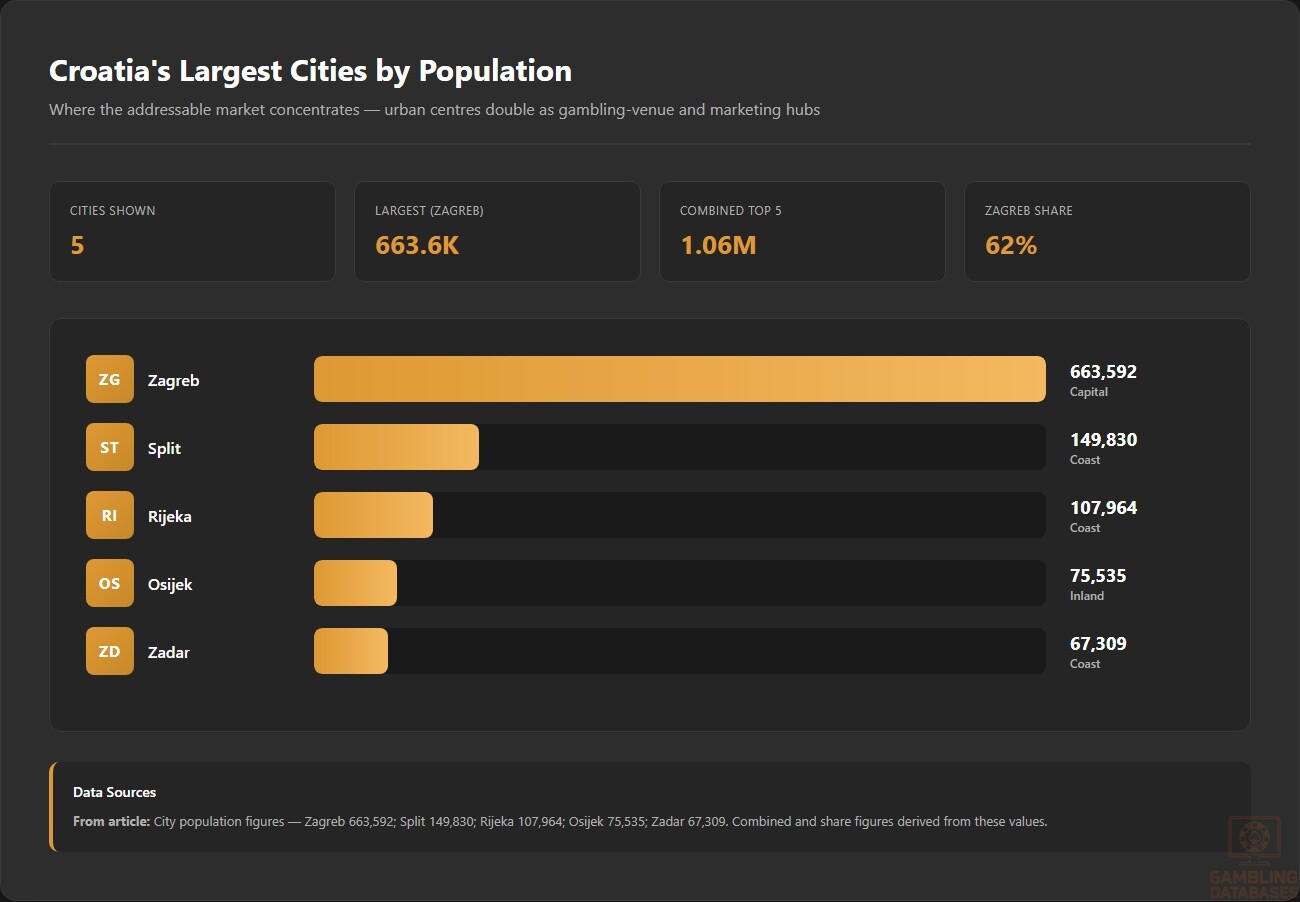
The urban concentration is especially pronounced in major cities such as Zagreb, Split, Rijeka, and Osijek, which also serve as primary hubs for gambling venues and marketing efforts. Regional disparities exist, with coastal areas benefiting from tourism-driven demand and inland regions exhibiting more conservative economic profiles.
- Zagreb – 663,592 inhabitants
- Split – 149,830 inhabitants
- Rijeka – 107,964 inhabitants
- Osijek – 75,535 inhabitants
- Zadar – 67,309 inhabitants
Economic Indicators and Consumer Spending Power
Croatia’s economy is projected to grow by approximately 3.2% in 2025, building on a 3.9% growth in 2024. This positive economic outlook is driven by stable private consumption, supported by rising real wages and employment gains. The GDP is estimated near €65 billion, with the service sector constituting the largest component of economic activity.
Income distribution reveals an average per capita income of roughly €12,000, with a medium household income supporting moderate discretionary spending capacity. Despite income inequality challenges, disposable incomes have trended upward, facilitating growth in consumer sectors including entertainment and iGaming.
| Metric | Value |
|---|---|
| GDP Growth Rate (YoY) | 3.2% |
| Unemployment Rate | 4.6% |
| Inflation Rate | 3.4% |
| Average Income Per Capita | €12,000 |
| Household Consumption Contribution to GDP Growth | Major driver |
| Service Sector Share of GDP | Over 60% |
The Croatian market shows steady growth potential for gambling operators due to increasing consumer confidence, expanding digital payment acceptance, and a rising number of internet users. The gradual economic recovery also bolsters discretionary income available for entertainment expenditures such as iGaming.
Education, Skills, and Digital Literacy
Croatia boasts a well-educated population with literacy rates exceeding 99%. The workforce is characterized by strong secondary education attainment, complemented by growing tertiary-level graduation rates in technology and commerce fields. Digital literacy is robust, underpinned by widespread internet access and integration of digital tools in daily life.
This favorable education environment enhances consumer readiness to engage in online iGaming platforms and supports the availability of skilled personnel necessary for operational and regulatory compliance in the gaming sector.
Cultural and Social Factors
Communication and Language
Croatian is the official language and primary communication medium for the majority of the population. The linguistic landscape is relatively homogeneous, with minor communities speaking Serbian, Bosnian, Italian, Hungarian, and Romani languages. English is widely understood among younger and urban demographics, facilitating international iGaming communications.
- Croatian (Official)
- Serbian
- Bosnian
- Italian
- Hungarian
Cultural Attitudes
Gambling enjoys moderate acceptance in Croatian society, bolstered by the national presence of state lottery and gaming institutions. Religious and conservative segments exhibit cautious attitudes toward gambling, emphasizing responsible conduct and youth protection. Foreign gambling brands are generally accepted, especially where compliance with local regulations is transparent and consumer protections are evident.
Problem Gambling and Social Considerations
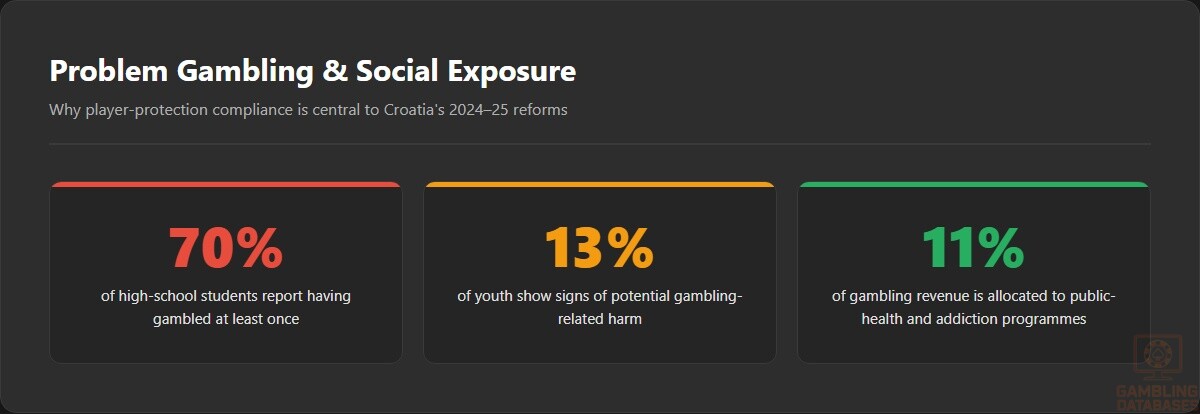
Government and health authorities acknowledge the issue of problem gambling, with recent data revealing concerning signs among youth populations, including reports that over 70% of high school students have gambled at least once, and 13% show potential gambling-related harm. Consequently, Croatia has implemented a suite of response measures to address addiction and foster social responsibility among operators.
- Establishment of a national self-exclusion registry
- Mandatory age and identity verification protocols
- Public awareness campaigns on gambling risks
- Funding for addiction treatment and counseling services
- Restrictions on advertising targeting vulnerable groups
Political Structure and Governance
Croatia is a parliamentary republic with a stable political environment that promotes regulatory consistency and market openness. As a member of the European Union, Croatia adheres to EU regulatory standards, enhancing transparency and investor confidence. Governance structures support enforcement of gaming regulations and cooperation with international regulatory bodies.
Technology Adoption and Digital Behavior
Internet and Digital Usage
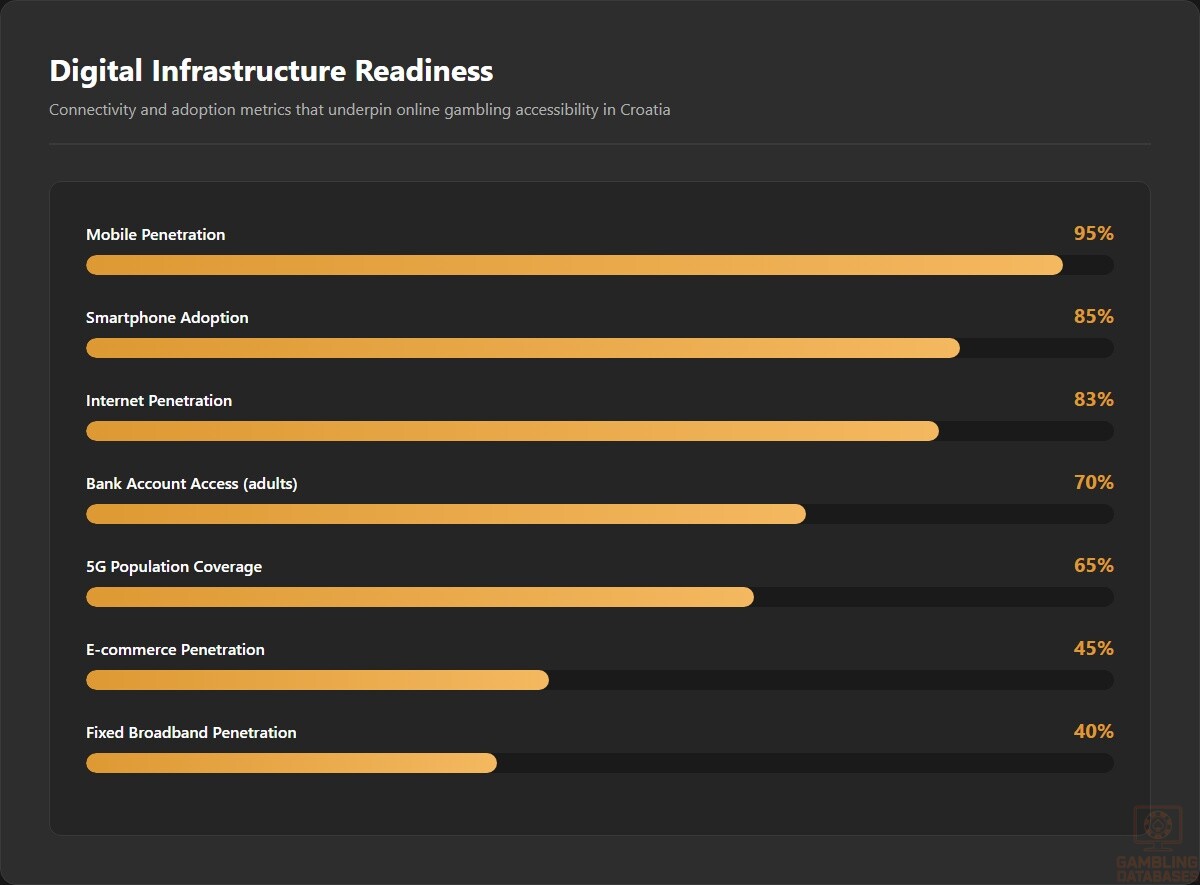
Internet penetration in Croatia stands at approximately 83%, with mobile subscriptions exceeding 95%, indicating extensive digital connectivity. Daily internet usage averages 5-6 hours, with social media playing a central role in communication and entertainment.
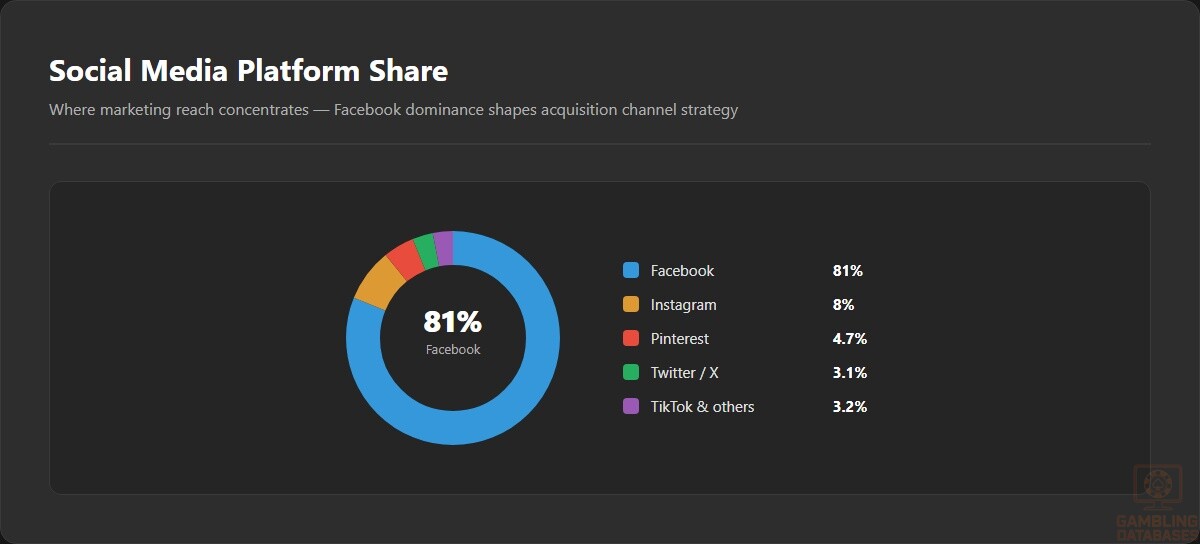
- Facebook: 81% market share, dominant platform
- Instagram: 8% share, popular among youth
- Pinterest: 4.7% share
- Twitter: 3.1% share
- TikTok: Rapid growth segment
Digital Payment Behavior
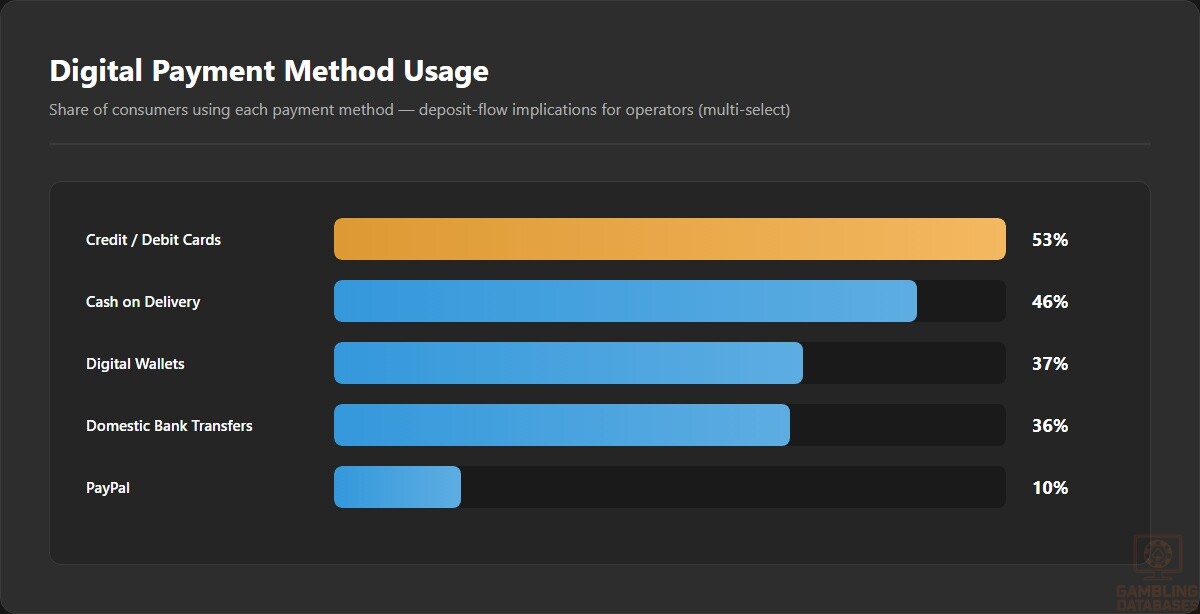
Digital payment adoption is robust in Croatia, with credit and debit cards leading supported by growing use of domestic digital wallets. Cash-on-delivery remains relevant, especially for ecommerce sectors. Cryptocurrency adoption is still nascent but gaining interest among younger demographics.
- Credit/Debit Cards (Visa, Mastercard): 53% usage
- Cash on Delivery: 46% usage
- Digital Wallets: 37% usage
- Domestic Bank Transfers: 36% usage
- Paypal: 10% usage
Gaming and Gambling Preferences
Current Market Participation
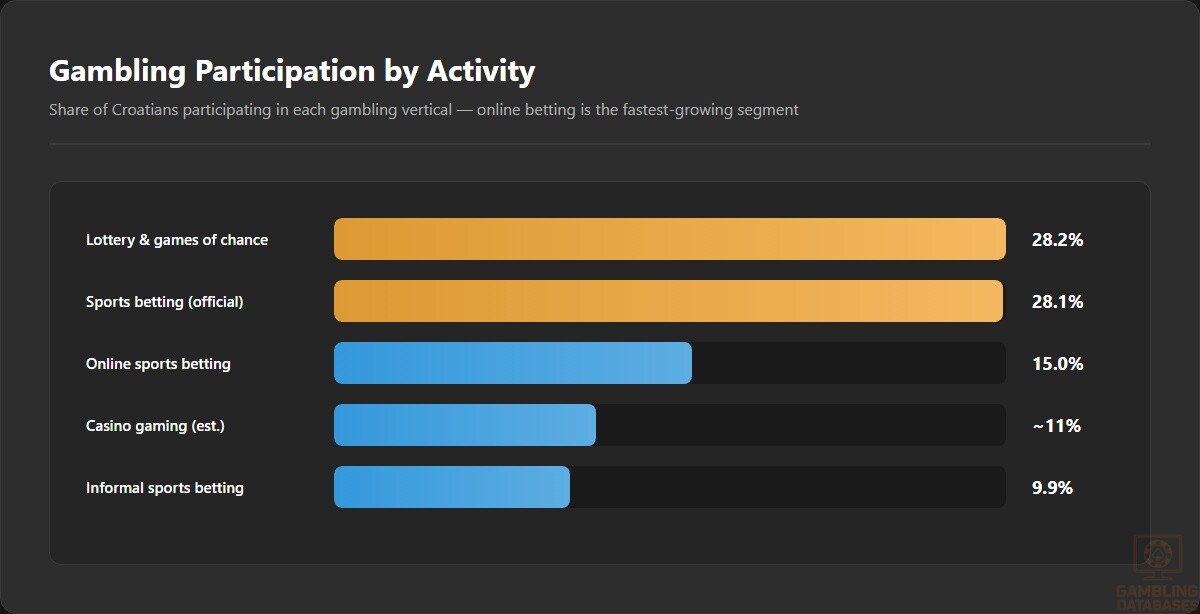
Participation in gambling activities is significant, with approximately 28% of Croatians engaging in lottery or games of chance, and a comparable share actively betting on sports events. Online sports betting is growing, with estimated 15% participation via digital platforms. Informal betting amongst friends remains smaller but culturally present.
- Lottery and games of chance: 28.2%
- Sports betting (official): 28.1%
- Online sports betting: 15.0%
- Informal sports betting: 9.9%
- Casino gaming participation: estimated 10-12%
Consumer Behavior Patterns
Croatian consumers demonstrate a preference for convenient access via mobile and desktop platforms, with peak gaming activity during evenings and weekends. Average session lengths vary by game type, with sports betting sessions typically shorter than casino gambling. Retention is influenced by loyalty programs and localised marketing that respects cultural nuances.
Spending patterns suggest cautious but growing investment in gambling, especially online, facilitated by improved payment infrastructures and consumer protection measures enhancing trust.
Section 3: Technology Infrastructure and Business Environment
Internet and Digital Infrastructure
Croatia exhibits strong internet penetration at approximately 83% of the population, distinguishing itself with balanced access to both fixed broadband and mobile internet. Fixed broadband penetration stands at nearly 40%, offering high-speed connections primarily in urban and suburban areas, while mobile internet usage dominates rural connectivity.
Average fixed broadband download speeds exceed 180 Mbps, positioning Croatia ahead of many regional neighbors. Investment in fiber-optic infrastructure has accelerated, supported by EU funds targeting national digital transitions and broadband accessibility expansion.
5G and Future Technology Deployment
5G networks have been actively deployed in major urban and tourist centers, covering roughly 65% of the population as of mid-2025. National telecom operators pursue ambitious rollout plans targeting near-complete 5G coverage by 2027, focusing on critical economic zones and enhancing digital service quality.
This advanced connectivity supports data-intensive applications including livestream casino gaming and mobile betting experiences, creating a favorable environment for iGaming technologies requiring low latency and high uptime.
Mobile Technology Ecosystem
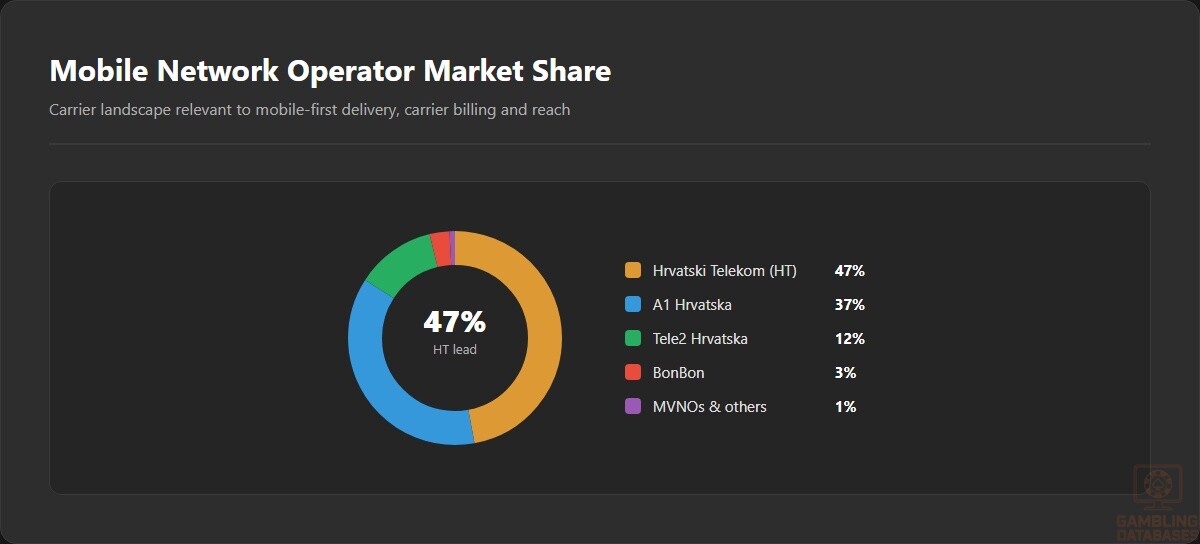
Croatia’s mobile network sector is competitive with multiple operators ensuring extensive coverage and affordable data pricing. Smartphone adoption exceeds 85%, with most consumers preferring Android devices due to wider availability and cost considerations. Emerging trends show increasing preference for mobile-first applications in digital entertainment.
- Hrvatski Telekom (HT) – 47% market share
- A1 Hrvatska – 37% market share
- Tele2 Hrvatska – 12% market share
- BonBon – 3% market share
- Coming operators and MVNOs – 1% combined
Financial Services and Payment Infrastructure
Croatia’s banking sector supports a modern payment ecosystem with wide adoption of digital banking and contactless payments. Consumers have access to multiple banking apps and payment gateways facilitating secure transactions for iGaming platforms. Bank account penetration reaches over 70% of adults, underpinning trust and ease of online payments.
- Zagrebačka banka – Market leader with extensive retail and corporate services
- Privredna banka Zagreb (PBZ) – Strong digital banking offerings
- Erste & Steiermärkische Bank – Comprehensive online payment tools
- Raiffeisenbank Austria – SME-focused banking solutions
- OTP Banka – Rapidly growing digital user base
- Others including regional and foreign banks
Payment Processing Options
Operators benefit from diverse payment methods including credit/debit cards, e-wallets, and bank transfers integrated into local and international payment processors. Cryptocurrency payments remain regulated but are less prevalent, primarily used by tech-savvy demographics.
- Visa and Mastercard credit/debit cards processed locally
- E-wallets such as PayPal, Skrill, Neteller gaining popularity
- Bank transfers including instant payments via SEPA
- Mobile payments leveraging digital wallets and carrier billing
- Prepaid cards and vouchers mostly for casual users
- Emerging support for select cryptocurrencies
E-commerce and Digital Economy
The Croatian digital economy is expanding rapidly, supported by increasing consumer trust in online transactions and efficient logistics networks. E-commerce penetration surpasses 45%, with a growing share of purchases made via mobile devices. This trend correlates strongly with digital payment adoption and advanced telecommunications infrastructure.
Gaming operators leverage this momentum by integrating seamless payment gateways and mobile-optimized platforms that enhance user retention and conversion rates in a competitive market.
Business Environment and Regulatory Framework
Croatia ranks favorably in the World Bank’s Ease of Doing Business index, reflecting streamlined business registration, investor-friendly policies, and efficient regulatory administration. Foreign investors benefit from EU alignment, access to multi-lateral treaty protections, and government incentives for technology-driven sectors.
Initial market entry involves moderate complexity, requiring adherence to specific procedural steps but facilitated by transparent legal frameworks and supportive agencies.
- Prepare and notarize company founding documents, including foreign certifications if applicable
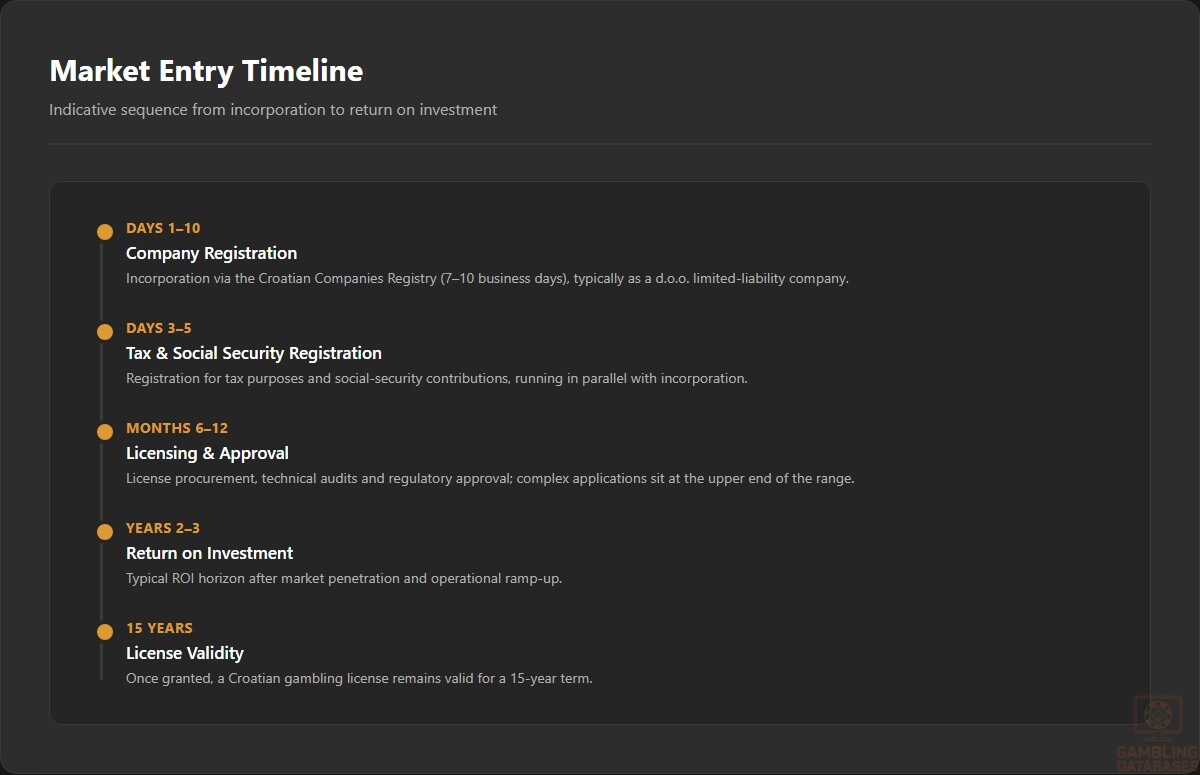
- Submit registration to the Croatian Companies Registry with processing within 7-10 business days
- Register for tax purposes and social security contributions within 3-5 days
- Open a corporate bank account and deposit minimum capital as mandated by the gambling regulator
- Obtain additional permits or licenses specific to gaming and online operations
Corporate Structure and Registration
The limited liability company (d.o.o.) is the most common and recommended corporate form for iGaming operators due to limited liability and capital flexibility. Other structures include joint-stock companies (d.d.) and branch offices of foreign firms, each with distinct regulatory and tax implications.
The registration requires disclosure of ultimate beneficial owners and compliance with Croatian and EU anti-money laundering standards, ensuring transparency and operational legitimacy.
- Founding act or articles of association
- Proof of registered office in Croatia
- Personal identification of shareholders and directors
- Bank confirmation of capital deposit
- Tax registration certificate
- Certificates of good standing for foreign entities, if applicable
Taxation Framework
Corporate tax in Croatia is set at a standard rate of 18%, with a reduced 12% rate applicable for companies with annual revenues below €3 million. The government offers tax incentives and relief for companies investing in special economic zones or adopting innovative technologies.
Personal income taxation follows progressive brackets, with rates from 20% up to 30%, combined with mandatory social security contributions. Tax treaties with over 50 countries mitigate double taxation risks for international operators.
- Austria
- Germany
- Italy
- Slovenia
- United Kingdom
- France
- Others across Europe and beyond
Market Entry Considerations
Entering Croatia’s iGaming market involves strategic partnerships with local operators or direct establishment of Croatian entities. Leveraging localized content, compliance expertise, and integrated payment solutions is crucial for success. A phased market entry with initial focus on sports betting or lottery products allows brand recognition before expanding casino offerings.
- Form joint ventures or partnerships with local license holders
- Invest in robust KYC and compliance platforms to meet regulations
- Adapt marketing to comply with strict advertising rules
- Employ mobile-first, user-centric game development
- Leverage multiple payment processors to enhance accessibility
Costs range widely, with license procurement and regulatory compliance representing the major investments. Operational costs include technology platform maintenance, marketing within regulatory limits, and personnel salaries for compliance and customer service teams. Typical license processing takes between 6-12 months, extending for complex applications.
| Category | Estimated Cost |
|---|---|
| License Application Fee | €100,000 – €250,000 |
| Regulatory Compliance Setup | €50,000 – €100,000 |
| Company Registration and Legal Fees | €15,000 – €40,000 |
| Technology and Platform Setup | €150,000 – €300,000 |
| Marketing Budget (Annual) | €100,000+ |
| Operational and Staff Costs (Annual) | €200,000+ |
FAQ: Frequently Asked Questions
1. Is online gambling legal in Croatia?
Yes, online gambling is legal and regulated under the Games of Chance Act. Operators must obtain Croatian licenses linked to land-based casino operations, meeting strict compliance and technical standards. The legal framework emphasizes responsible gambling and player protection mechanisms.
2. What types of gambling licenses are available and what do they cover?
Croatia offers licenses for various gambling categories including land-based casinos, sports betting, slot machines, lotteries, and online gambling tied to physical operations. Each license type has distinct application requirements and fees, governing the scope of permitted activities and tax obligations.
3. How much does an iGaming license cost and how long does it take to obtain?
License fees range from €100,000 to €250,000, depending on the category and online extension. The typical licensing process takes between 6 to 12 months, requiring comprehensive documentation, technical audits, and regulatory approval steps.
4. Can foreign companies obtain a gambling license?
Foreign companies can obtain licenses provided they establish a local subsidiary or partnership with an entity holding a physical presence in Croatia. Complete transparency of beneficial ownership is mandated, and all regulatory standards must be met to maintain operational compliance.
5. What are the tax obligations for iGaming operators?
Operators pay gross gaming revenue (GGR) taxes varying by game type—5% for sports betting, 15% for casino games, and 25% for slot machines—combined with fixed annual license fees and turnover-based contributions.
6. Are gambling winnings taxed for players?
Yes, gambling winnings are subject to progressive taxation starting from a threshold of approximately €1,327. Tax rates range from 10% to 30%, ensuring that higher winnings are taxed proportionately while protecting smaller prizes.
7. What are the typical operational costs for running an online casino or sportsbook?
Operational costs include technology platform licenses and maintenance, regulatory compliance, payments processing fees, marketing within regulated limits, and staff salaries for customer support and compliance teams. Annual budgets typically exceed €400,000 for a mid-sized operator.
8. What is the expected ROI timeline for entering this market?
Return on investment generally requires 2-3 years, factoring in license acquisition, market penetration efforts, and operational ramp-up. Success depends on compliance efficiency, brand localization, and quality customer engagement.
9. What are the local presence requirements for operators?
Operators must establish a registered company in Croatia with physical offices, host servers locally, and designate compliance officers. This ensures regulatory oversight and facilitates consumer protections integral to market participation.
10. What payment methods are available and recommended?
Croatia supports a wide variety of payment options, including credit and debit cards, e-wallets like PayPal and Skrill, bank transfers, and mobile payment solutions. Diversifying payment methods enhances customer acquisition and retention.
11. What are the advertising and marketing restrictions?
Gambling advertising is tightly regulated, prohibited from 6 AM to 11 PM on most media except limited live sports broadcasts. Promotions must not target minors or vulnerable groups, and sponsorships are scrutinized to maintain market integrity.
12. What responsible gambling measures are mandatory?
Mandatory measures include national self-exclusion registries, age verification, limits on bonuses, visible responsible gambling information, and support channels for addiction counseling. Operators must actively monitor and report suspicious behavior to regulators.
13. How large is the iGaming market and what is the growth potential?
The Croatian iGaming market is projected to exceed €720 million in gross revenues by 2025, growing at a CAGR of 8.4% through 2030. Digital channels drive much of this growth, reflecting increasing internet access and consumer engagement.
14. Who are the main competitors and what is their market share?
Main operators include state lottery Hrvatska Lutrija, Supersport, and Germania Sport, along with select foreign entrants partnered locally. These players combined hold over 80% market share, presenting notable competitive barriers for new entries.
15. What are player preferences and typical spending patterns?
Players favor sports betting and lotteries, with growing interest in online casino games. Spending concentrates in evening hours and weekends, with loyalty programs influencing frequent play and average revenue per user steadily increasing.
16. What are the key success factors and main challenges for new entrants?
Success depends on regulatory compliance expertise, technological robustness, tailored marketing, efficient local partnerships, and diversified payment integration. Challenges include high entry costs, strict advertising regulations, and competitive market saturation in core segments.
Sources and References
- Croatia Gambling Regulatory Authority – Official Website – https://legalpilot.com/country/croatia/
- National Statistical Office of Croatia – Population and Demographic Data 2024-2025 – https://worldpopulationreview.com/countries/croatia
- Ministry of Finance Croatia – Gambling Laws and Taxation – https://porezna-uprava.gov.hr/en
- European Commission – Croatia Economic Forecast 2025 – https://economy-finance.ec.europa.eu
- World Bank – Ease of Doing Business Report 2024 – https://worldbank.org
- International Telecommunication Union – ICT Statistics Croatia 2025 – https://itu.int
- Statista Market Forecast – Gambling and Digital Payments Croatia 2024-2025 – https://statista.com
- Balkan Global Hub – Gambling Tax & Fee Changes 2025 – https://balkanglobalhub.com
- European Gaming Media – Regulatory Changes in Croatia 2025 – https://europeangaming.eu
- TGM Research – Gambling and Sports Betting Survey Croatia 2022 – https://tgmresearch.com
- Digital 2025 Report – Datareportal Croatia – https://datareportal.com/reports/digital-2025-croatia
- Croatia National Bank Reports – Financial Sector Analysis 2025 – https://hnb.hr
- OECD Economic Outlook – Croatia Volume 2025 – https://oecd.org
- IGaming Expert – Market Entry and Reforms Croatia 2025 – https://igamingexpert.com
- Worldometers – Croatia Population Statistics 2025 – https://worldometers.info
- Yahoo Finance – Croatia Gambling Market Forecast 2030 – https://finance.yahoo.com
- European Journal of Media – Social Media Trends in Croatia – https://ej-media.org
- Legal 500 – Croatia Gambling Law – https://legal500.com/guides/chapter/croatia-gambling-law/
- Altenar – Licensing Guide 2024/25 – https://altenar.com/blog/gaming-licences-which-one-should-you-get-in-2024/
- Slotegrator – Gambling Regulation Croatia 2022-2025 – https://slotegrator.pro
- Tribuna – Regulatory Reform Analysis 2025 – https://tribuna.com
- IGamingToday – Market Research Report Croatia 2025 – https://igamingtoday.com
- Balkan Insight – Croatia Demographic and Economic Trends – https://balkaninsight.com
- OST Council – Digital Economy Reports Croatia 2025 – https://ost.council/reports
- European Telecommunications Review – 5G Deployment Croatia 2025 – https://etr.news
- European Payment Council – Payment Methods in Croatia 2024 – https://epc.europa.eu
- Croatian Chamber of Economy – Business Registration Procedures – https://hgk.hr
- OECD Tax Database – Croatia – https://oecd.org/tax
- Local Newspapers and News Portals – Regulatory, Market Updates 2024-2025