
Estonia presents a compelling opportunity for iGaming operators due to its modern regulatory framework and digital-forward business environment. The country’s legal gambling status is well-defined, enabling both land-based and online activities under strict licensing and compliance regimes. Estonia’s strategic location in Northern Europe and its advanced digital infrastructure make it attractive for market entry and expansion in 2026 and beyond.
| Metric | Value |
|---|---|
| Gambling Legal Status | Fully regulated, licensed sector |
| Regulatory Authority | Estonian Tax and Customs Board (EMTA) |
| Primary Legislation | Gambling Act, Gambling Tax Act, AML Act |
| Population | ~1.37 million |
| GDP (2024) | €36.5 billion |
| GDP per Capita | ~€27,000 |
| Internet Penetration | ~93% |
| Mobile Penetration | ~118% |
| Number of Licensed Operators | ~30 (online and land-based) |
| License Application Fee | €100,000 – €200,000 |
| Gross Gaming Revenue Tax (GGR) | 6%, reducing to 4% by 2028 |
| Corporate Income Tax | 22% on distributed profits |
| License Granting Timeline | 60-90 days |
| Minimum Capital Requirement | €350,000 |
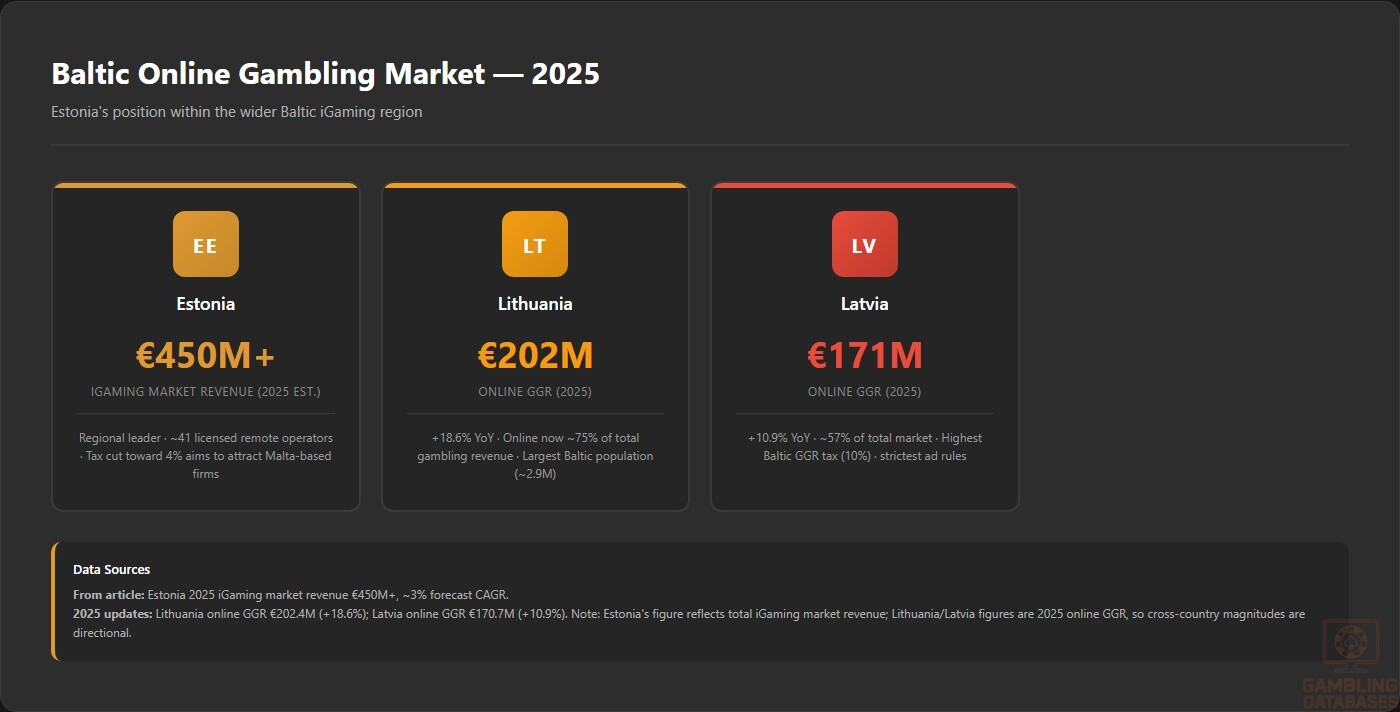
| Market Size (2025 Revenue) | €450+ million |
| CAGR Forecast (2025-2029) | ~3% |
| Average Revenue Per User (ARPU) | €250-300 annually |
| Market Penetration | ~30% online gambling participation |
| Responsible Gambling Measures | Mandatory self-exclusion, deposit limits, advertising restrictions |
| Compliance Reporting Frequency | Monthly |
| Advertising Restrictions | Target audience limits, mandatory warnings, time restrictions |
| Enforcement Actions | Fines, license suspensions, operational audits |
Section 1: Regulatory Framework and Legal Environment
Current Gambling Regulation Status
Estonia maintains a comprehensive regulatory framework covering all forms of gambling including land-based casinos, slot machine halls, betting shops, lotteries, and online gambling platforms. The Gambling Act governs all gaming activities, prescribing licensing obligations, operational standards, player protection measures, and tax obligations.
Land-based gambling is dominated by licensed casinos and betting shops primarily located in Tallinn and major urban centers. The category includes commercial casinos offering table games, electronic slot venues, and regulated sports betting outlets operated by licensed entities. Slot machine halls exist but have reduced in number as regulatory emphasis shifts towards digital gambling.
Online gambling activities are strictly licensed. Estonia permits a wide range of remote gambling services, including online casinos, sportsbooks, poker, lottery games, and virtual gaming. Digital operators must comply with stringent AML/KYC protocols and responsible gambling measures.
Licensed Operators and Market Players
The Estonian gambling market features approximately 30 licensed operators active across land-based and online segments. Major players include OlyBet, TonyBet, Betsafe, Optibet, and Parklane Casino, combining international and domestic market leaders. The market exhibits moderate concentration with competitive dynamics influenced by licensing transparency and regulatory consistency.
Operators employ locally tailored marketing strategies and technology platforms optimized for the Estonian digital consumer profile. Increasing attention to compliance and player protection defines entry and operational viability, favoring technologically sophisticated and legally compliant entities.
Licensing Framework and Requirements
The licensing authority, the Estonian Tax and Customs Board (EMTA), administers licensing under the Gambling Act. Applicants must demonstrate financial stability, technical capability, and regulatory compliance readiness. License categories include remote gambling, land-based casinos, and betting intermediary licenses.
License application costs range between €100,000 and €200,000, with a processing timeline from 60 to 90 days. EMTA requires licenses to be renewed annually, demanding ongoing reporting and transparency. The minimum capital requirement is approximately €350,000, reflecting a commitment to financial soundness.
The application process involves submission of detailed documentation:
- Corporate registration certificate and articles of association
- Audited financial statements for the last three years
- Business plans including market and financial projections
- Technical system documentation and Random Number Generator (RNG) certification
- Background checks on directors and beneficial owners
- Proof of compliance with AML/KYC regulations
- Evidence of minimum required capital deposit
Physical presence is mandatory in terms of a registered legal entity within Estonia, but no physical office or local personnel are explicitly required. Foreign ownership is unrestricted, though local representatives for communication with regulators may be necessary.
Compliance Obligations and Monitoring
Operators must enforce age verification, with the legal gambling age set at 21 years. KYC and AML compliance are rigorously monitored through mandatory player identification and transaction screening. Reporting obligations include monthly financial and operational reports submitted to EMTA.
- Age verification to prevent underage gambling
- Comprehensive KYC identification procedures
- Transaction and activity monitoring for AML compliance
- Implementation of self-exclusion and deposit limit systems
- Mandatory responsible gambling messaging and player information disclosure
Financial oversight includes detailed transaction monitoring, audit rights for EMTA, and operational transparency measures. Reporting cycles are monthly and are critical for maintaining licensing compliance.
Taxation Structure and Financial Obligations
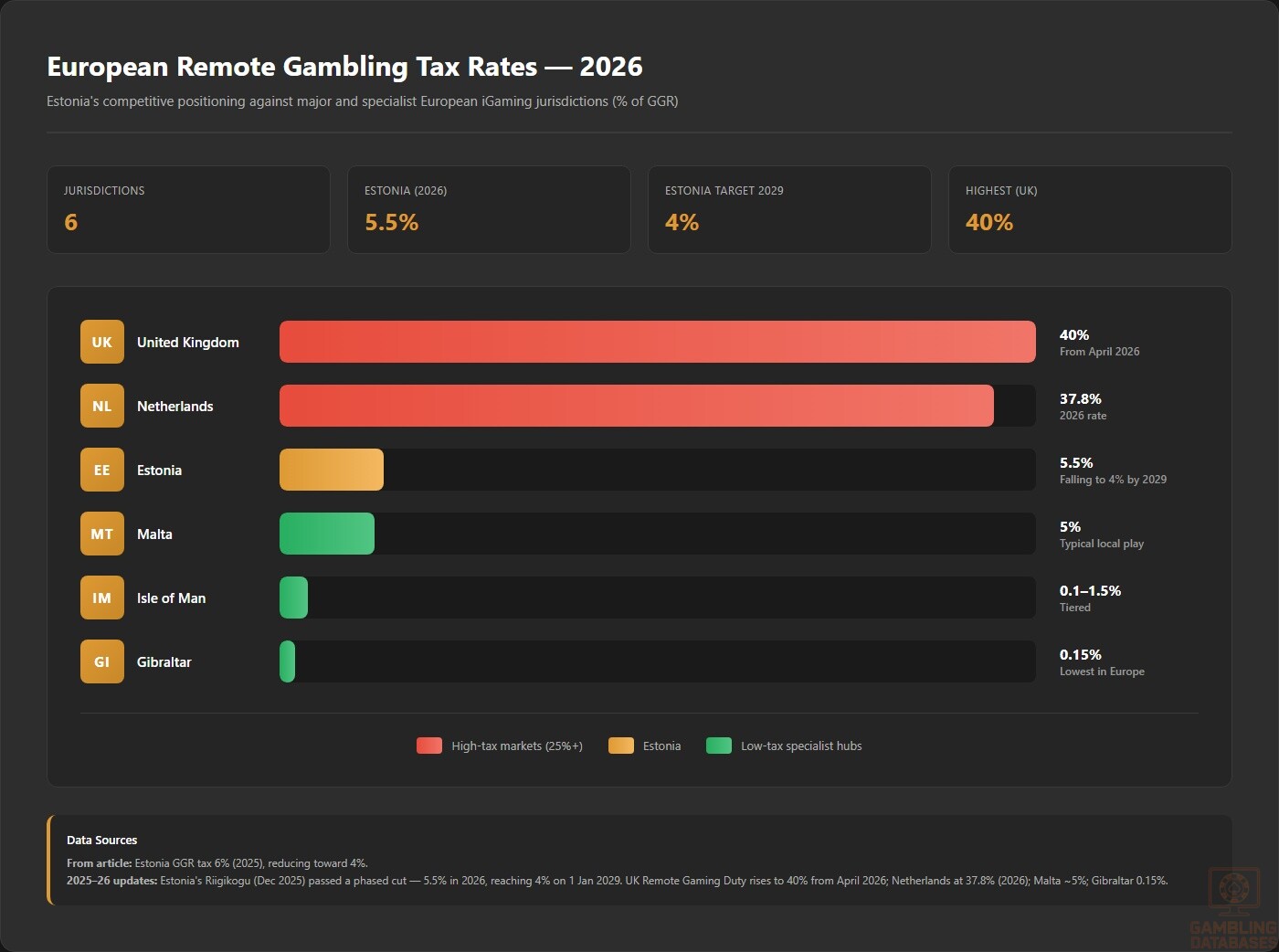
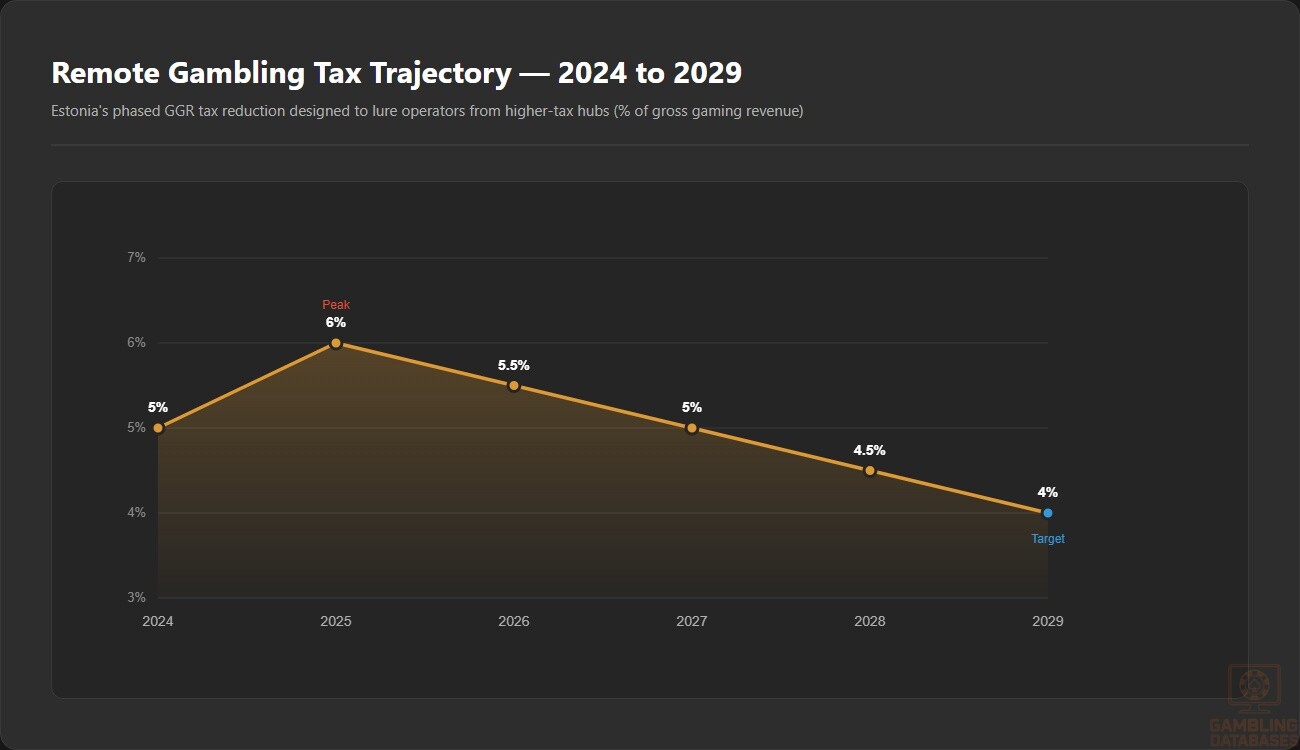
Players are exempt from direct taxation on gambling winnings, with operators bearing all fiscal responsibilities. The gross gaming revenue tax stands at 6% currently, planned to reduce to 4% by 2028 to boost market competitiveness. Corporate income tax is levied only on distributed profits at 22%, fostering reinvestment.
| Game Type | GGR Tax Rate |
|---|---|
| Online Casino Games | 6% (reducing to 4% by 2028) |
| Sports Betting | 6% |
| Lotteries | 6% |
| Land-Based Casinos | 6% |
License fees and renewal charges are fixed and payable annually. Operators must comply with statutory financial reporting and submit periodic tax returns underscoring full financial transparency.
The Estonian gambling market’s financial performance has increased steadily, supported by rising online activity. Total wagering and tax revenues have grown year-over-year, reflecting broader digital adoption and market maturation.
Advertising and Marketing Restrictions
Advertising is regulated to minimize exposure to minors and vulnerable groups. Permitted channels include digital, television, and print media, provided gambling is not glamorized, misleading claims are prohibited, and mandatory responsible gambling disclaimers are included.
- Prohibition of targeting minors or vulnerable persons
- Mandatory inclusion of responsible gambling messages
- Prohibition of misleading or exaggerated claims
- Restrictions on advertising during certain hours (e.g., late night)
- Sponsorship constraints on events attracting underage audiences
Recent Regulatory Changes and Their Impact
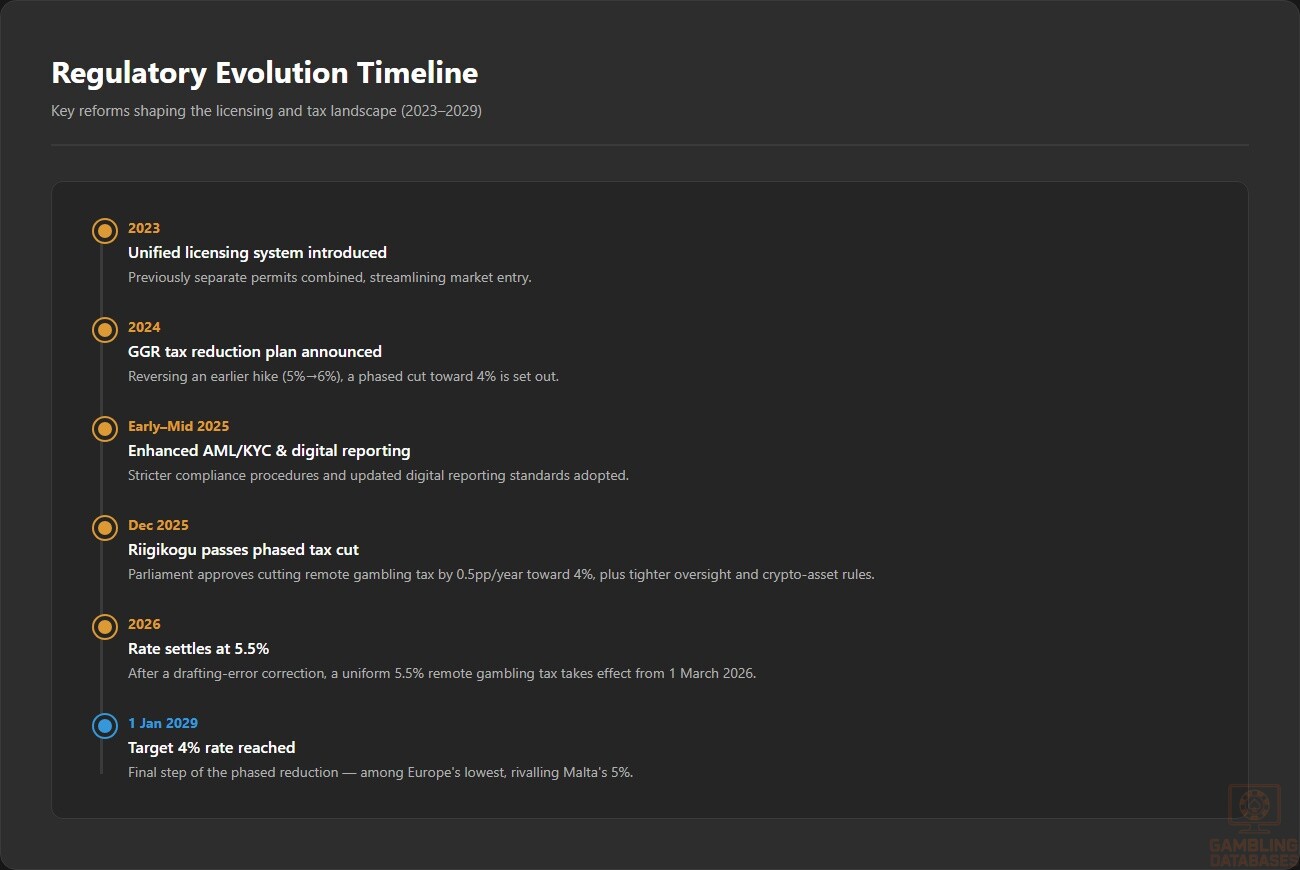
- 2023 introduction of unified licensing system combining previous separate permits
- GGR tax reduction plan announced in 2024 to start in 2025
- Enhanced AML/KYC procedures adopted in early 2025
- Digital reporting and compliance standards updated mid-2025
These amendments have accelerated licensing timelines, reduced operator costs, and improved regulatory clarity, enabling faster market entry and increased investor confidence.
Enforcement Mechanisms and Penalties
EMTA enforces rigorous compliance inspections and can impose penalties ranging from fines to license suspension or revocation. Enforcement emphasis targets disciplinary measures for AML breaches, underage access, and advertising violations.
- Monetary fines proportional to violation severity
- License suspension or revocation for repeat offences
- Operational audits and compliance inspections
- Mandated corrective action plans for detected non-compliance
- Public disclosure of enforcement actions to maintain market integrity
Section 2: Demographics and Consumer Analysis
Population Demographics and Distribution
As of early 2025, Estonia’s population is approximately 1.37 million, reflecting a slight decline due to natural decrease despite modest positive net migration. The median age stands at 42.8 years, indicating an aging demographic typical of many Northern European nations. Gender distribution leans slightly female, with approximately 877 males per 1,000 females, highlighting a skew common in aging populations.
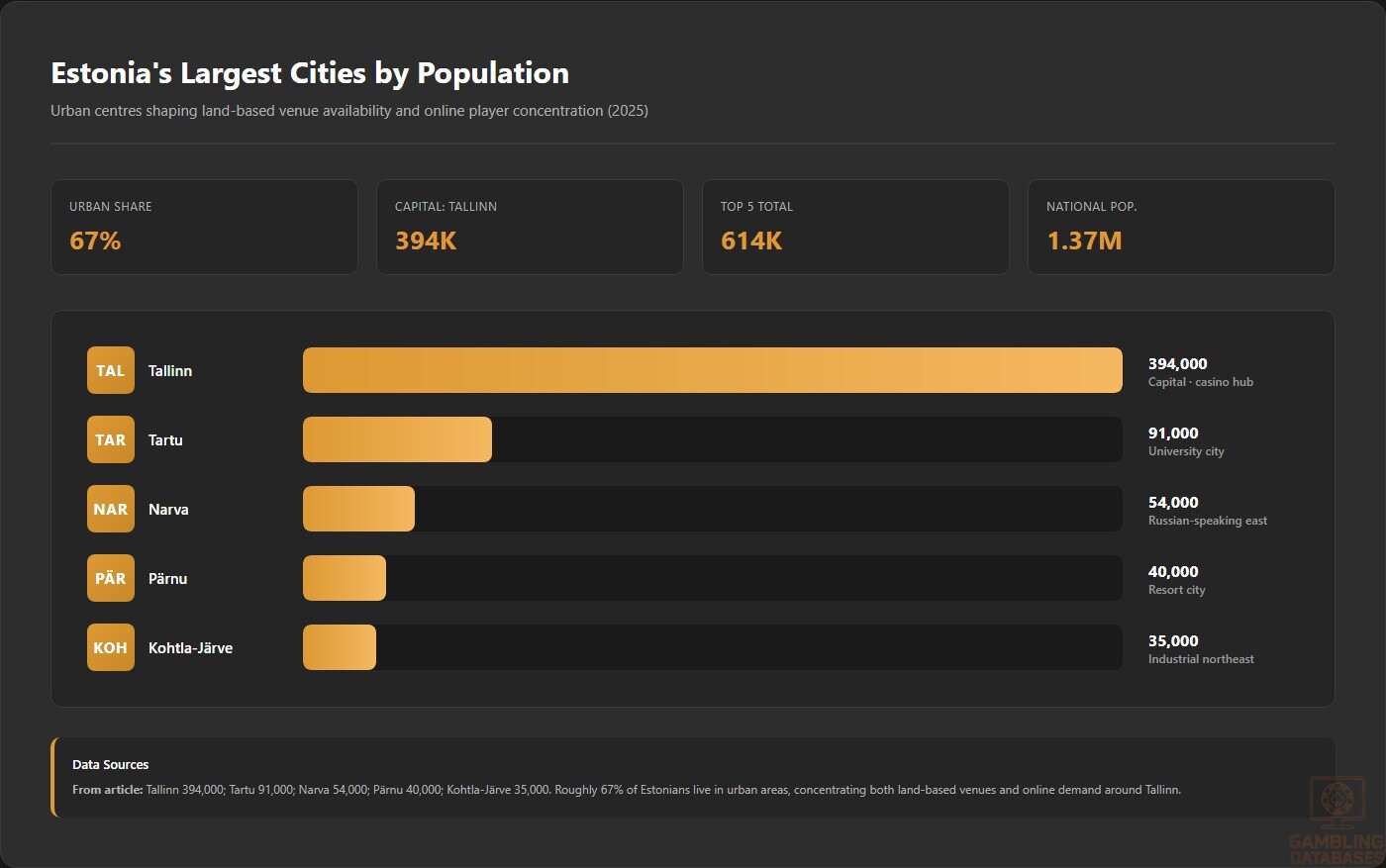
Estonia is predominantly urbanized, with about 67% of the population residing in urban areas. Tallinn, the capital, is the largest city with nearly 394,000 residents, followed by Tartu and Narva. The rural population, dispersed mainly in the eastern and southern regions, exhibits lower population density and limited connectivity, influencing localized gambling venue availability and online access patterns.
| Age Group | Percentage of Population |
|---|---|
| 0-14 years | 15.5% |
| 15-24 years | 11.6% |
| 25-54 years | 43.8% |
| 55-64 years | 13.1% |
| 65 years and over | 16.0% |
- Tallinn: 394,000
- Tartu: 91,000
- Narva: 54,000
- Pärnu: 40,000
- Kohtla-Järve: 35,000
Economic Indicators and Consumer Spending Power
Estonia’s economy demonstrates steady yet cautious growth, with real GDP expansion estimated at 1.1% for 2025 and projected to rise to 2.3% by 2026. Driven largely by consumption and increased public investment, economic growth faces external risks from global uncertainty and tax hikes. The country’s GDP reached approximately €36.5 billion in 2024, with GDP per capita near €27,000, positioning Estonia among the higher-income Baltic states.
Disposable income levels have seen gradual improvement, supported by low unemployment rates near 7.6% and moderate inflation pressures of approximately 3.8%. Income inequality remains moderate, with middle-income households expanding their consumption capacity. Consumer spending patterns reflect a digital orientation, with increasing expenditure on online services including iGaming entertainment.
| Indicator | Value |
|---|---|
| GDP Growth Rate | 1.1% |
| GDP per Capita | €27,000 |
| Unemployment Rate | 7.6% |
| Inflation Rate | 3.8% |
| Government Debt to GDP | 23.8% |
Education, Skills, and Digital Literacy
Estonia is widely recognized for its advanced education system and digital literacy, with a literacy rate approaching 100%. The country invests heavily in digital skills development, reflected in broad adoption of e-governance and IT services. The workforce possesses strong competencies in technology, programming, and digital innovation, which underpins Estonia’s status as a leading digital society in Europe.
Higher education institutions emphasize STEM fields, bolstering talent pipelines essential for sustaining growth in digital sectors including iGaming technology and digital payment solutions. Digital inclusion programs ensure that a majority of the population accesses and efficiently uses online services, promoting widespread comfort with online gambling platforms.
Cultural and Social Factors
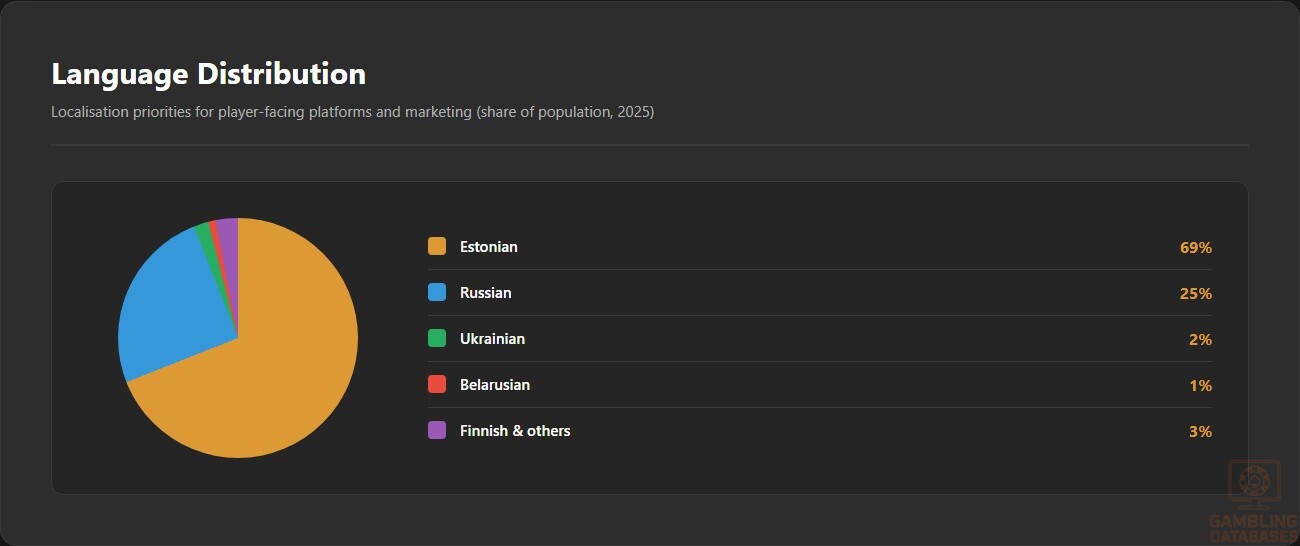
The primary language in Estonia is Estonian, spoken by approximately 70% of the population, accompanied by a significant Russian-speaking minority constituting roughly 25%. English is widely spoken, especially among younger demographics and in business contexts, facilitating international communication and marketing.
- Estonian (69%)
- Russian (25%)
- Ukrainian (2%)
- Belarusian (1%)
- Finnish and others (3%)
Culturally, gambling enjoys moderate social acceptance, viewed generally as an entertainment activity rather than a vice. Religious influences are minimal in daily social behaviors, allowing flexible marketing and product offerings. Foreign gaming brands are largely welcomed, benefiting from Estonia’s open attitude toward innovation and international trade.
Concerning problem gambling, prevalence stands at approximately 0.5-1% of the adult population exhibiting risky behavior patterns. The government and industry maintain ongoing initiatives to support responsible gambling through self-exclusion programs, public awareness campaigns, and mandatory contributions to social funds dedicated to addiction prevention.
- National helplines and counseling services
- Self-exclusion registries for operators
- Mandatory responsible gambling messages in advertisements
- Funding for research on gambling addiction
- Collaboration with NGOs on prevention programs
Political Structure and Governance
Estonia operates as a parliamentary republic with stable governance and a pro-business regulatory environment. The government ensures transparency and consistency in digital policy frameworks, fostering an attractive atmosphere for iGaming investments. Membership in the European Union aligns Estonia with harmonized regulatory standards, facilitating market access across borders.
Political stability and supportive international relations enhance confidence for foreign operators seeking local partnerships or market entry. Estonia’s digital government initiatives, such as e-Residency, showcase openness to innovation and global connectivity.
Technology Adoption and Digital Behavior
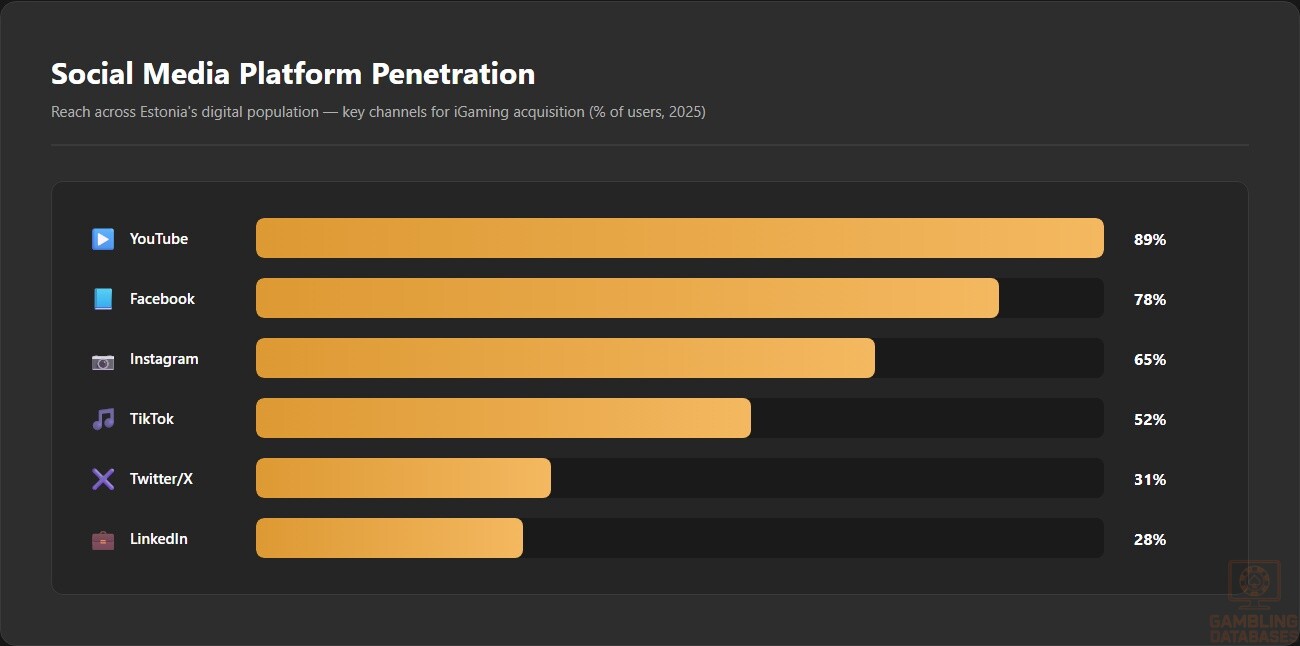
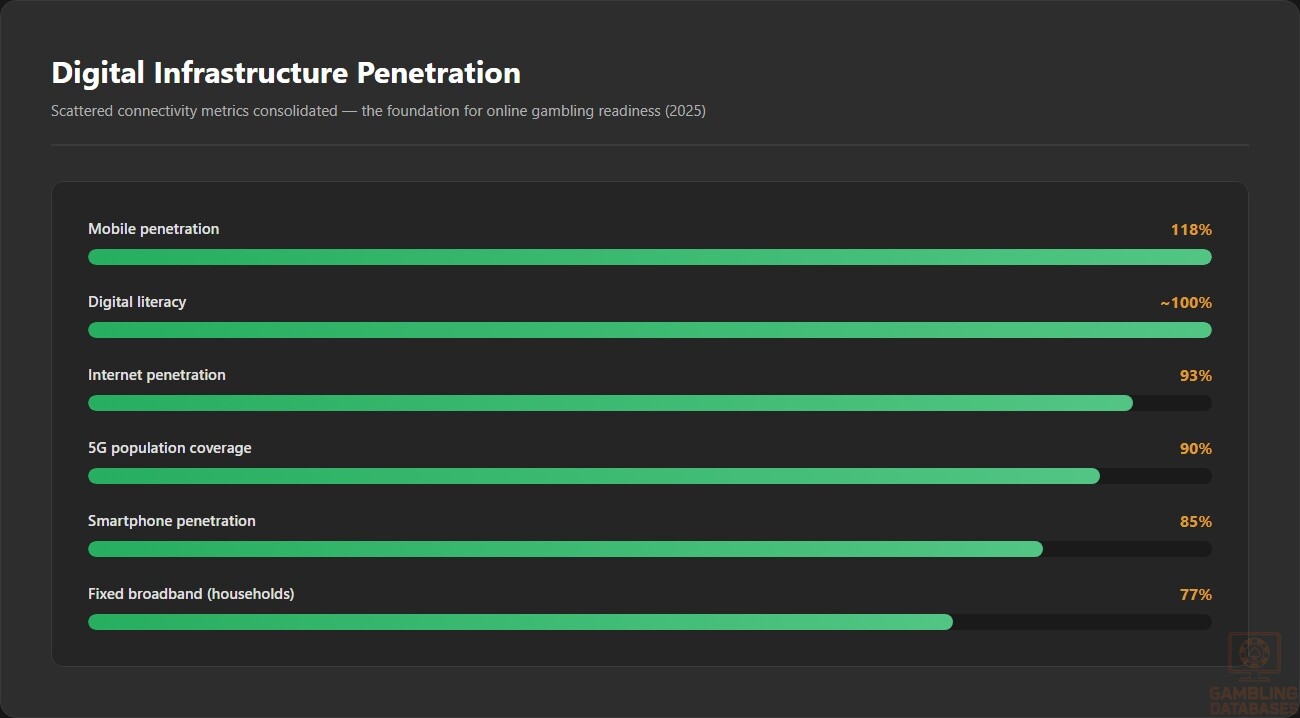
Internet penetration stands at approximately 93% with over 1.26 million internet users as of 2025. Mobile broadband adoption exceeds desktop use, supported by median mobile internet speeds above 100 Mbps, fostering strong digital engagement. Daily internet usage averages around 6 hours per user, with high interaction on digital platforms facilitating online leisure activities including iGaming.
- YouTube: 89% penetration
- Facebook: 78% penetration
- Instagram: 65% penetration
- TikTok: 52% penetration
- Twitter: 31% penetration
- LinkedIn: 28% penetration
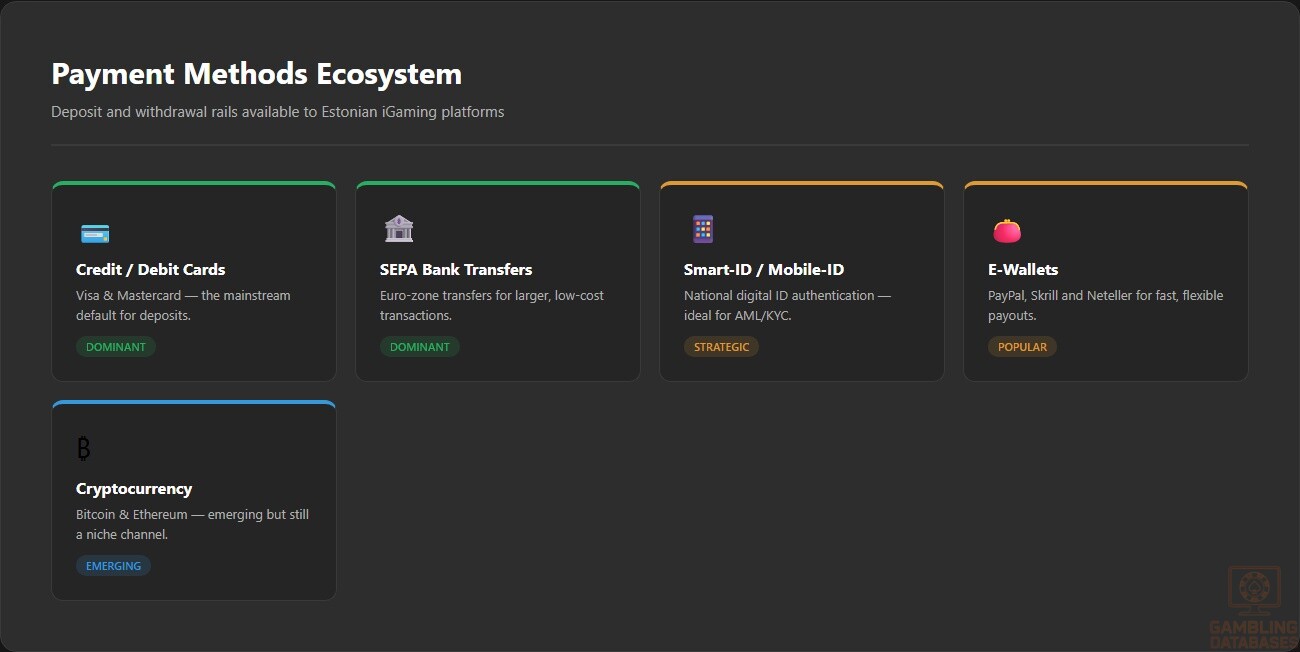
Digital payments show rapid growth, with widespread adoption of bank cards, e-wallets, and instant payments integrated into ecommerce and gaming platforms. Cryptocurrency use is emerging but remains niche. The national ID system and e-Residency program underpin secure digital interactions, which improves user trust and drives gambling platform adoption.
- Credit/Debit Cards
- Bank Transfers (SEPA)
- Mobile Payments (Smart-ID, Mobile-ID)
- E-Wallets (PayPal, Skrill)
- Cryptocurrency (Bitcoin, Ethereum – emerging)
Gaming and Gambling Preferences
Approximately 70% of the adult population in Estonia has engaged in gambling at least once, with around 30% participating in online gambling activities. Casino games, sports betting, and poker represent the dominant game types, reflecting consumer preference for diverse, engaging formats.
- Casino Slots
- Sports Betting
- Online Poker
- Lotteries
- Live Dealer Games
Consumer behavior shows peak gambling sessions occurring during evenings and weekends, with average session durations between 30 minutes to 1.5 hours. Players exhibit high platform loyalty, particularly for operators offering seamless mobile experiences and diverse payment options. Retention efforts focus on personalized promotions and gamification mechanics that maintain engagement.
| Type of Gambling | Participation Rate (%) |
|---|---|
| Lifetime Gambling Experience | 70% |
| Online Gambling Participation | 30% |
| Sports Betting | 20% |
| Casino Games | 45% |
| Lotteries | 35% |
Section 3: Technology Infrastructure and Business Environment
Internet and Digital Infrastructure
Estonia boasts advanced internet infrastructure with an estimated 93% internet penetration as of 2025, supported by extensive fiber optic deployments and fast broadband connectivity. Fixed broadband access covers approximately 77% of households with average speeds above 100 Mbps, exceeding the EU average. Mobile broadband is widely available, and mobile data consumption continues to rise driven by user demand for streaming, online gaming, and remote services.
Infrastructure investments include government subsidies totaling around €89 million targeting rural connectivity and market failure areas, alongside private sector contributions to build out high-speed access nationwide. Network reliability ranks highly, underpinned by robust cybersecurity frameworks and digital governance initiatives, helping to ensure seamless iGaming platform operations and secure player experiences.
5G and Future Technology Deployment
Estonia is among the Baltic front-runners in 5G rollout, with commercial 5G coverage currently available to nearly 90% of the population. Major cities and transport corridors have prioritized 5G deployment, with plans to achieve full national coverage by 2030. Industry leaders Telia, Elisa, and Tele2 actively expand their 5G networks to deliver ultra-fast, low-latency connectivity essential for next-generation gaming applications.
Future plans include preparing for 6G technology adoption, aligned with the Digital Agenda 2030 strategy focusing on gigabit connectivity and digital government services. Ongoing collaboration with neighboring Baltic states aims to develop integrated communication corridors ensuring cross-border 5G coverage and harmonization.
Mobile Technology Ecosystem
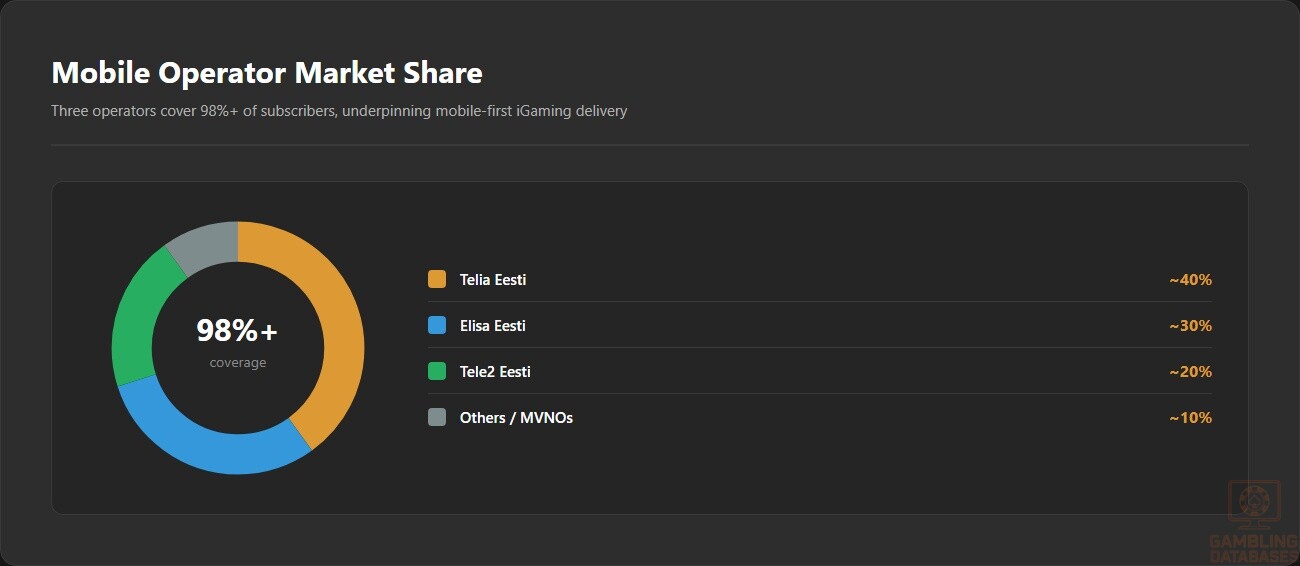
The Estonian mobile market is dominated by three main operators: Telia Eesti, Elisa Eesti, and Tele2 Eesti, collectively covering over 98% of subscribers with comprehensive 4G and rapidly expanding 5G networks. Telia holds the largest market share with about 40%, delivering the widest coverage and highest speeds, while Elisa commands around 30%, offering competitive pricing and solid network performance. Tele2, the third operator, holds about 20% market share and is known for affordable service with increasing 5G penetration.
- Telia Eesti: ~40% market share, widest 4G/5G coverage
- Elisa Eesti: ~30% market share, strong mid-range pricing
- Tele2 Eesti: ~20% market share, budget-friendly options
Smartphone penetration is high, surpassing 85%, with users favoring mid-to-high tier devices capable of 5G connectivity. Mobile usage trends indicate increasing preference for mobile browsing and entertainment, directly supporting growth in mobile iGaming platforms and services.
Financial Services and Payment Infrastructure
Estonia’s banking sector remains robust and technologically advanced, with widespread adoption of digital banking services and a competitive market structure. The main banks include Swedbank, SEB, Luminor, LHV Pank, and Coop Pank, each offering extensive online banking platforms suitable for facilitating iGaming transactions.
- Swedbank: Major digital banking provider with large user base
- SEB: International banking services with strong fintech integration
- Luminor: Focus on Baltic retail and corporate sectors
- LHV Pank: Local bank with pioneering digital payment solutions
- Coop Pank: Growing retail banking player with digital offerings
Payment methods favored by users encompass credit and debit cards, SEPA bank transfers, mobile payment solutions (Smart-ID, Mobile-ID), and popular e-wallets such as PayPal and Skrill. The country’s advanced digital ID infrastructure enables efficient, secure transaction authentication ideal for compliance with AML and KYC regulations.
- Credit and Debit Cards (Visa, Mastercard)
- SEPA Bank Transfers
- Mobile Payment Solutions (Smart-ID, Mobile-ID)
- E-wallets (PayPal, Skrill, Neteller)
- Cryptocurrencies (emerging adoption)
E-commerce and Digital Economy
Estonia’s e-commerce market is flourishing, projected to exceed €1 billion in revenue for 2025 driven by growing consumer trust and digital literacy. The seamless integration of digital IDs with payment systems accelerates online shopping and service adoption, including iGaming. Consumer confidence is bolstered by strong cybersecurity practices, transparent data protection laws, and active regulatory oversight.
Digital service sectors, including SaaS, fintech, and gaming, play a significant role in the economy, benefiting from Estonia’s e-Residency program that attracts remote entrepreneurs and startups. This digital ecosystem fosters innovative business models and supports rapid market entry for iGaming operators.
Business Environment and Regulatory Framework
Estonia ranks highly in global ease of doing business indices, favored for efficient company registration, low bureaucracy, and transparent legal systems. Foreign investors enjoy strong protections, and Estonia actively promotes itself as an EU gateway for digital businesses. Corporate governance standards and compliance requirements align with EU norms, offering predictability for market entrants.
- Obtain e-Residency or register local representative
- Reserve and verify company name
- Prepare and submit registration documents online
- Open bank or payment system account
- Register for tax including VAT and corporate income tax
Available corporate structures include the Private Limited Company (OÜ), Joint-Stock Company (AS), and Branch office. The OÜ is preferred for most iGaming startups due to its flexible capital requirements and simple management. Foreign ownership is permitted without restrictions, facilitating international investment.
- Private Limited Company (OÜ)
- Joint-Stock Company (AS)
- Branch Office of Foreign Company
Registration typically takes less than two weeks, with costs ranging from €190 for business registry fees to additional expenses for legal and consultancy services. Digital registration portals and e-Residency expedite these processes substantially.
- Business Registry fee: ~€190
- Legal/consultancy fees: €1,000-5,000
- Bank account setup: €0-500
- Miscellaneous registrations and licenses as needed
- Tax registration: no cost
Taxation Framework
Estonia operates a distinctive corporate income tax system with a flat rate of 22% applied only on distributed profits, encouraging reinvestment and growth. This deferred taxation model is valued by entrepreneurs and supports capital accumulation within companies. The country holds numerous double taxation treaties, reducing withholding taxes on cross-border payments with key partners.
- United States
- Germany
- Finland
- Sweden
- Russia
- United Kingdom
Individuals face a flat personal income tax of 20%, with social security contributions collected separately. VAT applies at 20% standard rate, with certain goods and services exempted or zero-rated. The gaming sector is subject to specific gross gaming revenue taxes, currently at 6%, scheduled to gradually reduce to 4% by 2028.
Market Entry Considerations
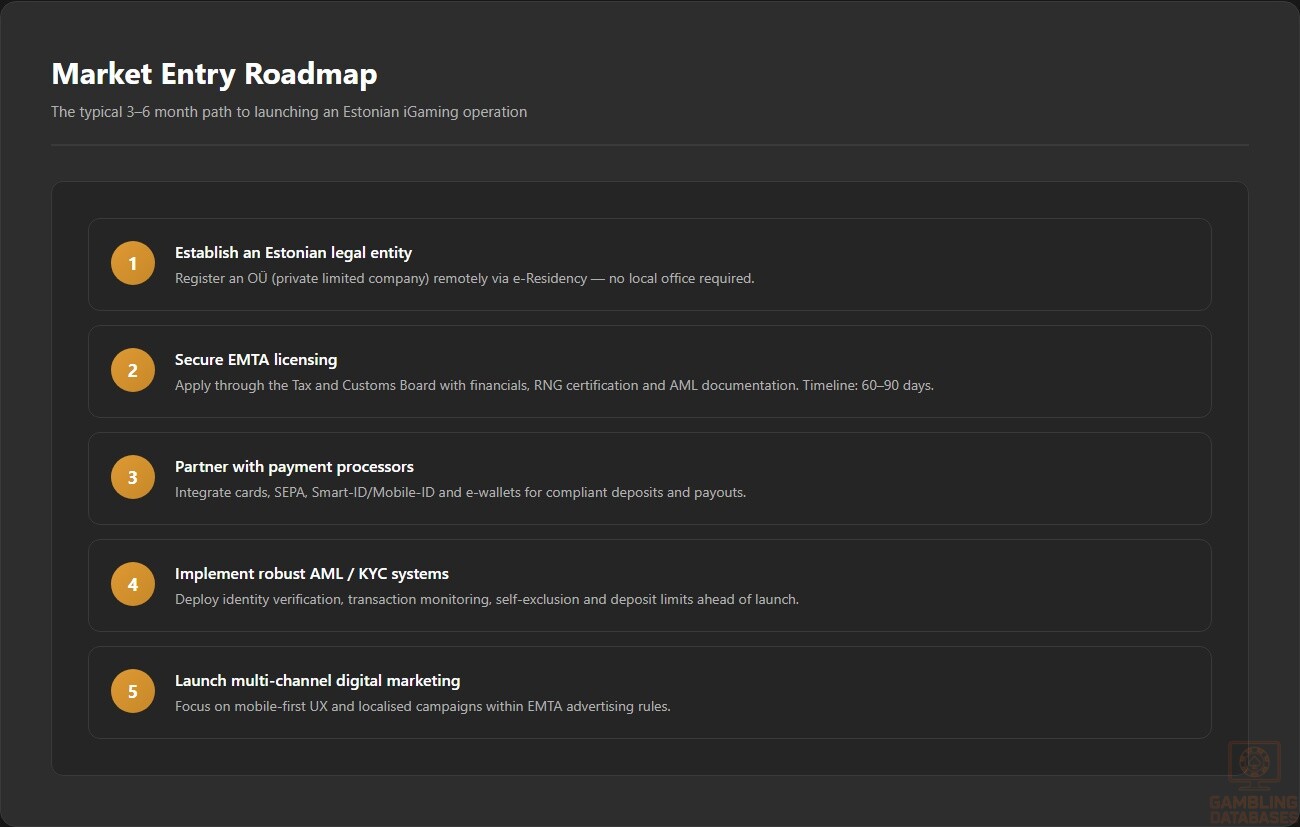
Optimal entry strategies focus on leveraging Estonia’s digital infrastructure and pro-business environment. Many operators utilize the e-Residency program for remote management combined with local partnerships for regulatory compliance and marketing. Emphasizing mobile-friendly platforms and secure payment integration is critical to capture Estonia’s digitally proficient user base.
- Establish Estonian legal entity via e-Residency
- Secure local licensing through EMTA
- Partner with established payment processors
- Implement robust AML and KYC systems
- Focus on multi-channel digital marketing
Typical initial investment requirements range from €300,000 to €600,000 covering licensing fees, technology acquisition, marketing, and operational working capital. Market entry timelines span from 3 to 6 months depending on business scale and regulatory processes. Success hinges on agility, regulatory adherence, and value propositions tailored to local consumer preferences.
| Cost Category | Estimated Range (€) |
|---|---|
| Licensing Fees | 100,000 – 200,000 |
| Company Registration & Legal | 10,000 – 30,000 |
| Technology & Platform Setup | 100,000 – 200,000 |
| Marketing & Customer Acquisition | 50,000 – 100,000 |
| Operational Costs (12 months) | 50,000 – 100,000 |
FAQ: Frequently Asked Questions
1. Is online gambling legal in Estonia?
Online gambling is fully legal and regulated in Estonia. The Estonian Tax and Customs Board (EMTA) oversees licensing and compliance. Operators must obtain a valid license and comply with stringent requirements for player protection, anti-money laundering, and responsible gambling. Multiple license types cover remote gambling, land-based operations, and lottery offerings.
2. What types of gambling licenses are available and what do they cover?
Several license categories exist including remote gambling licenses for online casinos and sports betting, land-based casino licenses, lottery licenses, and betting intermediary licenses. Each license type specifies permitted activities, operational requirements, and tax obligations. Remote gambling licenses are most relevant for iGaming operators and cover a broad range of digital games and betting products.
3. How much does an iGaming license cost and how long does it take to obtain?
License fees vary but typically range from €100,000 to €200,000 upfront. The application process can take from 60 to 90 days depending on completeness and operational readiness. Operators must submit detailed business plans, technical certifications, and comply with local regulatory standards. Renewal fees and ongoing compliance costs apply annually.
4. Can foreign companies obtain a gambling license?
Yes, foreign companies are eligible to apply for gambling licenses in Estonia without restrictions on ownership. Many leverage the e-Residency program to establish a local legal presence remotely. Regulatory authorities require clear compliance frameworks, local representation, and adherence to Estonian law regardless of operator domicile.
5. What are the tax obligations for iGaming operators?
Operators pay a gross gaming revenue (GGR) tax currently set at 6%, scheduled to decrease to 4% by 2028. Corporate income tax applies at 22% only on distributed profits, offering reinvestment incentives. VAT and other applicable taxes follow standard Estonian regulations. Annual license renewal fees and reporting obligations maintain fiscal transparency and control.
6. Are gambling winnings taxed for players?
Gambling winnings are generally exempt from personal income tax for players. Operators handle tax withholding via gross revenue tax systems, simplifying player obligations. This tax structure supports player acquisition and retention by ensuring winnings are not reduced by direct taxation.
7. What are the typical operational costs for running an online casino/sportsbook?
Key operational expenses include licensing fees, technology platform maintenance, staff salaries, marketing budgets, payment processing fees, and compliance costs. Licensing and regulatory fees represent significant fixed costs, while marketing and technology scale with user base growth. Efficient cost management and partner selection are critical for profitability.
8. What is the expected ROI timeline for entering this market?
Return on investment typically occurs within 2 to 3 years, influenced by market entry strategies, competitive positioning, and regulatory compliance. Early entrants may benefit from brand establishment and consumer trust, while newcomers face higher acquisition costs. Robust risk management and customer retention tactics expedite ROI realization.
9. What are the local presence requirements for operators?
Operators must maintain a legal entity registered in Estonia and appoint a local contact person or representative. Physical offices are not mandatory if managing the company remotely through e-Residency and digital tools. Compliance with local laws, including KYC, AML, and responsible gambling measures, is required regardless of physical presence.
10. What payment methods are available and recommended?
Estonia supports a diverse payment ecosystem including credit/debit cards, SEPA bank transfers, e-wallets like PayPal and Skrill, and mobile authentication via Smart-ID or Mobile-ID. Cryptocurrency usage is emerging but remains limited. Recommended methods emphasize security, speed, and regulatory compliance to optimize player experience.
11. What are the advertising and marketing restrictions?
Advertising must comply with regulations prohibiting targeting minors and requiring responsible gambling messaging. Restrictions include content censorship to avoid misleading claims and limitations on sponsorship and promotions during certain hours. All marketing channels must adhere to EMTA guidelines and ethical standards.
12. What responsible gambling measures are mandatory?
Mandatory measures include self-exclusion programs, deposit limits, mandatory player warnings in advertisements, staff training on problem gambling, and regular reporting to authorities. Operators contribute financially to government-supported addiction prevention and provide easy-to-access player support services.
13. How large is the iGaming market and what is the growth potential?
Estonia’s iGaming market revenue is estimated at over $450 million for 2025, with a projected CAGR of 3% through 2029. Online casino and sports betting dominate the market. Growth is driven by increasing digital penetration, supportive legislation, and rising consumer demand for interactive entertainment.
14. Who are the main competitors and what is their market share?
The market comprises approximately 30 licensed operators including domestic companies like OlyBet and TonyBet and international brands such as Betsafe. Market shares fluctuate but domestic operators often enjoy loyal local customer bases while international entrants leverage global platforms and marketing networks.
15. What are the player preferences and typical spending patterns?
Players prefer mobile-optimized casinos and diverse game libraries featuring slots, sports betting, and live dealer games. Peak activity periods are evenings and weekends with average session lengths of 30-90 minutes. Spending tends to be moderate but consistent among frequent users, with retention driven by promotions and seamless user experience.
16. What are the key success factors and main challenges for new entrants?
Success relies on understanding local regulatory nuances, deploying user-friendly technology, maintaining strong AML/KYC compliance, and delivering targeted marketing. Challenges include competitive pressure, evolving tax rates, and strict responsible gambling requirements. Building trust and operational agility are crucial for establishing market presence.
- Strong local regulatory knowledge
- Robust technology and payment systems
- Effective compliance frameworks
- Targeted marketing and customer retention
- Flexible adaptation to policy changes
Sources and References
- Estonian Tax and Customs Board (EMTA) – Official Website – https://www.emta.ee
- Statistics Estonia – Population and Economic Indicators – https://stat.ee
- European Commission – Digital Strategy and Connectivity – https://digital-strategy.ec.europa.eu/en/policies/digital-connectivity-estonia
- IGaming Today – Estonia Market Research Report 2025 – https://www.igamingtoday.com/estonia-igaming-market-research-report/
- World Bank – Doing Business Report 2024 – https://www.worldbank.org/en/programs/business-enabling-environment
- Stripe – Payments in Estonia Guide 2025 – https://stripe.com/resources/more/payments-in-estonia
- Tele2 Estonia – 5G Network Expansion Announcement 2025 – https://www.thefastmode.com
- Telia Company – Mobile Network Advances – https://www.teliacompany.com
- Eesti Pank – Central Bank of Estonia Strategy 2025-2028 – https://www.eestipank.ee/en
- Consultant.net.ua – Company Registration in Estonia Guide – https://consultant.net.ua
- EY Estonia – Tax Changes 2025 – https://www.ey.com/en_ee/insights/tax/significant-tax-changes-in-estonia-in-2025-2026
- Just Digi – Estonian National Digital Decade Roadmap – https://www.justdigi.ee/sites/default/files/documents/2025-03/Estonian%20National%20Digital%20Decade%20Strategic%20Roadmap%202025.pdf
- Population Pyramid – Estonia Demographics 2025 – https://www.populationpyramid.net/estonia/2025/
- Speedtest.net – Fastest 5G Network Estonia Q1-Q2 2025 – https://www.speedtest.net/awards/reports/2025/2025_Estonia_5G_Mobile_Q1Q2.pdf
- Reuters – Estonian Casino Market Growth 2025 – https://www.reuters.com/press-releases/estonian-casino-market-growth-momentum-regulatory-shifts-boonuspart-study-2025-10-03/
- Digital 2025 Report – Estonia – https://datareportal.com/reports/digital-2025-estonia
- EY Global – Estonia Tax System – https://www.ey.com/en_gl/technical/tax-alerts/estonia—significant-tax-changes-in-2024-and-2025
- IGamingToday – Estonia Tax Cuts Proposal 2025 – https://www.igamingtoday.com/estonia-mps-plan-gambling-tax-cuts-to-attract-remote-online-gaming-operators/
- Estonian World – Estonia Population Shifts 2025 – https://estonianworld.com/life/estonias-population-shrinks/
- Digital Payments – Estonia Market Forecast – https://www.statista.com/outlook/fmo/payments/digital-payments/estonia
- FineVolution – CIT Estonia 2025 Key Changes – https://finevolution.pl/en/post/cit-estonia-2025-updated-taxation-system-for-business/
- LegalPilot – Estonia Gambling Law Overview – https://legalpilot.com/country/estonia/
- Advennt – Online Gaming Estonia – https://www.advennt.com/jurisdictions/online-gaming/estonia/
- Q1Q2 25 Estonia 5G Network Report – https://www.speedtest.net/awards/reports/2025/2025_Estonia_5G_Mobile_Q1Q2.pdf
- Manimama – Estonia E-Residency & Company Registration Guide – https://manimama.eu/estonia-e-residency-amp-company-registration-full-guide/




Quick question about player eligibility here – does Estonia’s licensing under EMTA cover EU residents only, or can folks from outside the EU access these operators? I’m in Canada and wondering if the 30 licensed operators list includes any that accept North American players. Also, do they use geolocation blocking or is it more of a self-declaration thing on signup?