Ethiopia’s iGaming landscape in 2026 presents a cautiously regulated market primarily focused on sports betting and lotteries. While online casino regulation remains absent, the growing youth population, rising mobile connectivity, and government-controlled licensing create a unique environment for market entry.
Regulated under the National Lottery Administration (NLA), the sector is tightly controlled with licensing restricted to local entities, promoting responsible gambling and public protection amid rapid market growth.
Executive Summary: Key Market Indicators
| Metric | Value |
|---|---|
| Legal Gambling Status | Legal for sports betting and lotteries; online casinos unregulated |
| Regulatory Authority | National Lottery Administration (NLA) |
| Gambling Legislation | National Lottery Administration Re-Establishment Proclamation 2009 & Sports-Betting Lottery Directive 2021 |
| Licensed Gambling Types | Sports betting, lotteries, raffles; online casinos prohibited |
| Population | ~125 million |
| Youth Population | Over 70% under age 30 |
| GDP (Nominal) | Approx. $125 billion (2024 est.) |
| GDP Per Capita | ~$1,000 (Nominal) |
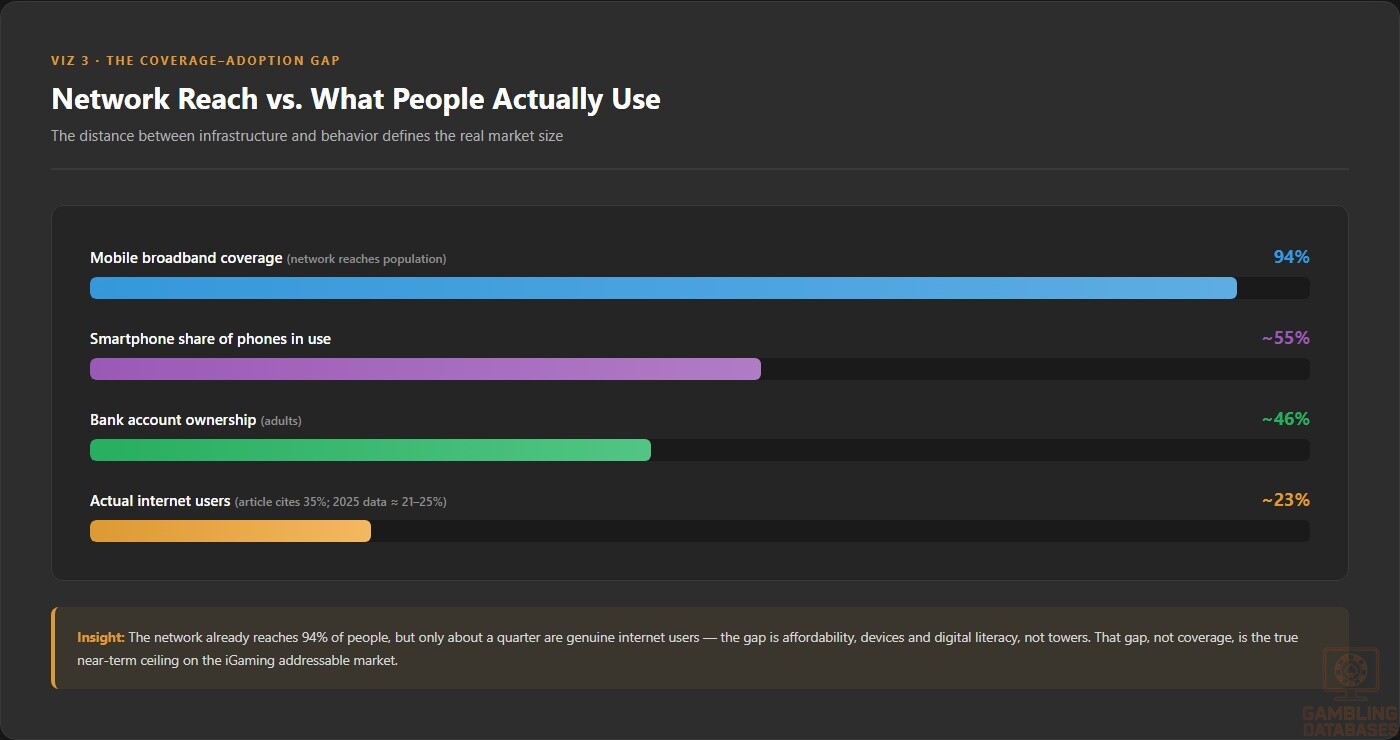
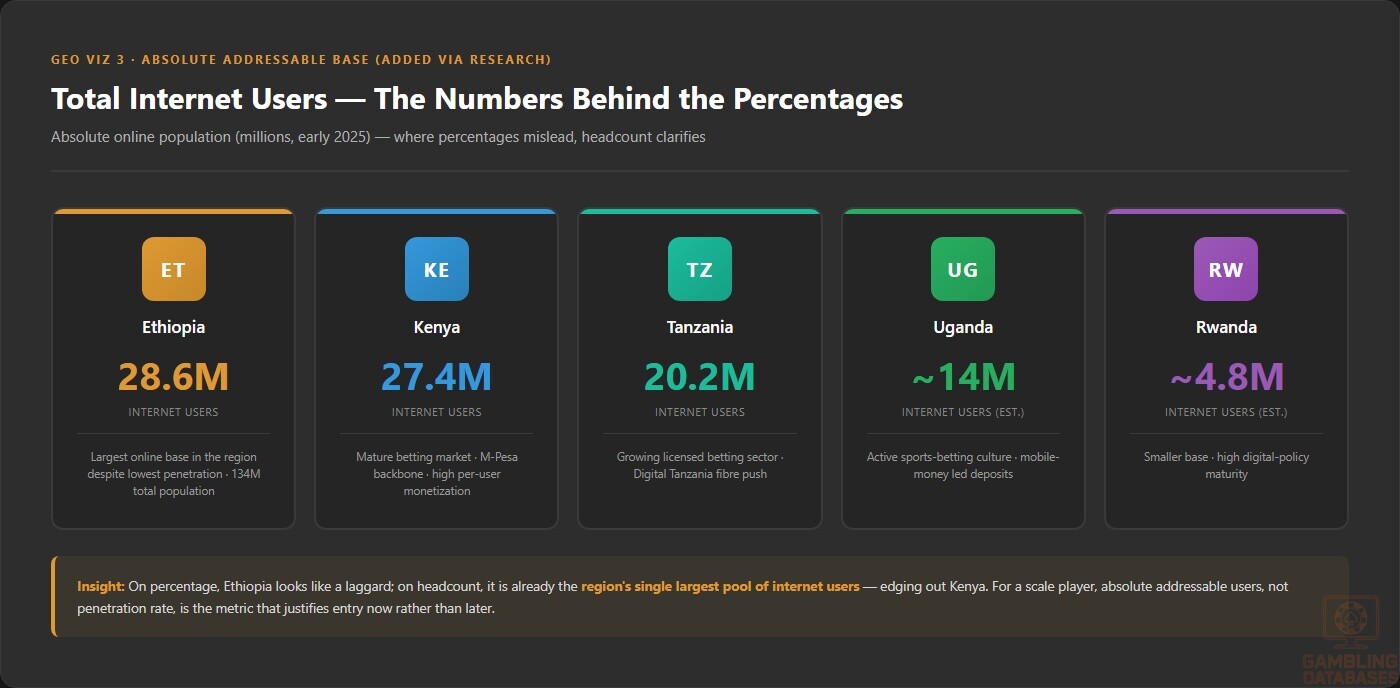
| Internet Penetration | ~35% |
| Mobile Penetration | Over 60% |
| License Fee (Sports Betting) | ETB 500,000 (~€3,400 / $3,400) |
| License Renewal Fee | ETB 100,000 |
| Bank Guarantee | ETB 1.5 million (~$26,000) |
| Tax on Operator Turnover | 15% |
| Tax on Player Winnings | 20-25% |
| License Issuance Restriction | Only to companies with Ethiopian citizen co-founder |
| License Application Timeline | Approx. 2 months to commencement after approval |
| Market Size (2025 Revenue) | Estimated $21.45 million |
| Market Growth Forecast (CAGR 2025-2031) | Moderate growth expected; regulatory changes may impact pace |
| Average Revenue Per User (ARPU) | Relatively low; constrained by income levels & taxes |
| Market Penetration | Low to moderate, hindered by internet access |
| Foreign Operator Restrictions | Prohibited from direct B2C operations; allowed as service providers |
| Responsible Gambling Measures | Mandatory; focus on youth protection, self-exclusion available |
| Compliance Monitoring | Central electronic management system planned |
| Operational Start Deadline | Within 60 days post-license approval |
| Enforcement Actions | License revocation for non-compliance, fines imposed |
Section 1: Regulatory Framework and Legal Environment
Current Gambling Regulation Status
Ethiopia’s gambling industry is primarily regulated by the National Lottery Administration (NLA), operating under the Ministry of Finance and Economic Development. Its regulatory powers stem from the National Lottery Administration Re-Establishment Proclamation of 2009 and the Sports-Betting Lottery Directive enacted in 2021. These frameworks specifically permit sports betting and lottery betting as the sole legally authorized gambling activities.
The legal environment restricts the issuance of licenses to these activities only; online casinos and other digital gaming formats remain outside the current regulatory scope and effectively prohibited, reflecting a cautious approach to gambling expansion.
Land-based casino operations exist but are minimally regulated and not broadly licensed, while sports betting and lottery games overwhelmingly dominate the market. The government implements strong prohibitions on unauthorized gambling activities, enforcing crackdowns on illegal venues.
Land-Based Gambling Activities
Traditional gambling in Ethiopia is limited and controlled, centered mainly on the National Lottery and select sports betting venues officially licensed by the NLA. Land-based gambling venues include:
- National Lottery outlets scattered across urban and regional centers
- Licensed sports betting shops focusing on domestic and international events
- Occasional raffles and tombola organized under strict regulation
Casino-type venues and slot machine halls are rare and lack clear legal frameworks, causing an informal or unregulated presence in this segment.
Online Gambling Framework
The Ethiopian regulatory framework for online gambling is underdeveloped. No specific laws or licenses govern online casinos, poker, or other digital games. The NLA’s jurisdiction formally excludes online casino operations, leaving the sector unregulated and effectively illegal for domestic providers.
Foreign companies cannot directly offer B2C online gambling services in Ethiopia, though they can operate as technology and service providers for licensed local operators. This restricts international expansion but offers scope for digital infrastructure providers in the local market.
The government monitors and restricts unauthorized online gambling, with ongoing efforts to control illegal betting platforms alongside efforts to modernize oversight technology, including plans to implement a centralized electronic monitoring system.
Licensed Operators and Market Players
Market entry is highly restricted, as only companies with at least one Ethiopian citizen co-founder can obtain a gambling license. This exclusivity limits foreign direct operational control but encourages partnerships and local joint ventures.
The competitive landscape is dominated by established local sports betting and lottery operators licensed by the NLA. These entities face strict compliance requirements and taxation, alongside supervision for responsible gambling enforcement.
Foreign operators typically participate as game developers, technology suppliers, or ancillary service providers, navigating regulation through partnerships rather than direct market access.
Licensing Framework and Requirements
Application Process and Eligibility
The licensing process for gambling operators is managed exclusively by the NLA. To be eligible, applicants must meet stringent financial, operational, and legal conditions designed to safeguard public interests and maintain market integrity.
The application process includes the following steps:
- Submission of a detailed business proposal demonstrating operational capability and compliance plans
- Provision of proof of a physical office location adhering to NLA guidelines
- Presentation of a bank guarantee amounting to ETB 1.5 million (~$26,000)
- Payment of the initial license fee of ETB 500,000 (~€3,400)
- Fulfillment of company registration and tax identification mandate
Following approval, licensees must commence operations within 60 days, or risk revocation. Licenses are renewable annually for a standard renewal fee of ETB 100,000.
Local Presence and Operational Requirements
Licensees must maintain physical offices in Ethiopia that comply with NLA standards, ensuring accessible local operations and regulatory oversight. The regulatory regime mandates local company formation with Ethiopian citizen involvement as a founding partner.
Foreign ownership in licensed gambling businesses is restricted, effectively requiring joint ventures or strategic partnerships with local investors for market entry. Operational personnel must also be locally based to satisfy regulatory expectations and support compliance monitoring.
Compliance Obligations and Monitoring
Player Protection and Identification
Ethiopian regulations emphasize protection against gambling-related harms, particularly among youth, who represent the majority of the population. Operators must implement robust age verification, Know Your Customer (KYC), and Anti-Money Laundering (AML) procedures to ensure legal compliance and reduce risks.
The mandatory player protection framework includes:
- Strict age verification minimizing underage participation
- Comprehensive customer identity checks conforming to national standards
- Ongoing monitoring of suspicious betting patterns to detect fraud
- Responsible gambling policies including self-exclusion programs
- Public awareness campaigns targeting gambling addiction risks
Operators are accountable for transparent information disclosures and must facilitate mechanisms for players to limit their participation voluntarily.
Financial Monitoring and Reporting
The NLA mandates rigorous financial reporting and transaction monitoring to ensure compliance and tax collection accuracy. Licensed operators submit periodic revenue and audit reports as required.
The reporting process involves multiple sequential steps:
- Monthly submission of detailed betting turnover and prize payout reports
- Reconciliation of financial records with transaction data
- Compliance audits by NLA-appointed inspectors
- Submission of annual audited financial statements
Failure to meet these reporting standards can result in penalties, fines, or license suspension.
Taxation Structure and Financial Obligations
Player Taxation
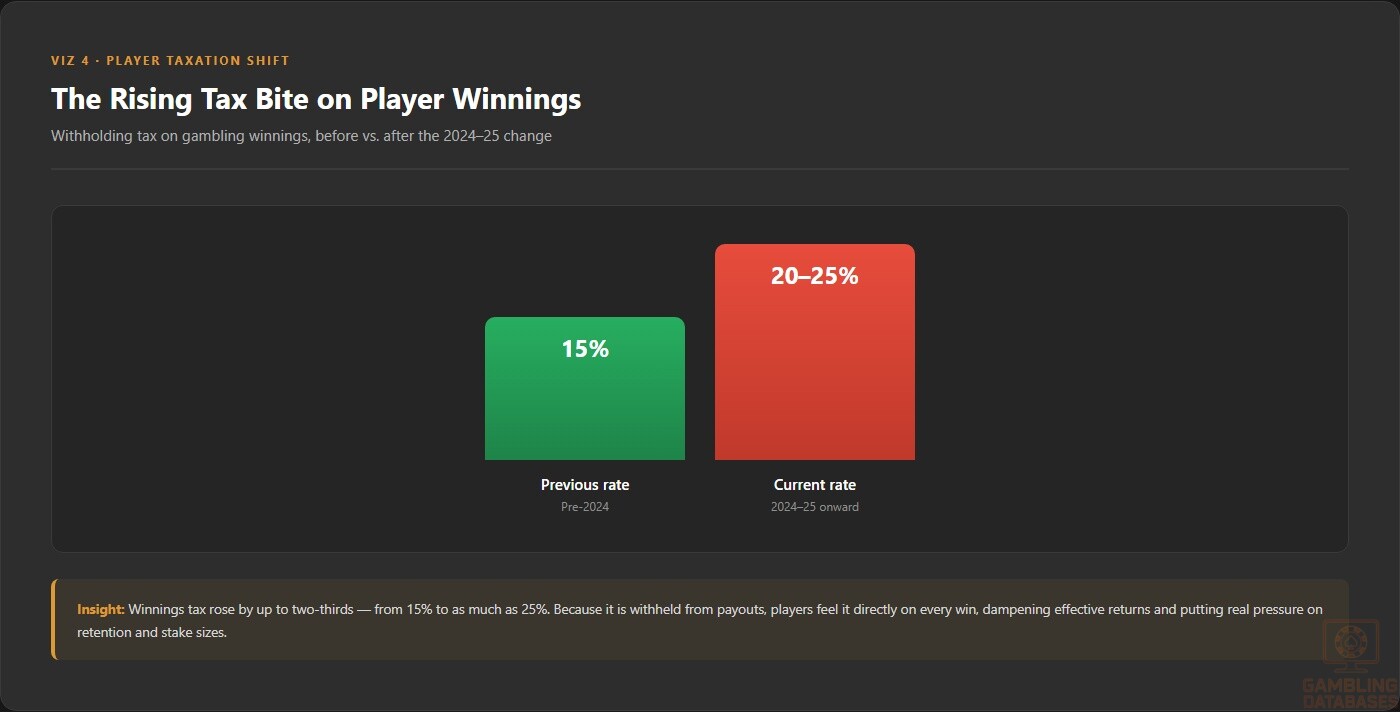
Players in Ethiopia face withholding taxes on gambling winnings, increased recently from 15% to between 20% and 25%. These taxes apply to winnings from lottery games, sports betting, and prize draws, creating a significant cost element for players that may influence betting behavior.
Operator Taxation
| Tax Type | Rate |
|---|---|
| Turnover Tax | 15% on total stakes / sales |
| Corporate Income Tax | Standard corporate tax applies (~30%) |
| License Fee | ETB 500,000 initial; ETB 100,000 renewal |
| Bank Guarantee | ETB 1.5 million held during license term |
These taxation policies reflect government emphasis on revenue generation balanced with market control. The 15% turnover tax directly reduces operator margins and influences pricing and promotional strategies.
Gambling Market Financial Performance
The Ethiopian gambling sector generated approximately $21.45 million in revenues in 2025, centered on licensed sports betting and lottery activities. Despite robust population demographics, the limited internet and mobile penetration place natural caps on rapid growth.
Year-over-year growth remains moderate, constrained by high taxation, limited license availability, and regulatory conservatism. Tax revenues constitute a significant portion of government receipts from the sector.
Advertising and Marketing Restrictions
Advertising of gambling services in Ethiopia is tightly regulated to protect vulnerable populations. Allowed promotional activities are subject to strict content controls and channel restrictions.
The advertising framework encompasses multiple categories:
- Prohibition of gambling ads targeting minors and young viewers
- Restricted use of mass media channels during protected hours
- Ban on misleading or exaggerated promotional claims
- Limits on bonuses and inducements to prevent harmful gambling
- Mandatory inclusion of responsible gambling messages
Sponsorship deals involving sporting events are permitted but regulated to prevent normalization of gambling among youth.
Recent Regulatory Changes and Their Impact
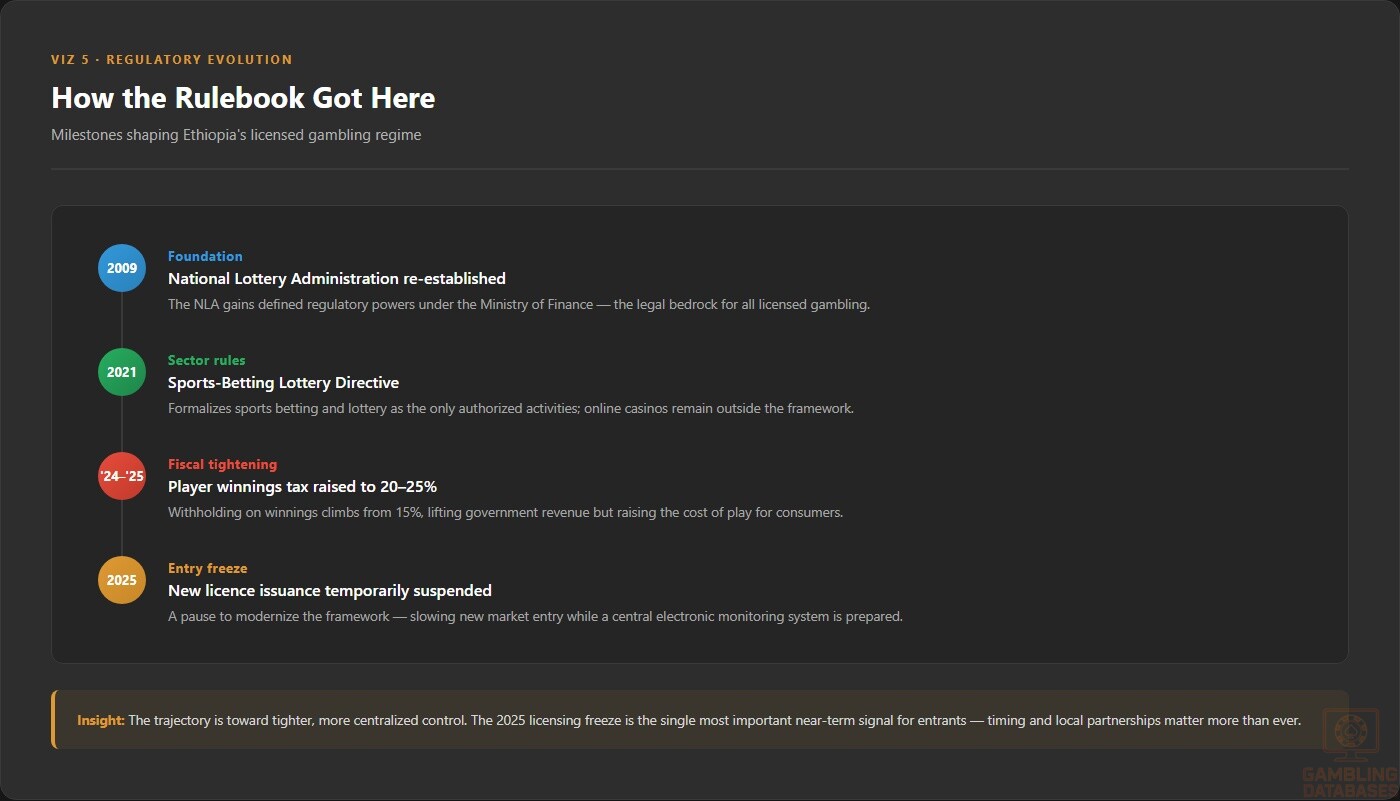
- 2009: Formal re-establishment of the National Lottery Administration with defined regulatory powers
- 2021: Introduction of Sports-Betting Lottery Directive refining sector-specific rules
- 2024-2025: Implementation of increased tax rates on player winnings from 15% to up to 25%
- 2025: Temporary suspension of new license issuances to allow regulatory framework modernization
These regulatory shifts reflect a balancing act between expanding market opportunities and safeguarding public welfare. They have increased operator costs and limited new market entries, slowing overall sector expansion while emphasizing responsible gambling.
Enforcement Mechanisms and Penalties
The Ethiopian regulatory regime employs a range of enforcement tools to ensure compliance across the gambling sector. Non-compliance may result in penalties that include:
- Revocation or suspension of gambling licenses
- Monetary fines proportional to the severity of violations
- Confiscation of bank guarantees upon breach of conditions
- Criminal prosecution for illegal gambling activities
- Operational bans on unlicensed entities and blacklisting
Enforcement activities are supported by planned technological upgrades for real-time monitoring and more effective industry oversight.
Section 2: Demographics and Consumer Analysis
Population Demographics and Distribution
Ethiopia is the second most populous country in Africa with an estimated population of over 125 million. Its demographic profile is notably youthful, with more than 70% of the population under the age of 30 and a median age hovering around 20 years. This young demographic presents a substantial opportunity for iGaming operators targeting tech-savvy and digitally engaged consumers.
The gender ratio is relatively balanced, with a slight male majority at approximately 102 males per 100 females. Urbanization is progressing with around 22% of the population residing in urban centers, while the majority remains distributed across rural regions involved in agrarian livelihoods.
| Age Group | Percentage of Total Population |
|---|---|
| 0-14 years | 42% |
| 15-24 years | 28% |
| 25-54 years | 25% |
| 55-64 years | 3% |
| 65 years and above | 2% |
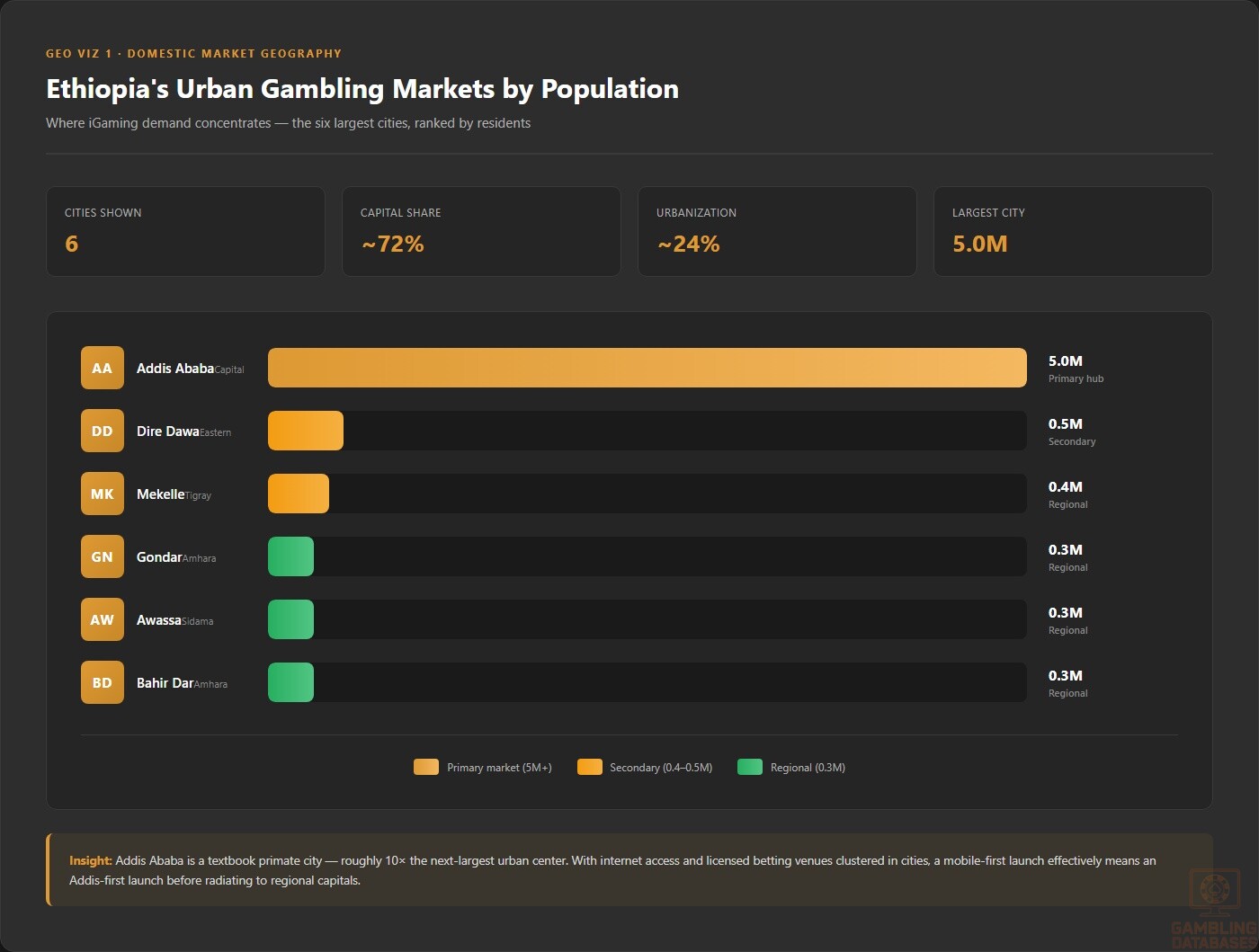
The geographic distribution is uneven, with economic activity and population density concentrated in key regional capitals and the capital city, Addis Ababa. Internet accessibility and gambling venue availability correspond strongly with these urban hubs due to greater infrastructure development.
Major cities are focal points of emerging online and land-based gambling interest, while rural areas see limited participation due to infrastructure constraints.
- Addis Ababa – Approx. 5 million residents
- Dire Dawa – Approx. 0.5 million residents
- Mekelle – Approx. 0.4 million residents
- Gondar – Approx. 0.3 million residents
- Awassa – Approx. 0.3 million residents
- Bahir Dar – Approx. 0.3 million residents
Economic Indicators and Consumer Spending Power
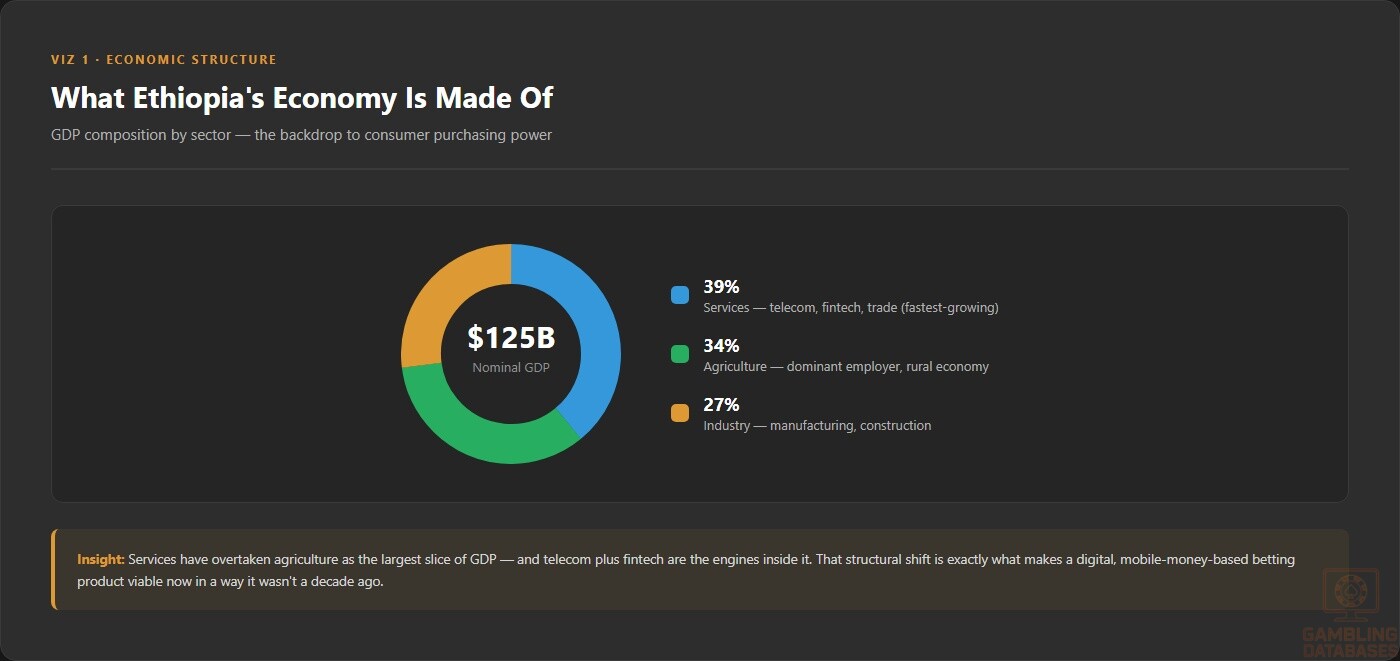
Ethiopia’s economy has demonstrated sustained growth over the past decade with a GDP estimated near $125 billion in 2024. Medium-term forecasts project steady expansion driven by agriculture modernization, rapid urbanization, and development of service sectors including telecommunications and fintech.
Per capita GDP remains low relative to global averages, approximately $1,000 nominal, reflecting widespread income disparities and limited consumer purchasing power across large rural populations. However, urban pockets and emerging middle-class segments show increasing disposable income available for leisure activities, including gambling.
The economic structure is predominantly agricultural (around 34% of GDP), complemented by industry (27%) and services sectors (39%). Growth in mobile telecommunications and expanding digital payment infrastructure is facilitating greater consumer access to online platforms.
Income distribution shows significant inequality with a Gini coefficient above 35, influenced by regional economic imbalances and urban-rural divides. Consumer spending patterns are typically conservative, focused on essentials, but discretionary expenditures on entertainment and digital services are growing in urban settings.
| Indicator | Value |
|---|---|
| GDP (Nominal) | $125 billion |
| GDP Growth Rate | 5.5% annually |
| GDP per Capita (Nominal) | $1,000 |
| Inflation Rate | 8.3% |
| Unemployment Rate | 19% |
Market Size and Growth Projections
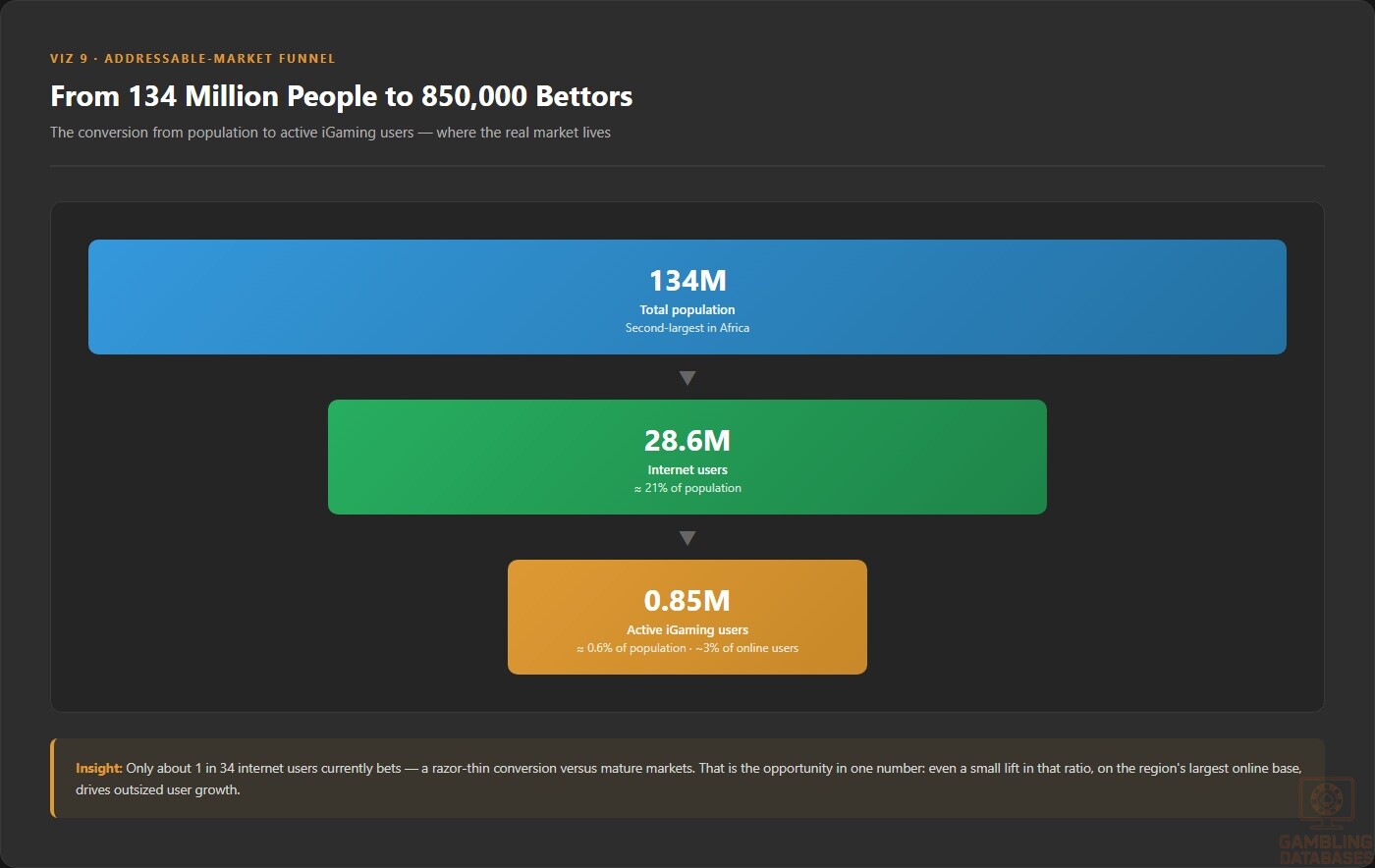
The Ethiopian iGaming market remains nascent, with total revenue estimated at approximately $21.45 million in 2025, predominantly from sports betting and lottery segments. Expected moderate annual growth over 2025-2031 is underpinned by expanding internet and mobile penetration and evolving regulatory frameworks.
Market penetration remains low relative to population size, constrained by socio-economic factors and regulatory limits, yet youth demographics and rising digital literacy bolster long-term potential. Average Revenue Per User (ARPU) is low compared to mature markets, reflecting constrained disposable income.
| Metric | 2025 | 2031 Projection | CAGR 2025-2031 |
|---|---|---|---|
| Total Revenue | $21.45 million | $38.7 million | 9.5% |
| Active Users | 850,000 | 1.8 million | 13.3% |
| ARPU | $25.23 | $21.50 | -3.1% |
| Market Penetration | 0.68% | 1.44% | ~+10% annually |
Education, Skills, and Digital Literacy
Ethiopia’s literacy rate has risen steadily to an estimated 52% nationwide, with disparities across gender and rural-urban divides. Educational attainment remains developing, with most youth completing primary education; secondary and tertiary enrollments are increasing but still limited.
Digital literacy is emergent, concentrated in urban centers via growing smartphone usage and educational initiatives. Workforce skills in tech and IT are improving, fostered by private sector growth and government training programs aimed at supporting digital economy advancements.
Cultural and Social Factors
Communication and Language
Ethiopia is a multilingual country with over 80 languages spoken. The primary official language is Amharic, widely used in government and business. Other significant languages include Oromo, Tigrinya, Somali, and Afar, reflecting diverse ethnic groups.
English serves as an important language of education and digital communication, particularly among urban youth and professionals engaged in technology and business sectors.
- Amharic (official language and lingua franca)
- Oromo
- Tigrinya
- Somali
- English (widely used in education and online)
Cultural Attitudes
Gambling is viewed ambivalently within Ethiopian society, influenced strongly by religious and cultural norms. Predominantly Christian and Muslim populations hold conservative views toward gambling, associating it with moral risks and social harm.
Nevertheless, sports betting and lottery participation are socially tolerated within regulated frameworks, particularly in urban areas and among younger adults. Foreign brands face challenges in trust-building but benefit from growing youth openness to digital entertainment.
Problem Gambling and Social Considerations
Prevalence of problem gambling is not extensively studied but is recognized as an emerging social issue linked to youth participation and economic vulnerability. Government and civil society actors promote responsible gambling through awareness campaigns and support services.
- National campaigns on gambling addiction awareness
- Self-exclusion programs promoted by licensed operators
- Support services offered via NGOs and healthcare providers
- Monitoring of underage gambling through regulatory audits
- Collaboration with international organizations for best practices
Operators are mandated to contribute to social responsibility funds and integrate harm-minimization features into platforms.
Political Structure and Governance
Ethiopia operates a federal parliamentary republic framework, with relatively stable governance focused on economic development initiatives and regulatory reforms. Recent political stability improvements facilitate regulatory consistency crucial for business planning.
International relations support foreign investment with caveats around compliance and local partnership rules. The government exhibits cautious openness to innovation, balancing economic growth with social safeguarding.
Technology Adoption and Digital Behavior
Internet and Digital Usage
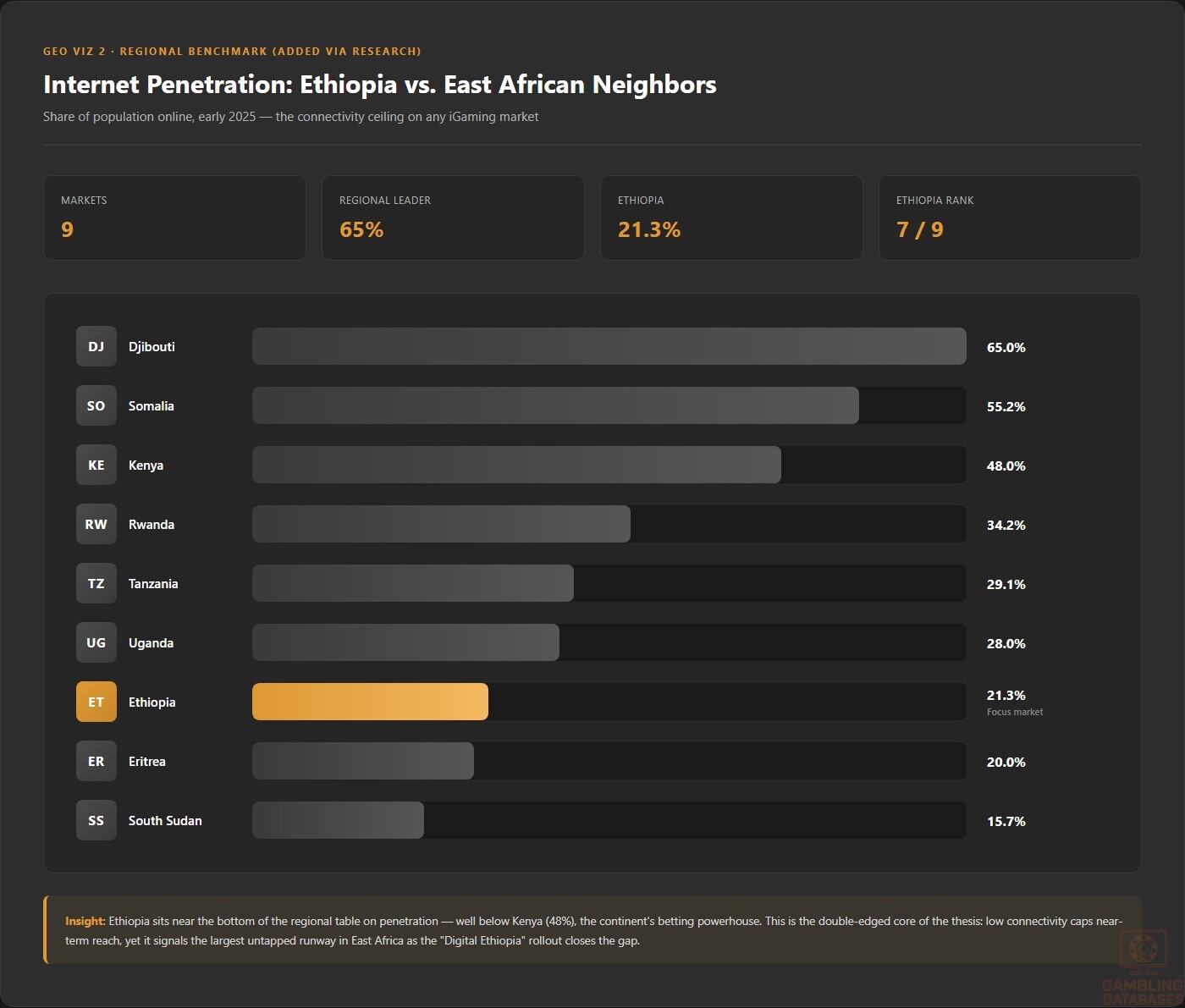
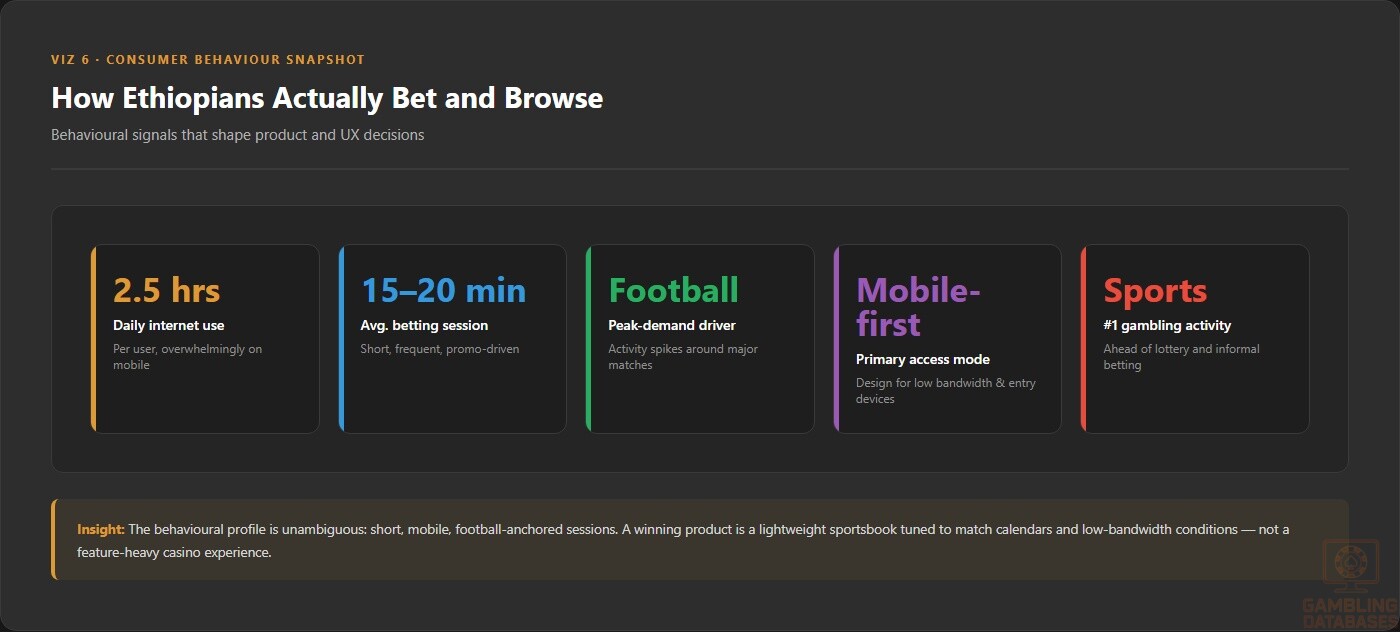
Internet penetration stands at roughly 35%, with daily usage averaging about 2.5 hours per user, primarily via mobile devices. Mobile adoption exceeds 60%, boosted by expanding 4G coverage and increasing smartphone affordability.
Social media engagement is vibrant among youth and urban populations, facilitated by platforms that enable video, messaging, and gaming content. The digital ecosystem is growing rapidly, with youth leading adoption patterns.
- Facebook dominates with ~70% penetration of internet users
- YouTube follows closely with strong engagement in video content
- Instagram is popular among younger demographics (18-34 years)
- TikTok exhibits rapid growth, especially in under-25s
- Telegram and WhatsApp are widely used for communication
Digital Payment Behavior
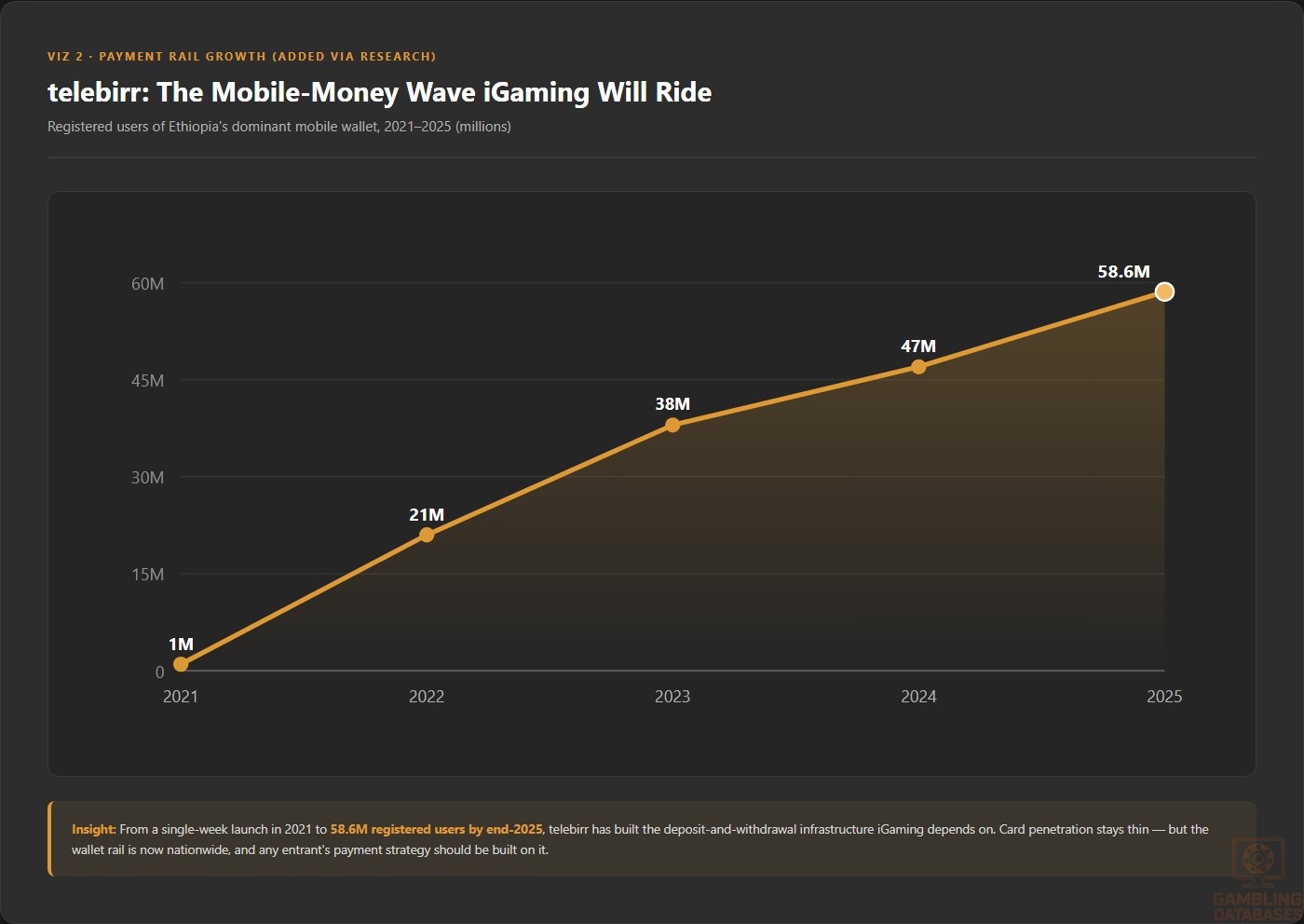
Digital payment adoption is growing, driven by mobile money and fintech innovation. Credit and debit cards remain less common, with preference for alternative digital payment methods tailored to local market conditions.
The market relies heavily on mobile wallets and bank transfers, supporting online transactions including gambling deposits and withdrawals. Cryptocurrency use is marginal but gradually increasing among tech-savvy users.
- Mobile money services (e.g., M-Pesa, local operators)
- Bank transfers
- Credit and debit cards (Visa, Mastercard)
- E-wallets linked to telecom providers
- Emerging crypto payment acceptance in niche segments
Gaming and Gambling Preferences
Current Market Participation
Sports betting is the most popular gambling activity in Ethiopia, followed by lotteries and informal betting pools. Online casino participation remains minimal due to regulatory and cultural restrictions.
- Sports betting
- National and regional lottery participation
- Informal betting among social groups
- Scratch cards and raffle games
- Limited exposure to online casino games
| Activity | Participation Rate (%) |
|---|---|
| Sports betting | 5.2% |
| Lottery games | 3.8% |
| Informal betting | 2.1% |
| Scratch/Raffle games | 1.5% |
| Online casino games | 0.4% |
Consumer Behavior Patterns
Ethiopian consumers exhibit cautious gambling spending habits, focusing on low to moderate stakes primarily in sports betting. Betting activity peaks around popular sports events, especially football matches involving regional and international teams.
Online bettors tend to favor mobile-friendly platforms offering simple interfaces and easy payment methods. Session lengths typically average 15-20 minutes, with retention driven by user engagement and promotional incentives.
Retention challenges arise from strict regulatory constraints and taxation that elevate betting costs. However, increasing digital literacy and growing social acceptance are expected to improve participation rates gradually.
Section 3: Technology Infrastructure and Business Environment
Internet and Digital Infrastructure
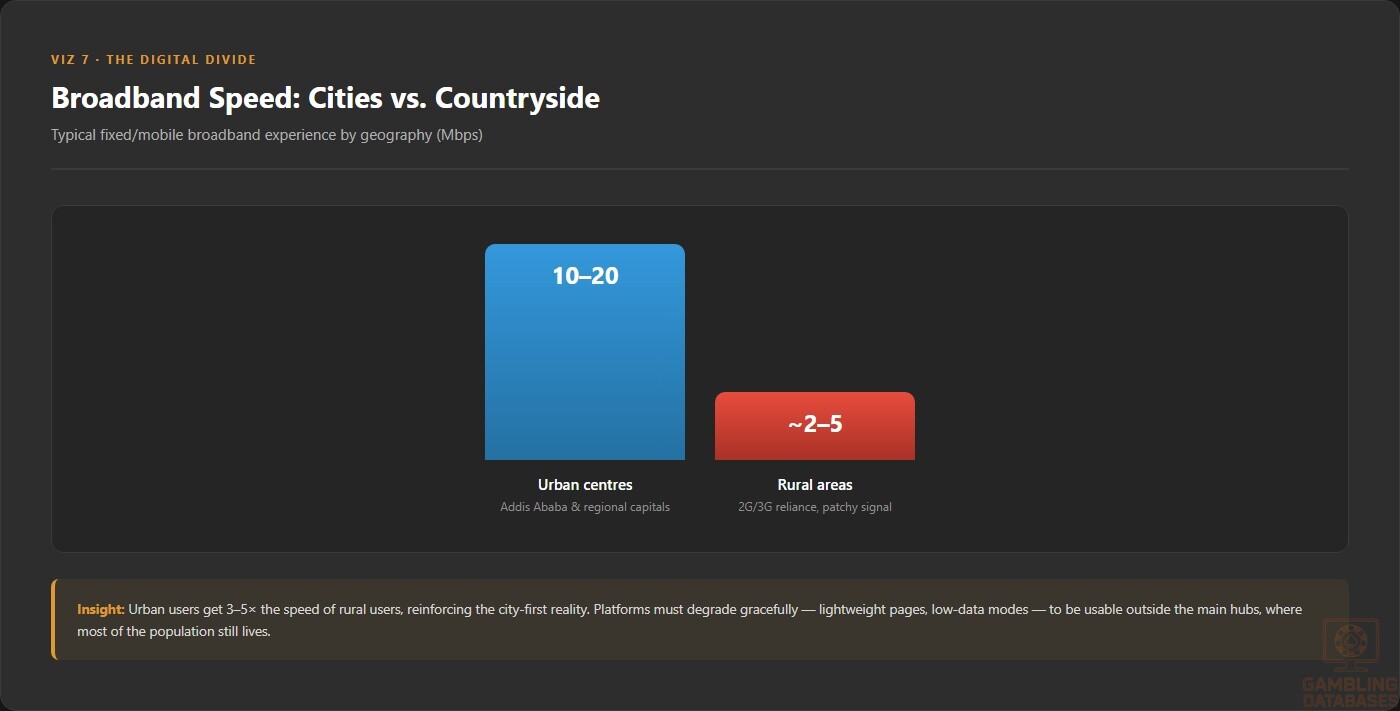
Ethiopia’s internet penetration is around 35%, primarily driven by mobile broadband access. Fixed broadband infrastructure is limited, predominantly available in urban centers such as Addis Ababa. Average broadband speeds hover around 10-20 Mbps in major cities, with rural areas experiencing significantly lower speeds and connectivity challenges.
Investment in digital infrastructure has accelerated, with government and private sector collaboration aimed at expanding fiber optic networks and improving last-mile connectivity. Public Wi-Fi hotspots and internet cafes remain common access points outside home broadband coverage, particularly among younger demographics.
5G and Future Technology Deployment
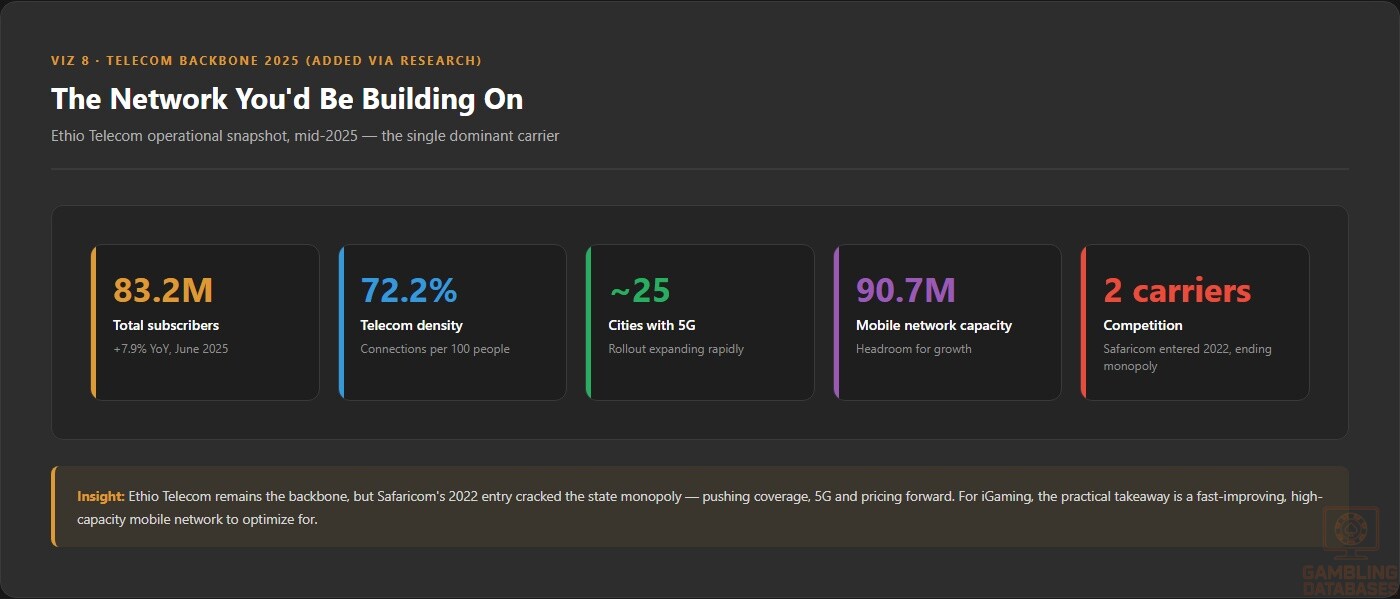
The rollout of 5G technology is in preliminary stages, with pilot projects underway primarily in Addis Ababa. The national telecom regulator and Ethio Telecom have announced plans to expand 5G coverage gradually over the next 3-5 years, focusing on high-density urban areas and industrial zones.
This technology roll-out is expected to boost mobile data speeds, latency, and reliability, thereby enhancing the user experience for mobile-centric iGaming platforms. Ethio Telecom holds a monopoly on network operations, impacting competitive dynamics and service pricing.
Mobile Technology Ecosystem
Ethiopia’s mobile network infrastructure supports over 60% mobile penetration, with growth driven by affordable devices and expanding 4G LTE coverage. Network quality varies considerably between urban centers with robust signal strength and rural locations reliant on 2G or 3G.
- Ethio Telecom (State-owned monopoly with 100% market share)
Smartphone adoption is growing rapidly, now representing more than half of all mobile devices in use nationally, favored by young adults and urban professionals. Entry-level smartphones dominate the installed base, but mid to high-end device penetration is increasing among the emerging middle class.
Financial Services and Payment Infrastructure
The banking sector in Ethiopia features several established institutions, with limited digital banking penetration but rapid mobile money expansion facilitating financial inclusion. Account penetration remains below 50% of the adult population but is increasing due to government-backed initiatives.
- Commercial Bank of Ethiopia (largest market share and branch network)
- Dashen Bank (significant corporate banking focus)
- Nib International Bank
- Awash International Bank
- Bank of Abyssinia
Digital payment options include mobile money wallets, bank transfers, card payments, and emerging fintech solutions. Cryptocurrency acceptance is minimal but observed among niche technology user groups.
- Mobile money platforms (e.g., M-Birr, HelloCash)
- Bank wire transfers
- Visa and Mastercard credit/debit cards (limited penetration)
- E-wallet services linked to telecom providers
- POS and USSD-based payment mechanisms
E-commerce and Digital Economy
Ethiopia’s e-commerce sector is expanding gradually, supported by increased internet access and improving digital payment infrastructure. Online retail penetration remains low compared to developed markets due to logistical challenges, but digital services such as ride-hailing, food delivery, and ticketing are growing fast in urban centers.
Consumer trust in digital transactions is rising, albeit cautiously, underpinned by government e-commerce frameworks promoting cybersecurity and consumer protection.
Business Environment and Regulatory Framework
Ease of Business Operations
Ethiopia ranks approximately 159th in the World Bank’s Ease of Doing Business index, reflecting challenges in regulatory efficiency, infrastructure, and taxation complexity. Despite this, recent reforms are aimed at simplifying company registration and investment approvals.
Operational costs remain moderate but include significant bureaucratic and compliance obligations, which can delay market entry without adequate local expertise.
Corporate Structure and Registration
Business registration options include Limited Liability Companies (LLCs), Share Companies (similar to corporations), and Branch offices of foreign entities. The LLC structure is most commonly recommended for iGaming operators, balancing liability protection with administrative simplicity.
- LLC: local or foreign ownership allowed, simpler governance
- Share Company: suited for larger capital-intensive ventures
- Branch Office: extension of foreign parent, but subject to local laws
Registration timelines are typically 4-6 weeks, contingent on document preparation and government processing. Foreign ownership is permitted without restriction, but operational licenses for gambling impose local partnership mandates.
- Certificate of Incorporation
- Articles of Association
- Tax Identification Number
- Bank Account Verification
- Proof of Local Address
- Copy of Parent Company Documents (if applicable)
Taxation Framework
Corporate income tax in Ethiopia is set at 30% for most businesses, with incentives available in select industrial parks and export-processing zones. Tax holidays up to 5 years are provided for qualifying investments in priority sectors, though gambling is generally excluded from preferential treatment.
Double taxation treaties exist with several countries to promote cross-border investment and reduce tax burdens.
- China
- India
- Turkey
- Norway
- Sweden
Personal income tax rates are progressive, ranging from 10% to 35%, supplemented by social security contributions and withholding tax obligations relevant to employment and service contracts.
Market Entry Considerations
Successful entry into Ethiopia’s iGaming sector requires navigating strict licensing rules mandating local partnerships and physical presence. Emphasizing mobile-first platforms adapted to lower bandwidth conditions enhances user experience.
Establishing partnerships with local companies and leveraging Ethio Telecom’s network monopoly for optimized data delivery are advisable strategies. Compliance with stringent KYC, AML, and responsible gambling frameworks is essential for regulatory approval and market reputation.
- Form joint ventures with Ethiopian citizens or entities
- Prioritize mobile-optimized gaming platforms
- Invest in local compliance and responsible gambling capacities
- Utilize mobile money payment integration
- Engage in localized marketing respecting cultural norms
| Cost Category | Estimate |
|---|---|
| Licensing & Regulatory Fees | $3,400 initial, $680 renewal |
| Bank Guarantee | $26,000 (held during license term) |
| Legal and Consulting | $30,000 – $50,000 |
| Technology Platform Setup | $100,000+ |
| Marketing and Operations | $50,000 – $100,000 annual |
| Phase | Duration |
|---|---|
| Preparation and Document Gathering | 3-4 weeks |
| Company Registration & Licensing | 4-6 weeks |
| Platform Development & Localization | 6-8 weeks |
| Marketing Launch & Operations Start | 2-4 weeks |
FAQ: Frequently Asked Questions
1. Is online gambling legal in Ethiopia?
Online gambling in Ethiopia is largely unregulated and not explicitly legal. Only sports betting and lotteries authorized by the National Lottery Administration are permitted. Online casino games and poker are effectively prohibited. Operators must partner with licensed Ethiopian entities for legal market presence.
2. What types of gambling licenses are available and what do they cover?
Licenses are issued exclusively for sports betting and lottery operations by the National Lottery Administration. There are no separate licenses for online casinos or other digital gaming formats, reflecting the government’s cautious stance on gambling expansion.
3. How much does an iGaming license cost and how long does it take to obtain?
The initial license fee for sports betting is approximately ETB 500,000 (~$3,400), with annual renewals costing ETB 100,000. The application process, including company registration and documentation, generally requires 6-8 weeks before operations can commence.
4. Can foreign companies obtain a gambling license?
Foreign companies cannot directly obtain gambling licenses; they must form partnerships or joint ventures with Ethiopian citizens or local companies. Foreign entities participate primarily as service providers or technology suppliers under local licensed operators.
5. What are the tax obligations for iGaming operators?
| Tax Type | Rate |
|---|---|
| Turnover Tax | 15% |
| Corporate Income Tax | 30% |
| License Fee | Initial $3,400; Renewal $680 |
Operators face a turnover tax of 15% on betting revenues plus standard corporate income tax. Additional compliance and reporting obligations apply.
6. Are gambling winnings taxed for players?
Yes, gambling winnings are subject to withholding taxes ranging from 20% to 25%, recently increased to boost government revenues. Players receive net amounts after tax deductions, influencing betting attractiveness and user behavior.
7. What are the typical operational costs for running an online casino/sportsbook?
Operational costs include license fees, platform setup and maintenance, marketing, staff salaries, payment processing fees, and compliance expenses. Initial technology investment can exceed $100,000 with ongoing marketing budgets from $50,000 annually, depending on scale.
8. What is the expected ROI timeline for entering this market?
Return on investment timelines vary widely but typically range from 18 to 36 months, impacted by high taxation, regulatory complexities, and customer acquisition costs. Successful operators with strong local partnerships and optimized mobile platforms may shorten this horizon.
9. What are the local presence requirements for operators?
Operators are required to have physical offices in Ethiopia and must engage at least one Ethiopian citizen as a founding partner. Local operational staff presence is essential for compliance with NLA guidelines and to facilitate regulatory oversight.
10. What payment methods are available and recommended?
- Mobile money platforms are the most widely used for deposits and withdrawals, favored for convenience and accessibility.
- Bank wire transfers provide reliability for larger transactions but have slower processing times.
- Credit and debit cards are less common but accepted, primarily in urban areas.
- USSD-based payments enable mobile banking without smartphones.
- Emerging e-wallet and fintech solutions offer future growth potential.
11. What are the advertising and marketing restrictions?
Advertising is subject to strict channel controls, prohibiting promotion to minors and requiring responsible gambling messaging. Mass media advertising faces time restrictions, and bonus promotions are tightly regulated to prevent excessive player inducement.
12. What responsible gambling measures are mandatory?
- Implementation of age verification systems
- Self-exclusion program availability
- Ongoing player monitoring for harmful behavior
- Information disclosure about gambling risks
- Operator contributions to social responsibility funds
13. How large is the iGaming market and what is the growth potential?
The current Ethiopian iGaming market is valued around $21.45 million, primarily from sports betting and lotteries. Growth prospects are moderate, supported by demographic and technological trends, with revenues projected to reach nearly $39 million by 2031.
14. Who are the main competitors and what is their market share?
The competitive landscape is dominated by a handful of licensed local operators controlling sports betting and lottery segments. Foreign operators act largely as service providers, with no significant direct market share due to regulatory exclusivity measures.
15. What are the player preferences and typical spending patterns?
Players predominantly engage in sports betting on football and national lotteries. Betting stakes tend to be low to moderate, constrained by income levels and taxation. Mobile devices are the preferred access point, with peak activity aligned with major sporting events.
16. What are the key success factors and main challenges for new entrants?
- Establishing robust local partnerships to meet licensing requirements
- Developing mobile-optimized platforms adapted to network infrastructure
- Implementing strong compliance and responsible gambling frameworks
- Adapting marketing strategies to cultural sensitivities
- Overcoming infrastructure and payment system limitations
Challenges include regulatory rigidity, high taxation, infrastructure gaps, and cultural attitudes toward gambling. Success depends on adaptive strategies and deep local market understanding.
Sources and References
- National Lottery Administration, Ethiopia – Official Regulatory Framework
- Ministry of Finance, Ethiopia – Taxation and Licensing Guidelines 2025
- Ethio Telecom – Network Coverage and 5G Deployment Reports
- World Bank – Doing Business Report Ethiopia 2024
- International Telecommunication Union – Ethiopia ICT Data 2025
- Central Statistical Agency of Ethiopia – Population and Demographics 2024
- National Bank of Ethiopia – Banking Sector Reports 2025
- Gaming Industry Report, Africa – 2024 Edition
- Gambling Regulatory Insights – Ethiopia Market Analysis 2025
- Finance Africa – Ethiopian Payment Systems Study 2025
- United Nations Development Program – Ethiopia Digital Literacy Report
- Oxford Economics – Ethiopia Economic Forecast 2025-2031
- Statista – Ethiopian iGaming Market Overview 2025
- Research and Markets – Gambling Market Report Ethiopia 2024
- International Monetary Fund – Ethiopian Economic Data 2024
- Technology Business News – Ethiopia Telecom Market Analysis 2025
- Grey Market Reports – Ethiopian Gambling Sector 2025 Insights
- Financial Times – Ethiopia Economic and Regulatory Update 2025
- Local News Outlets – Ethiopia Gambling Tax and Policy Changes 2025
- Ethiopian Investment Commission – Foreign Investment Regulations
- Human Rights Watch – Social Impacts of Gambling in Ethiopia
- Bloomberg – Ethiopia Telecom Monopoly Overview 2025
- African Financial Review – Digital Payment Innovations in Ethiopia
- Cambridge University – Study on Gambling Behavior Ethiopia 2025
- Confederation of Ethiopian Employers – Industry Reports 2024
- Global Betting and Gaming Consultants – Ethiopia Market Entry Guide 2025