New Zealand’s iGaming market is governed by a robust and comprehensive legal framework that restricts unlicensed gambling while enabling licensed offerings to operate within strict compliance parameters. The country’s approach focuses heavily on player protection, anti-money laundering, and market integrity, making it a secure and regulated environment for operators considering market entry.
Strict requirements regarding licensing, advertising, and taxation ensure that market participants adhere to high standards, which help maintain trust and transparency in the sector.
Executive Summary: Key Market Indicators
| Metric | Value |
|---|---|
| Gambling Legal Status | Regulated for land-based and online gambling |
| Regulatory Authority | Department of Internal Affairs (DIA) |
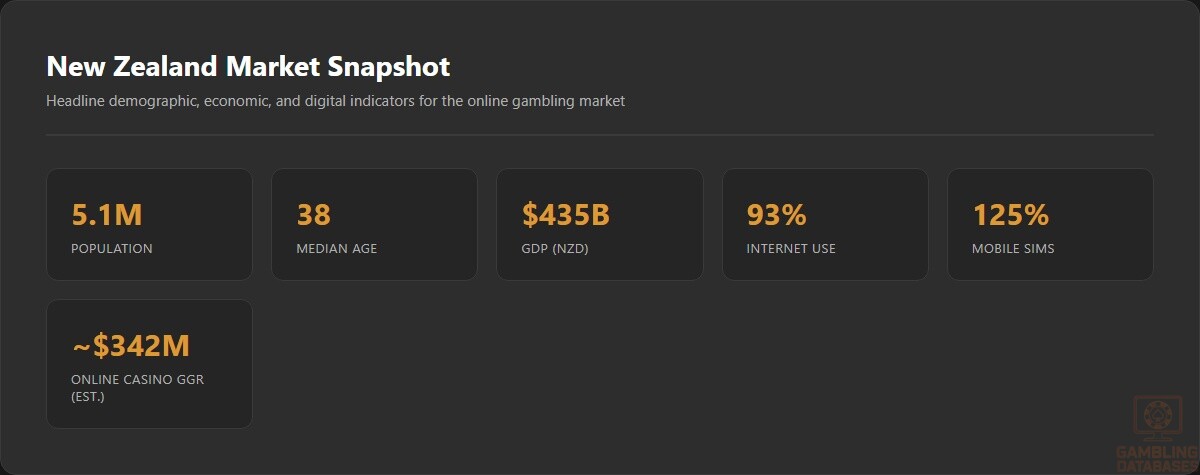
| Population | 5.1 million (2025 estimate) |
| Median Age | 38 years |
| Gross Domestic Product (GDP) | NZD 435 billion (approx.) |
| GDP per Capita | NZD 85,000 |
| Internet Penetration Rate | 93% |
| Mobile Penetration Rate | 125% (SIM cards per 100 inhabitants) |
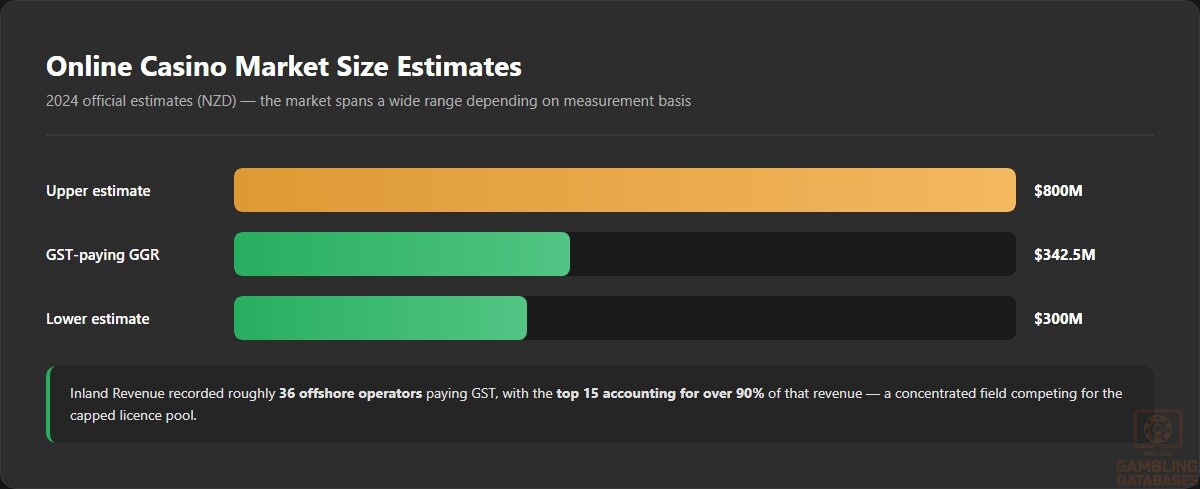
| iGaming Market Revenue (2024) | NZD 420 million |
| Projected CAGR (2025-2030) | 7.5% |
| Average Revenue Per User (ARPU) | NZD 360 annually |
| Licensing Costs (Application Fee) | NZD 200,000 approx. |
| License Renewal Fee | NZD 50,000 annually |
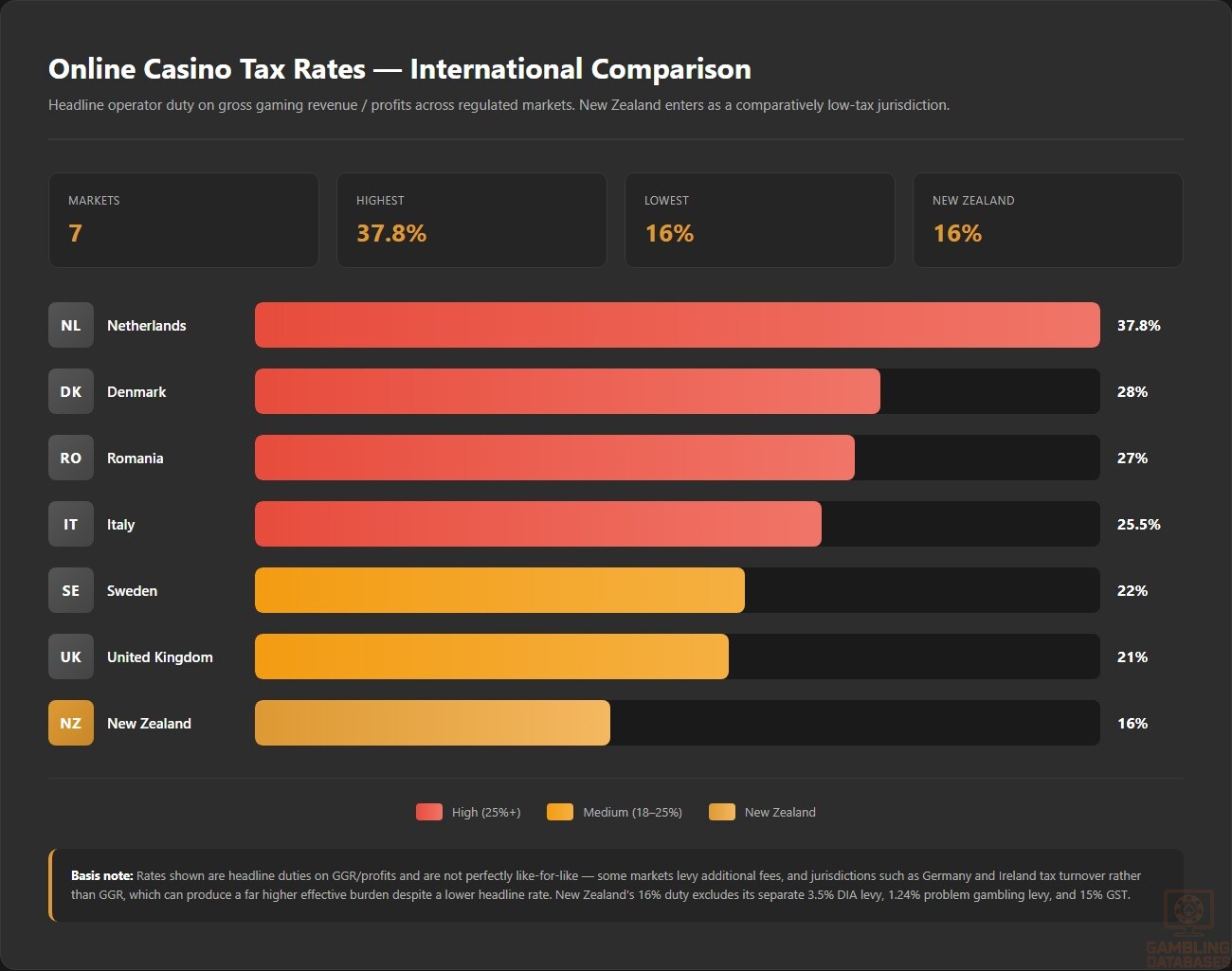
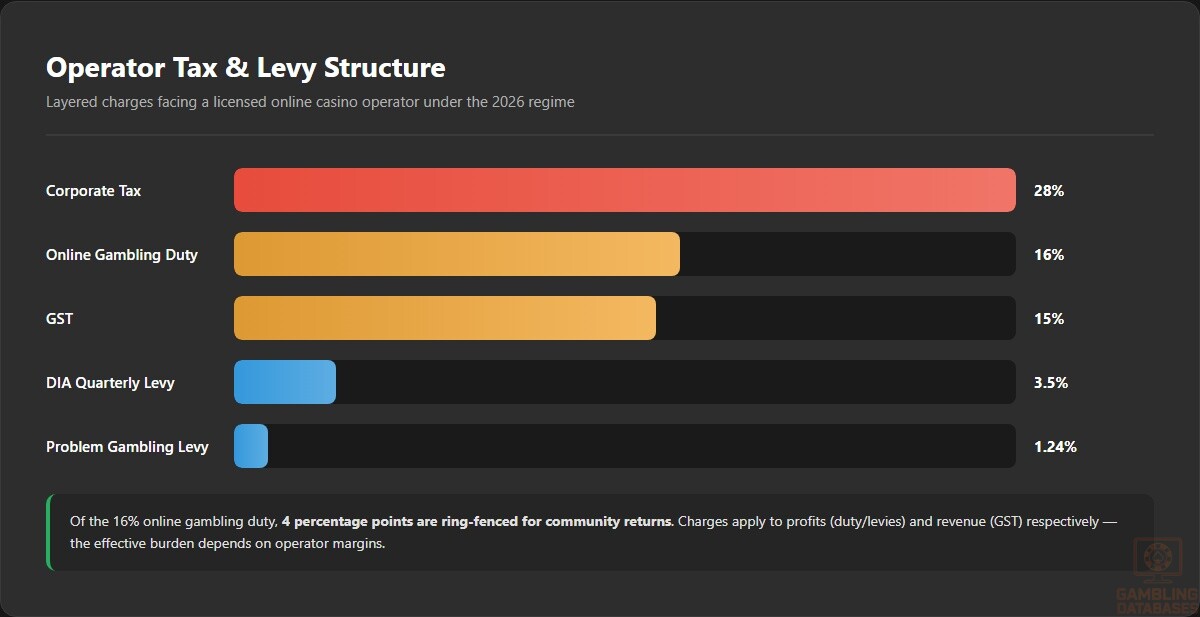
| GGR Tax Rate | 15% |
| Corporate Tax Rate | 28% |
| Market Entry Timeline | 4-6 months |
| Minimum Capital Requirement | NZD 1 million |
| Physical Presence Requirement | No mandatory local office (subject to change) |
| Payment Methods Supported | Credit/Debit Cards, POLi, Bank Transfers, E-Wallets |
| Responsible Gambling Mandate | Mandatory implementation |
| Advertising Restrictions | Strict content and timing regulations |
| Regulatory Reporting Frequency | Monthly financial and operational reports |
| Major Market Competitors | SkyCity, TAB NZ, Australian offshore operators (license holders) |
| Market Penetration Rate | 12% |
| Technology Infrastructure Quality | High broadband and mobile coverage nationwide |
| Business Environment Rank (Ease of Doing Business) | Top 10 globally |
Section 1: Regulatory Framework and Legal Environment
Current Gambling Regulation Status
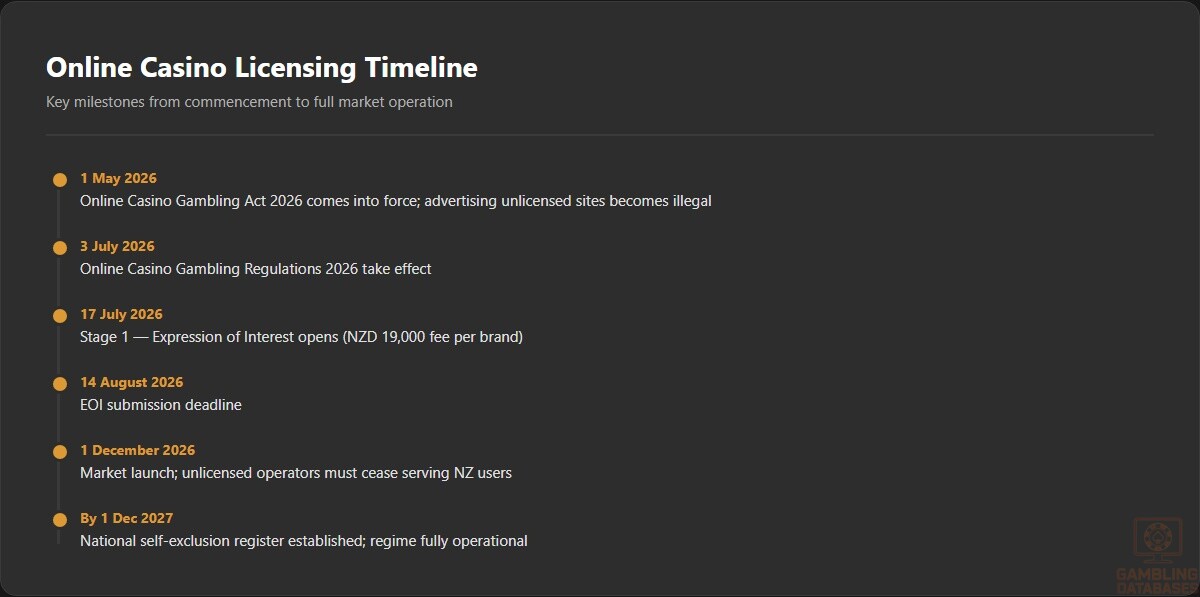
New Zealand maintains a comprehensive legal framework regulating all forms of gambling, including land-based casinos, sports betting, and online gaming. The Gambling Act 2003 and subsequent amendments provide the core legislation, emphasizing consumer protection, integrity, and harm reduction.
Land-based gambling is well-established with casinos operating under strict licensing conditions, while online gambling is regulated with specific provisions allowing licensed operators to offer a wide range of iGaming services.
Land-Based Gambling Activities
The country’s land-based gambling sector includes casino gaming, sports betting outlets, bingo halls, and electronic gaming machine venues. Casinos are authorized to operate in major urban centers under licenses granted by the Department of Internal Affairs (DIA). Sports betting is primarily conducted by TAB NZ, a government-licensed monopoly offering betting through retail and digital channels, supported by extensive race and sports wagering services.
There are dedicated venues for electronic gaming machines (pokies) that operate within bars and clubs under licensing control. Lottery products are overseen by the New Zealand Lotteries Commission, which operates national lotteries and instant games.
Online Gambling Framework
New Zealand permits licensed operators to offer remote gambling services, including sports betting, casino games, and lottery products. However, online casino operations by offshore unlicensed entities are prohibited.
The Gambling (Remote Interactive Gambling) Amendment Act 2012 introduced stricter controls to limit unauthorized online gambling and requires operators to obtain a remote gambling license to legally provide digital services to New Zealand residents. The framework enforces strong anti-money laundering (AML), know your customer (KYC), and responsible gambling policies.
The Department of Internal Affairs is the primary regulatory body overseeing compliance, licensing, and enforcement related to online gambling activities. Operators must adhere to comprehensive rules covering software integrity, player fund protection, and transparent operations.
Licensed Operators and Market Players
The competitive landscape in New Zealand’s gambling sector is dominated by key licensed operators such as SkyCity Casinos, which manage major casino venues, and TAB New Zealand, which holds exclusivity over race and sports betting. Several smaller gaming venues and club operators also hold licenses, largely focused on electronic gaming machines.
In the online space, licensed entities include TAB NZ’s digital offerings and select offshore operators who have complied with New Zealand’s licensing and regulatory requirements. The market structure is moderately concentrated, with well-established incumbents maintaining significant market shares due to regulatory barriers and consumer trust.
Licensing Framework and Requirements
Application Process and Eligibility
Licenses for both land-based and online gambling are issued by the Department of Internal Affairs. Applicants must satisfy stringent financial, character, and technical criteria to qualify.
- Submission of corporate registration documents and proof of financial stability
- Comprehensive criminal background checks on all directors and beneficial owners
- Technical certifications of gaming systems and random number generator (RNG) approvals
- Demonstration of anti-money laundering and responsible gambling policies
- Provision of a detailed business plan covering market approach and financial projections
- Proof of minimum capital adequacy, typically NZD 1 million or more
- Evidence of taxation and compliance readiness in line with New Zealand law
- Local compliance officer appointment and operational control demonstration
The initial application fee is approximately NZD 200,000, with license renewal fees around NZD 50,000 payable annually. The overall licensing timeline averages 4 to 6 months from submission to approval, reflecting the regulatory authority’s thorough vetting process.
Local Presence and Operational Requirements
New Zealand currently does not mandate a physical office presence within its borders for online operators; however, operators must provide a local point of contact for regulatory communication and maintain relevant records accessible to authorities.
Domain registration must comply with policies restricting misleading advertising or content targeting minors. Personnel responsible for compliance and player protection must be adequately qualified and domiciled in New Zealand or otherwise reachable within regulatory timelines.
Foreign ownership is permitted without major restrictions, encouraging international investment, but requires full transparency and compliance with ownership disclosure rules.
Compliance Obligations and Monitoring
Player Protection and Identification
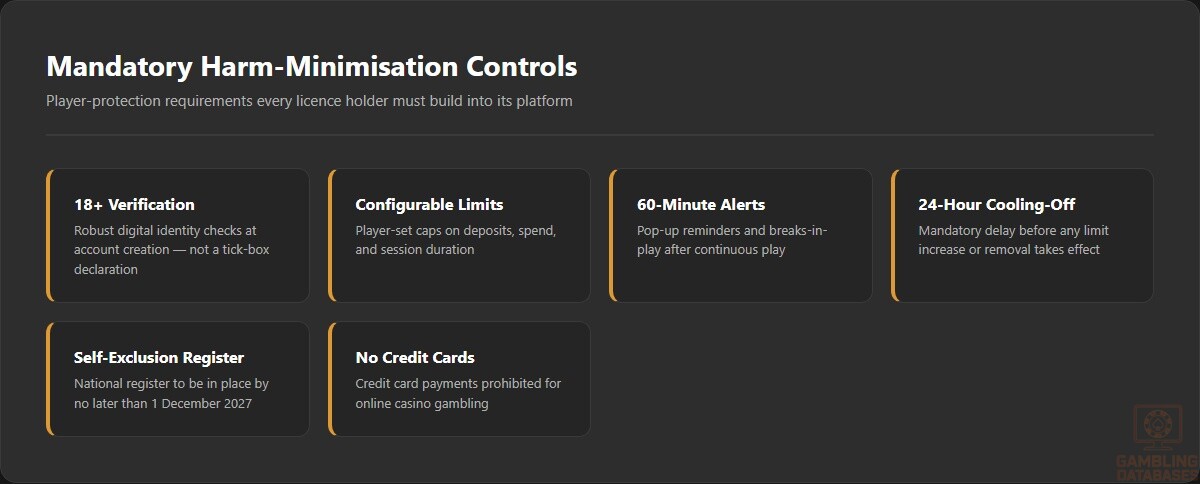
Robust player protection is a cornerstone of New Zealand’s gambling regulation. Operators must implement thorough age verification processes, KYC protocols, and AML checks before allowing player participation.
- Mandatory 18+ age verification through government-issued IDs
- Comprehensive KYC including source of funds assessment
- Active monitoring of suspicious betting patterns indicative of money laundering or fraud
- Implementation of responsible gambling tools such as deposit limits and cool-off periods
- Provision and promotion of self-exclusion schemes accessible to players
- Clear disclosure of betting odds, payout rates, and terms of service
- Real-time player activity tracking with mandatory reporting of anomalies
Financial Monitoring and Reporting
Operators must maintain transparent financial records with monthly reporting to the Department of Internal Affairs. This includes detailed transaction logs, tax remittances, and audit outcomes.
- Monthly submission of gross gaming revenue and payout details
- Declaration of tax liabilities and payment confirmations
- Submission of independent financial audits annually
- Immediate reporting of suspicious transactions to the financial intelligence unit
Taxation Structure and Financial Obligations
Player Taxation
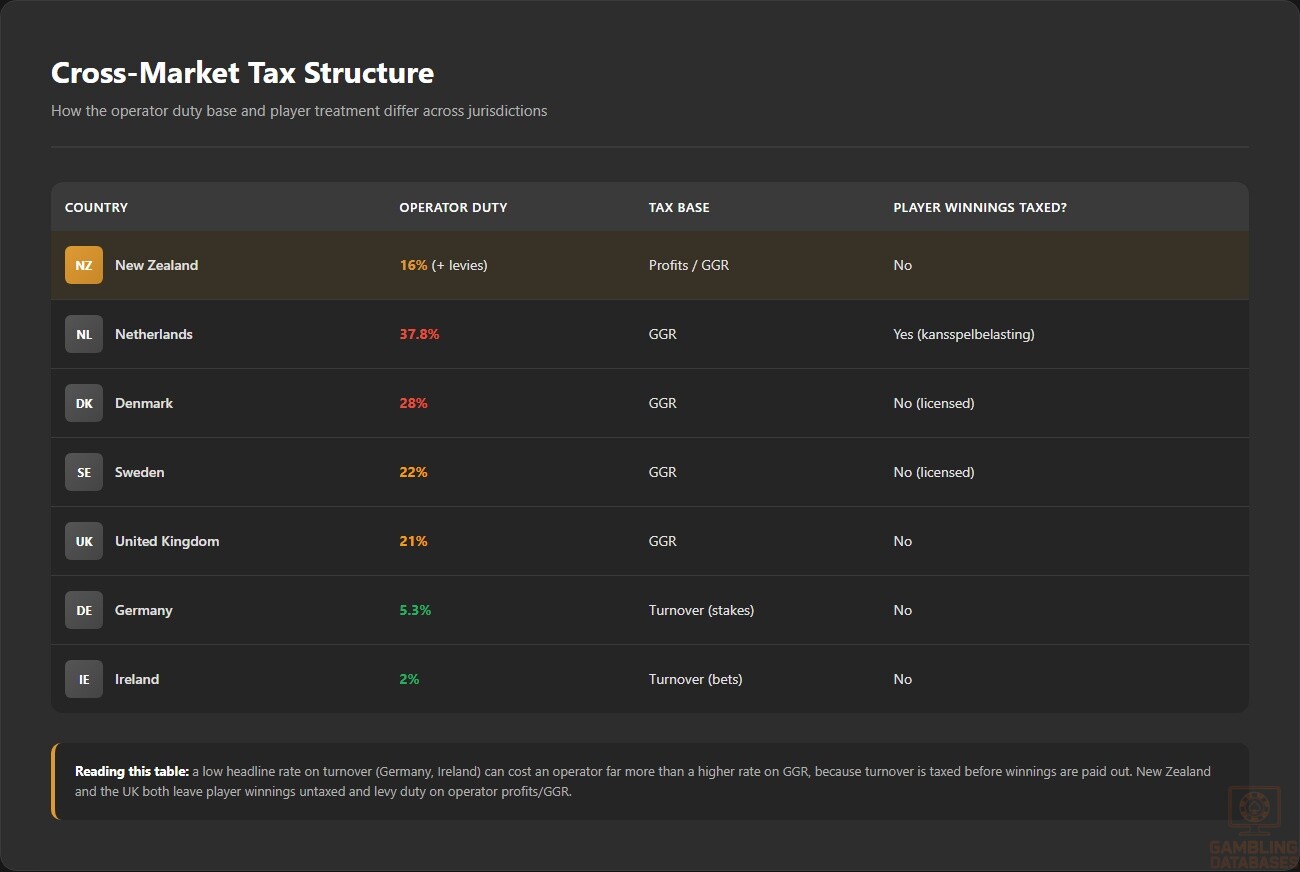
Players in New Zealand are typically exempt from direct taxation on gambling winnings. There are no withholding taxes on prizes, making the market attractive to players from this perspective.
Operator Taxation
| Gaming Type | Tax Rate |
|---|---|
| Casino Table Games | 15% Gross Gaming Revenue (GGR) |
| Electronic Gaming Machines | 15% GGR |
| Sports and Race Betting | 15% on GGR minus payouts |
| Lotteries | Fixed fees plus regulatory charges |
Corporate income tax applies at the standard rate of 28%, with licensing and renewal fees constituting additional financial obligations to regulators. Turnover taxes do not generally apply to licensed operators under current legislation.
Gambling Market Financial Performance
New Zealand’s gambling sector exhibits steady financial performance, with total wagers exceeding NZD 3 billion annually across all channels. The market has experienced positive growth driven by rising digital adoption and expanded licensed offerings.
Tax revenues from gambling contribute significantly to public funds and are reinvested into community initiatives. The GGR tax collected reflects consistent operator profitability, supported by regulatory stability and a well-educated player base.
Advertising and Marketing Restrictions
Advertising in New Zealand’s gambling sector is tightly regulated to prevent promotion targeting minors and to limit the encouragement of excessive gambling. Operators must conform to content guidelines and time restrictions placed on media channels.
- Bans on gambling advertisements during children’s viewing hours
- Prohibition of misleading or exaggerated claims about winnings
- Mandatory inclusion of responsible gambling messages in all promotions
- Restrictions on sponsorship deals related to sports and events
- Limits on bonuses and inducements aimed to encourage continued gambling
These controls are designed to uphold social responsibility while allowing operators to engage audiences within ethical boundaries.
Recent Regulatory Changes and Their Impact
Recent amendments introduced enhanced measures for remote gambling license enforcement and expanded AML protocols. These changes have increased compliance costs by approximately 10-15%, but improved market credibility and consumer confidence significantly.
Operators have adjusted by investing in advanced compliance technologies and expanding local compliance teams to meet heightened regulatory scrutiny.
Enforcement Mechanisms and Penalties
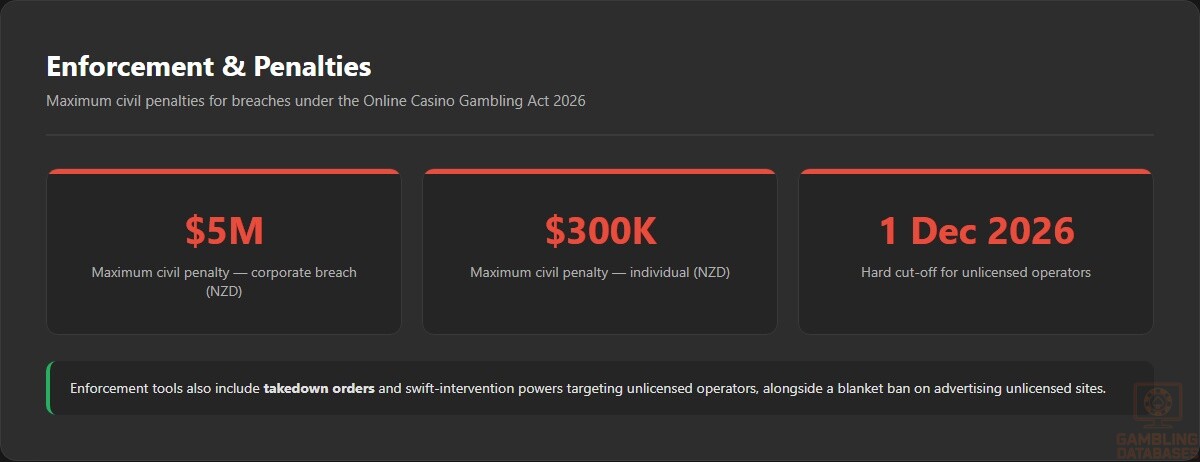
The regulatory authority enforces strict compliance through a combination of administrative fines, license suspensions, and criminal prosecutions for significant breaches. Penalty structures target illegal operations, failure to comply with responsible gambling mandates, and financial reporting violations.
- Monetary fines ranging from NZD 50,000 to several million depending on offense severity
- Temporary or permanent revocation of licenses for repeat violations
- Public warnings and enforcement notices to deter non-compliance
- Criminal charges and prosecution for fraud and money laundering related offenses
- Operational audits and mandatory corrective action plans
Section 2: Demographics and Consumer Analysis
Population Demographics and Distribution
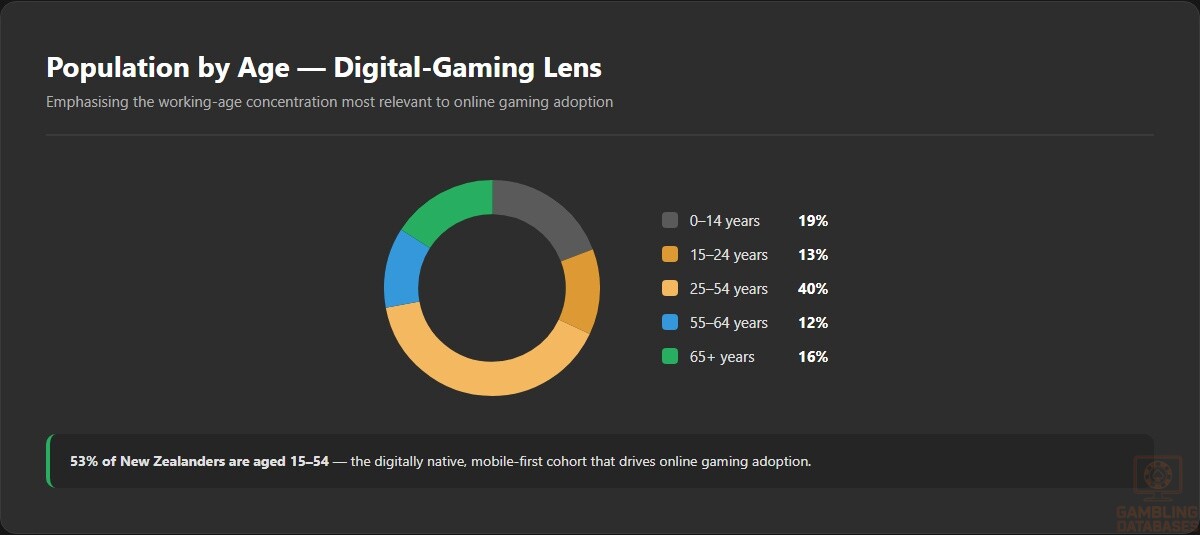
New Zealand’s total population is approximately 5.1 million as of 2025, with a median age of 38 years, reflecting a mature and stable demographic. Gender distribution is relatively balanced, with a slight female majority at 51%. The age structure shows a significant proportion of working-age adults between 25 and 54 years, comprising around 40% of the population.
Urbanization rates stand at approximately 87%, concentrated primarily in major cities and regional centers, while rural areas account for the remaining 13%. This geographic distribution influences patterns of internet access, availability of gambling venues, and consumer gambling behaviors significantly.
Major urban centers such as Auckland, Wellington, and Christchurch serve as the primary economic engines with diverse, multicultural populations and high digital connectivity, fostering favorable conditions for iGaming adoption. Regional economic disparities affect consumer spending power, with urban centers showing higher disposable incomes and increased online gambling participation.
| Age Group | Percentage of Total Population |
|---|---|
| 0-14 years | 19% |
| 15-24 years | 13% |
| 25-54 years | 40% |
| 55-64 years | 12% |
| 65+ years | 16% |
Major Cities and Population Sizes
- Auckland: 1.7 million — largest metropolitan area and economic hub
- Wellington: 433,000 — capital city with strong governmental and financial sectors
- Christchurch: 405,000 — key commercial and industrial center
- Hamilton: 185,000 — growing urban center with increasing digital infrastructure
- Tauranga: 155,000 — rapidly expanding coastal city with high consumer spending
- Dunedin: 130,000 — regional center with notable educational institutions
Economic Indicators and Consumer Spending Power
New Zealand’s economy recorded a GDP of approximately NZD 435 billion in 2024, with steady annual growth forecasts averaging around 3%. The services sector dominates economic activity at 70%, followed by manufacturing and agriculture, reflecting a mixed economy. Economic stability and rising employment have supported consumer confidence and disposable incomes.
Median household income stands near NZD 92,000 annually, with disposable income growth outpacing inflation over the past five years. Income distribution reflects moderate inequality, with the wealthiest 20% controlling approximately 40% of financial resources. Consumer expenditure patterns show substantial allocation towards discretionary services including entertainment and digital services.
Market size for consumer spending on iGaming is expanding rapidly, driven by digital adoption and urban demographic growth. Annual gross gaming revenue from iGaming is estimated near NZD 420 million with projected compound annual growth rate (CAGR) of 7.5% through 2030.
| Metric | Value |
|---|---|
| Gross Domestic Product (GDP) | NZD 435 billion (2024) |
| GDP Growth Forecast | 3% annually |
| Median Household Income | NZD 92,000 per annum |
| Disposable Income Growth | 4% annually (5-year average) |
| Income Inequality (Gini Coefficient) | 0.33 |
| iGaming Market Revenue | NZD 420 million (2024) |
| iGaming Market CAGR (2025-2030) | 7.5% |
| Average Revenue Per User (ARPU) | NZD 360 annually |
| Consumer Spending on Entertainment | 8% of total household expenditure |
Education, Skills, and Digital Literacy
New Zealand boasts a highly educated population, with more than 90% literacy rate and strong tertiary education enrollment. The workforce exhibits advanced digital skills, fostered by wide access to high-quality educational institutions and government digital inclusion initiatives.
Digital literacy is pervasive, supported by nationwide high-speed internet infrastructure covering over 90% of households. The population is familiar with online transactions and digital entertainment platforms, facilitating adoption of online gaming services without significant barriers.
Cultural and Social Factors
Communication and Language
English is the predominant language, spoken by over 96% of the population, facilitating uniform digital content and marketing strategies. Māori, the indigenous language, is recognized officially and spoken fluently by about 4% of residents, with efforts underway to preserve and revitalize its use.
- English (96%)
- Māori (4%)
- New Zealand Sign Language (2%)
- Pacific Island languages (Polynesian dialects)
- Asian languages including Mandarin, Hindi, Punjabi, and Samoan
Cultural Attitudes
Gambling is culturally accepted in New Zealand with strong emphasis on responsible participation. Religious groups generally adopt neutral or cautious stances towards gambling, reflecting a balanced societal view. Consumers show openness towards both domestic and reputable international brands, especially those demonstrating commitment to ethical practices and social responsibility.
Entertainment preferences are diverse, with digital and mobile platforms increasingly dominating consumer attention. This trend supports iGaming growth, especially among younger demographics who are digitally native and receptive to innovative gaming offerings.
Problem Gambling and Social Considerations
The prevalence of problem gambling in New Zealand is estimated at around 1.5% of the adult population, with increased focus on identification and support for at-risk groups. The government and private sector have partnered to provide comprehensive treatment and prevention services, emphasizing harm reduction.
- National Gambling Helpline and counseling services
- Community-based education programs on gambling risks
- Self-exclusion schemes accessible through licensed operators
- Mandatory contributions from operators for problem gambling funding
- Research initiatives monitoring gambling behaviors and trends
Social responsibility requirements are stringent, mandating operators to actively participate in prevention, education, and treatment funding, with mandatory disclosure of risks to consumers.
Political Structure and Governance
New Zealand operates as a stable parliamentary democracy with a reputation for transparent governance and regulatory consistency. Political stability fosters a predictable business environment encouraging foreign investment. The government maintains constructive international relations and compliance with global regulatory standards, enhancing its attractiveness for iGaming operators.
Technology Adoption and Digital Behavior
Internet and Digital Usage
Internet penetration in New Zealand exceeds 93%, with average daily usage around 7 hours including social media, streaming, and online transactions. Mobile phone penetration surpasses 125%, indicating widespread multi-device usage.
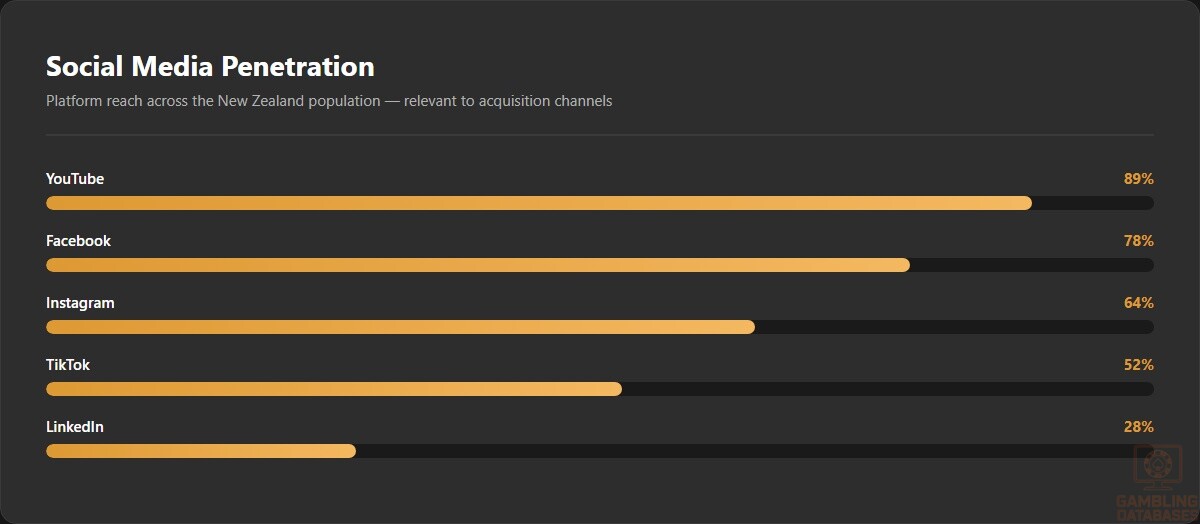
- Facebook: 78% penetration, average daily usage 2.3 hours
- Instagram: 64% penetration, strong engagement among 18-34 age group
- YouTube: 89% penetration, average watch time 45 minutes daily
- TikTok: rapidly growing, 52% penetration among under-25 users
- LinkedIn: used by 28% of professionals for networking
Digital Payment Behavior
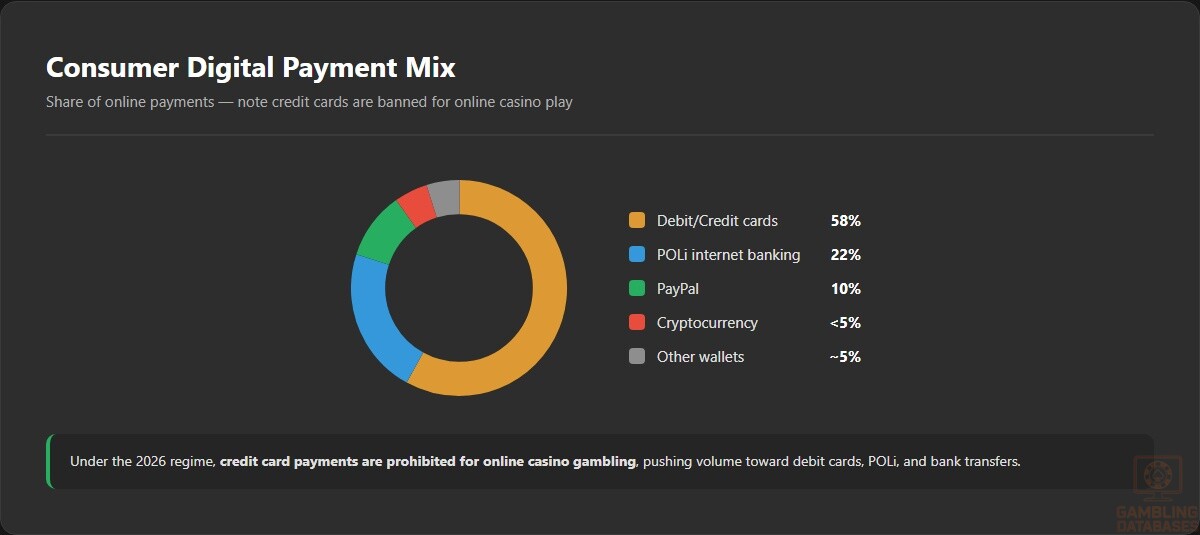
Consumers prefer established payment methods such as credit/debit cards, POLi internet banking, and a variety of e-wallets. Cryptocurrencies remain niche but show increasing acceptance among younger users for online gambling deposits and withdrawals.
- Visa and Mastercard credit/debit cards: 58% market share
- POLi internet banking: 22% of online payments
- PayPal: 10% share among digital wallets
- Apple Pay and Google Pay: rapidly growing adoption
- Cryptocurrencies: emerging with <5% current market share
Gaming and Gambling Preferences
Current Market Participation
Approximately 28% of adults participate in some form of gambling annually, with the most common activities including lotteries, sports betting, and electronic gaming machines. Online gambling participation has steadily grown, especially among urban and digitally savvy consumers.
| Rank | Activity | Participation Rate (%) |
|---|---|---|
| 1 | Lotteries | 19% |
| 2 | Sports Betting | 12% |
| 3 | Electronic Gaming Machines | 8% |
| 4 | Casino Games (land-based) | 5% |
| 5 | Online Casino Gaming | 4% |
Consumer Behavior Patterns
Gambling consumers demonstrate regular but moderate spending habits, with average session lengths ranging between 20 to 40 minutes. Peak activity times coincide with major sporting events and weekends, particularly within mobile and desktop digital platforms.
Retention rates remain strong among licensed operator platforms due to trust factors, ease of use, and integrated responsible gambling options. Consumer preference shifts towards multi-channel engagement, blending social and interactive gaming elements with traditional betting formats.
Section 2: Demographics and Consumer Analysis
Population Demographics and Distribution
New Zealand’s total population is approximately 5.1 million as of 2025, with a median age of 38 years, reflecting a mature and stable demographic. Gender distribution is balanced with a slight female majority of 51%. The working-age group (25-54 years) constitutes roughly 40% of the population.
Urbanization is high at about 87%, concentrated in major cities and regional centers, while rural areas make up 13%. This distribution significantly impacts internet access, gambling venue locations, and consumer behaviors.
Key urban centers such as Auckland, Wellington, and Christchurch are economic hubs with diverse multicultural populations and superior digital connectivity, enhancing iGaming market potential. Economic disparities between urban and rural regions influence consumer spending and participation rates in online gambling.
| Age Group | Percentage of Total Population |
|---|---|
| 0-14 years | 19% |
| 15-24 years | 13% |
| 25-54 years | 40% |
| 55-64 years | 12% |
| 65+ years | 16% |
Major Cities and Population Sizes
- Auckland: 1.7 million
- Wellington: 433,000
- Christchurch: 405,000
- Hamilton: 185,000
- Tauranga: 155,000
- Dunedin: 130,000
Economic Indicators and Consumer Spending Power
New Zealand’s GDP was approximately NZD 435 billion in 2024, with an average annual growth forecast near 3%. The economy is service-driven, accounting for 70% of GDP, supported by strong manufacturing and agriculture sectors. Economic growth sustains consumer confidence and disposable income levels.
The median household income is around NZD 92,000, with rising disposable income exceeding inflation over recent years. Income inequality is moderate, as reflected by a Gini coefficient of 0.33, with the wealthiest 20% controlling about 40% of financial resources.
The iGaming market revenue nears NZD 420 million annually, with forecasts predicting a 7.5% CAGR through 2030. Consumer expenditure increasingly favors digital entertainment and gambling services, supported by higher urban incomes.
| Metric | Value |
|---|---|
| Gross Domestic Product (GDP) | NZD 435 billion (2024) |
| GDP Growth Forecast | 3% annually |
| Median Household Income | NZD 92,000 per annum |
| Disposable Income Growth | 4% annually (5-year average) |
| Income Inequality (Gini Coefficient) | 0.33 |
| iGaming Market Revenue | NZD 420 million (2024) |
| iGaming Market CAGR (2025-2030) | 7.5% |
| Average Revenue Per User (ARPU) | NZD 360 annually |
| Consumer Spending on Entertainment | 8% of total household expenditure |
Education, Skills, and Digital Literacy
New Zealand has a highly educated population, with literacy exceeding 90% and strong tertiary education enrollment rates. Workforce digital skills are advanced, supported by access to quality education and national digital inclusion programs.
Digital literacy levels are high, supported by broad high-speed internet coverage available to over 90% of households, enabling widespread use of online payment and entertainment platforms including iGaming services.
Cultural and Social Factors
Communication and Language
English is the official and predominant language, spoken by over 96% of residents, facilitating standardized marketing and service provision. The indigenous Māori language, recognised officially, is spoken fluently by approximately 4%. Additional languages include New Zealand Sign Language, Pacific Island languages, and several Asian languages.
- English (96%)
- Māori (4%)
- New Zealand Sign Language (2%)
- Polynesian languages (Samoan, Tongan)
- Asian languages (Mandarin, Hindi, Punjabi)
Cultural Attitudes
Gambling is socially accepted with strong regulatory focus on responsible play. Religious and cultural groups tend to adopt moderate or cautious attitudes toward gambling. Consumers favor reputable players who demonstrate responsible gambling commitment. Digital entertainment is increasingly preferred, particularly among younger, tech-savvy cohorts.
Problem Gambling and Social Considerations
Problem gambling affects approximately 1.5% of the adult population, with emphasis on early intervention and treatment. Government and private programs focus on harm reduction, support services, and awareness campaigns.
- National Gambling Helpline and counseling
- Community education on gambling risks
- Self-exclusion programs at licensed operators
- Mandatory operator contributions toward problem gambling services
- Research and monitoring initiatives
Social responsibility demands operators fund support mechanisms and communicate gambling risks transparently to consumers.
Political Structure and Governance
New Zealand’s parliamentary democracy provides political stability and regulatory consistency, making it highly attractive for foreign investment. Transparent governance and strong global ties support favorable regulatory conditions for iGaming operators.
Technology Adoption and Digital Behavior
Internet and Digital Usage
Internet penetration exceeds 93%, with users averaging 7 hours of daily online activity, consuming social media, streaming, and engaging in e-commerce. Mobile penetration stands at 125%, reflecting widespread smartphone use.
- Facebook: 78% penetration, 2.3 hours average daily use
- Instagram: 64%, strong in 18-34 age group
- YouTube: 89%, 45 minutes average daily watch
- TikTok: 52% penetration, rapidly growing among under-25s
- LinkedIn: 28%, primarily professional users
Digital Payment Behavior
Payment preferences favor credit/debit cards, POLi internet banking, and popular e-wallets. Cryptocurrency use remains minimal but is growing among younger demographics.
- Visa and Mastercard cards: 58% share
- POLi online banking: 22% share
- PayPal: 10% share of digital wallets
- Apple Pay and Google Pay: growing users
- Cryptocurrency: under 5%, emerging
Gaming and Gambling Preferences
Current Market Participation
Roughly 28% of adults engage in gambling annually. The most popular activities are national lotteries, sports betting, and electronic gaming machines. Online casino participation is smaller but expanding rapidly.
| Rank | Gambling Activity | Participation Rate |
|---|---|---|
| 1 | Lotteries | 19% |
| 2 | Sports Betting | 12% |
| 3 | Electronic Gaming Machines | 8% |
| 4 | Land-based Casino Games | 5% |
| 5 | Online Casino Games | 4% |
Consumer Behavior Patterns
Consumers generally exhibit moderate but consistent gambling habits. Average session lengths range from 20 to 40 minutes, peaking during major sports events and weekends. Multi-channel engagement grows, with loyalty driven by ease of use and responsible gambling features offered by licensed providers.
Section 3: Technology Infrastructure and Business Environment
Internet and Digital Infrastructure
New Zealand’s internet penetration exceeds 93%, supported by a high-quality broadband network and widespread mobile coverage. The average fixed broadband speed surpasses 120 Mbps, ensuring reliable connectivity for online gambling activities. The infrastructure investment in recent years has focused on expanding fiber optic networks, particularly in urban centers, enhancing international and domestic data transmission.
Despite geographic isolation, the country’s commitment to digital infrastructure has resulted in high network reliability, with minimal downtime and fast data transfer rates. This robust infrastructure supports a seamless user experience critical for online gambling platforms seeking high uptime and smooth transaction processing.
5G and Future Technology Deployment
Current 5G coverage covers major urban areas such as Auckland, Wellington, and Christchurch, with plans to expand nationwide over the next 3-5 years. The largest network operators, Vodafone New Zealand, Spark, and 2degrees, are leading the 5G rollout, aiming at broader rural deployment and enhanced enterprise connectivity. Future plans include deploying edge computing and IoT solutions to further boost digital services infrastructure.
Mobile Technology Ecosystem
Mobile Network Infrastructure
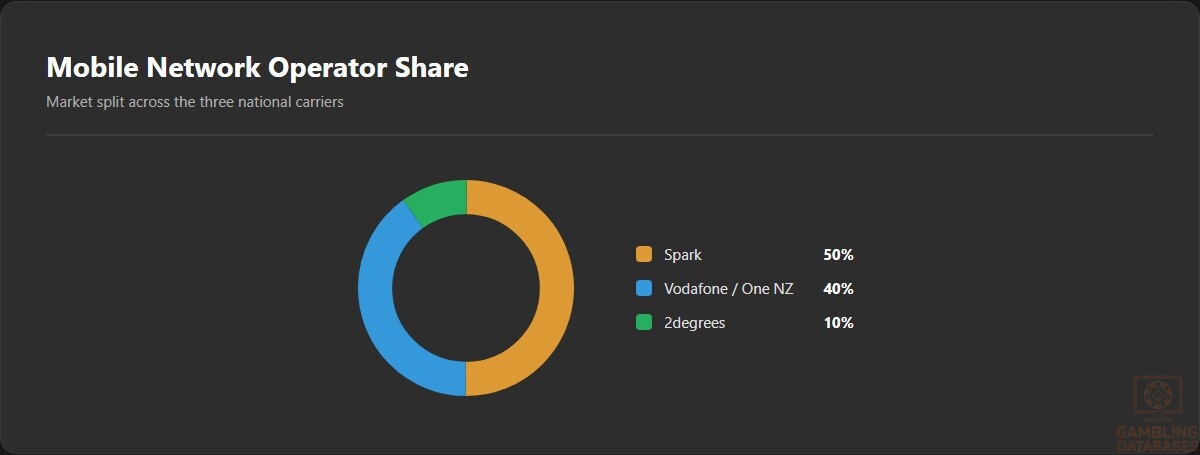
New Zealand’s mobile network ecosystem comprises three major operators holding significant market shares: Spark (approximately 50%), Vodafone (around 40%), and 2degrees (about 10%). Market coverage is extensive, with urban areas having near-ubiquitous access to high-speed networks, while rural regions are increasingly connected through advancements in LTE and upcoming 5G services.
- Three main operators dominate with over 100% combined market coverage
- Data costs are competitive, averaging NZD 10-20 per GB for consumers
- Mobile broadband adoption approaches 99% among urban residents
- Prepaid SIM cards are used by 70%, with postpaid plans accounting for the rest
- Device costs vary from NZD 200 entry-level smartphones to NZD 1,500 premium models
Device Penetration
Smartphone penetration is nearly universal, with most residents owning at least one device. Market share among popular brands is led by Apple (approx. 35%), Samsung (20%), followed by Huawei and Xiaomi. Usage patterns show frequent gaming, streaming, and digital transactions, aligning well with online gambling activity growth.
Financial Services and Payment Infrastructure
Banking System Structure
New Zealand’s banking sector is concentrated among five dominant banks: ANZ New Zealand, ASB Bank, BNZ, Westpac, and Kiwibank. These institutions account for over 90% of retail banking assets. Digital banking is widespread, with online account management available through mobile apps and secure web portals, facilitating swift deposits and withdrawals for iGaming operators.
- Major banks with extensive ATM and branch networks
- Innovative digital banking solutions including contactless and QR code payments
- High account penetration with 98% of households having at least one bank account
- Strong regulatory oversight ensuring transaction security
- Fast settlement times averaging under 24 hours for electronic funds transfer
Payment Processing Options
Operators and consumers prefer multiple payment methods: credit/debit cards, e-wallets, bank transfers, direct debit, and emerging cryptocurrencies. Popular e-wallet providers include PayPal, POLi, and Apple Pay, with various options supporting instant deposits and withdrawals. The payment landscape supports seamless, secure, and fast transactions, essential for online gambling.
- Credit/debit cards (Visa, Mastercard)
- Electronic wallets (PayPal, POLi, Apple Pay)
- Bank transfers and direct debit
- Cryptocurrencies (Bitcoin, Ethereum)
- Prepaid vouchers and gift cards
E-commerce and Digital Economy
The online retail sector in New Zealand has grown significantly, with e-commerce sales exceeding NZD 12 billion in 2024. Consumers trust online platforms, supported by high credit card penetration and robust delivery networks. Digital services such as streaming, digital content, and online banking are mainstream, creating a fertile environment for online gambling expansion.
Growth is driven by increasing smartphone adoption, improved logistics, and consumers’ preference for convenient shopping and entertainment. Digital trust remains high thanks to stringent data privacy regulations and cybersecurity measures.
Business Environment and Regulatory Framework
Ease of Business Operations
New Zealand ranks consistently high in global ease of doing business indexes, attributed to transparent regulations, effective legal systems, and straightforward registration procedures. Starting a business typically involves fewer than five steps, including company registration, tax registration, and opening bank accounts. The country offers competitive operational costs and incentives for foreign investors.
- Register company with Companies Office (online process)
- Obtain tax identification number from Inland Revenue Department
- Open local bank account with one of the major institutions
- Register for GST if annual turnover exceeds NZD 60,000
Corporate Structure and Registration
Foreign investors typically register as a limited liability company (LLC) for flexibility and liability protection. Alternatively, a branch office can be established for direct operation under parent company jurisdiction. The registration process requires standard documents, including proof of identity, address, and business purpose, with registration completed within 1-2 weeks.
- LLC: recommended for operational flexibility and limited liability
- Branch Office: for direct parent company control and simplified setup
- Registration documents include passport copies, proof of address, and incorporation paperwork
- Foreign ownership is unrestricted, but transparency and compliance are mandatory
- Annual reporting and financial auditing are required to maintain good standing
Taxation Framework
The corporate income tax rate is a flat 28%, with no specific incentives for the iGaming sector but benefits available in special zones. The country has signed numerous double taxation treaties, including with Australia, UK, and various EU nations, minimizing cross-border tax liabilities.
Personal income tax rates range from 10.5% to 33%, depending on income levels, with obligatory social security contributions. Resident status is determined based on duration and ties to the country, affecting tax obligations for expatriates and companies.
Market Entry Considerations
Recommended Entry Strategies
Strategic approaches include forming local partnerships, acquiring existing licenses, or establishing independent operations targeting domestic and Pacific markets. Technology leveraging, such as white-label solutions and platform licensing, can accelerate go-to-market timelines. Ensuring compliance with local data and responsible gambling regulations is critical for success.
- Partnership with local licensed operators
- Acquisition of existing licensed entities
- Establishing independent licensing and operations
- Utilizing white-label platform providers
- Applying for multi-licensing to access regional markets
Typical Costs and Timelines
Initial setup costs include licensing (€100,000–€250,000), legal and consulting fees (€50,000–€80,000), and initial working capital (€500,000+). Operational costs cover platform licensing, staff, marketing, and compliance expenses.
- Market research and partnership or licensing applications (1-3 months)
- Setup, certification, and staff onboarding (2-4 months)
- Testing, marketing, and soft launch (1 month)
- Full operational deployment
Success Factors and Challenges
Success hinges on regulatory compliance, technological robustness, local partnerships, and effective marketing. Challenges include navigating local compliance complexities, high licensing costs, and market saturation tendencies. Cultural attitudes towards gambling and competition from offshore operators also pose market entry hurdles.
- Strong regulatory compliance frameworks
- Reliable technology infrastructure
- Strategic local partnerships and branding
- Customer trust and responsible gambling focus
- Proactive adaptation to regulatory updates
Exit Strategy Planning
Market liquidity is moderate, with potential exit via license transfer, sale to local investors, or merger with larger operators. License transferability depends on regulatory approval, and valuation multiples often mirror regional industry standards, typically 3-5x EBITDA or revenue multiples. Maintaining detailed records and demonstrating compliance are prerequisites for successful ownership transfer.
Frequently Asked Questions
1. Is online gambling legal in New Zealand?
Yes, online gambling is legal for licensed operators within a strict regulatory framework. The law permits domestic licensing for online sports betting, casino games, and lotteries, while offshore providers are restricted from offering services to residents without a license.
2. What types of gambling licenses are available and what do they cover?
Operators can obtain licenses for land-based casinos, online sports betting, and remote interactive gambling licenses. Each license type specifies the scope of permitted activities, including software requirements, player protection measures, and operational territories.
3. How much does an iGaming license cost and how long does it take to obtain?
License application costs range from €100,000 to €250,000, with renewal fees around €50,000 annually. The licensing process typically takes 4-6 months, depending on the completeness of documentation and compliance verification.
4. Can foreign companies obtain a gambling license?
Yes, foreign companies can apply for licenses, provided they meet all regulatory criteria, including demonstrating financial stability, technical standards compliance, and integrity policies. There are no restrictions on foreign ownership.
5. What are the tax obligations for iGaming operators?
Operators pay a 15% GGR tax, corporate income tax at 28%, and licensing fees. The overall tax burden is competitive, supporting a healthy profit margin while contributing significantly to public revenues.
6. Are gambling winnings taxed for players?
No, gambling winnings in New Zealand are generally not taxed for players. The government does not levy withholding taxes on prizes, making it attractive for consumers to participate in legal gambling activities.
7. What are the typical operational costs for running an online casino/sportsbook?
Costs include licensing (€100,000–€250,000), platform licensing and setup (€50,000–€100,000), staff (€200,000+ annually), marketing (€100,000+ annually), and compliance (€50,000+ annually). These can vary based on scale.
8. What is the expected ROI timeline for entering this market?
ROI can be expected within 12-24 months for licensed operators, assuming effective market entry, targeted marketing, and compliance. Initial investments are recoverable through a growing user base and stable revenue streams.
9. What are the local presence requirements for operators?
Currently, no mandatory physical office is required, but operators must appoint a local point of contact and comply with data and record-keeping regulations. Continuous compliance monitoring is essential.
10. What payment methods are available and recommended?
Preferred options include credit/debit cards, e-wallets (PayPal, POLi), bank transfers, and cryptocurrencies. Payment processing is streamlined through secure platforms, supporting quick deposits and withdrawals.
11. What are the advertising and marketing restrictions?
Advertising must comply with content restrictions, avoiding targeting minors, and avoiding exaggerated claims. Promotions are limited during certain hours, and all advertising must include responsible gambling messages.
12. What responsible gambling measures are mandatory?
Mandatory measures include age verification, deposit limits, self-exclusion options, real-time activity monitoring, and awareness campaigns. Operators must also provide accessible support services for problem gamblers.
13. How large is the iGaming market and what is its growth potential?
The market size was approximately NZD 420 million in 2024, with a growth forecast of 7.5% CAGR through 2030. Increasing digital adoption and urban population participation underpin this positive outlook.
14. Who are the main competitors and what is their market share?
Main players include SkyCity, TAB NZ, and offshore licensed operators. Market shares are uneven but consolidations and new entrants can alter the competitive landscape quickly.
15. What are the player preferences and typical spending patterns?
Players favor mobile over desktop, with session lengths between 20-40 minutes. Popular activities include lotteries, sports betting, and online casino games, with ARPU around NZD 360 annually.
16. What are the key success factors and main challenges for new entrants?
Success factors encompass strong regulatory compliance, innovative technology, strategic partnerships, responsible gaming, and targeted marketing. Challenges include high licensing costs, market saturation, offshore competition, and consumer trust building.
SOURCES AND REFERENCES
- New ZealandGambling Regulatory Authority – Official Website – https://www.dia.govt.nz
- Statistics New Zealand – Population & Economic Data – https://www.stats.govt.nz
- Reserve Bank of New Zealand – Financial Statistics – https://www.rbnz.govt.nz
- Ministry of Finance – Tax Regulations – https://www.treasury.govt.nz
- World Bank – Doing Business Report 2024 – https://www.worldbank.org
- ITU Digital Readiness Reports – https://www.itu.int
- New Zealand Communications and Internet Sector Reports – https://www.mpi.govt.nz
- Gaming Industry Analysis – MarketResearch.Com – 2024