
Papua New Guinea (PNG) presents a burgeoning opportunity in the iGaming sector due to its evolving regulatory landscape and growing digital connectivity. While land-based gambling is established under clear national laws, iGaming regulation is undergoing critical developments aimed at formalizing licensing and consumer protections.
The market’s potential is underpinned by increasing internet and mobile penetration, a young population, and nascent online gambling activity primarily through offshore platforms. This analysis explores the current regulatory framework, license requirements, tax structures, and enforcement environment shaping PNG’s iGaming entry landscape.
Executive Summary: Key Market Indicators
| Metric | Value |
|---|---|
| Legal Status of Gambling | Regulated (land-based); Online regulation developing |
| Regulatory Authority | National Gaming Control Board (NGCB) |
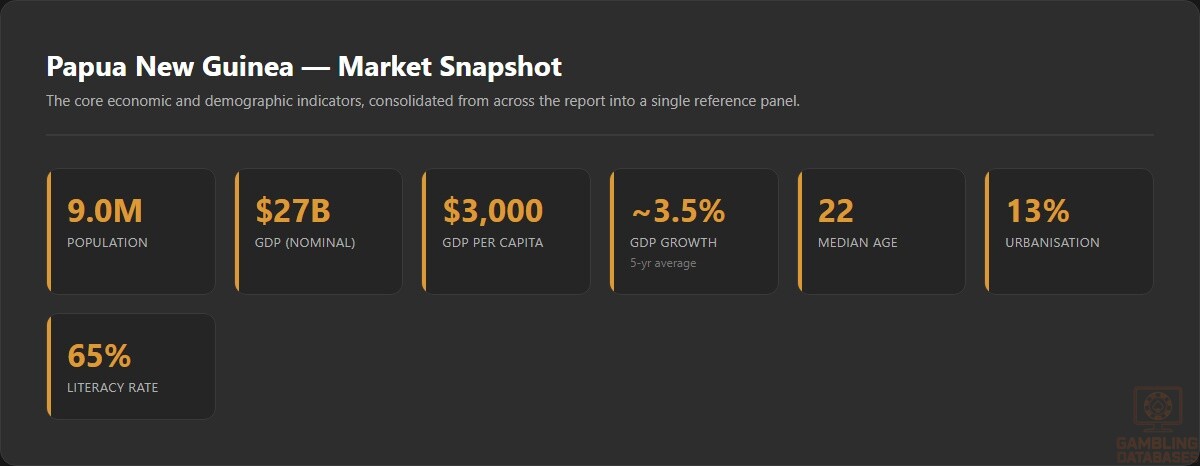
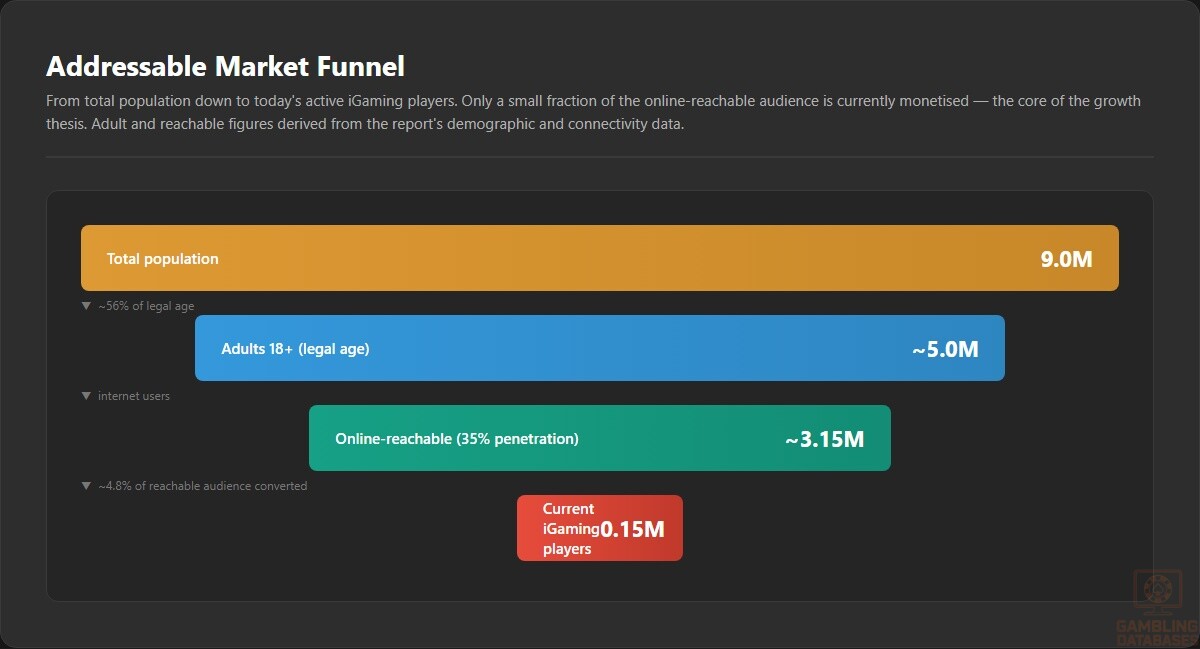
| Population | ~9 million |
| GDP (Nominal) | Approx. USD 27 billion |
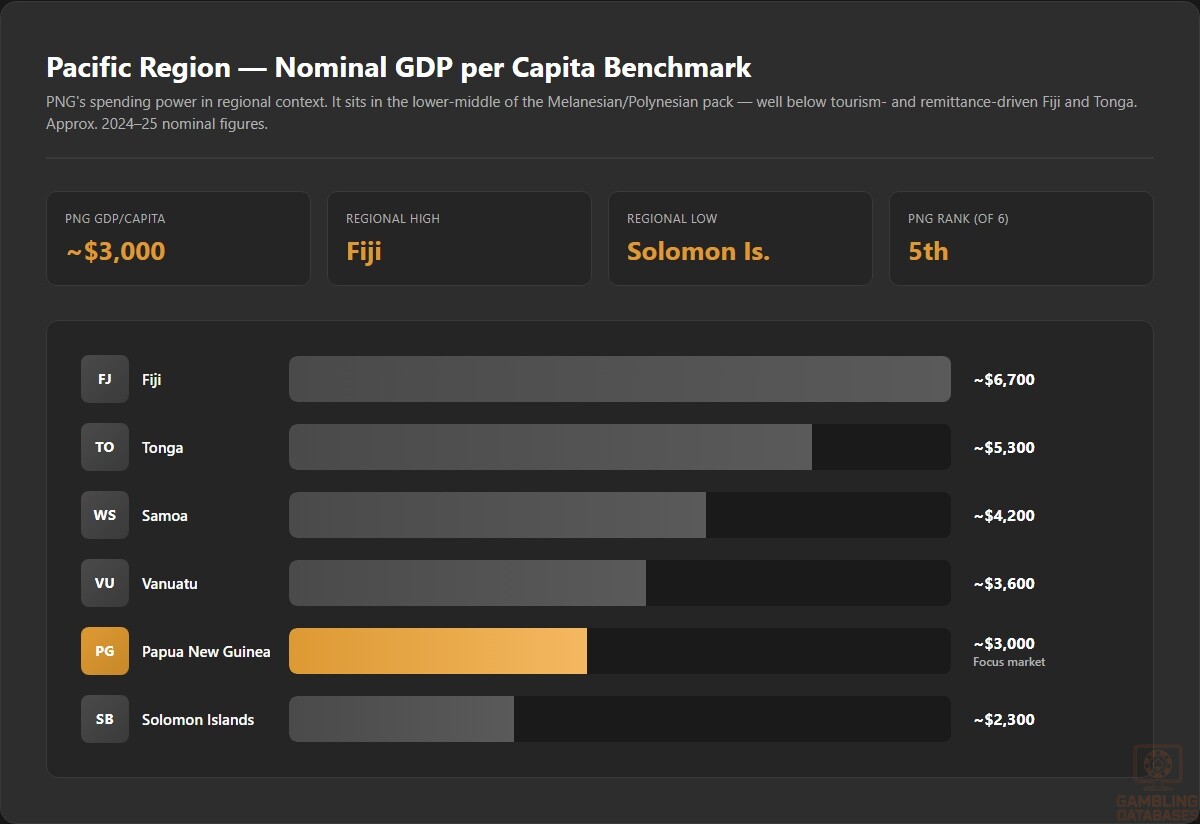
| GDP per Capita | ~USD 3,000 |
| Internet Penetration Rate | ~35% |
| Mobile Penetration Rate | ~70% |
| iGaming License Fee | Not formally established; application fees anticipated |
| Gross Gaming Revenue Tax | 15% Bookmaker’s Turnover Tax; 55% on gaming machine profits |
| Community Welfare Levy | 7% of gaming revenue |
| License Application Process Duration | Estimated 3-6 months (anticipated post new online gaming law) |
| Minimum Age for Gambling | 18 years |
| Prohibited Gambling Forms | Underage gambling; some remote online unlicensed activities |
| Local Presence Required | Likely mandatory (pending formal online regulations) |
| Player Protection Measures | Player registration, KYC, responsible gaming policies in development |
| Major Licensed Land-Based Operators | Multiple local operators; 19 new licenses issued in 2023 |
| Online Operators Presence | Mostly offshore platforms; local licensing forthcoming |
| Market Size (Gambling Revenue) | Projected growth; specific figures pending new regulation |
| Annual Market Growth Forecast | Significant growth anticipated in iGaming over next 5 years |
| Average Revenue Per User (ARPU) | Data emerging with market formalization |
| Technology Infrastructure | Improving broadband and mobile access |
| Enforcement Framework | NGCB-led with penalties for illegal gambling |
| Advertising Regulations | Restrictions under discussion; focus on responsible promotion |
Section 1: Regulatory Framework and Legal Environment
Current Gambling Regulation Status
The regulatory architecture for gambling in Papua New Guinea is defined predominantly by the Gaming Control Act of 2007, governed by the National Gaming Control Board (NGCB). This Act legalizes and regulates a comprehensive range of gambling activities, including casinos, sports betting, lotteries, and online gambling.
PNG’s gambling environment distinguishes between land-based operations, which are actively licensed and controlled, and online gambling, which remains in a transitional phase seeking formal regulatory clarity. The online sector operates in a quasi-legal space where domestic players mostly access offshore operators, although a new Gaming Control Bill aimed at online platforms is expected to impose formal licensing and regulatory requirements shortly.
Land-Based Gambling Activities
Land-based gambling is well-established within PNG, encompassing casinos, sports betting venues, slot machine halls, and lottery operations. The NGCB licenses a variety of operators, including local companies controlling popular mass-market gambling offerings such as fruit machines (“pokies”), sports betting, and casino games. In recent years, 19 new gaming licenses were issued, increasing market activity and employment opportunities.
The operational framework includes mandated separation of gaming venues, adherence to local community development levies, and stringent tax collection on gambling revenues. Existing land-based operators maintain significant market shares, supported by robust licensing and enforcement efforts from the NGCB.
Online Gambling Framework
Although online gambling has been permitted under the 2007 Act, the regulatory framework lacked detailed provisions specific to digital platforms until recent legislative proposals. The emerging Online Gaming section within the revised Gaming Control Bill proposes a structured licensing regime for digital operators, integrating technical standards, financial oversight, and player protection measures.
This new regime mandates operator licensing, player registration processes, secure financial transactions, and the introduction of wagering limits to promote responsible gaming. Illegal gambling provisions mainly target unlicensed land-based operators, with limited enforcement historically on offshore online gambling usage by residents.
The regulatory framework will likely require online operators to adhere to similar obligations as land-based licensees but with enhanced focus on cybersecurity, data protection, and compliance monitoring tailored to digital environments.
Licensed Operators and Market Players
The competitive landscape comprises established domestic firms holding land-based licenses and a growing presence of international online operators targeting PNG players. Although no fully licensed domestic online platforms currently dominate, international brands have entered the market through offshore channels, leveraging digital distribution and partnerships to capture user bases.
Market entry strategies typically involve collaboration with local partners and compliance alignment with NGCB regulations. The regulatory tightening anticipated through formal online licensing aims to reduce illicit market share, increase tax revenues, and boost consumer confidence in iGaming services.
Licensing Framework and Requirements
Application Process and Eligibility
The licensing authority, NGCB, administers all gambling licenses under the Gaming Control Act. Prospective operators must submit detailed applications including business structure, financial projections, and operational procedures. Technical standards require proof of gaming platform integrity and Random Number Generator (RNG) certification.
The application process involves financial background checks, verification of ethical management, and compliance with regulatory mandates. License fees and timelines for online gaming are anticipated to be aligned with the broader licensing framework, with application review periods estimated between three to six months following comprehensive submissions.
Document requirements for licensing include:
- Corporate registration and incorporation certificates
- Audited financial statements covering the previous three years
- Detailed business plan and operational model
- Technical documentation of gaming software and systems
- Criminal background checks for directors and beneficial owners
- Proof of minimum capital reserves or deposits
- Security protocols and responsible gaming policy frameworks
Local Presence and Operational Requirements
Operators must maintain a physical presence in Papua New Guinea, including registered office addresses and on-site personnel responsible for compliance with licensing conditions. Domains used for online gambling must be registered and authorized under NGCB supervision.
Personnel requirements stipulate appropriately qualified compliance officers and local management teams to ensure operational integrity. Foreign ownership is permitted, but local partnerships or subsidiaries may be required to facilitate regulatory oversight and community engagement.
- Registered local office mandatory
- Appointed local compliance officers
- Local staff for operational oversight
- Domain registration with NGCB approval
- Partnerships encouraged for market integration
Compliance Obligations and Monitoring
Player Protection and Identification
The regulatory framework emphasizes rigorous player identification standards, including mandatory age verification to prevent underage gambling. Know Your Customer (KYC) and Anti-Money Laundering (AML) protocols are integral to the licensing regime, requiring operators to collect and securely store player information.
Responsible gambling measures under development include self-exclusion programs, wagering limits, and information disclosure obligations. The NGCB mandates operators to provide transparent access to game rules, odds, and payout information for consumer protection.
- Mandatory age verification (minimum 18 years)
- KYC and AML compliance protocols
- Self-exclusion and voluntary suspension options
- Transparent disclosure of terms and conditions
- Wagering and deposit limits enforcement
Financial Monitoring and Reporting
Operators are subject to continuous financial monitoring, including real-time transaction tracking and anti-fraud measures. Reporting requirements include monthly submission of detailed financial statements, customer activity logs, and independent audits conducted annually.
- Monthly submission of financial reports to NGCB
- Transaction monitoring with anomaly detection
- Annual independent financial audits
- Compliance audits on responsible gaming implementations
Taxation Structure and Financial Obligations
Player Taxation
Players pay no direct taxes on winnings within Papua New Guinea, as the fiscal burden is primarily on operators. Withholding tax mechanisms do not currently apply to individual gamblers, fostering a player-friendly tax landscape.
Operator Taxation
Operators face a comprehensive tax regime designed to maximize government revenue from gaming activities. The bookmaker’s turnover tax stands at 15%, applied on gross wagering turnover, merged with stamp duties to streamline collection.
Gaming machines are subject to an elevated tax rate where the government’s share of gross profits increased to 55%, a significant hike from previous levels. Additionally, a community welfare levy of 7% of total gaming revenue funds social development initiatives.
| Tax Category | Rate |
|---|---|
| Bookmaker’s Turnover Tax (BTT) | 15% |
| Gaming Machine Gross Profit Tax | 55% |
| Community Welfare Levy | 7% |
License renewal fees and other fixed operational charges are anticipated to be introduced or formalized with the new online gaming regulations. Corporate income tax applies separately per standard tax codes.
Gambling Market Financial Performance
The market exhibits robust wagering volume increases, propelled by land-based operator expansion and emerging digital engagement. The growth in betting turnover and machine profit has improved fiscal inflows, benefiting community welfare programs funded by levy revenues.
The NGCB’s stringent reporting and auditing regimes ensure transparency and compliance. Revenue distribution reflects concentrated revenue shares among established land-based operators, while upcoming regulation of online gaming is expected to diversify income streams within the sector.
Advertising and Marketing Restrictions
Marketing and advertising in the gambling sector face evolving regulatory scrutiny focused on consumer protection and responsible messaging. Operators must adhere to restrictions on advertising channels, avoiding promotion to minors and vulnerable groups.
- Restricted advertising during certain hours
- Prohibition of misleading claims
- Mandatory responsible gambling messages in ads
- Ban on targeting underage audiences
- Limits on sponsorship visibility in community events
Sponsorship of sports and cultural events is permitted within defined boundaries to prevent overexposure and maintain ethical standards. Enforcement mechanisms are designed to penalize violations through fines and potential license suspensions.
Recent Regulatory Changes and Their Impact
The regulatory framework has evolved with renewed focus on online gaming governance through the Gaming Control Bill 2021, aimed for enactment soon. This bill introduces licensing for online operators, enhanced consumer protections, and tighter oversight mechanisms.
Operational costs are expected to rise with compliance burdens, but the market benefit includes legitimizing digital operators and capturing offshore revenue flows. The new law is anticipated to improve market transparency and investor confidence while supporting the national economic agenda.
Enforcement Mechanisms and Penalties
Enforcement is managed primarily by the NGCB, with a mandate to supervise license adherence, monitor illegal gambling activities, and impose penalties. Penalties range from monetary fines to license suspension and criminal charges for severe violations.
- Fines for unlicensed operation
- License suspension or revocation
- Criminal prosecution for illegal gambling operators
- Sanctions for advertising violations
- Mandatory compliance audits and corrective actions
Section 2: Demographics and Consumer Analysis
Population Demographics and Distribution
Papua New Guinea’s population is approximately 9 million people, characterized by a youthful demographic profile. The median age is estimated at around 22 years, indicative of a large segment of the population in the prime age range for digital engagement and gambling activities.
Gender distribution is relatively balanced, with a slight male predominance of approximately 51%. Urbanization is moderate, with roughly 13% of the population residing in urban centers, while the majority remain in rural areas, impacting access to digital services and gambling venues.
| Age Group | Percentage of Population |
|---|---|
| 0-14 years | 36% |
| 15-24 years | 20% |
| 25-54 years | 34% |
| 55-64 years | 5% |
| 65+ years | 5% |
The population is geographically dispersed across mountainous terrains and coastal regions. Urban populations concentrate in provincial capitals with enhanced economic activities. Access to internet and gambling venues is predominantly urban-centric, with satellite towns increasingly gaining connectivity.
Geographic Distribution
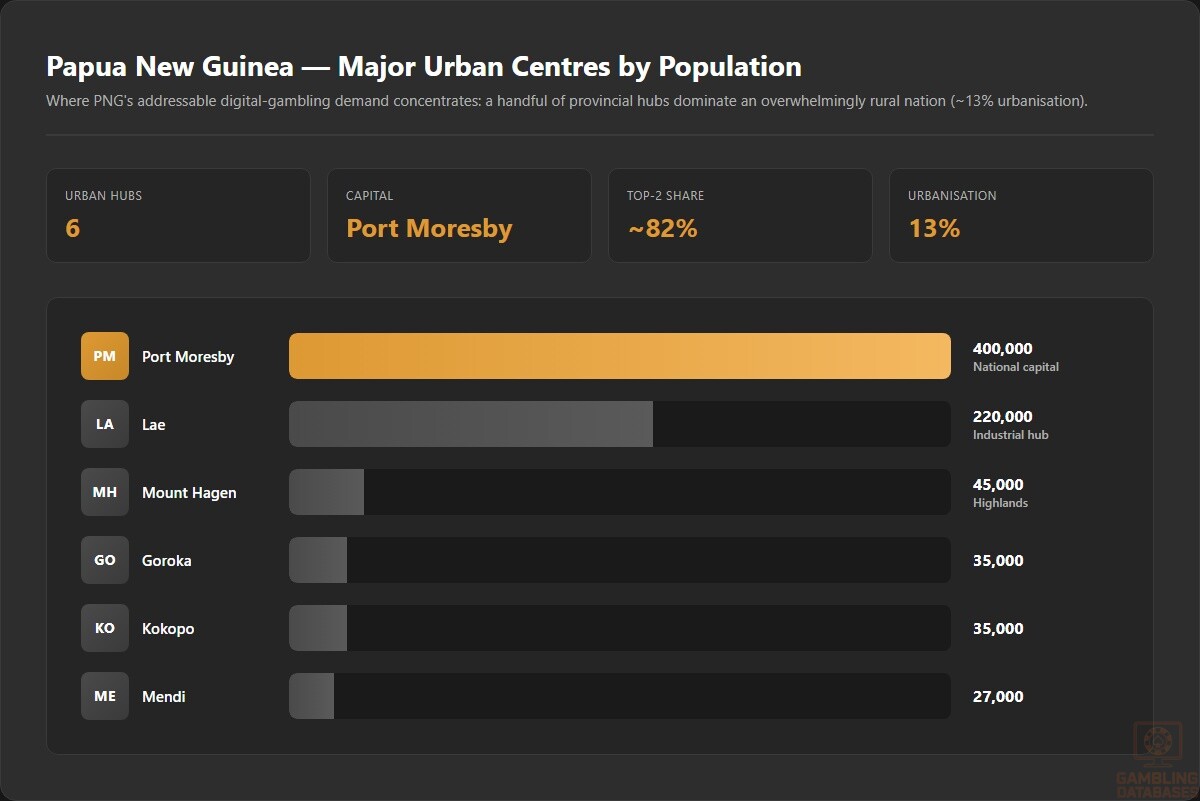
Major population centers include the capital Port Moresby and secondary cities such as Lae and Mount Hagen, which serve as economic and social hubs. These areas host majority of gambling outlets and represent the largest consumer bases for both land-based and online gambling.
- Port Moresby – Population approx. 400,000
- Lae – Population approx. 220,000
- Mount Hagen – Population approx. 45,000
- Goroka – Population approx. 35,000
- Kokopo – Population approx. 35,000
- Mendi – Population approx. 27,000
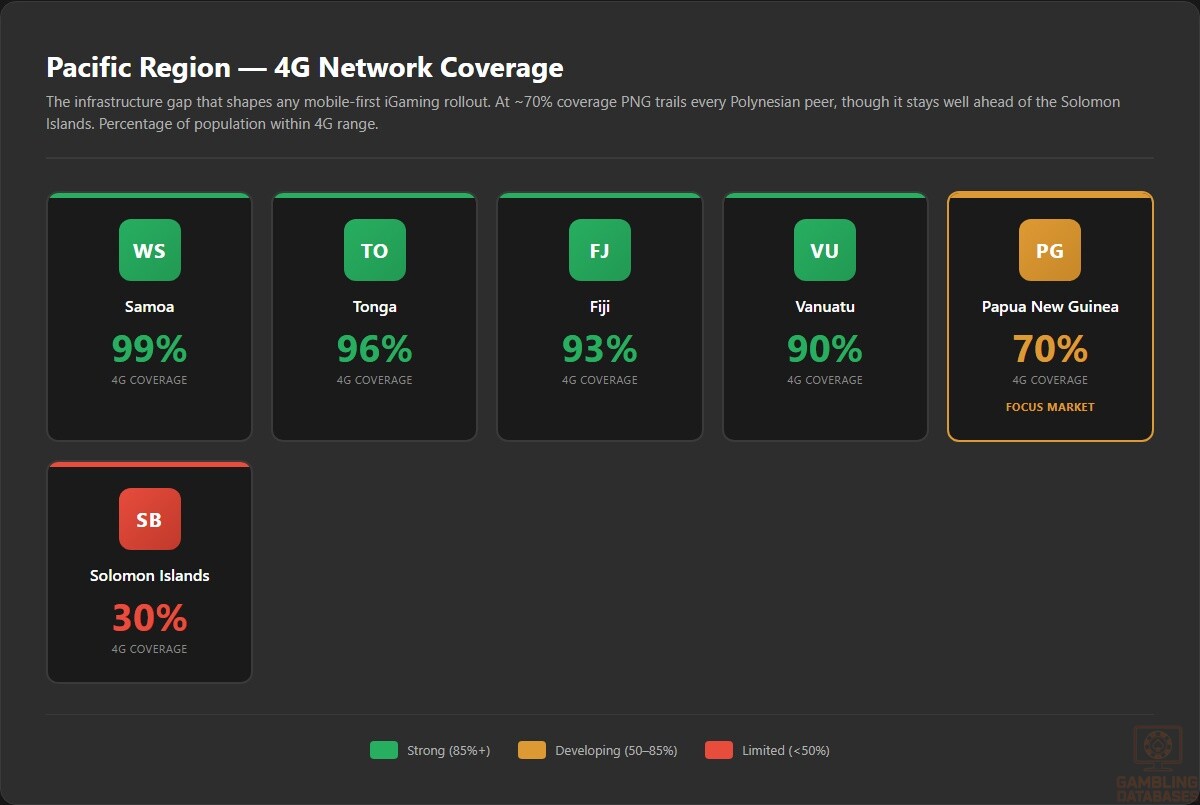
Internet penetration correlates strongly with urban centers, where broadband infrastructure and mobile cellular coverage offer the highest accessibility. Conversely, rural regions face challenges related to connectivity, limiting wider adoption of digital gambling platforms.
Economic Indicators and Consumer Spending Power
GDP and Economic Performance
Papua New Guinea’s economy is valued at approximately USD 27 billion in nominal GDP terms. The country experienced modest but steady growth trends averaging around 3-4% annually over the past five years, with forecasts projecting continued expansion driven by resource sectors and infrastructure investments.
The economic structure leans heavily on natural resources, with mining, agriculture, and petroleum comprising a significant share of GDP. The service sector, including financial services and retail, is gradually growing, providing opportunities for digital economy expansion including iGaming.
Income and Wealth Distribution
Average household income is relatively low by global standards, with a median income estimated near USD 3,000 annually. Income distribution is uneven, with marked disparities between urban and rural populations and between regions heavily reliant on subsistence farming versus those benefiting from mining-related employment.
Disposable income growth is trending positively among urban youth and middle-income classes, supporting increased discretionary spending on entertainment including gambling.
Market Size and Growth Projections
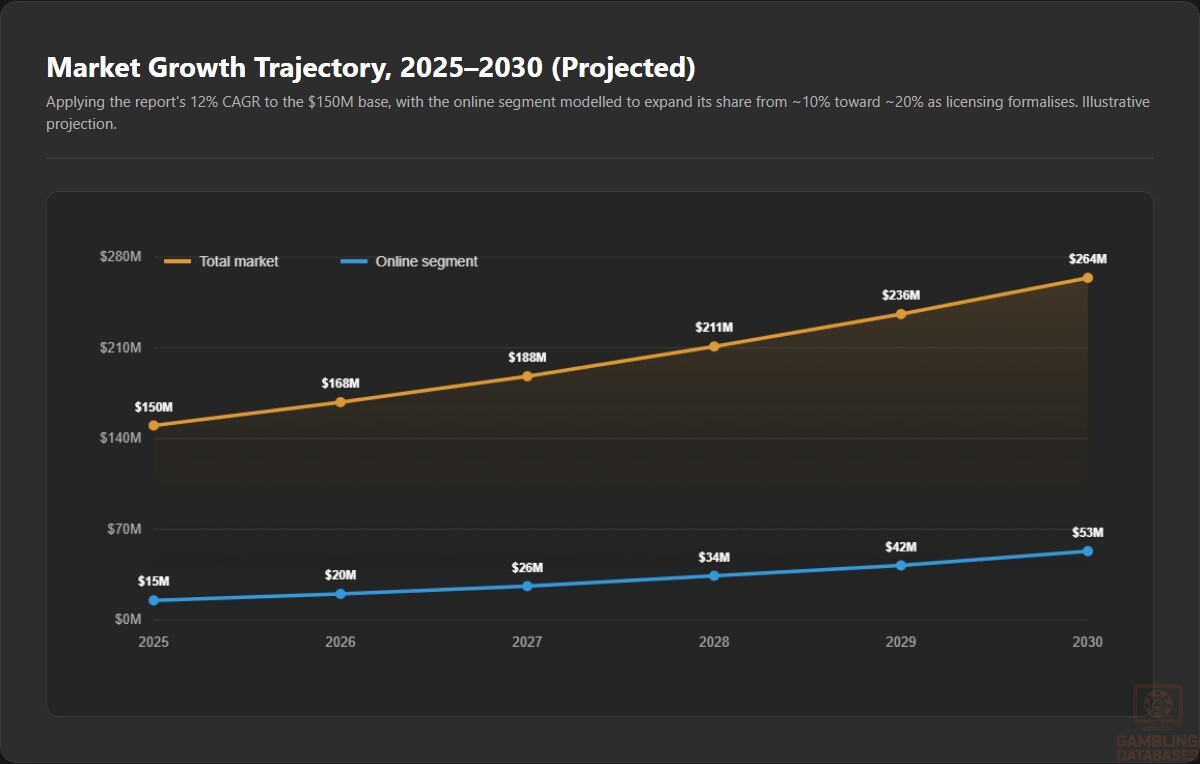
The gambling market in Papua New Guinea remains in a developmental phase, with land-based revenues growing alongside increasing consumer interest in digital platforms. Current market revenue estimates fall within the low hundreds of millions USD annually, with online gambling accounting for a marginal but fast-growing share.
| Metric | Value |
|---|---|
| Current Total Market Revenue (2025) | Estimated USD 150 million |
| Online Gambling Share | Approx. 10% |
| Annual Growth Rate (CAGR) | Projected 12% (2025-2030) |
| User Base (iGaming) | Approx. 150,000 active players |
| Average Revenue Per User (ARPU) | USD 400 annually |
Growth drivers include increasing mobile internet accessibility, rising digital literacy, and expanding middle-class demographics with disposable income. Projections suggest a shift towards online gambling as regulatory frameworks mature and local participation increases.
Education, Skills, and Digital Literacy
Literacy rates in Papua New Guinea are improving, currently estimated around 65% nationwide, with higher rates concentrated in urban areas. Educational attainment remains a challenge due to infrastructural and socio-economic constraints, particularly in rural zones.
Digital literacy is growing, especially among younger generations, fueled by increasing smartphone penetration and government initiatives to promote digital skills. Workforce skills relevant to iGaming include basic computer usage, internet navigation, and digital payment familiarity, which are progressively expanding in the population.
Cultural and Social Factors
Communication and Language
Papua New Guinea is linguistically diverse, with over 800 indigenous languages. Tok Pisin, English, and Hiri Motu serve as the primary languages for communication, with Tok Pisin functioning as the lingua franca.
- Tok Pisin (spoken by 50%+ population)
- English (official language, government and business use)
- Hiri Motu (regional use)
- Indigenous languages (various regional dialects)
- Pidgin English (widespread informal communication)
Language preferences affect online and offline communication, with English heavily used in digital interfaces. Localization and multilingual support are essential for operators targeting a broad demographic spectrum.
Cultural Attitudes
Gambling is generally accepted as a form of entertainment in PNG, entwined with social and cultural practices. Religious and ethical views vary, with some conservative groups expressing reservations around gambling impacts.
Foreign brand entry is met with cautious openness, provided operators comply with local regulations and contribute to community development. Entertainment preferences increasingly blend traditional cultural expressions with modern leisure activities including sports and digital gaming.
Problem Gambling and Social Considerations
Problem gambling prevalence remains moderate but is a growing concern with increased access to digital platforms. Vulnerable groups include youth, low-income populations, and individuals with limited awareness of responsible gambling.
- National awareness campaigns on gambling risks
- Support services including counseling and helplines
- Mandatory responsible gambling messages by operators
- Self-exclusion programs promoted by NGCB
- Collaboration with NGOs for social support initiatives
Operators are required to participate in social responsibility frameworks, including financial contributions to problem gambling programs and public education.
Political Structure and Governance
Papua New Guinea operates as a constitutional monarchy with a parliamentary democracy, maintaining relative political stability. Governance is decentralized, with provincial administrations playing roles in local economic development and regulatory enforcement.
Political consistency supports regulatory reforms, including the ongoing modernization of gambling legislation. International relations focus on regional partnerships and trade, indirectly influencing market openness and foreign investment climate.
Technology Adoption and Digital Behavior
Internet and Digital Usage
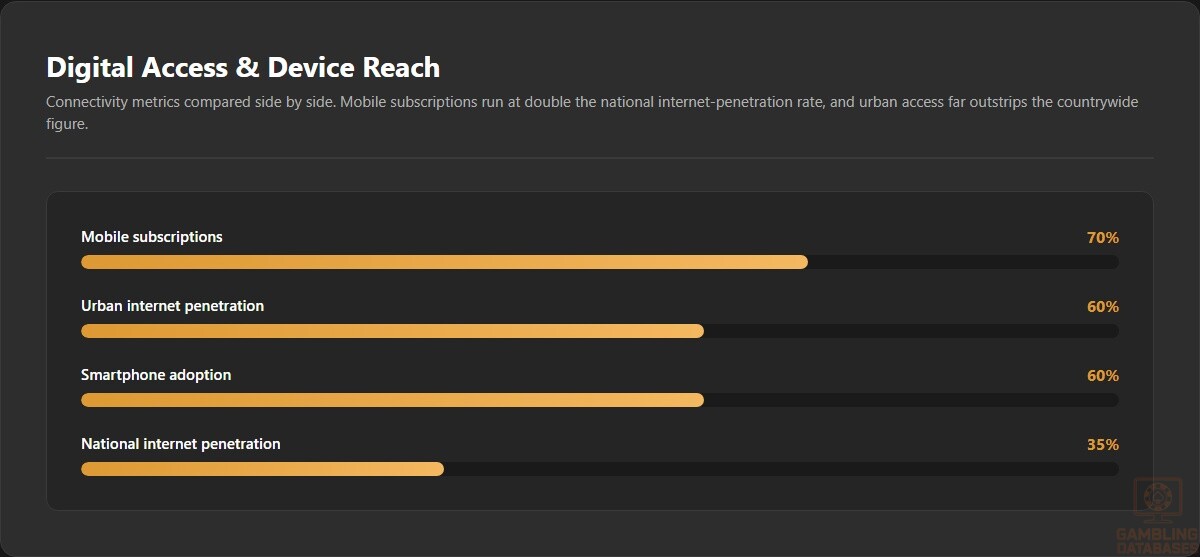
Internet penetration stands near 35%, with urban centers reaching over 60%. Daily average internet usage is approximately 3-4 hours, heavily skewed towards social media, entertainment, and communication.
Mobile adoption is strong, with mobile subscriptions exceeding 70% of the population. Smartphones form the primary device for internet access, making mobile-optimized gambling platforms critical.
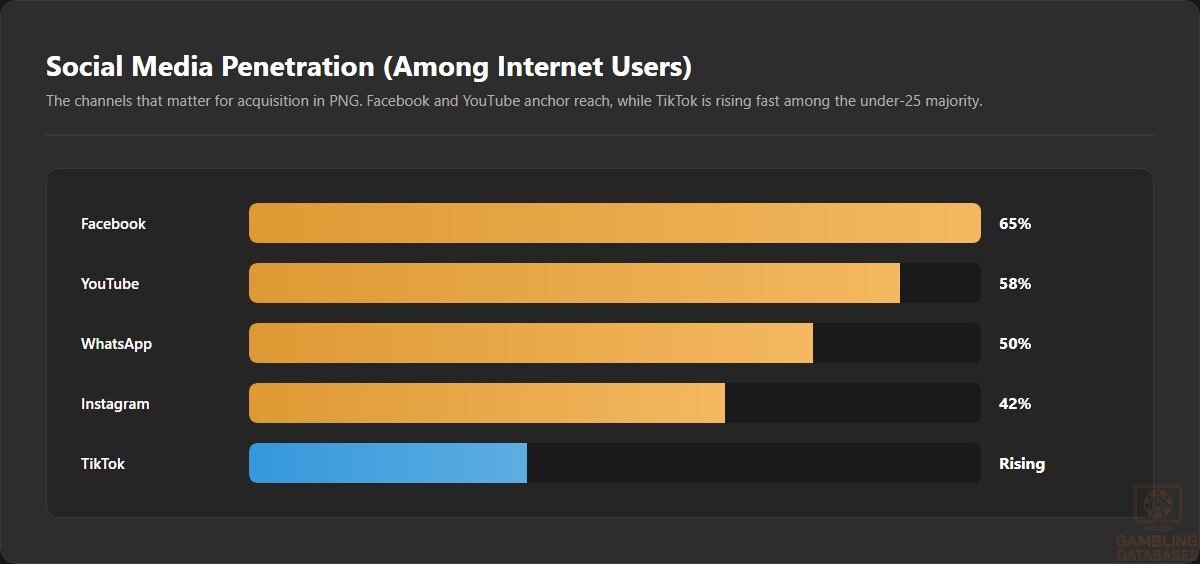
- Facebook – 65% penetration among internet users
- YouTube – 58% penetration with high video engagement
- Instagram – 42% popular among younger demographics
- WhatsApp – 50% usage for messaging and calls
- TikTok – Rapidly growing among under-25 users
Digital Payment Behavior
Payment preferences encompass a blend of traditional and digital methods. Bank transfers and cash remain important, but mobile money solutions are rapidly advancing, especially in urban areas. Cryptocurrency adoption is nascent but slowly emerging.
- Mobile money services (e.g., Digicel Mobile Money)
- Credit and debit cards (Visa and Mastercard)
- Bank transfers for larger transactions
- Prepaid cards and vouchers
- Emerging use of cryptocurrencies for anonymity and flexibility
Gaming and Gambling Preferences
Current Market Participation
Gambling participation is dominated by sports betting and casino-style games in land-based venues while online engagement is expanding. Popular activities reflect both traditional and digital behaviors, adapting to demographics and technology availability.
- Sports betting
- Slot machines and pokies
- Lotteries
- Traditional betting games (e.g., bingo)
- Online casino games (emerging)
| Activity | Participation Rate (%) |
|---|---|
| Sports Betting | 28% |
| Slot Machines / Pokies | 19% |
| Lottery Games | 17% |
| Bingo and Traditional Games | 12% |
| Online Casino Games | 8% |
Consumer Behavior Patterns
Players typically exhibit moderate spending habits, with peak gambling activity occurring during weekends and major sports events. Session lengths range from 30 minutes to over an hour, with retention driven by promotional offers and loyalty programs.
Preference trends highlight a growing inclination towards mobile platforms, facilitated by improving internet infrastructure and convenience. Consumer loyalty is influenced by game diversity, payout speed, and customer service quality, essential factors for market competitiveness.
Section 3: Technology Infrastructure and Business Environment
Internet and Digital Infrastructure
Papua New Guinea’s internet penetration stands at approximately 35%, reflecting ongoing infrastructure challenges due to geographic dispersion and rugged terrain. Broadband internet usage remains limited to urban centers, with mobile data supplementing connectivity across much of the country.
Average fixed broadband speeds hover around 15 Mbps, while mobile broadband speeds vary between 10-25 Mbps depending on location and network quality. Network reliability shows improvement, yet outages remain common in rural and remote areas.
Infrastructure investments have focused on expanding fiber optic networks and satellite services, aiming to bridge the digital divide and support digital economy growth, essential for sustaining an emerging iGaming sector.
5G and Future Technology Deployment
While 5G rollout is in initial phases, Papua New Guinea has yet to achieve wide commercial coverage. Pilot projects started in late 2024, primarily in Port Moresby and select provincial capitals, with national coverage expected to develop gradually over the next 3-5 years.
The telecommunications market remains concentrated among a few major operators collaborating with international technology providers for network expansion. Future plans prioritize rural connectivity enhancements through public-private partnerships and international aid funding.
Mobile Technology Ecosystem
Mobile Network Infrastructure
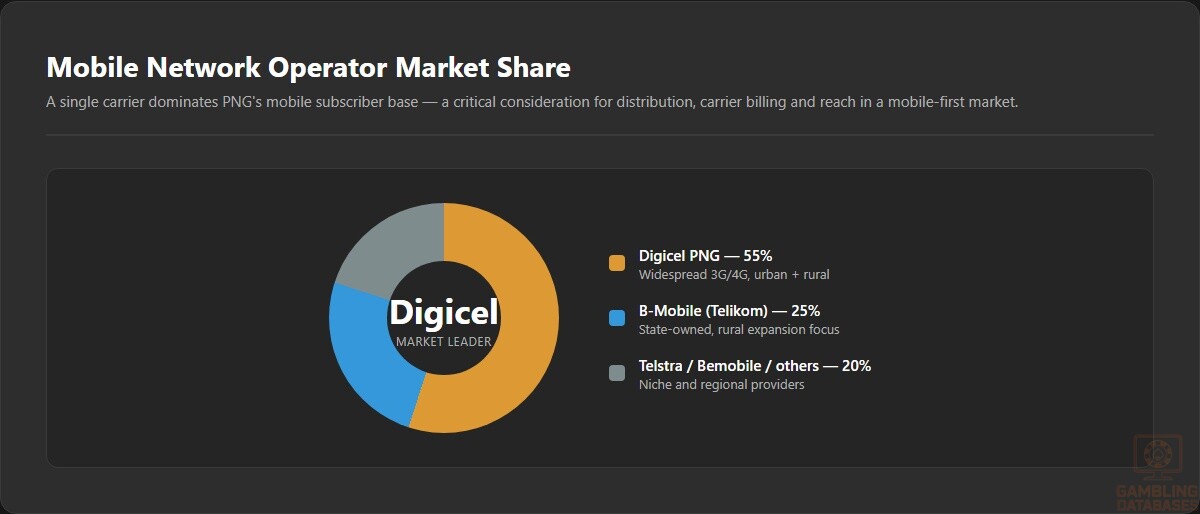
There are multiple mobile network operators (MNOs) providing service across Papua New Guinea, competing in coverage and service quality. Market shares are divided with a dominant player controlling over half of the market, offering extensive urban and improving rural coverage.
- Digicel PNG – Market leader with approximately 55% share and widespread 3G/4G coverage
- B-Mobile (Telikom PNG) – State-owned, covering 25%, focusing on rural expansion
- Telstra PNG – Smaller but significant player with niche market presence
- Bemobile – Regional operator with specialized services
- Other minor MVNOs and local providers with limited scale
Data costs remain relatively high compared to regional averages, constraining usage volumes among price-sensitive consumers but driving demand for affordable data plans.
Device Penetration
Smartphone adoption is increasing rapidly, with an estimated 60% device penetration among the population, primarily driven by mid-range Android devices. Device preferences lean towards affordable models, with limited uptake of flagship smartphones except among wealthier urban consumers.
Usage patterns indicate mobile-first internet access, with consumers relying on smartphones for communication, social media, and increasingly for gaming and entertainment, providing a critical platform for iGaming operators.
Financial Services and Payment Infrastructure
Banking System Structure
The banking sector includes multiple institutions ranging from large commercial banks to regional and digital-only banks. Account penetration remains moderate, with mobile and agency banking expanding financial inclusion in semi-urban and rural areas.
- Bank of South Pacific (BSP) – Market leader with 35% share and extensive branch network
- ANZ PNG – International presence, focusing on corporate and retail clients
- Maybank PNG – Regional bank with strong SME lending
- PNG Microfinance Limited – Specialized in microloans and financial inclusion
- City Savings Bank – Domestic bank focusing on retail banking
Payment Processing Options
Payment infrastructure supports a mix of traditional and digital methods, with mobile money and bank transfers gaining traction for online transactions. Card penetration is growing but remains limited among the broader population.
- Mobile money platforms such as Digicel Mobile Money
- Debit and credit cards, mainly Visa and Mastercard
- Bank transfers for high-value payments
- Prepaid vouchers and scratch cards popular for smaller payments
- Emerging cryptocurrency use for online gambling transactions
E-commerce and Digital Economy
The e-commerce market is in early growth stages, stimulated by increasing smartphone use and improving payment options. Online retail penetration remains below 10%, partly due to logistical challenges, trust issues, and limited digital literacy outside urban areas.
Consumer trust is evolving, with greater adoption of digital services like food delivery and mobile payments building confidence necessary for iGaming growth. Digital platforms focus on user experience and localized content to engage consumers more deeply.
Business Environment and Regulatory Framework
Ease of Business Operations
According to World Bank rankings, Papua New Guinea ranks in the lower middle tier globally for ease of doing business, reflecting challenges related to infrastructure, bureaucracy, and regulatory compliance. Business registration involves multi-step processes requiring local legal and financial expertise.
- Preparation of incorporation documents and notarization
- Submission to the Investment Promotion Authority with review time of 7-10 days
- Registration for tax identification and business permits
- Opening corporate bank accounts and obtaining necessary sector licenses
Foreign investment policies encourage participation but require adherence to local content rules and partnership with domestic entities in some sectors, aligning with government initiatives to foster sustainable development.
Corporate Structure and Registration
Common corporate entities include Limited Liability Companies (LLCs), Public Companies, and Branch Offices for foreign firms. LLCs are most popular for iGaming due to operational flexibility and limited liability protections.
Registration timelines average around 2-4 weeks, with costs ranging depending on company size and activities. Foreign ownership is allowed up to 100% in most cases, although local partnerships are recommended to navigate regulatory and cultural environments effectively.
- Certificate of Incorporation
- Memorandum and Articles of Association
- Directors and shareholders’ identification documents
- Proof of registered office address
- Tax registration certificates
Taxation Framework
Corporate Income Tax Structure
Corporate income tax in Papua New Guinea is set at a standard rate of 30%. Companies operating within special economic zones may benefit from reduced rates or tax holidays up to five years, incentivizing foreign direct investment.
Tax treaties exist with a select group of countries to avoid double taxation and promote international business collaboration.
- Australia
- New Zealand
- Singapore
- Japan
- United Kingdom
Personal Income Tax
Individuals pay progressive income tax rates ranging from 22%-42%, with withholding taxes applied on certain payments. Social security contributions are required, and tax residency is determined by the location of permanent home or physical presence exceeding 183 days annually.
Market Entry Considerations
Recommended Entry Strategies
Market entry requires strategic aggregation of regulatory compliance, local partnership, and technology adaptation. Building relationships with NGCB and local stakeholders is critical for smoother licensing and operational success.
- Forming joint ventures with local operators for market access
- Investing in mobile-optimized platforms to reach broader users
- Implementing robust compliance and responsible gaming systems
- Leveraging digital marketing tailored to PNG’s linguistic diversity
- Utilizing local payment solutions to enhance transaction success rates
Typical Costs and Timelines
Initial investments encompass licensing fees, technology deployment, marketing, and staffing. Annual operational costs are influenced by compliance, customer acquisition, and platform maintenance.
| Cost Category | Estimated Amount |
|---|---|
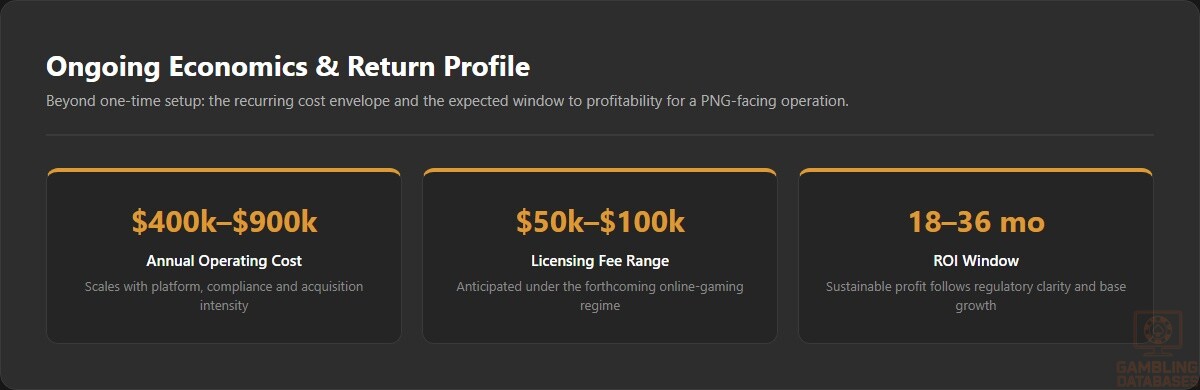
| License Application and Fees | 50,000 – 100,000 |
| Technology Platform Setup | 150,000 – 300,000 |
| Marketing and Customer Acquisition | 100,000 – 250,000 |
| Staffing and Operations | 80,000 – 150,000 |
| Compliance and Legal | 40,000 – 70,000 |
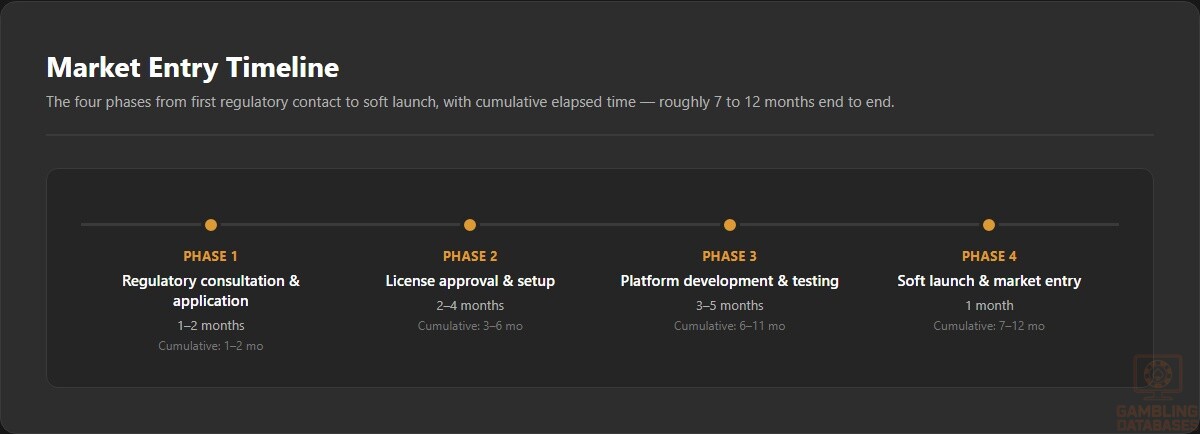
- Initial regulatory consultation and application (1-2 months)
- License approval and setup (2-4 months)
- Platform development and testing (3-5 months)
- Soft launch and market entry (1 month)
Success Factors and Challenges
Success hinges on regulatory alignment, technology adaptation to local conditions, and building trust with consumers. Challenges include infrastructure limitations, competition from offshore operators, and cultural sensitivities.
- Strong local partnerships with market knowledge
- Tailored mobile-first user experiences
- Robust compliance and responsible gambling frameworks
- Investment in multi-language customer support
- Effective data security and payment processing
Operational challenges focus on payment processing reliability, regulatory changes, and cultivating brand loyalty amid a nascent but dynamic market.
Exit Strategy Planning
Market liquidity remains limited but is improving as regulatory certainty rises. License transferability is possible with NGCB approval, and foreign investors can exit via sale to local or regional operators. Valuation multiples vary but are growing aligned with market revenue expansion and regulatory maturity.
FAQ: Frequently Asked Questions
1. Is online gambling legal in Papua New Guinea?
Online gambling is legal but governed by evolving regulations. The current framework permits licensed operators under the Gaming Control Act and pending Online Gaming Bill. Operators must be licensed by the NGCB, adhere to KYC standards, and ensure player protection. Illegal operation is subject to enforcement. The market is transitioning from informal offshore participation to formalized licensing.
2. What types of gambling licenses are available and what do they cover?
Licenses include those for land-based casinos, sports betting, gaming machines, lotteries, and the emerging online gaming license. Each license category specifies operational scopes, tax obligations, and compliance requirements. Online licenses currently under formalization will cover digital sportsbooks, casino games, and related services. The diversity allows operators to target specific segments or multiple verticals.
3. How much does an iGaming license cost and how long does it take to obtain?
Licensing fees range from approximately USD 50,000 to 100,000 depending on scope. Application turnaround typically spans 3 to 6 months inclusive of background checks and document review. Costs include application fees, compliance preparations, and technical certifications. Timelines may vary based on completeness of submissions and regulatory responsiveness.
4. Can foreign companies obtain a gambling license?
Yes, foreign companies can obtain licenses subject to registration and compliance with Papua New Guinea laws. Foreign ownership is permitted up to 100%, although local partnerships are recommended for operational ease. Companies must demonstrate financial stability, submit required documentation, and appoint local compliance officers.
5. What are the tax obligations for iGaming operators?
Operators pay a 15% bookmaker’s turnover tax, 55% gross profit tax on gaming machines, and a 7% community welfare levy. Corporate income tax of 30% applies separately. Operators must comply with regular reporting and license renewal fees tied to operational scale and game categories.
6. Are gambling winnings taxed for players?
No direct taxation applies to players’ winnings. The tax burden is placed on operators, making PNG an attractive jurisdiction for players, fostering a favorable market environment due to the absence of withholding or income tax on prizes.
7. What are the typical operational costs for running an online casino/sportsbook?
Key costs include licensing fees, platform development, marketing expenses, staff salaries, and compliance-related expenses. Technology and customer acquisition represent large portions of the budget, followed by ongoing support and regulatory adherence. Operational costs range from USD 400,000 to 900,000 annually depending on scale and market approach.
8. What is the expected ROI timeline for entering this market?
ROI expectations range from 18 to 36 months, reflecting the developmental stage of the market and investment in compliance and brand building. Sustainable profit typically improves after regulatory establishment and consumer base expansion, supported by mobile accessibility improvements.
9. What are the local presence requirements for operators?
Operators must establish a registered office and appoint local compliance personnel. Holding physical presence facilitates regulatory interaction, enhances consumer trust, and meets legal mandates. Domain registration and partnership with local entities further strengthen market standing.
10. What payment methods are available and recommended?
Recommended payment methods include mobile money platforms, debit/credit cards, bank transfers, prepaid solutions, and cryptocurrencies where permitted. Convenience, security, and local availability drive preference. Integrating multiple payment options improves user acceptance and retention.
11. What are the advertising and marketing restrictions?
Advertising must avoid targeting minors, include responsible gambling messages, and comply with time-of-day restrictions. Misleading claims and aggressive promotions are prohibited. Sponsorships are allowed within ethical guidelines to avoid overexposure, ensuring balanced consumer protection.
12. What responsible gambling measures are mandatory?
Measures include age verification, KYC compliance, self-exclusion programs, deposit limits, and clear information disclosure. Operators must contribute to social responsibility programs and provide accessible support for problem gambling issues, aligning with NGCB mandates.
13. How large is the iGaming market and what is the growth potential?
The market is estimated at USD 150 million in revenue with a projected CAGR of 12% through 2030. Increasing mobile internet access and regulatory clarity drive growth. Online platforms will capture expanding segments, supported by rising digital literacy and consumer spending.
14. Who are the main competitors and what is their market share?
Main competitors include established domestic land-based operators and offshore online platforms with PNG customer bases. Partnerships between local entities and international brands are forming. Market share is currently concentrated, but diversification is underway with licensed online entrants expected to reshape competition.
15. What are the player preferences and typical spending patterns?
Players favor sports betting, pokies, and lotteries, with a rising interest in online casino games. Spending is moderate, with peak activity on weekends and during major sporting events. Mobile play dominates, with loyalty influenced by promotional offers and payout reliability.
16. What are the key success factors and main challenges for new entrants?
Success depends on local partnerships, regulatory compliance, and mobile-first user experience. Challenges include infrastructure limitations, payment processing reliability, competition from unlicensed operators, and cultural adaptation. Effective localization and trust-building are critical.
Sources and References
- Papua New Guinea Gambling Regulatory Authority – Official Website – https://ngcb.gov.pg
- National Statistical Office – Papua New Guinea Population and Economic Data 2024
- Central Bank of Papua New Guinea – Financial Reports 2024
- Ministry of Finance – Taxation and Regulatory Guidelines 2024
- World Bank – Doing Business Report 2024 – Papua New Guinea
- International Telecommunication Union – ICT Statistics 2024
- Digicel Group – Corporate Reports 2024
- Telikom PNG – Service and Market Reports 2024
- Bank of South Pacific Annual Report 2024
- Asian Development Bank – Papua New Guinea Economic Outlook 2024
- Gaming Industry Insight – Market Research 2025
- PNG Online Gambling Market Report – 2025
- UNDP Papua New Guinea – Digital Literacy and Inclusion Programs
- Telecom Regulatory Commission PNG – Annual Communications Report 2024
- PWC Papua New Guinea – Tax and Corporate Advisory 2024
- Jumia E-Commerce Market Analysis – Papua New Guinea 2024
- World Economic Forum – Digital Economy Reports 2024
- International Monetary Fund – Papua New Guinea Economic Update 2024
- Asia Pacific Gambling Regulatory Review 2025
- PNG Ministry of Culture and Tourism – Consumer Behavior Studies
- NGCB Social Responsibility and Gambling Addictions Initiatives
- PNG Parliament – Gaming Control Bill Proposals 2024-2025
- Global Gambling Compliance Review 2025
- Local News Outlets – Papua New Guinea Business Updates 2025
- International Legal Frameworks on Gambling – Comparative Analysis 2024
- Cryptocurrency Adoption Studies – Papua New Guinea 2024
- Digital Payment Trends – Asia-Pacific 2024
- Mobile Network Operators Performance Reports 2024
- Regional Market Entry Guides – PNG Focus 2025
- NGCB Annual Compliance and Audit Reports 2024







PNG market opening up is huge news. That 70% mobile penetration means Mega Moolah could absolutely explode there. Young population, growing internet access, mostly playing offshore right now… once those local licenses drop, the progressive pools are going to be insane. Just waiting for that life-changing hit to come from somewhere like this emerging market.
The regulatory framework here matters way more than people realize when analyzing operator profitability. PNG’s 15% bookmaker turnover tax plus 7% community welfare levy cuts into margins significantly compared to MGA jurisdictions running 10-12% effective rates. What concerns me is the application timeline. They’re estimating 3-6 months for licensing post-law, but that’s almost certainly optimistic given NGCB’s track record with land-based approvals taking 8-12 months historically. From a GTO perspective, early movers who secure licenses before the rush will have massive field softness advantages over the next 18-24 months. The real bankroll management play here isn’t chasing early bonuses, it’s positioning for when the player pool gets genuinely competitive. Right now offshore operators are pulling cash from PNG with minimal friction, but once formal licensing exists, rake structures become the decisive factor. Anyone seriously analyzing this market needs to model out the tax burden against projected ARPU across different player segments.
You’ve identified the critical profitability pressure points accurately. The combined 22% effective tax burden on gaming revenue does create structural challenges for operators accustomed to lower-tax jurisdictions. One clarification worth adding: the 55% tax on gaming machine profits specifically targets slot-type operations differently than the bookmaker turnover tax, so operators will need separate financial modeling for each vertical. Regarding the licensing timeline, your historical skepticism about NGCB approval speeds is well-founded. The 2023 land-based license surge (19 new licenses) actually reveals something interesting about their capacity: those approvals took 6-14 months individually, suggesting the online licensing process could follow similar or longer patterns given the regulatory complexity involved. The field softness window you mentioned is the real arbitrage opportunity. PNG’s current player base accessing offshore platforms has minimal RNG verification requirements or responsible gaming controls compared to what NGCB will mandate. Early-licensed operators who build compliant infrastructure ahead of enforcement crackdowns will have retention advantages as offshore alternatives face increased pressure. Worth monitoring NGCB’s published enforcement statistics once online regulation finalizes.
That’s really helpful context on the split taxation model. I hadn’t fully accounted for the 55% machine profit rate being separate from the 15% bookmaker turnover. So a slot operator and a sportsbook operator structuring the same revenue would face completely different effective tax rates depending on how they categorize gameplay. That timing window makes sense too, and yeah the 2023 approvals averaging 6-14 months tells you everything about realistic timelines. My main question is whether NGCB’s enforcement will actually hit offshore operators aggressively or if they’ll let them coexist during the transition period like most emerging markets do. If offshore stays soft for 12+ months after licensing opens, the field softness advantage disappears quickly.
That’s the million-kina question. PNG’s enforcement approach will likely depend on their capacity and political priorities. We’ve seen two patterns emerge in similar markets: (1) Singapore-style crackdown where offshore access gets blocked aggressively within 6-12 months, or (2) Gradual migration where NGCB focuses on regulating licensed operators while tacitly allowing offshore to diminish naturally as local players move to licensed platforms with better UX and trust factors. Historically, NGCB has shown moderate enforcement appetite for illegal gambling, but that was focused on unlicensed land-based operations. Online enforcement requires different technical infrastructure (ISP-level blocking, payment processor coordination) that PNG is still developing. My read is 12-18 month coexistence window is realistic, with selective crackdowns on the largest offshore operators to show political will without destabilizing the entire player base. The real tell will be whether NGCB coordinates with payment processors to restrict offshore transactions—that’s the enforcement lever that actually moves player behavior.