

Portugal presents a compelling opportunity for iGaming operators seeking a regulated European market with steady growth and robust oversight. The Portuguese market is characterized by clear regulatory frameworks, significant digital adoption, and a stable economic environment.
The country’s well-structured licensing and compliance regime, alongside a growing player base of nearly 5 million registered accounts, position Portugal as an attractive gateway for online gambling businesses.
Executive Summary: Key Market Indicators
| Metric | Value |
|---|---|
| Gambling Legal Status | Fully regulated, legal for land-based and online |
| Regulatory Authority | Serviço de Regulação e Inspeção de Jogos (SRIJ) |
| Population | 10.2 million |
| Internet Penetration | 84% of population |
| Mobile Penetration | Over 90% |
| GDP (Nominal) | ~€270 billion (2024 est.) |
| Average Monthly Income | Approx. €1,200 – €1,400 |
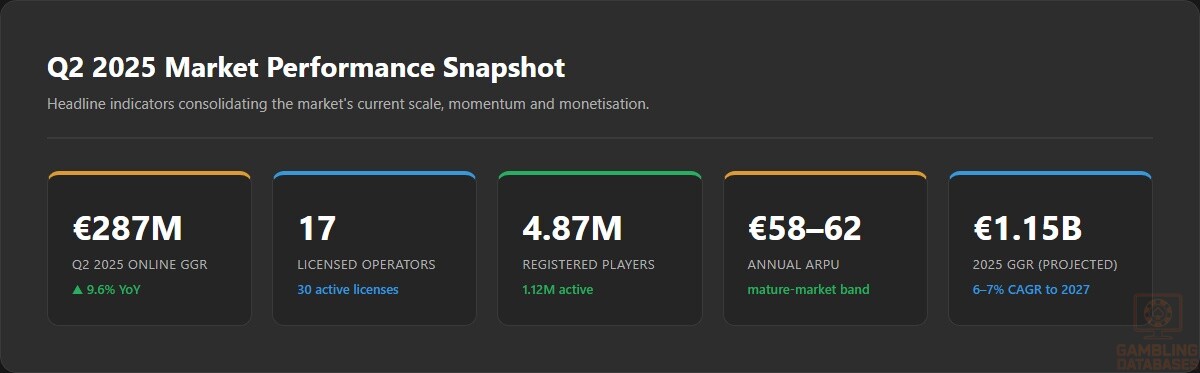
| Number of Licensed Online Operators | 17 operators holding 30 licenses |
| Annual Gross Gaming Revenue (Online) | €1.15 billion (2025 projected) |
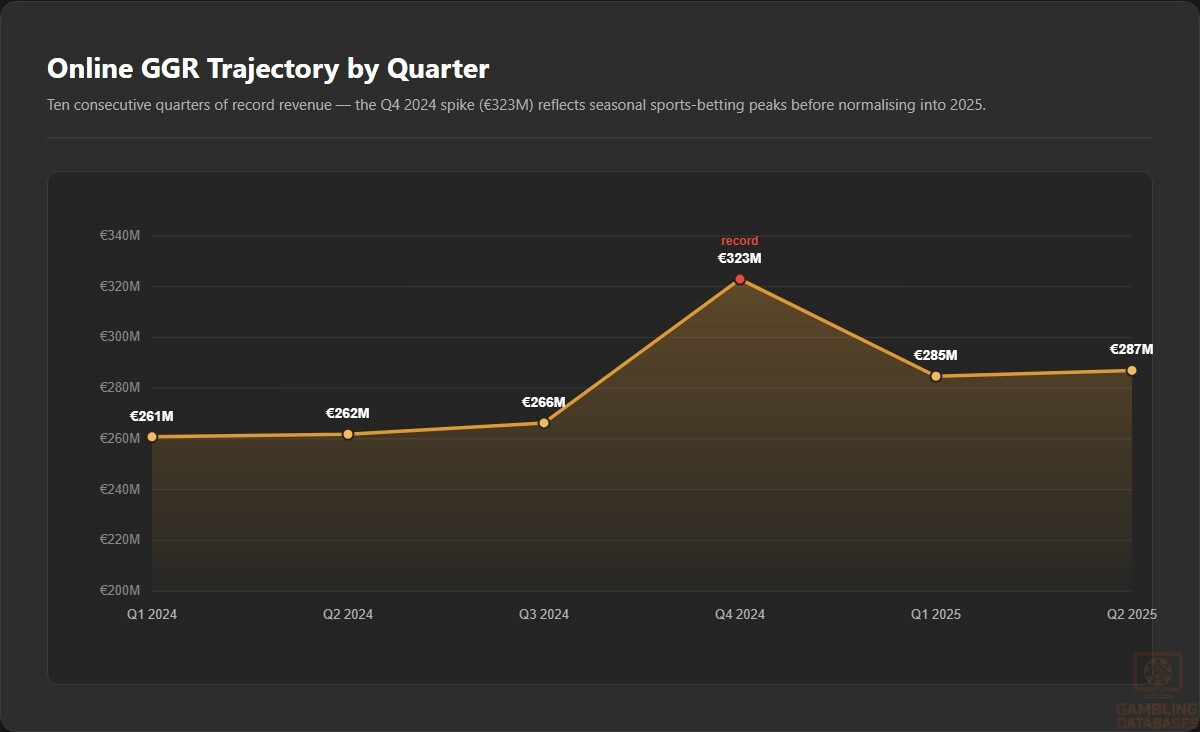
| Q2 2025 GGR | €287 million (9.6% YoY growth) |
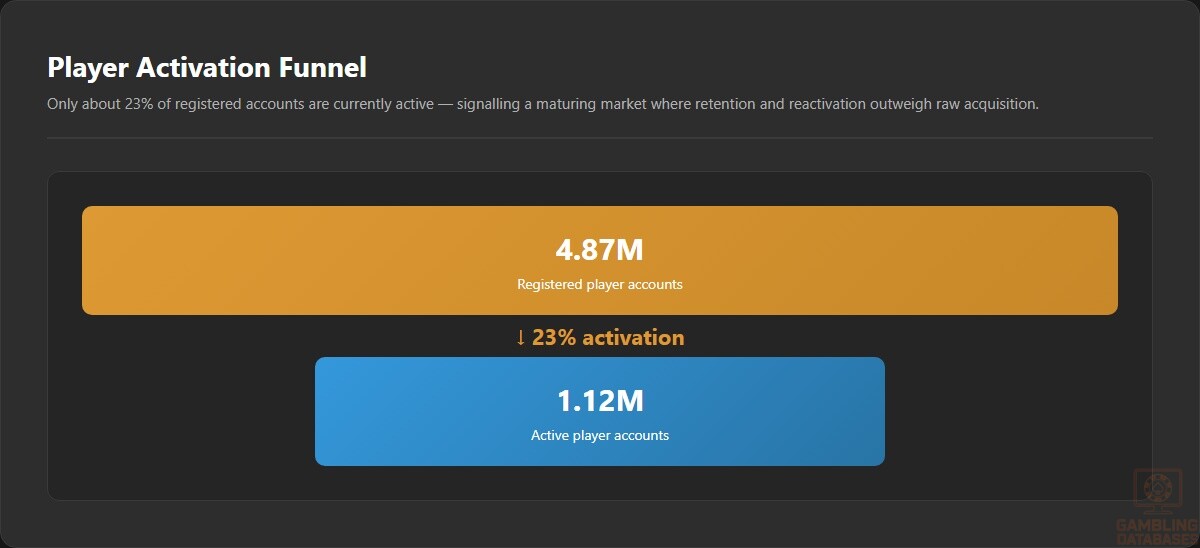
| Registered Player Accounts | 4.87 million |
| Active Player Accounts | 1.12 million |
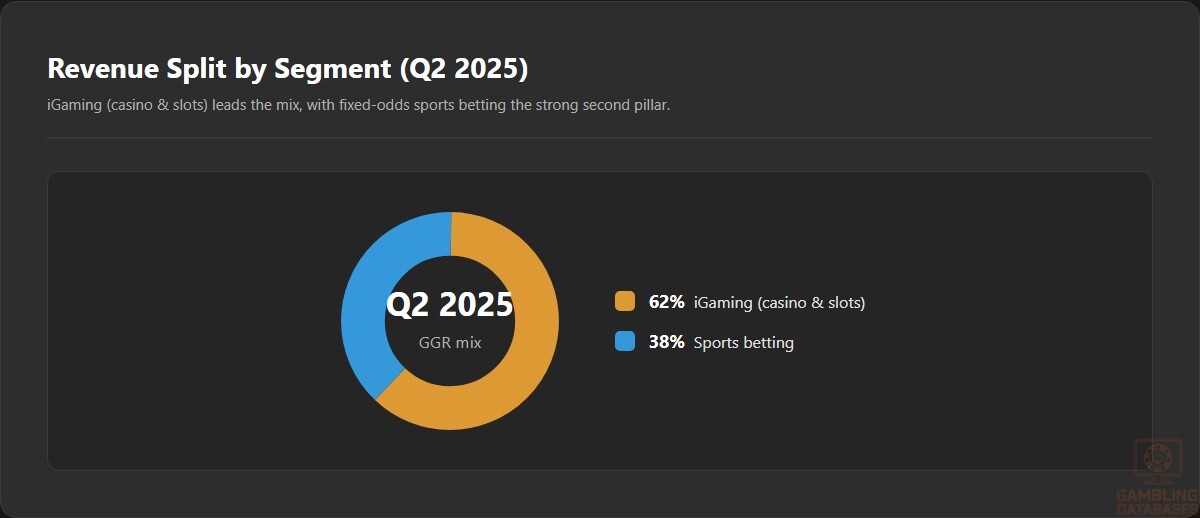
| Market Segment Breakdown (Q2 2025) | iGaming 62%, Sports Betting 38% |
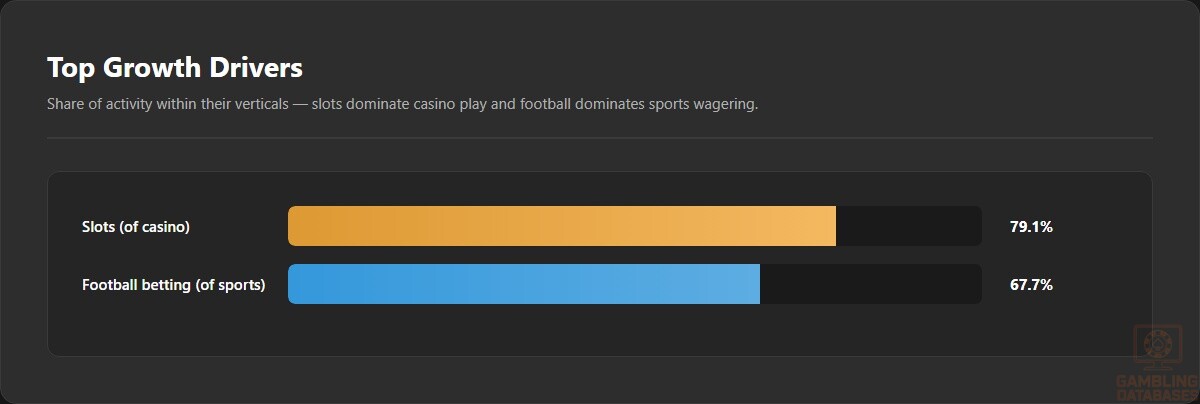
| Games Driving Growth | Slots (79.1%), Football Betting (67.7%) |
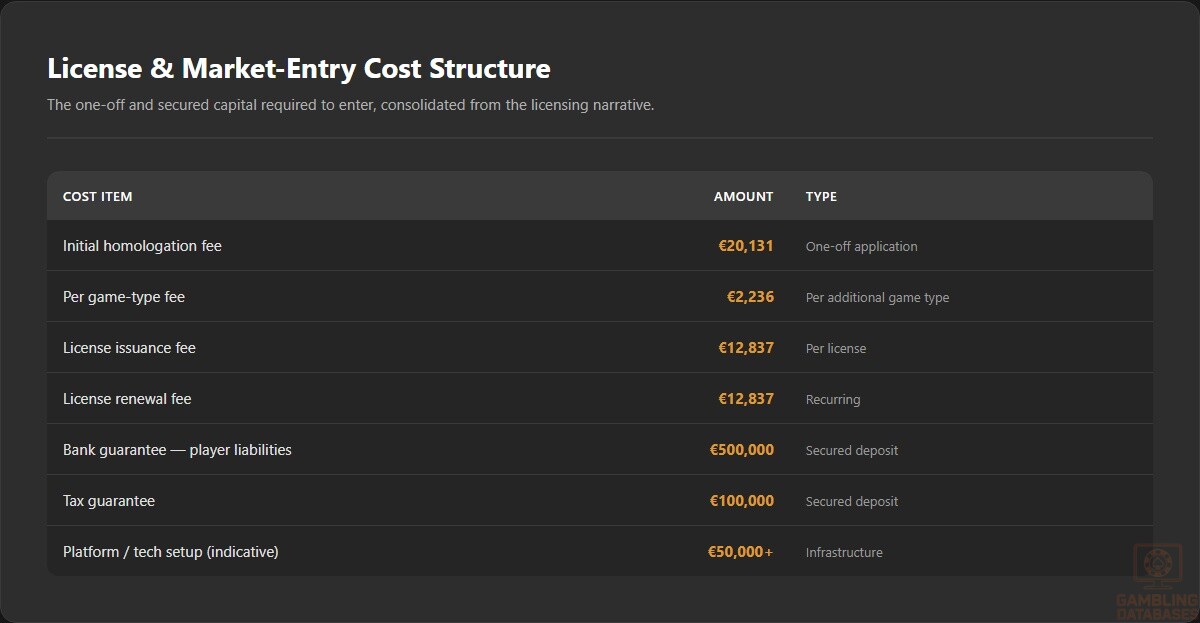
| Average License Fee (Initial) | ~€20,000 plus €2,200 per game type |
| License Validity Period | Typically 1 to 5 years |
| Minimum Bank Guarantee | €500,000 (player liabilities) |
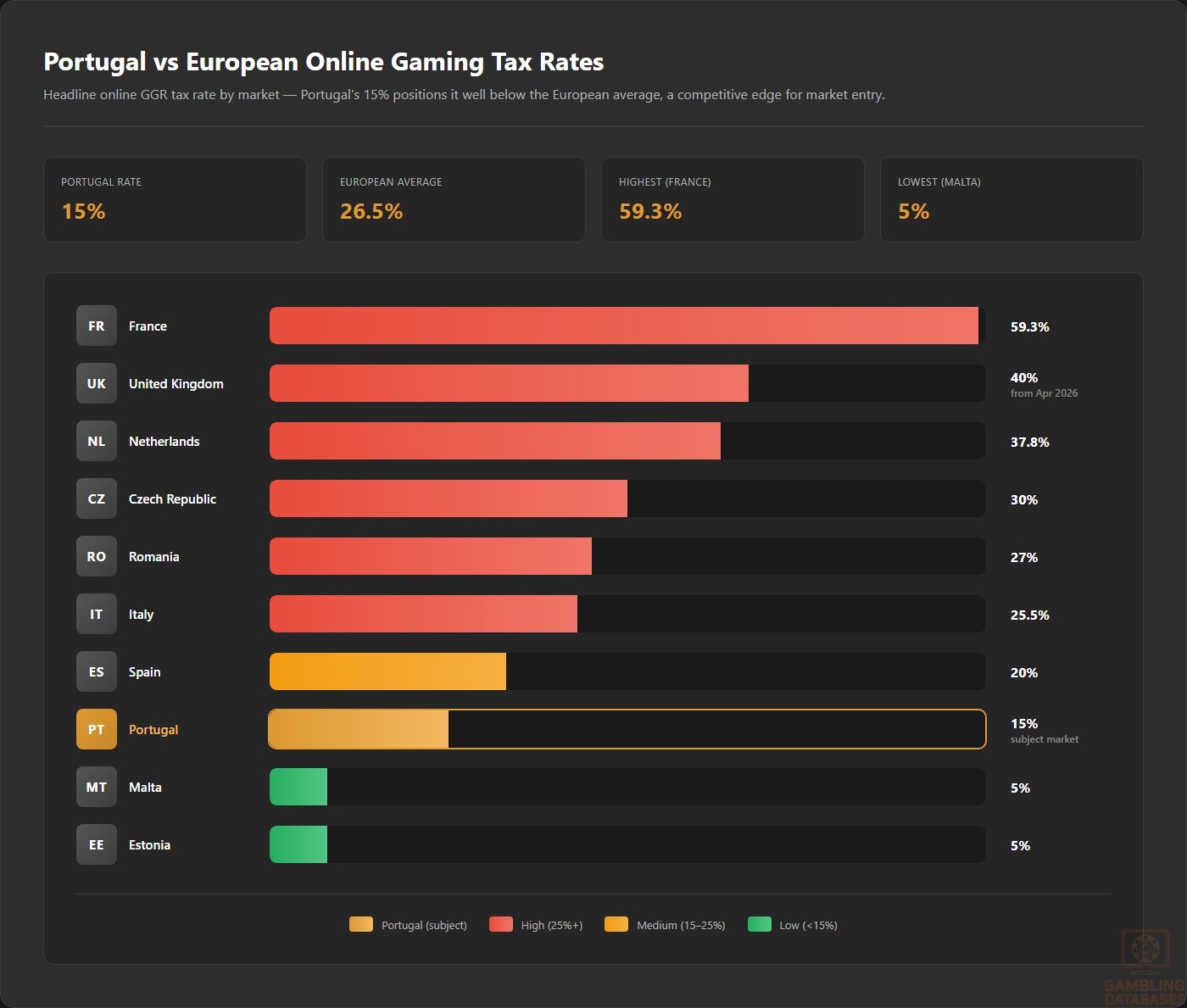
| Special Online Gaming Tax Rate | 15% on gross gaming revenue |
| Corporate Tax Rate | 21% |
| License Renewal Fee | ~€12,800 per license |
| Responsible Gambling Mandates | Self-exclusion, limits, player info disclosure |
| Advertising Restrictions | Pending tighter regulations; restrictions on sponsorships |
| Compliance Reporting Frequency | Monthly financial and operational reports |
| License Application Timeline | Approx. 3 to 6 months |
| Market Growth Forecasts (CAGR) | Approx. 6-7% through 2027 |
| Average Revenue Per User (ARPU) | €58 – €62 annually |
Section 1: Regulatory Framework and Legal Environment
Current Gambling Regulation Status
Portugal maintains a comprehensive regulatory framework governing all forms of gambling, overseen by the Serviço de Regulação e Inspeção de Jogos (SRIJ). Gambling activities are fully legal under strict licensing and compliance requirements that safeguard consumer protection and industry integrity.
Land-based gambling in Portugal includes casinos, sports betting venues, bingo halls, and slot machine operations, all subject to public concessions and licensing procedures. The government regularly awards exclusive casino operating rights through public tenders, ensuring competitive and transparent market dynamics.
Land-Based Gambling Activities
There are currently multiple sanctioned land-based gambling operations. The casino sector is tightly controlled, with licenses granted through competitive public tenders requiring operators to demonstrate technical and financial capabilities. Sports betting also occurs through licensed physical outlets with strong regulatory oversight.
Online Gambling Framework
The online gambling sector is regulated under a specific licensing regime tailored for digital platforms. Operators must comply with technical and financial conditions, including maintaining a portion of their gambling systems infrastructure within Portugal. The regulatory scope covers all games of chance including slots, betting on sports events, poker, and lotteries.
Prohibited online activities include unlicensed gambling offers, gaming that lacks the regulator’s approval, and any form of unauthorized advertising. The SRIJ enforces frequent audits and monitoring to ensure compliance with regulatory mandates.
Licensed Operators and Market Players
The Portuguese iGaming market currently hosts 17 licensed online operators holding 30 active licenses. The market is moderately concentrated with several dominant operators commanding a significant share of the revenue, especially in the slots and sports betting segments.
Market entry strategies typically emphasize compliance readiness, strong local partnerships, and investment in customer acquisition and retention due to rising market maturity and competitive intensity. The robust regulatory environment favors operators with established reputations and reliable technological platforms.
Licensing Framework and Requirements
Application Process and Eligibility
The licensing process is administered by the SRIJ and involves three primary phases: compliance documentation submission, initial technical certification, and homologation testing. Applicants must provide extensive documentation proving legal standing, financial solvency, and technical capability of their gaming platforms.
Application fees include an initial homologation fee of approximately €20,131 plus a fee of about €2,236 per game type. On issuance, a license fee of €12,837 per license is payable alongside mandatory bank guarantees totaling €500,000 to cover player liabilities and €100,000 for tax guarantees. These security deposits are subject to regulatory review post-commencement of activities.
- Submission of corporate registration and ownership details
- Financial statements demonstrating stability
- Detailed business and operational plans
- Technical platform certification from recognized labs
- Criminal background checks for principals
- Proof of financial guarantees and insurance
- Responsible gambling policies
- Bank account details for transaction management
Local Presence and Operational Requirements
Operators must establish a local branch or legal presence in Portugal, ensuring compliance with taxation, social security, and operational mandates. The technical gambling system must have key components housed within the country, such as the entry and registry infrastructure.
Foreign ownership is permitted but must comply with Portuguese company law and demonstrate transparency. There is no explicit requirement for local partnerships, although maintaining strong local operational teams is advantageous for regulatory compliance and customer service.
- Local legal entity registration
- Mandatory use of Portuguese registered domains
- Employment of compliance and customer support staff locally
- Maintenance of technical infrastructure within Portugal
- Adherence to national taxation and social security law
Compliance Obligations and Monitoring
Player Protection and Identification
Portugal enforces strict KYC (Know Your Customer) and AML (Anti-Money Laundering) procedures including mandatory age verification to prevent underage gambling. Operators are required to implement self-exclusion programs, player deposit limits, and information disclosure to promote responsible gambling.
- Verification of players’ identity before gaming activity
- Regular monitoring of transactions for suspicious behavior
- Mandatory responsible gambling tools and notifications
- Self-exclusion registry participation
- Disclosure of betting history and account activities on request
Financial Monitoring and Reporting
Operators must submit monthly detailed reports on financial transactions, player accounts, and betting volumes to SRIJ. Additionally, real-time monitoring systems are employed to detect irregularities and potential fraudulent activities.
- Submission of monthly gross gaming revenue and betting activity
- Detailed financial audits and submission of annual accounts
- Reporting of suspicious transactions under AML regulations
- Ongoing technical audits of gaming platform compliance
Taxation Structure and Financial Obligations
Player Taxation
Players are not subject to taxation on their winnings, as Portugal does not levy taxes on gambling winnings for individuals. This zero tax policy enhances player attraction and participation in licensed gambling platforms.
Operator Taxation
| Game Type | Effective GGR Tax Rate |
|---|---|
| Online Slots and Casino Games | 15% |
| Sports Betting (Fixed Odds) | 15% |
| Poker and Skill Games | 15% |
| Lotteries | 15% |
In addition to the special online gaming tax, operators pay corporate income tax at the standard rate of 21% on profits. License renewal fees are approximately €12,800 per license and turnover or gambling activity taxes are structured within GGR tax regimes. Operators must maintain transparency in financial reporting to ensure compliance.
Gambling Market Financial Performance
The online gambling market in Portugal generated €287 million in Gross Gaming Revenue (GGR) in Q2 2025, reflecting a 9.6% year-on-year growth. The sector is dominated by slots games (62% of revenue) and sports betting (38%), with football betting constituting over two-thirds of sports bets.
With 4.87 million registered players, the market shows a relatively high penetration rate, although the number of active players is stabilizing, signaling a maturing market. This trend encourages operators to shift focus towards retention and value maximization strategies.
Advertising and Marketing Restrictions
Portugal is moving towards stricter regulation in gambling advertising. Current restrictions limit promotional content to licensed operators, with close monitoring of marketing practices to prevent targeting minors or vulnerable groups.
- Prohibition of gambling ads in media accessible to minors
- Restrictions on sponsorship, especially in sports
- Limits on bonus and promotional offers
- Mandatory inclusion of responsible gambling messages
- Pre-approval of marketing materials by regulators
Recent Regulatory Changes and Their Impact
In 2025, the Portuguese government launched public tenders for five new land-based casino licenses, strengthening the land-based sector’s competitive environment. Regulatory oversight was enhanced with increased enforcement actions against illegal operators. The stricter advertising regulations under parliamentary consideration are expected to increase compliance costs but improve industry sustainability.
Enforcement Mechanisms and Penalties
Enforcement by SRIJ includes fines, license suspensions, and website blocking for unauthorized operators. Penalties escalate with repeat offenses affecting both operators and intermediaries. Compliance monitoring is frequent and includes financial audits and technical inspections.
- Monetary fines for advertising violations and unauthorized operations
- License suspensions or revocations for non-compliance
- Blocking of illegal gambling websites and services
- Criminal prosecution in cases of fraud or money laundering
- Mandatory corrective measures and compliance reporting
Section 2: Demographics and Consumer Analysis
Population Demographics and Distribution
Portugal’s population is estimated at approximately 10.02 million in 2025, with a slight decline trend of -0.3% annually due to natural decrease and migration dynamics. The median age is notably high at 46.4 years, reflecting an aging population with low fertility rates around 1.28 children per woman.
The population shows a gender imbalance with roughly 904 males per 1,000 females. Age distribution indicates that 16.8% of citizens are under 20 years old, while over 24.8% are aged 65 and above. This demographic structure signals challenges and opportunities for consumer targeting in age-sensitive categories such as gambling.
| Age Group | Percentage of Population |
|---|---|
| 0-19 years | 16.8% |
| 20-64 years | 58.5% |
| 65 years and older | 24.8% |
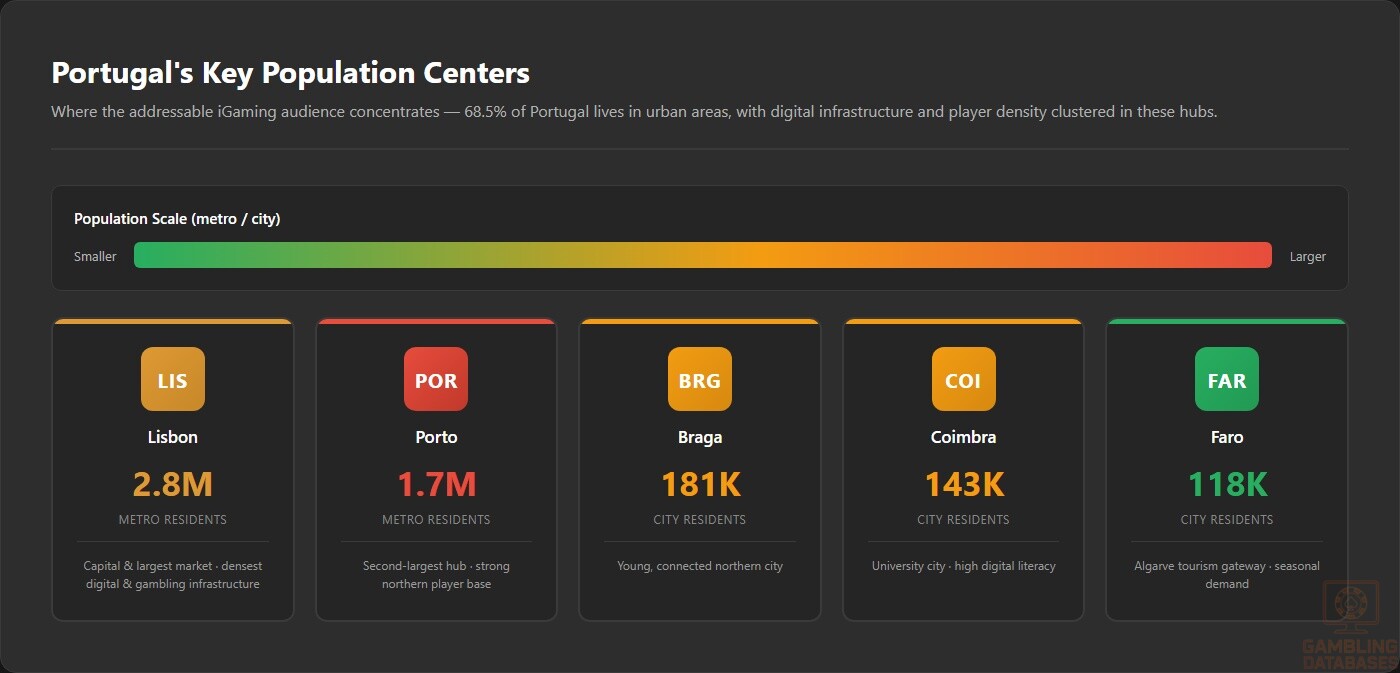
Urbanization is advanced, with roughly 68.5% of the population living in urban areas. Major population centers host the majority of economic activity and gambling infrastructure, while rural regions experience population decline and less internet penetration.
- Lisbon metropolitan area: approximately 2.8 million residents
- Porto metropolitan area: around 1.7 million residents
- Braga: 181,000 residents
- Coimbra: 143,000 residents
- Faro: 118,000 residents
Internet access and gambling venues concentrate strongly in these metropolitan hubs, reflecting infrastructure availability and consumer density that supports iGaming growth potential.
Economic Indicators and Consumer Spending Power
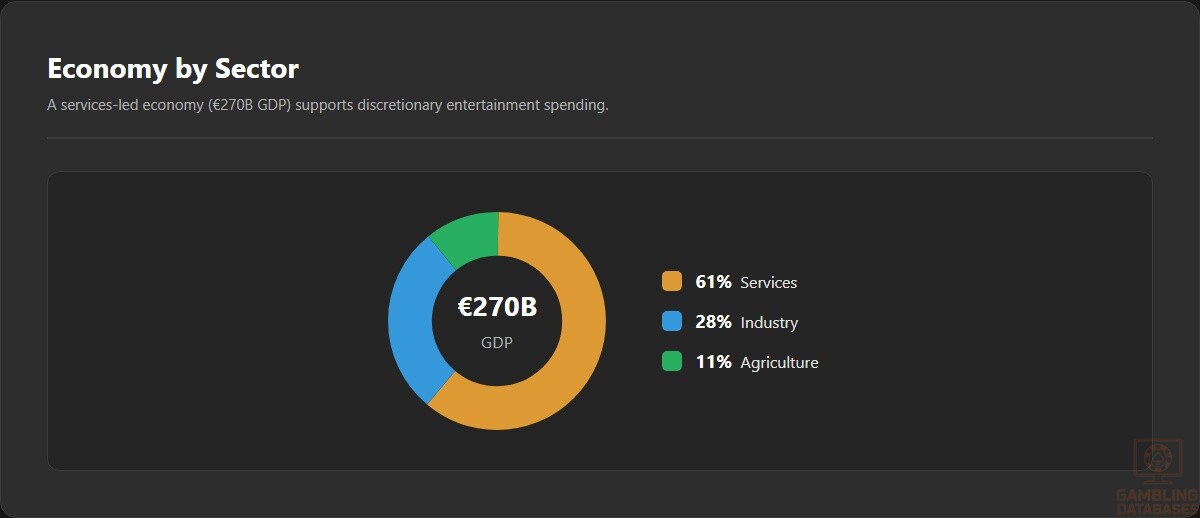
Portugal’s nominal GDP is approximately €270 billion with a modest growth forecast averaging around 1.8% to 2.2% annually through 2026. The economy is primarily driven by the services sector, which accounts for about 61% of GDP, supplemented by industry (28%) and agriculture (11%).
Average monthly incomes range between €1,200 to €1,400 with disparities across regions. The country exhibits moderate income inequality, with a Gini coefficient close to the EU average, and disposable income increasing in urban centers. Consumer spending reflects cautious optimism shaped by external economic headwinds and domestic fiscal policies.
| Indicator | Value |
|---|---|
| GDP Growth (yoy) | 1.8% |
| Inflation Rate | 2.1% |
| Unemployment Rate | 6.4% |
| Average Monthly Income | €1,200-€1,400 |
| Service Sector Contribution to GDP | 61% |
The iGaming sector’s revenue growth aligns with increased consumer spending and digital engagement. Projections suggest sustained growth in active player numbers and gaming revenue harnessing disposable income and entertainment consumption trends.
Market Size and Growth Projections
The Portuguese gambling market is mature yet expanding, supported by over 4.87 million registered player accounts as of mid-2025. The active user base is around 1.12 million, growing at approximately 9.9% year over year.
Revenue reached €287 million in Q2 2025 alone, driven mainly by slots and sports betting. The compound annual growth rate (CAGR) for the sector is forecasted at roughly 6-7% through 2027, supported by digital platform proliferation, regulatory stability, and increasing consumer comfort with online gambling.
| Metric | Value |
|---|---|
| Registered Player Accounts (2025) | 4.87 million |
| Active Player Accounts | 1.12 million |
| Q2 2025 Revenue | €287 million |
| Annual Revenue CAGR (2022-2027) | 6-7% |
| ARPU | €58-€62 |
Education, Skills, and Digital Literacy
Literacy rates in Portugal exceed 95%, with a workforce characterized by increasing higher-education attainment and growing digital literacy. Digital skills are improving due to national digital transformation initiatives and a strong focus on AI and technology adoption in business.
As connectivity spreads, the population’s proficiency with smartphones, computers, and internet services is enhancing, enabling broader access to online entertainment and iGaming services. However, older generations may require targeted outreach and education on digital gambling products.
Cultural and Social Factors
Communication and Language
Portuguese is the official and dominant language, spoken by virtually the entire population. English is commonly used among younger demographics and business professionals, facilitating communication for international operators.
- Portuguese (official language, 99%)
- English (widely spoken among youth and professionals)
- Spanish (understood by many near border regions)
- French and German (spoken mainly in tourism sectors)
- Other immigrant languages (in smaller communities)
Cultural Attitudes
Gambling is generally accepted culturally but approached with caution given the aging demographic and conservative elements. Religious influences, predominantly Catholicism, shape occasional societal skepticism towards gambling, emphasizing responsible play.
Foreign online brands are mostly well-received if properly licensed, with trust built through compliance and customer protections. Sporting events, especially football, play a central role in betting preferences and entertainment culture.
Problem Gambling and Social Considerations
Problem gambling prevalence is monitored actively, with an estimated 1-2% of the adult population considered at risk. Government and regulatory agencies promote responsible gambling through education, self-exclusion programs, and mandatory operator contributions to social support.
- Self-exclusion schemes and hotlines
- Public awareness campaigns
- Mandatory operator training on responsible gambling
- Funding for treatment programs
- Regulatory audits focused on social responsibility compliance
Political Structure and Governance
Portugal is a stable parliamentary democracy with consistent regulatory policies supporting market stability. Governance structures provide transparent processes for licensing and enforcement, facilitating business confidence and foreign investment in the iGaming sector.
Technology Adoption and Digital Behavior
Internet and Digital Usage
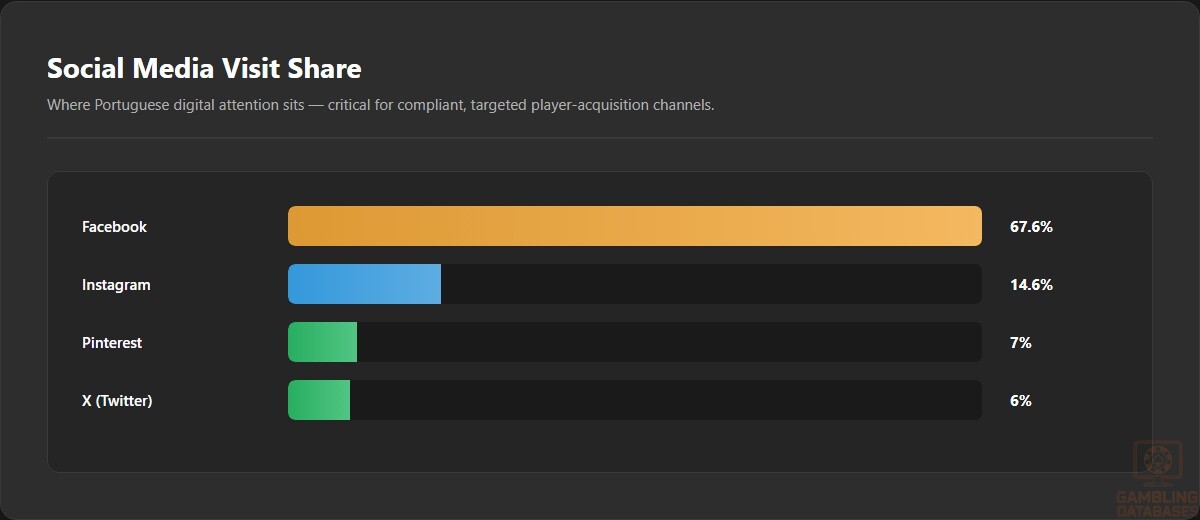
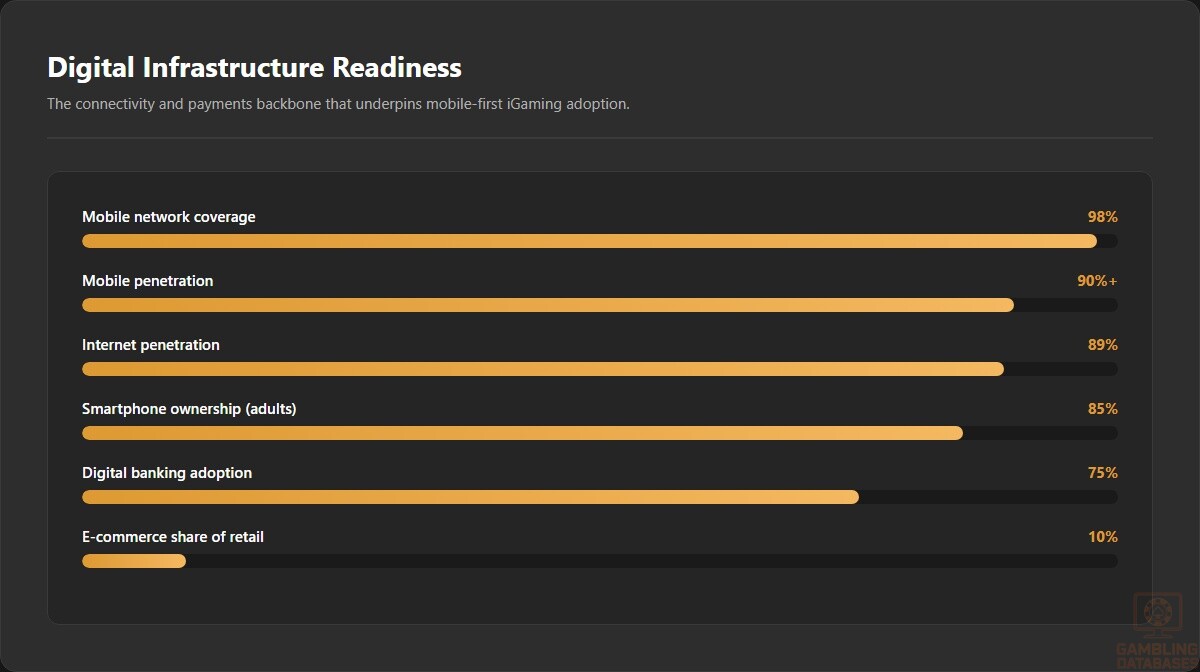
The internet penetration rate is approximately 89%, with around 9.27 million users. Mobile adoption is widespread, exceeding 90%, and daily average internet use per person is over 4 hours. The digital landscape is dominated by social media and instant messaging platforms.
- Facebook with over 67.6% market visit share
- Instagram with approximately 14.6% share
- Pinterest capturing near 7% share
- X (formerly Twitter) accounting for 6%
- LinkedIn and TikTok with growing user bases
Digital Payment Behavior
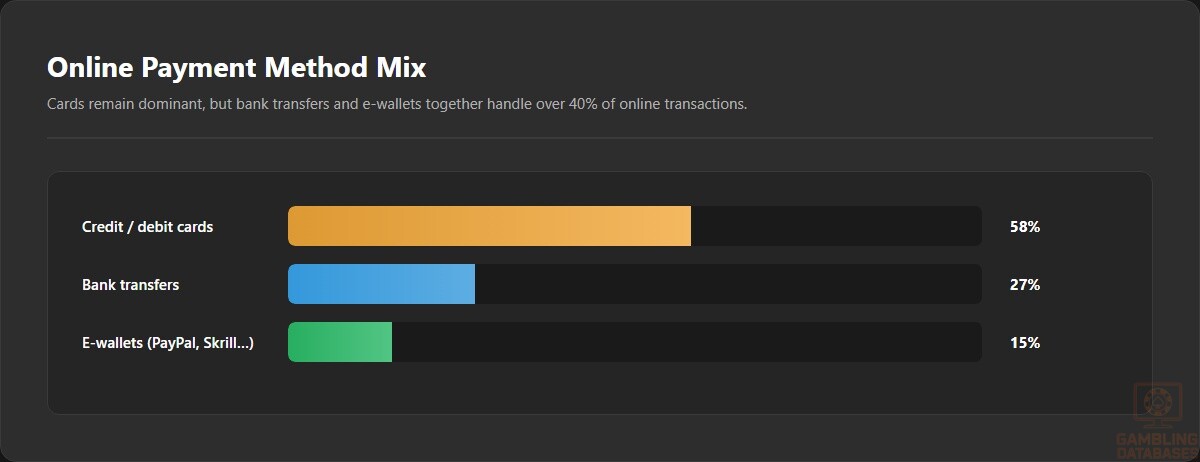
Online payment methods are diverse, with credit and debit cards dominating transaction volumes. Bank transfers and e-wallets continue to grow in popularity, particularly among younger demographics. Cryptocurrency adoption for iGaming payments remains limited but gradually emerging.
- Credit/debit cards (58% of online transactions)
- Bank transfers (27%)
- E-wallets such as PayPal, Skrill, Neteller (15%)
- Instant payment methods (gaining traction)
- Emerging cryptocurrency payment options (low market penetration)
Gaming and Gambling Preferences
Current Market Participation
The most popular gambling activities by participation rate include sports betting, slot games, and lotteries. Sports betting, especially on football, maintains leadership in consumer engagement with significant user loyalty. Slots and casino games attract a broad demographic, with notable growth among younger players.
- Sports Betting – highest participation
- Slots and Online Casino Games
- Lottery and Instant Win Games
- Poker and Skill-Based Games
- Bingo and Social Gambling
Consumer Behavior Patterns
Spending habits reflect moderate sessions with peak activity aligned to sporting events and weekend evenings. User retention improves through loyalty schemes and personalized promotions. Mobile platform use dominates access, providing convenience and continuous engagement opportunities across devices.
There is a marked preference for transparent, trusted operators with strong customer service and responsible gambling features. Data-driven marketing and social media engagement enhance customer acquisition and brand loyalty in the competitive Portuguese market.
Section 3: Technology Infrastructure and Business Environment
Internet and Digital Infrastructure
Portugal’s internet penetration is high, with approximately 89% of the population having access, reflecting widespread connectivity across urban and rural areas. Broadband coverage dominates, with average speeds reaching 150 Mbps in urban centers, supported by ongoing infrastructure investments.
Mobile network infrastructure is well-developed, with coverage extending to over 98% of the territory. The reliability of networks is generally robust, enabling seamless online gaming and banking activities. Public and private sector investments continue to push for faster, more resilient networks.
5G and Future Technology Deployment
While 4G coverage is universal, 5G is progressively rolling out across major cities like Lisbon and Porto, with national coverage expected by 2027. Operations are led primarily by three major providers, with plans for expanded fixed and mobile 5G infrastructure designed to support IoT, eCommerce, and smart city initiatives.
Mobile Technology Ecosystem
There are three primary mobile network operators controlling over 95% of the market share, with Vodafone, NOS, and Meo being the dominant players. Their coverage quality is high, with 4G and emerging 5G coverage in key metropolitan regions, providing a fertile environment for mobile-led digital services.
Device Penetration
Smartphone adoption in Portugal is near saturation, with over 85% of the adult population owning a smartphone. Device preferences favor models from Apple and Samsung, with usage concentrated on social media, banking, and gaming apps. This high penetration supports mobile commerce and online gambling growth.
Financial Services and Payment Infrastructure
The banking system is composed of several major banks, including Banco Santander Portugal, Millennium B.l.c., and Novo Banco, with strong digital banking adoption surpassing 75%. Nearly all banks provide robust online and mobile banking services, facilitating seamless transactions for consumers and operators.
Payment Processing Options
- Credit and debit cards (VISA, Mastercard, American Express)
- E-wallets (PayPal, Skrill, Neteller)
- Bank transfers and direct debits
- Mobile payment apps (Apple Pay, Google Pay)
- Cryptocurrency options (limited but emerging)
E-commerce and Digital Economy
The online retail sector in Portugal has grown significantly, representing about 10% of total retail sales, with e-commerce valued at over €8 billion in 2024. Consumer trust in online payments is high, supported by secure transaction protocols and increasing digital literacy.
The adoption of cloud-based platforms and digital service subscriptions continues to surge, creating a broader ecosystem conducive to online gambling and entertainment. Trust and ease of online shopping positively influence online gambling participation.
Business Environment and Regulatory Framework
Portugal ranks moderately high in operational ease, with a World Bank Doing Business score of 77.1. The registration process involves three main steps, each streamlined by digital platforms; registration typically takes 2-3 weeks with transparent fee structures.
Corporate Structure and Registration
Available entity types include Limited Liability Companies (Lda), public corporations, and branch offices. LLCs are favored for flexibility and limited liability, while branches are suitable for foreign firms aiming for quick market entry. Registration costs are approximately €1,200, with a turnaround of about 10 days.
Registration Requirements
- Company founding documents (articles of incorporation)
- Tax identification number (NIF)
- Proof of address and legal representation
- Bank deposits for capital requirements
- Registration in the Commercial Registry
Taxation Framework
Corporate income tax is set at a standard rate of 21%, while small-medium enterprises may benefit from reduced rates or incentives in free zones. Portugal has signed treaties with over 80 countries, facilitating international operations and tax compliance.
Personal income tax rates are progressive, ranging from 14.5% up to 48%, depending on income brackets. Social security contributions are around 23% for employers and 11% for employees, adding to the operational costs for companies.
Market Entry Considerations
- Form strategic local partnerships to navigate regulatory and cultural landscapes
- Utilize digital platforms for efficient customer acquisition
- Invest in multi-channel marketing respecting regulatory restrictions
- Leverage Portugal’s digital infrastructure to deliver seamless user experiences
- Prioritize responsible gambling measures to ensure regulatory compliance
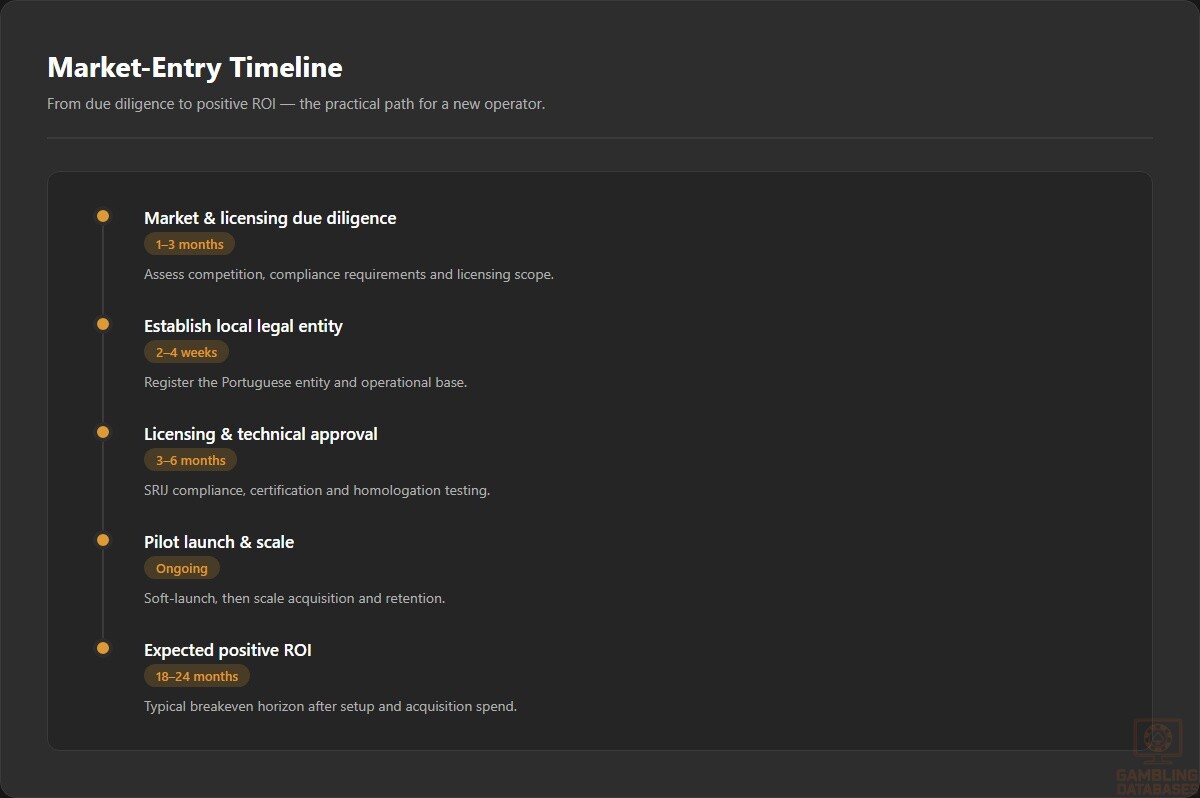
- Conduct detailed market and licensing due diligence (1-3 months)
- Establish legal entity and local operational base (2-4 weeks)
- Apply for licensing and technical approval (3-6 months)
- Launch pilot operations and scale gradually (ongoing)
Success Factors and Challenges
Success hinges on regulatory compliance, strong local partnerships, and technological robustness. Challenges include navigating bureaucratic processes, market saturation, and evolving advertising restrictions. Building consumer trust and responsible gaming commitments are crucial for sustainability.
Exit Strategy Planning
Market liquidity and license transferability are facilitated by Portugal’s transparent regulatory regime. It is possible to sell licensed entities or transfer licenses under specific conditions. Valuation multiples typically range from 3-6x EBITDA, depending on performance and market conditions, providing clarity for exit planning.
FAQ: Frequently Asked Questions
1. Is online gambling legal in Portugal?
Yes, online gambling is fully legal and regulated under the jurisdiction of the Portuguese regulator, SRIJ. Licensed operators can offer sports betting, casino games, poker, and lotteries within a strict regulatory framework that ensures player protection and fair play.
2. What types of gambling licenses are available and what do they cover?
The main license types include general online gaming licenses covering casino, poker, and slot games; sports betting licenses; and lottery permits. Each license category requires specific technical standards and operational conditions, with operators able to hold multiple licenses depending on their offerings.
3. How much does an iGaming license cost and how long does it take to obtain?
The initial license application fee is approximately €20,131, with renewal costs around €12,837 annually. The licensing process typically spans 3-6 months, depending on the completeness of documentation and technical approvals.
4. Can foreign companies obtain a gambling license?
Absolutely, foreign companies can apply for licenses provided they meet local requirements, such as establishing a legal entity in Portugal, complying with AML and security standards, and demonstrating financial solvency. The process is transparent but requires adherence to national rules.
5. What are the tax obligations for iGaming operators?
Operators are subject to a 15% gross gaming revenue tax on online revenue, corporate income tax at 21%, and license renewal fees. Additional obligations include reporting and audit requirements to ensure compliance with fiscal regulations.
6. Are gambling winnings taxed for players?
No, Portugal does not tax individual gambling winnings, making the country attractive for players who seek favorable tax treatment of their winnings.
7. What are the typical operational costs for running an online casino or sportsbook?
Operational costs include licensing fees (€20,000+), technology infrastructure (platform setup €50,000+), staff salaries, marketing, and compliance expenses. Ongoing costs involve transaction fees, customer support, and regulatory compliance investments.
8. What is the expected ROI timeline for entering this market?
ROI can typically be achieved within 18-24 months, considering initial setup costs, licensing, marketing, and customer acquisition phases. The expanding and mature market offers steady revenue streams post-breakeven.
9. What are the local presence requirements for operators?
Operators must establish a legal entity in Portugal, maintain local offices or representatives, and ensure their technical systems are hosted within Portuguese jurisdiction. Compliance with local data and gaming security standards is mandatory.
10. What payment methods are available and recommended?
Major payment options include credit/debit cards, e-wallets, bank transfers, and emerging digital currencies. Ensuring a wide array of trusted methods improves deposit/withdrawal ease, directly affecting player satisfaction.
11. What are the advertising and marketing restrictions?
Advertising is heavily regulated: marketing to minors is prohibited, sponsorships are restricted, and promotional bonuses must adhere to strict limits. All promotional communications require prior regulator approval.
12. What responsible gambling measures are mandatory?
Mandatory measures include registration of self-exclusion, deposit and loss limits, age verification, and regular player activity monitoring. Operators are also required to promote responsible gambling awareness and support initiatives.
13. How large is the iGaming market and what is the growth potential?
The market in Portugal generated €287 million in Q2 2025, exhibiting a 9.6% YoY growth. With expanding digital infrastructure and increasing consumer engagement, forecasts indicate a CAGR of 6-7% through 2027, ensuring strong growth potential.
14. Who are the main competitors and what is their market share?
Key players include Betway, Bet365, 1xBet, and local licensed operators like Solverde. The market is consolidated among several dominant brands capturing significant revenue shares, with new entrants competing increasingly on innovative offerings.
15. What are the player preferences and typical spending patterns?
Portuguese players favor sports betting, especially football, alongside slots and online casino games. Spending sessions are often short but frequent, with high engagement during major sporting events. ARPU levels align with mature European markets, around €58-€62 annually.
16. What are the key success factors and main challenges for new entrants?
Success depends on regulatory compliance, technological excellence, local market understanding, responsible gaming, and effective marketing. Challenges include high licensing and setup costs, regulatory complexity, and market saturation. Understanding cultural nuances is vital for long-term sustainability.
SOURCES AND REFERENCES
- PortugalGambling Regulatory Authority – Official Website
- National Statistical Office – Population and Economic Data 2024
- European Commission – Economic Forecast Portugal 2025
- World Bank – Doing Business Report 2024
- European Telecommunication Union – ICT Statistics 2025
- Portugal Ministry of Finance – Tax Regulations 2025
- Portugal Digital Strategy – Digital 2025 Report
- Portugal Central Bank – Financial System Overview 2025
- Statista – Social Media and E-commerce Data Portugal 2025
- Portugal iGaming Market Report 2025
- Portugal Market Insights – Betting and Gaming Industry
- OECD Economic Outlook – Portugal 2025
- Portugal’s Land-based Casino Tenders – Official Publications
- Global Gambling Statistics 2025
- European Gaming Reports 2025
- SRIJ Licensing Data Archive
- Portugal Accommodation & Transport Infrastructure Reports
- International Payment Processing Analysis 2025
- Portuguese Digital Payment Landscape
- Market Entry Strategies – Europeania Consulting 2025
- Portugal Business Environment – World Bank Rankings








The €500,000 minimum bank guarantee mentioned here is standard across most EU jurisdictions, but Portugal’s implementation through SRIJ is worth examining closely. What isn’t discussed is the actual KYC timeline burden for new operators. I’ve processed applications for firms entering the Portuguese market, and the monthly compliance reporting requirement combined with the 3-6 month licensing window creates a real bottleneck. The SRIJ requires operators to maintain detailed player verification records including source of funds documentation, which aligns with FATF recommendations but means your compliance backend needs to be bulletproof before day one. One detail that caught my attention: the article mentions responsible gambling mandates exist, but doesn’t specify that operators must implement cooling-off periods (minimum 24 hours for self-exclusion requests) and deposit limits. These aren’t optional—they’re mandatory per SRIJ circular 2/2021. The 15% special online gaming tax is also relevant to your AML calculations; it affects the net revenue reporting structure. If you’re planning entry, budget for continuous monitoring software and expect SRIJ to request transaction pattern analysis quarterly. They’re particularly aggressive on detecting structuring behavior and unusual betting patterns that suggest money laundering.
You’ve identified a critical gap in our article. The compliance infrastructure requirements absolutely deserve deeper coverage, especially regarding the monthly reporting cadence and what SRIJ actually scrutinizes in those submissions. Regarding the cooling-off periods and deposit limits—you’re correct that these fall under the responsible gambling framework, and we should have been explicit about the 24-hour minimum for self-exclusion requests rather than grouping them vaguely. The SRIJ circular 2/2021 reference is particularly useful; operators often miss these operational bulletins because they’re published in Portuguese administrative channels. One clarification on source-of-funds documentation: while the SRIJ requires it, the depth of verification typically depends on deposit size thresholds (usually triggered above €2,000 transactions). The transaction pattern monitoring you mention ties directly to the quarterly AML reporting cycle, which operators sometimes conflate with the standard monthly financial reports. Have you observed whether operators entering Portugal typically use third-party compliance software (like Actio or Compliant) or build in-house solutions? That decision seems to significantly impact licensing timeline success.